Homework from Alison
(i) your approach to the analysis and synthesis
concept,
(ii) why you have taken this approach,
(iii) what you perceive are your strengths and
weaknesses–and legacy,
(iv) the role of your Centre in fostering new
science and discoveries, and
(v) what you wish to see from the meeting.
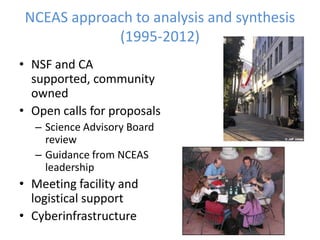
NCEAS approach to analysis and synthesis
(1995-2012)
• NSF and CA
supported, community
owned
• Open calls for proposals
– Science Advisory Board
review
– Guidance from NCEAS
leadership
• Meeting facility and
logistical support
• Cyberinfrastructure
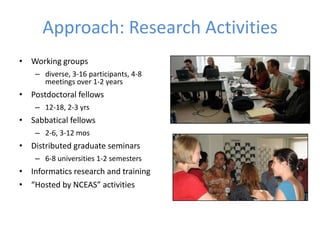
Approach: Research Activities
• Working groups
– diverse, 3-16 participants, 4-8
meetings over 1-2 years
• Postdoctoral fellows
– 12-18, 2-3 yrs
• Sabbatical fellows
– 2-6, 3-12 mos
• Distributed graduate seminars
– 6-8 universities 1-2 semesters
• Informatics research and training
• “Hosted by NCEAS” activities
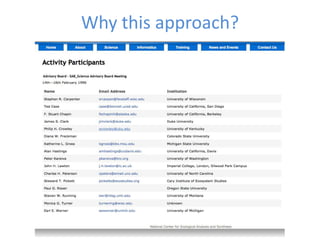
Why this approach?
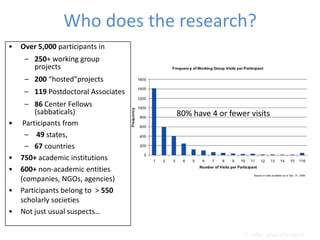
3. Who does the work
• Over 5,000 participants in
– 250+ working group
projects
– 200 “hosted”projects
– 119 Postdoctoral Associates
– 86 Center Fellows
(sabbaticals)
• Participants from
– 49 states,
– 67 countries
• 750+ academic institutions
• 600+ non-academic entities
(companies, NGOs, agencies)
• Participants belong to > 550
scholarly societies
• Not just usual suspects…
80% have 4 or fewer visits
Who does the research?
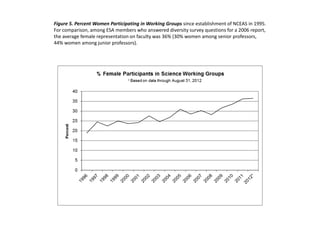
Figure 5. Percent Women Participating in Working Groups since establishment of NCEAS in 1995.
For comparison, among ESA members who answered diversity survey questions for a 2006 report,
the average female representation on faculty was 36% (30% women among senior professors,
44% women among junior professors).
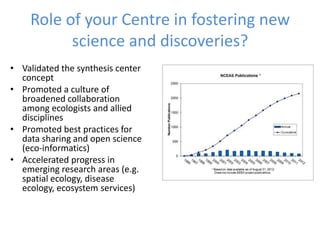
Role of your Centre in fostering new
science and discoveries?
• Validated the synthesis center
concept
• Promoted a culture of
broadened collaboration
among ecologists and allied
disciplines
• Promoted best practices for
data sharing and open science
(eco-informatics)
• Accelerated progress in
emerging research areas (e.g.
spatial ecology, disease
ecology, ecosystem services)
What you perceive are your strengths
and weaknesses–and legacy,
• Strengths
– Community engagement
– Leadership willing to take risks
– Adequate financial resources
– Customer service
– Technical staff
– Facility and location
• Weaknesses
– Uneven WG orientation, training and support
– Narrow communication and outreach
– Lack of long-term business strategy
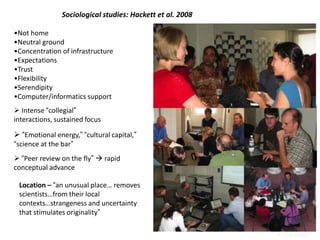
•Not home
•Neutral ground
•Concentration of infrastructure
•Expectations
•Trust
•Flexibility
•Serendipity
•Computer/informatics support
 Intense “collegial”
interactions, sustained focus
 “Emotional energy,” “cultural capital,”
“science at the bar”
 “Peer review on the fly”  rapid
conceptual advance
Location – “an unusual place… removes
scientists…from their local
contexts…strangeness and uncertainty
that stimulates originality”
Sociological studies: Hackett et al. 2008
4. Sociology
What you wish to see from the
meeting?
• Identify important emerging research areas
that could be fostered by one or more centers
• Discuss opportunities for joint training
initiatives
• Explore and evaluate alternative institutional
vision(s) and strategies for synthesis centers

NCEAS_IJSCM Day 1

  • 1.
    Homework from Alison (i)your approach to the analysis and synthesis concept, (ii) why you have taken this approach, (iii) what you perceive are your strengths and weaknesses–and legacy, (iv) the role of your Centre in fostering new science and discoveries, and (v) what you wish to see from the meeting.
  • 2.
    NCEAS approach toanalysis and synthesis (1995-2012) • NSF and CA supported, community owned • Open calls for proposals – Science Advisory Board review – Guidance from NCEAS leadership • Meeting facility and logistical support • Cyberinfrastructure
  • 3.
    Approach: Research Activities •Working groups – diverse, 3-16 participants, 4-8 meetings over 1-2 years • Postdoctoral fellows – 12-18, 2-3 yrs • Sabbatical fellows – 2-6, 3-12 mos • Distributed graduate seminars – 6-8 universities 1-2 semesters • Informatics research and training • “Hosted by NCEAS” activities
  • 4.
  • 5.
    3. Who doesthe work • Over 5,000 participants in – 250+ working group projects – 200 “hosted”projects – 119 Postdoctoral Associates – 86 Center Fellows (sabbaticals) • Participants from – 49 states, – 67 countries • 750+ academic institutions • 600+ non-academic entities (companies, NGOs, agencies) • Participants belong to > 550 scholarly societies • Not just usual suspects… 80% have 4 or fewer visits Who does the research?
  • 6.
    Figure 5. PercentWomen Participating in Working Groups since establishment of NCEAS in 1995. For comparison, among ESA members who answered diversity survey questions for a 2006 report, the average female representation on faculty was 36% (30% women among senior professors, 44% women among junior professors).
  • 7.
    Role of yourCentre in fostering new science and discoveries? • Validated the synthesis center concept • Promoted a culture of broadened collaboration among ecologists and allied disciplines • Promoted best practices for data sharing and open science (eco-informatics) • Accelerated progress in emerging research areas (e.g. spatial ecology, disease ecology, ecosystem services)
  • 8.
    What you perceiveare your strengths and weaknesses–and legacy, • Strengths – Community engagement – Leadership willing to take risks – Adequate financial resources – Customer service – Technical staff – Facility and location • Weaknesses – Uneven WG orientation, training and support – Narrow communication and outreach – Lack of long-term business strategy
  • 9.
    •Not home •Neutral ground •Concentrationof infrastructure •Expectations •Trust •Flexibility •Serendipity •Computer/informatics support  Intense “collegial” interactions, sustained focus  “Emotional energy,” “cultural capital,” “science at the bar”  “Peer review on the fly”  rapid conceptual advance Location – “an unusual place… removes scientists…from their local contexts…strangeness and uncertainty that stimulates originality” Sociological studies: Hackett et al. 2008 4. Sociology
  • 10.
    What you wishto see from the meeting? • Identify important emerging research areas that could be fostered by one or more centers • Discuss opportunities for joint training initiatives • Explore and evaluate alternative institutional vision(s) and strategies for synthesis centers