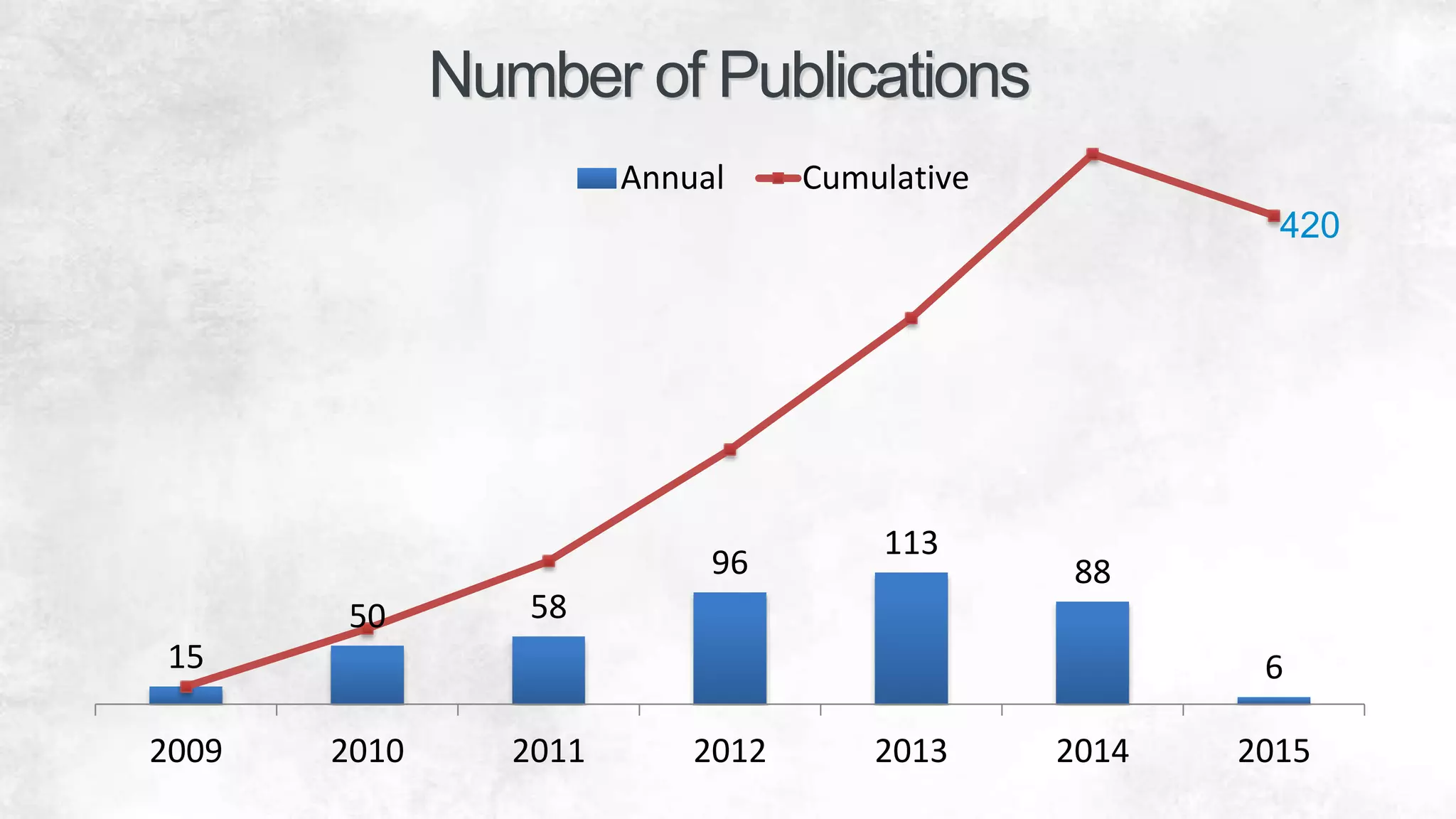
Number of Publications
15
50 58
96
113
88
6
2009 2010 2011 2012 2013 2014 2015
Annual Cumulative
4
420
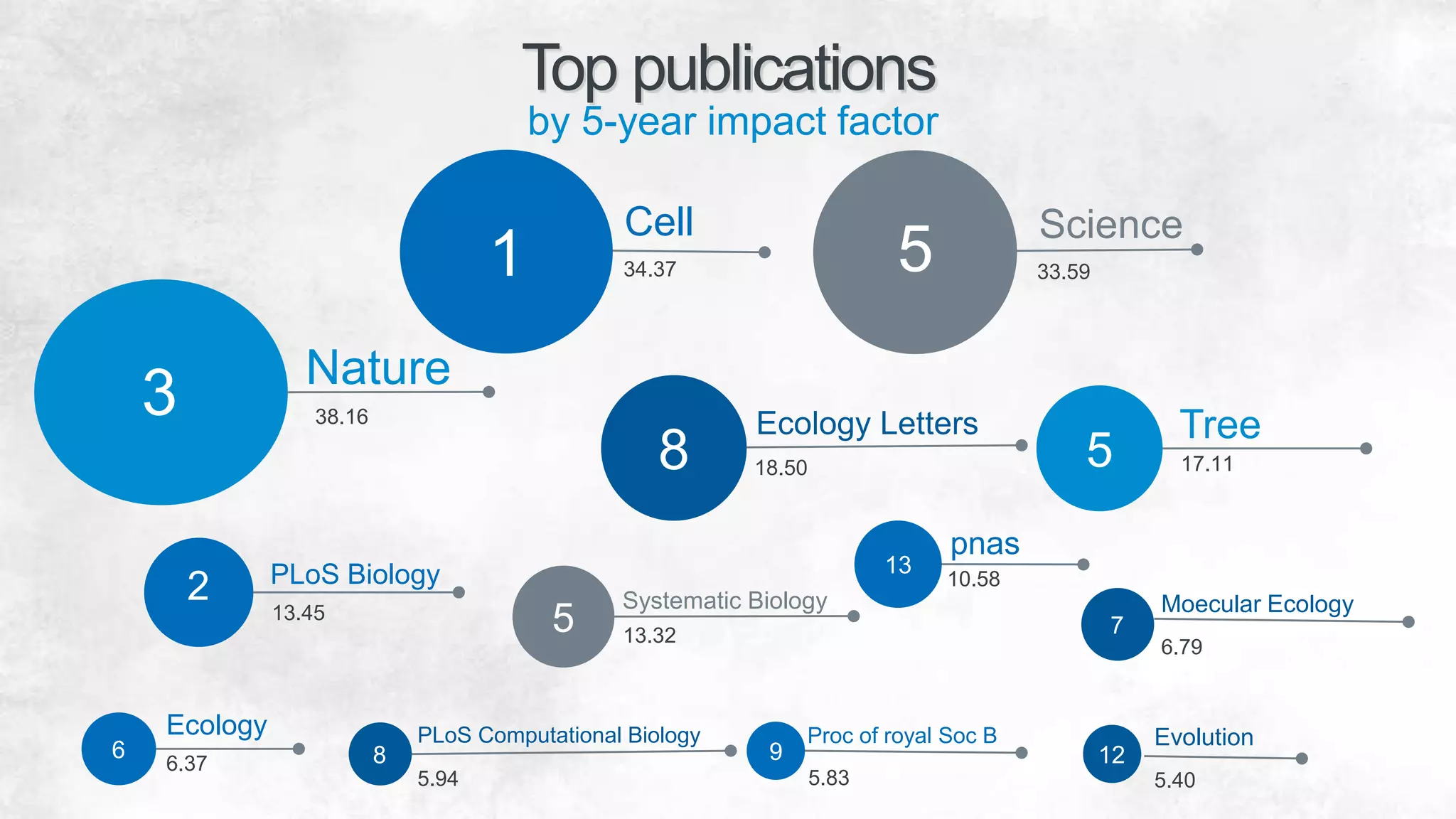
Top publications
by 5-year impact factor
Nature
38.16
Cell
34.37
Science
33.59
Moecular Ecology
6.79
pnas
10.58PLoS Biology
13.45
Systematic Biology
13.32
Ecology Letters
18.50
Tree
17.11
3
1 5
8 5
2
5
13
7
PLoS Computational Biology
5.94
Ecology
6.37
6 8
Evolution
5.40
Proc of royal Soc B
5.83
9 12
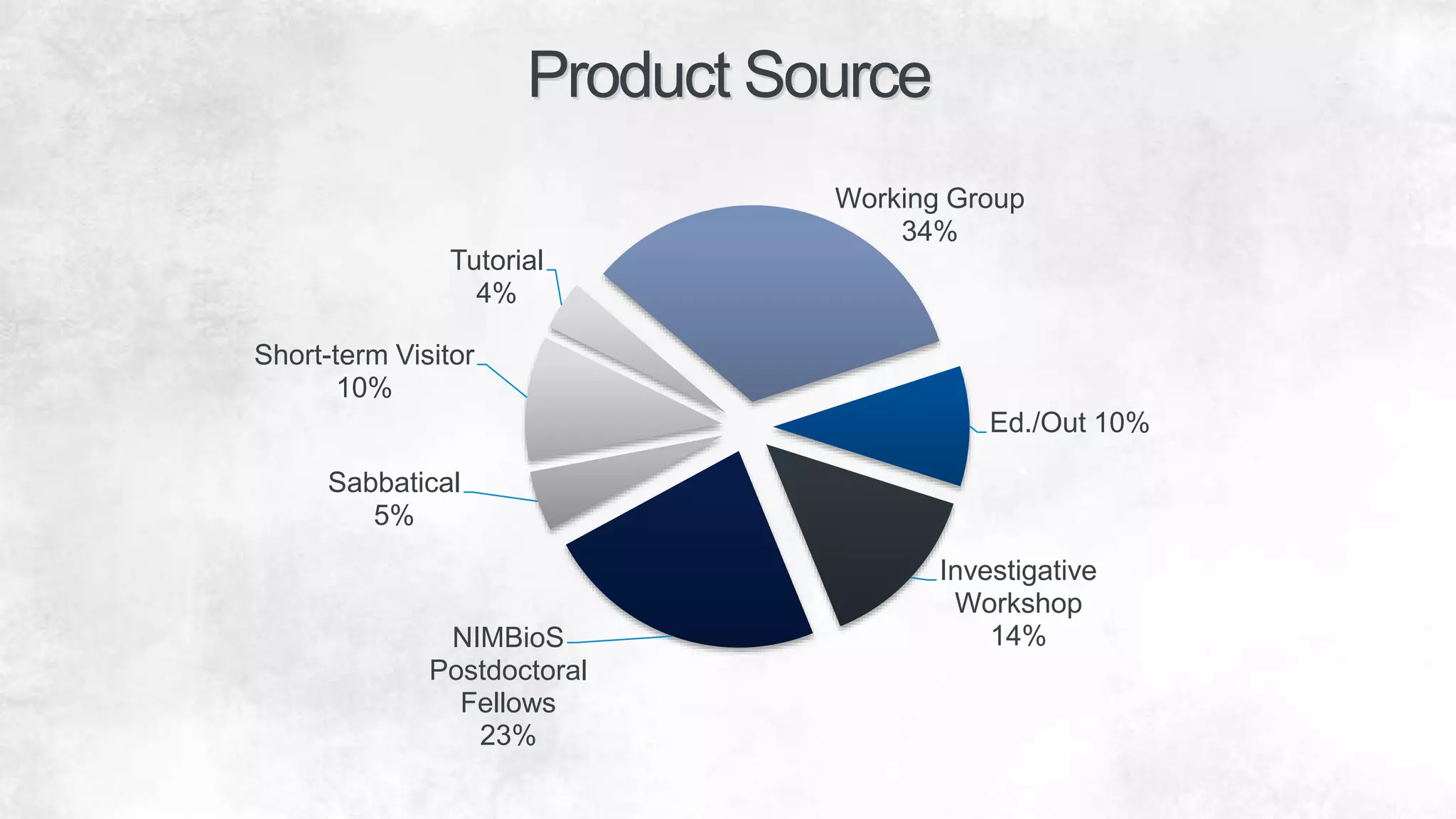
Product Source
Ed./Out 10%
Investigative
Workshop
14%NIMBioS
Postdoctoral
Fellows
23%
Sabbatical
5%
Short-term Visitor
10%
Tutorial
4%
Working Group
34%
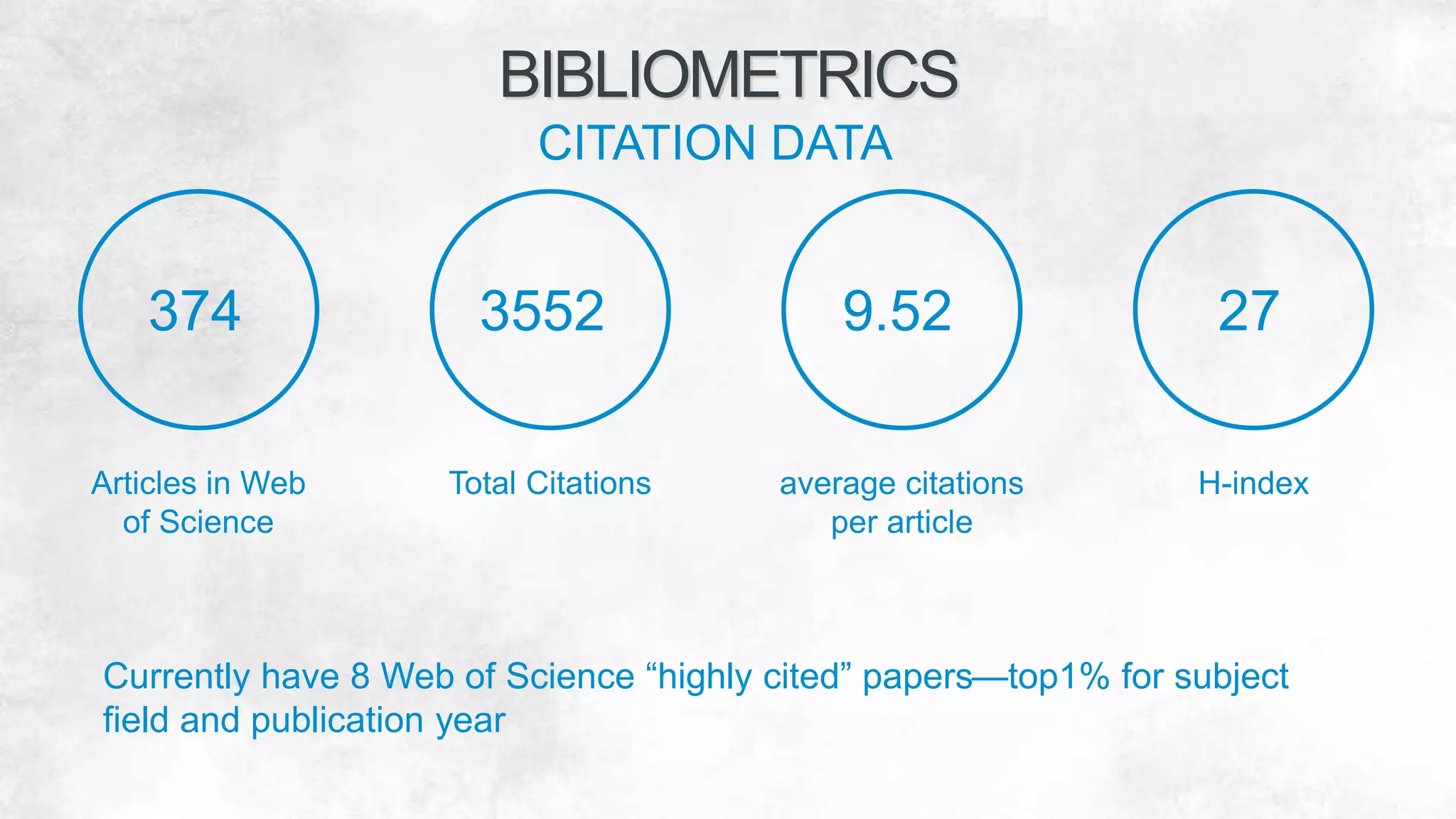
Articles in Web
of Science
Total Citations average citations
per article
H-index
BIBLIOMETRICS
374 3552 9.52 27
CITATION DATA
Currently have 8 Web of Science “highly cited” papers—top1% for subject
field and publication year
BIBLIOMETRICS
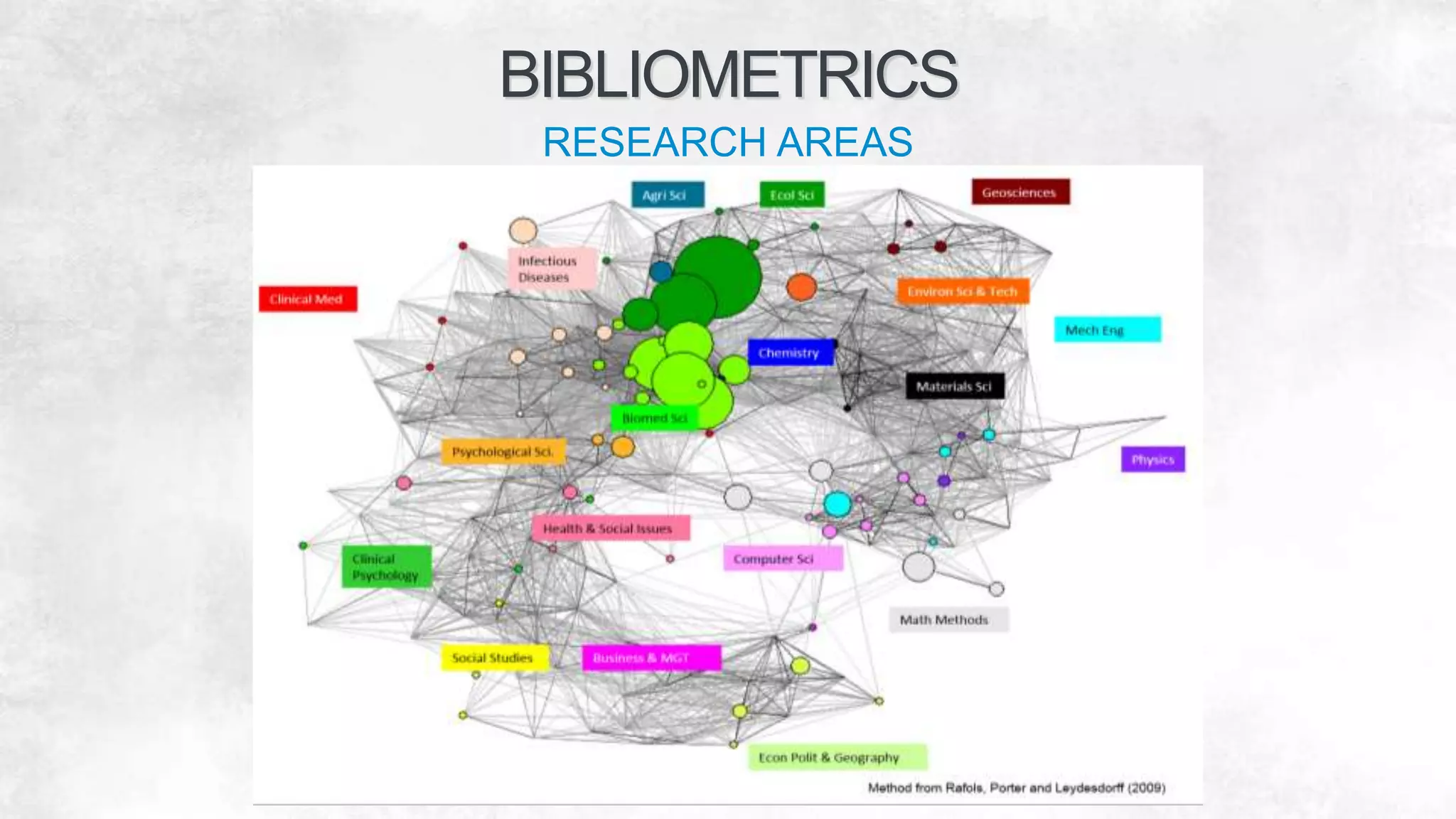
RESEARCH AREAS
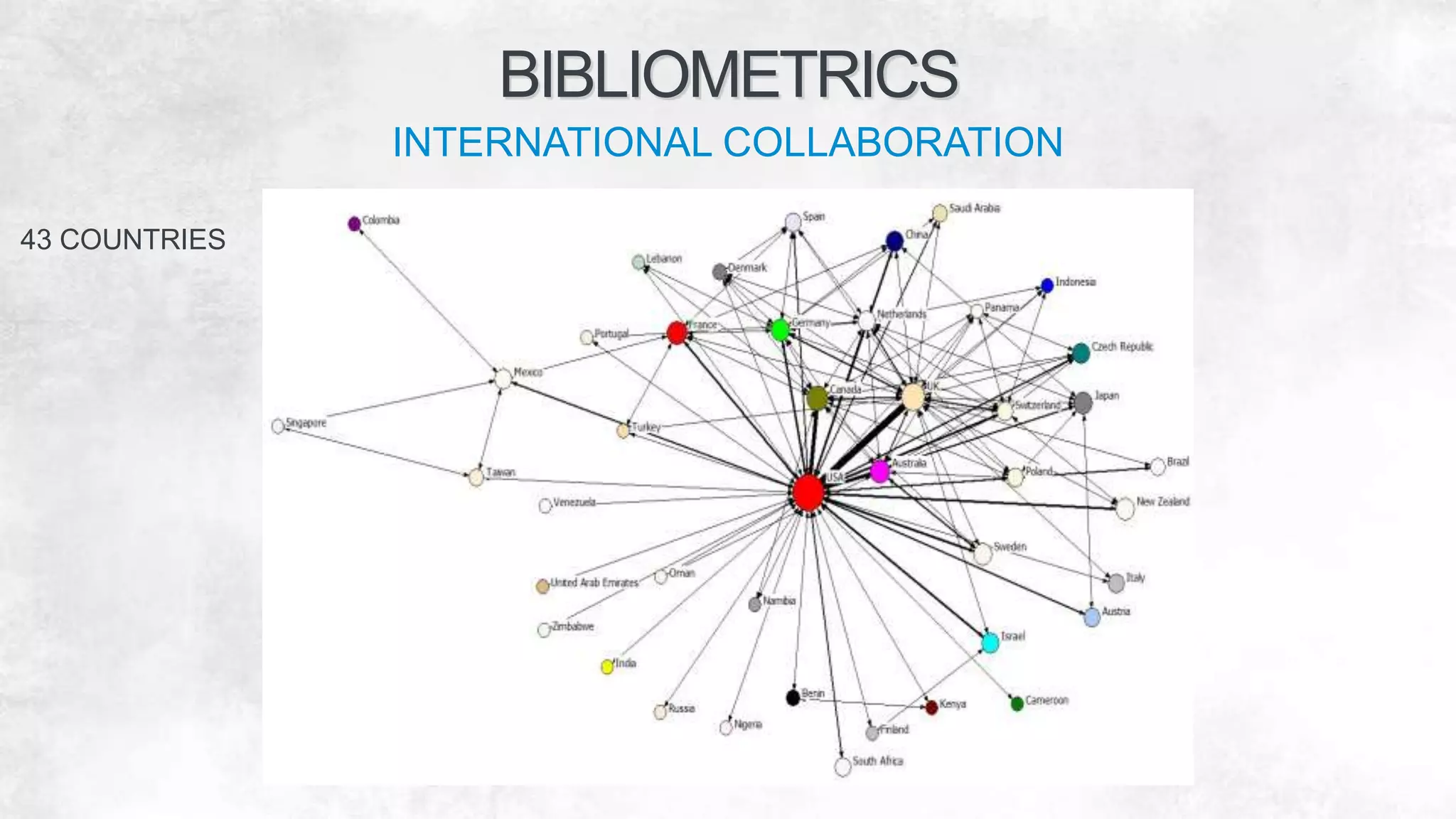
43 COUNTRIES
BIBLIOMETRICS
INTERNATIONAL COLLABORATION
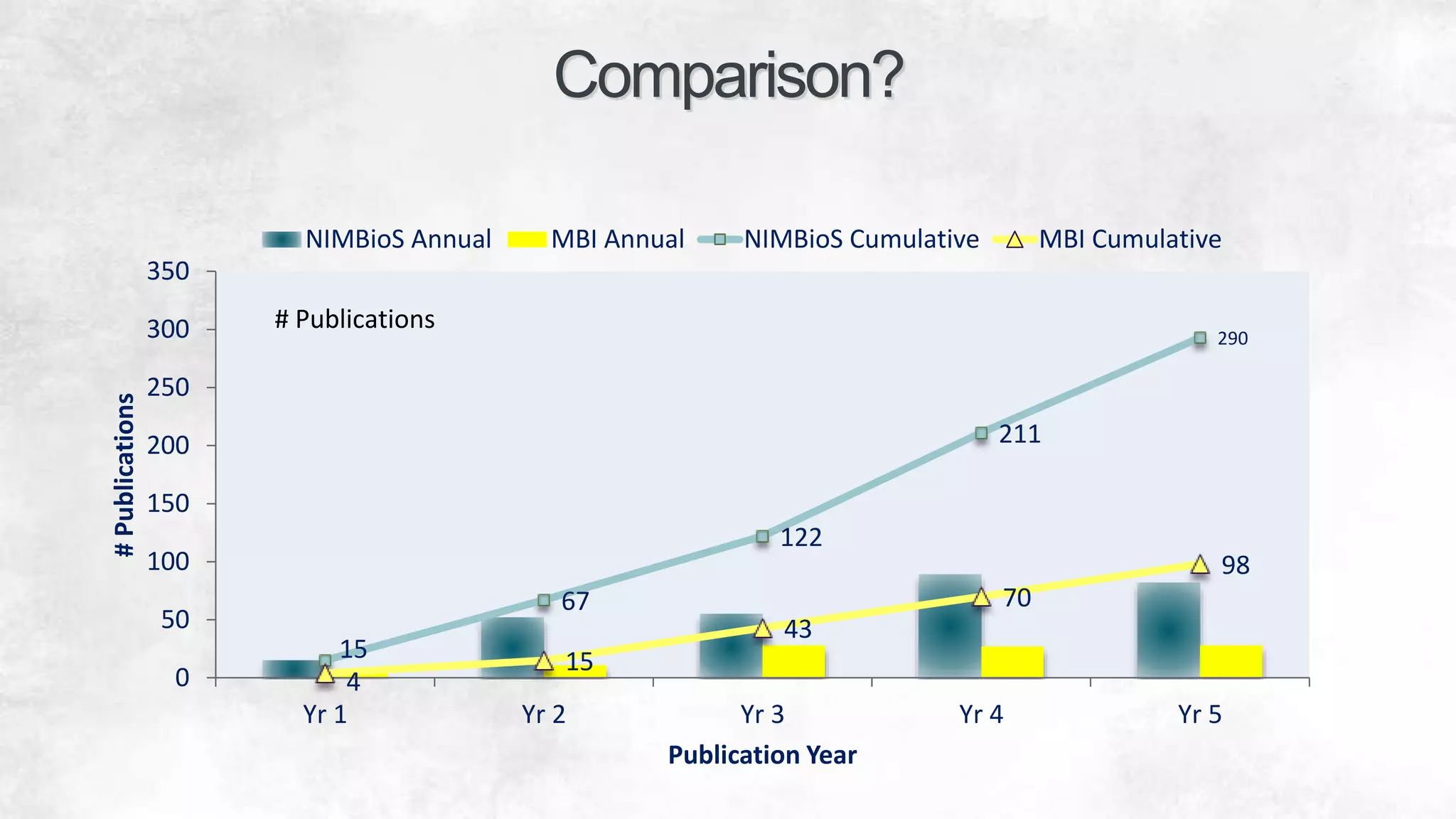
Comparison?
15
67
122
211
290
4
15
43
70
98
0
50
100
150
200
250
300
350
Yr 1 Yr 2 Yr 3 Yr 4 Yr 5
#Publications
Publication Year
NIMBioS Annual MBI Annual NIMBioS Cumulative MBI Cumulative
# Publications
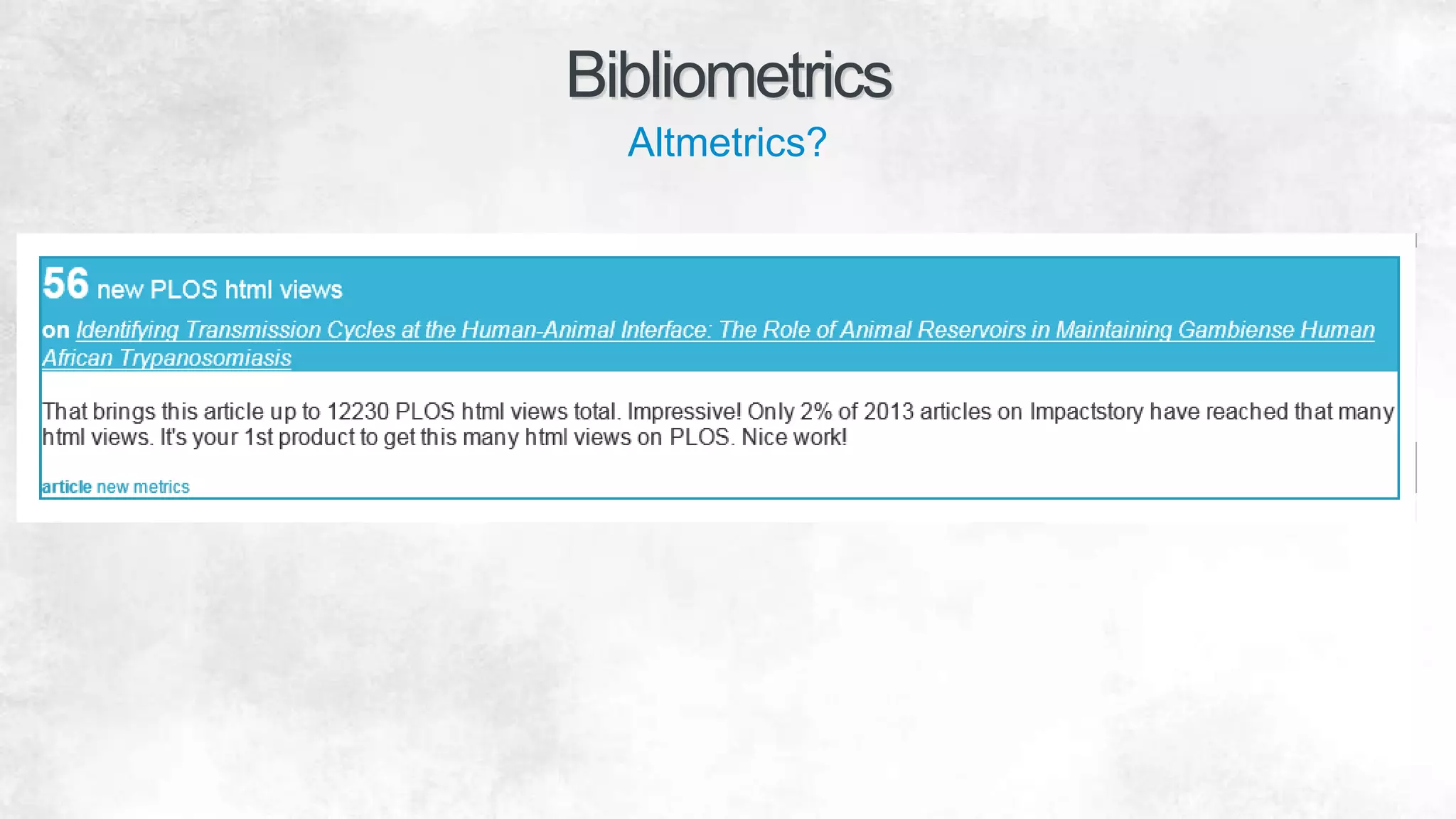
Bibliometrics
Altmetrics?
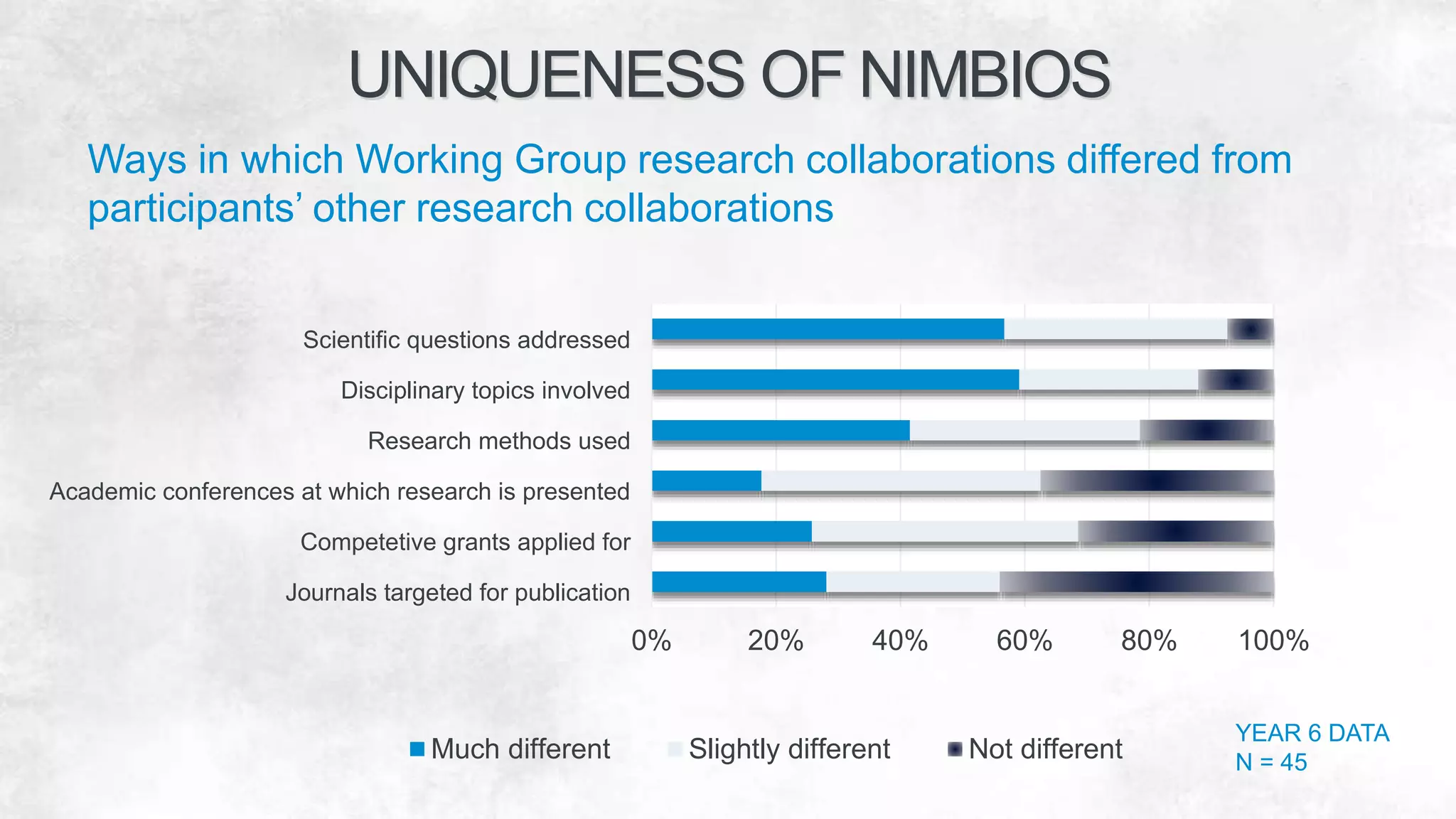
UNIQUENESS OF NIMBIOS
Ways in which Working Group research collaborations differed from
participants’ other research collaborations
0% 20% 40% 60% 80% 100%
Journals targeted for publication
Competetive grants applied for
Academic conferences at which research is presented
Research methods used
Disciplinary topics involved
Scientific questions addressed
Much different Slightly different Not different
YEAR 6 DATA
N = 45
Multiscale Modeling of the Life Cycle
of Toxoplasma gondii WG 2014
Ocean Viral Dynamics WG
2014
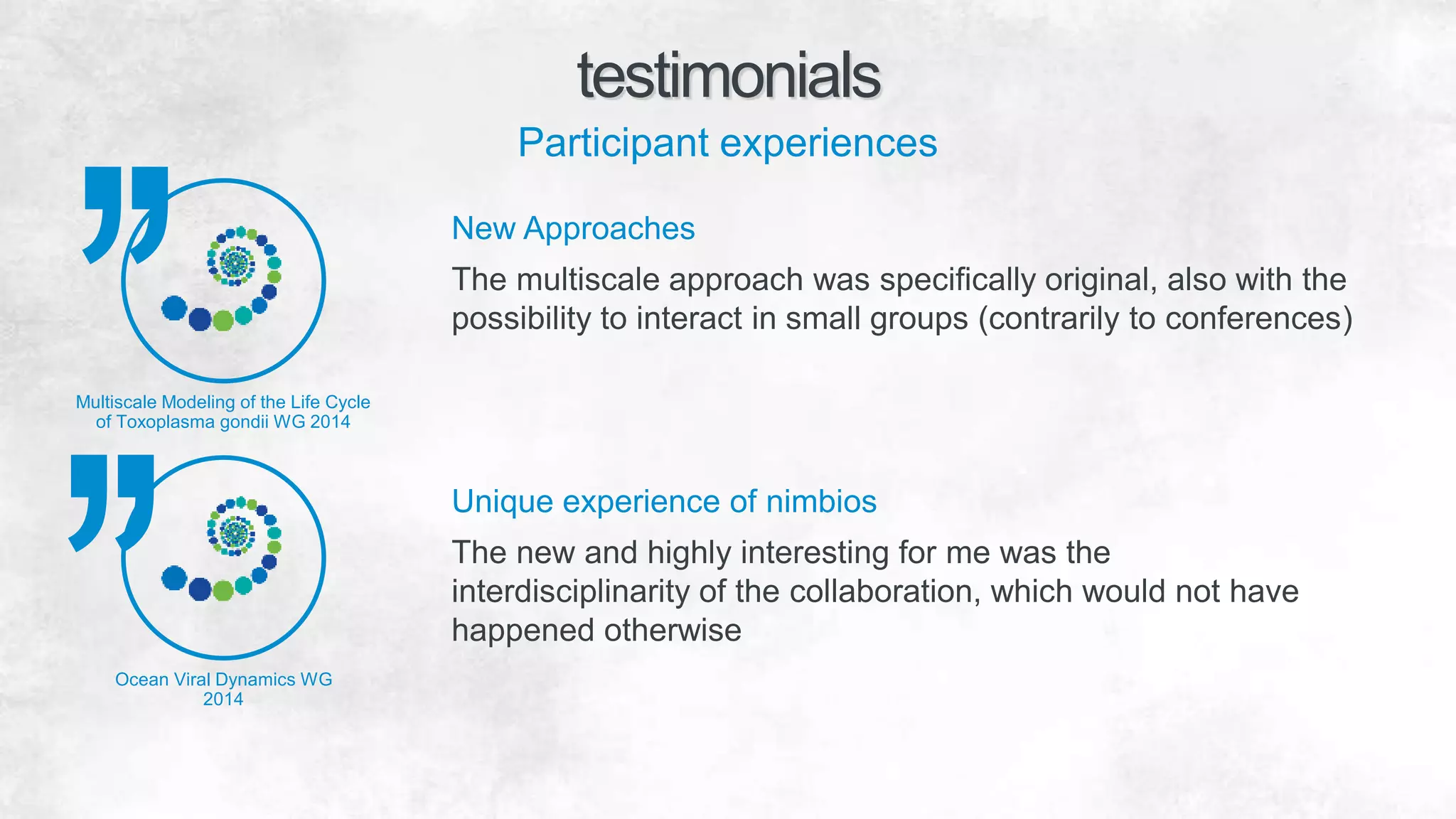
testimonials
Participant experiences
New Approaches
The multiscale approach was specifically original, also with the
possibility to interact in small groups (contrarily to conferences)
Unique experience of nimbios
The new and highly interesting for me was the
interdisciplinarity of the collaboration, which would not have
happened otherwise
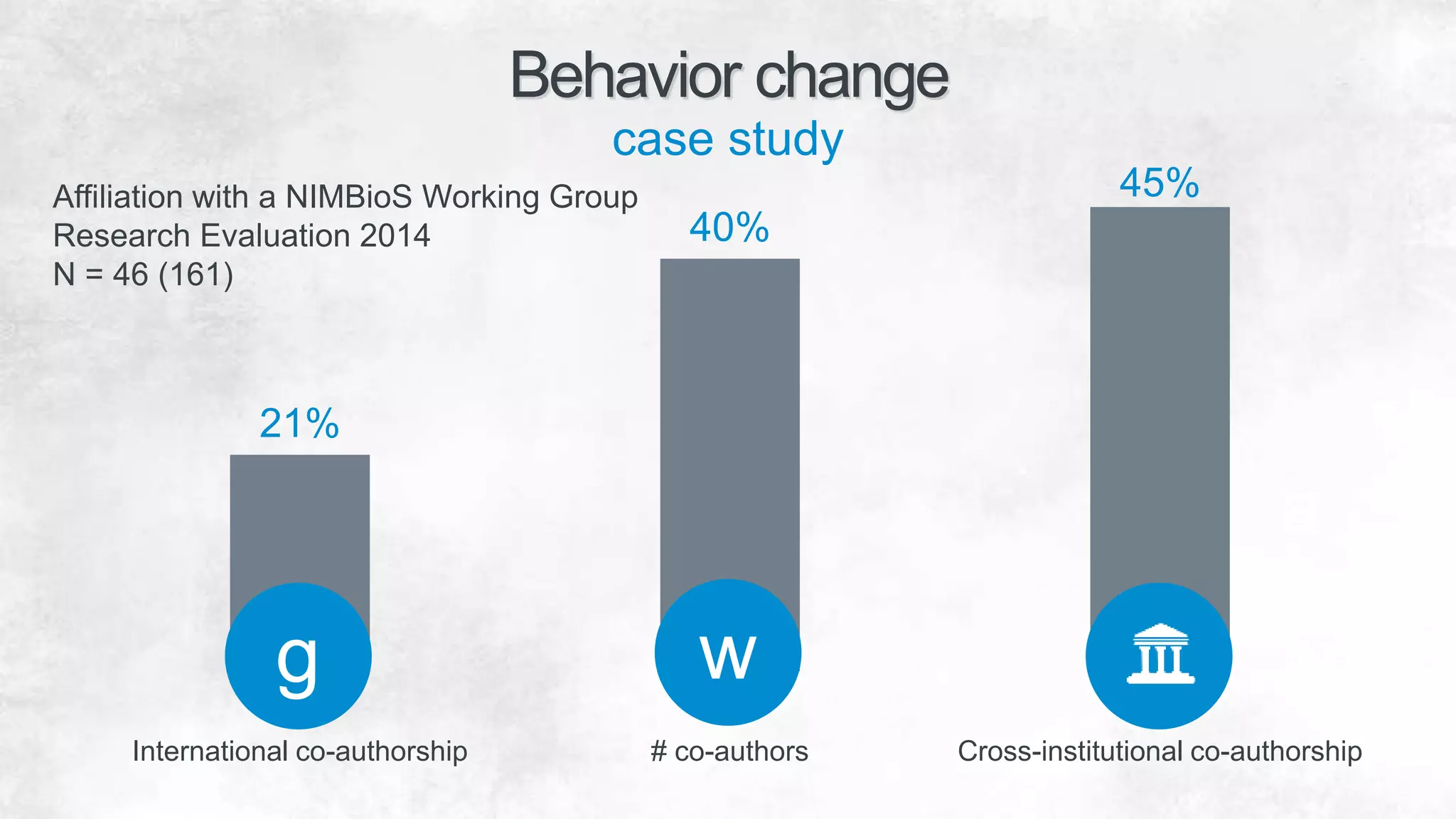
21%
40%
45%
International co-authorship # co-authors Cross-institutional co-authorship
Behavior change
case study
Affiliation with a NIMBioS Working Group
Research Evaluation 2014
N = 46 (161)
w
a
g
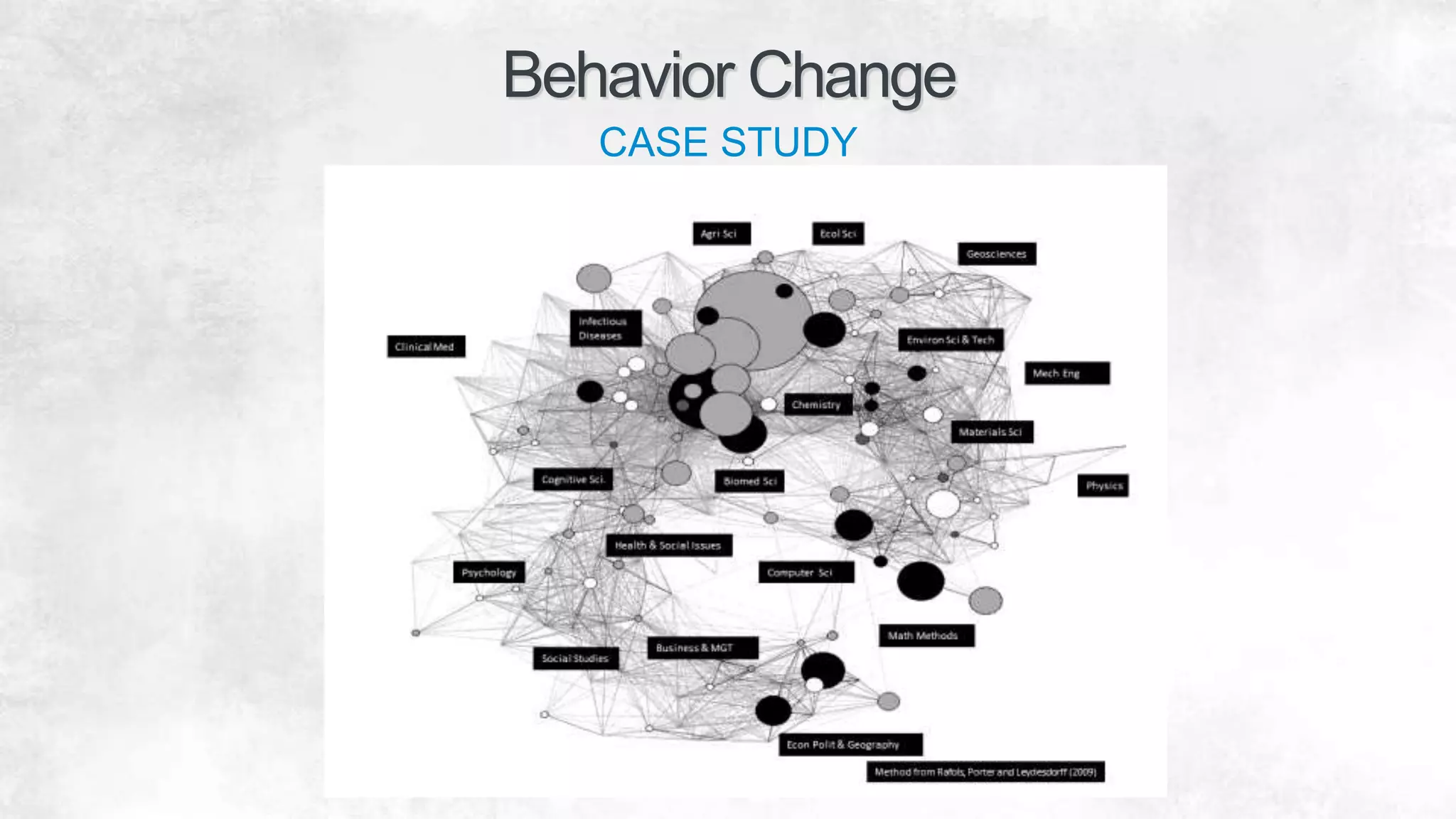
Behavior Change
CASE STUDY
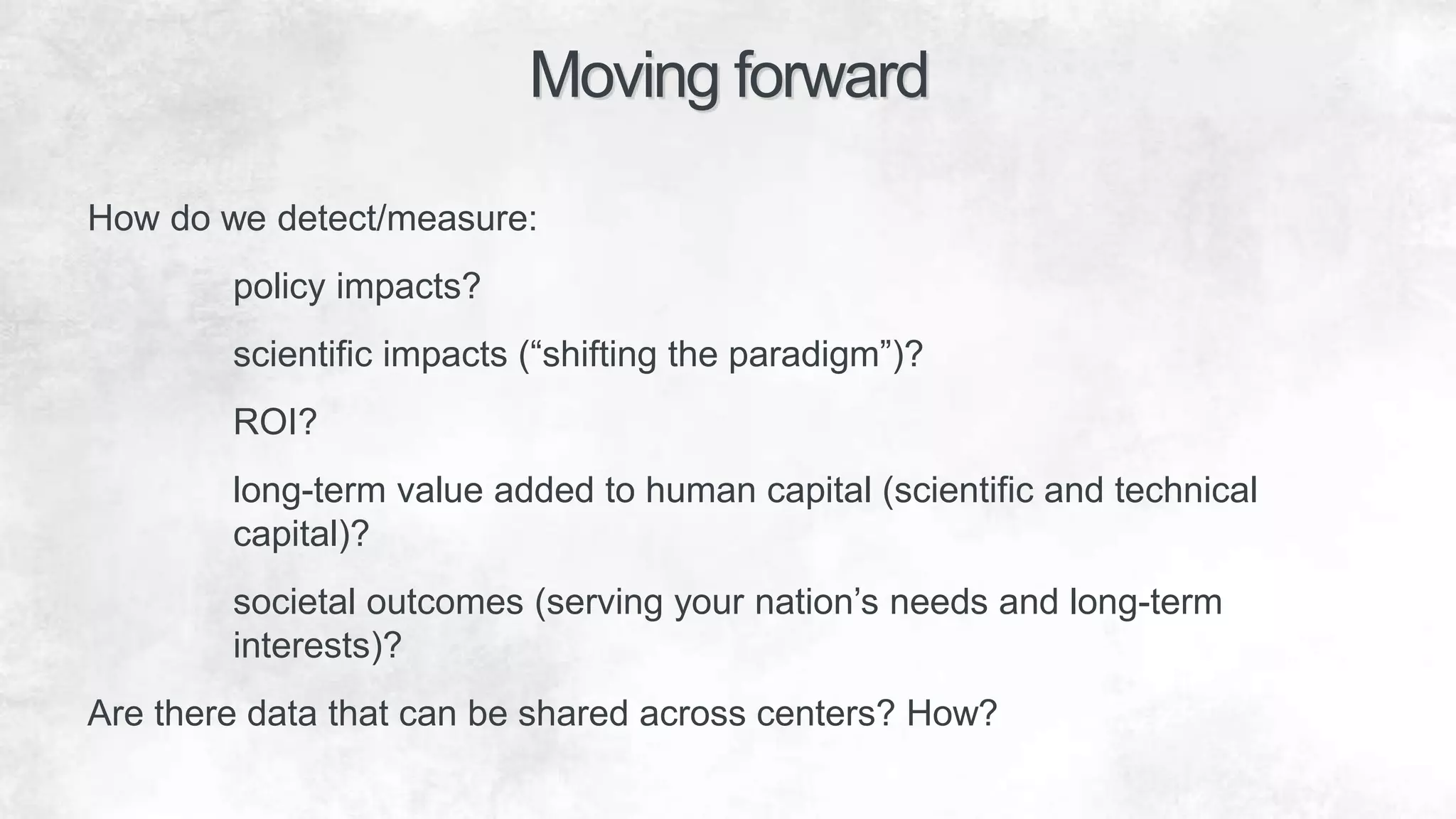
How do we detect/measure:
policy impacts?
scientific impacts (“shifting the paradigm”)?
ROI?
long-term value added to human capital (scientific and technical
capital)?
societal outcomes (serving your nation’s needs and long-term
interests)?
Are there data that can be shared across centers? How?
Moving forward
FACEBOOK
facebook.com/NIMBioS
TWITTER
twitter.com/NIMBioS
web site
nimbios.org
Live stream
nimbios.org/videos/livestream
BIMONTHLY NEWSLETTER
nimbios.org/press/newsletter
nimbios blog
nimbios.org/wordpress
YOUTUBE
youtube.com/user/NIMBioS
LINKEDIN
linkedin.com/company/national-institute-for-
mathematical-and-biological-synthesis-nimbios-
FOLLOW US
Social + Info links
t
v
Pamela Bishop
pambishop@nimbios.org
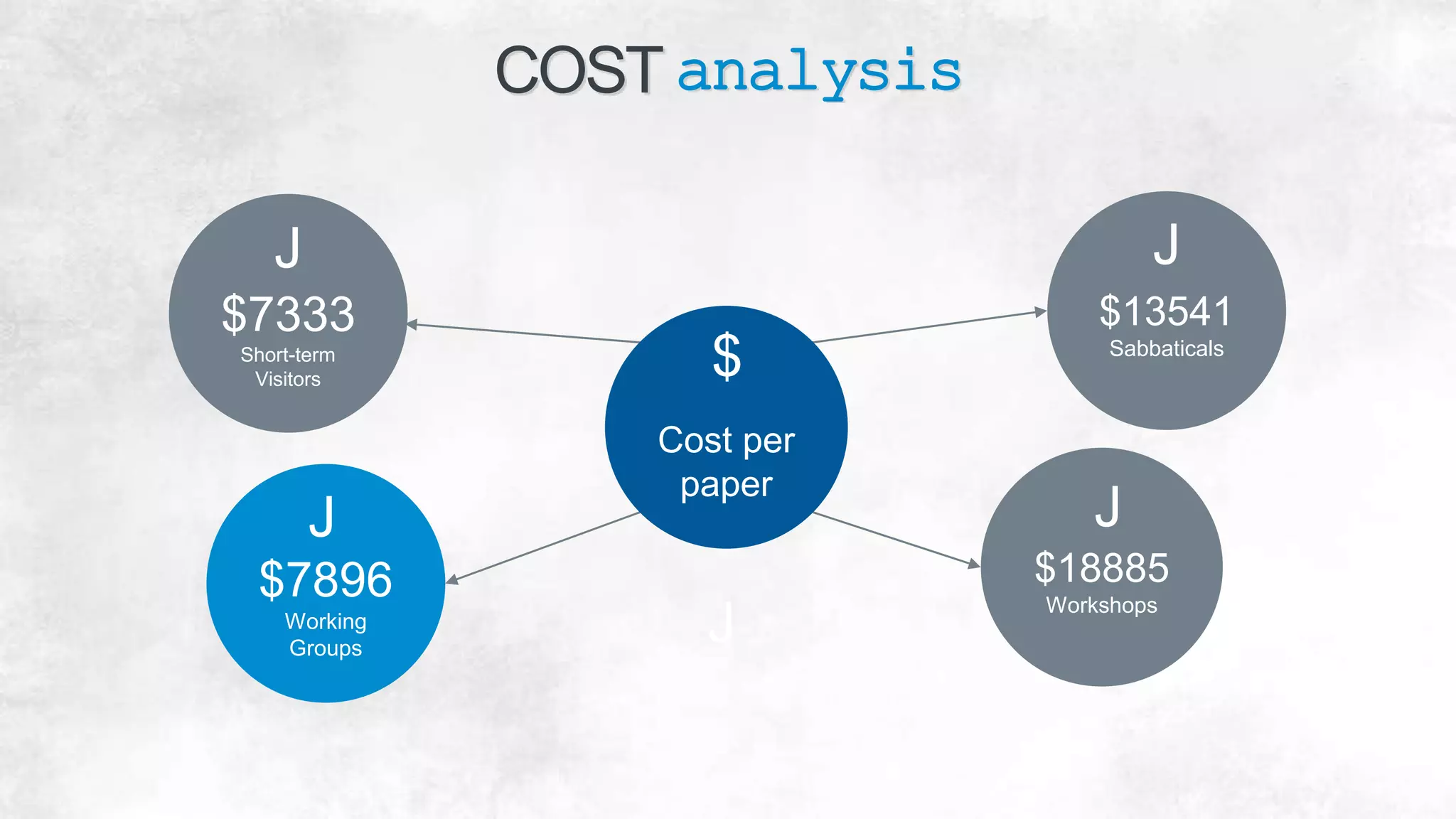
COST analysis
Cost per
paper
$7896
Working
Groups
$18885
Workshops
J
$13541
Sabbaticals
$7333
Short-term
Visitors
$
J J
J
J

Bishop germany 2015_slidesh_part b

Editor's Notes

  • #6  So, as opposed to the number of SCs, no we are looking qualitatively at which categories in which participants are publishing pre to post. The gray background intersections are the 224 WOS Subject Categories from the science citation index I and the social science citation index, located based on cross-citation relationships among all WOS journals in 2007 . The 19 labeled “macro-disciplines” are based on factor analysis of that cross-citation matrix also. The gray lines linking the SCs are based on these overall WOS patterns, not the publications currently under study. Nearness on the map indicates a closer relationship among disciplines. Circular node sizes reflect the relative number of publications in the current study. SCs in which publications were more focused before, or in which there was no change in numbers of publications are lighter grey. SCs in which publications are more focused after affiliation appear as black nodes. SCs in which researchers published only after affiliation with the center are represented with white nodes. Map provides a visual perspective of a shift in publication SCs toward mathematical fields, with more gray nodes in the Ecological, Biomedical, and Agricultural Science discipline areas, and more black and white nodes in the Mathematical Methods, Materials Science, Computer Science, and Economics, Politics & Geography discipline areas.
  • #13 So, as opposed to the number of SCs, no we are looking qualitatively at which categories in which participants are publishing pre to post. The gray background intersections are the 224 WOS Subject Categories from the science citation index I and the social science citation index, located based on cross-citation relationships among all WOS journals in 2007 . The 19 labeled “macro-disciplines” are based on factor analysis of that cross-citation matrix also. The gray lines linking the SCs are based on these overall WOS patterns, not the publications currently under study. Nearness on the map indicates a closer relationship among disciplines. Circular node sizes reflect the relative number of publications in the current study. SCs in which publications were more focused before, or in which there was no change in numbers of publications are lighter grey. SCs in which publications are more focused after affiliation appear as black nodes. SCs in which researchers published only after affiliation with the center are represented with white nodes. Map provides a visual perspective of a shift in publication SCs toward mathematical fields, with more gray nodes in the Ecological, Biomedical, and Agricultural Science discipline areas, and more black and white nodes in the Mathematical Methods, Materials Science, Computer Science, and Economics, Politics & Geography discipline areas.