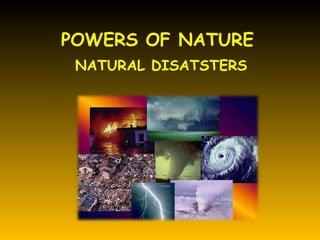
POWERS OF NATURE
 NATURAL DISATSTERS
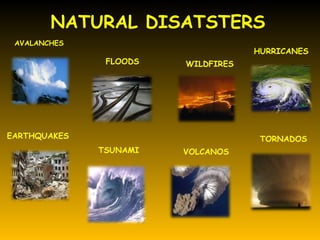
NATURAL DISATSTERS
 AVALANCHES
                                    HURRICANES
               FLOODS   WILDFIRES


EARTHQUAKES                          TORNADOS
              TSUNAMI   VOLCANOS
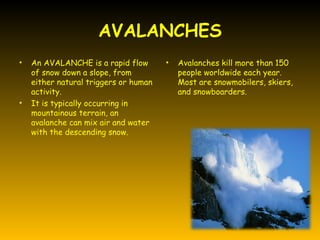
AVALANCHES
•   An AVALANCHE is a rapid flow       •   Avalanches kill more than 150
    of snow down a slope, from             people worldwide each year.
    either natural triggers or human       Most are snowmobilers, skiers,
    activity.                              and snowboarders.
•   It is typically occurring in
    mountainous terrain, an
    avalanche can mix air and water
    with the descending snow.
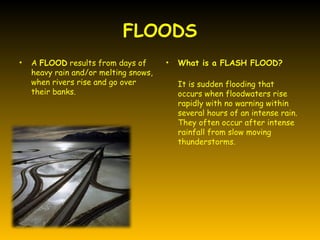
FLOODS
•   A FLOOD results from days of       •   What is a FLASH FLOOD?
    heavy rain and/or melting snows,
    when rivers rise and go over           It is sudden flooding that
    their banks.                           occurs when floodwaters rise
                                           rapidly with no warning within
                                           several hours of an intense rain.
                                           They often occur after intense
                                           rainfall from slow moving
                                           thunderstorms.
EARTHQUAKES
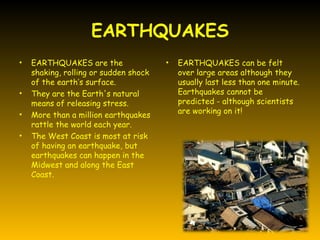
•   EARTHQUAKES are the                •   EARTHQUAKES can be felt
    shaking, rolling or sudden shock       over large areas although they
    of the earth’s surface.                usually last less than one minute.
•   They are the Earth's natural           Earthquakes cannot be
    means of releasing stress.             predicted - although scientists
                                           are working on it!
•   More than a million earthquakes
    rattle the world each year.
•   The West Coast is most at risk
    of having an earthquake, but
    earthquakes can happen in the
    Midwest and along the East
    Coast.
TORNADOS
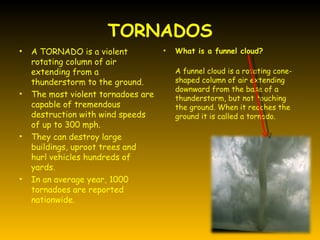
•   A TORNADO is a violent           •   What is a funnel cloud?
    rotating column of air
    extending from a                     A funnel cloud is a rotating cone-
    thunderstorm to the ground.          shaped column of air extending
                                         downward from the base of a
•   The most violent tornadoes are       thunderstorm, but not touching
    capable of tremendous                the ground. When it reaches the
    destruction with wind speeds         ground it is called a tornado.
    of up to 300 mph.
•   They can destroy large
    buildings, uproot trees and
    hurl vehicles hundreds of
    yards.
•   In an average year, 1000
    tornadoes are reported
    nationwide.
VOLCANOS
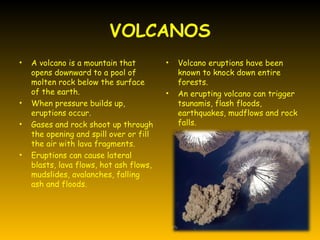
•   A volcano is a mountain that         •   Volcano eruptions have been
    opens downward to a pool of              known to knock down entire
    molten rock below the surface            forests.
    of the earth.                        •   An erupting volcano can trigger
•   When pressure builds up,                 tsunamis, flash floods,
    eruptions occur.                         earthquakes, mudflows and rock
•   Gases and rock shoot up through          falls.
    the opening and spill over or fill
    the air with lava fragments.
•   Eruptions can cause lateral
    blasts, lava flows, hot ash flows,
    mudslides, avalanches, falling
    ash and floods.
HURRICANES
•   A hurricane is a huge storm! It can be
    up to 600 miles across and have strong
    winds spiralling inward and upward at
                                               The Eye of the
    speeds of 75 to 200 mph. Each
    hurricane usually lasts for over a week,      Hurricane
    moving 10-20 miles per hour over the
    open ocean. Hurricanes gather heat and
    energy through contact with warm
    ocean waters. Evaporation from the
    seawater increases their power.
    Hurricanes rotate in a counter-
    clockwise direction around an "eye."
    The center of the storm or "eye" is the
    calmest part. It has only light winds
    and fair weather. When they come onto
    land, the heavy rain, strong winds and
    large waves can damage buildings, trees
    and cars.
WILDFIRES
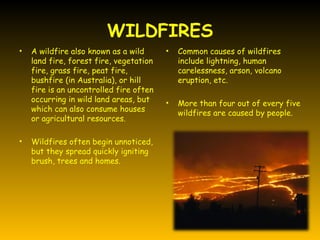
•   A wildfire also known as a wild      •   Common causes of wildfires
    land fire, forest fire, vegetation       include lightning, human
    fire, grass fire, peat fire,             carelessness, arson, volcano
    bushfire (in Australia), or hill         eruption, etc.
    fire is an uncontrolled fire often
    occurring in wild land areas, but    •   More than four out of every five
    which can also consume houses            wildfires are caused by people.
    or agricultural resources.

•   Wildfires often begin unnoticed,
    but they spread quickly igniting
    brush, trees and homes.
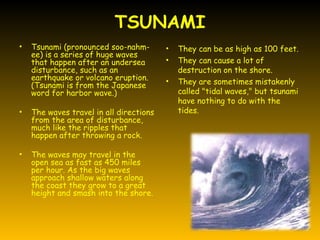
TSUNAMI
•   Tsunami (pronounced soo-nahm-        •   They can be as high as 100 feet.
    ee) is a series of huge waves
    that happen after an undersea        •   They can cause a lot of
    disturbance, such as an                  destruction on the shore.
    earthquake or volcano eruption.
    (Tsunami is from the Japanese
                                         •   They are sometimes mistakenly
    word for harbor wave.)                   called "tidal waves," but tsunami
                                             have nothing to do with the
•   The waves travel in all directions       tides.
    from the area of disturbance,
    much like the ripples that
    happen after throwing a rock.

•   The waves may travel in the
    open sea as fast as 450 miles
    per hour. As the big waves
    approach shallow waters along
    the coast they grow to a great
    height and smash into the shore.
POWERS OF NATURE


Thank you

Natural Disaters

  • 1.
    POWERS OF NATURE NATURAL DISATSTERS
  • 2.
    NATURAL DISATSTERS AVALANCHES HURRICANES FLOODS WILDFIRES EARTHQUAKES TORNADOS TSUNAMI VOLCANOS
  • 3.
    AVALANCHES • An AVALANCHE is a rapid flow • Avalanches kill more than 150 of snow down a slope, from people worldwide each year. either natural triggers or human Most are snowmobilers, skiers, activity. and snowboarders. • It is typically occurring in mountainous terrain, an avalanche can mix air and water with the descending snow.
  • 4.
    FLOODS • A FLOOD results from days of • What is a FLASH FLOOD? heavy rain and/or melting snows, when rivers rise and go over It is sudden flooding that their banks. occurs when floodwaters rise rapidly with no warning within several hours of an intense rain. They often occur after intense rainfall from slow moving thunderstorms.
  • 5.
    EARTHQUAKES • EARTHQUAKES are the • EARTHQUAKES can be felt shaking, rolling or sudden shock over large areas although they of the earth’s surface. usually last less than one minute. • They are the Earth's natural Earthquakes cannot be means of releasing stress. predicted - although scientists are working on it! • More than a million earthquakes rattle the world each year. • The West Coast is most at risk of having an earthquake, but earthquakes can happen in the Midwest and along the East Coast.
  • 6.
    TORNADOS • A TORNADO is a violent • What is a funnel cloud? rotating column of air extending from a A funnel cloud is a rotating cone- thunderstorm to the ground. shaped column of air extending downward from the base of a • The most violent tornadoes are thunderstorm, but not touching capable of tremendous the ground. When it reaches the destruction with wind speeds ground it is called a tornado. of up to 300 mph. • They can destroy large buildings, uproot trees and hurl vehicles hundreds of yards. • In an average year, 1000 tornadoes are reported nationwide.
  • 7.
    VOLCANOS • A volcano is a mountain that • Volcano eruptions have been opens downward to a pool of known to knock down entire molten rock below the surface forests. of the earth. • An erupting volcano can trigger • When pressure builds up, tsunamis, flash floods, eruptions occur. earthquakes, mudflows and rock • Gases and rock shoot up through falls. the opening and spill over or fill the air with lava fragments. • Eruptions can cause lateral blasts, lava flows, hot ash flows, mudslides, avalanches, falling ash and floods.
  • 8.
    HURRICANES • A hurricane is a huge storm! It can be up to 600 miles across and have strong winds spiralling inward and upward at The Eye of the speeds of 75 to 200 mph. Each hurricane usually lasts for over a week, Hurricane moving 10-20 miles per hour over the open ocean. Hurricanes gather heat and energy through contact with warm ocean waters. Evaporation from the seawater increases their power. Hurricanes rotate in a counter- clockwise direction around an "eye." The center of the storm or "eye" is the calmest part. It has only light winds and fair weather. When they come onto land, the heavy rain, strong winds and large waves can damage buildings, trees and cars.
  • 9.
    WILDFIRES • A wildfire also known as a wild • Common causes of wildfires land fire, forest fire, vegetation include lightning, human fire, grass fire, peat fire, carelessness, arson, volcano bushfire (in Australia), or hill eruption, etc. fire is an uncontrolled fire often occurring in wild land areas, but • More than four out of every five which can also consume houses wildfires are caused by people. or agricultural resources. • Wildfires often begin unnoticed, but they spread quickly igniting brush, trees and homes.
  • 10.
    TSUNAMI • Tsunami (pronounced soo-nahm- • They can be as high as 100 feet. ee) is a series of huge waves that happen after an undersea • They can cause a lot of disturbance, such as an destruction on the shore. earthquake or volcano eruption. (Tsunami is from the Japanese • They are sometimes mistakenly word for harbor wave.) called "tidal waves," but tsunami have nothing to do with the • The waves travel in all directions tides. from the area of disturbance, much like the ripples that happen after throwing a rock. • The waves may travel in the open sea as fast as 450 miles per hour. As the big waves approach shallow waters along the coast they grow to a great height and smash into the shore.
  • 11.