National Biodiversity Authority
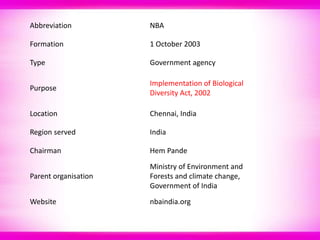
Abbreviation NBA
Formation 1 October 2003
Type Government agency
Purpose
Implementation of Biological
Diversity Act, 2002
Location Chennai, India
Region served India
Chairman Hem Pande
Parent organisation
Ministry of Environment and
Forests and climate change,
Government of India
Website nbaindia.org
• Statutory, Autonomous Body
• Performs facilitative, regulatory and advisory function –
conservation,
sustainable use of biological resources
fair and equitable sharing of benefits
arising out of the use of biological resources
Biological Diversity Act (2002)
• Decentralized system with the NBA
• Advising the Central Government
• Advising the State Governments in the selection of areas of
biodiversity importance to be notified under Sub-Section (1)
of Section 37 as heritage sites & measures for the
management of such heritage site
ROLE OF SSBs
• Granting of approvals or otherwise requests for commercial
utilization or bio-survey
• Bio-utilization of any biological resource by Indians.
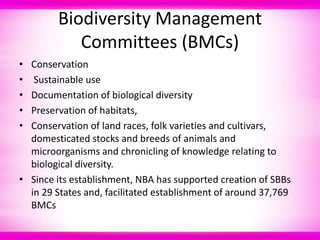
Biodiversity Management
Committees (BMCs)
• Conservation
• Sustainable use
• Documentation of biological diversity
• Preservation of habitats,
• Conservation of land races, folk varieties and cultivars,
domesticated stocks and breeds of animals and
microorganisms and chronicling of knowledge relating to
biological diversity.
• Since its establishment, NBA has supported creation of SBBs
in 29 States and, facilitated establishment of around 37,769
BMCs
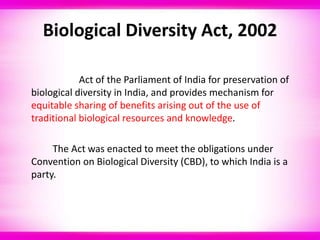
Biological Diversity Act, 2002
Act of the Parliament of India for preservation of
biological diversity in India, and provides mechanism for
equitable sharing of benefits arising out of the use of
traditional biological resources and knowledge.
The Act was enacted to meet the obligations under
Convention on Biological Diversity (CBD), to which India is a
party.
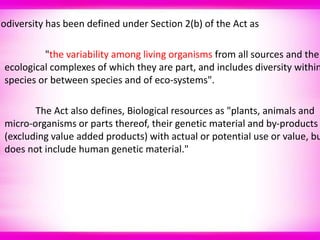
iodiversity has been defined under Section 2(b) of the Act as
"the variability among living organisms from all sources and the
ecological complexes of which they are part, and includes diversity within
species or between species and of eco-systems".
The Act also defines, Biological resources as "plants, animals and
micro-organisms or parts thereof, their genetic material and by-products
(excluding value added products) with actual or potential use or value, bu
does not include human genetic material."
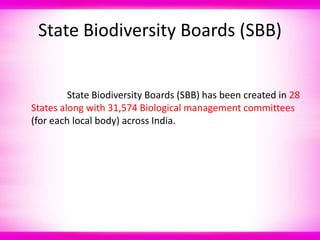
State Biodiversity Boards (SBB)
State Biodiversity Boards (SBB) has been created in 28
States along with 31,574 Biological management committees
(for each local body) across India.
Functions
• Regulation of acts prohibited under the Act
• Advise the Government on conservation of biodiversity
• Advise the Government on selection of biological heritage
sites
• Take appropriate steps to oppose grant of intellectual
property rights in foreign countries, arising from the use of
biological resources or associated traditional knowledge
Penality
• "punishable with imprisonment for a term which may extend
to five years, or with fine which may extend to ten lakh rupees
and where the damage caused exceeds ten lakh rupees such
fine may commensurate with the damage caused, or with
both.“
• Any offence under this Act is non-bailable and cognizable.

NATIONAL BIODIVERSITY AUTHORITY

  • 1.
  • 2.
    Abbreviation NBA Formation 1October 2003 Type Government agency Purpose Implementation of Biological Diversity Act, 2002 Location Chennai, India Region served India Chairman Hem Pande Parent organisation Ministry of Environment and Forests and climate change, Government of India Website nbaindia.org
  • 3.
    • Statutory, AutonomousBody • Performs facilitative, regulatory and advisory function – conservation, sustainable use of biological resources fair and equitable sharing of benefits arising out of the use of biological resources
  • 4.
    Biological Diversity Act(2002) • Decentralized system with the NBA • Advising the Central Government • Advising the State Governments in the selection of areas of biodiversity importance to be notified under Sub-Section (1) of Section 37 as heritage sites & measures for the management of such heritage site
  • 5.
    ROLE OF SSBs •Granting of approvals or otherwise requests for commercial utilization or bio-survey • Bio-utilization of any biological resource by Indians.
  • 6.
    Biodiversity Management Committees (BMCs) •Conservation • Sustainable use • Documentation of biological diversity • Preservation of habitats, • Conservation of land races, folk varieties and cultivars, domesticated stocks and breeds of animals and microorganisms and chronicling of knowledge relating to biological diversity. • Since its establishment, NBA has supported creation of SBBs in 29 States and, facilitated establishment of around 37,769 BMCs
  • 7.
    Biological Diversity Act,2002 Act of the Parliament of India for preservation of biological diversity in India, and provides mechanism for equitable sharing of benefits arising out of the use of traditional biological resources and knowledge. The Act was enacted to meet the obligations under Convention on Biological Diversity (CBD), to which India is a party.
  • 8.
    iodiversity has beendefined under Section 2(b) of the Act as "the variability among living organisms from all sources and the ecological complexes of which they are part, and includes diversity within species or between species and of eco-systems". The Act also defines, Biological resources as "plants, animals and micro-organisms or parts thereof, their genetic material and by-products (excluding value added products) with actual or potential use or value, bu does not include human genetic material."
  • 9.
    State Biodiversity Boards(SBB) State Biodiversity Boards (SBB) has been created in 28 States along with 31,574 Biological management committees (for each local body) across India.
  • 10.
    Functions • Regulation ofacts prohibited under the Act • Advise the Government on conservation of biodiversity • Advise the Government on selection of biological heritage sites • Take appropriate steps to oppose grant of intellectual property rights in foreign countries, arising from the use of biological resources or associated traditional knowledge
  • 11.
    Penality • "punishable withimprisonment for a term which may extend to five years, or with fine which may extend to ten lakh rupees and where the damage caused exceeds ten lakh rupees such fine may commensurate with the damage caused, or with both.“ • Any offence under this Act is non-bailable and cognizable.