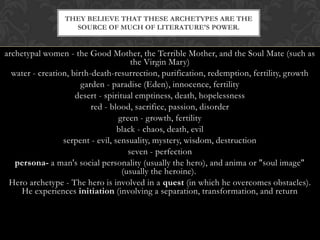
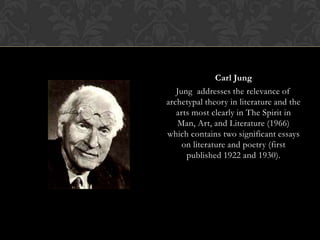


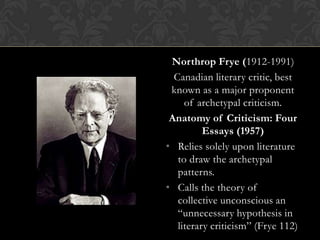
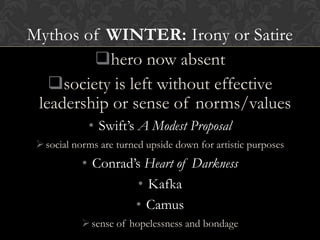


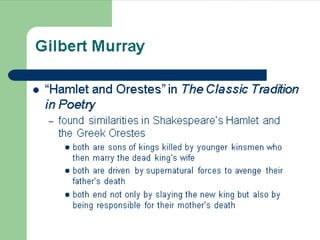
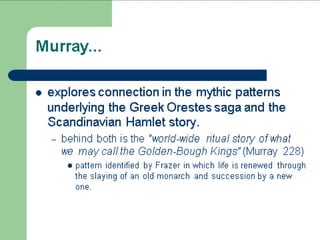


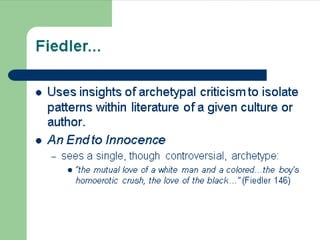

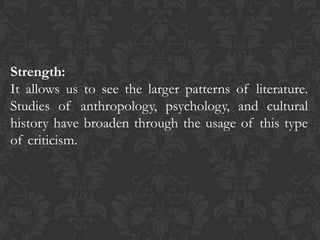
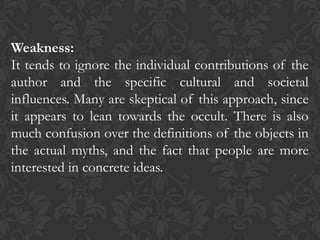


Archetypal criticism examines literature through the lens of universal symbols, images, and story patterns known as archetypes. This approach originated from Jung's theory of a collective unconscious containing archetypes inherited from a remote past. Key proponents like Frye applied the theory to literature by identifying common archetypes like the hero's journey. Archetypal critics believe these archetypes reveal literature's power by tapping into shared human experiences, fears, and desires. Readers can recognize archetypes and find meaning by connecting works to basic patterns in mythology and the human condition. However, some critics argue it ignores individual authors and historical/cultural influences.


