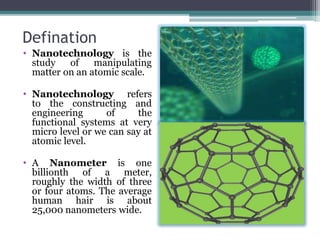
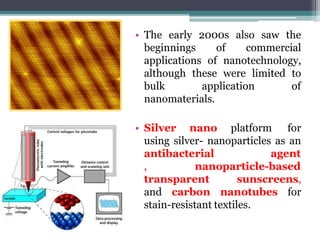
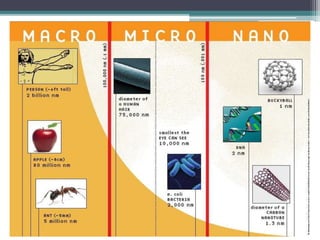
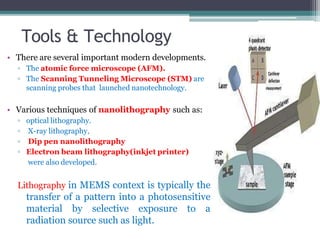
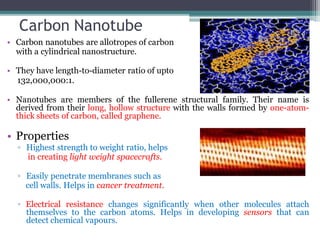
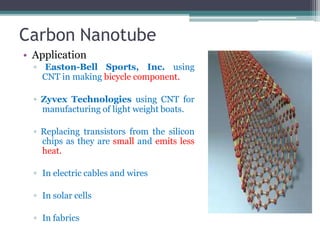
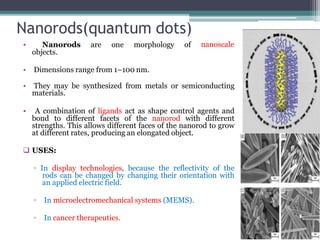
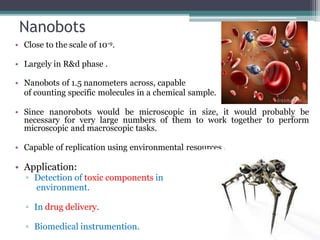
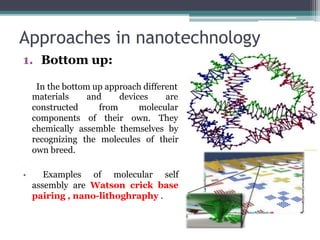
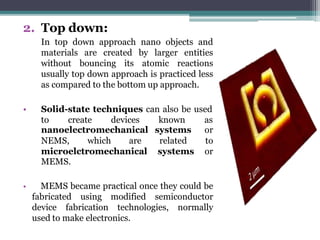
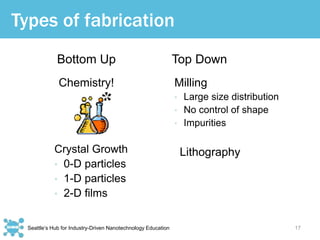
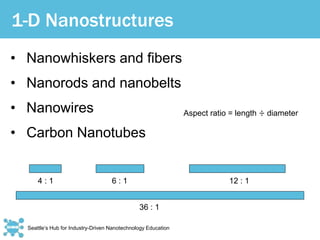
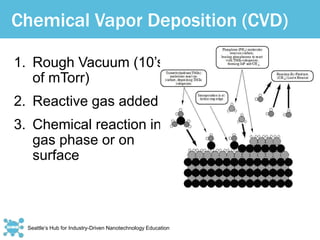
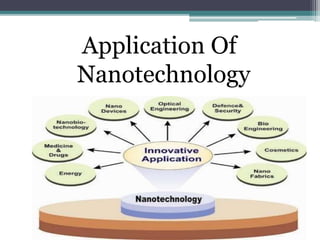
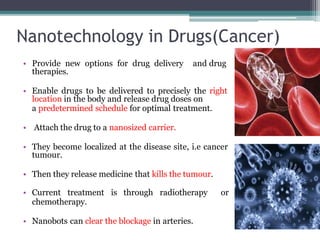
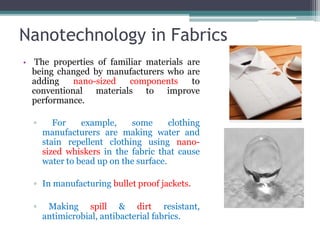
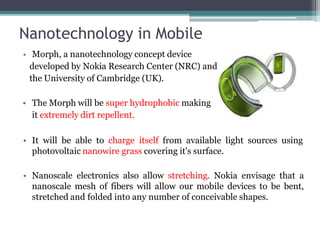
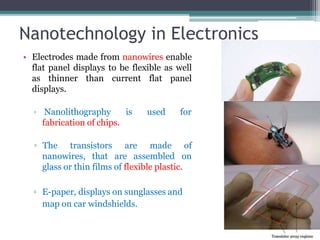
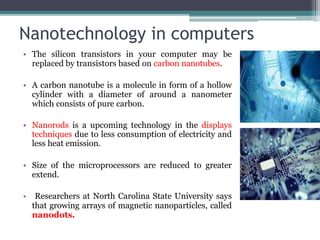
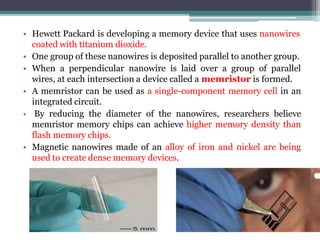
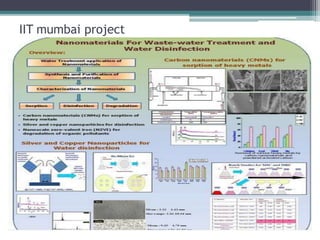
Nanotechnology involves manipulating matter at the atomic or molecular scale. It allows scientists to build structures to specific atomic specifications ranging from 1 to 100 nanometers in size. Key tools used in nanotechnology include scanning probes like atomic force microscopes and techniques like lithography which can precisely construct nanostructures. Potential applications of nanotechnology include more effective drug delivery systems, stronger and lighter materials, flexible electronics, and advanced computer chips. While nanotechnology promises many benefits, potential risks also exist and more research is still needed to realize its future possibilities while avoiding unintended consequences.