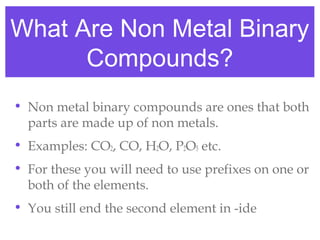
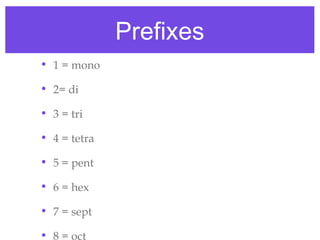
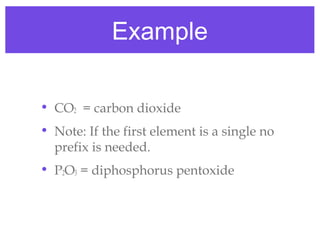
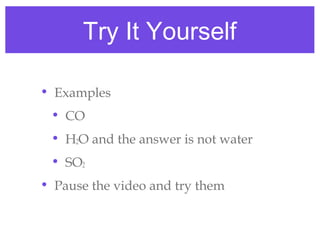
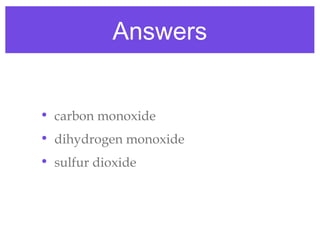
This document discusses naming non-metal binary compounds using prefixes and suffixes. It provides examples of common non-metal binary compounds like CO2, CO, H2O, and P2O5. The prefixes used are mono, di, tri, tetra, penta, and hexa to denote the number of each element present. The second element always ends in -ide. Examples given are carbon dioxide for CO2, carbon monoxide for CO, dihydrogen monoxide for H2O, and diphosphorus pentoxide for P2O5. The document encourages practicing naming non-metal binary compounds from their formulas and writing formulas from their names.