My Teachnology Philosophy Najme Khatami
Overview Techniques Of Teaching Role Of A Teacher Technology Literacy  Technology In Classroom  Students’ Knowledge Of Technology  Dealing With Less Informed Students
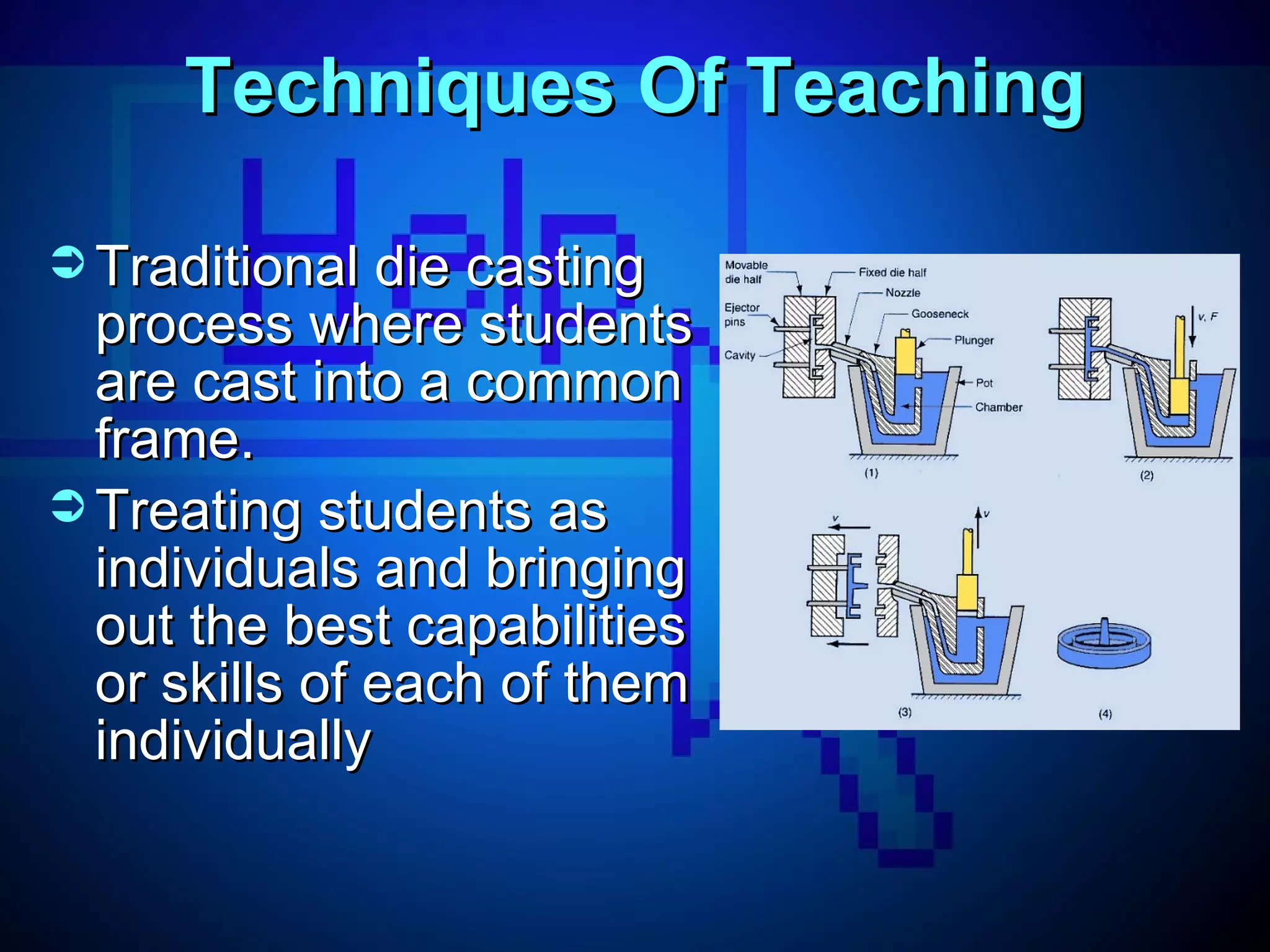
Techniques Of Teaching Traditional die casting process where students are cast into a common frame. Treating students as individuals and bringing out the best capabilities or skills of each of them individually
Role Of A Teacher Focus on students and not on teacher Providing equal opportunities for each student Let students improve their known skills and discover their hidden talents Let the students be creative and feel confident about their abilities
Technology Literacy [technological literacy involves] computer skills and the ability to use computers and other technology to improve learning, productivity, and performance. Source: 1996 federal publication, “Getting America’s students ready for the twenty-first century”
Technology In Classroom  An inseparable part of today’s classroom It should streamline the learning process It should not be a cause of panic for the students
Students’ Knowledge Of Technology Each student’s technology literacy should be determined by the teacher An informal quiz can be used to help the teacher to investigate individual capabilities Avoid a simple “Do you know?” or assuming that  everyone is aware of the technology  Keep in mind students come from different backgrounds with varying exposure to technology
Dealing With Less Informed Students  Extra awareness sessions  Pairing students with different technological abilities to let the less informed ones learn from their peers Providing an encouraging environment for students to develop the technological literacy  Provision of open lab hours for students to practice
Conclusion After all we should not let advantages of technology overlook the potential drawbacks We must control technology not be controlled by it Ethics of using technology in classrooms should be stressed for the students

Najme Teachnology

  • 1.
  • 2.
    Overview Techniques OfTeaching Role Of A Teacher Technology Literacy Technology In Classroom Students’ Knowledge Of Technology Dealing With Less Informed Students
  • 3.
    Techniques Of TeachingTraditional die casting process where students are cast into a common frame. Treating students as individuals and bringing out the best capabilities or skills of each of them individually
  • 4.
    Role Of ATeacher Focus on students and not on teacher Providing equal opportunities for each student Let students improve their known skills and discover their hidden talents Let the students be creative and feel confident about their abilities
  • 5.
    Technology Literacy [technologicalliteracy involves] computer skills and the ability to use computers and other technology to improve learning, productivity, and performance. Source: 1996 federal publication, “Getting America’s students ready for the twenty-first century”
  • 6.
    Technology In Classroom An inseparable part of today’s classroom It should streamline the learning process It should not be a cause of panic for the students
  • 7.
    Students’ Knowledge OfTechnology Each student’s technology literacy should be determined by the teacher An informal quiz can be used to help the teacher to investigate individual capabilities Avoid a simple “Do you know?” or assuming that everyone is aware of the technology Keep in mind students come from different backgrounds with varying exposure to technology
  • 8.
    Dealing With LessInformed Students Extra awareness sessions Pairing students with different technological abilities to let the less informed ones learn from their peers Providing an encouraging environment for students to develop the technological literacy Provision of open lab hours for students to practice
  • 9.
    Conclusion After allwe should not let advantages of technology overlook the potential drawbacks We must control technology not be controlled by it Ethics of using technology in classrooms should be stressed for the students