


Daniel Sta.Maria
MTE 508
• It is the use of technology tools in general content
areas in education in order to allow students to
apply computer and technology skills to learning
and problem-solving. Generally speaking, the
curriculum drives the use of technology and not vice
versa.
• The technology should become an integral part of
how the classroom functions — as accessible as all
other classroom tools. The focus in each lesson or
unit is the curriculum outcome, not the technology."
• A common misconception is that educators
know the answer to this question.
Teachers are often expected to integrate
technology without having a working
definition of the concept.
• Morton (1996) suggests that technology
integration is not simply seeing the
computer as a “tool”.
• He argues that using this view promotes the
notion of the “computer as add-on.” It
misleads educational planners by implying
that computer technology is like any other
tool, such as the blackboard or overhead,
which may require little or no training and
may not even need to be used. In addition,
“computer as tool” enables curriculum
developers to continue implementing
traditional, subject-based, teacher-directed
instructional plans where “the computer
environment remains peripheral.
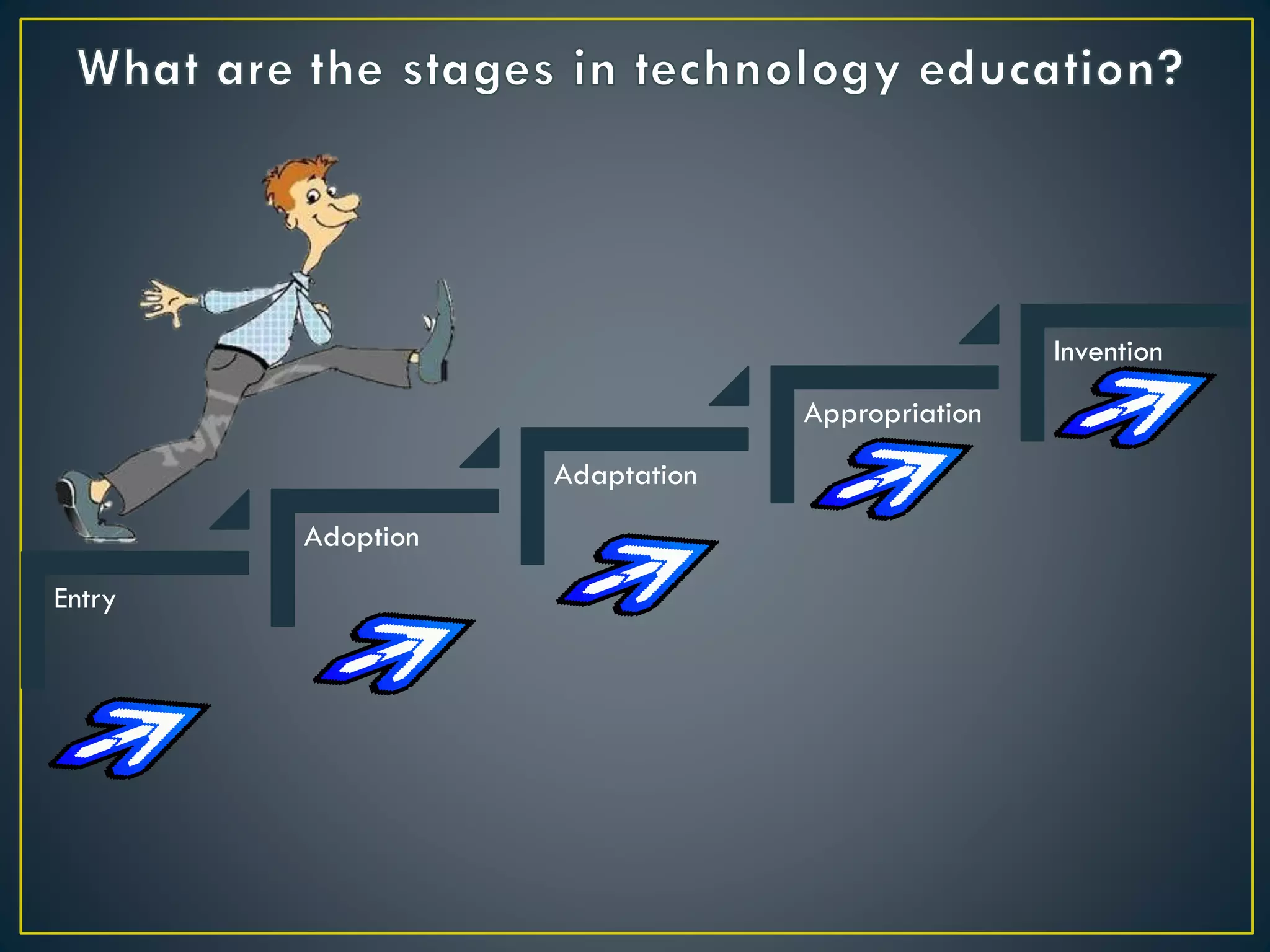
Entry
Adoption
Adaptation
Appropriation
Invention
• Learn the basics of using the new technology.
At the entry level, typically the teacher
uses technology to deliver curriculum content
to students. Entry level activities may include
listening to or watching content delivered
through technology or working on activities
designed to build fluency with basic facts or
skills, such as drill-and-practice exercises.
•In a lesson that includes technology
use at the Entry level, the students
may not have direct access to the
technology. Decisions about how
and when to use technology tools
as well as which tools to use are
made by the teacher.
• Use new technology to support traditional
instruction.
At the Adoption level, technology tools
are used in conventional ways. The teacher
makes decisions about which technology
tool to use and when and how to use it.
Students exposure to individual technology
tools may be limited to single types of tasks
that involve a procedural understanding.
Integrate new technology into traditional
classroom practice. Here they often focus on
increased student productivity and engagement
by using word processors, spread-sheets, and
graphic tools.
At the Adaptation level, the teacher
incorporates technology tools as an integral
part of the lesson.
While the teacher makes most decisions
about technology use, the teacher guides
the students in the independent use of
technology tools. Students have a greater
familiarity with the use of technology tools
and have a more conceptual understanding
of the tools than students at the Adoption
level.
They are able to work without direct
procedural instruction from the teacher and
begin to explore different ways of using the
technology tools.
Focus on cooperative, project based, and
interdisciplinary work and incorporating the
technology as needed and as one of many tools.
At this level, a range of different
technology tools are integrated flexibly
and seamlessly into teaching and learning.
Technology is available in sufficient
quantities to meet the needs of all students.
Students are able to make informed
decisions about when and how to use
different tools. The instructional focus is on
student learning and not on the technology
tools themselves. For this reason, Infusion
level work typically occurs after teachers
and students have experience with a
particular technology tool.
The teacher guides students to make
decisions about when and how to use
technology.
Discover new uses of technology tools, for
example, developing spreadsheet macros for
teaching algebra or designing projects that
combine multiple technologies.
At the Invention level, students use
technology tools flexibly to achieve specific
learning outcomes. The students have a
conceptual understanding of the tools
coupled with extensive practical knowledge
about their use.
Students apply that understanding and
knowledge, and students may extend the
use of technology tools. They are
encouraged to use technology tools in
unconventional ways and are self-directed
in combining the use of various tools. The
teacher serves as a guide, mentor, and
model in the use of technology.
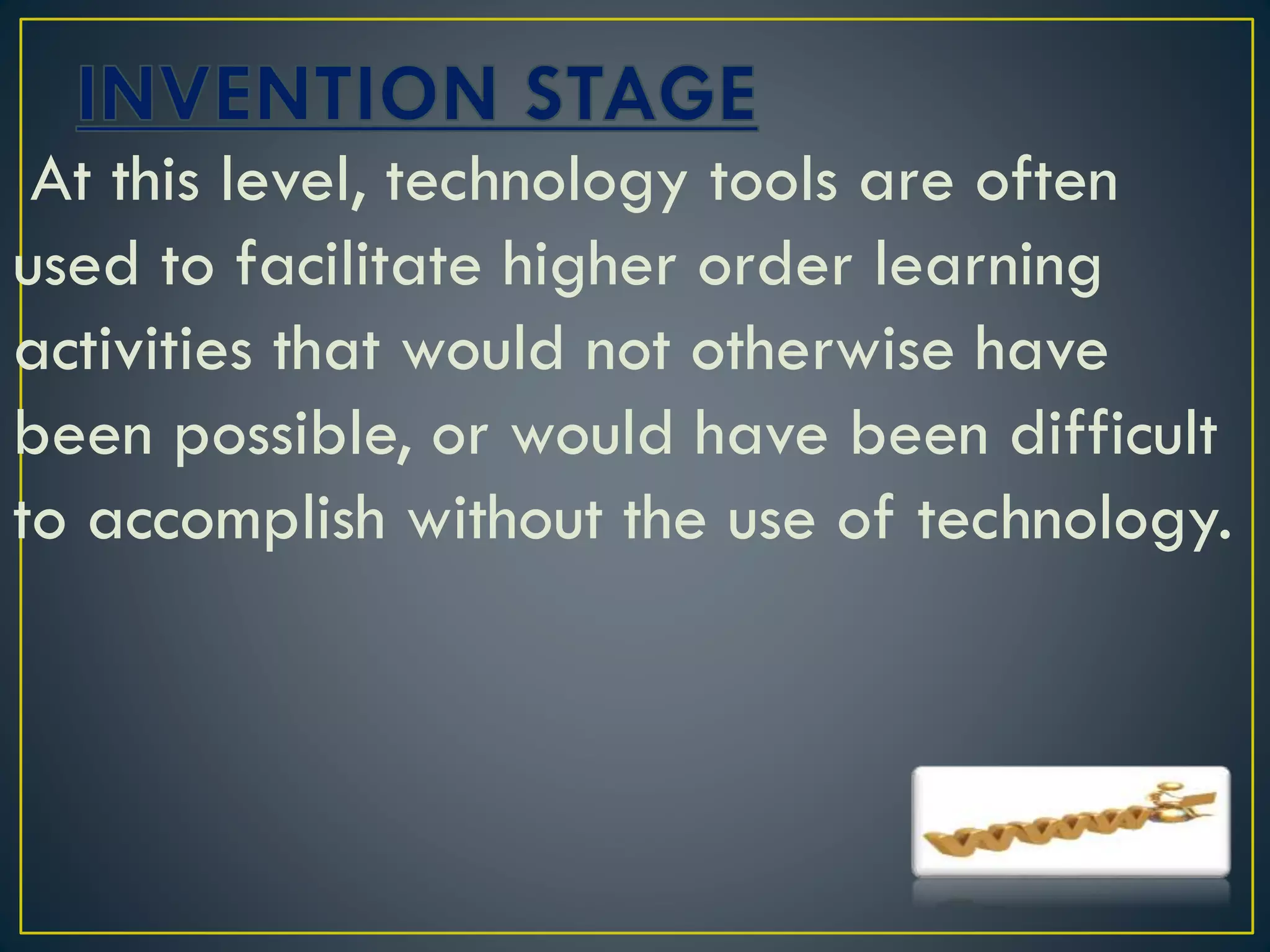
At this level, technology tools are often
used to facilitate higher order learning
activities that would not otherwise have
been possible, or would have been difficult
to accomplish without the use of technology.
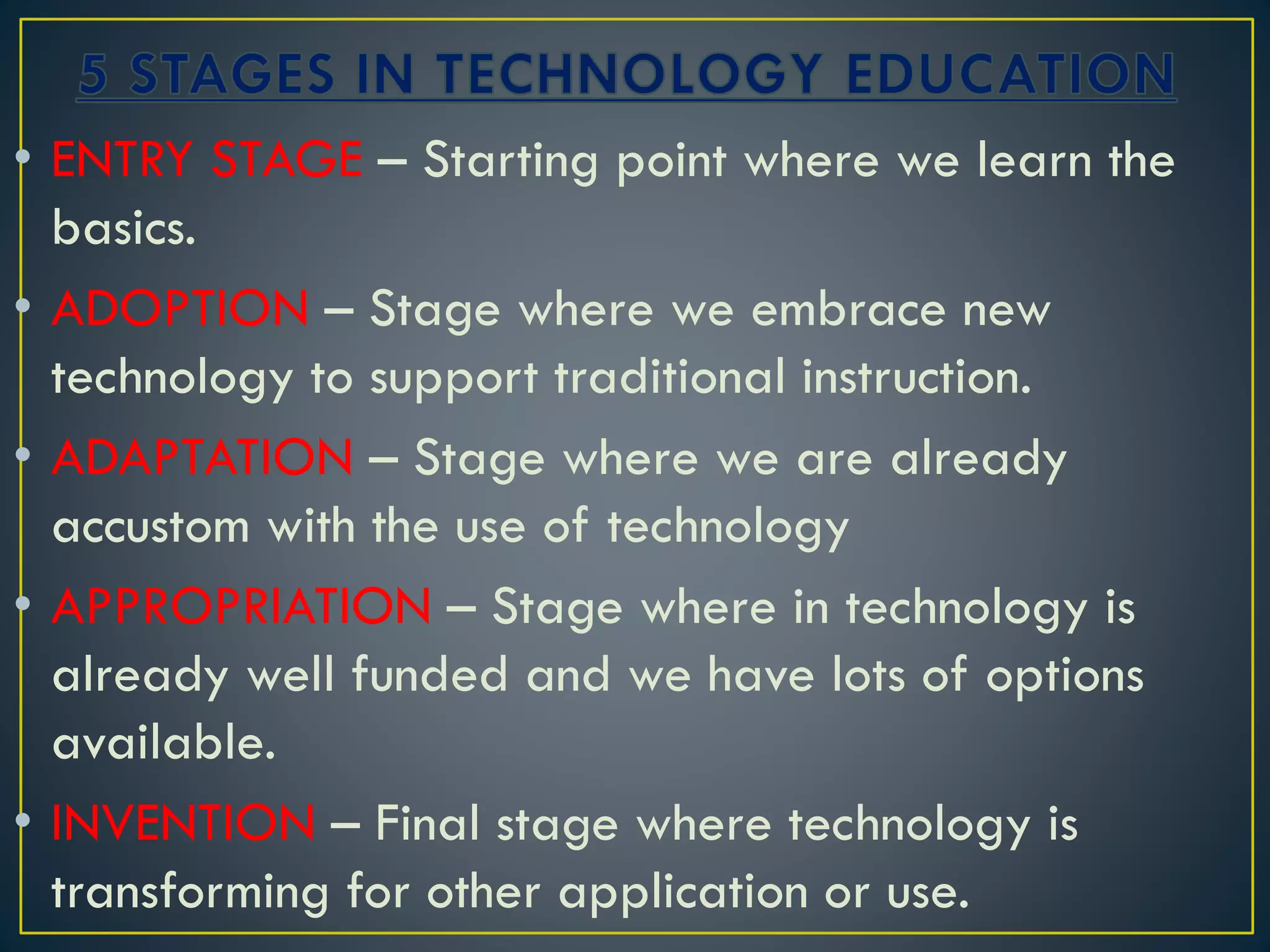
• ENTRY STAGE – Starting point where we learn the
basics.
• ADOPTION – Stage where we embrace new
technology to support traditional instruction.
• ADAPTATION – Stage where we are already
accustom with the use of technology
• APPROPRIATION – Stage where in technology is
already well funded and we have lots of options
available.
• INVENTION – Final stage where technology is
transforming for other application or use.
•The most common barriers to
technology integration include time,
training, resources, and support.
Teachers need time to learn how to
use both the hardware and software,
time to plan, and time to collaborate
with other teachers
Stages in technology education

Stages in technology education

  • 1.
  • 3.
    • It isthe use of technology tools in general content areas in education in order to allow students to apply computer and technology skills to learning and problem-solving. Generally speaking, the curriculum drives the use of technology and not vice versa. • The technology should become an integral part of how the classroom functions — as accessible as all other classroom tools. The focus in each lesson or unit is the curriculum outcome, not the technology."
  • 4.
    • A commonmisconception is that educators know the answer to this question. Teachers are often expected to integrate technology without having a working definition of the concept. • Morton (1996) suggests that technology integration is not simply seeing the computer as a “tool”.
  • 5.
    • He arguesthat using this view promotes the notion of the “computer as add-on.” It misleads educational planners by implying that computer technology is like any other tool, such as the blackboard or overhead, which may require little or no training and may not even need to be used. In addition, “computer as tool” enables curriculum developers to continue implementing traditional, subject-based, teacher-directed instructional plans where “the computer environment remains peripheral.
  • 6.
  • 7.
    • Learn thebasics of using the new technology. At the entry level, typically the teacher uses technology to deliver curriculum content to students. Entry level activities may include listening to or watching content delivered through technology or working on activities designed to build fluency with basic facts or skills, such as drill-and-practice exercises.
  • 8.
    •In a lessonthat includes technology use at the Entry level, the students may not have direct access to the technology. Decisions about how and when to use technology tools as well as which tools to use are made by the teacher.
  • 9.
    • Use newtechnology to support traditional instruction. At the Adoption level, technology tools are used in conventional ways. The teacher makes decisions about which technology tool to use and when and how to use it. Students exposure to individual technology tools may be limited to single types of tasks that involve a procedural understanding.
  • 10.
    Integrate new technologyinto traditional classroom practice. Here they often focus on increased student productivity and engagement by using word processors, spread-sheets, and graphic tools. At the Adaptation level, the teacher incorporates technology tools as an integral part of the lesson.
  • 11.
    While the teachermakes most decisions about technology use, the teacher guides the students in the independent use of technology tools. Students have a greater familiarity with the use of technology tools and have a more conceptual understanding of the tools than students at the Adoption level.
  • 12.
    They are ableto work without direct procedural instruction from the teacher and begin to explore different ways of using the technology tools.
  • 13.
    Focus on cooperative,project based, and interdisciplinary work and incorporating the technology as needed and as one of many tools. At this level, a range of different technology tools are integrated flexibly and seamlessly into teaching and learning. Technology is available in sufficient quantities to meet the needs of all students.
  • 14.
    Students are ableto make informed decisions about when and how to use different tools. The instructional focus is on student learning and not on the technology tools themselves. For this reason, Infusion level work typically occurs after teachers and students have experience with a particular technology tool.
  • 15.
    The teacher guidesstudents to make decisions about when and how to use technology.
  • 16.
    Discover new usesof technology tools, for example, developing spreadsheet macros for teaching algebra or designing projects that combine multiple technologies. At the Invention level, students use technology tools flexibly to achieve specific learning outcomes. The students have a conceptual understanding of the tools coupled with extensive practical knowledge about their use.
  • 17.
    Students apply thatunderstanding and knowledge, and students may extend the use of technology tools. They are encouraged to use technology tools in unconventional ways and are self-directed in combining the use of various tools. The teacher serves as a guide, mentor, and model in the use of technology.
  • 18.
    At this level,technology tools are often used to facilitate higher order learning activities that would not otherwise have been possible, or would have been difficult to accomplish without the use of technology.
  • 19.
    • ENTRY STAGE– Starting point where we learn the basics. • ADOPTION – Stage where we embrace new technology to support traditional instruction. • ADAPTATION – Stage where we are already accustom with the use of technology • APPROPRIATION – Stage where in technology is already well funded and we have lots of options available. • INVENTION – Final stage where technology is transforming for other application or use.
  • 20.
    •The most commonbarriers to technology integration include time, training, resources, and support. Teachers need time to learn how to use both the hardware and software, time to plan, and time to collaborate with other teachers