Download to read offline
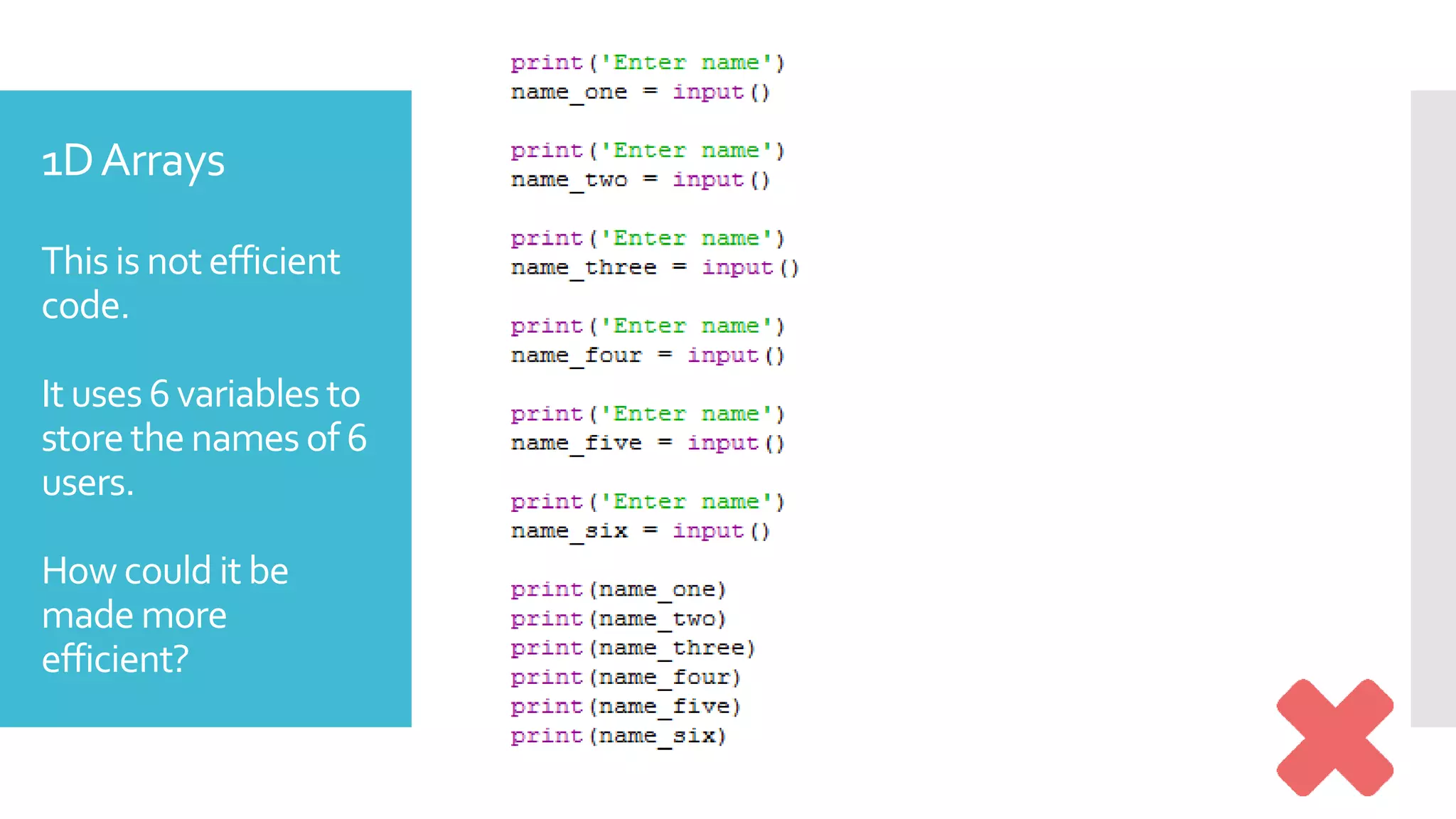
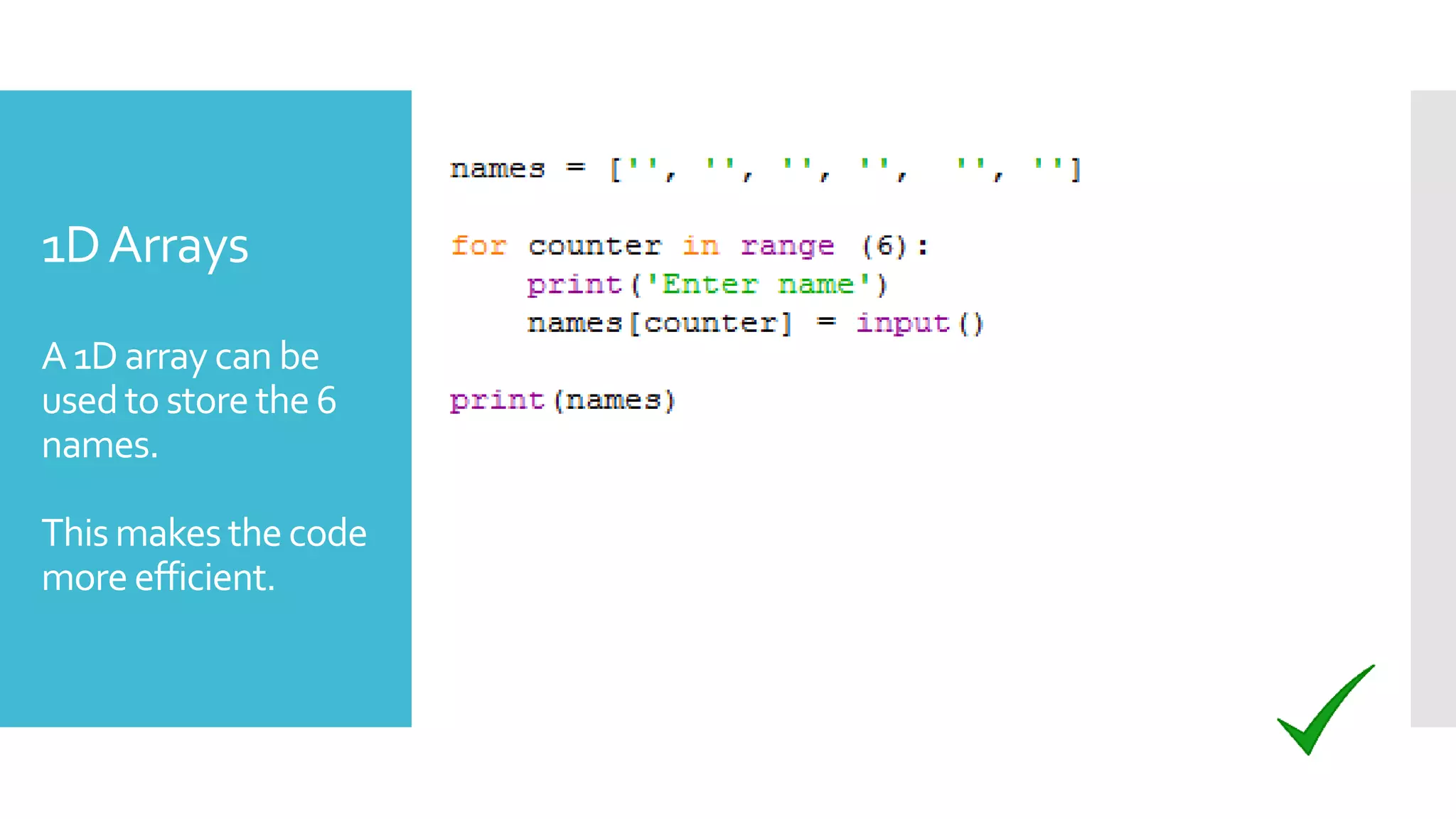
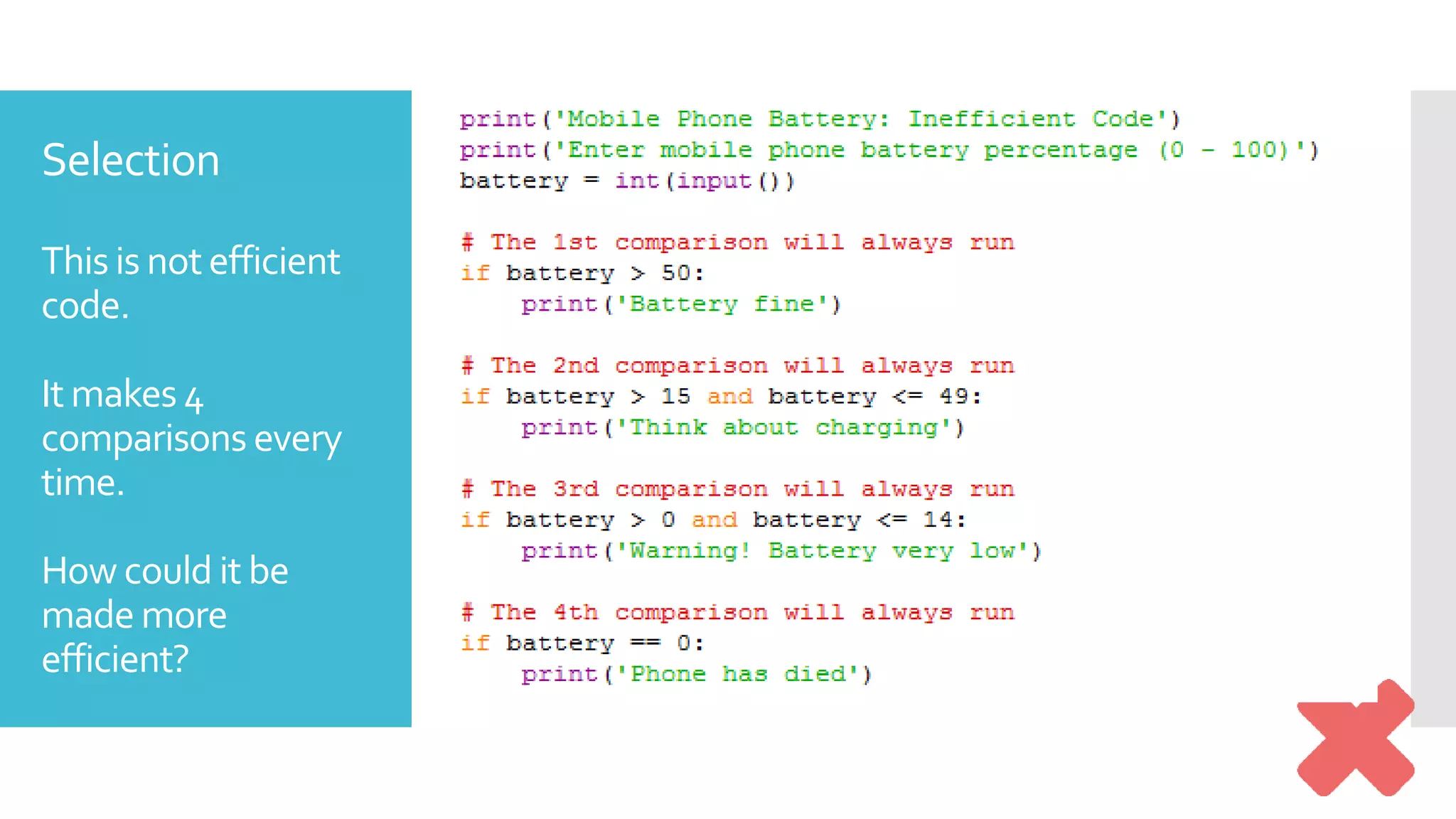
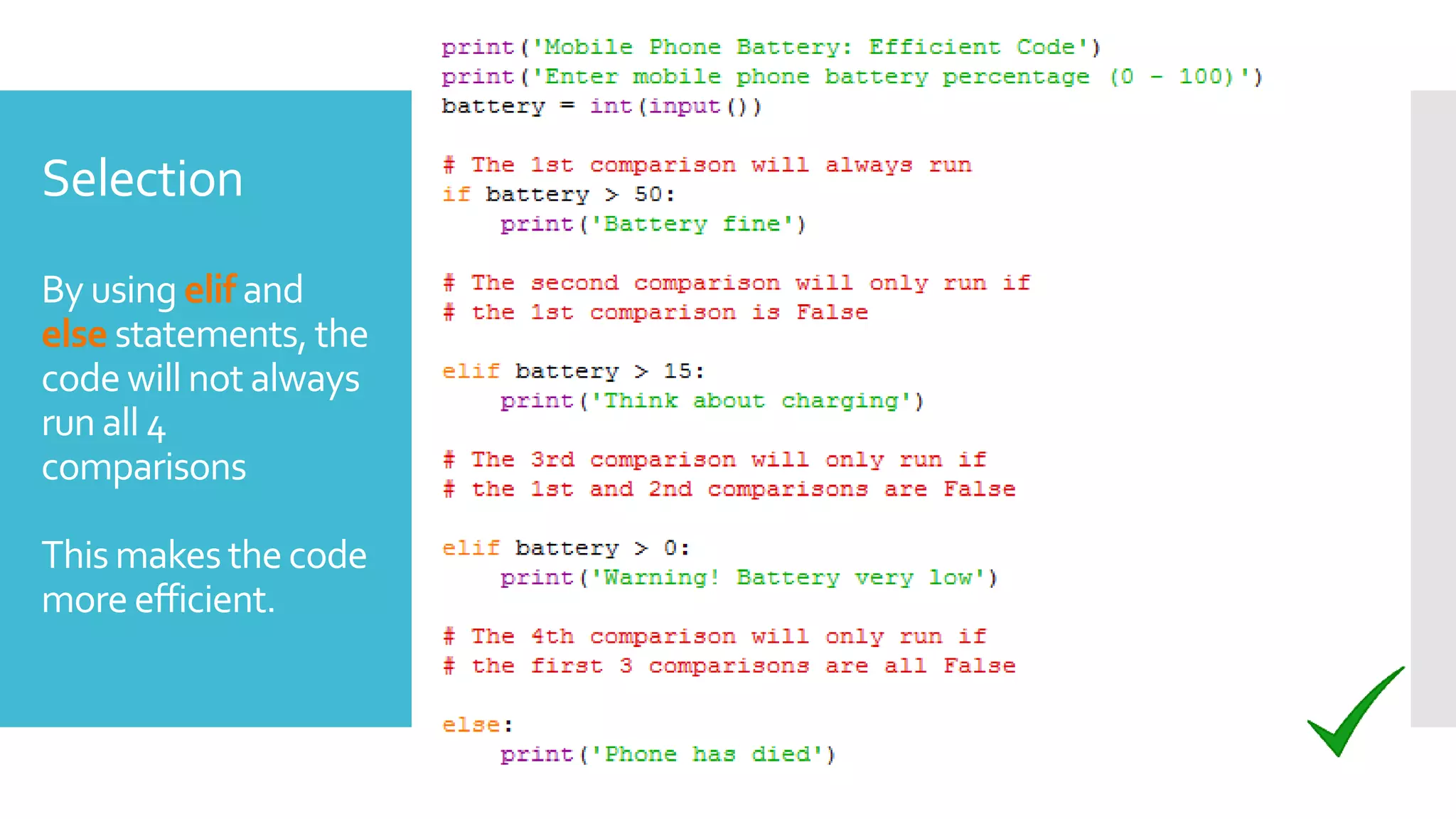
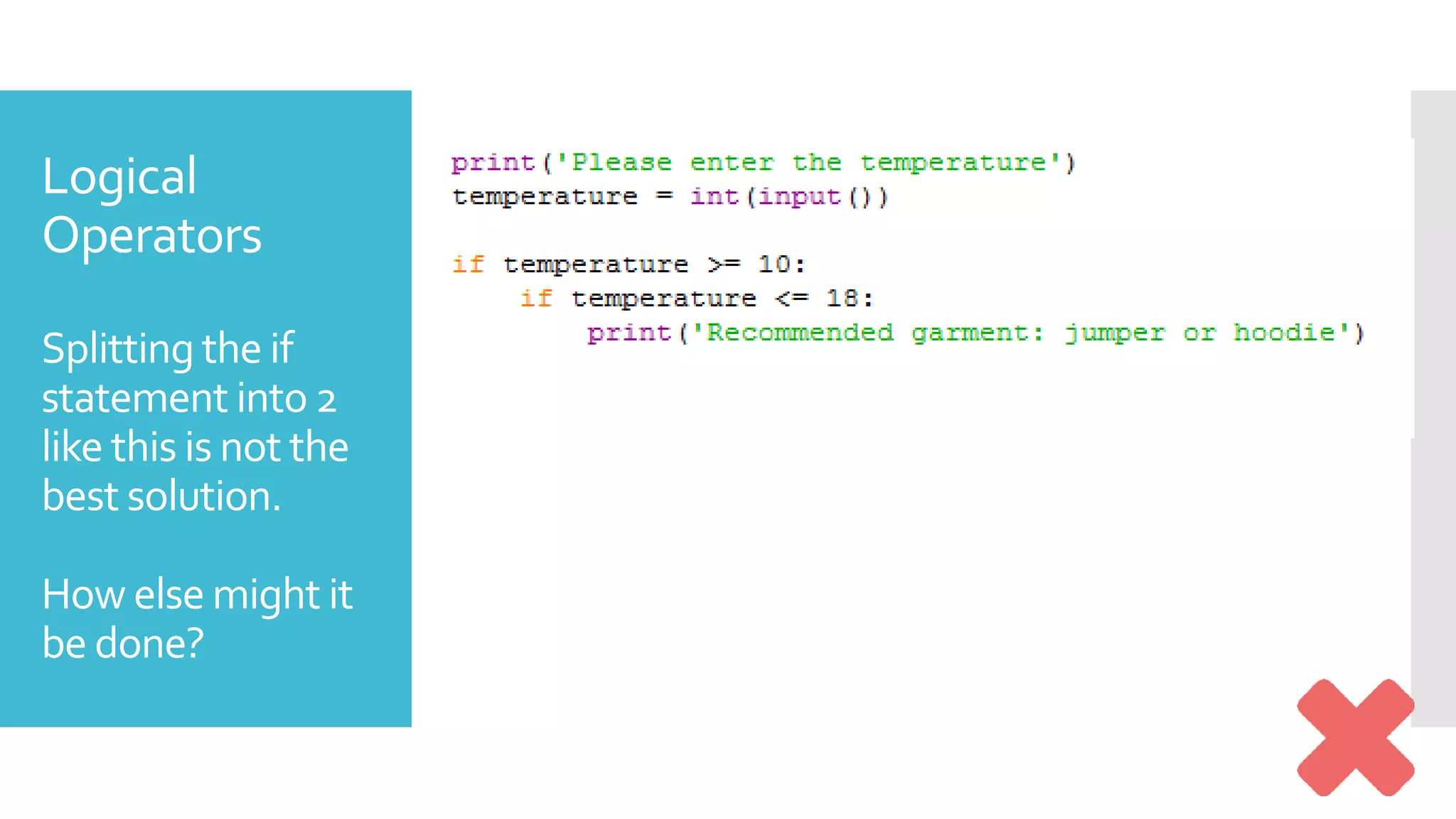
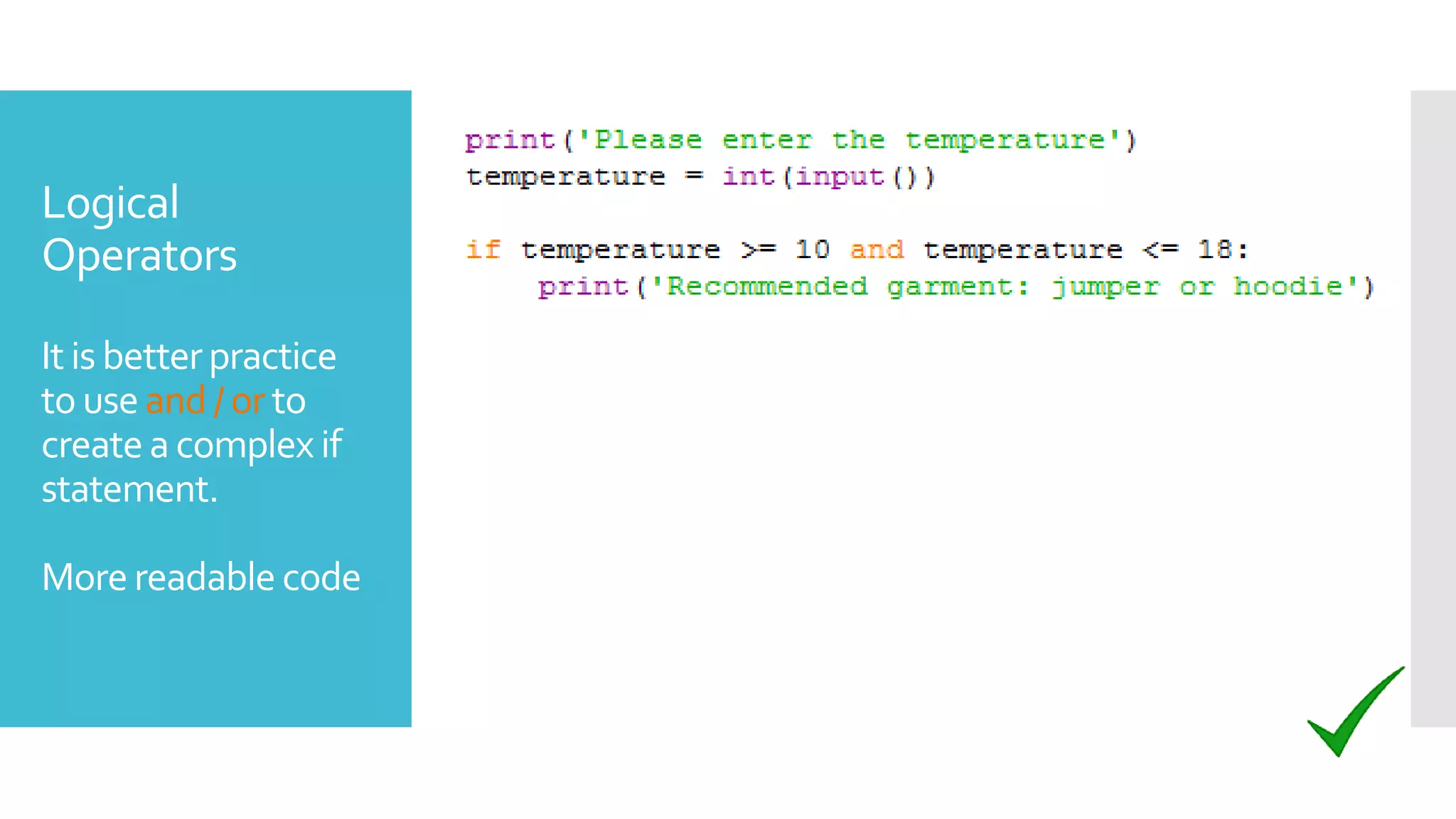
Efficient code is code that achieves the desired result using fewer resources like memory, processing power or time. The document gives examples of inefficient code and how they could be made more efficient through techniques like using loops for repetition instead of writing the same code multiple times, storing multiple values in an array instead of separate variables, using elif and else statements in selection to avoid unnecessary comparisons, and using logical operators like and/or to combine conditions in an if statement.
Introduces the concept of code efficiency, emphasizing the importance of writing efficient code that achieves results with fewer resources.
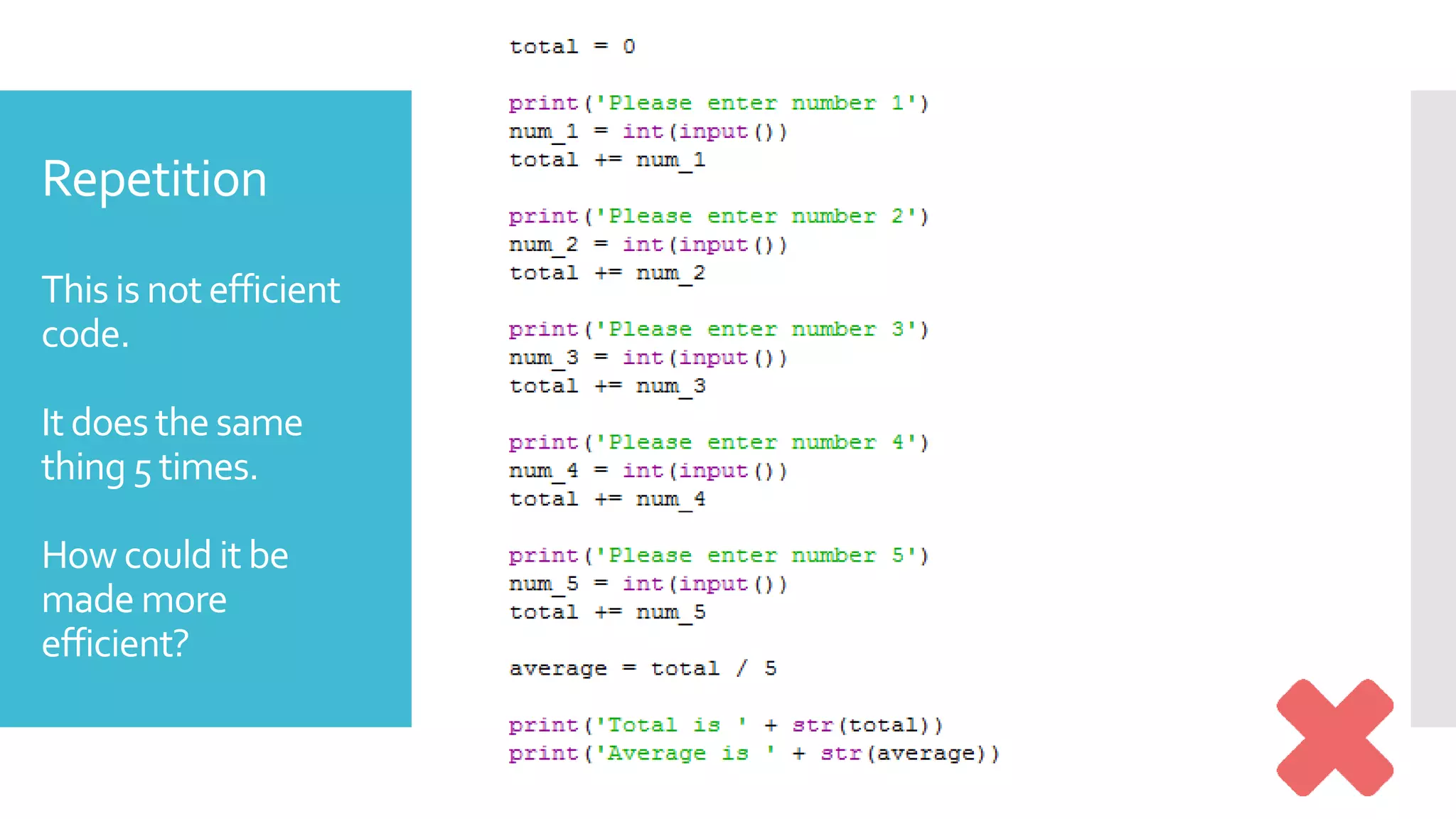
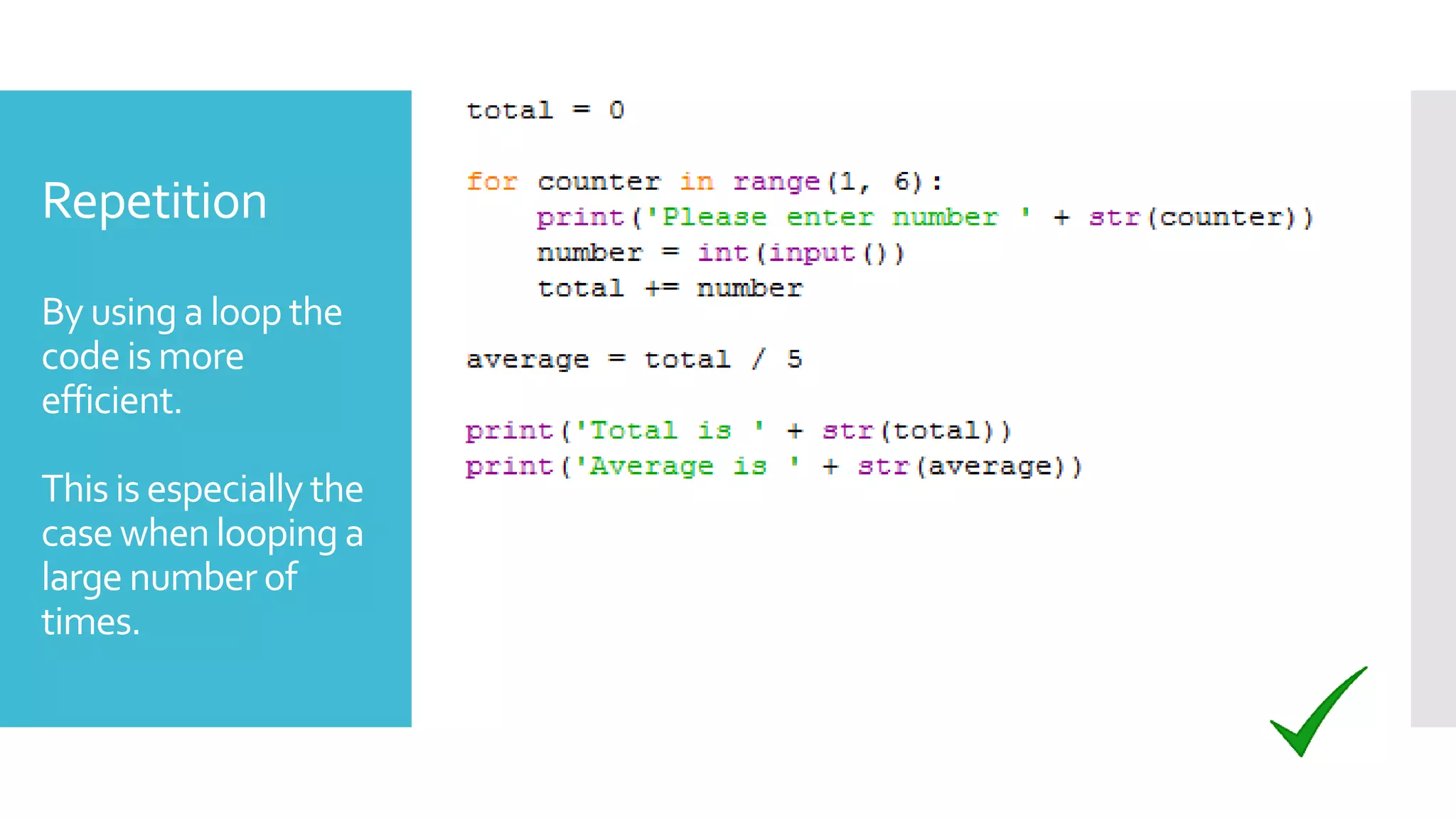
Highlights inefficient coding due to repetition and illustrates how using loops can enhance efficiency when executing repetitive tasks.
Examines inefficient code using multiple variables for similar data, and how 1D arrays can consolidate them for more efficient storage.
Discusses inefficiencies in comparisons within code, and shows how using conditional statements can minimize unnecessary checks.
Critiques splitting if statements, and advocates using logical operators for better readability and concise code.


