07 October 2023
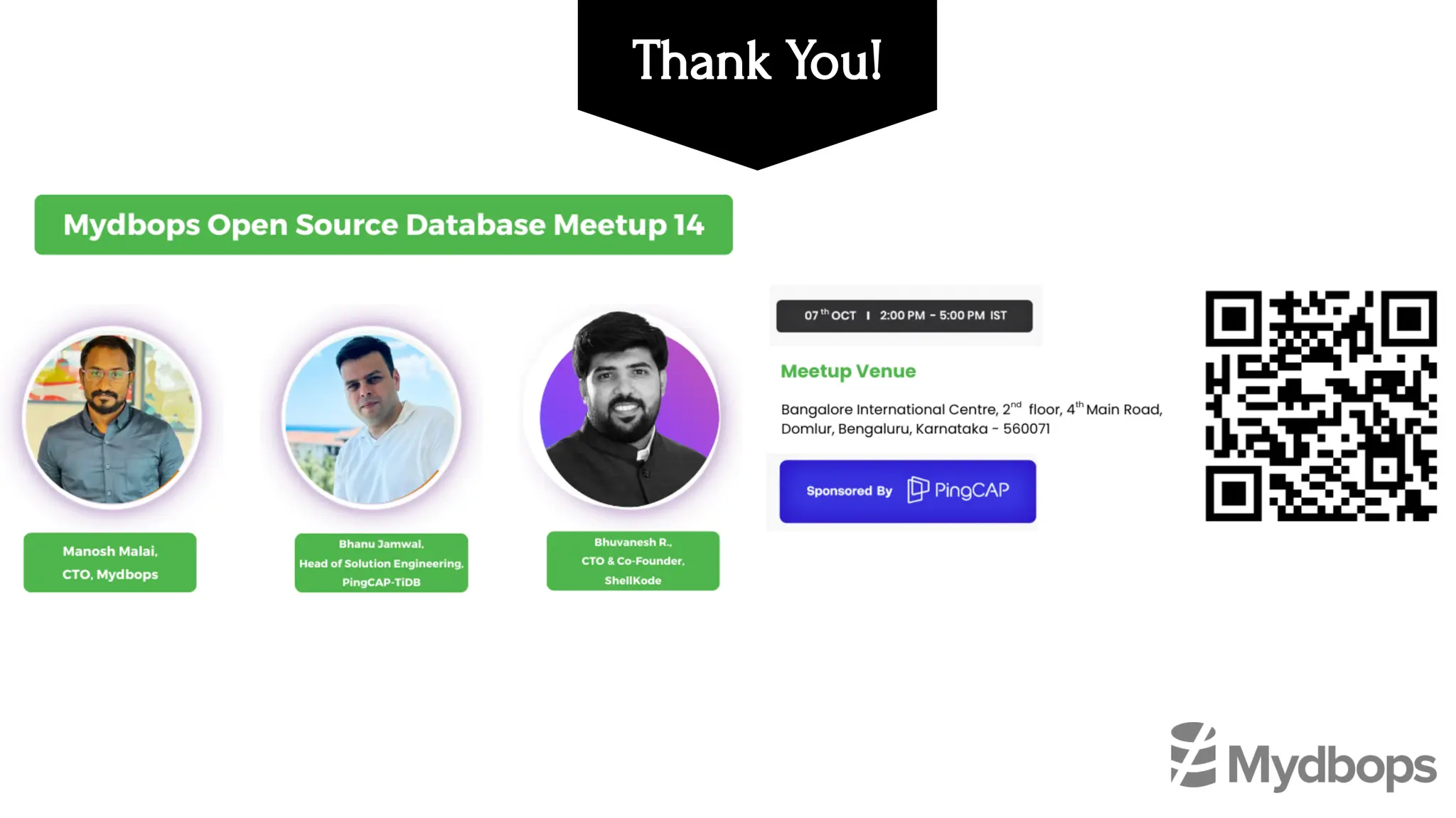
Mydbops Open Source Database Meetup 14
Vinoth Kanna RS
Co-Founder, Mydbops
MySQL Database Transformation Case Study
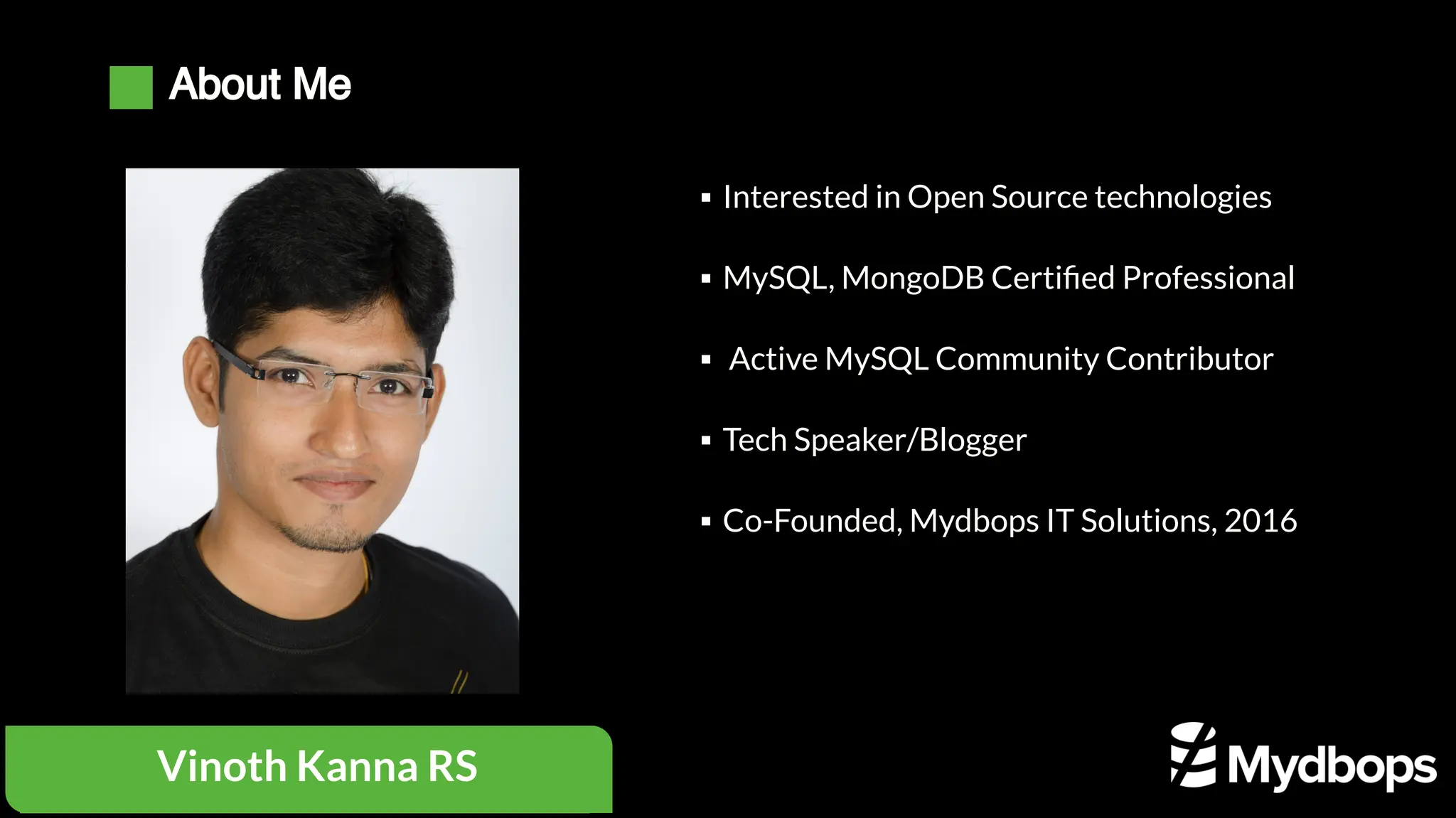
Interested in Open Source technologies
▪
MySQL, MongoDB Certified Professional
▪
Active MySQL Community Contributor
▪
Tech Speaker/Blogger
▪
Co-Founded, Mydbops IT Solutions, 2016
▪
Vinoth Kanna RS
About Me
Mydbops
at a
glance
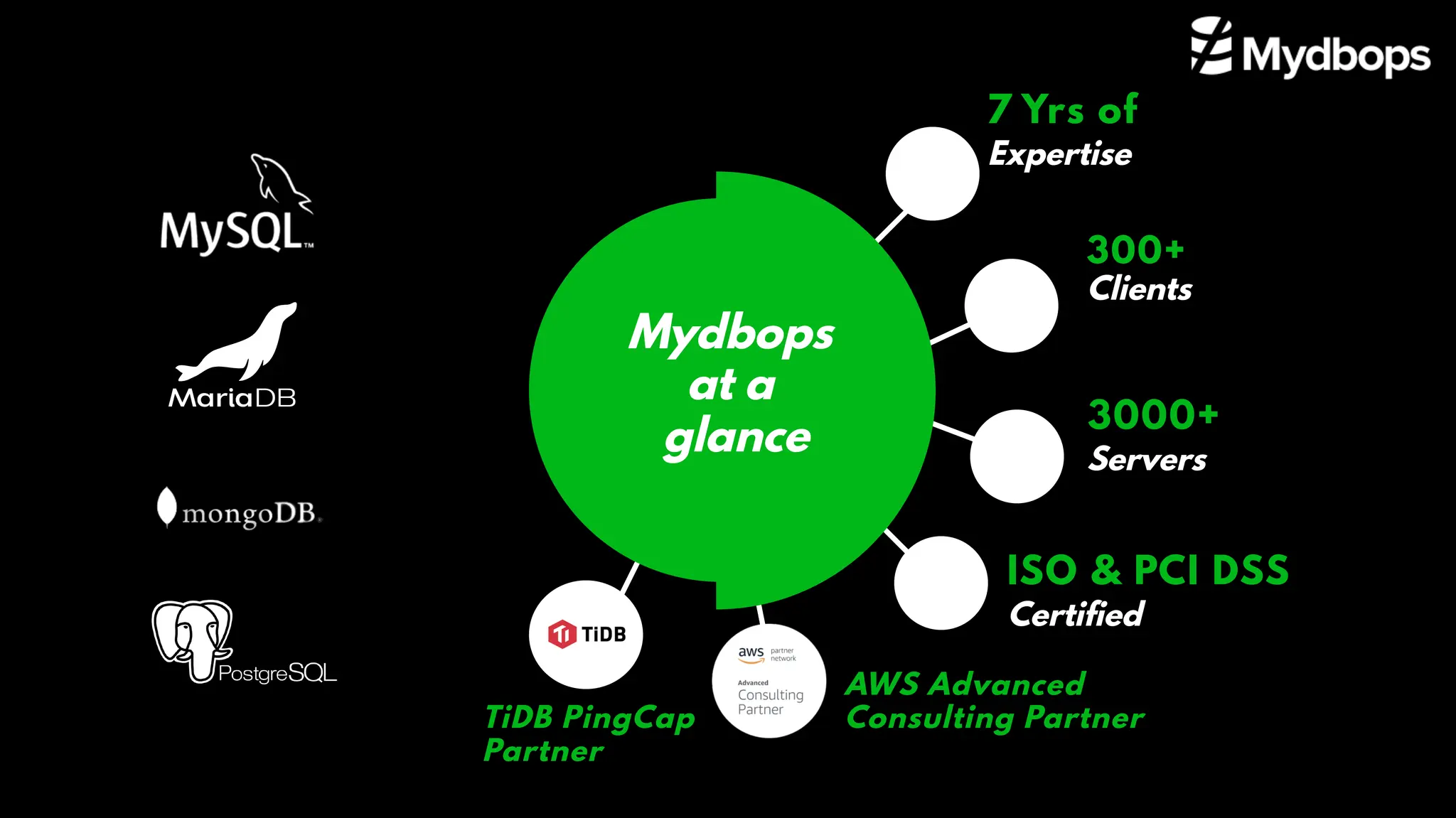
300+
Clients
3000+
Servers
ISO & PCI DSS
Certified
7 Yrs of
Expertise
AWS Advanced
Consulting Partner
TiDB PingCap
Partner
Mydbops Services
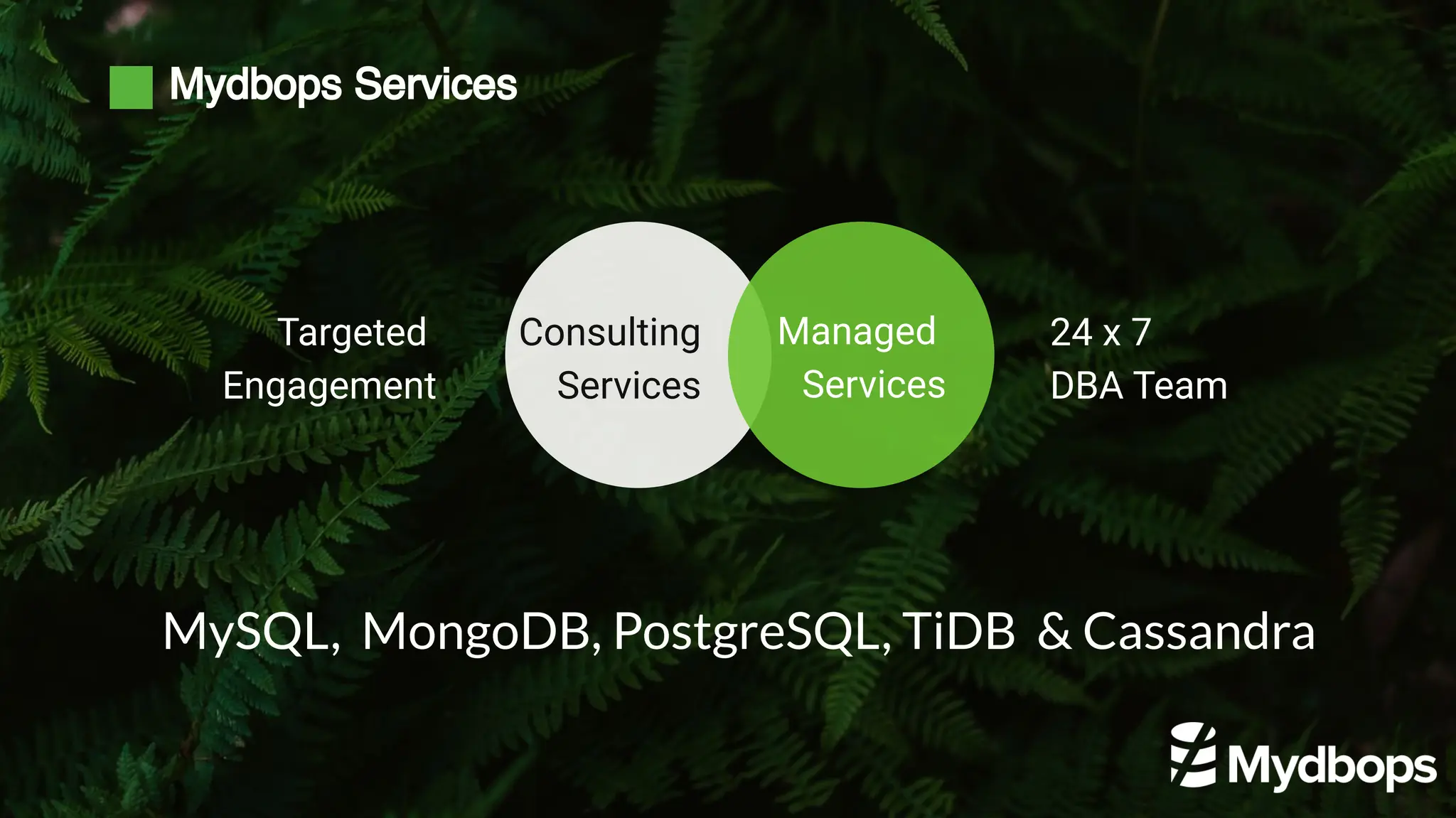
Consulting
Services
Managed
Services
MySQL, MongoDB, PostgreSQL, TiDB & Cassandra
Targeted
Engagement
24 x 7
DBA Team
Observability
Challenges and Solutions
Implementation
Case Brief
Agenda
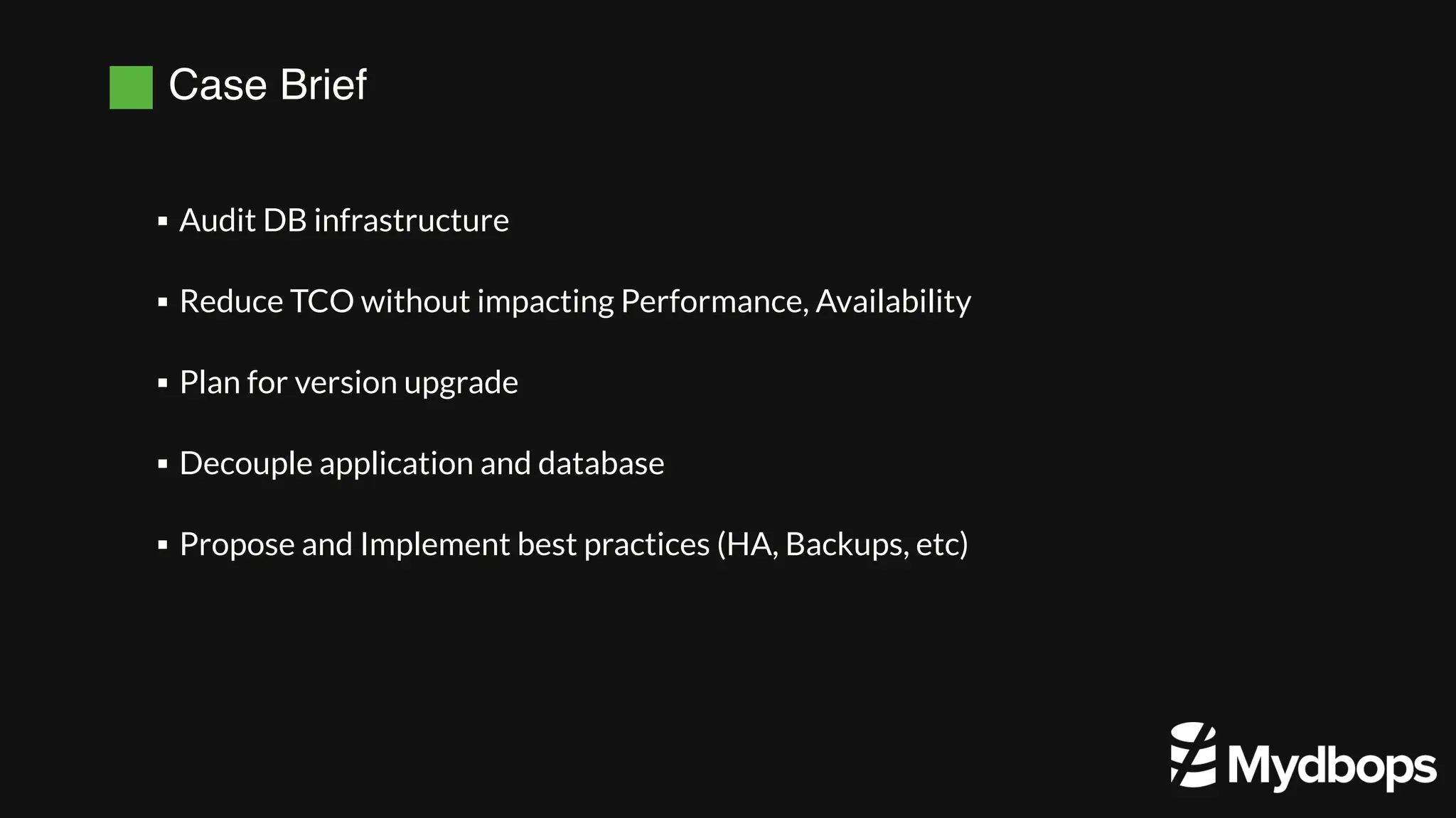
Case Brief
Audit DB infrastructure
▪
Reduce TCO without impacting Performance, Availability
▪
Plan for version upgrade
▪
Decouple application and database
▪
Propose and Implement best practices (HA, Backups, etc)
▪
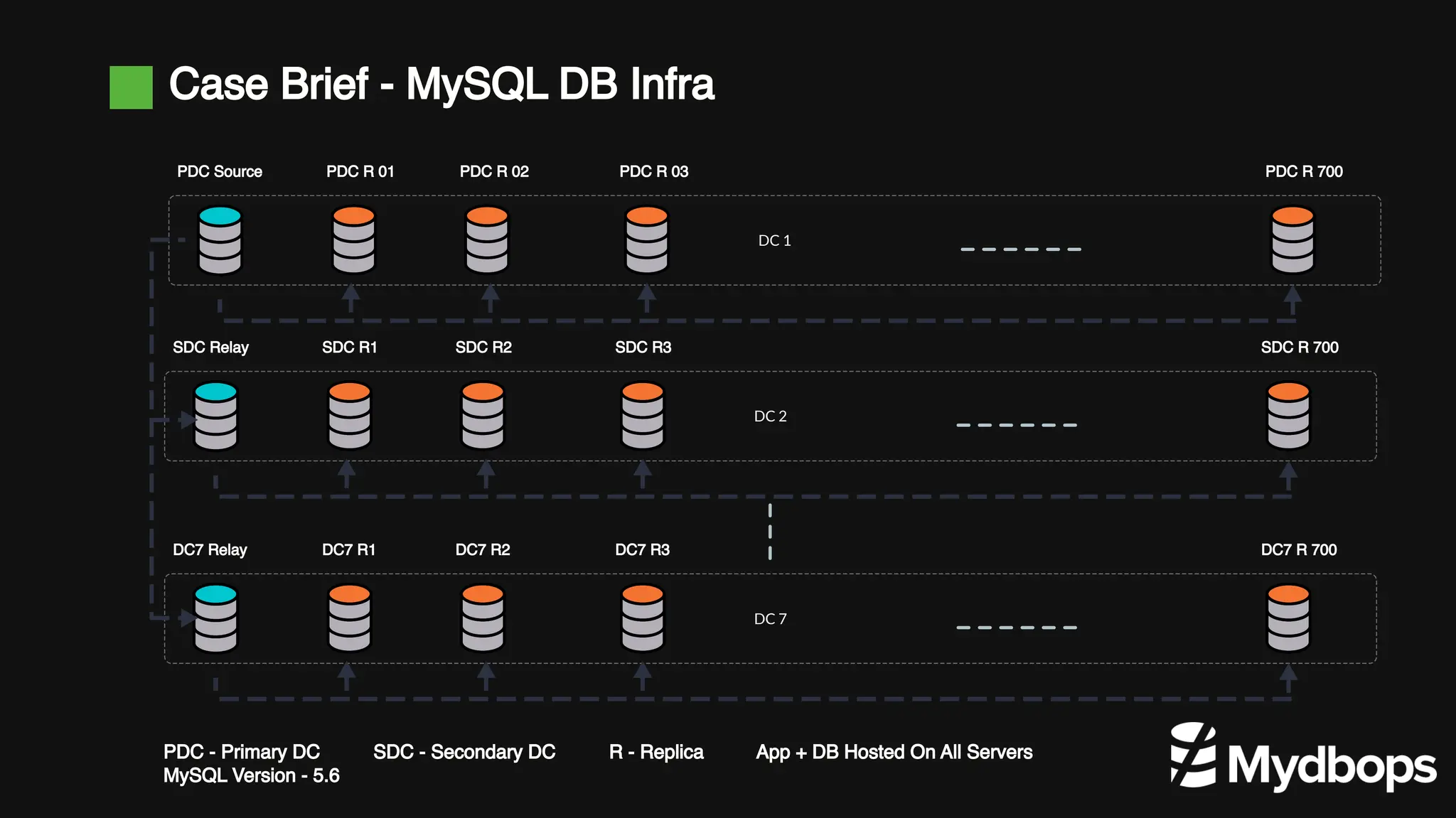
Case Brief - MySQL DB Infra
DC 1
PDC Source PDC R 01 PDC R 02 PDC R 03 PDC R 700
DC 2
SDC Relay SDC R1 SDC R2 SDC R3 SDC R 700
DC 7
DC7 Relay DC7 R1 DC7 R2 DC7 R3 DC7 R 700
PDC - Primary DC SDC - Secondary DC R - Replica App + DB Hosted On All Servers
MySQL Version - 5.6
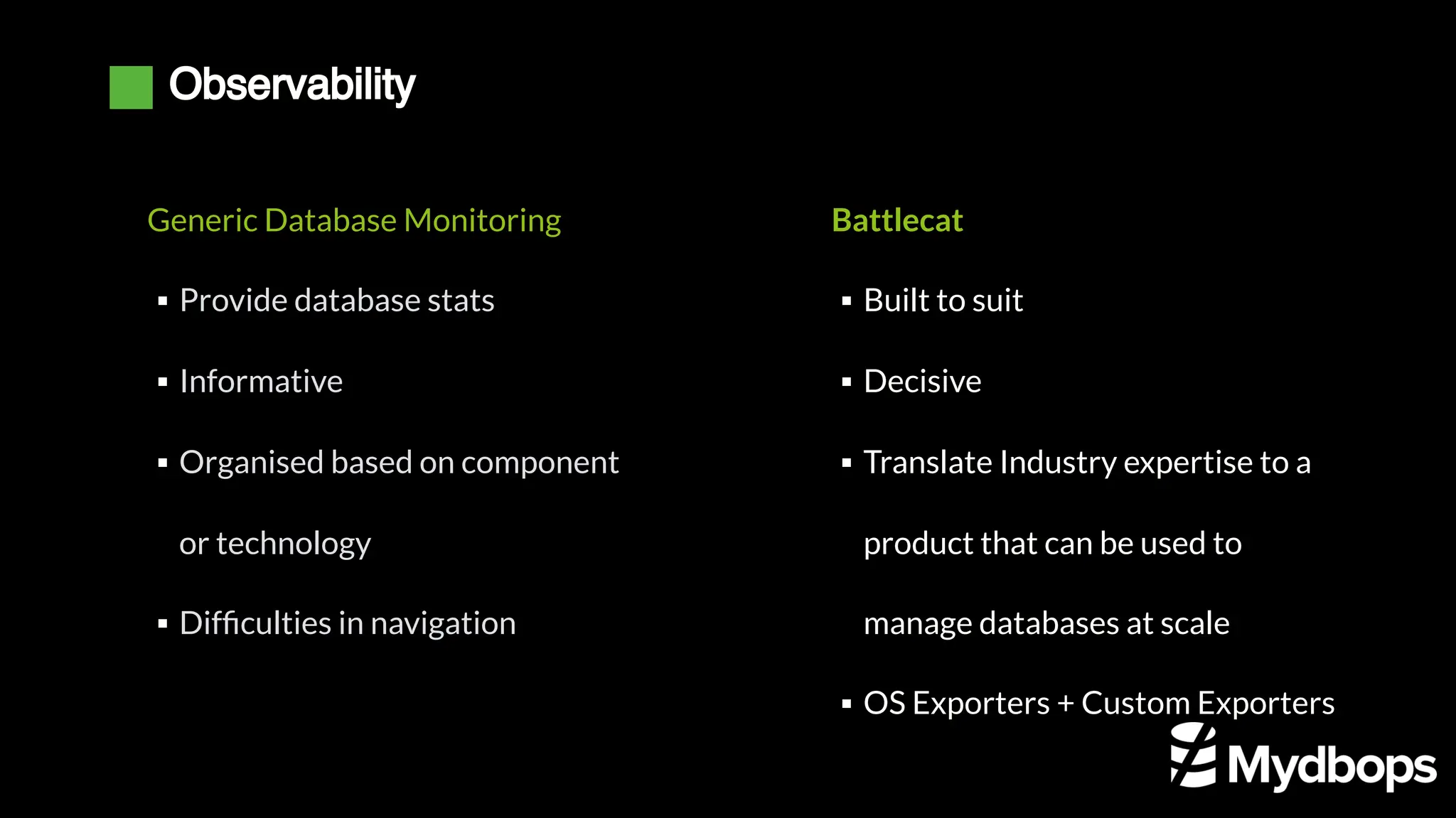
Observability
Generic Database Monitoring
Provide database stats
▪
Informative
▪
Organised based on component
or technology
▪
Difficulties in navigation
▪
Battlecat
Built to suit
▪
Decisive
▪
Translate Industry expertise to a
product that can be used to
manage databases at scale
▪
OS Exporters + Custom Exporters
▪
Observability
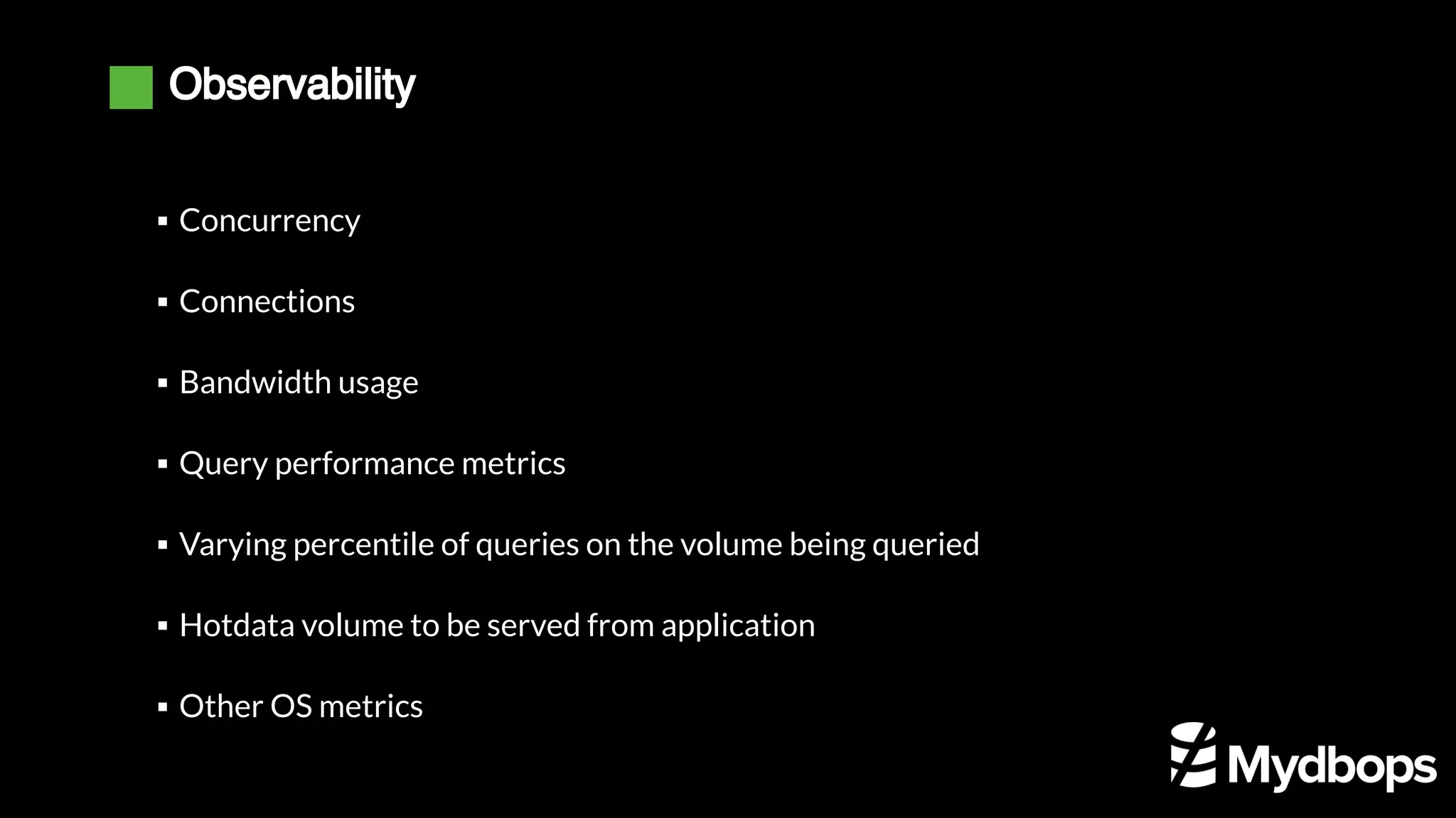
Concurrency
▪
Connections
▪
Bandwidth usage
▪
Query performance metrics
▪
Varying percentile of queries on the volume being queried
▪
Hotdata volume to be served from application
▪
Other OS metrics
▪
Observability
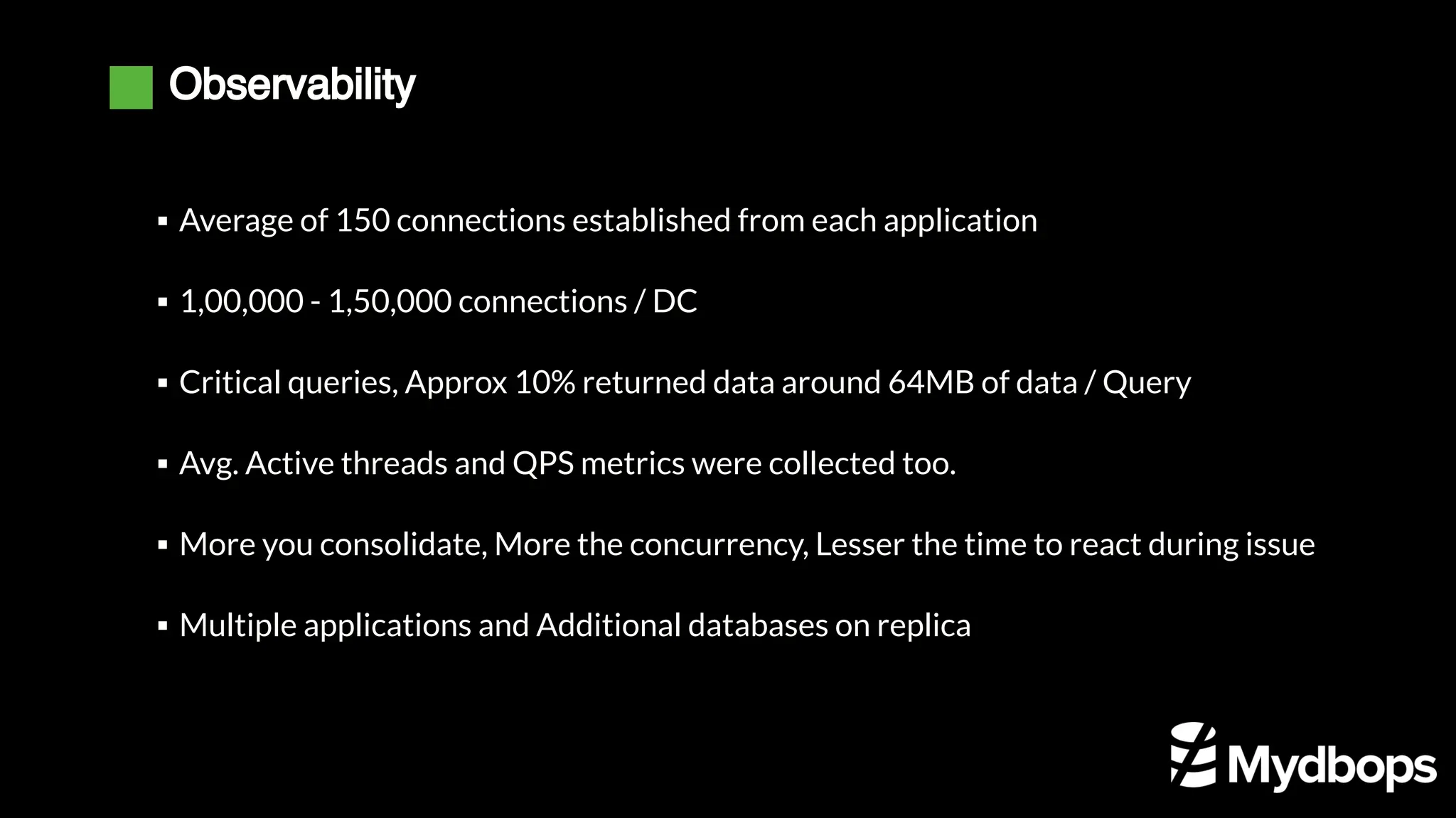
Average of 150 connections established from each application
▪
1,00,000 - 1,50,000 connections / DC
▪
Critical queries, Approx 10% returned data around 64MB of data / Query
▪
Avg. Active threads and QPS metrics were collected too.
▪
More you consolidate, More the concurrency, Lesser the time to react during issue
▪
Multiple applications and Additional databases on replica
▪
Choice Of Technology
Consistency
▪
Performance
▪
Resilency
▪
Fit to the product requirements
▪
Choice Of Technology - MySQL HA Solutions
Completely Managed Via MySQL Shell
Percona XtraDB Cluster / MariaDB Cluster (Galera Plugin Based)
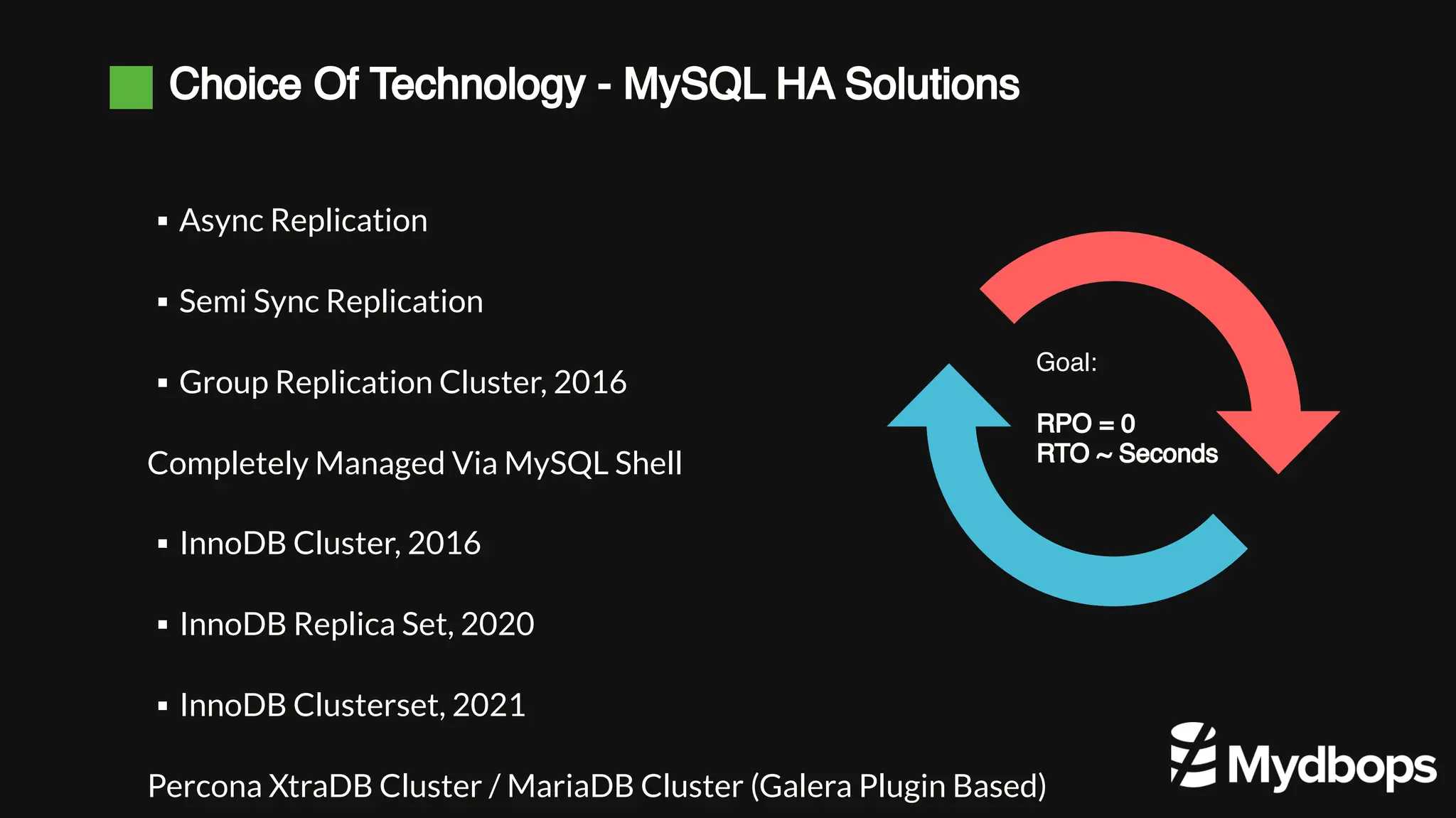
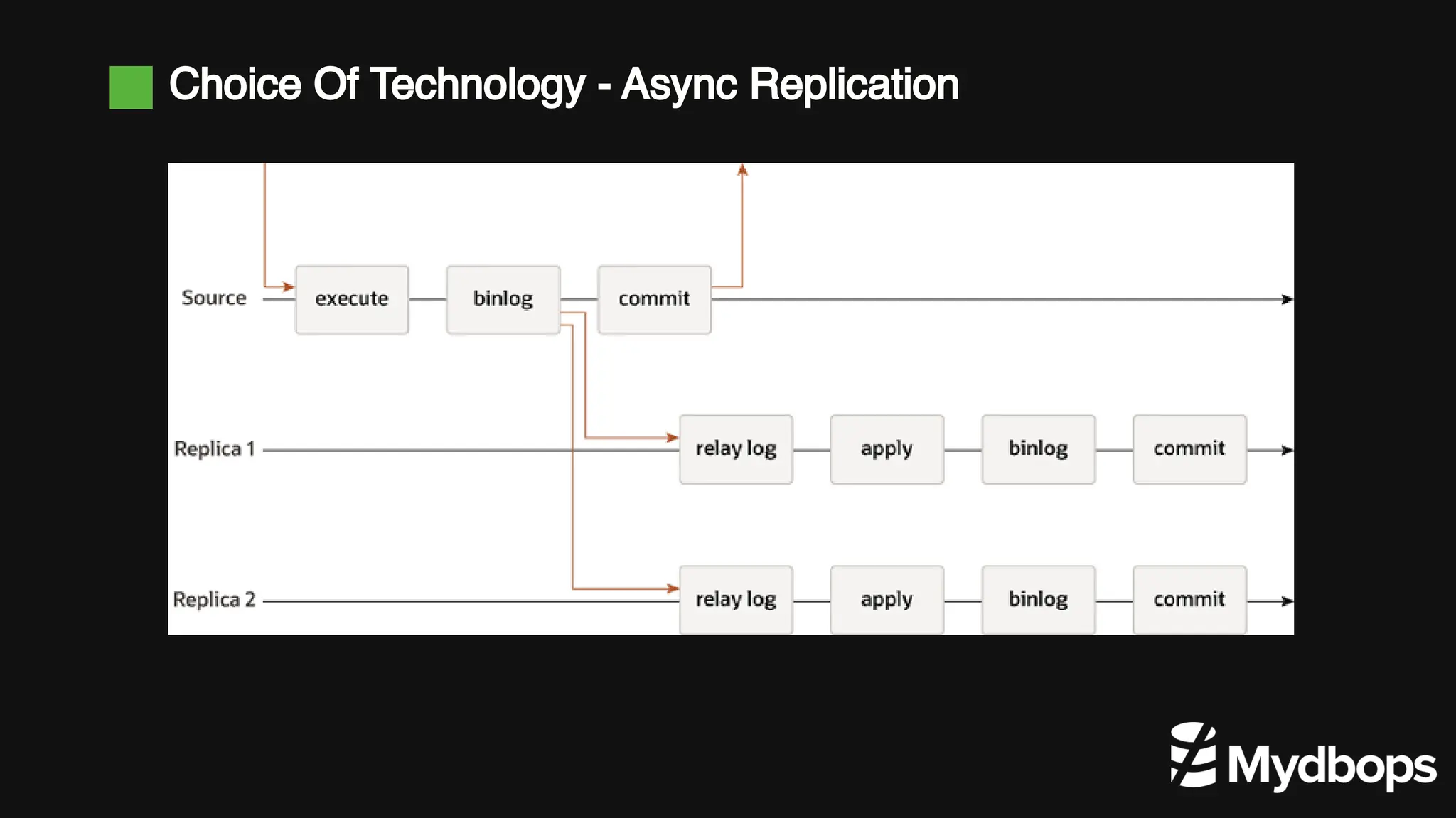
Async Replication
▪
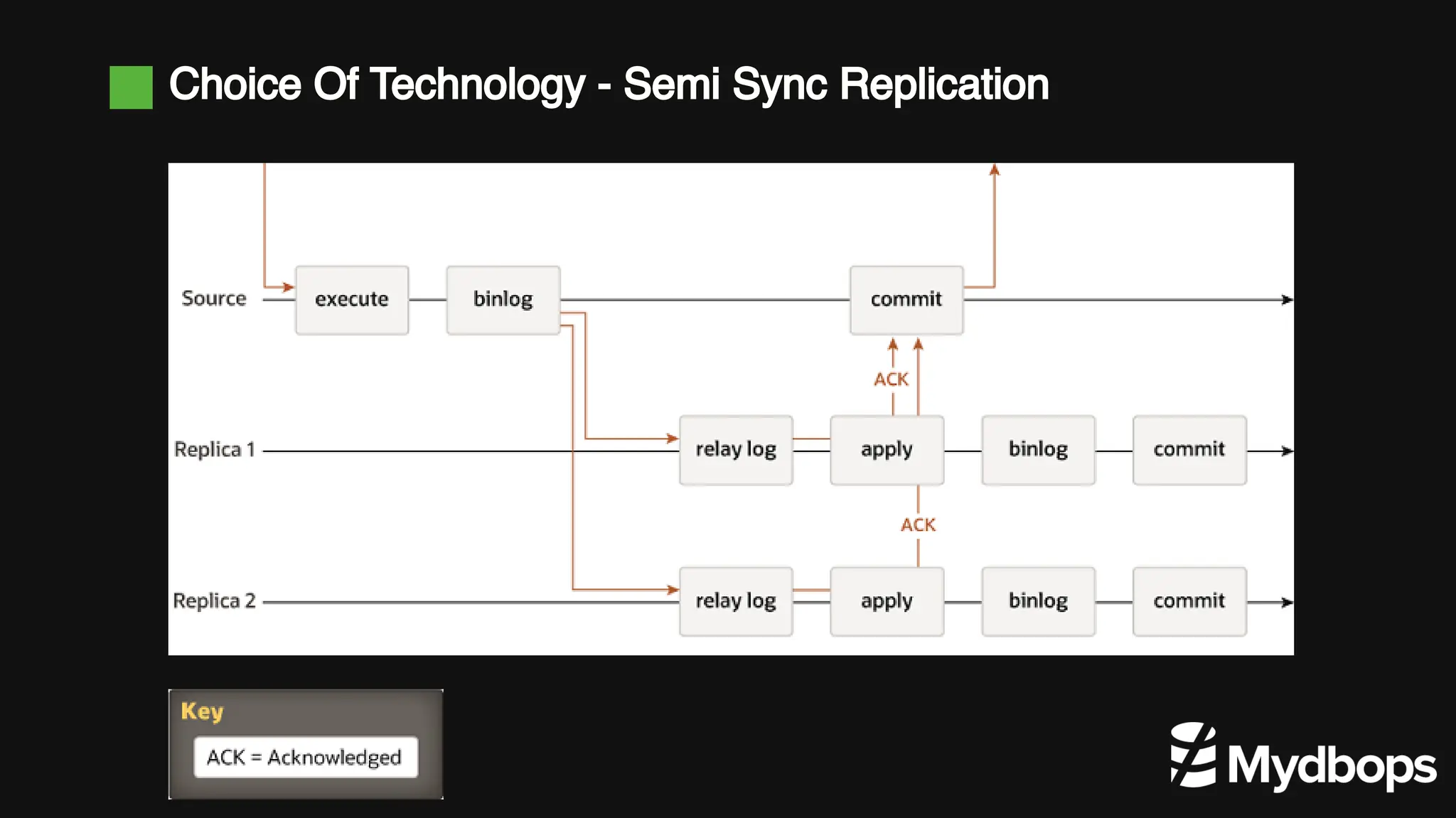
Semi Sync Replication
▪
Group Replication Cluster, 2016
▪
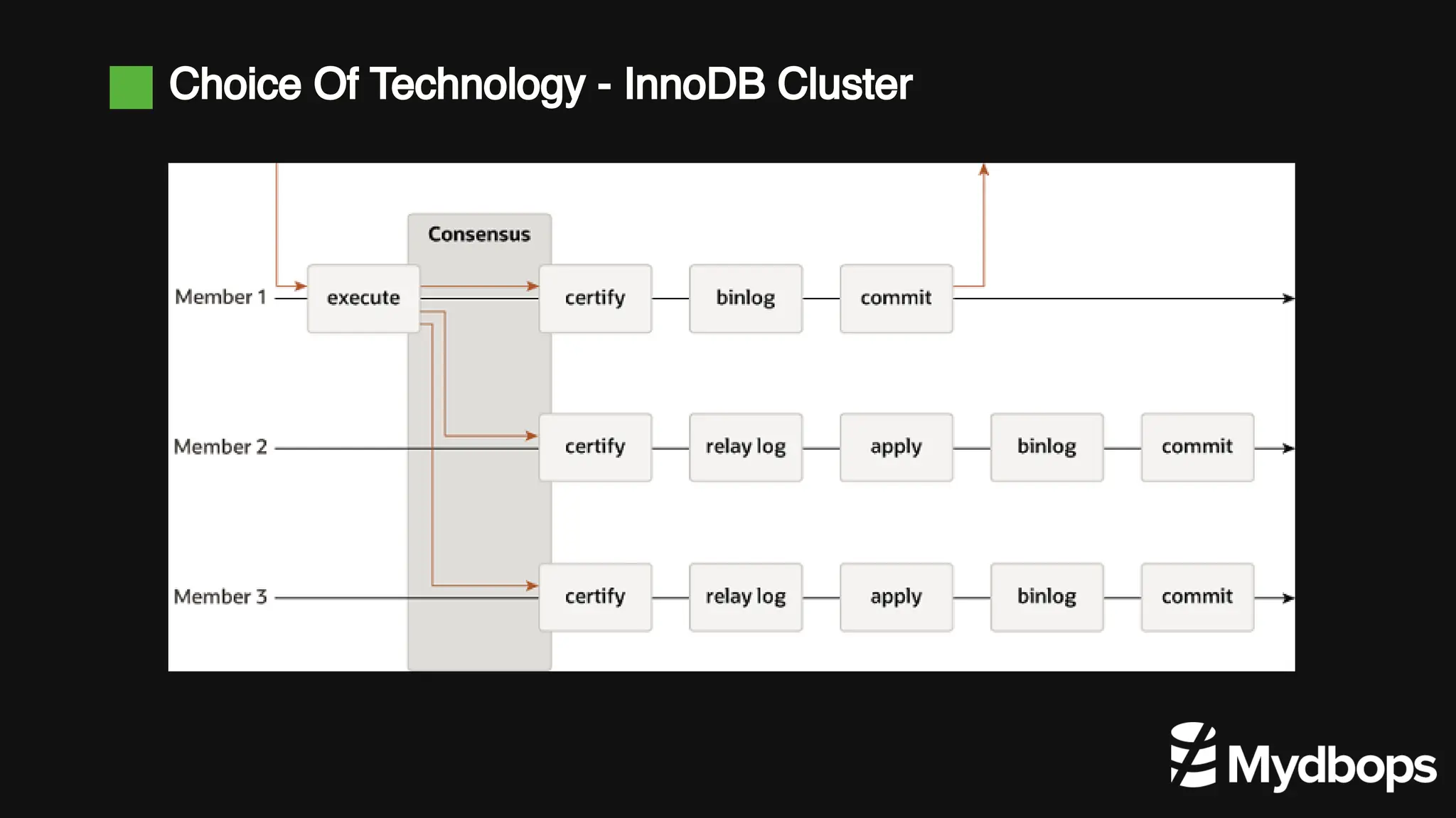
InnoDB Cluster, 2016
▪
InnoDB Replica Set, 2020
▪
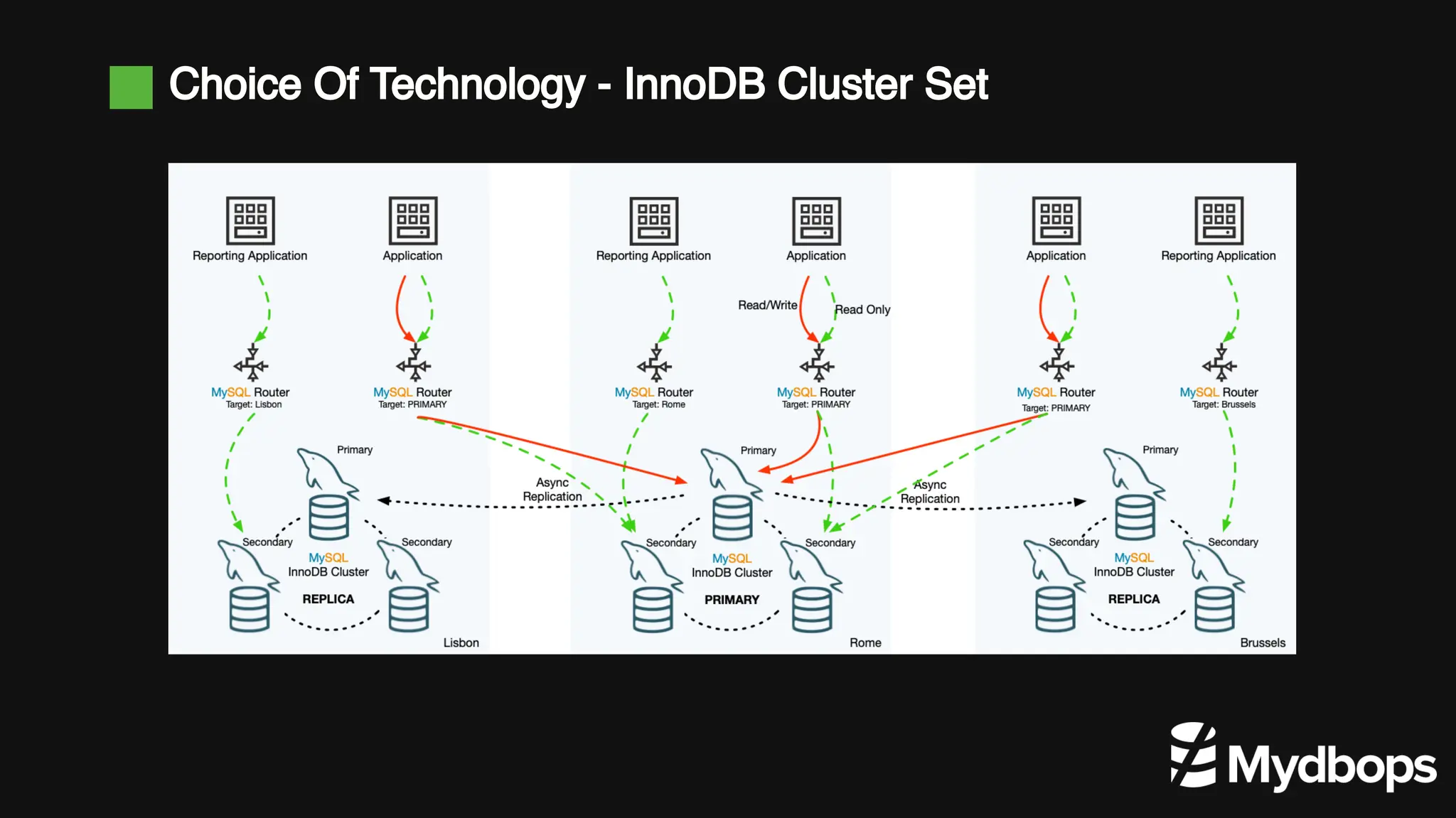
InnoDB Clusterset, 2021
▪
Goal:
RPO = 0
RTO ~ Seconds
Choice Of Technology - Async Replication
Choice Of Technology - Semi Sync Replication
Choice Of Technology - InnoDB Cluster
Choice Of Technology - InnoDB Cluster Set
Choice Of Technology - MySQL HA Solutions
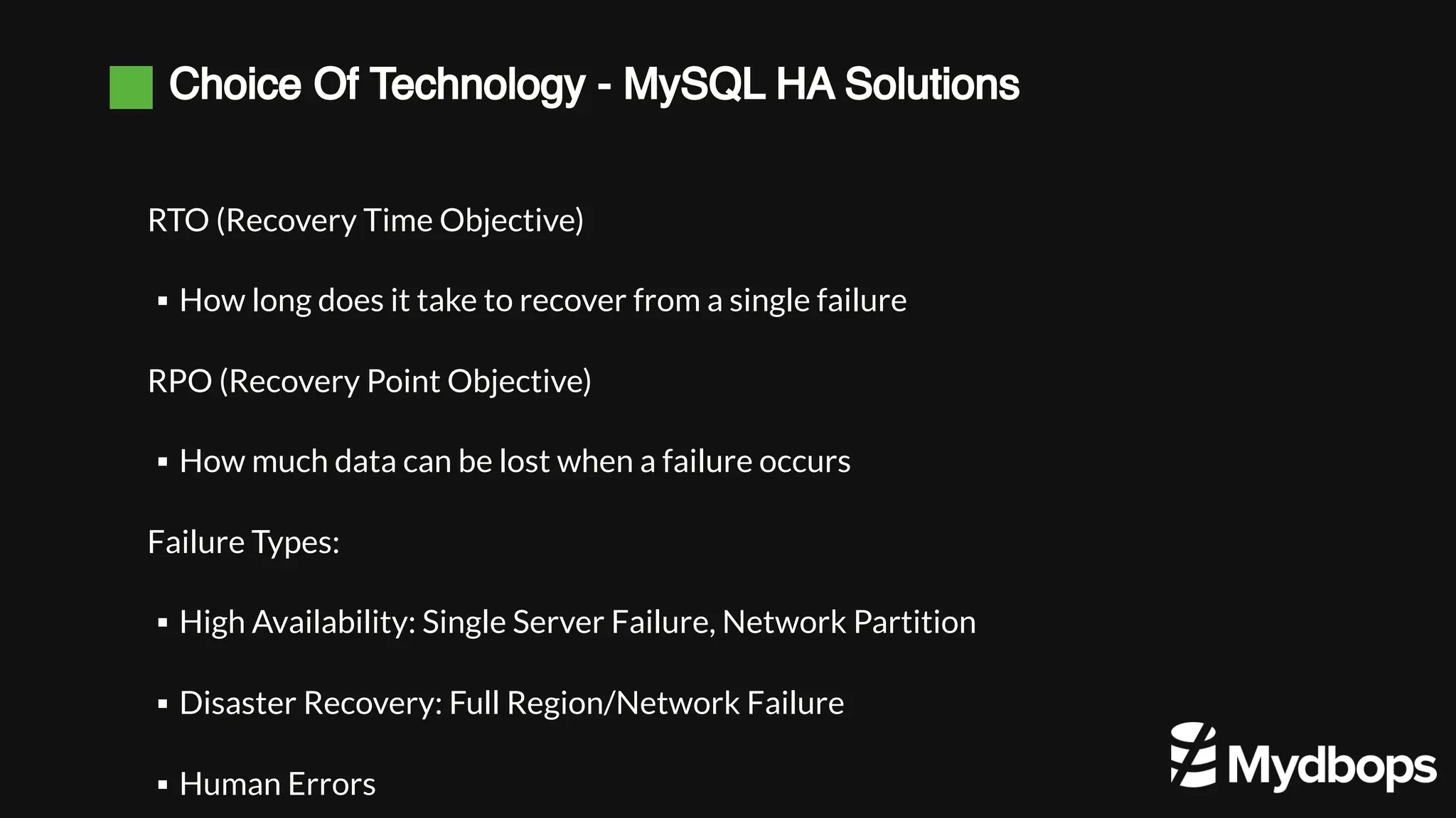
RTO (Recovery Time Objective)
RPO (Recovery Point Objective)
Failure Types:
How long does it take to recover from a single failure
▪
How much data can be lost when a failure occurs
▪
High Availability: Single Server Failure, Network Partition
▪
Disaster Recovery: Full Region/Network Failure
▪
Human Errors
▪
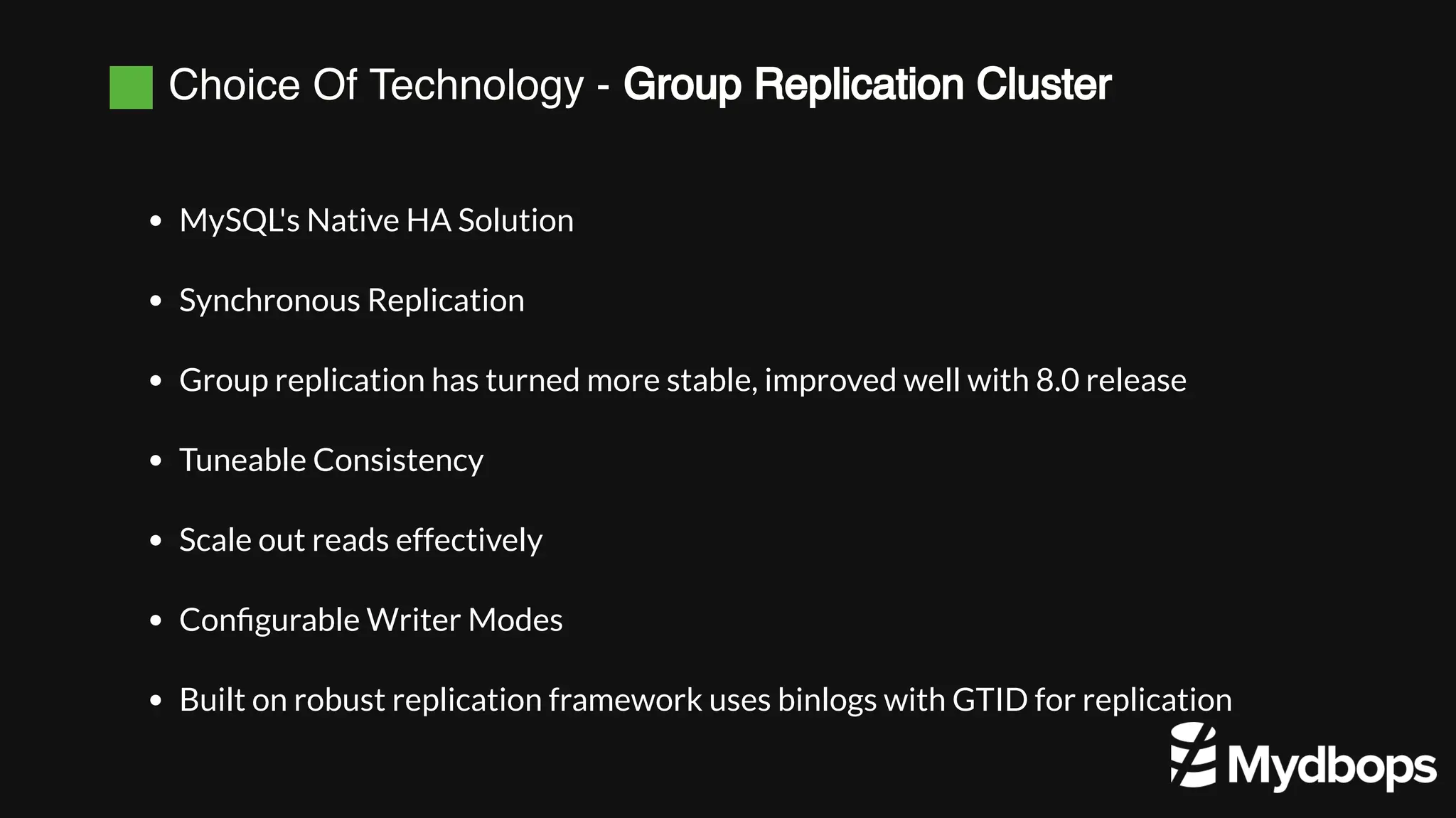
Choice Of Technology - Group Replication Cluster
MySQL's Native HA Solution
Synchronous Replication
Group replication has turned more stable, improved well with 8.0 release
Tuneable Consistency
Scale out reads effectively
Configurable Writer Modes
Built on robust replication framework uses binlogs with GTID for replication
Choice Of Technology - MySQL Compatible Load Balancers
MySQL Router
▪
Maxscale
▪
ProxySQL
▪
HA Proxy
▪
TCP / DNS based load balancing
▪
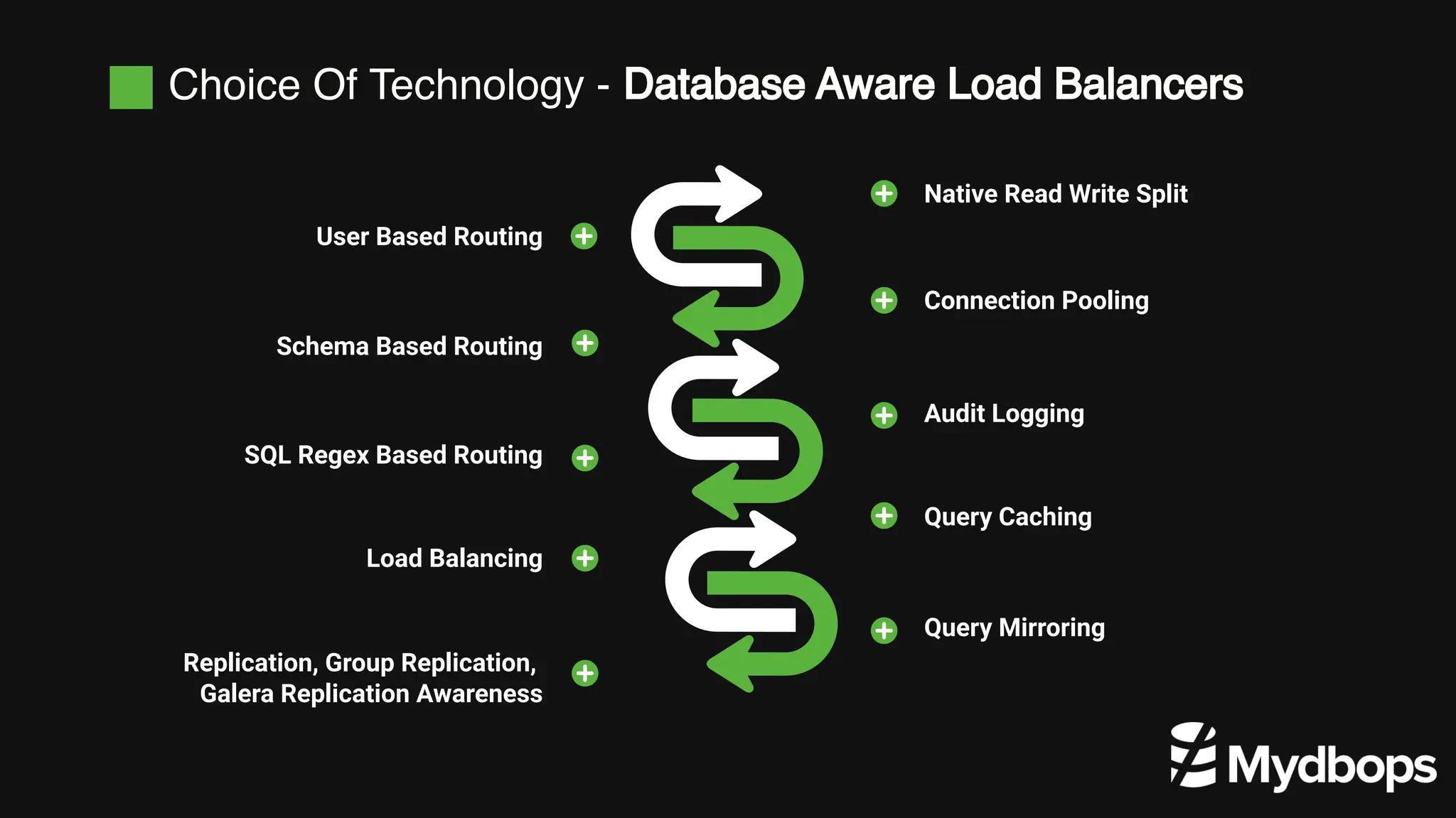
Choice Of Technology - Database Aware Load Balancers
Schema Based Routing
SQL Regex Based Routing
User Based Routing
Load Balancing
Replication, Group Replication,
Galera Replication Awareness
Connection Pooling
Audit Logging
Native Read Write Split
Query Caching
Query Mirroring
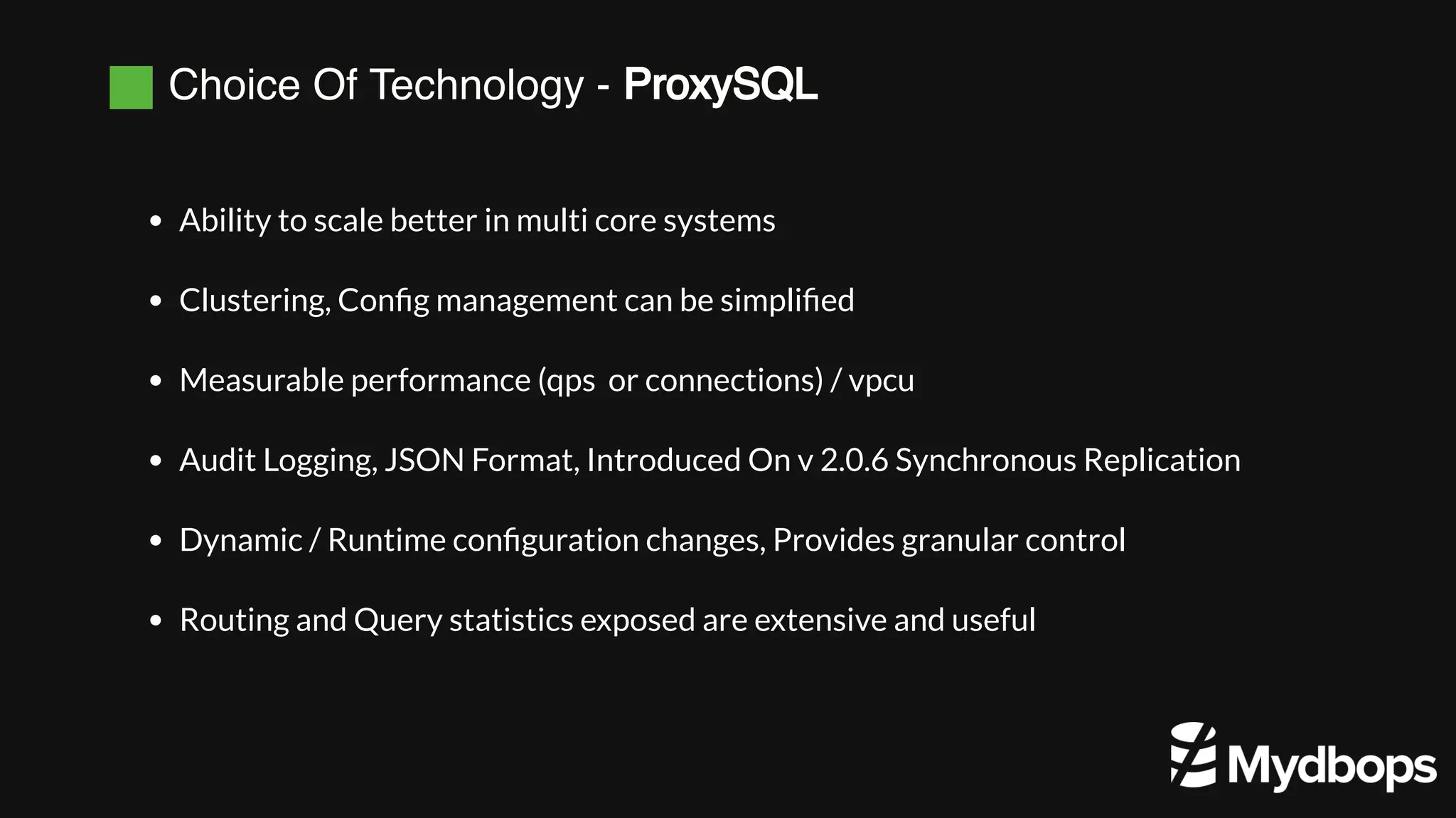
Choice Of Technology - ProxySQL
Ability to scale better in multi core systems
Clustering, Config management can be simplified
Measurable performance (qps or connections) / vpcu
Audit Logging, JSON Format, Introduced On v 2.0.6 Synchronous Replication
Dynamic / Runtime configuration changes, Provides granular control
Routing and Query statistics exposed are extensive and useful
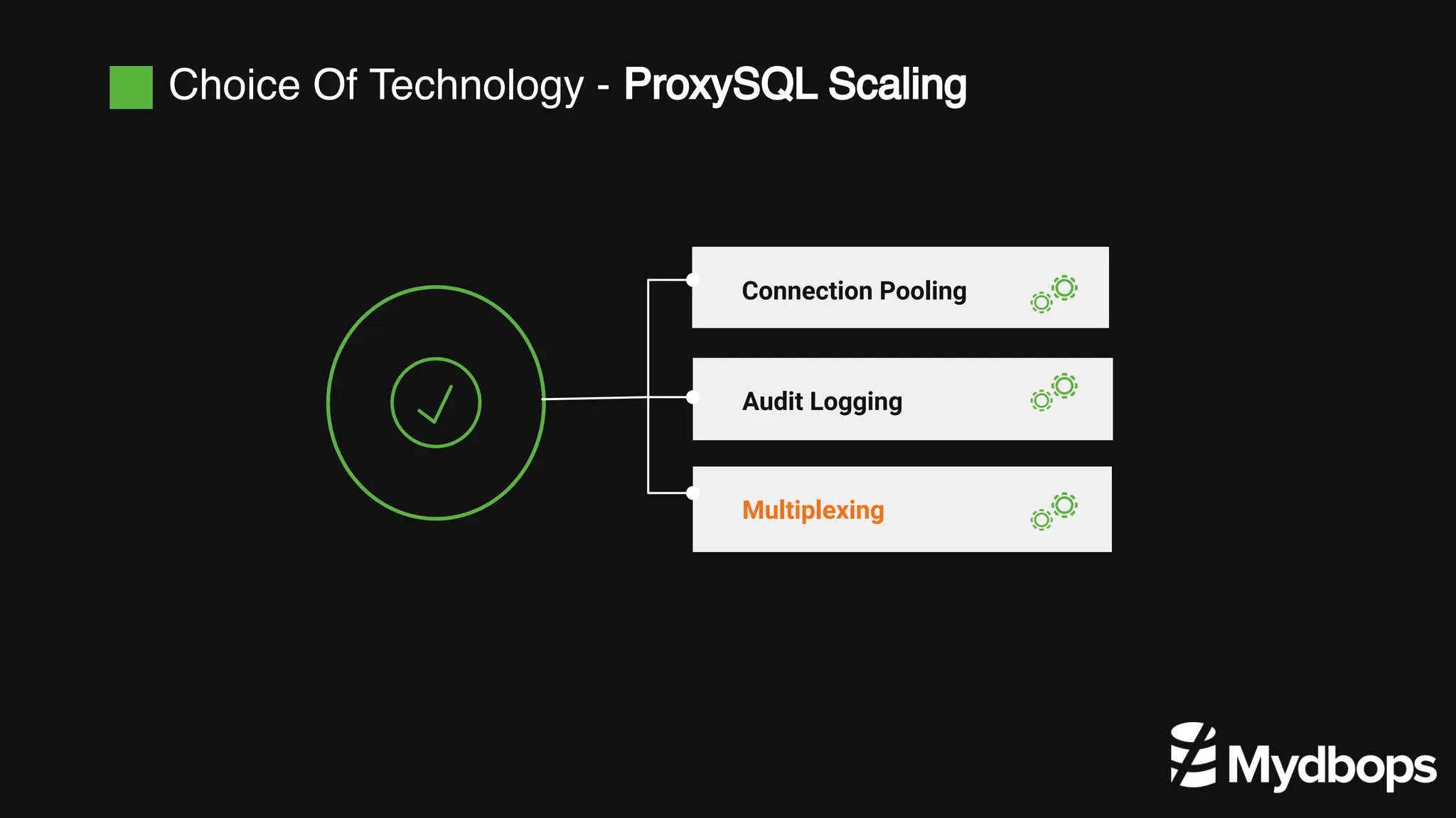
Choice Of Technology - ProxySQL Scaling
Connection Pooling
Audit Logging
Multiplexing
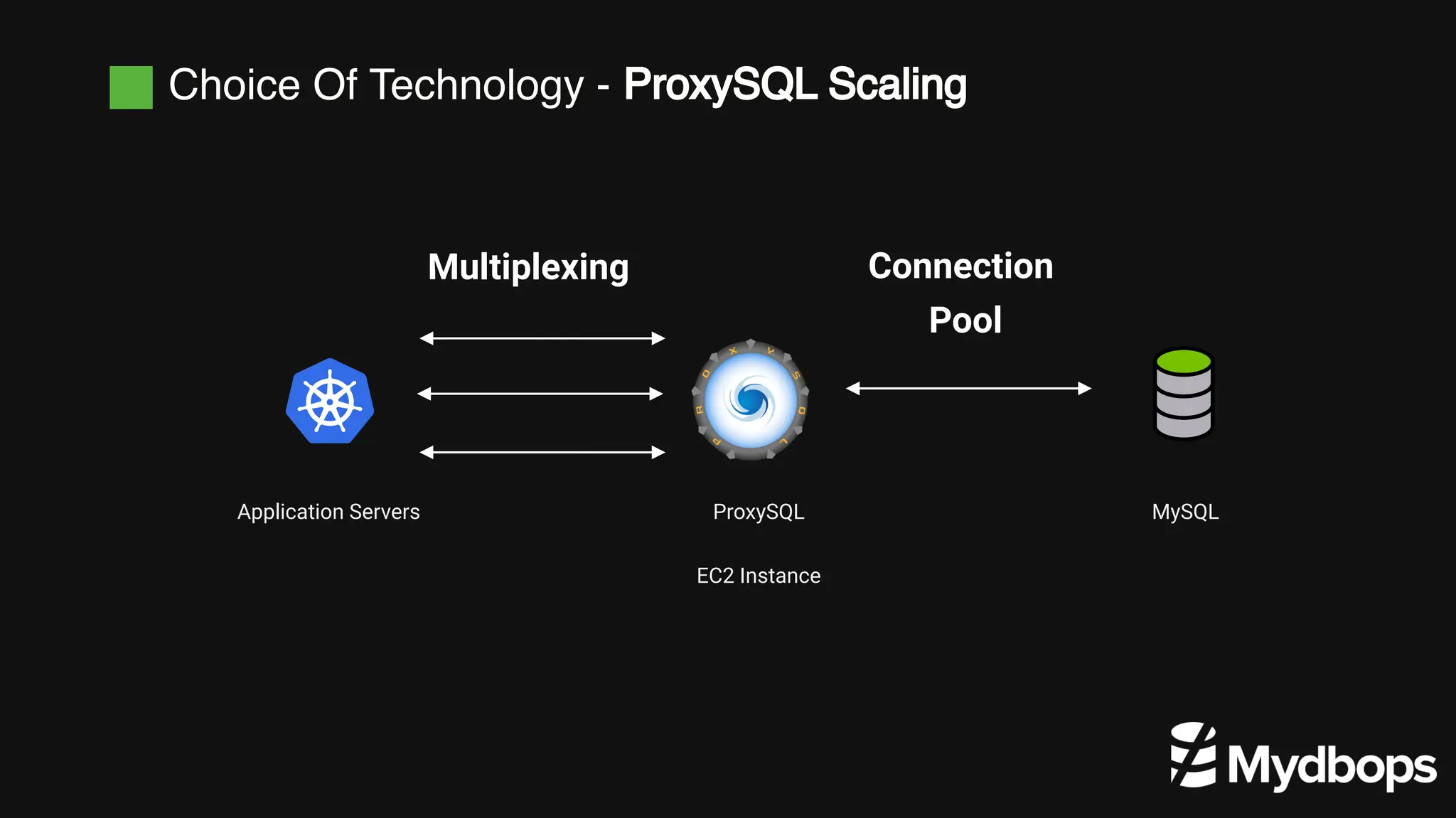
Multiplexing
Choice Of Technology - ProxySQL Scaling
Application Servers ProxySQL
EC2 Instance
MySQL
Connection
Pool
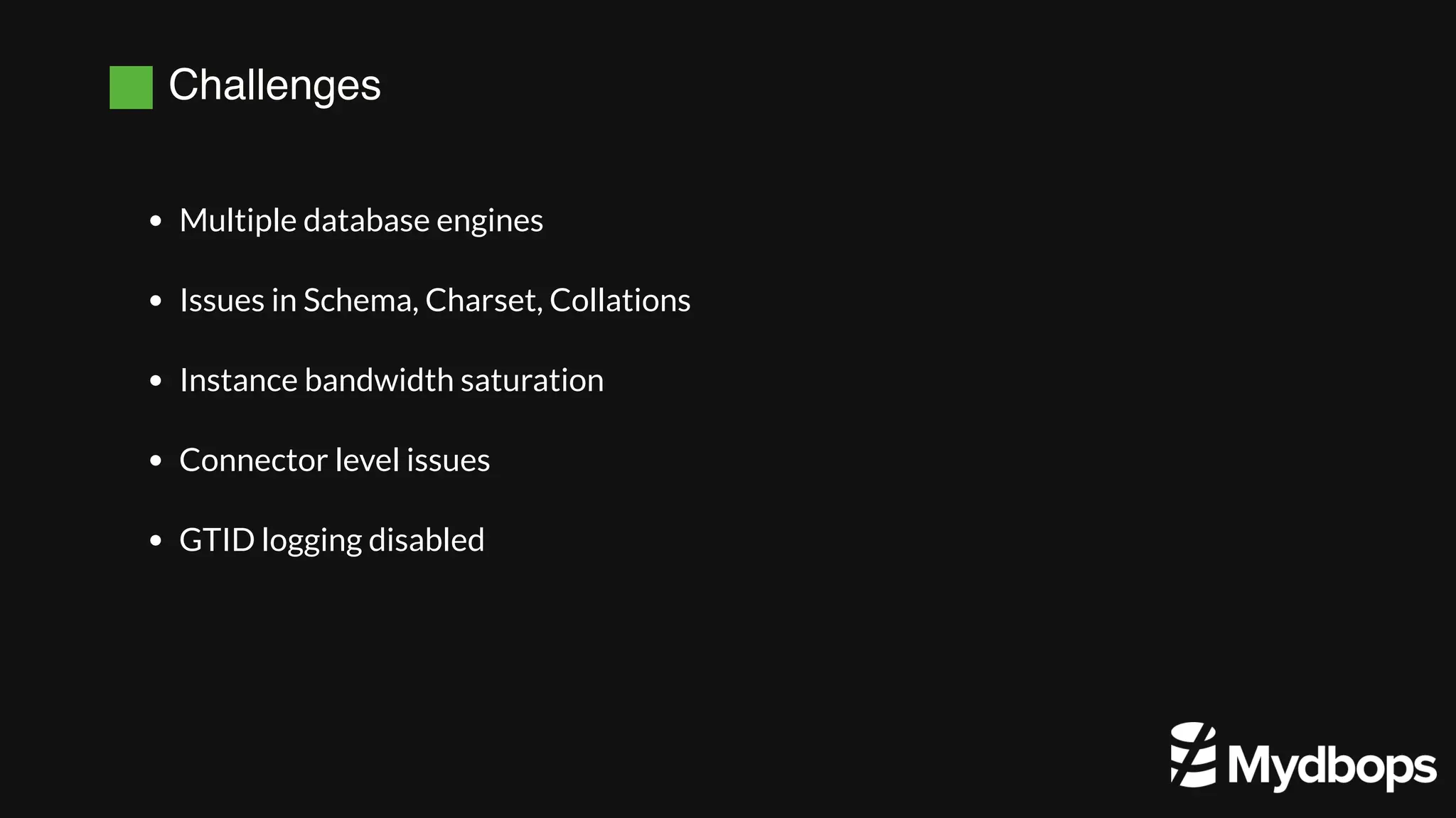
Challenges
Multiple database engines
Issues in Schema, Charset, Collations
Instance bandwidth saturation
Connector level issues
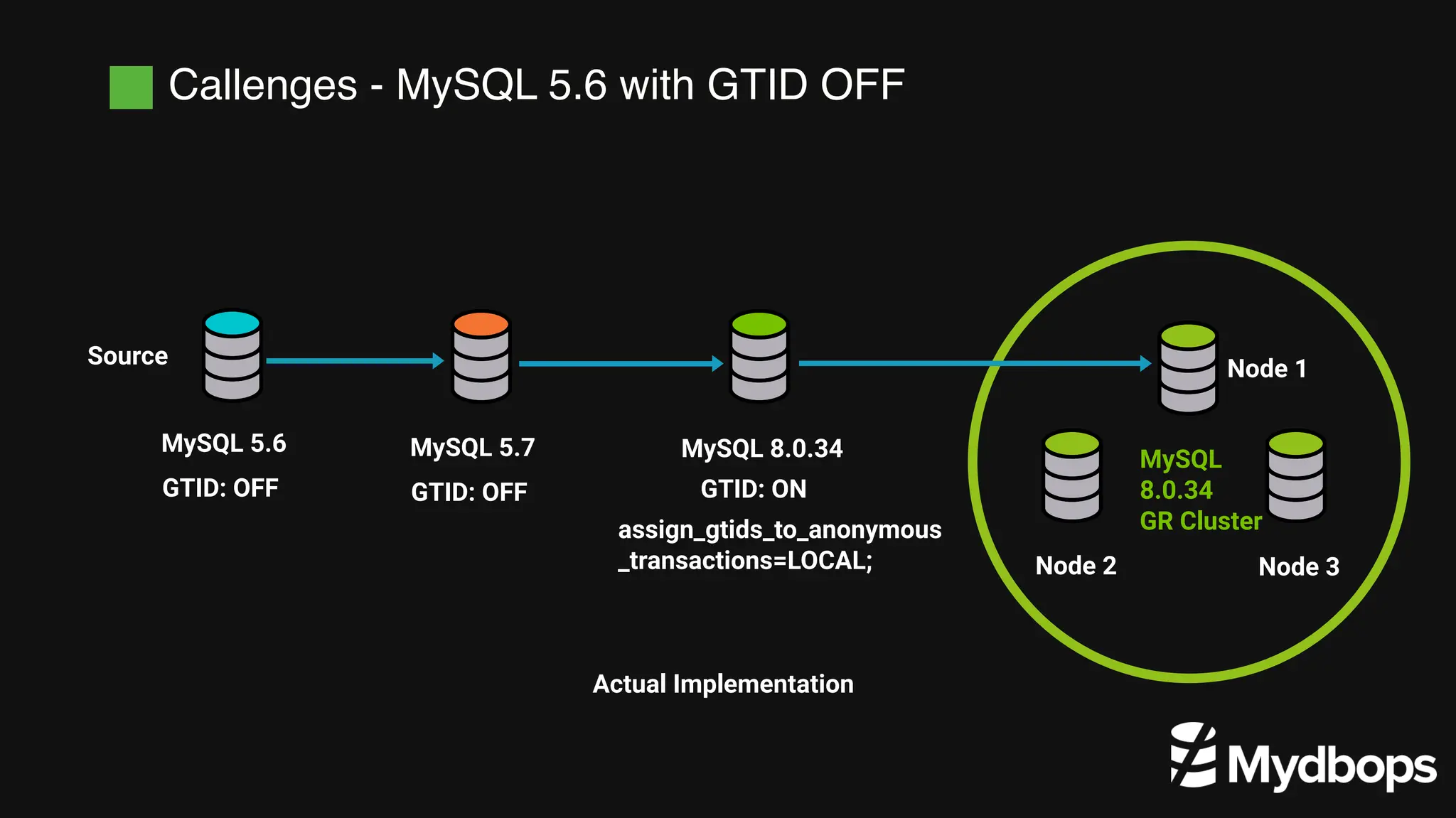
GTID logging disabled
Callenges - MySQL 5.6 with GTID OFF
Source
MySQL 8.0.34
MySQL 5.6
GTID: OFF
MySQL 5.7
GTID: OFF GTID: ON
assign_gtids_to_anonymous
_transactions=LOCAL;
Node 1
Node 2 Node 3
MySQL
8.0.34
GR Cluster
Actual Implementation
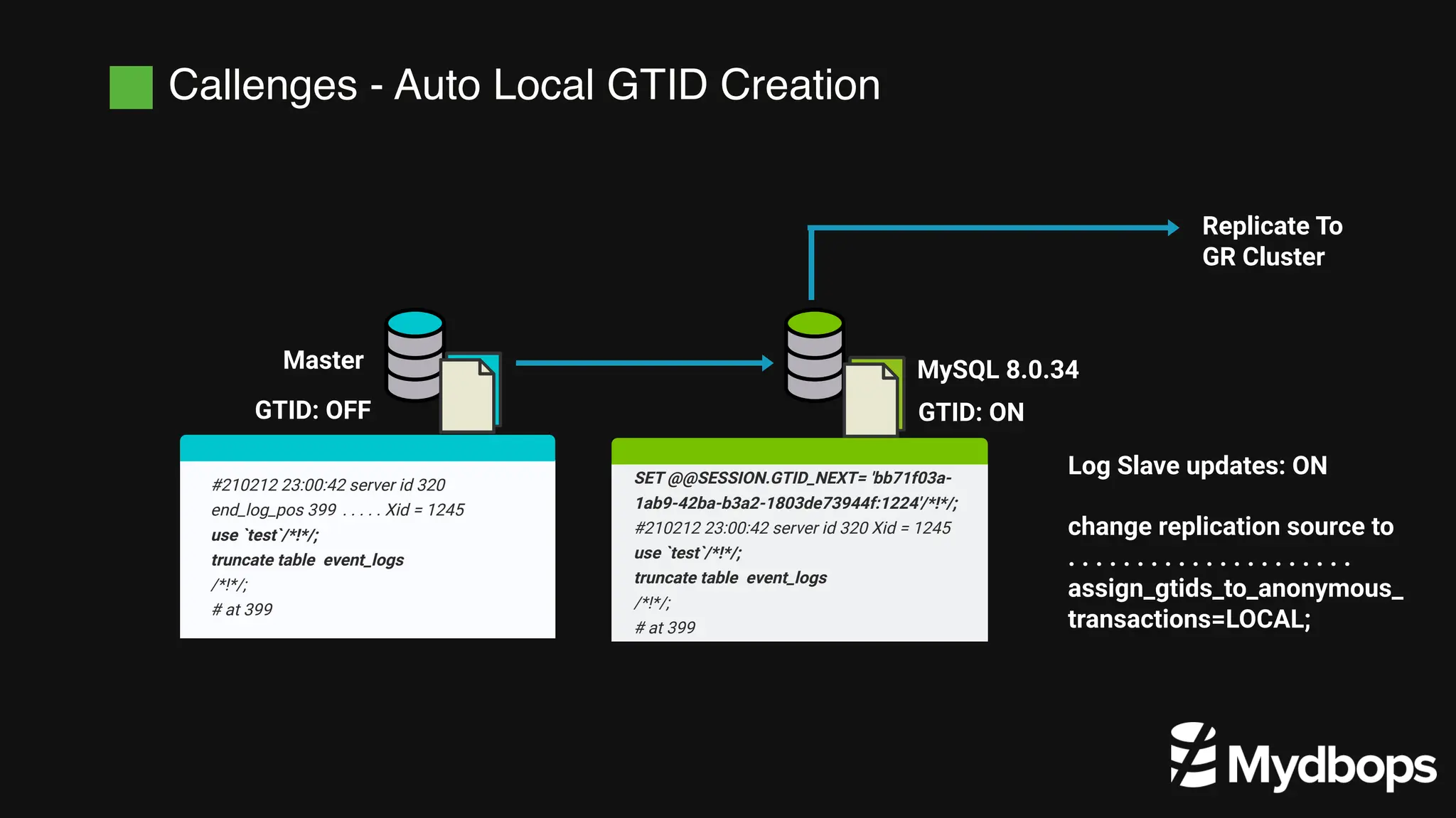
Callenges - Auto Local GTID Creation
Master MySQL 8.0.34
GTID: OFF GTID: ON
Log Slave updates: ON
change replication source to
. . . . . . . . . . . . . . . . . . . . .
assign_gtids_to_anonymous_
transactions=LOCAL;
#210212 23:00:42 server id 320
end_log_pos 399 . . . . . Xid = 1245
use `test`/*!*/;
truncate table event_logs
/*!*/;
# at 399
SET @@SESSION.GTID_NEXT= 'bb71f03a-
1ab9-42ba-b3a2-1803de73944f:1224'/*!*/;
#210212 23:00:42 server id 320 Xid = 1245
use `test`/*!*/;
truncate table event_logs
/*!*/;
# at 399
Replicate To
GR Cluster
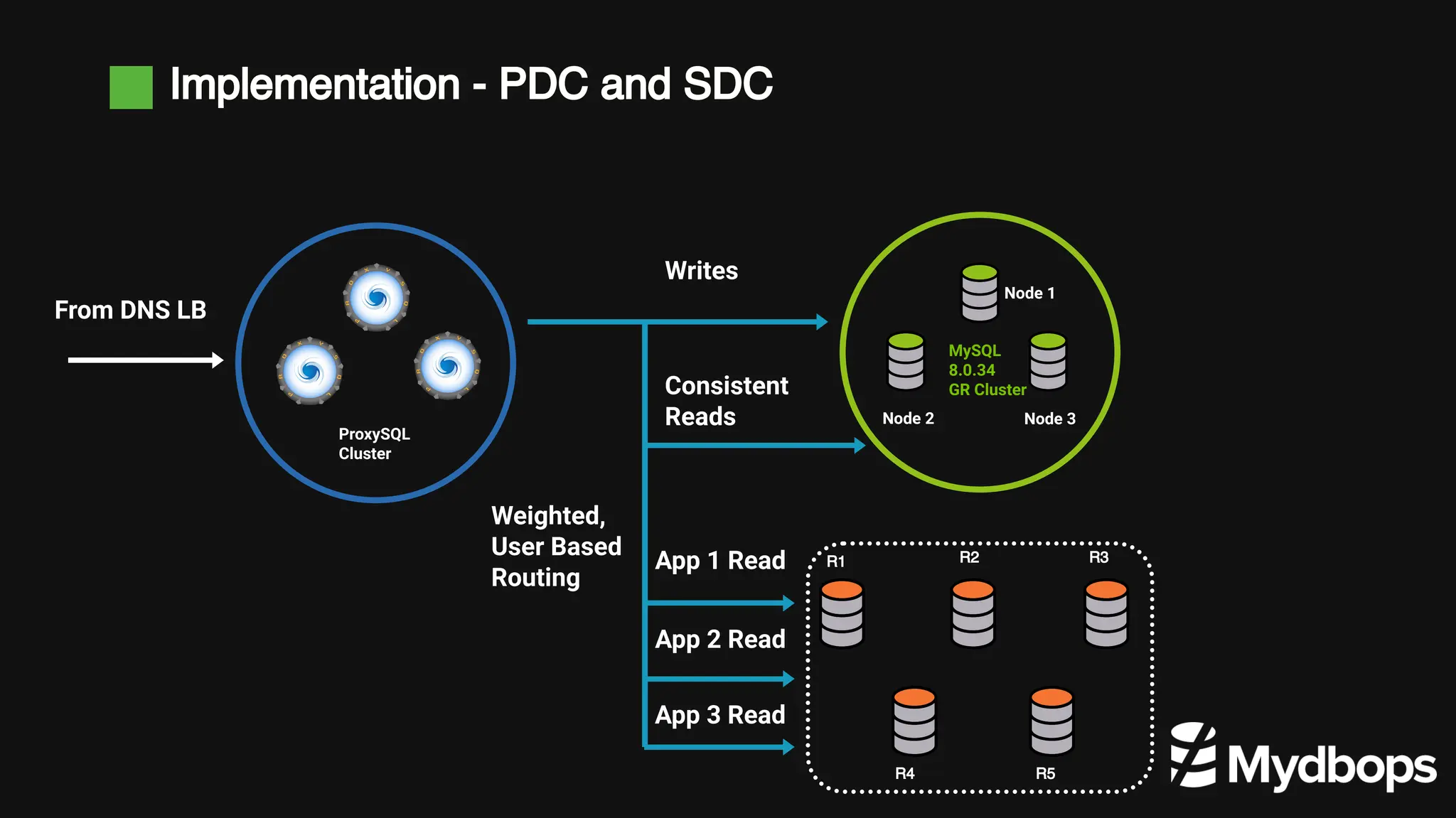
Implementation - PDC and SDC
Node 1
Node 2 Node 3
MySQL
8.0.34
GR Cluster
R1 R2 R3
R4 R5
ProxySQL
Cluster
From DNS LB
Weighted,
User Based
Routing
Writes
Consistent
Reads
App 1 Read
App 2 Read
App 3 Read
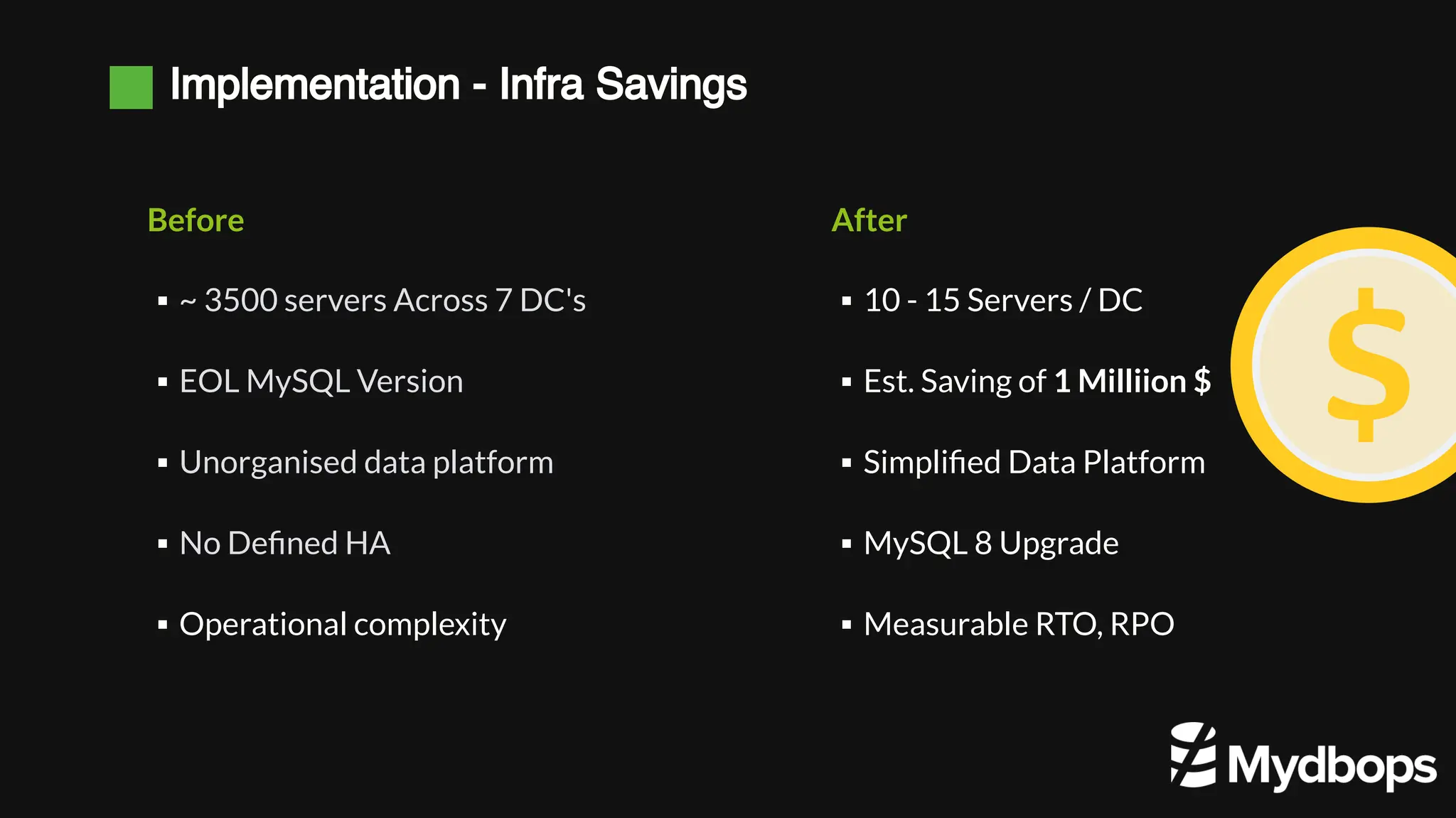
Implementation - Infra Savings
Before
~ 3500 servers Across 7 DC's
▪
EOL MySQL Version
▪
Unorganised data platform
▪
No Defined HA
▪
Operational complexity
▪
After
10 - 15 Servers / DC
▪
Est. Saving of 1 Milliion $
▪
Simplified Data Platform
▪
MySQL 8 Upgrade
▪
Measurable RTO, RPO
▪
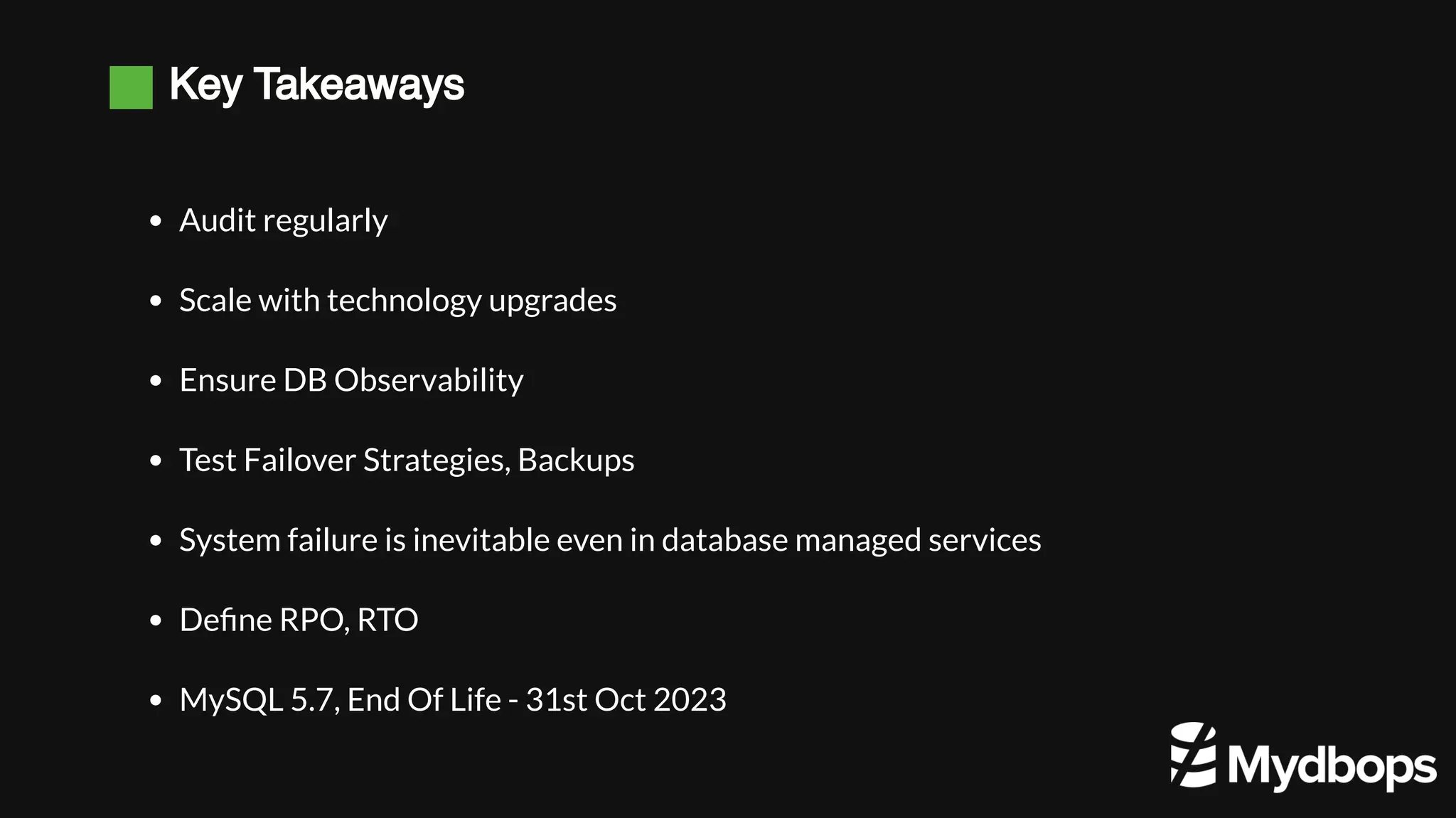
Key Takeaways
Audit regularly
Scale with technology upgrades
Ensure DB Observability
Test Failover Strategies, Backups
System failure is inevitable even in database managed services
Define RPO, RTO
MySQL 5.7, End Of Life - 31st Oct 2023
Thank You!

MySQL Transformation Case Study: 80% Cost Savings & Uninterrupted Availability - Mydbops Meetup 14

  • 1.
    07 October 2023 MydbopsOpen Source Database Meetup 14 Vinoth Kanna RS Co-Founder, Mydbops MySQL Database Transformation Case Study
  • 2.
    Interested in OpenSource technologies ▪ MySQL, MongoDB Certified Professional ▪ Active MySQL Community Contributor ▪ Tech Speaker/Blogger ▪ Co-Founded, Mydbops IT Solutions, 2016 ▪ Vinoth Kanna RS About Me
  • 3.
    Mydbops at a glance 300+ Clients 3000+ Servers ISO &PCI DSS Certified 7 Yrs of Expertise AWS Advanced Consulting Partner TiDB PingCap Partner
  • 4.
    Mydbops Services Consulting Services Managed Services MySQL, MongoDB,PostgreSQL, TiDB & Cassandra Targeted Engagement 24 x 7 DBA Team
  • 5.
  • 6.
    Case Brief Audit DBinfrastructure ▪ Reduce TCO without impacting Performance, Availability ▪ Plan for version upgrade ▪ Decouple application and database ▪ Propose and Implement best practices (HA, Backups, etc) ▪
  • 7.
    Case Brief -MySQL DB Infra DC 1 PDC Source PDC R 01 PDC R 02 PDC R 03 PDC R 700 DC 2 SDC Relay SDC R1 SDC R2 SDC R3 SDC R 700 DC 7 DC7 Relay DC7 R1 DC7 R2 DC7 R3 DC7 R 700 PDC - Primary DC SDC - Secondary DC R - Replica App + DB Hosted On All Servers MySQL Version - 5.6
  • 8.
    Observability Generic Database Monitoring Providedatabase stats ▪ Informative ▪ Organised based on component or technology ▪ Difficulties in navigation ▪ Battlecat Built to suit ▪ Decisive ▪ Translate Industry expertise to a product that can be used to manage databases at scale ▪ OS Exporters + Custom Exporters ▪
  • 9.
    Observability Concurrency ▪ Connections ▪ Bandwidth usage ▪ Query performancemetrics ▪ Varying percentile of queries on the volume being queried ▪ Hotdata volume to be served from application ▪ Other OS metrics ▪
  • 10.
    Observability Average of 150connections established from each application ▪ 1,00,000 - 1,50,000 connections / DC ▪ Critical queries, Approx 10% returned data around 64MB of data / Query ▪ Avg. Active threads and QPS metrics were collected too. ▪ More you consolidate, More the concurrency, Lesser the time to react during issue ▪ Multiple applications and Additional databases on replica ▪
  • 11.
  • 12.
    Choice Of Technology- MySQL HA Solutions Completely Managed Via MySQL Shell Percona XtraDB Cluster / MariaDB Cluster (Galera Plugin Based) Async Replication ▪ Semi Sync Replication ▪ Group Replication Cluster, 2016 ▪ InnoDB Cluster, 2016 ▪ InnoDB Replica Set, 2020 ▪ InnoDB Clusterset, 2021 ▪ Goal: RPO = 0 RTO ~ Seconds
  • 13.
    Choice Of Technology- Async Replication
  • 14.
    Choice Of Technology- Semi Sync Replication
  • 15.
    Choice Of Technology- InnoDB Cluster
  • 16.
    Choice Of Technology- InnoDB Cluster Set
  • 17.
    Choice Of Technology- MySQL HA Solutions RTO (Recovery Time Objective) RPO (Recovery Point Objective) Failure Types: How long does it take to recover from a single failure ▪ How much data can be lost when a failure occurs ▪ High Availability: Single Server Failure, Network Partition ▪ Disaster Recovery: Full Region/Network Failure ▪ Human Errors ▪
  • 18.
    Choice Of Technology- Group Replication Cluster MySQL's Native HA Solution Synchronous Replication Group replication has turned more stable, improved well with 8.0 release Tuneable Consistency Scale out reads effectively Configurable Writer Modes Built on robust replication framework uses binlogs with GTID for replication
  • 19.
    Choice Of Technology- MySQL Compatible Load Balancers MySQL Router ▪ Maxscale ▪ ProxySQL ▪ HA Proxy ▪ TCP / DNS based load balancing ▪
  • 20.
    Choice Of Technology- Database Aware Load Balancers Schema Based Routing SQL Regex Based Routing User Based Routing Load Balancing Replication, Group Replication, Galera Replication Awareness Connection Pooling Audit Logging Native Read Write Split Query Caching Query Mirroring
  • 21.
    Choice Of Technology- ProxySQL Ability to scale better in multi core systems Clustering, Config management can be simplified Measurable performance (qps or connections) / vpcu Audit Logging, JSON Format, Introduced On v 2.0.6 Synchronous Replication Dynamic / Runtime configuration changes, Provides granular control Routing and Query statistics exposed are extensive and useful
  • 22.
    Choice Of Technology- ProxySQL Scaling Connection Pooling Audit Logging Multiplexing
  • 23.
    Multiplexing Choice Of Technology- ProxySQL Scaling Application Servers ProxySQL EC2 Instance MySQL Connection Pool
  • 24.
    Challenges Multiple database engines Issuesin Schema, Charset, Collations Instance bandwidth saturation Connector level issues GTID logging disabled
  • 25.
    Callenges - MySQL5.6 with GTID OFF Source MySQL 8.0.34 MySQL 5.6 GTID: OFF MySQL 5.7 GTID: OFF GTID: ON assign_gtids_to_anonymous _transactions=LOCAL; Node 1 Node 2 Node 3 MySQL 8.0.34 GR Cluster Actual Implementation
  • 26.
    Callenges - AutoLocal GTID Creation Master MySQL 8.0.34 GTID: OFF GTID: ON Log Slave updates: ON change replication source to . . . . . . . . . . . . . . . . . . . . . assign_gtids_to_anonymous_ transactions=LOCAL; #210212 23:00:42 server id 320 end_log_pos 399 . . . . . Xid = 1245 use `test`/*!*/; truncate table event_logs /*!*/; # at 399 SET @@SESSION.GTID_NEXT= 'bb71f03a- 1ab9-42ba-b3a2-1803de73944f:1224'/*!*/; #210212 23:00:42 server id 320 Xid = 1245 use `test`/*!*/; truncate table event_logs /*!*/; # at 399 Replicate To GR Cluster
  • 27.
    Implementation - PDCand SDC Node 1 Node 2 Node 3 MySQL 8.0.34 GR Cluster R1 R2 R3 R4 R5 ProxySQL Cluster From DNS LB Weighted, User Based Routing Writes Consistent Reads App 1 Read App 2 Read App 3 Read
  • 28.
    Implementation - InfraSavings Before ~ 3500 servers Across 7 DC's ▪ EOL MySQL Version ▪ Unorganised data platform ▪ No Defined HA ▪ Operational complexity ▪ After 10 - 15 Servers / DC ▪ Est. Saving of 1 Milliion $ ▪ Simplified Data Platform ▪ MySQL 8 Upgrade ▪ Measurable RTO, RPO ▪
  • 29.
    Key Takeaways Audit regularly Scalewith technology upgrades Ensure DB Observability Test Failover Strategies, Backups System failure is inevitable even in database managed services Define RPO, RTO MySQL 5.7, End Of Life - 31st Oct 2023
  • 30.