MY POINT OF VIEW
CREATIVE WORKSHOP
26.7.2021
© Onno Hansen-Staszyński & Beata Staszyńska-Hansen
We’ve all done it
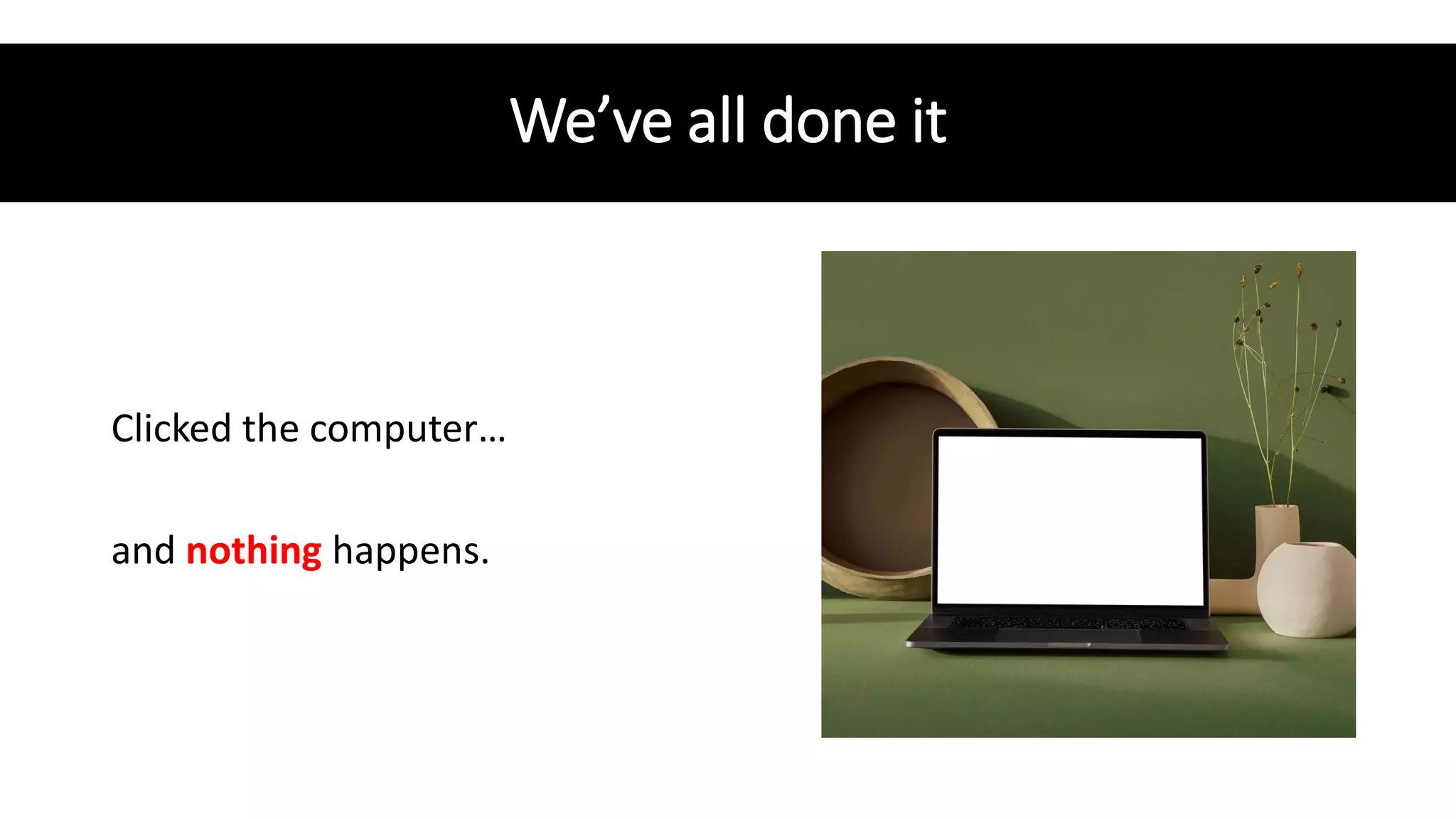
Clicked the computer…
and nothing happens.
When that happens
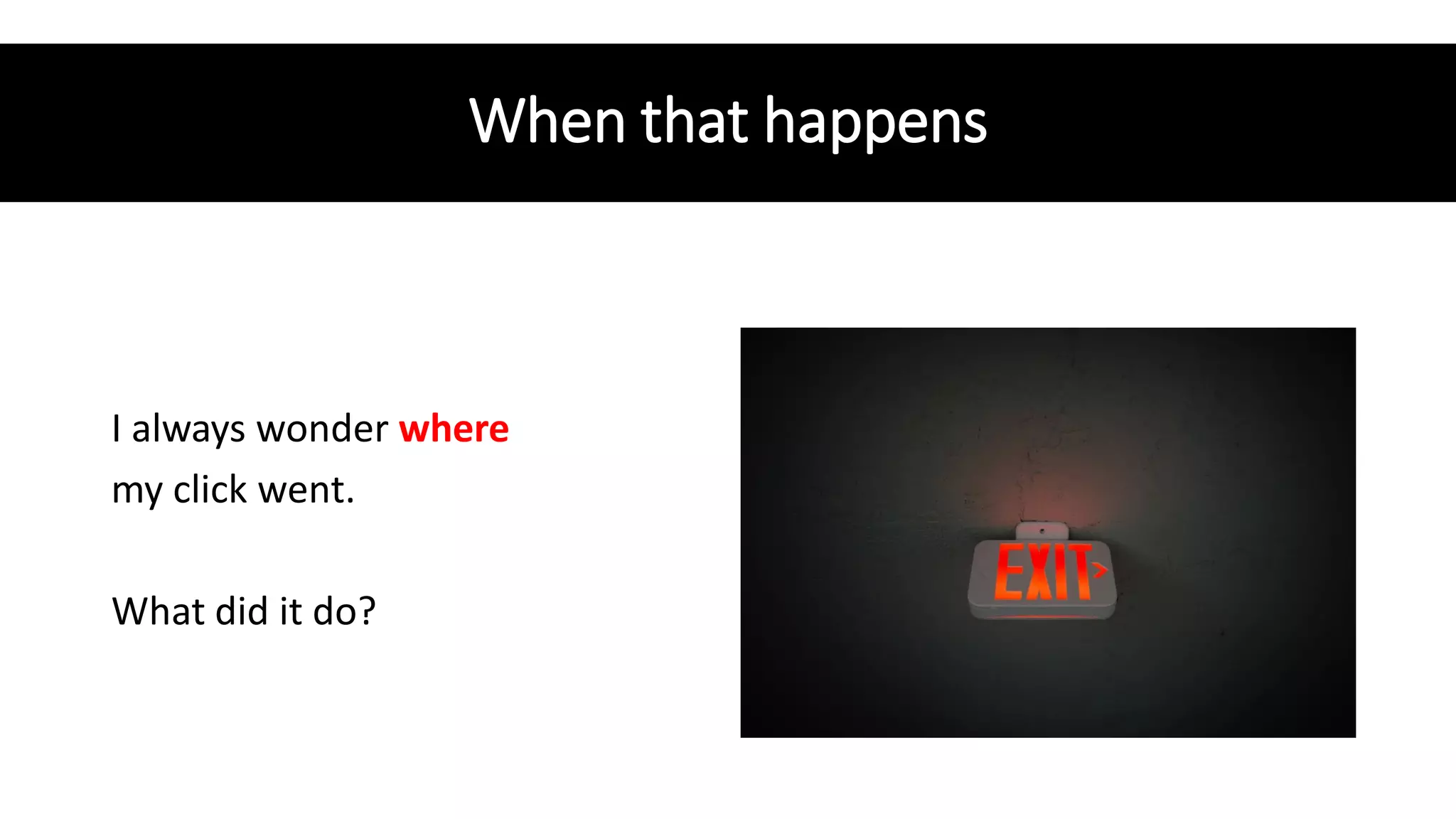
I always wonder where
my click went.
What did it do?
Reason: our brain is made to think causal
When there is an action,
there should be an effect:
there should be cause and effect.
So when I click my computer
I expect an effect.
Technology
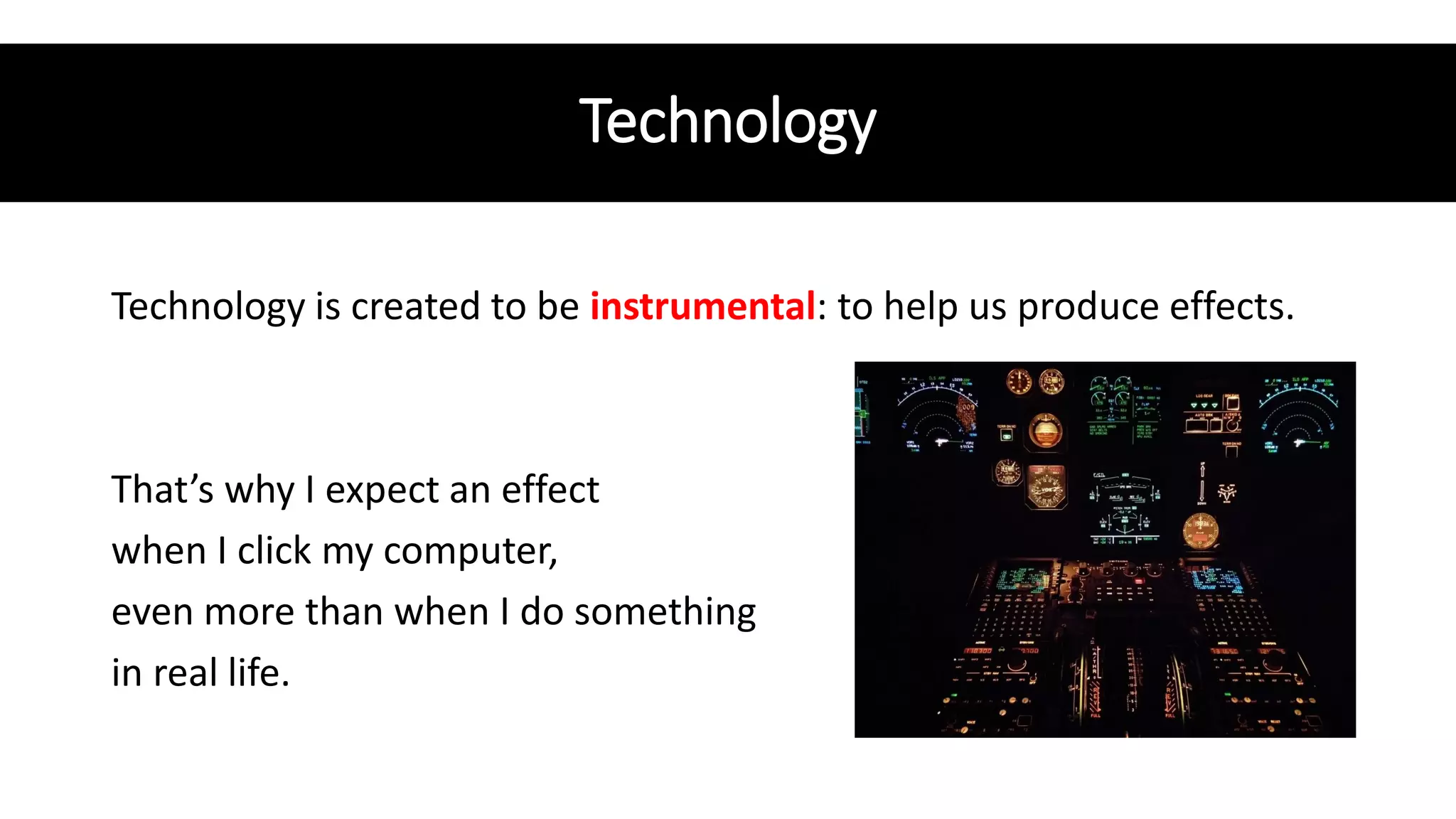
Technology is created to be instrumental: to help us produce effects.
That’s why I expect an effect
when I click my computer,
even more than when I do something
in real life.
Taking pictures
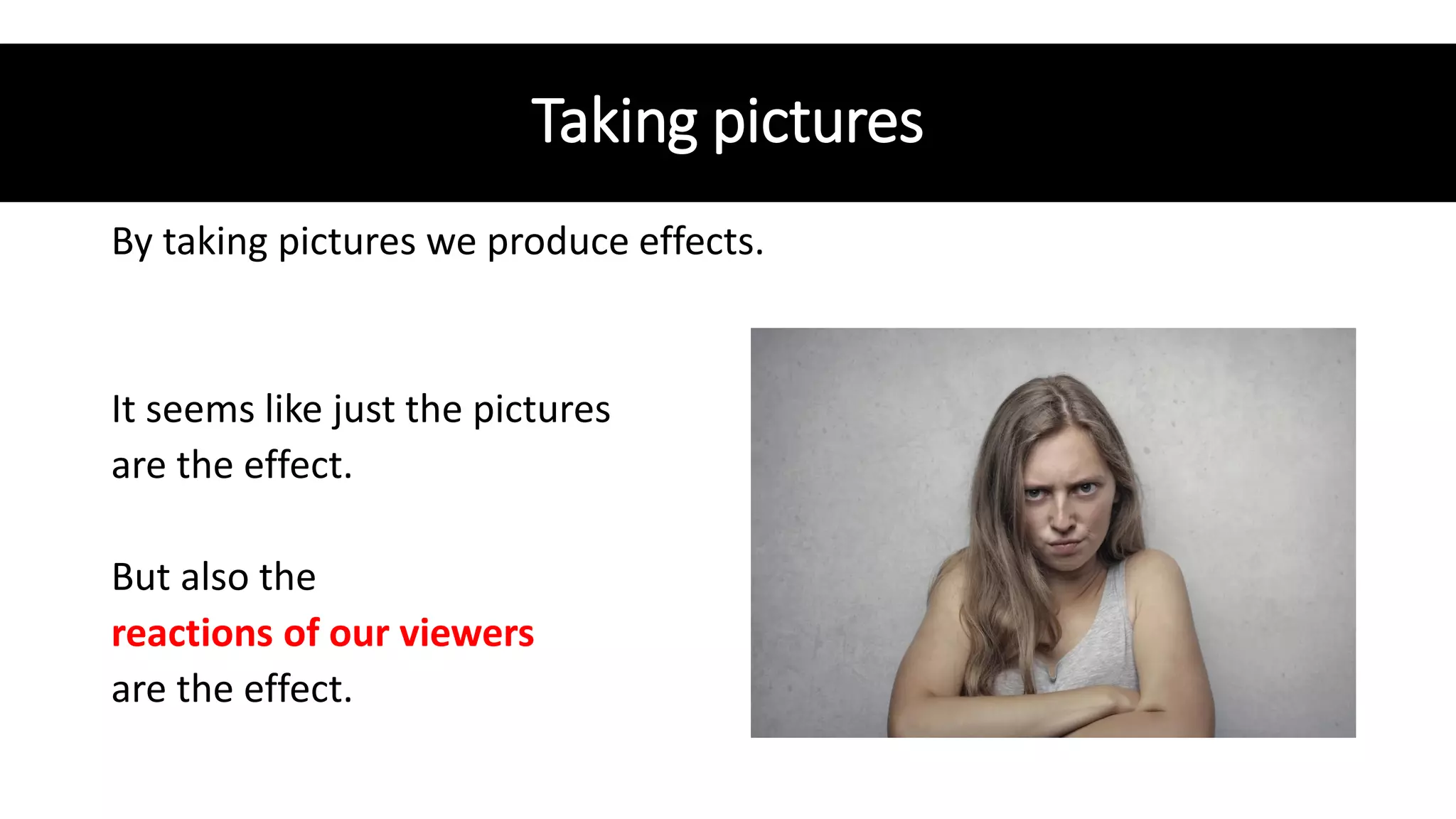
By taking pictures we produce effects.
It seems like just the pictures
are the effect.
But also the
reactions of our viewers
are the effect.
Our viewers look for causes
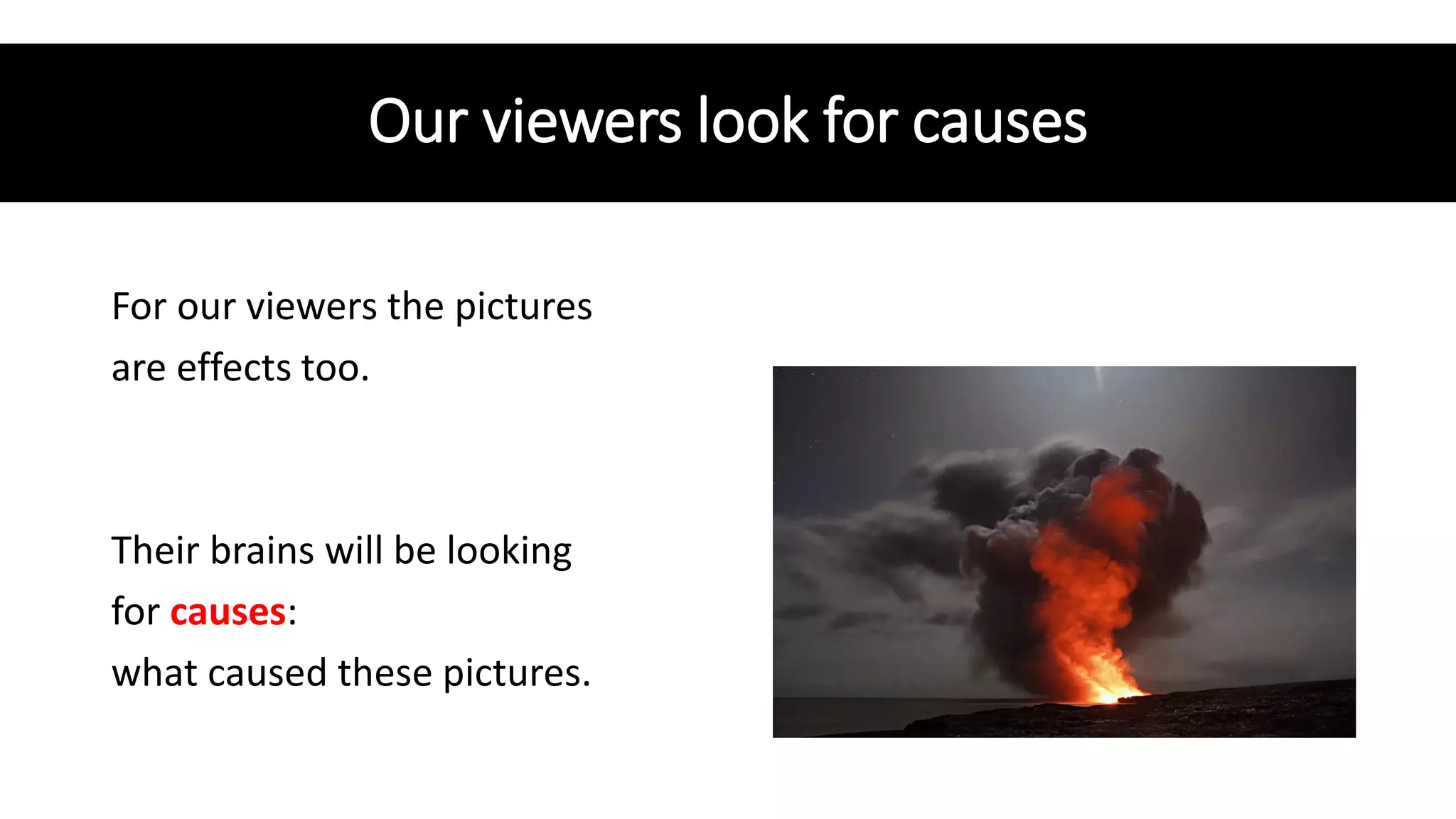
For our viewers the pictures
are effects too.
Their brains will be looking
for causes:
what caused these pictures.
Pictures are special
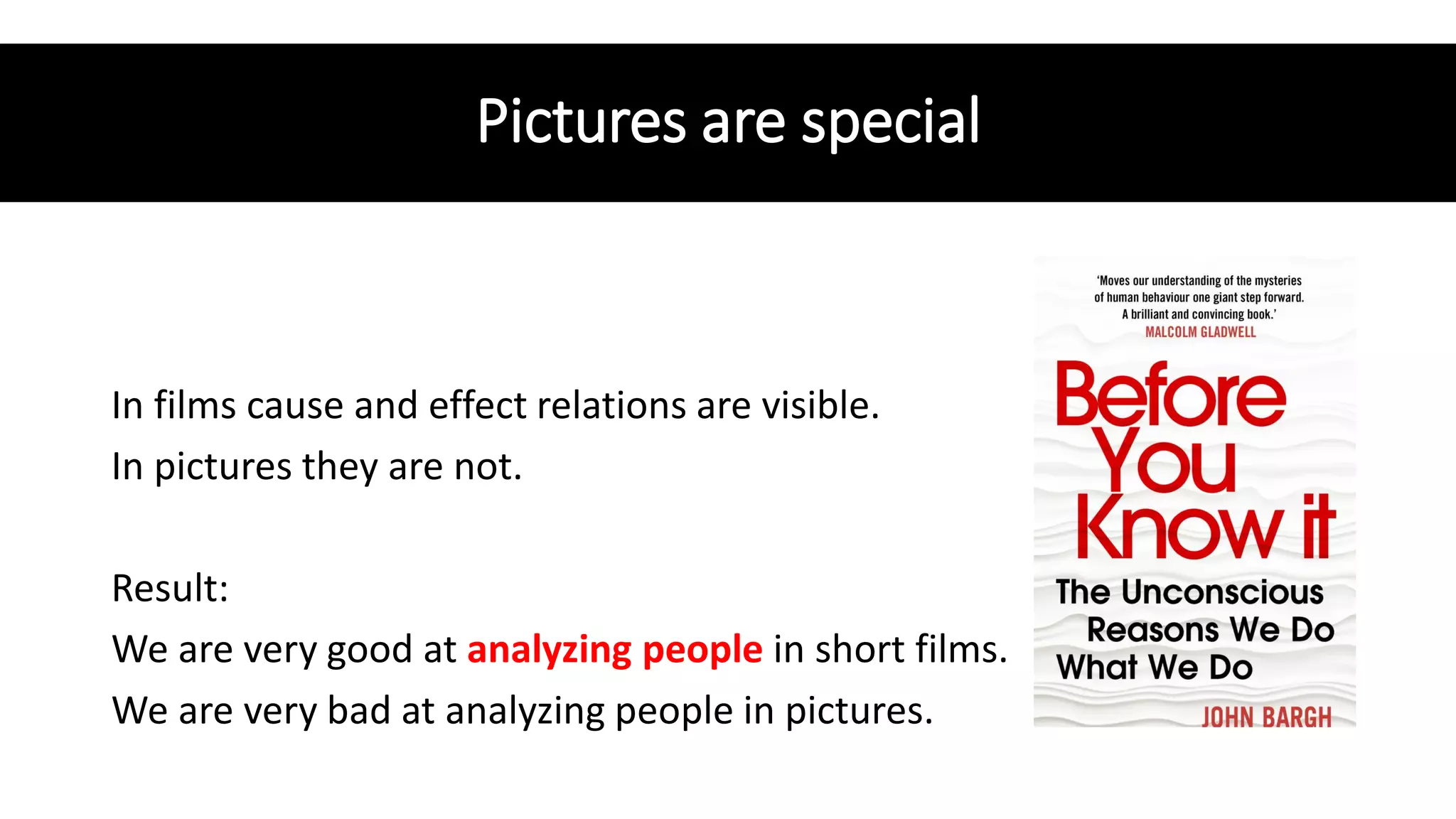
In films cause and effect relations are visible.
In pictures they are not.
Result:
We are very good at analyzing people in short films.
We are very bad at analyzing people in pictures.
For us a picture is a still from reality
We are aware of what happened before we took a picture.
And what happened after we took a picture.
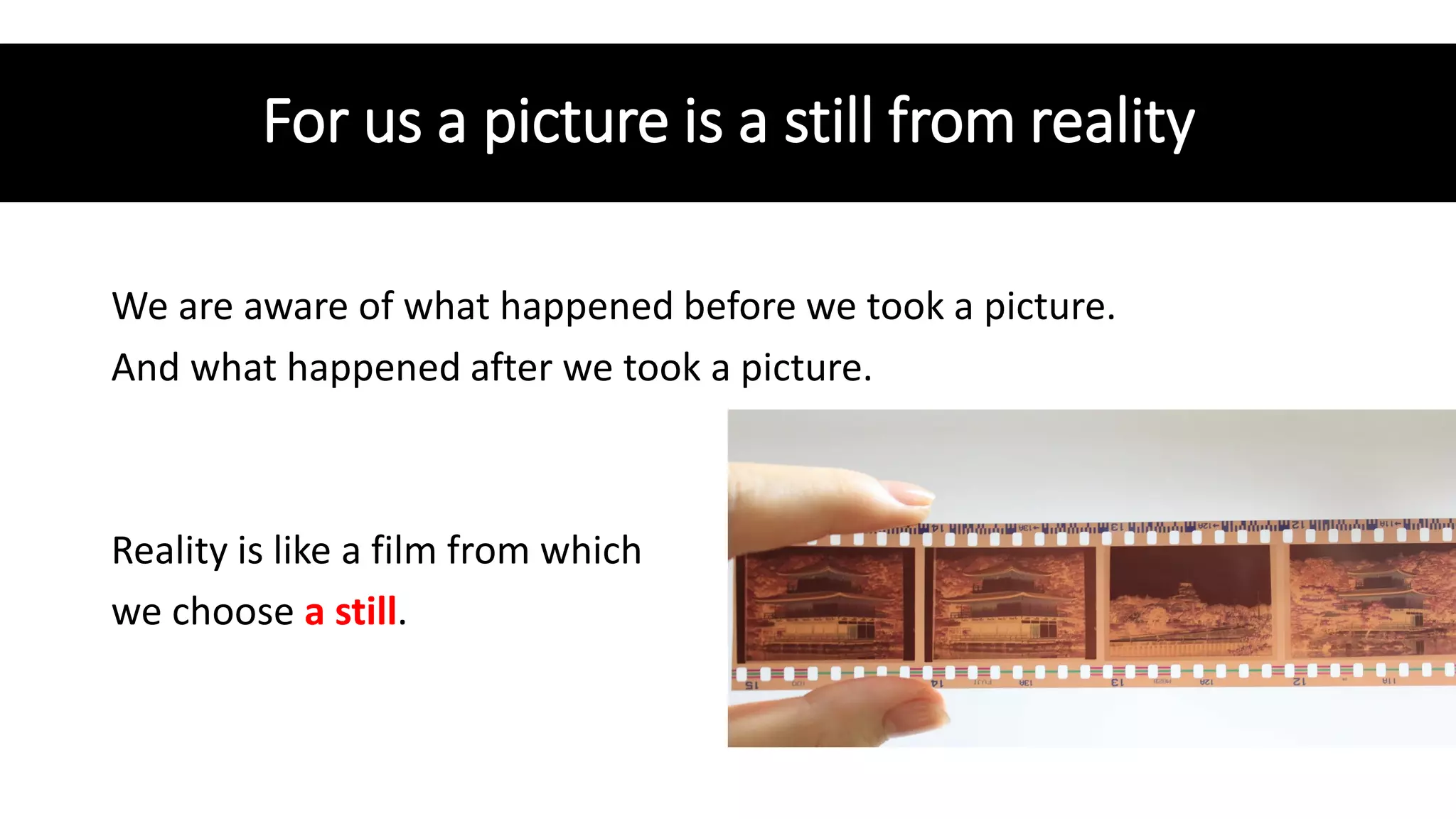
Reality is like a film from which
we choose a still.
The viewer’s perspective
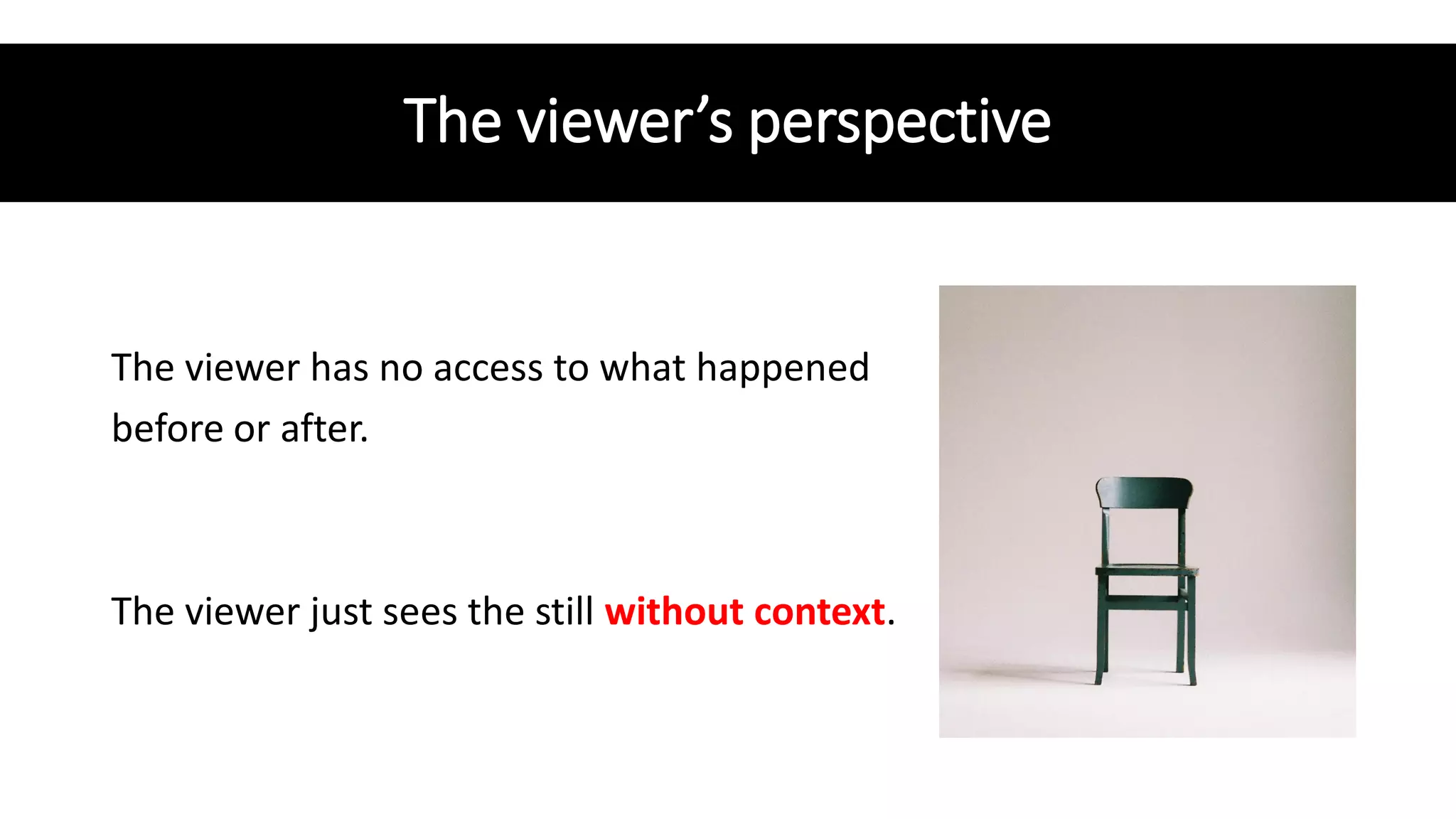
The viewer has no access to what happened
before or after.
The viewer just sees the still without context.
We need to help our viewers
If we do not provide clues viewers will start fantasizing or being bored.
The more we provide clues, the more
we help our viewers
understand our pictures.
Clue 1: create a photoreport
Producing a series of photos is like producing a short film: you provide
the viewers with a before and an after context.
During your stay you will daily create
photoreports that will be published
the next day.
Concrete activities
• Today: this workshop will prepare you for creating photoreports.
• During each day you will take pictures in order to create a
photoreport – one photoreport per partner.
• Every morning you will create a photoreport per partner.
• 27.7 (8:30-9:00) room 46
• 28.7 (8:30-9:00) room 46
• 29.7 (8:30-9:00) room 46
• 30.7 (11:00-11:30) room 46
Your photoreport
Each daily photoreport:
• Has a topic - all pictures are to be consistent with the topic and with each other
(and with the programme). So choose a common topic before taking pictures.
• Consists of a minimum of three pictures that you’ll select. Create a folder for the
pictures you took. Create a subfolder for the pictures you’ve selected. And create
a subfolder for those you didn’t select – don’t delete them.
• Will need a title consistent with the topic and the pictures. Choose the title after
you’ve selected your pictures.
• Will need a short description consistent with the topic and the pictures.
• Will be published.
Clue 2: use film language grammar elements
Film language grammar elements:
• Shot size: frame
• Foreground and background
• Composition within the frame
• Light
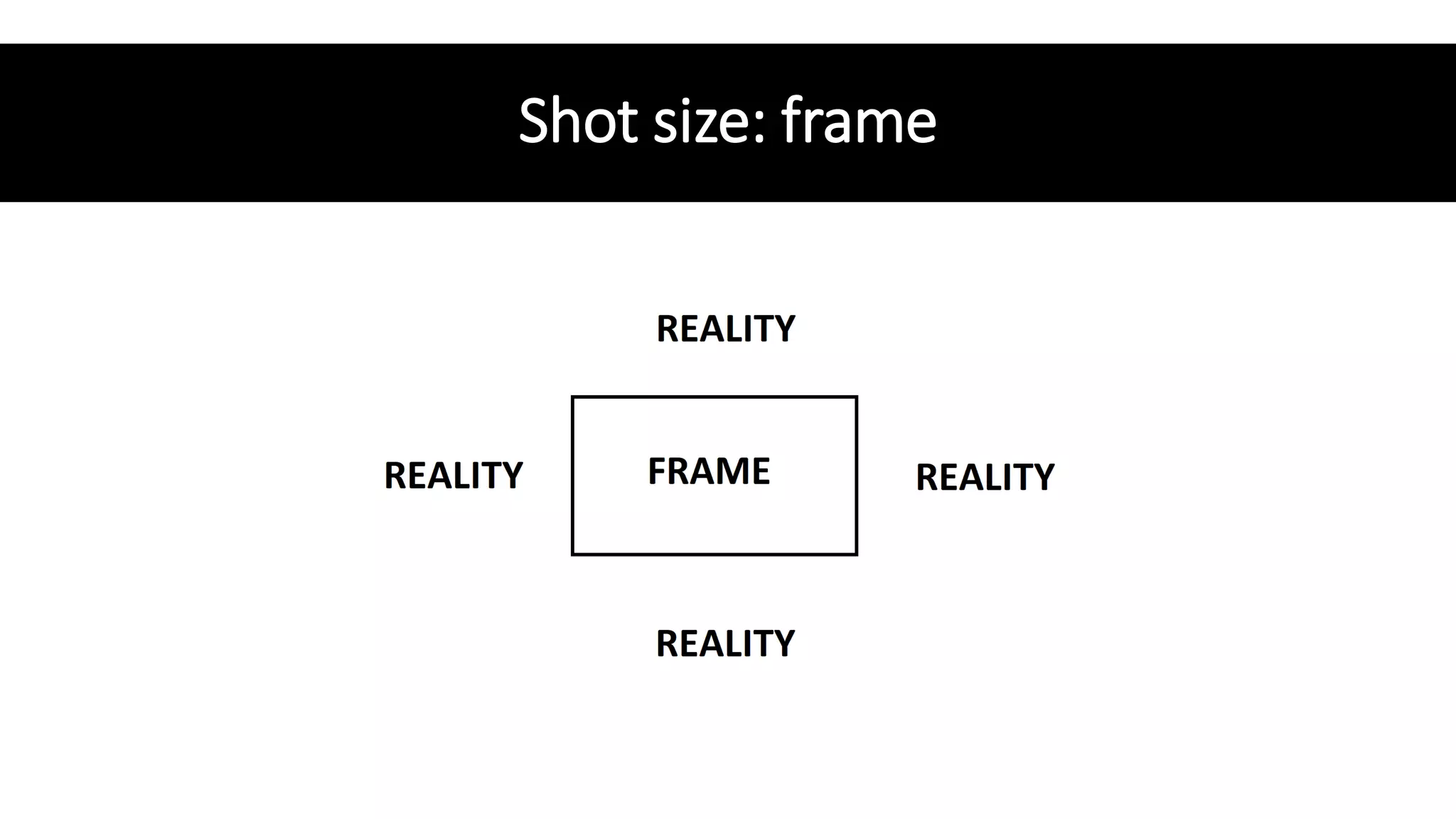
Shot size: frame
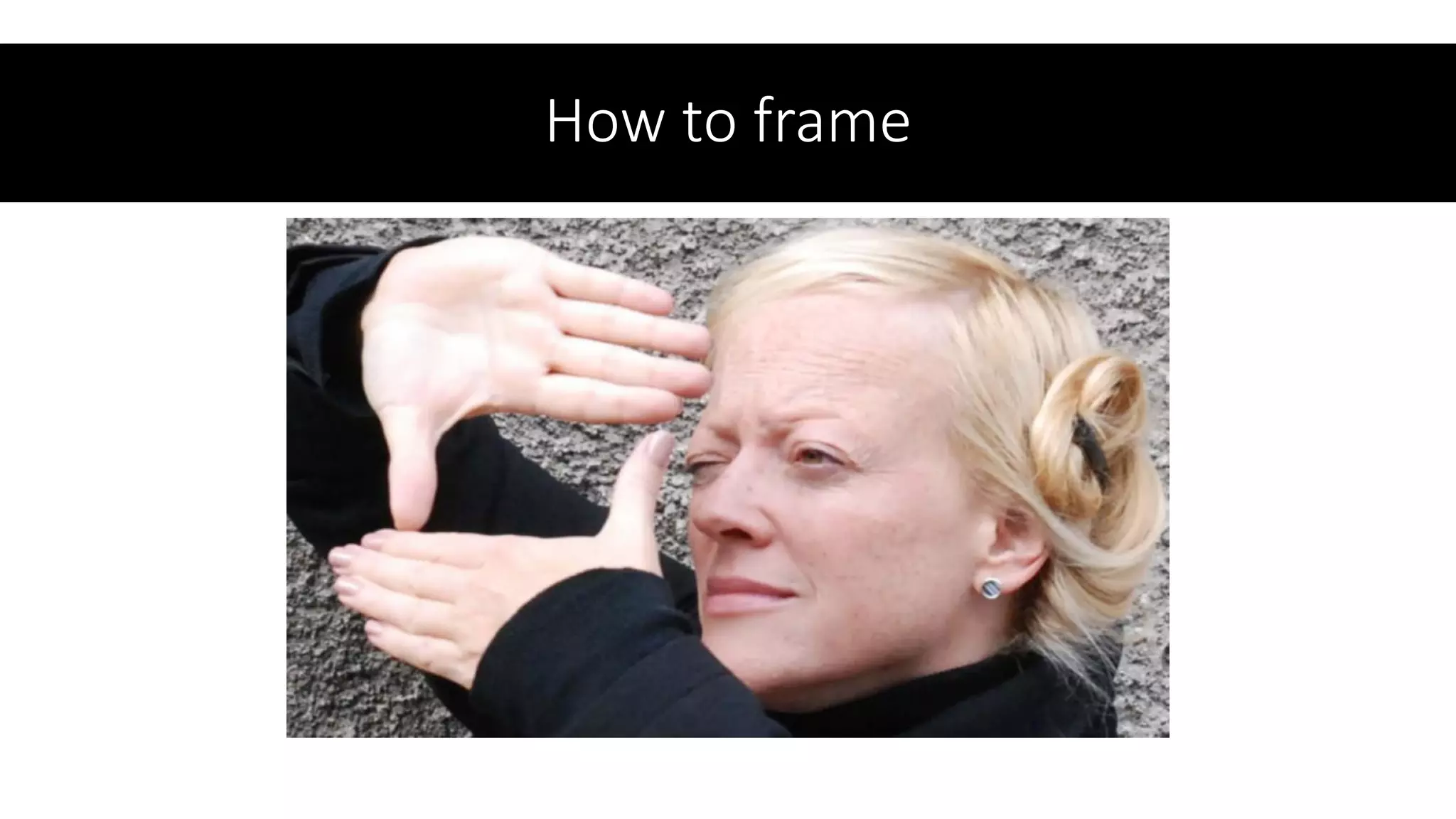
How to frame
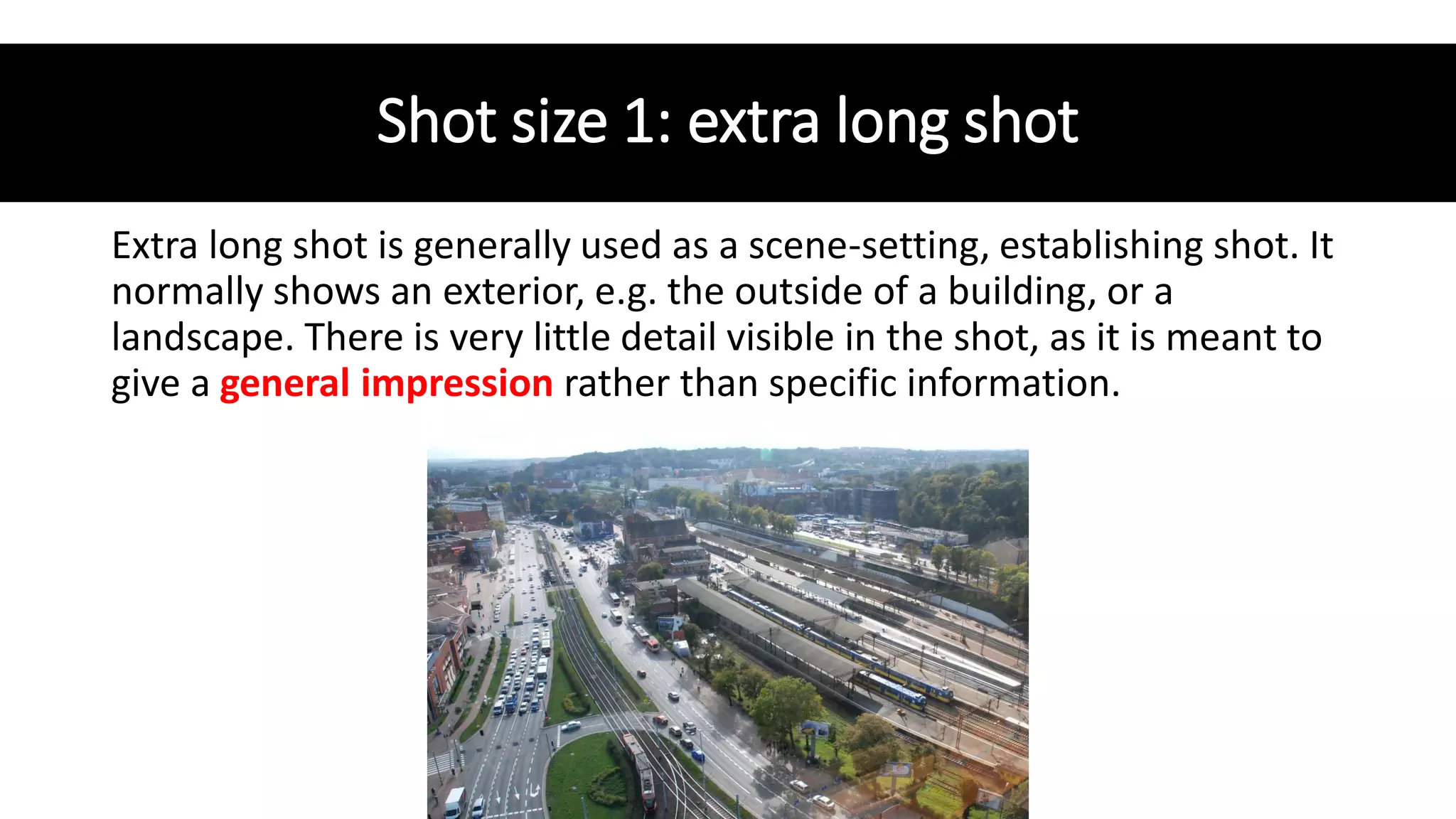
Shot size 1: extra long shot
Extra long shot is generally used as a scene-setting, establishing shot. It
normally shows an exterior, e.g. the outside of a building, or a
landscape. There is very little detail visible in the shot, as it is meant to
give a general impression rather than specific information.
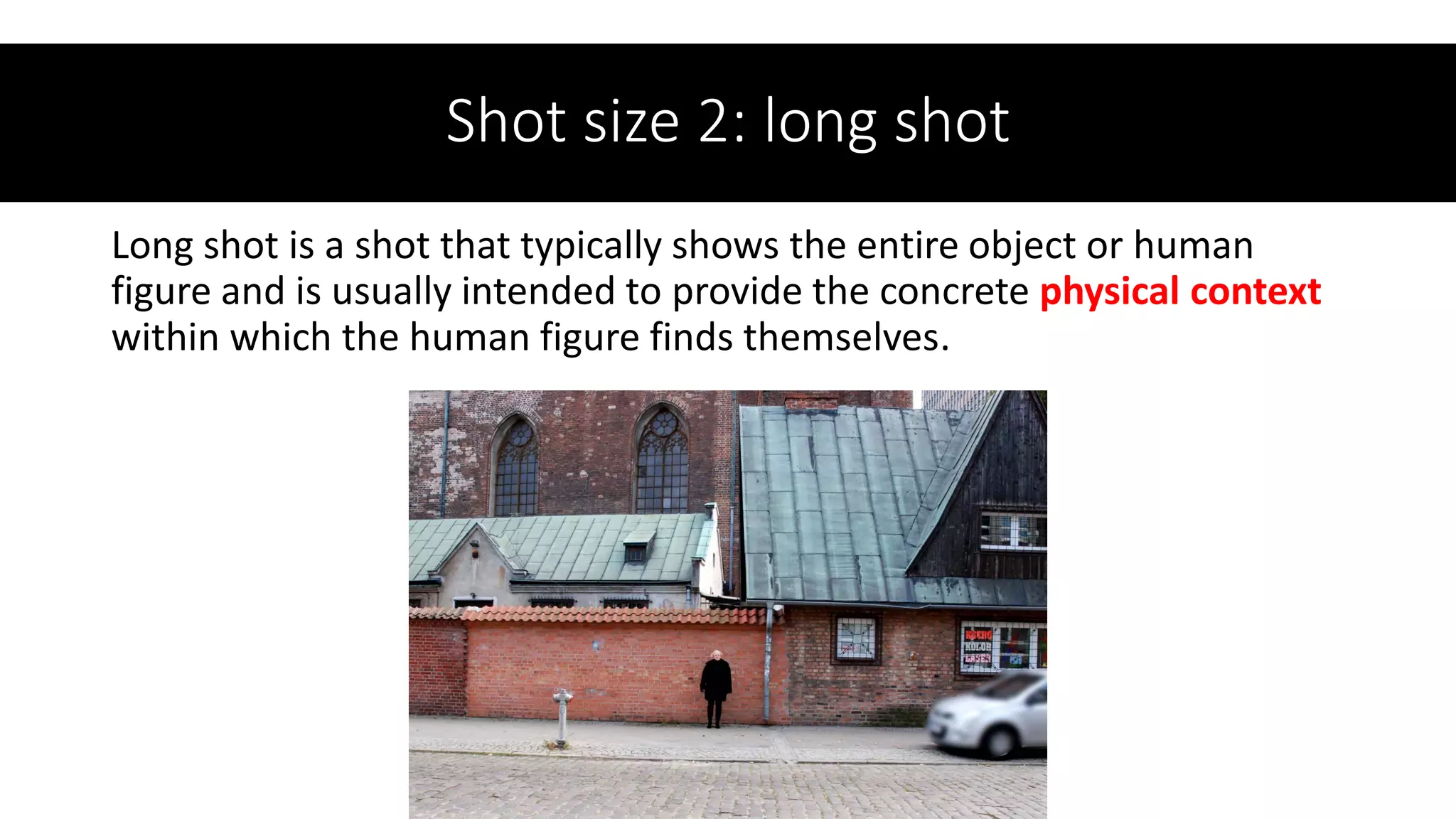
Shot size 2: long shot
Long shot is a shot that typically shows the entire object or human
figure and is usually intended to provide the concrete physical context
within which the human figure finds themselves.
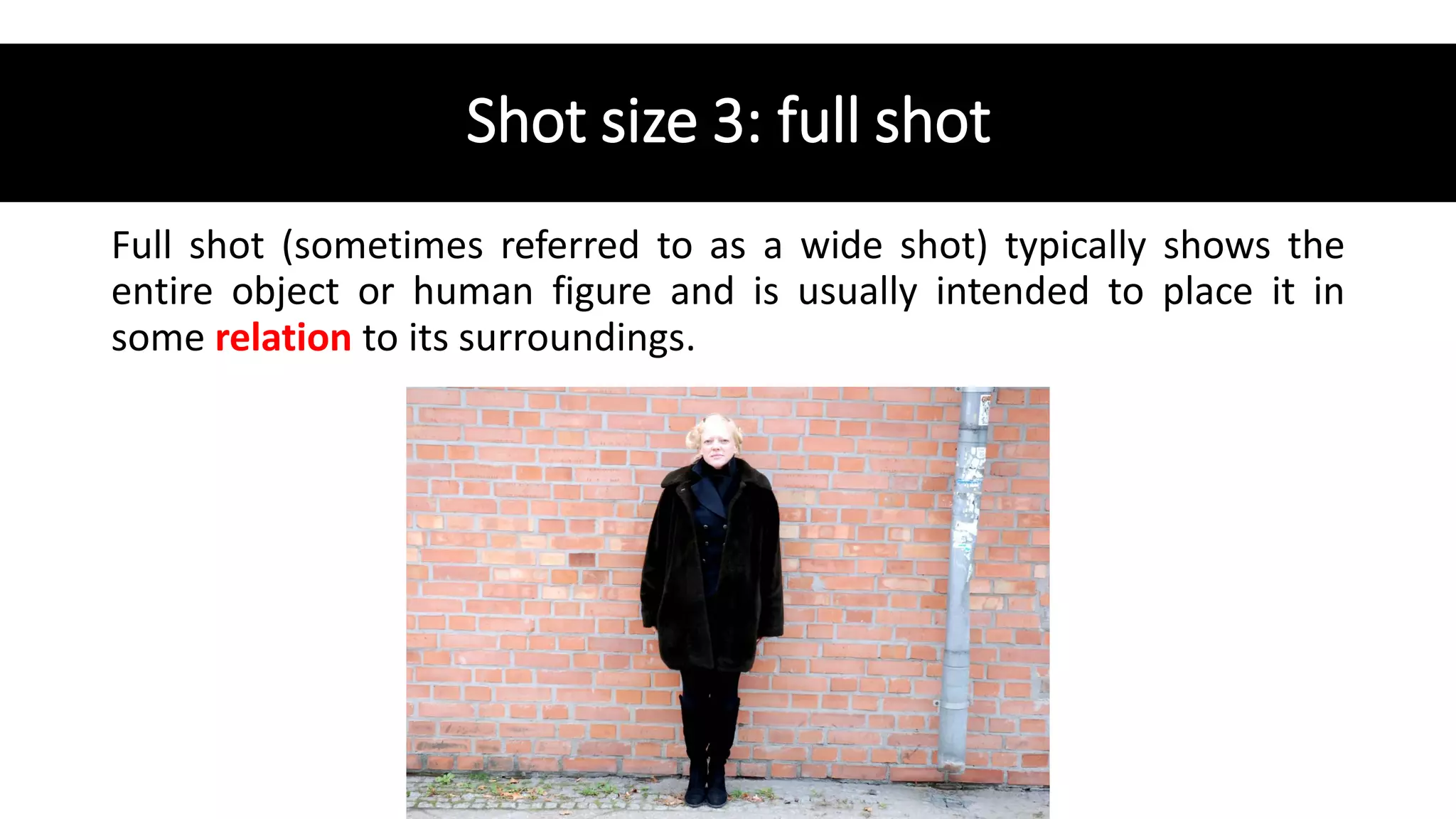
Shot size 3: full shot
Full shot (sometimes referred to as a wide shot) typically shows the
entire object or human figure and is usually intended to place it in
some relation to its surroundings.
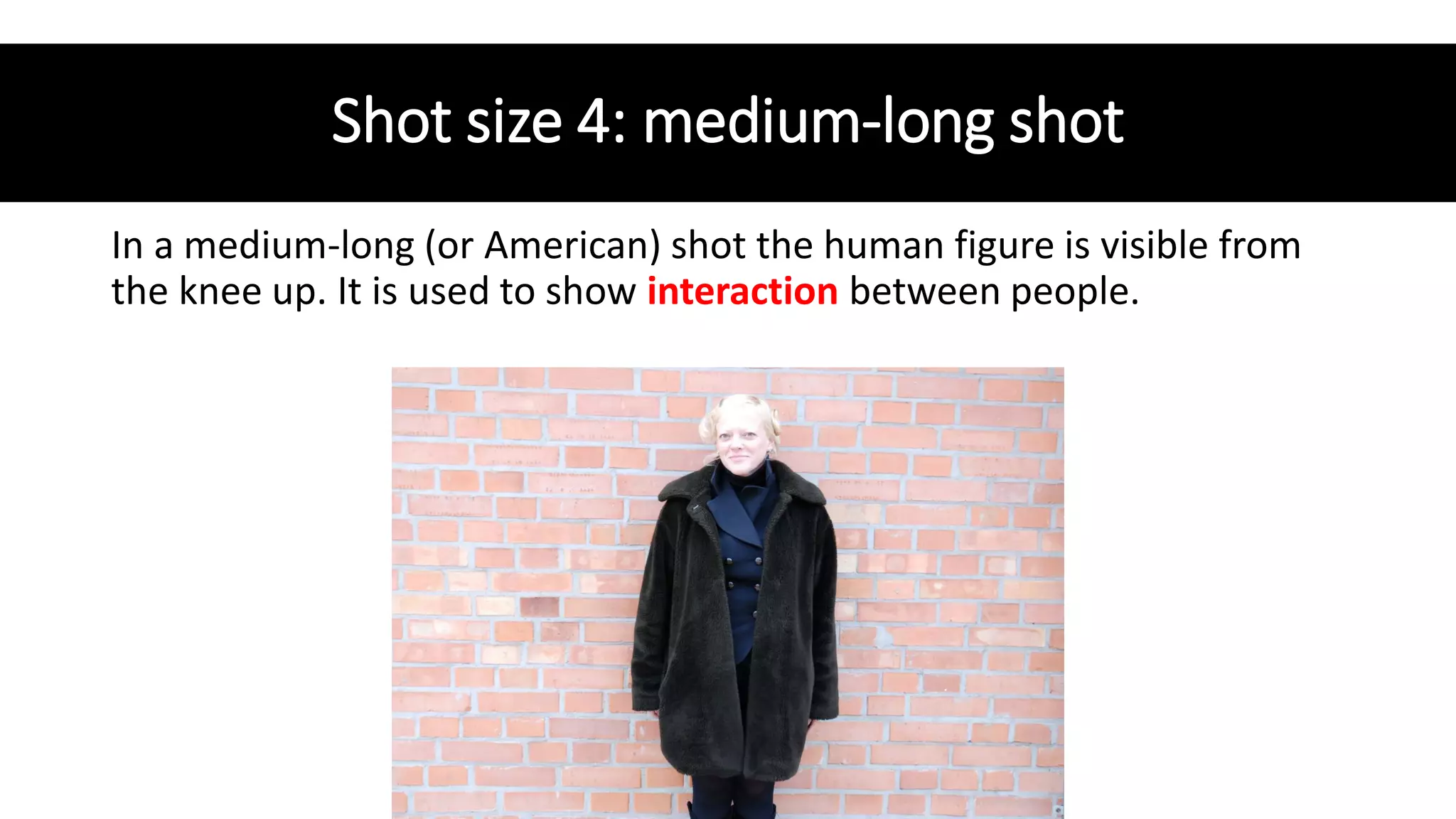
Shot size 4: medium-long shot
In a medium-long (or American) shot the human figure is visible from
the knee up. It is used to show interaction between people.
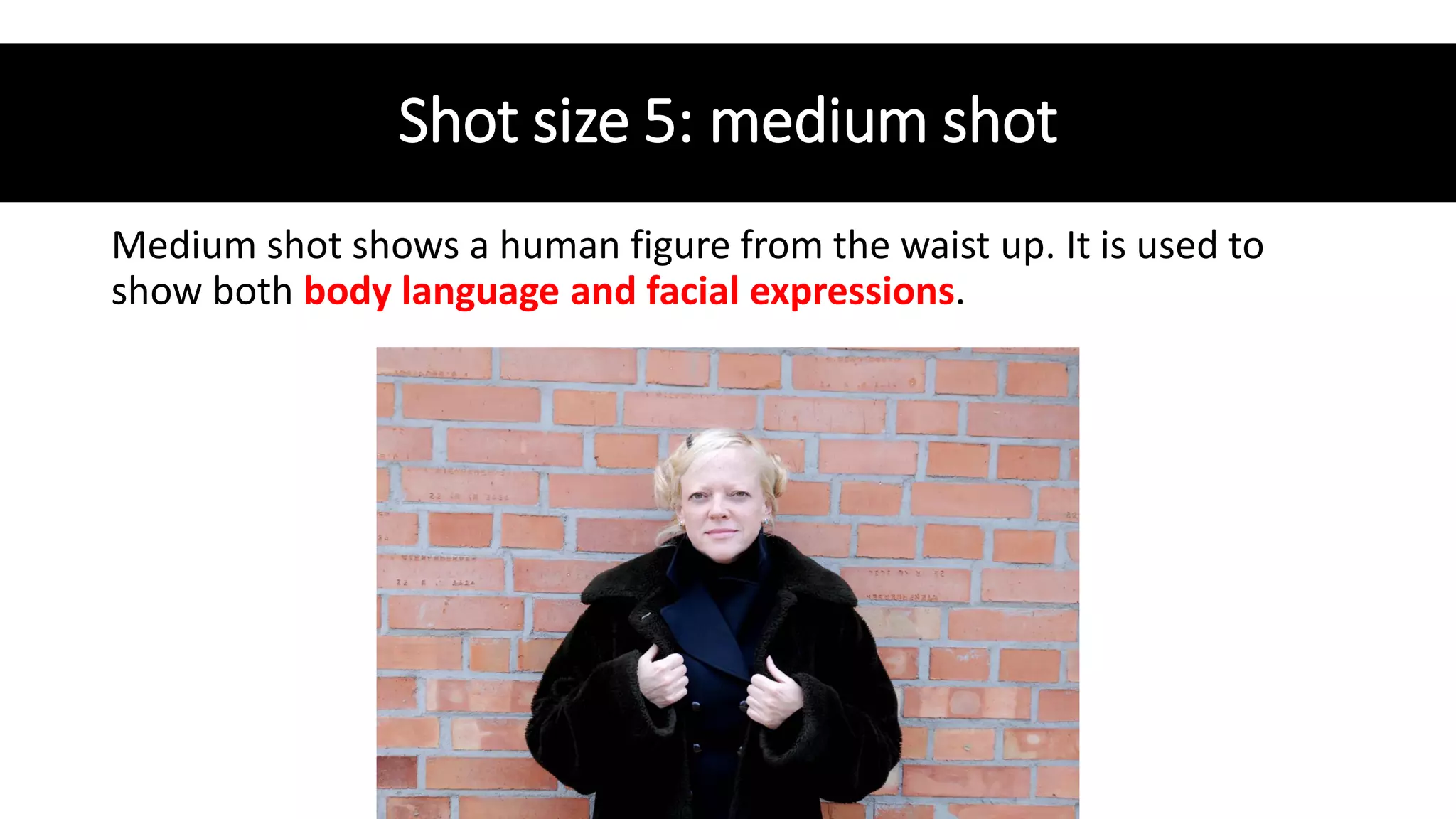
Shot size 5: medium shot
Medium shot shows a human figure from the waist up. It is used to
show both body language and facial expressions.
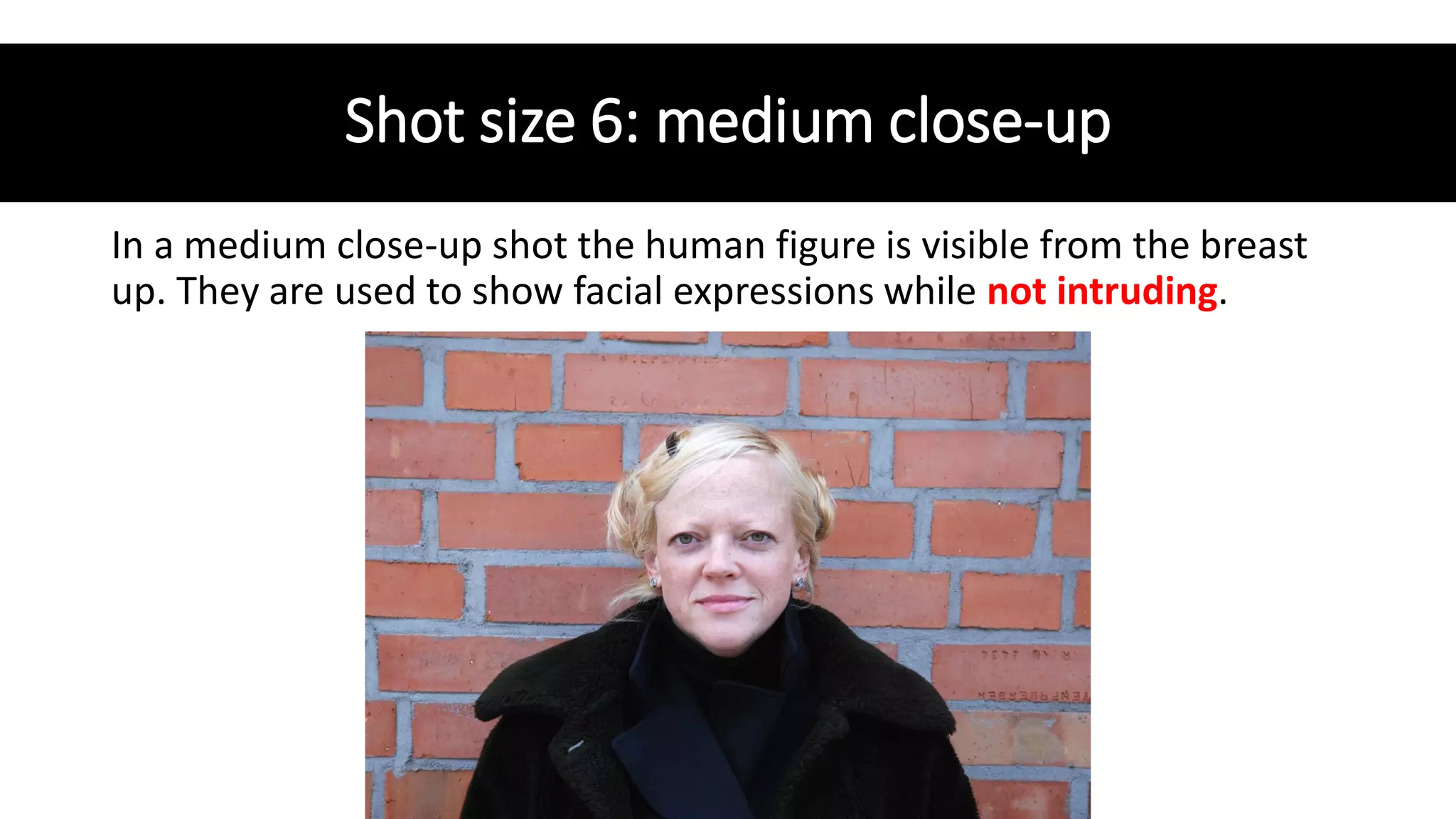
Shot size 6: medium close-up
In a medium close-up shot the human figure is visible from the breast
up. They are used to show facial expressions while not intruding.
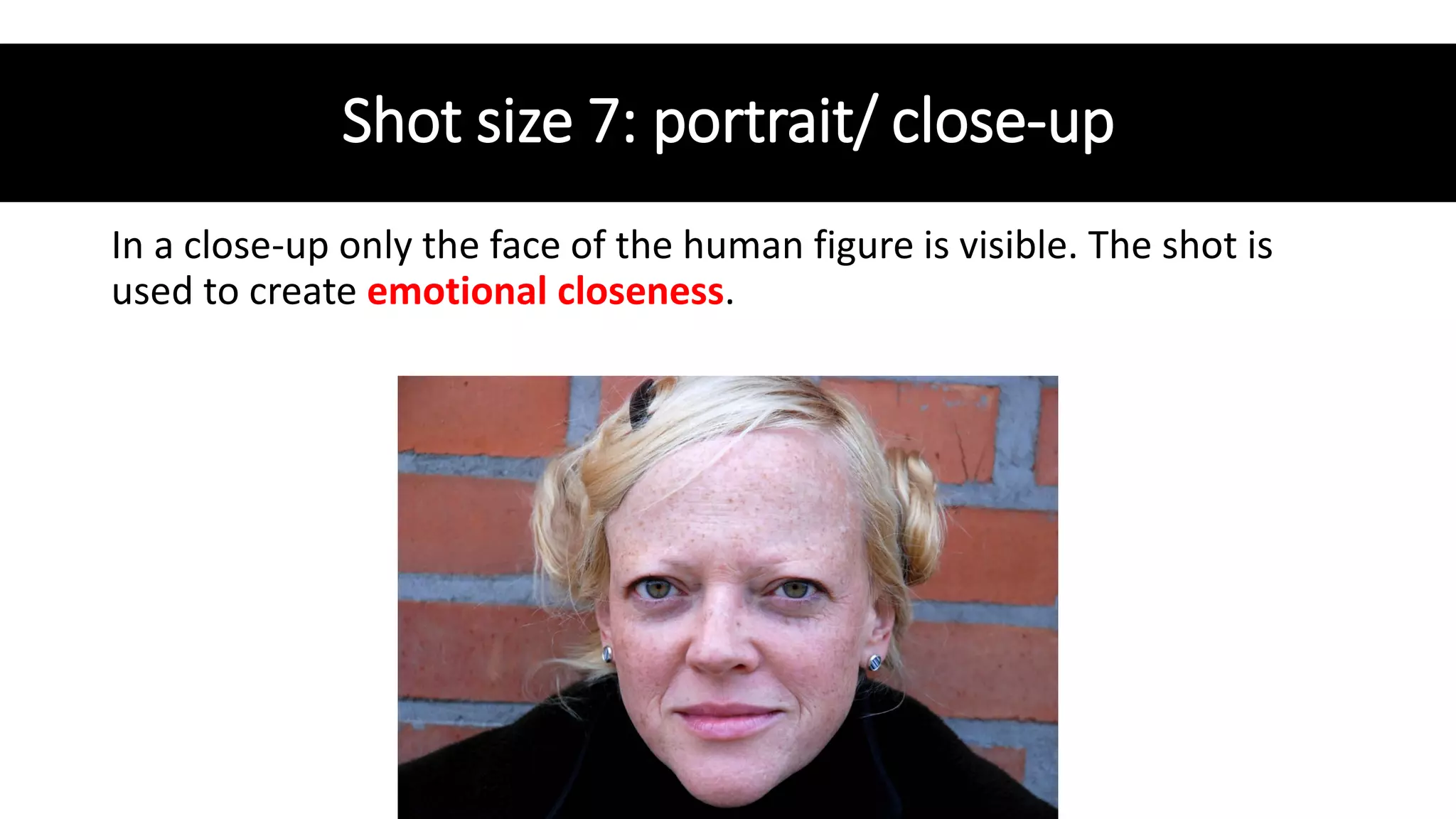
Shot size 7: portrait/ close-up
In a close-up only the face of the human figure is visible. The shot is
used to create emotional closeness.
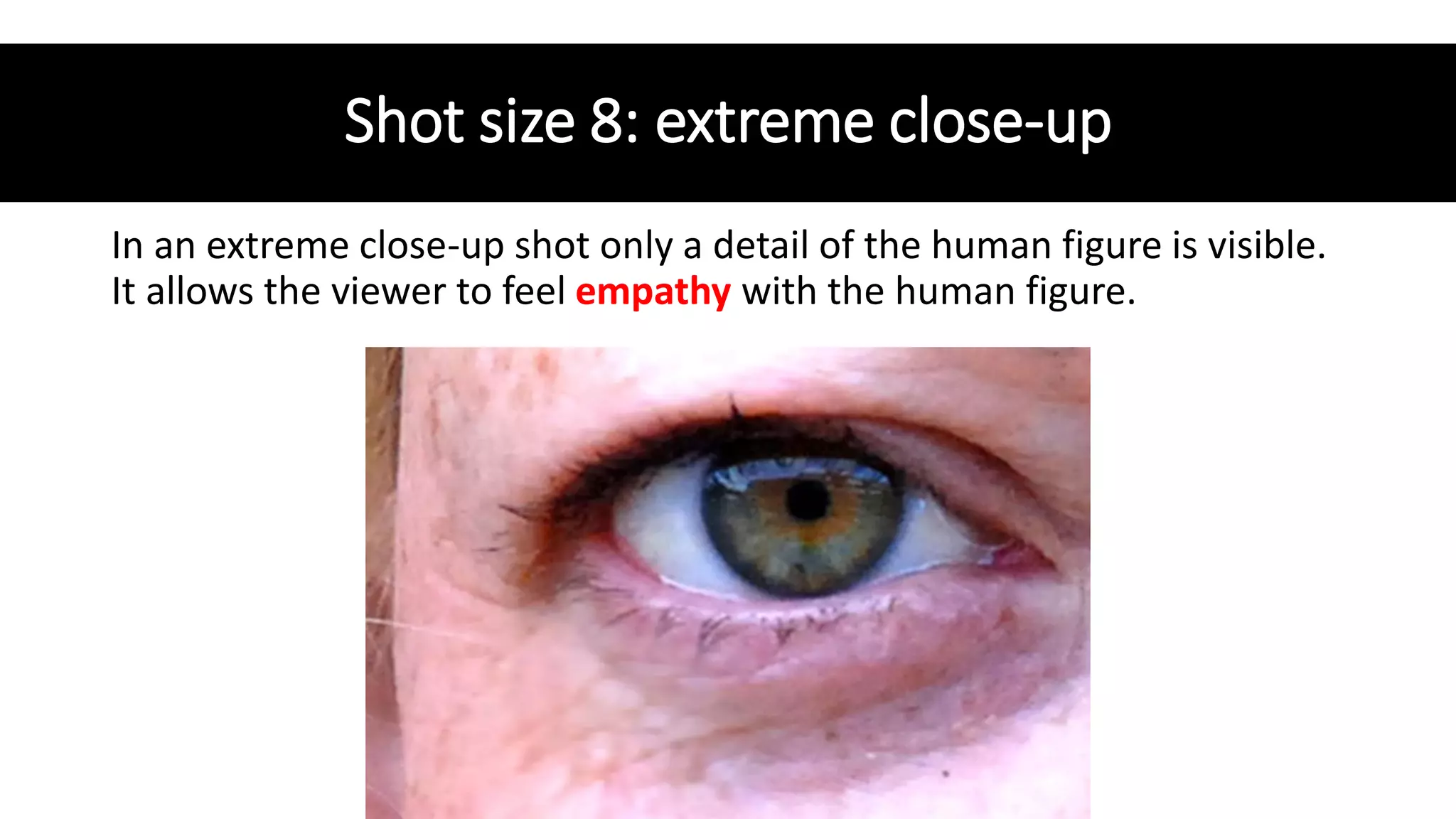
Shot size 8: extreme close-up
In an extreme close-up shot only a detail of the human figure is visible.
It allows the viewer to feel empathy with the human figure.
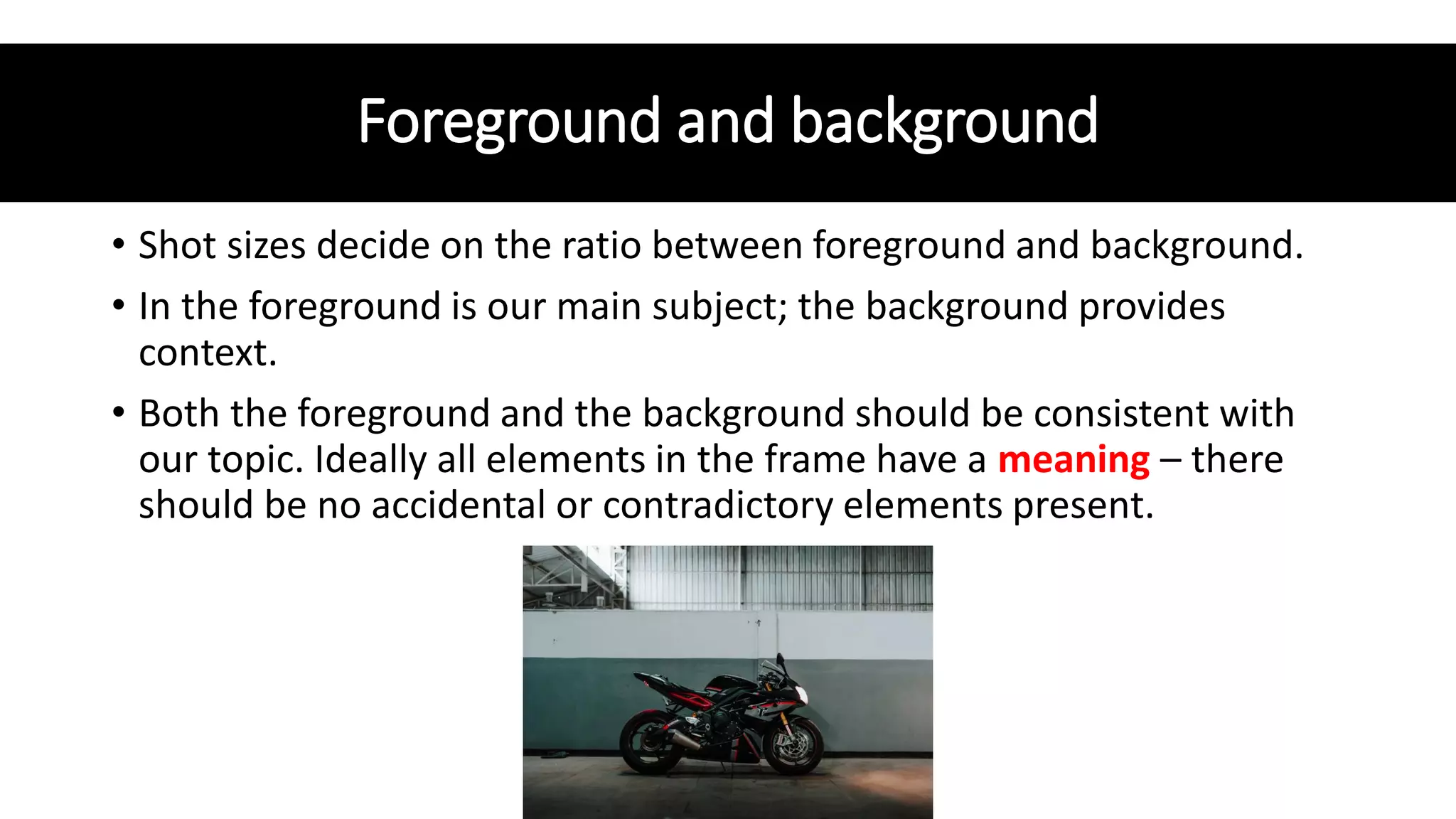
Foreground and background
• Shot sizes decide on the ratio between foreground and background.
• In the foreground is our main subject; the background provides
context.
• Both the foreground and the background should be consistent with
our topic. Ideally all elements in the frame have a meaning – there
should be no accidental or contradictory elements present.
Composition (aesthetics)
• Symmetry/ asymmetry
• Harmonious/ nonharmonious
• Golden ratio/ golden grid.
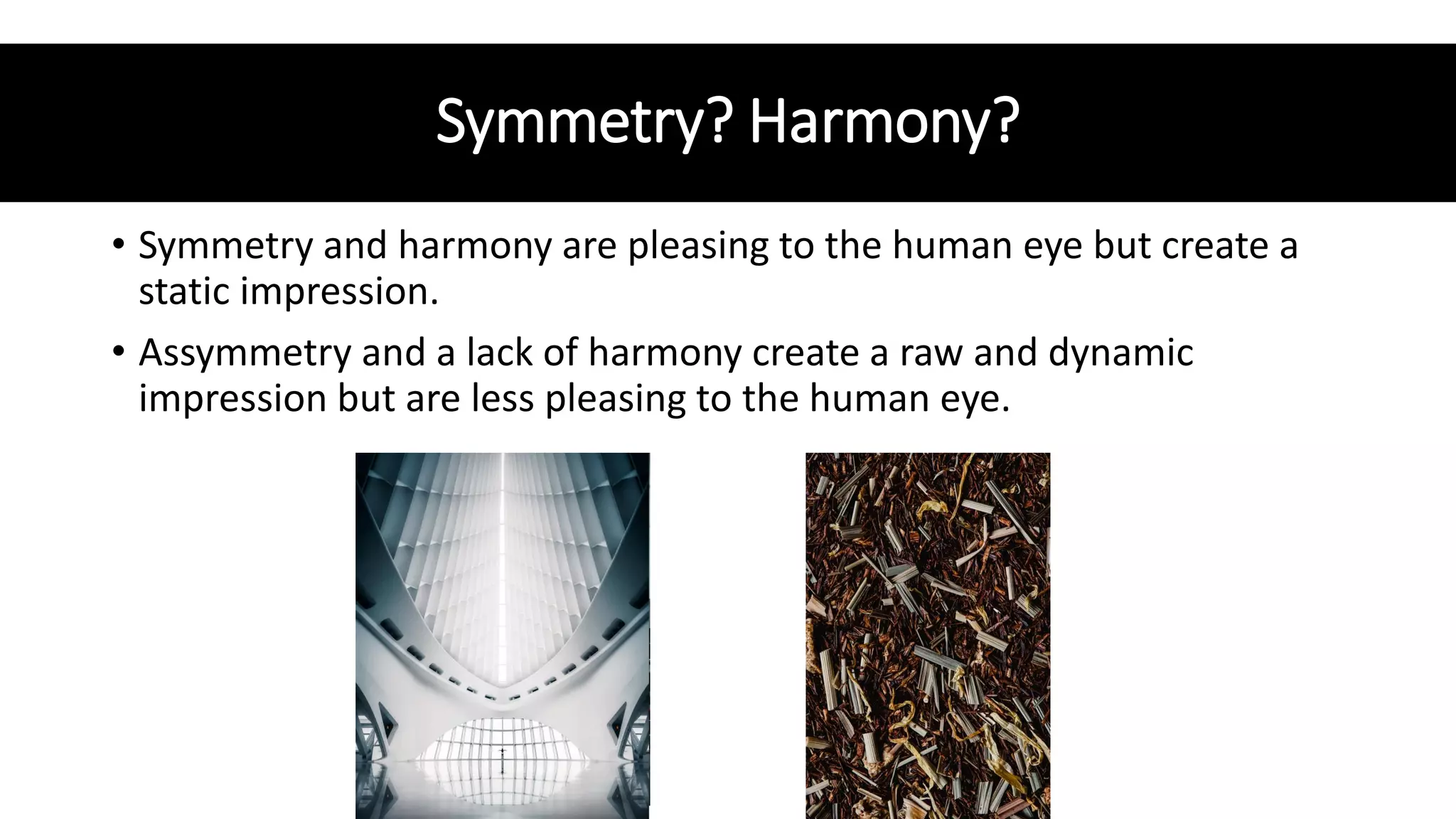
Symmetry? Harmony?
• Symmetry and harmony are pleasing to the human eye but create a
static impression.
• Assymmetry and a lack of harmony create a raw and dynamic
impression but are less pleasing to the human eye.
Golden ratio
https://youtu.be/4xpda7WB87w
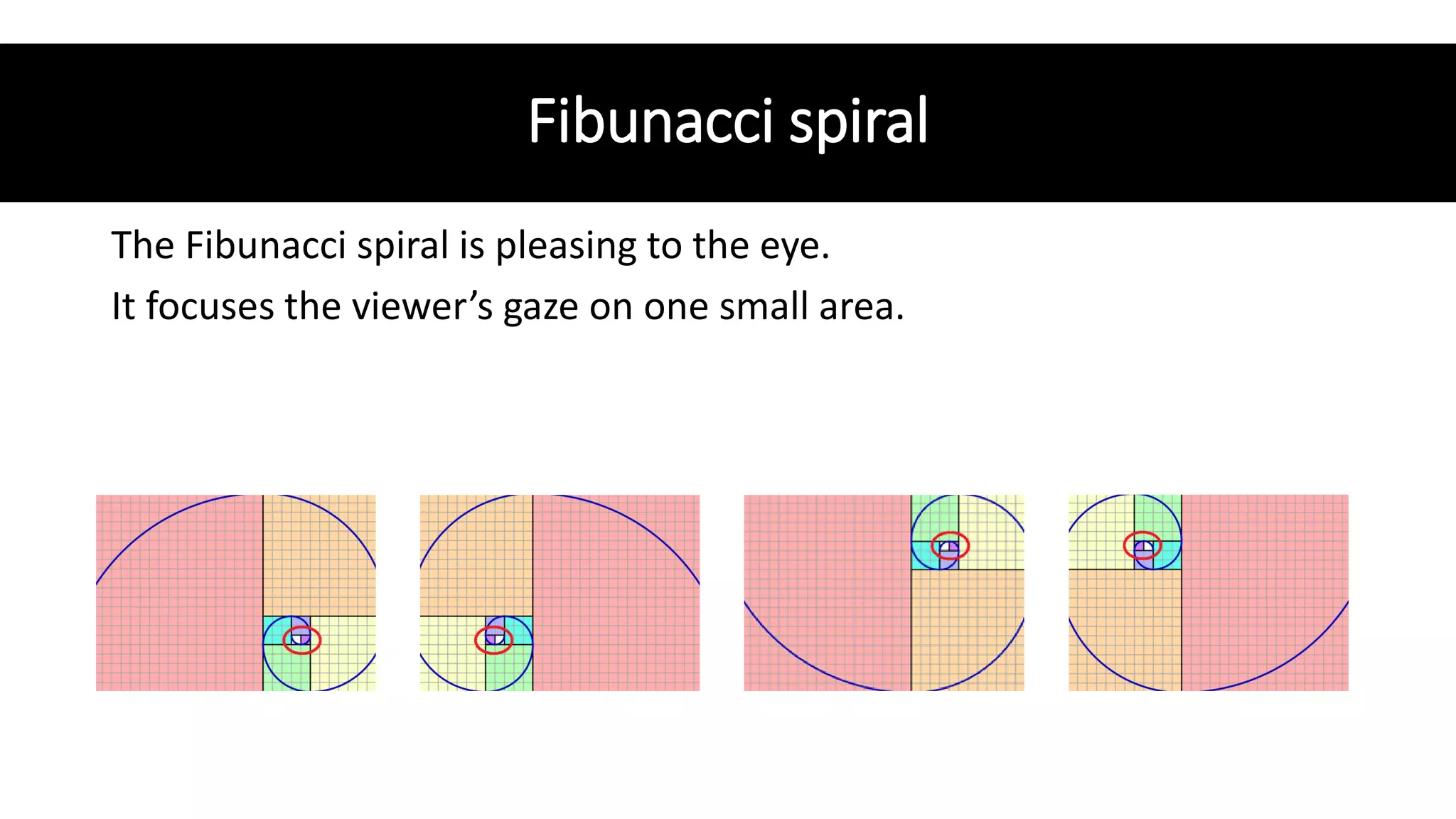
Fibunacci spiral
The Fibunacci spiral is pleasing to the eye.
It focuses the viewer’s gaze on one small area.
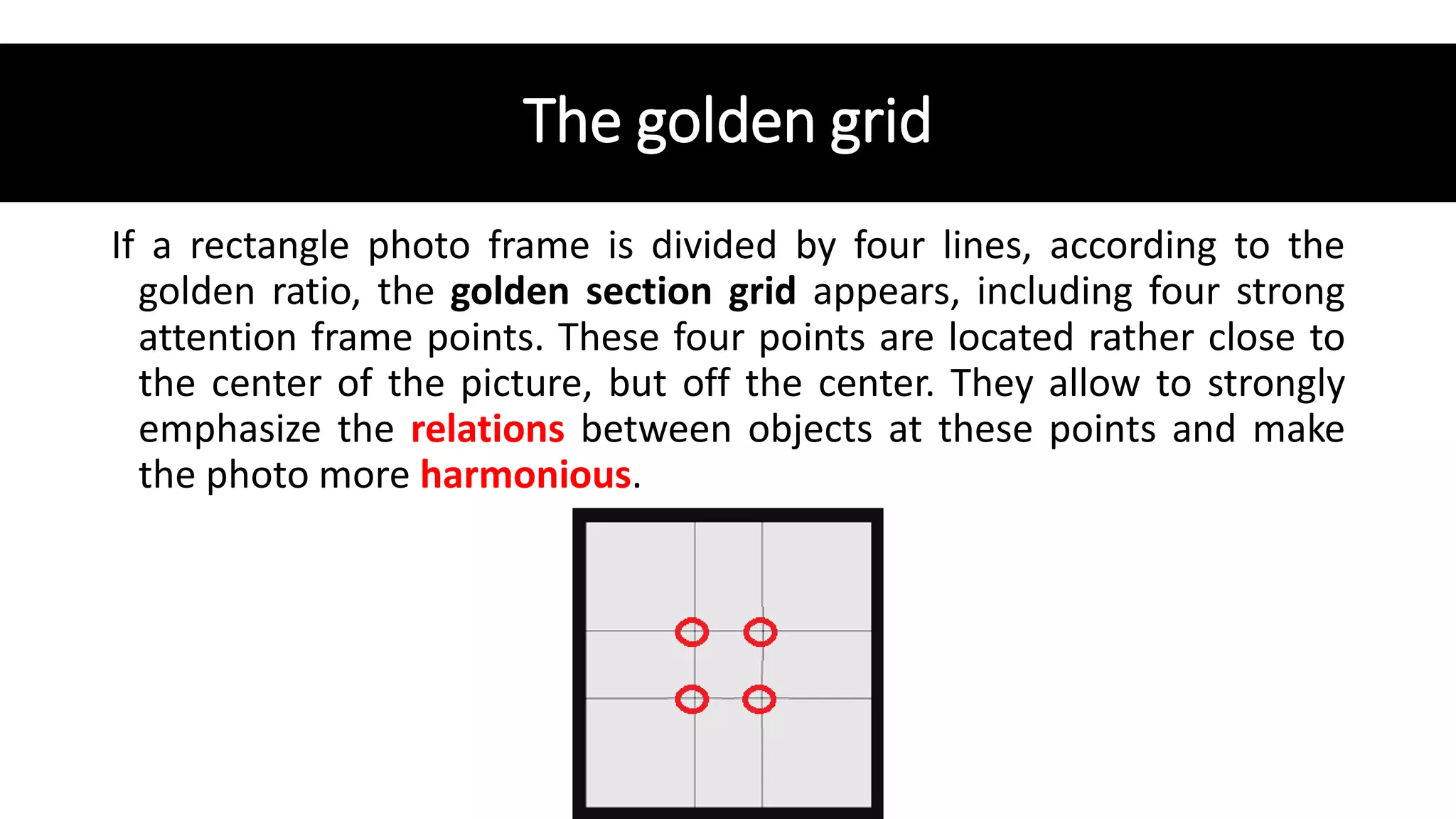
The golden grid
If a rectangle photo frame is divided by four lines, according to the
golden ratio, the golden section grid appears, including four strong
attention frame points. These four points are located rather close to
the center of the picture, but off the center. They allow to strongly
emphasize the relations between objects at these points and make
the photo more harmonious.
Light
Light influences the picture’s atmosphere.
• Day light is harder, more distant; artificial light is warmer, more
intimate.
• Exception: the golden hour: The golden hour is the period of daytime shortly after
sunrise or before sunset, during which daylight is redder and softer than when the
sun is higher in the sky. The golden hour is also sometimes called the "magic hour,"
especially by cinematographers. During these times, the brightness of the sky
matches the brightness of streetlights, signs, car headlights and lit windows.
• Light consists of colours. The interpretation of colours is cultural.
• More contrast produces harder more distant images.
Discussion

My point of view

  • 1.
    MY POINT OFVIEW CREATIVE WORKSHOP 26.7.2021 © Onno Hansen-Staszyński & Beata Staszyńska-Hansen
  • 2.
    We’ve all doneit Clicked the computer… and nothing happens.
  • 3.
    When that happens Ialways wonder where my click went. What did it do?
  • 4.
    Reason: our brainis made to think causal When there is an action, there should be an effect: there should be cause and effect. So when I click my computer I expect an effect.
  • 5.
    Technology Technology is createdto be instrumental: to help us produce effects. That’s why I expect an effect when I click my computer, even more than when I do something in real life.
  • 6.
    Taking pictures By takingpictures we produce effects. It seems like just the pictures are the effect. But also the reactions of our viewers are the effect.
  • 7.
    Our viewers lookfor causes For our viewers the pictures are effects too. Their brains will be looking for causes: what caused these pictures.
  • 8.
    Pictures are special Infilms cause and effect relations are visible. In pictures they are not. Result: We are very good at analyzing people in short films. We are very bad at analyzing people in pictures.
  • 9.
    For us apicture is a still from reality We are aware of what happened before we took a picture. And what happened after we took a picture. Reality is like a film from which we choose a still.
  • 10.
    The viewer’s perspective Theviewer has no access to what happened before or after. The viewer just sees the still without context.
  • 11.
    We need tohelp our viewers If we do not provide clues viewers will start fantasizing or being bored. The more we provide clues, the more we help our viewers understand our pictures.
  • 12.
    Clue 1: createa photoreport Producing a series of photos is like producing a short film: you provide the viewers with a before and an after context. During your stay you will daily create photoreports that will be published the next day.
  • 13.
    Concrete activities • Today:this workshop will prepare you for creating photoreports. • During each day you will take pictures in order to create a photoreport – one photoreport per partner. • Every morning you will create a photoreport per partner. • 27.7 (8:30-9:00) room 46 • 28.7 (8:30-9:00) room 46 • 29.7 (8:30-9:00) room 46 • 30.7 (11:00-11:30) room 46
  • 14.
    Your photoreport Each dailyphotoreport: • Has a topic - all pictures are to be consistent with the topic and with each other (and with the programme). So choose a common topic before taking pictures. • Consists of a minimum of three pictures that you’ll select. Create a folder for the pictures you took. Create a subfolder for the pictures you’ve selected. And create a subfolder for those you didn’t select – don’t delete them. • Will need a title consistent with the topic and the pictures. Choose the title after you’ve selected your pictures. • Will need a short description consistent with the topic and the pictures. • Will be published.
  • 15.
    Clue 2: usefilm language grammar elements Film language grammar elements: • Shot size: frame • Foreground and background • Composition within the frame • Light
  • 16.
  • 17.
  • 18.
    Shot size 1:extra long shot Extra long shot is generally used as a scene-setting, establishing shot. It normally shows an exterior, e.g. the outside of a building, or a landscape. There is very little detail visible in the shot, as it is meant to give a general impression rather than specific information.
  • 19.
    Shot size 2:long shot Long shot is a shot that typically shows the entire object or human figure and is usually intended to provide the concrete physical context within which the human figure finds themselves.
  • 20.
    Shot size 3:full shot Full shot (sometimes referred to as a wide shot) typically shows the entire object or human figure and is usually intended to place it in some relation to its surroundings.
  • 21.
    Shot size 4:medium-long shot In a medium-long (or American) shot the human figure is visible from the knee up. It is used to show interaction between people.
  • 22.
    Shot size 5:medium shot Medium shot shows a human figure from the waist up. It is used to show both body language and facial expressions.
  • 23.
    Shot size 6:medium close-up In a medium close-up shot the human figure is visible from the breast up. They are used to show facial expressions while not intruding.
  • 24.
    Shot size 7:portrait/ close-up In a close-up only the face of the human figure is visible. The shot is used to create emotional closeness.
  • 25.
    Shot size 8:extreme close-up In an extreme close-up shot only a detail of the human figure is visible. It allows the viewer to feel empathy with the human figure.
  • 26.
    Foreground and background •Shot sizes decide on the ratio between foreground and background. • In the foreground is our main subject; the background provides context. • Both the foreground and the background should be consistent with our topic. Ideally all elements in the frame have a meaning – there should be no accidental or contradictory elements present.
  • 27.
    Composition (aesthetics) • Symmetry/asymmetry • Harmonious/ nonharmonious • Golden ratio/ golden grid.
  • 28.
    Symmetry? Harmony? • Symmetryand harmony are pleasing to the human eye but create a static impression. • Assymmetry and a lack of harmony create a raw and dynamic impression but are less pleasing to the human eye.
  • 29.
  • 30.
    Fibunacci spiral The Fibunaccispiral is pleasing to the eye. It focuses the viewer’s gaze on one small area.
  • 31.
    The golden grid Ifa rectangle photo frame is divided by four lines, according to the golden ratio, the golden section grid appears, including four strong attention frame points. These four points are located rather close to the center of the picture, but off the center. They allow to strongly emphasize the relations between objects at these points and make the photo more harmonious.
  • 32.
    Light Light influences thepicture’s atmosphere. • Day light is harder, more distant; artificial light is warmer, more intimate. • Exception: the golden hour: The golden hour is the period of daytime shortly after sunrise or before sunset, during which daylight is redder and softer than when the sun is higher in the sky. The golden hour is also sometimes called the "magic hour," especially by cinematographers. During these times, the brightness of the sky matches the brightness of streetlights, signs, car headlights and lit windows. • Light consists of colours. The interpretation of colours is cultural. • More contrast produces harder more distant images.
  • 33.