CreatedOn 05092013
Rida Sarwar Bilgrami
B.C.S (4th
Semester):
Operating System:
Created By: Rida Sarwar Bilgrami
CreatedOn 05092013
WINDOWS 7:
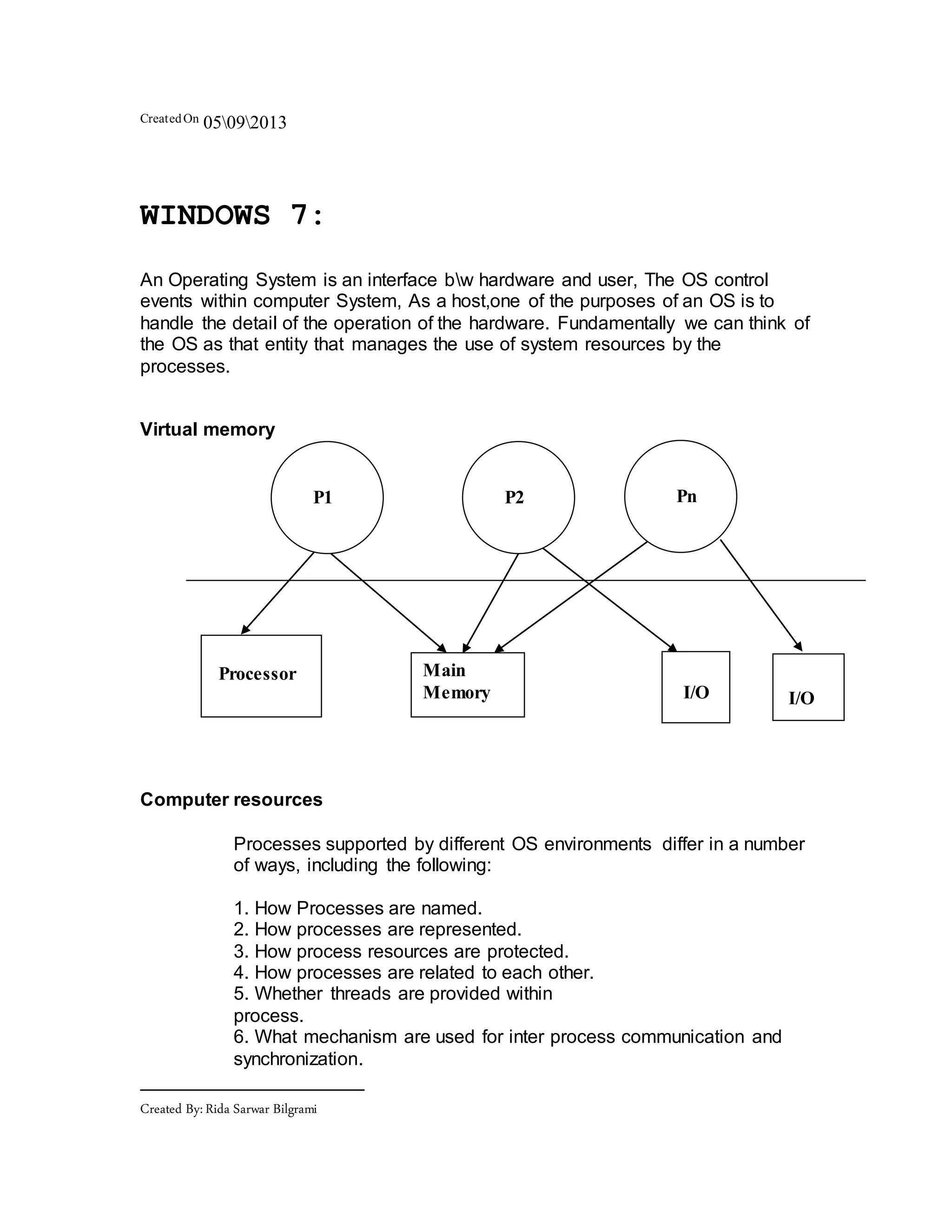
An Operating System is an interface bw hardware and user, The OS control
events within computer System, As a host,one of the purposes of an OS is to
handle the detail of the operation of the hardware. Fundamentally we can think of
the OS as that entity that manages the use of system resources by the
processes.
Virtual memory
Computer resources
Processes supported by different OS environments differ in a number
of ways, including the following:
1. How Processes are named.
2. How processes are represented.
3. How process resources are protected.
4. How processes are related to each other.
5. Whether threads are provided within
process.
6. What mechanism are used for inter process communication and
synchronization.
Created By:Rida Sarwar Bilgrami
Main
Memory
Processor
P1 P2 Pn
I/O I/O
Created On05092013
Window Process Design is driven by the need to provide support for a
variety of OS environments. Important characteristics of windows
processes are the following:
1. Windows processes are implemented as objects.
2. A process can be created as new process, or as a copy of an
existing process.
3. An executable process may contain one or more threads.
4. Both process and thread objects have built-in synchronization
capabilities.
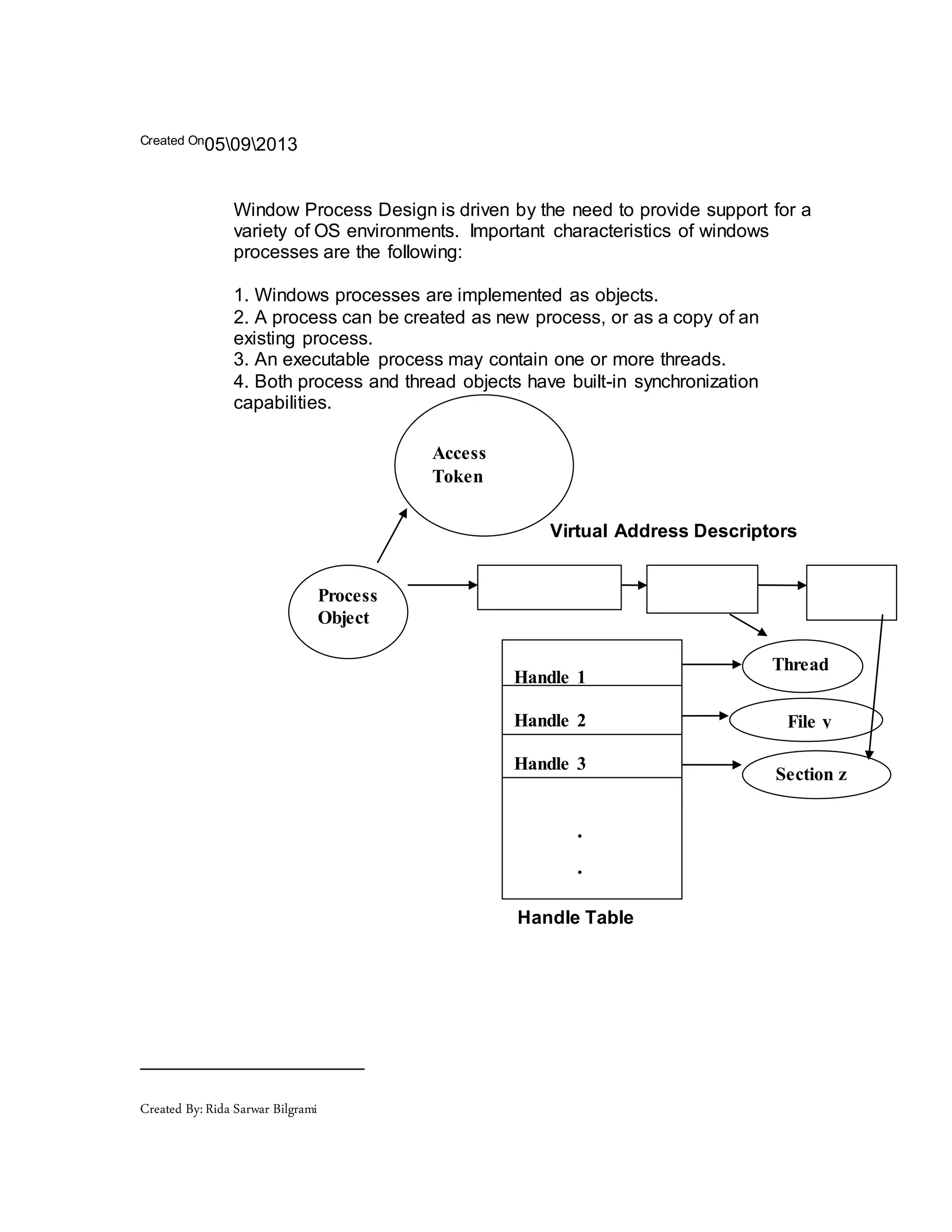
Virtual Address Descriptors
Handle Table
Created By:Rida Sarwar Bilgrami
Access
Token
Process
Object
Handle 1
Handle 2
Handle 3
.
.
.
Thread
x
File y
Section z
Windows Process and its resources
Each Process is assigned a security access token, called the process, When a
use first logs on, Windows creates an access token that includes the security ID
for the user, every process that is created by or runs on behalf of this user has a
copy of this access token. If the process attempts to open such a handle, the
security system determines whether this is permitted and therefore whether the
process may change its own attributes. Process must rely on the virtual memory
manager which provides a memory allocation service for the process. The
process has access to a file object and to section object that defines a section of
shared memory.
Process and Thread Objects: A thread is a dispatch able unit of
work that executes sequentially and is interruptible, so that the processor can
turn to another thread. .A Windows process must contain at least one thread to
execute. Each process is defined by a number of attributes and encapsulates a
no. of actions, or services that it may perform. It will perform when called upon
through a set of Published Interface Methods. At a time of creation of process
attribute values are assigned.
Windows Process Object Attributes
1. Process ID
2. Security Descriptor
3. Base Priority
4. Default Processor Affinity
5. Quota Limits
6. Execution Time
7. IO counters
8. V M Operation counters
9. Execution /Debugging Ports
10. Exit status
Windows Thread Object Attributes
1. Thread ID
2. Thread Context
3. Dynamic Priority
4. Base Priority
5. Thread processor Affinity
6. Thread Execution time
7. Alert Status
8. Suspension Count
9. Impersonation Token
10. Termination Port
11. Thread Exit Status
Created On05092013
Created By:Rida Sarwar Bilgrami
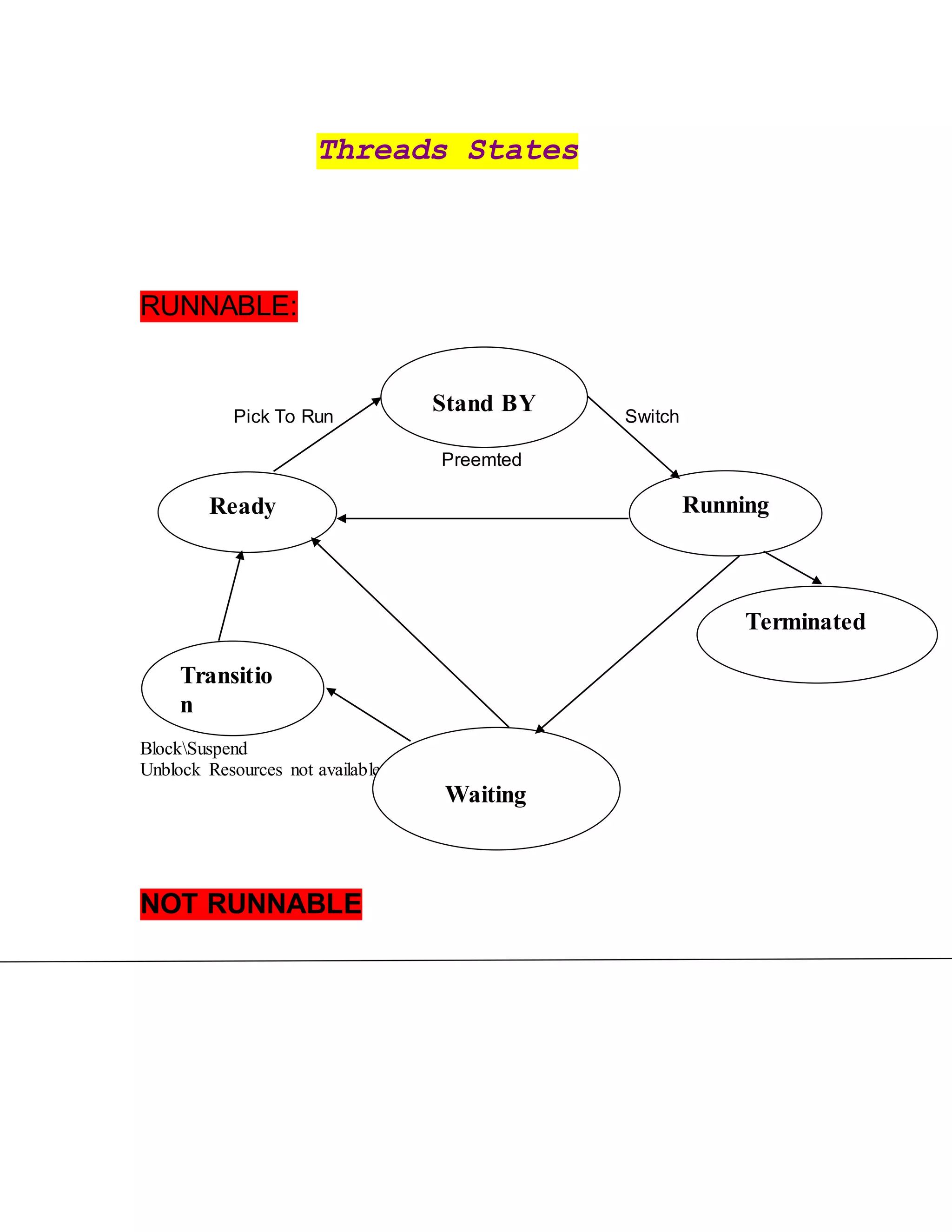
Threads States
RUNNABLE:
Pick To Run Switch
Preemted
BlockSuspend
Unblock Resources not available
NOT RUNNABLE
Ready
Transitio
n
Stand BY
Running
Waiting
Terminated

My first Operating System Presentation

  • 1.
    CreatedOn 05092013 Rida SarwarBilgrami B.C.S (4th Semester): Operating System: Created By: Rida Sarwar Bilgrami
  • 2.
    CreatedOn 05092013 WINDOWS 7: AnOperating System is an interface bw hardware and user, The OS control events within computer System, As a host,one of the purposes of an OS is to handle the detail of the operation of the hardware. Fundamentally we can think of the OS as that entity that manages the use of system resources by the processes. Virtual memory Computer resources Processes supported by different OS environments differ in a number of ways, including the following: 1. How Processes are named. 2. How processes are represented. 3. How process resources are protected. 4. How processes are related to each other. 5. Whether threads are provided within process. 6. What mechanism are used for inter process communication and synchronization. Created By:Rida Sarwar Bilgrami Main Memory Processor P1 P2 Pn I/O I/O
  • 3.
    Created On05092013 Window ProcessDesign is driven by the need to provide support for a variety of OS environments. Important characteristics of windows processes are the following: 1. Windows processes are implemented as objects. 2. A process can be created as new process, or as a copy of an existing process. 3. An executable process may contain one or more threads. 4. Both process and thread objects have built-in synchronization capabilities. Virtual Address Descriptors Handle Table Created By:Rida Sarwar Bilgrami Access Token Process Object Handle 1 Handle 2 Handle 3 . . . Thread x File y Section z
  • 4.
    Windows Process andits resources Each Process is assigned a security access token, called the process, When a use first logs on, Windows creates an access token that includes the security ID for the user, every process that is created by or runs on behalf of this user has a copy of this access token. If the process attempts to open such a handle, the security system determines whether this is permitted and therefore whether the process may change its own attributes. Process must rely on the virtual memory manager which provides a memory allocation service for the process. The process has access to a file object and to section object that defines a section of shared memory. Process and Thread Objects: A thread is a dispatch able unit of work that executes sequentially and is interruptible, so that the processor can turn to another thread. .A Windows process must contain at least one thread to execute. Each process is defined by a number of attributes and encapsulates a no. of actions, or services that it may perform. It will perform when called upon through a set of Published Interface Methods. At a time of creation of process attribute values are assigned. Windows Process Object Attributes 1. Process ID 2. Security Descriptor 3. Base Priority 4. Default Processor Affinity 5. Quota Limits 6. Execution Time 7. IO counters 8. V M Operation counters 9. Execution /Debugging Ports 10. Exit status Windows Thread Object Attributes 1. Thread ID 2. Thread Context 3. Dynamic Priority 4. Base Priority 5. Thread processor Affinity 6. Thread Execution time 7. Alert Status 8. Suspension Count 9. Impersonation Token 10. Termination Port 11. Thread Exit Status Created On05092013 Created By:Rida Sarwar Bilgrami
  • 5.
    Threads States RUNNABLE: Pick ToRun Switch Preemted BlockSuspend Unblock Resources not available NOT RUNNABLE Ready Transitio n Stand BY Running Waiting Terminated