Management of Genetic
Information
Learning objectives

   Understand the mechanism of DNA
    replication, RNA synthesis and protein
    synthesis
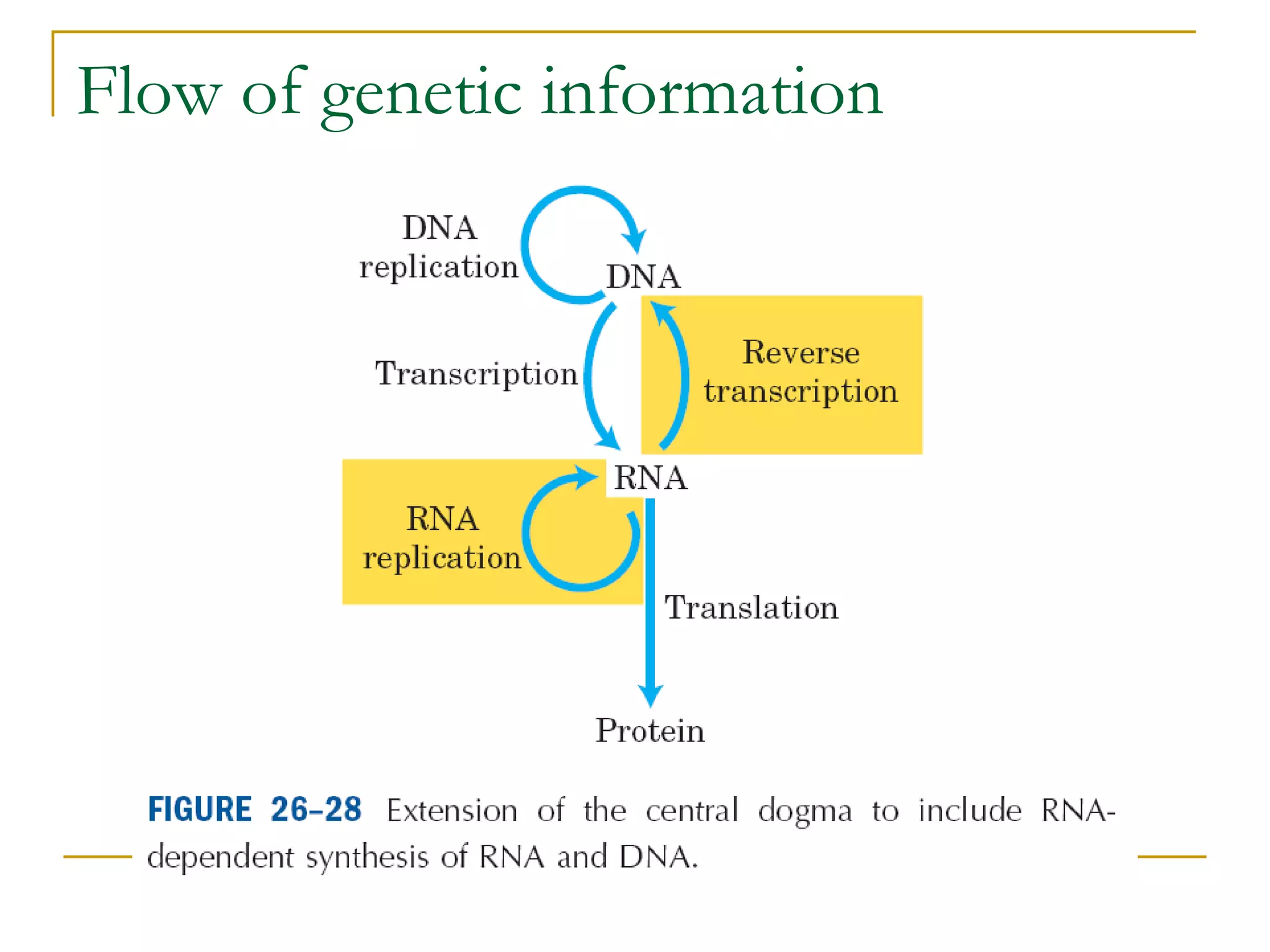
Flow of genetic information
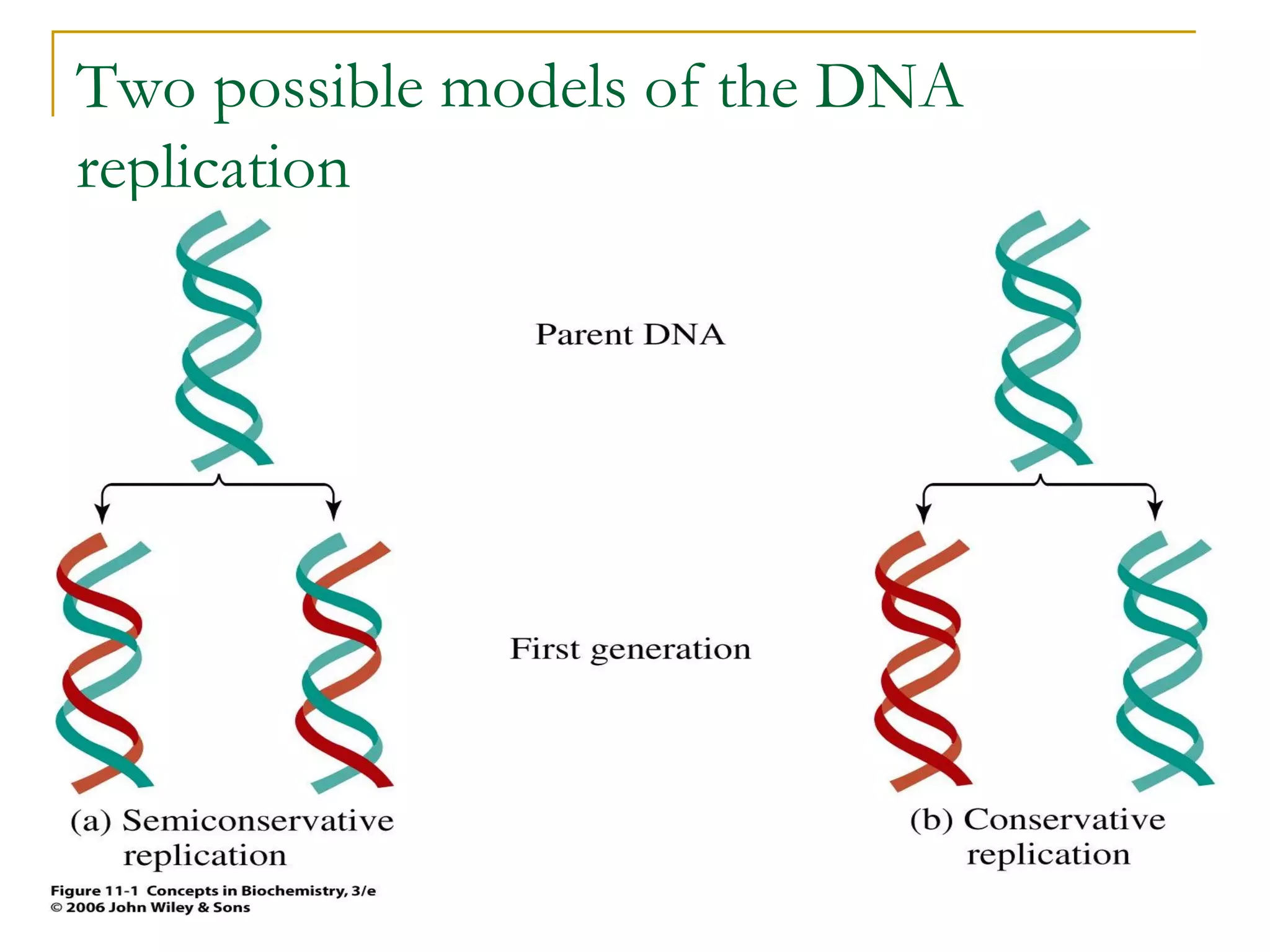
Two possible models of the DNA
replication
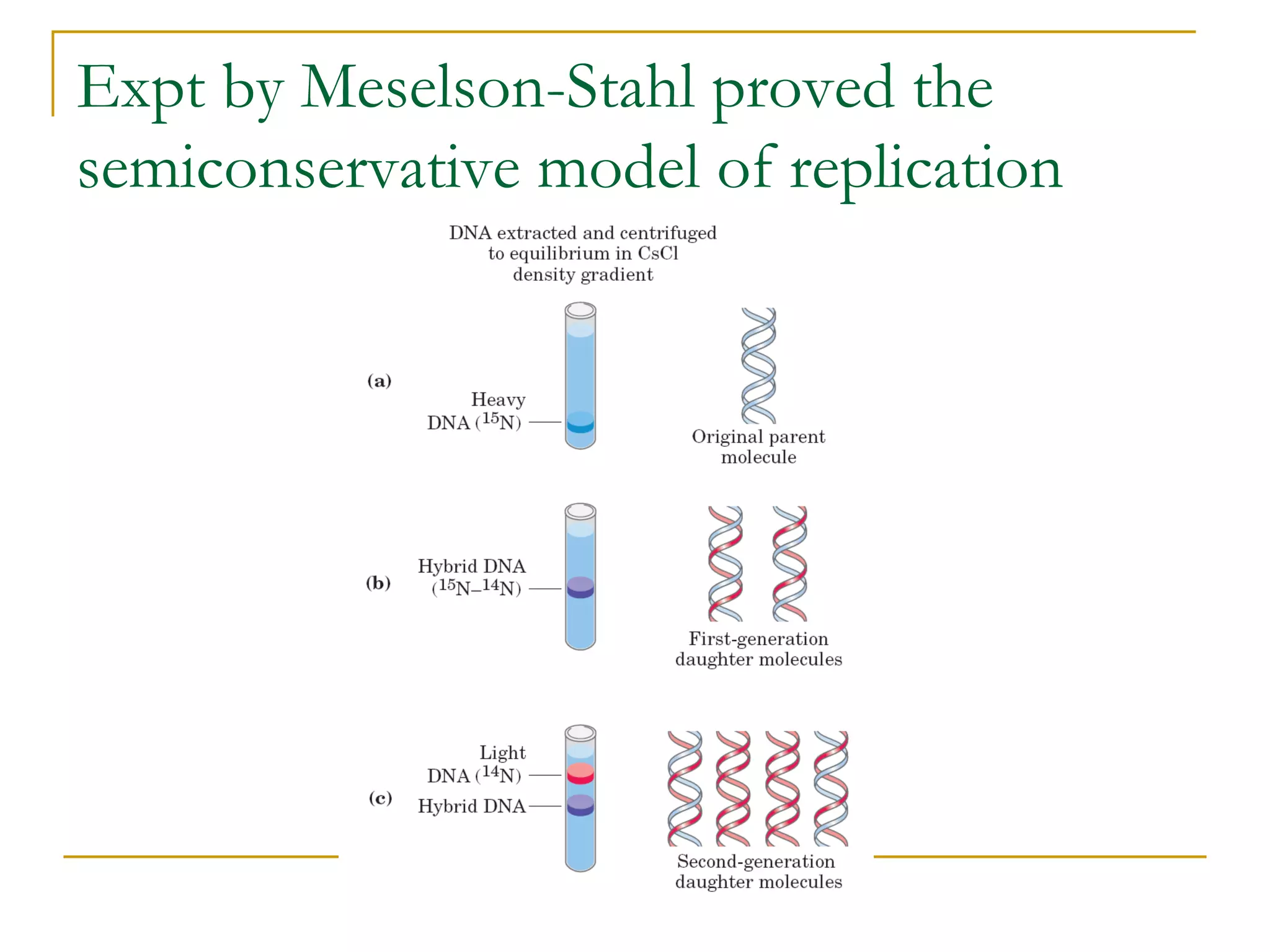
Expt by Meselson-Stahl proved the
semiconservative model of replication
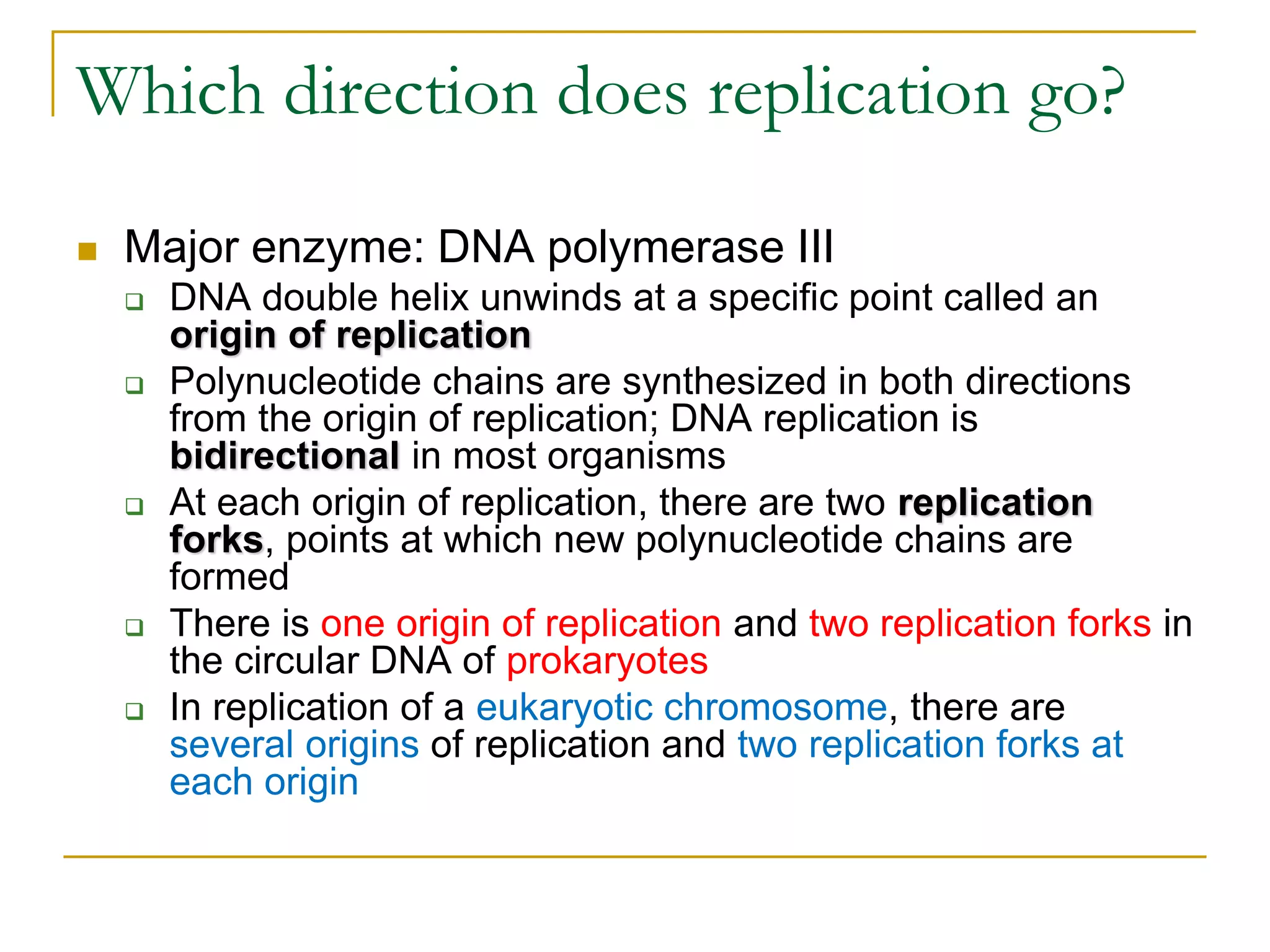
Which direction does replication go?

   Major enzyme: DNA polymerase III
       DNA double helix unwinds at a specific point called an
        origin of replication
       Polynucleotide chains are synthesized in both directions
        from the origin of replication; DNA replication is
        bidirectional in most organisms
       At each origin of replication, there are two replication
        forks, points at which new polynucleotide chains are
        formed
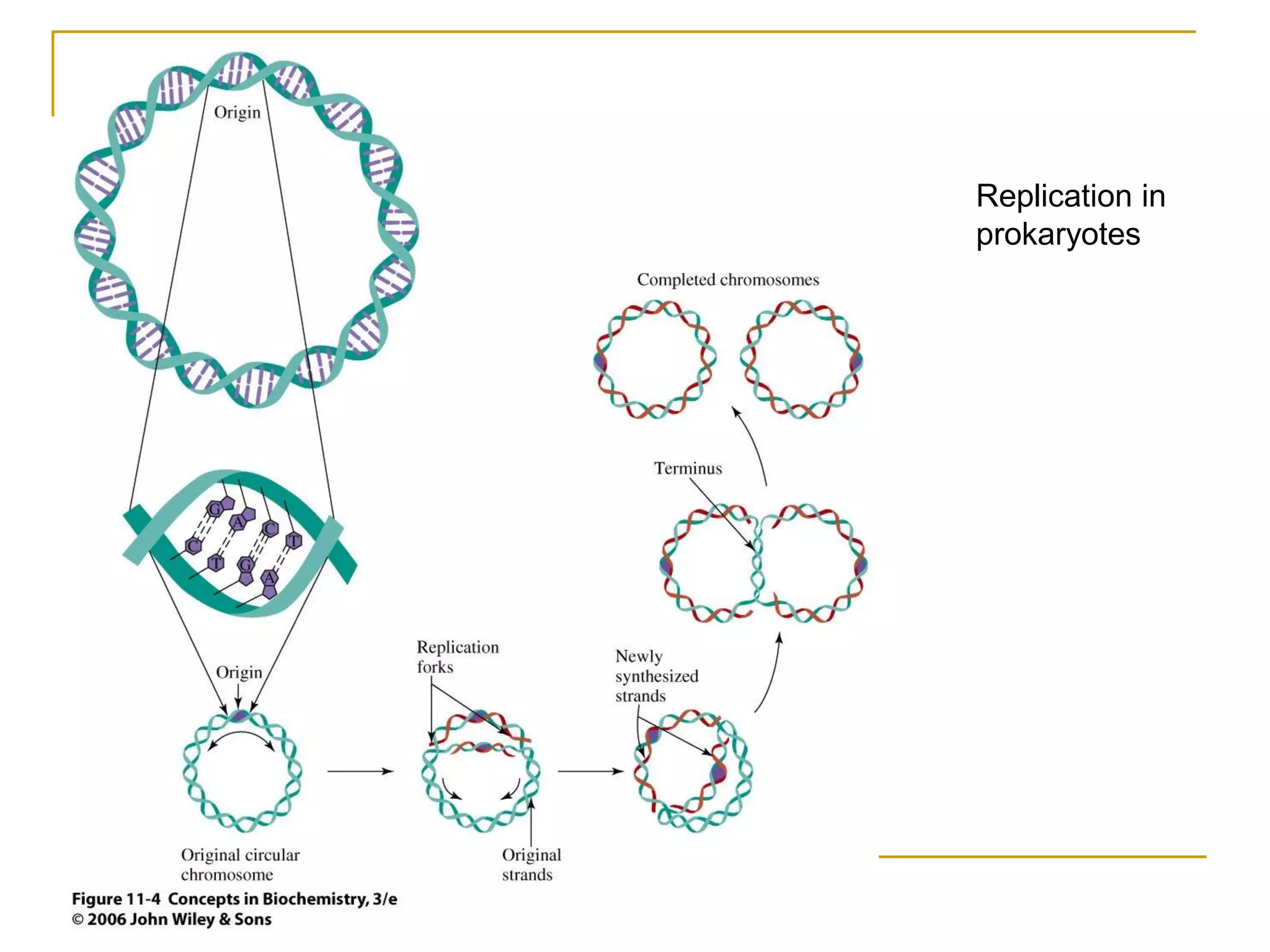
       There is one origin of replication and two replication forks in
        the circular DNA of prokaryotes
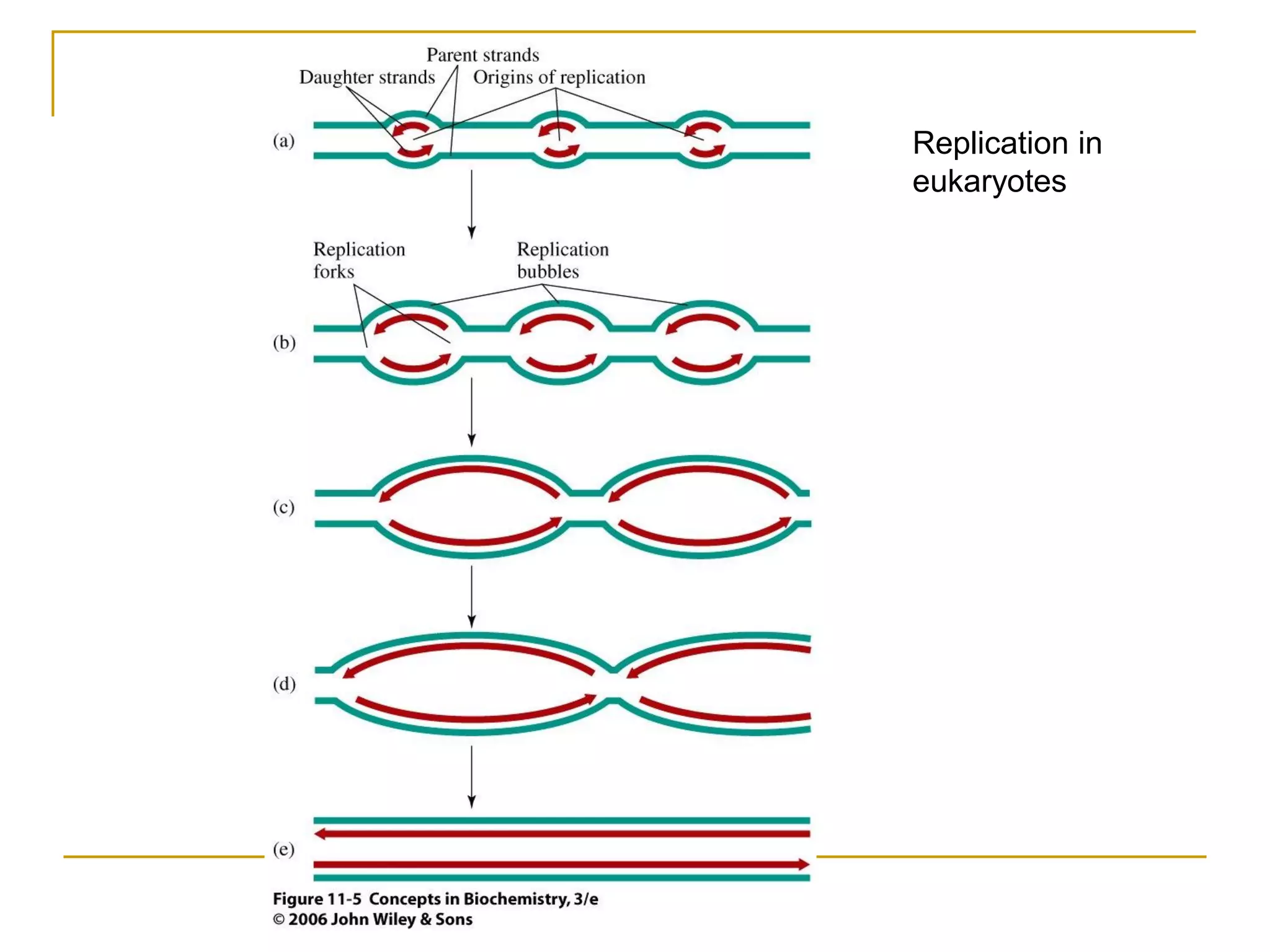
       In replication of a eukaryotic chromosome, there are
        several origins of replication and two replication forks at
        each origin
Replication in
prokaryotes
Replication in
eukaryotes
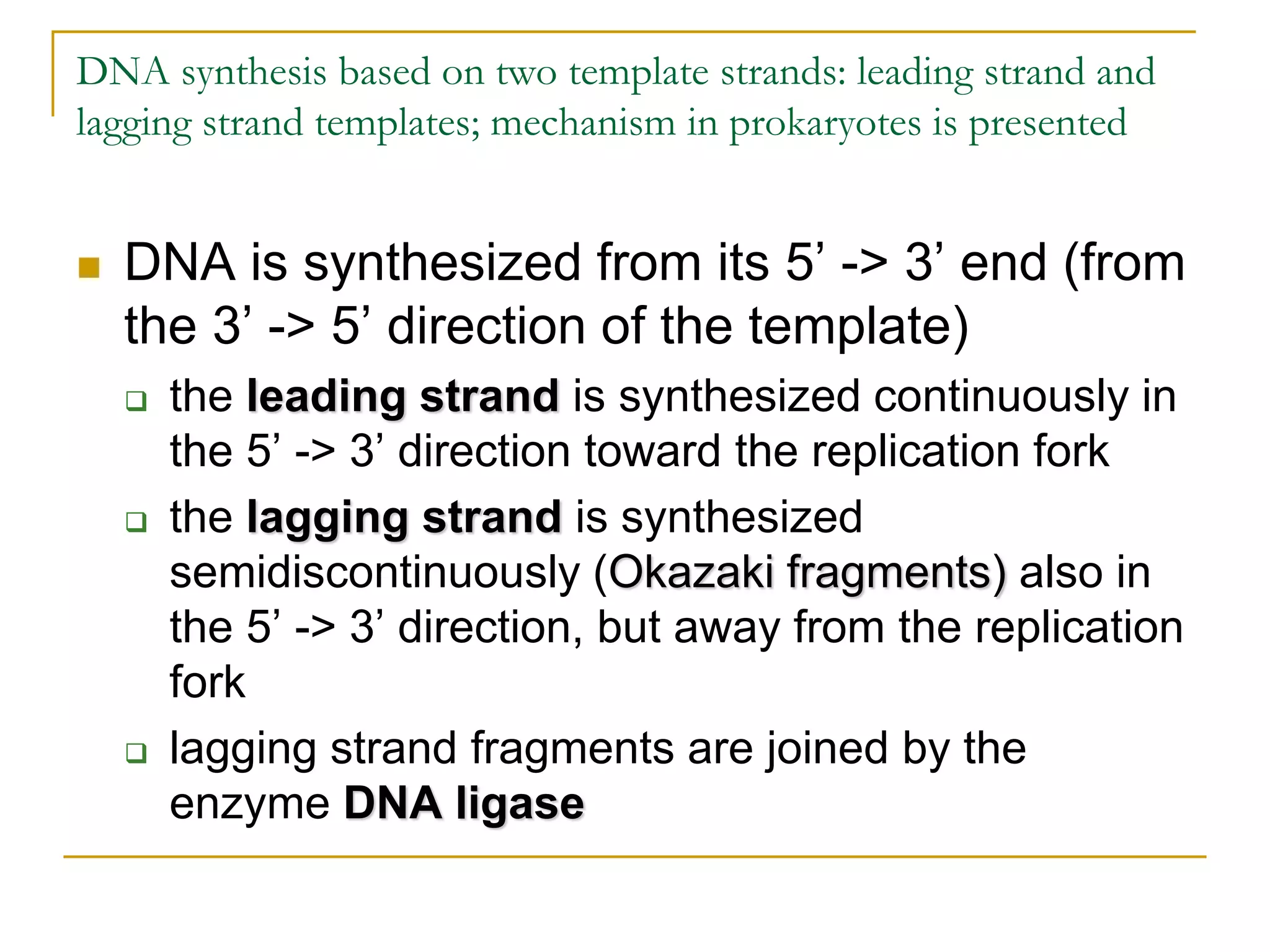
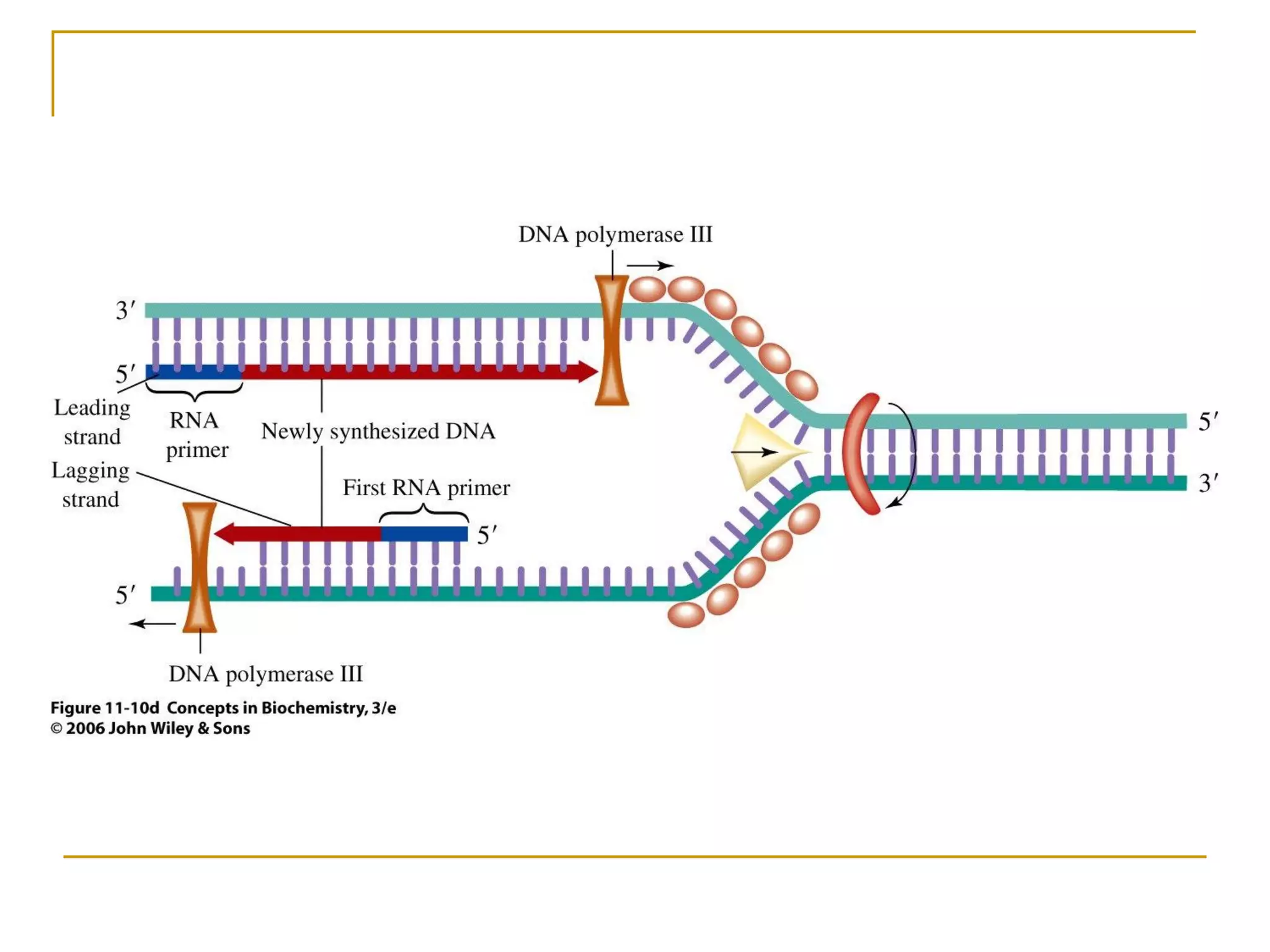
DNA synthesis based on two template strands: leading strand and
lagging strand templates; mechanism in prokaryotes is presented


   DNA is synthesized from its 5’ -> 3’ end (from
    the 3’ -> 5’ direction of the template)
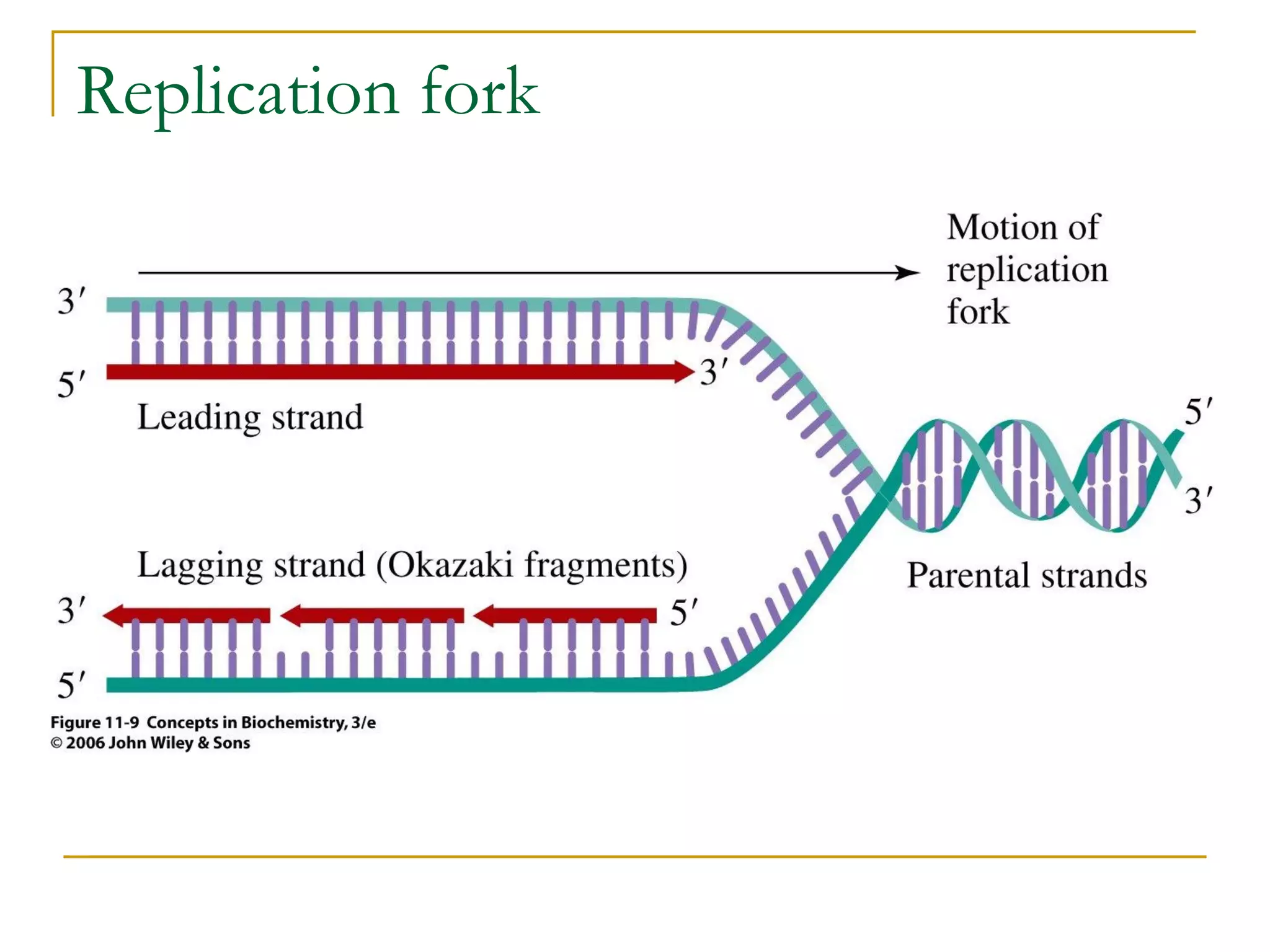
       the leading strand is synthesized continuously in
        the 5’ -> 3’ direction toward the replication fork
       the lagging strand is synthesized
        semidiscontinuously (Okazaki fragments) also in
        the 5’ -> 3’ direction, but away from the replication
        fork
       lagging strand fragments are joined by the
        enzyme DNA ligase
Replication fork
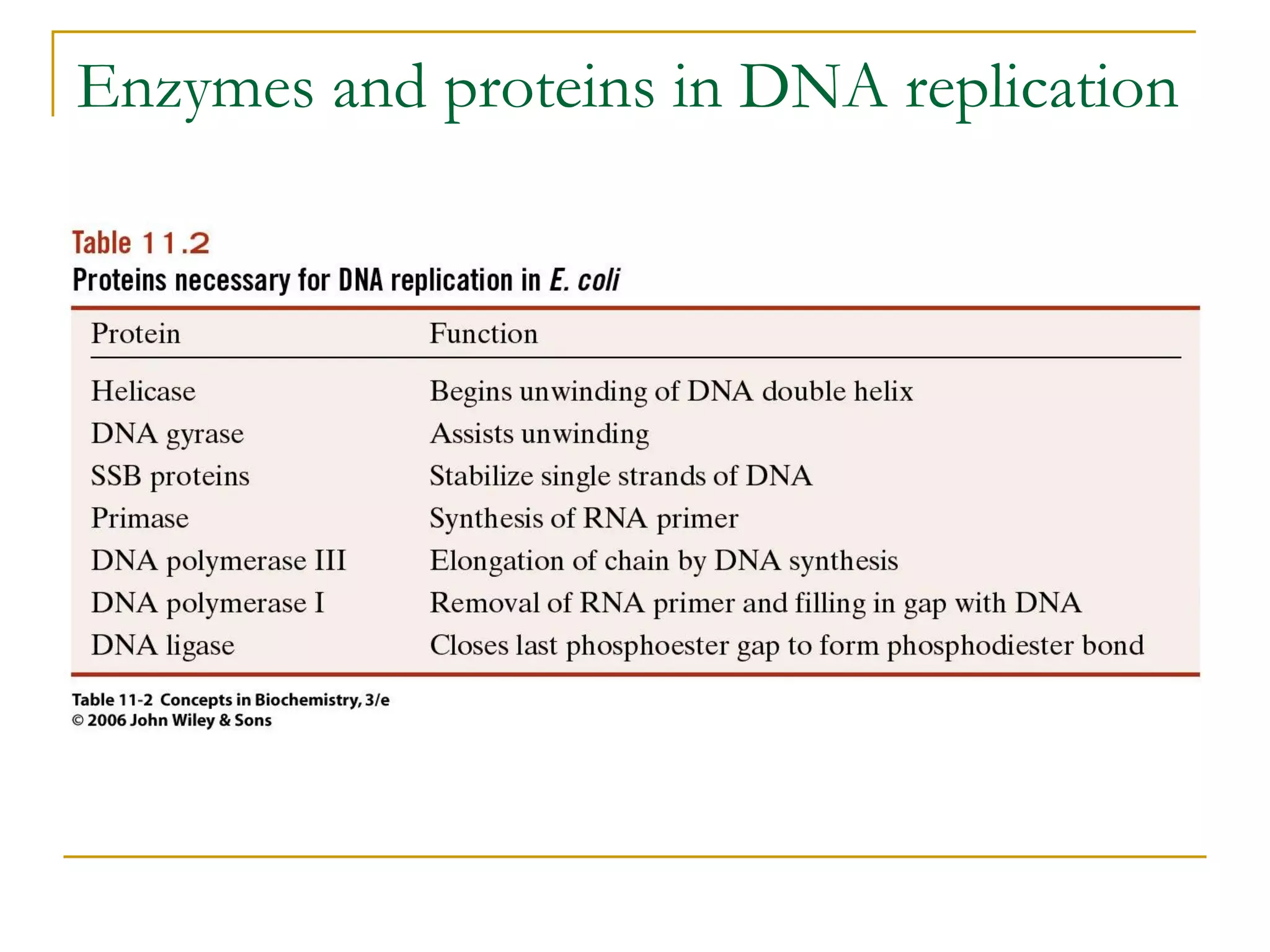
Enzymes and proteins in DNA replication
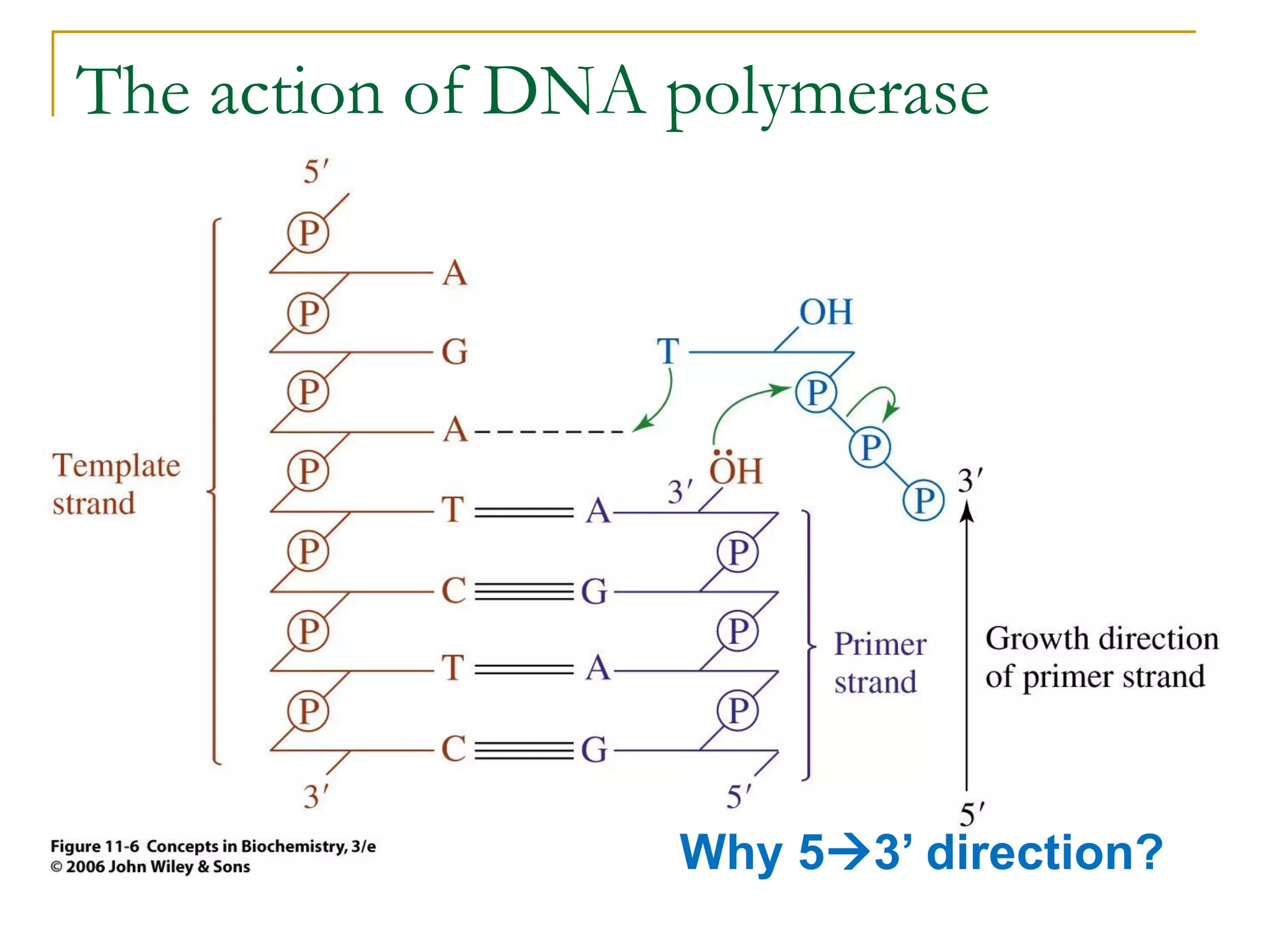
The action of DNA polymerase


                  Why 53’ direction?
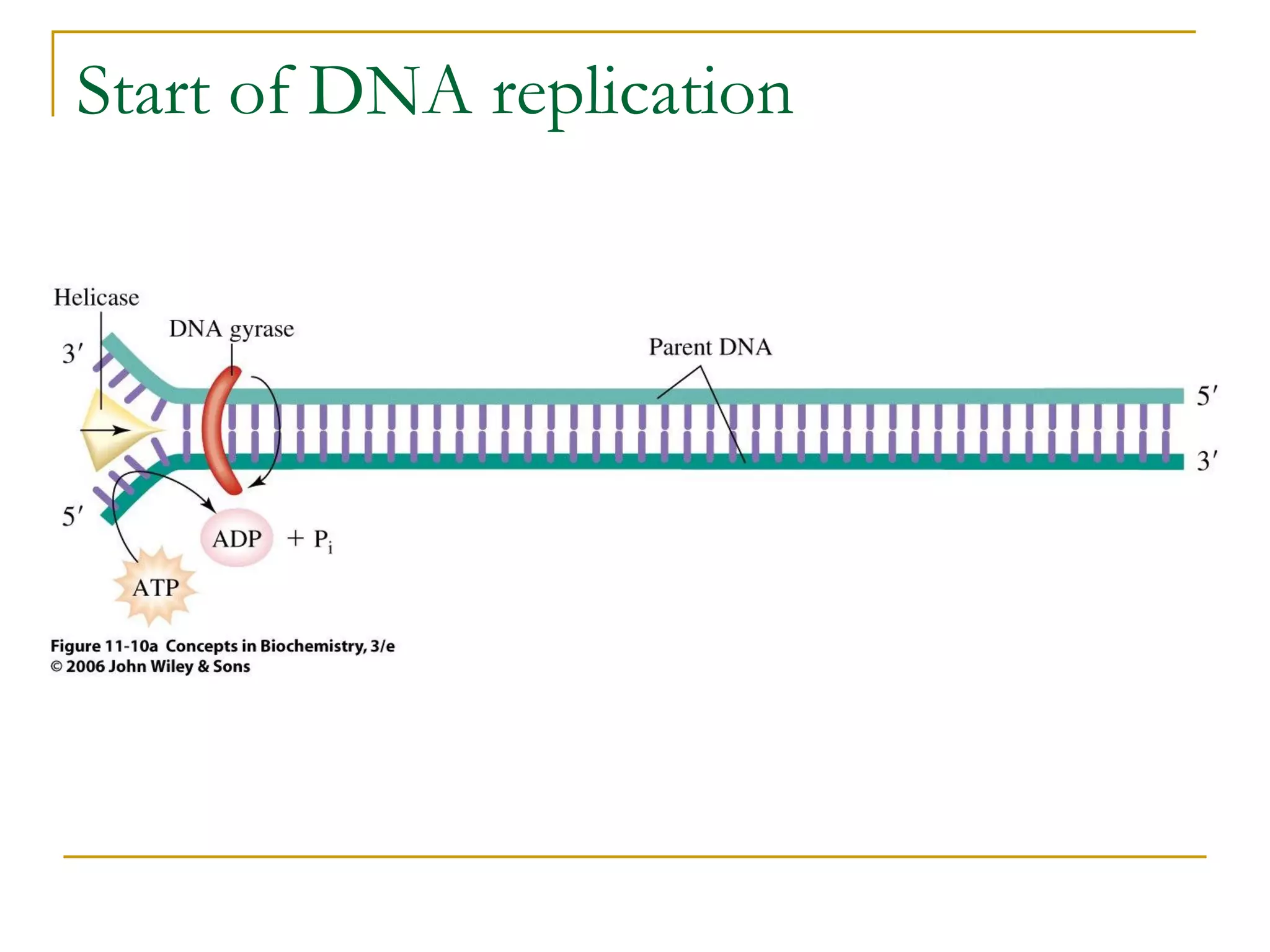
Start of DNA replication
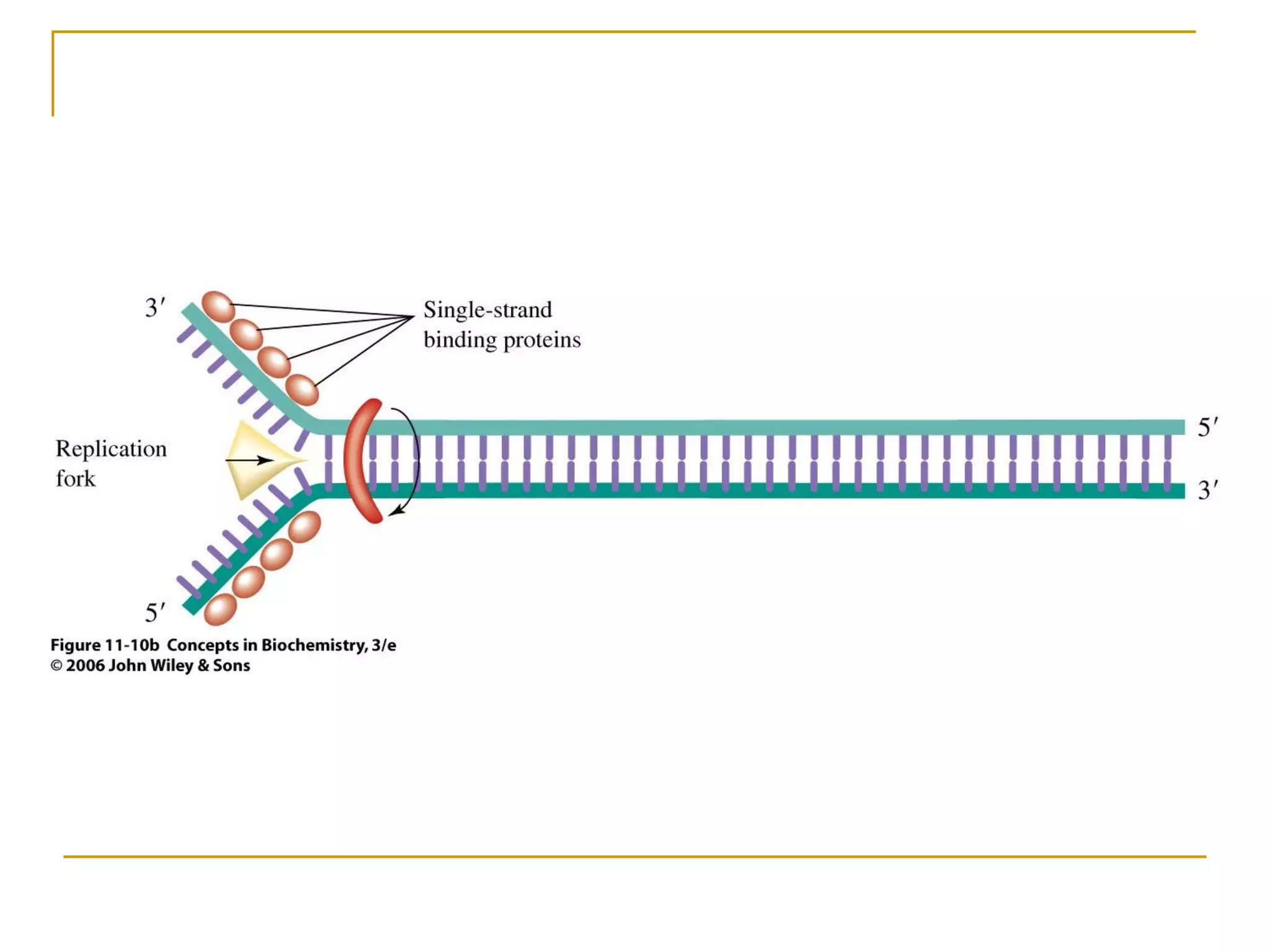
Unwinding
   DNA gyrase introduces a swivel point in
    advance of the replication fork
   a helicase binds at the replication fork and
    promotes unwinding
   single-stranded binding (SSB) protein protects
    exposed regions of single-stranded DNA
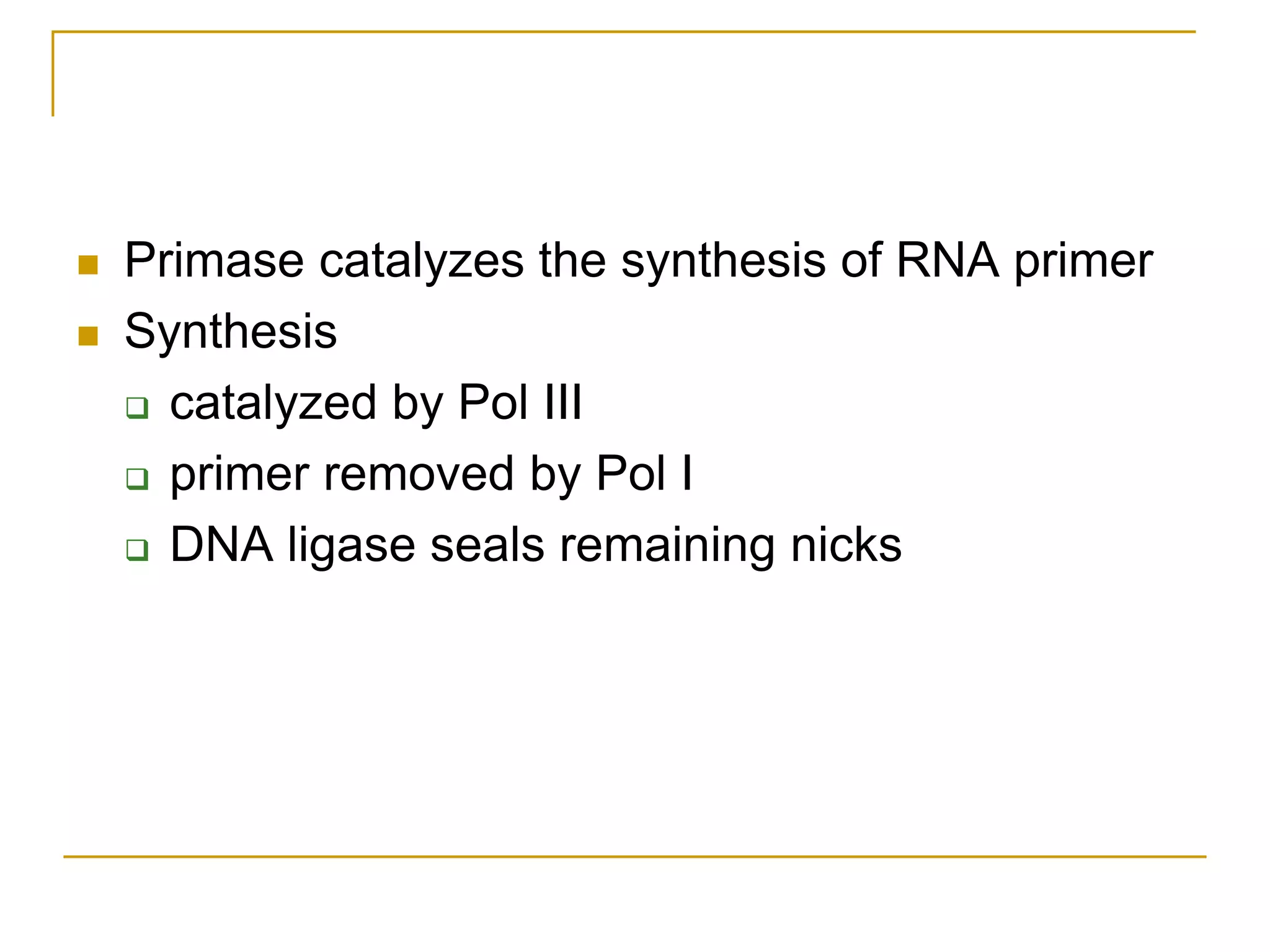
   Primase catalyzes the synthesis of RNA primer
   Synthesis
     catalyzed by Pol III

     primer removed by Pol I

     DNA ligase seals remaining nicks
Summary of DNA replication in
prokaryotes
   DNA synthesis is bidirectional
   DNA synthesis is in the 5’ -> 3’ direction
       the leading strand is formed continuously
       the lagging strand is formed as a series of
        Okazaki fragments which are later joined
DNA polymerases
   Five DNA polymerases have been found to exist in
    E. coli
       Pol I is involved in synthesis and repair
       Pol II, IV, and V are for repair under unique conditions
       Pol III is primarily responsible for new synthesis
Eukaryotic DNA replication

   Not as understood as prokaryotic. Due in no
    small part to higher level of complexity.

   Cell growth and division divided into phases:
    M, G1, S, and G2
   DNA replication occurs during the S phase
RNA synthesis

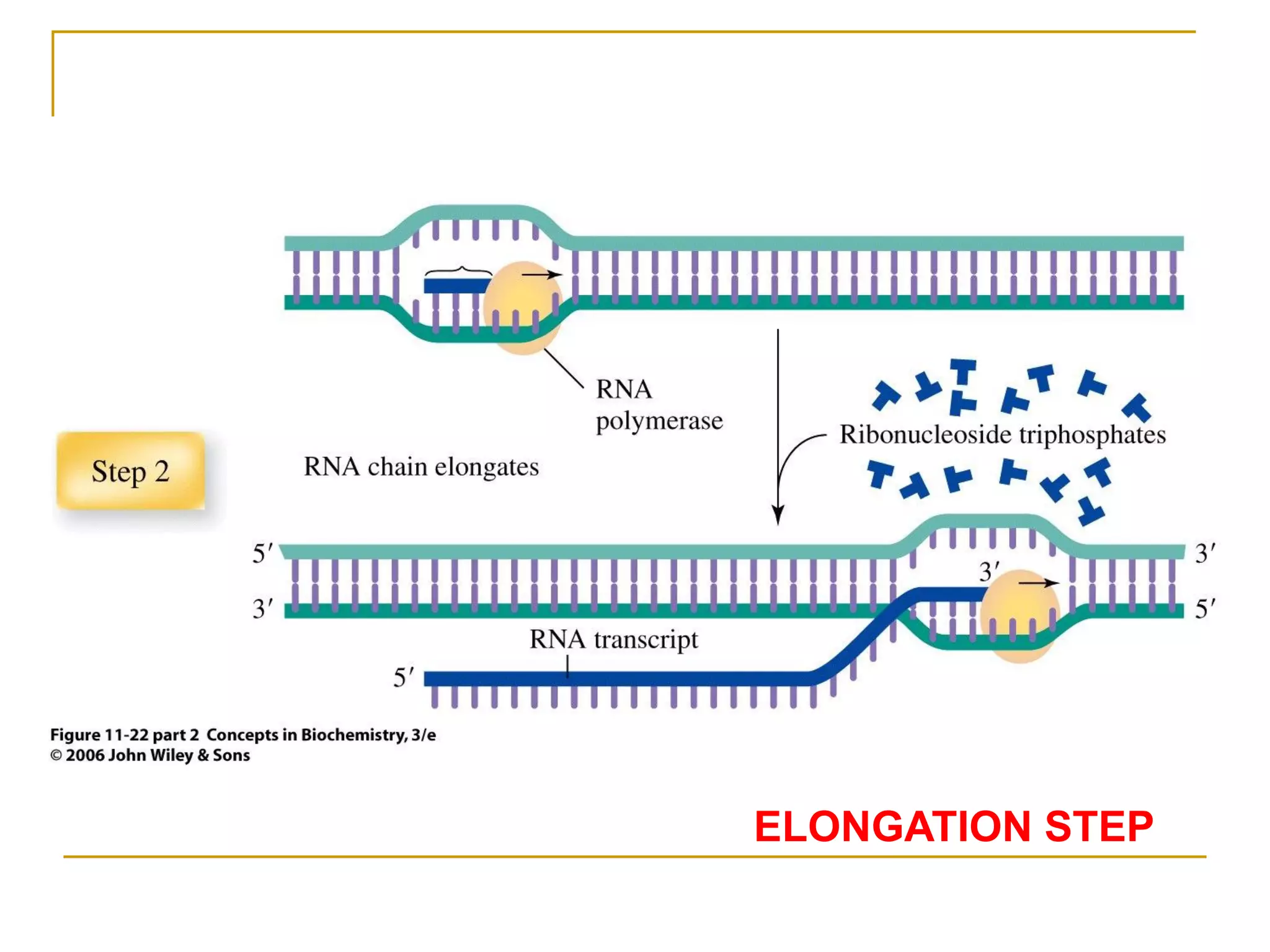
   Transcription
   Template is DNA
   Major enzyme: DNA directed RNA polymerase
   No need for primers
   5’ to 3’ direction
RNA synthesis

   Requires a promoter region in the template DNA
    to which the RNA polymerse will bind
   Promoter 40 base pairs upstream (-40) away
    from the start site (+1)
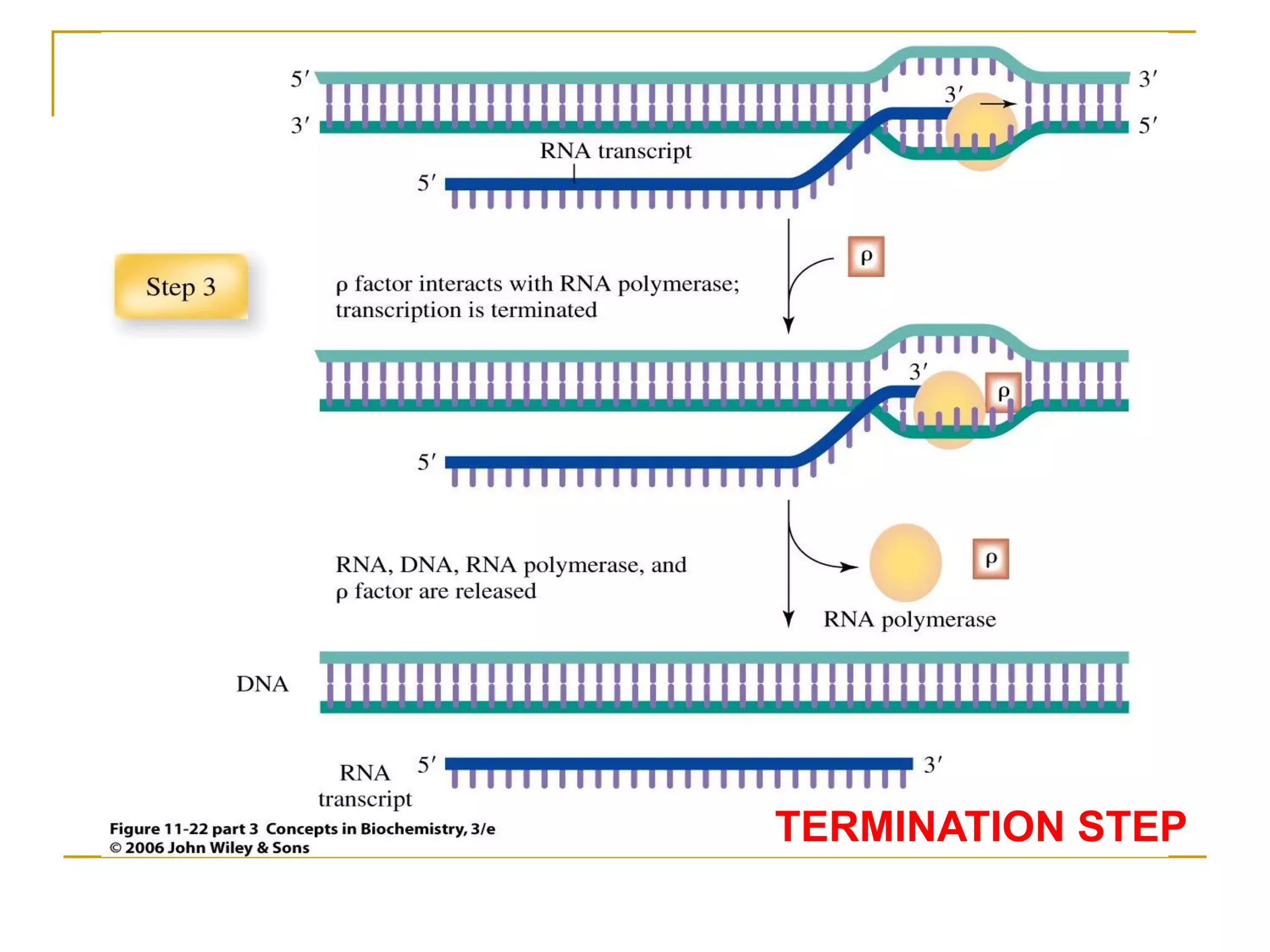
   Three stages:initiation, elongation, termination
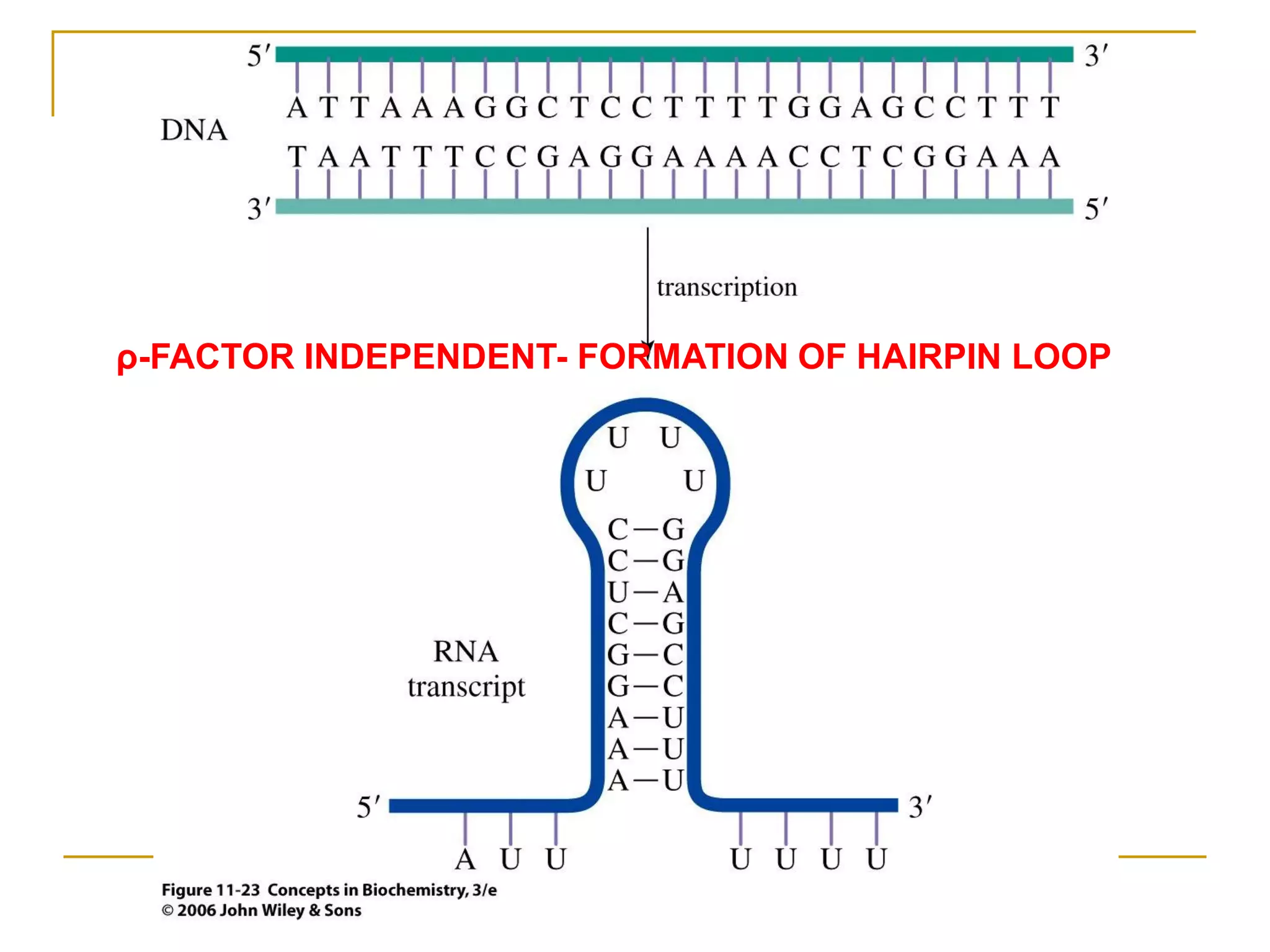
   Termination may be
       rho factor dependent – rho factor terminates
        synthesis
       or rho factor independent – formation of a stable
        hairpin loop
Promoter 40 base pairs upstream (-40)
away from the start site (+1)
INITIATION STEP
ELONGATION STEP
TERMINATION STEP
ρ-FACTOR INDEPENDENT- FORMATION OF HAIRPIN LOOP
Eukarotic transcription have 3 classes of
RNA polymerases
   RNA pol I transcribes large ribosomal RNA
    genes
   RNA pol II transcribes protein encoding gene
   RNA pol III transcribes small RNAs
    (including tRNA and 5SRNA)
Post transcriptional modification of the
eukaryotic mRNA
   Capping – methyl guanosine attachment at the
    5’ end to protect the cleavage of the RNA by
    exonucleases as RNA moves out of the nucleus
   Addition of poly A at the 3’ end (200-250 long)
    helps to stabilize the mRNA structure; increases
    resistance to cellular nucleases
   Splicing – removal of non coding sequences
    (introns)
Protein synthesis

   Translation
   Based on the m-RNA sequence, genetic
    code
   Starts from 5’ end of the transcript
   Occurs in the ribosomes
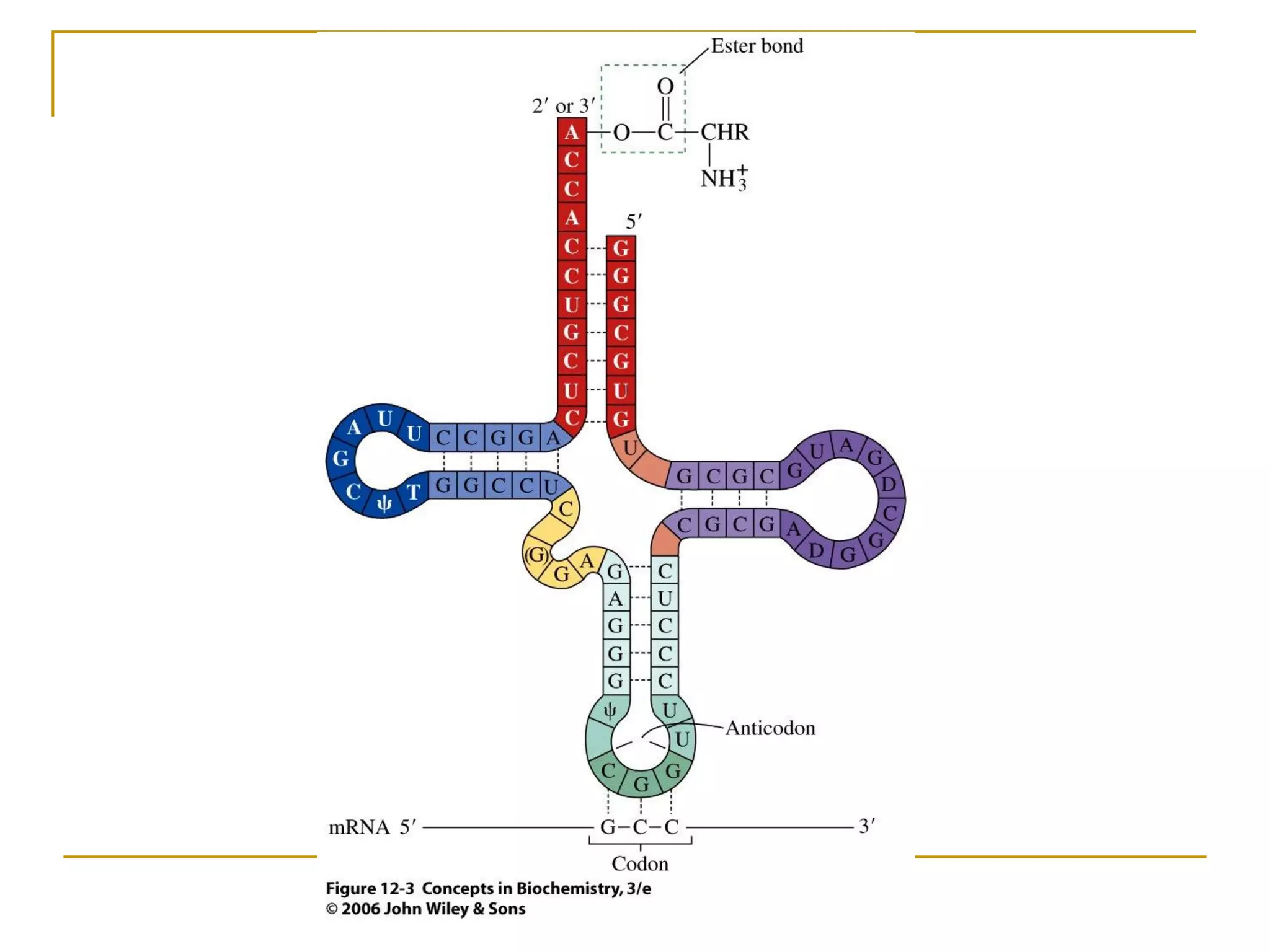
   Activation of amino acids – attachment to the
    tRNA
   Initiation, elongation, termination
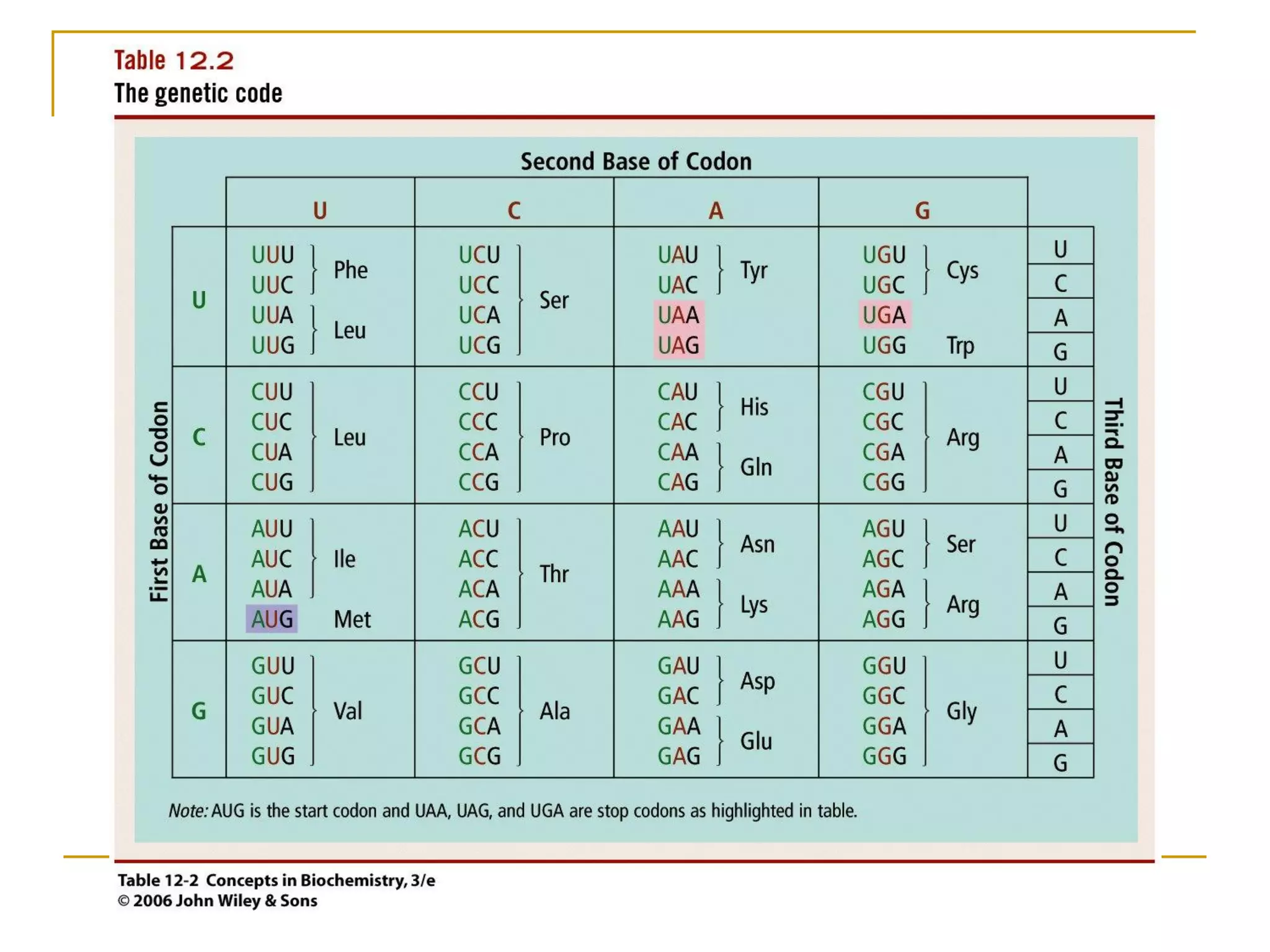
Genetic code

   Triplet nucleotide – one amino acid
   Nonoverlapping
   No punctuation
   Degenerate
   Almost universal
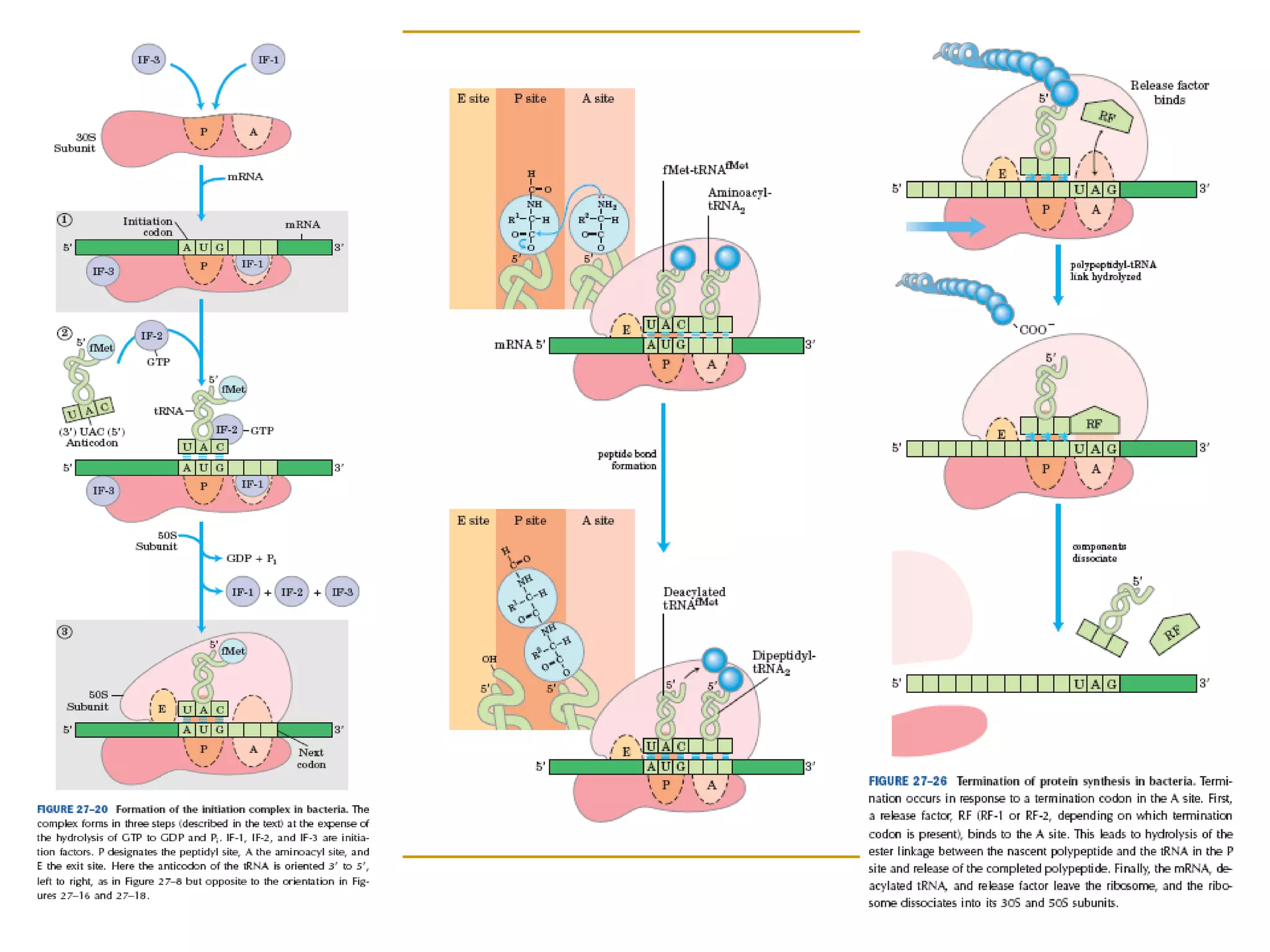
Initiation

   Initiation factors
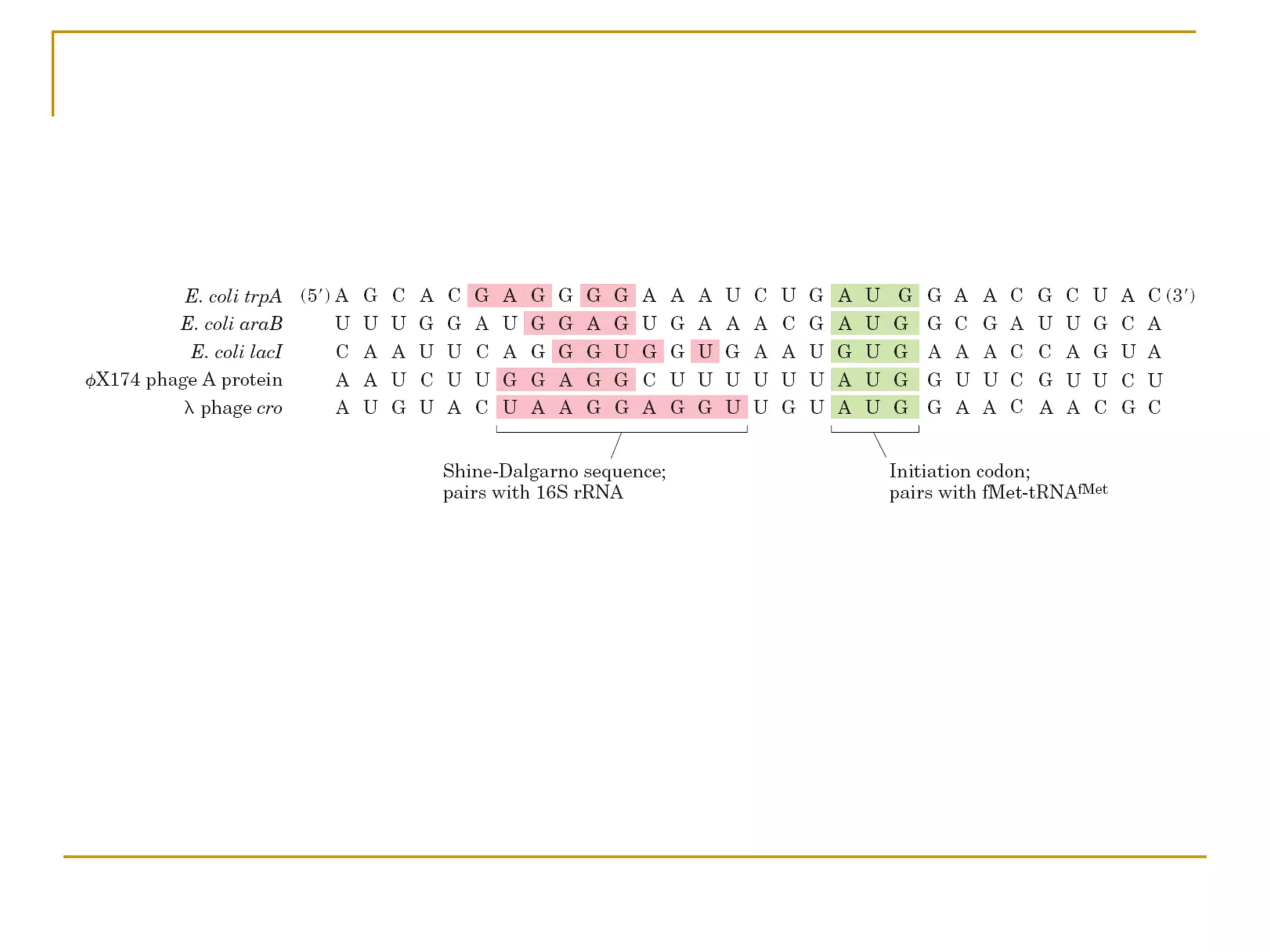
   Shine-Dalgarno sequence in mRNA
   30S ribosome
   N-formylmet
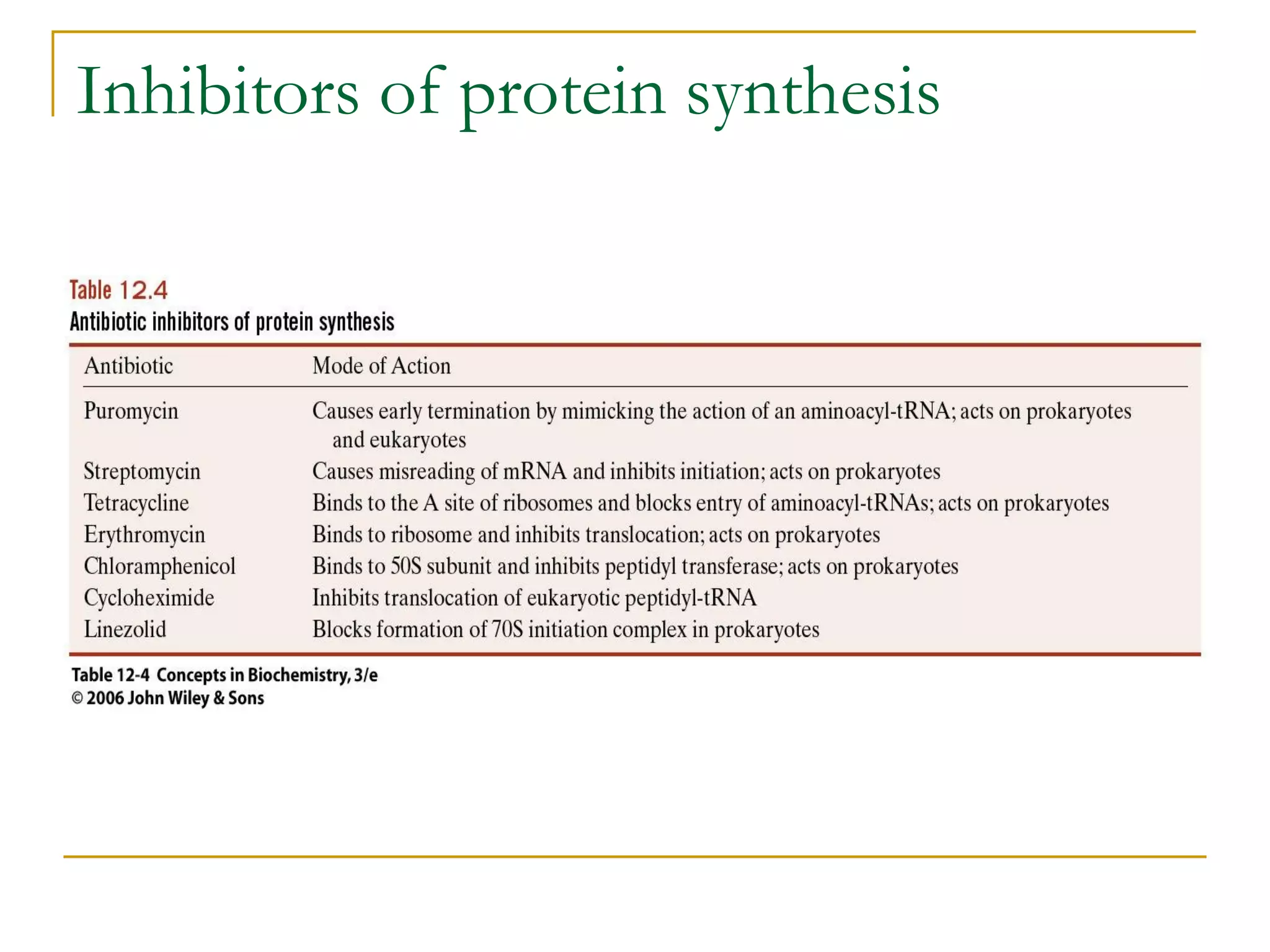
Inhibitors of protein synthesis
Postranslational modification

   Protein folding –chaperones
   Proteolytic cleavage (zymogens) – hydrolytic
    enzymes in the gut
   Amino acid modifications
   Attachment of carbohydrates
   Addition of prosthetic groups
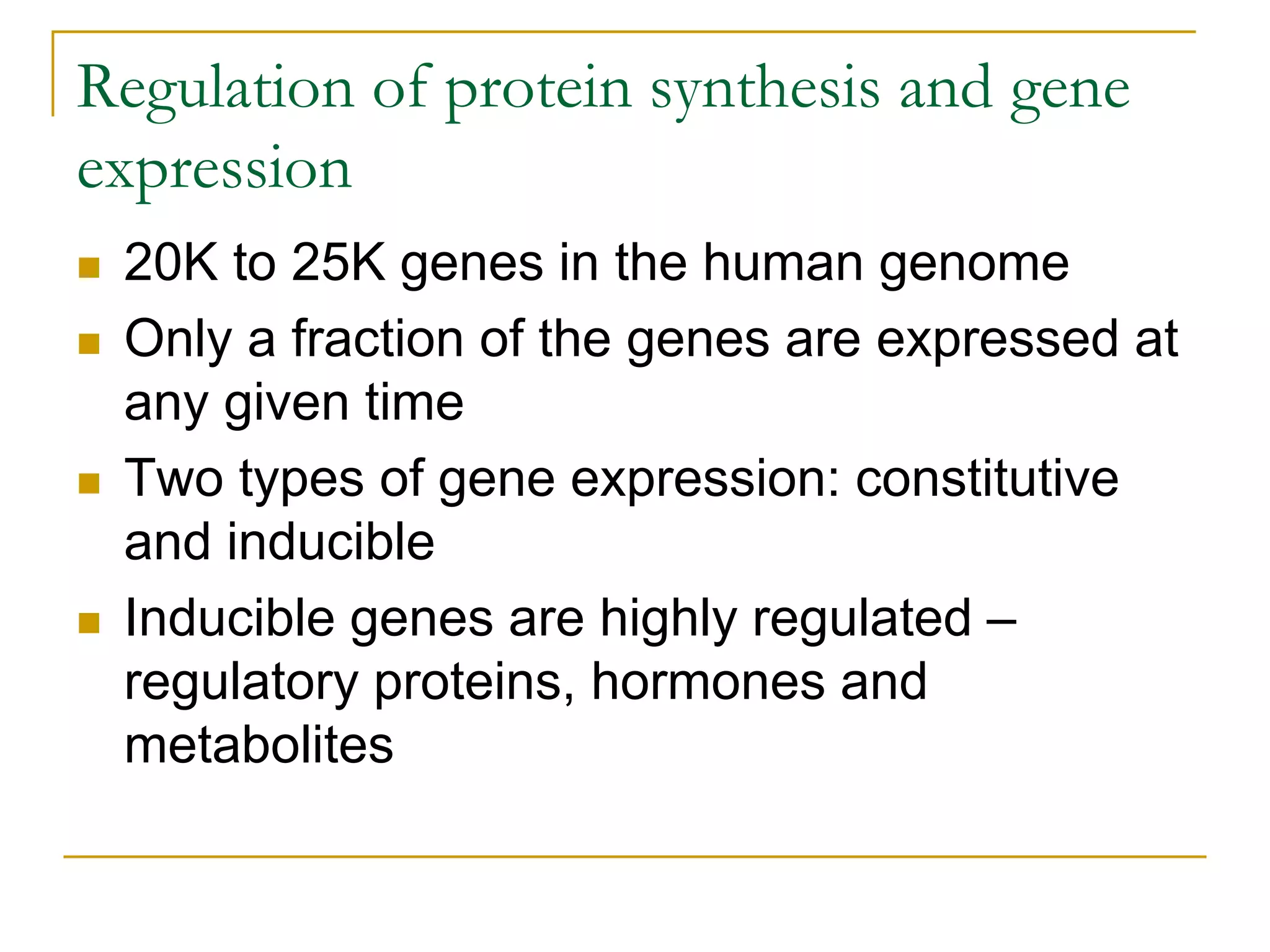
Regulation of protein synthesis and gene
expression
   20K to 25K genes in the human genome
   Only a fraction of the genes are expressed at
    any given time
   Two types of gene expression: constitutive
    and inducible
   Inducible genes are highly regulated –
    regulatory proteins, hormones and
    metabolites

Mv management of genetic information

  • 1.
  • 2.
    Learning objectives  Understand the mechanism of DNA replication, RNA synthesis and protein synthesis
  • 3.
    Flow of geneticinformation
  • 4.
    Two possible modelsof the DNA replication
  • 5.
    Expt by Meselson-Stahlproved the semiconservative model of replication
  • 6.
    Which direction doesreplication go?  Major enzyme: DNA polymerase III  DNA double helix unwinds at a specific point called an origin of replication  Polynucleotide chains are synthesized in both directions from the origin of replication; DNA replication is bidirectional in most organisms  At each origin of replication, there are two replication forks, points at which new polynucleotide chains are formed  There is one origin of replication and two replication forks in the circular DNA of prokaryotes  In replication of a eukaryotic chromosome, there are several origins of replication and two replication forks at each origin
  • 7.
  • 8.
  • 9.
    DNA synthesis basedon two template strands: leading strand and lagging strand templates; mechanism in prokaryotes is presented  DNA is synthesized from its 5’ -> 3’ end (from the 3’ -> 5’ direction of the template)  the leading strand is synthesized continuously in the 5’ -> 3’ direction toward the replication fork  the lagging strand is synthesized semidiscontinuously (Okazaki fragments) also in the 5’ -> 3’ direction, but away from the replication fork  lagging strand fragments are joined by the enzyme DNA ligase
  • 10.
  • 11.
    Enzymes and proteinsin DNA replication
  • 12.
    The action ofDNA polymerase Why 53’ direction?
  • 13.
    Start of DNAreplication
  • 14.
    Unwinding  DNA gyrase introduces a swivel point in advance of the replication fork  a helicase binds at the replication fork and promotes unwinding  single-stranded binding (SSB) protein protects exposed regions of single-stranded DNA
  • 16.
    Primase catalyzes the synthesis of RNA primer  Synthesis  catalyzed by Pol III  primer removed by Pol I  DNA ligase seals remaining nicks
  • 21.
    Summary of DNAreplication in prokaryotes  DNA synthesis is bidirectional  DNA synthesis is in the 5’ -> 3’ direction  the leading strand is formed continuously  the lagging strand is formed as a series of Okazaki fragments which are later joined
  • 22.
    DNA polymerases  Five DNA polymerases have been found to exist in E. coli  Pol I is involved in synthesis and repair  Pol II, IV, and V are for repair under unique conditions  Pol III is primarily responsible for new synthesis
  • 23.
    Eukaryotic DNA replication  Not as understood as prokaryotic. Due in no small part to higher level of complexity.  Cell growth and division divided into phases: M, G1, S, and G2  DNA replication occurs during the S phase
  • 25.
    RNA synthesis  Transcription  Template is DNA  Major enzyme: DNA directed RNA polymerase  No need for primers  5’ to 3’ direction
  • 26.
    RNA synthesis  Requires a promoter region in the template DNA to which the RNA polymerse will bind  Promoter 40 base pairs upstream (-40) away from the start site (+1)  Three stages:initiation, elongation, termination  Termination may be  rho factor dependent – rho factor terminates synthesis  or rho factor independent – formation of a stable hairpin loop
  • 27.
    Promoter 40 basepairs upstream (-40) away from the start site (+1)
  • 28.
  • 29.
  • 30.
  • 31.
  • 32.
    Eukarotic transcription have3 classes of RNA polymerases  RNA pol I transcribes large ribosomal RNA genes  RNA pol II transcribes protein encoding gene  RNA pol III transcribes small RNAs (including tRNA and 5SRNA)
  • 33.
    Post transcriptional modificationof the eukaryotic mRNA  Capping – methyl guanosine attachment at the 5’ end to protect the cleavage of the RNA by exonucleases as RNA moves out of the nucleus  Addition of poly A at the 3’ end (200-250 long) helps to stabilize the mRNA structure; increases resistance to cellular nucleases  Splicing – removal of non coding sequences (introns)
  • 37.
    Protein synthesis  Translation  Based on the m-RNA sequence, genetic code  Starts from 5’ end of the transcript  Occurs in the ribosomes  Activation of amino acids – attachment to the tRNA  Initiation, elongation, termination
  • 38.
    Genetic code  Triplet nucleotide – one amino acid  Nonoverlapping  No punctuation  Degenerate  Almost universal
  • 41.
    Initiation  Initiation factors  Shine-Dalgarno sequence in mRNA  30S ribosome  N-formylmet
  • 44.
  • 45.
    Postranslational modification  Protein folding –chaperones  Proteolytic cleavage (zymogens) – hydrolytic enzymes in the gut  Amino acid modifications  Attachment of carbohydrates  Addition of prosthetic groups
  • 46.
    Regulation of proteinsynthesis and gene expression  20K to 25K genes in the human genome  Only a fraction of the genes are expressed at any given time  Two types of gene expression: constitutive and inducible  Inducible genes are highly regulated – regulatory proteins, hormones and metabolites