Muscles of mastication
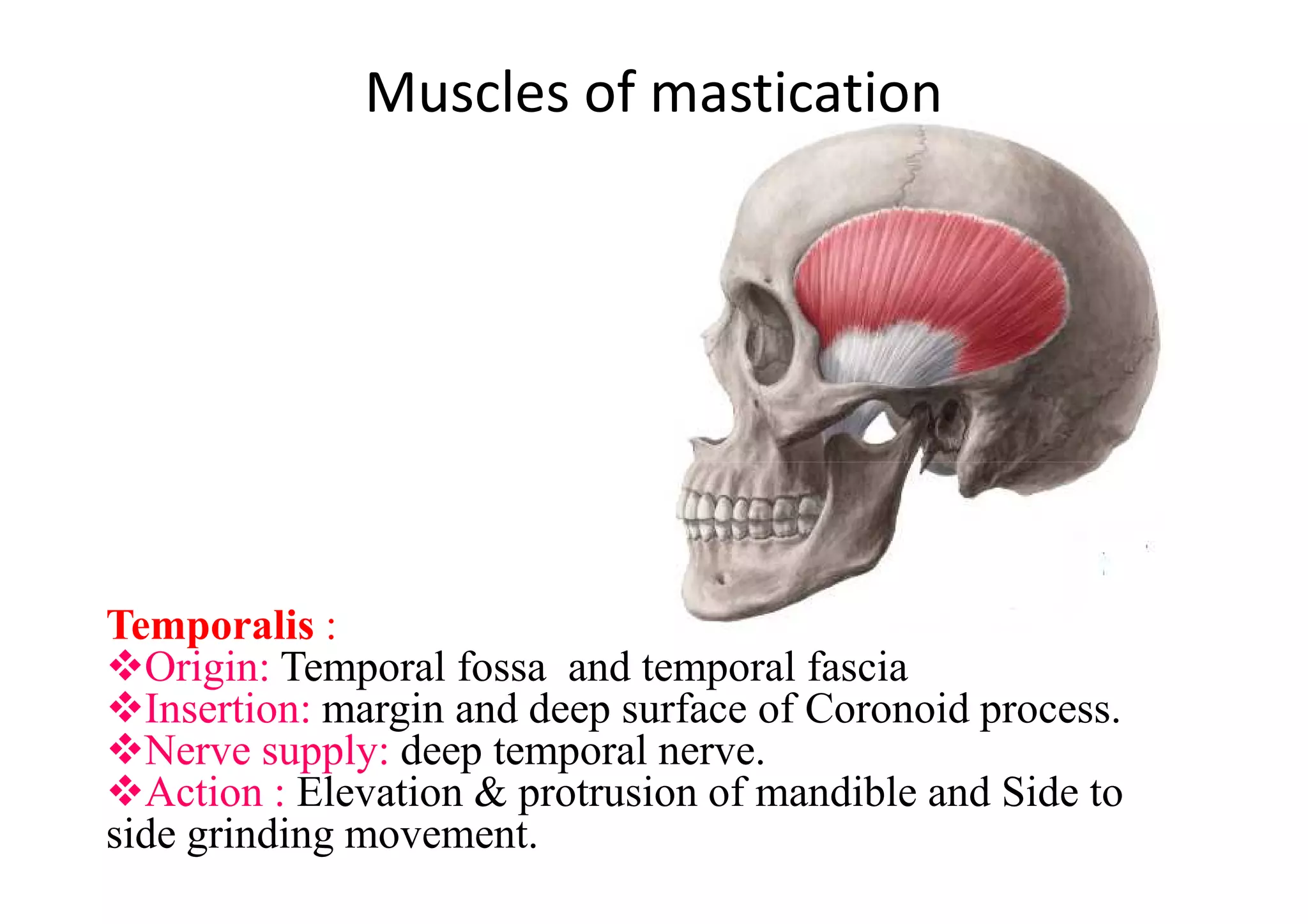
Temporalis :
Origin: Temporal fossa and temporal fascia
Insertion: margin and deep surface of Coronoid process.
Nerve supply: deep temporal nerve.
Action : Elevation & protrusion of mandible and Side to
side grinding movement.
Origin:
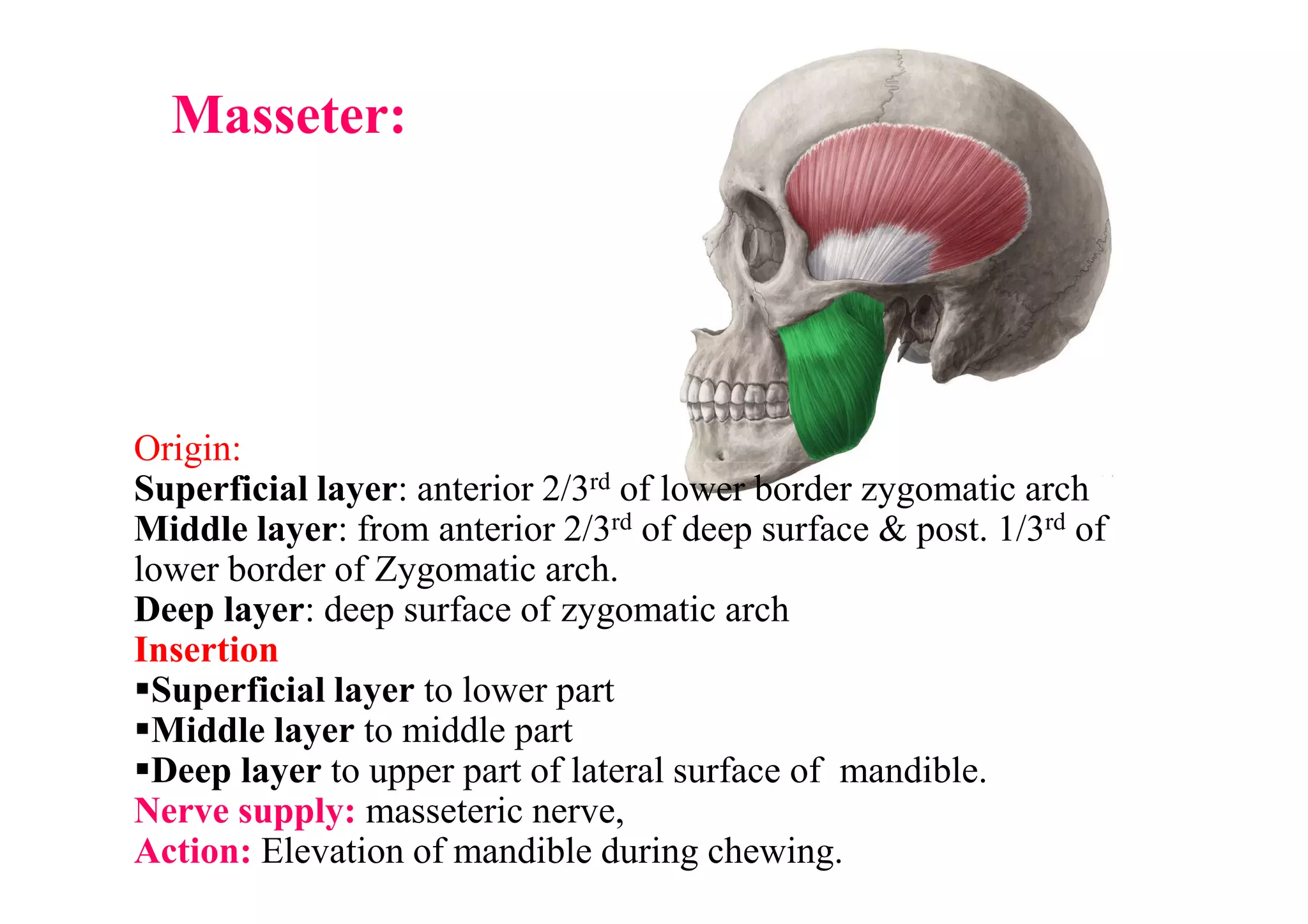
Masseter:
Origin:
Superficial layer: anterior 2/3rd of lower border zygomatic arch
Middle layer: from anterior 2/3rd of deep surface & post. 1/3rd of
lower border of Zygomatic arch.
Deep layer: deep surface of zygomatic arch
Insertion
Superficial layer to lower part
Middle layer to middle part
Deep layer to upper part of lateral surface of mandible.
Nerve supply: masseteric nerve,
Action: Elevation of mandible during chewing.
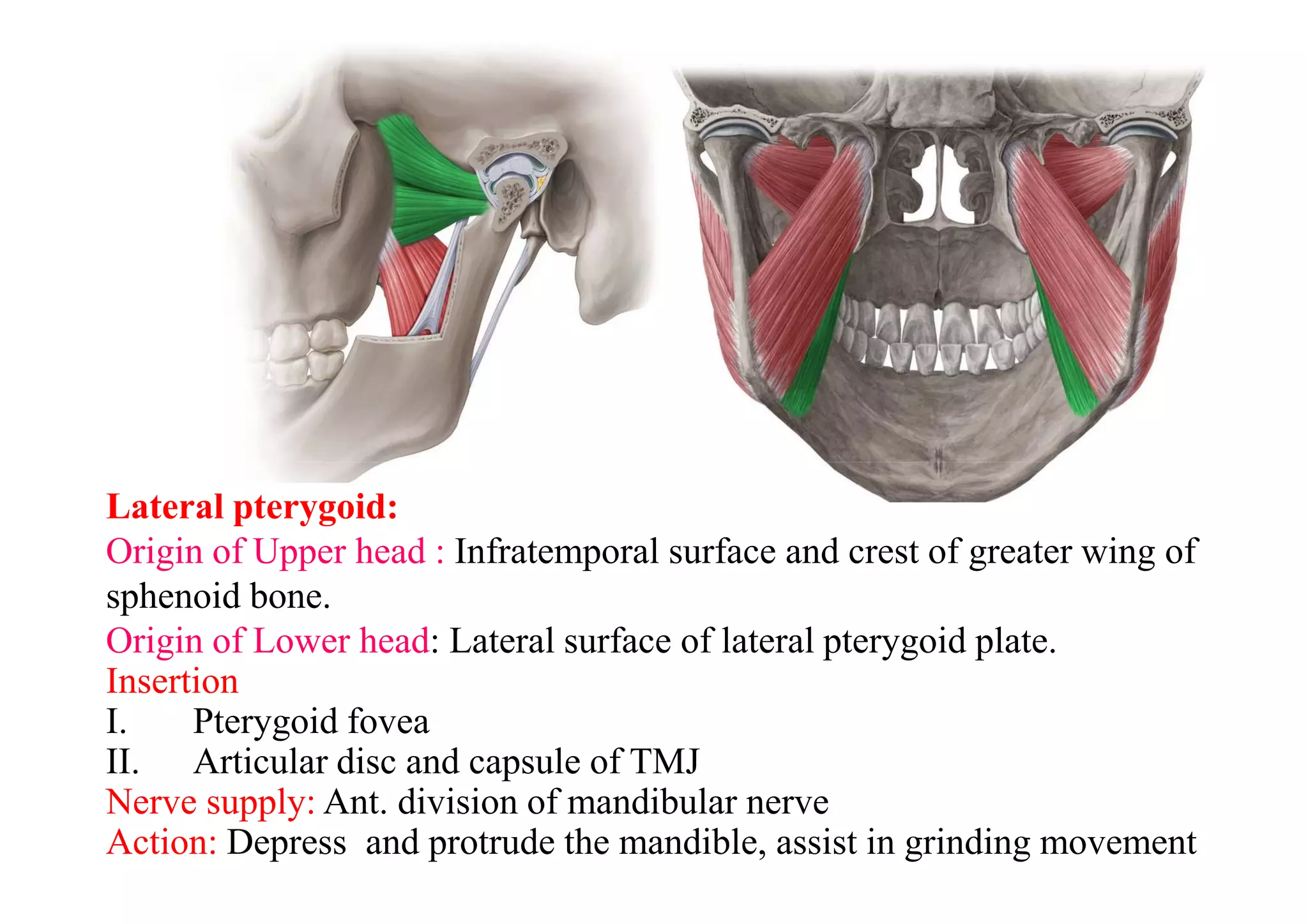
Lateral pterygoid:
Origin of Upper head : Infratemporal surface and crest of greater wing of
sphenoid bone.
Origin of Lower head: Lateral surface of lateral pterygoid plate.
Insertion
I. Pterygoid fovea
II. Articular disc and capsule of TMJ
Nerve supply: Ant. division of mandibular nerve
Action: Depress and protrude the mandible, assist in grinding movement
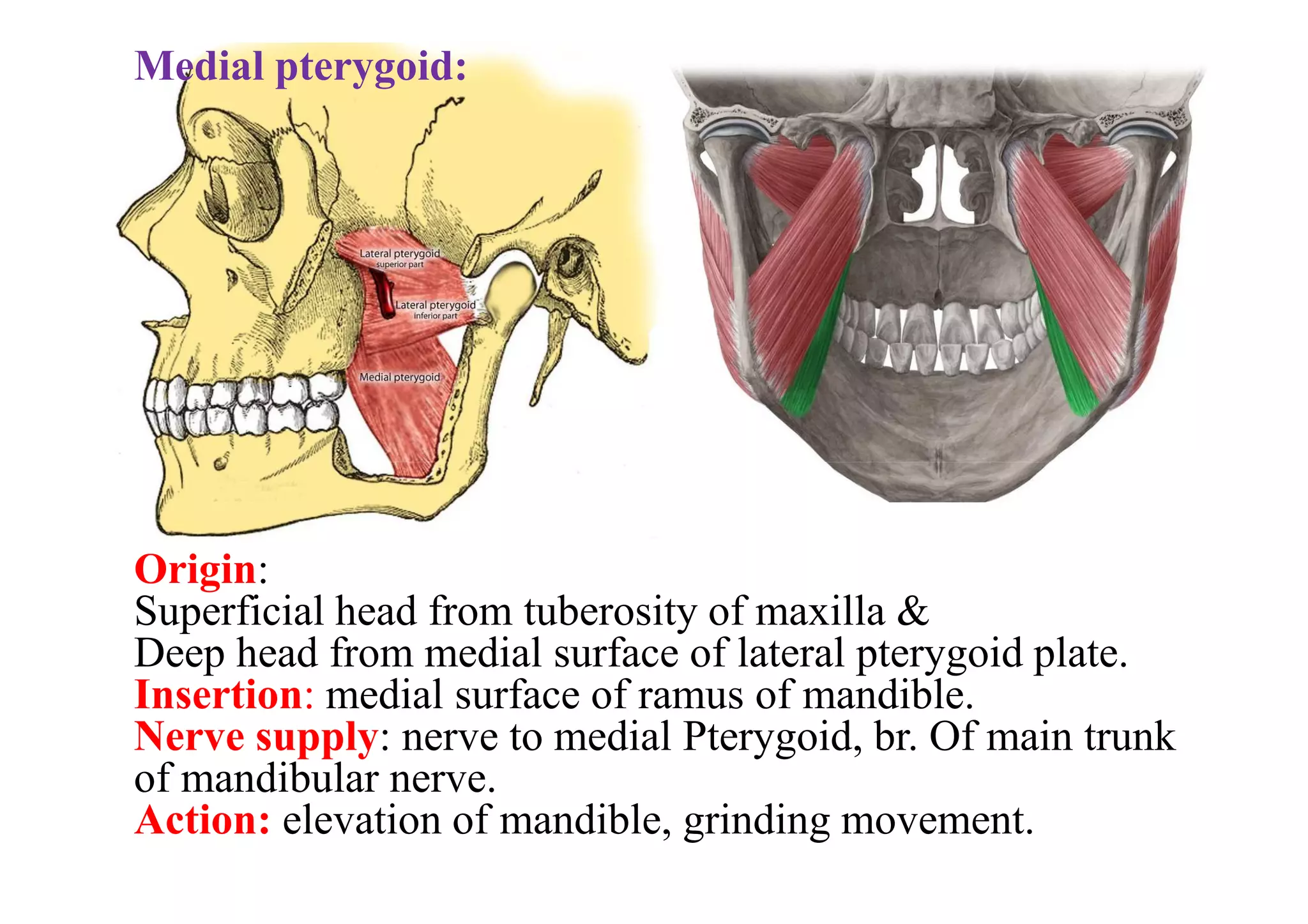
Medial pterygoid:
Origin:
Superficial head from tuberosity of maxilla &
Deep head from medial surface of lateral pterygoid plate.
Insertion: medial surface of ramus of mandible.
Nerve supply: nerve to medial Pterygoid, br. Of main trunk
of mandibular nerve.
Action: elevation of mandible, grinding movement.
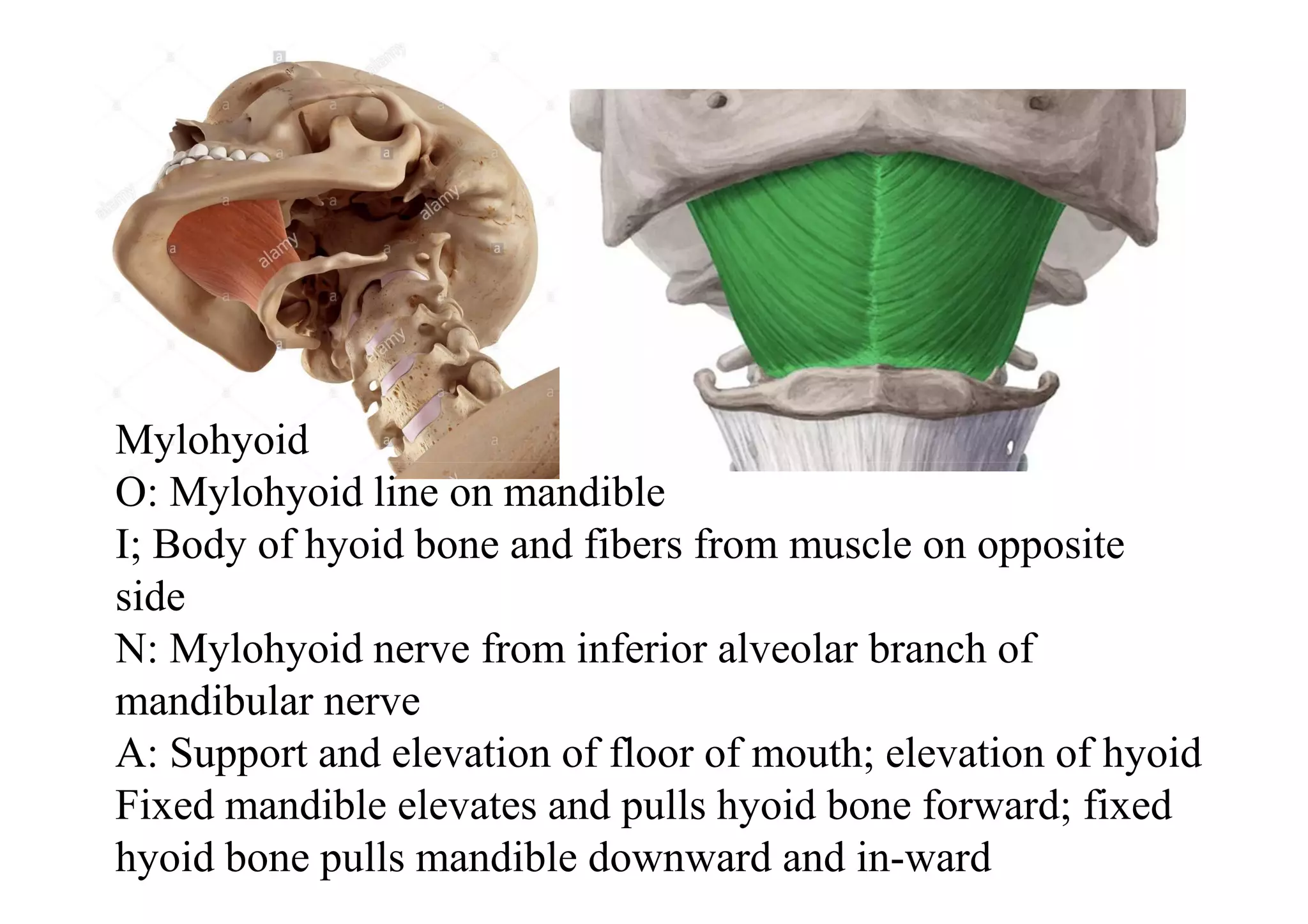
MylohyoidMylohyoid
O: Mylohyoid line on mandible
I; Body of hyoid bone and fibers from muscle on opposite
side
N: Mylohyoid nerve from inferior alveolar branch of
mandibular nerve
A: Support and elevation of floor of mouth; elevation of hyoid
Fixed mandible elevates and pulls hyoid bone forward; fixed
hyoid bone pulls mandible downward and in-ward
Geniohyoid
O: Inferior mental spine on inner surface of mandible
I; Anterior surface of body of hyoid bone
N: Branch from anterior ramus of C1 (carried along the hypoglossal
nerve)
A; Fixed mandible elevates and pulls hyoid bone forward; fixed hyoid
bone pulls mandible downward and in-ward
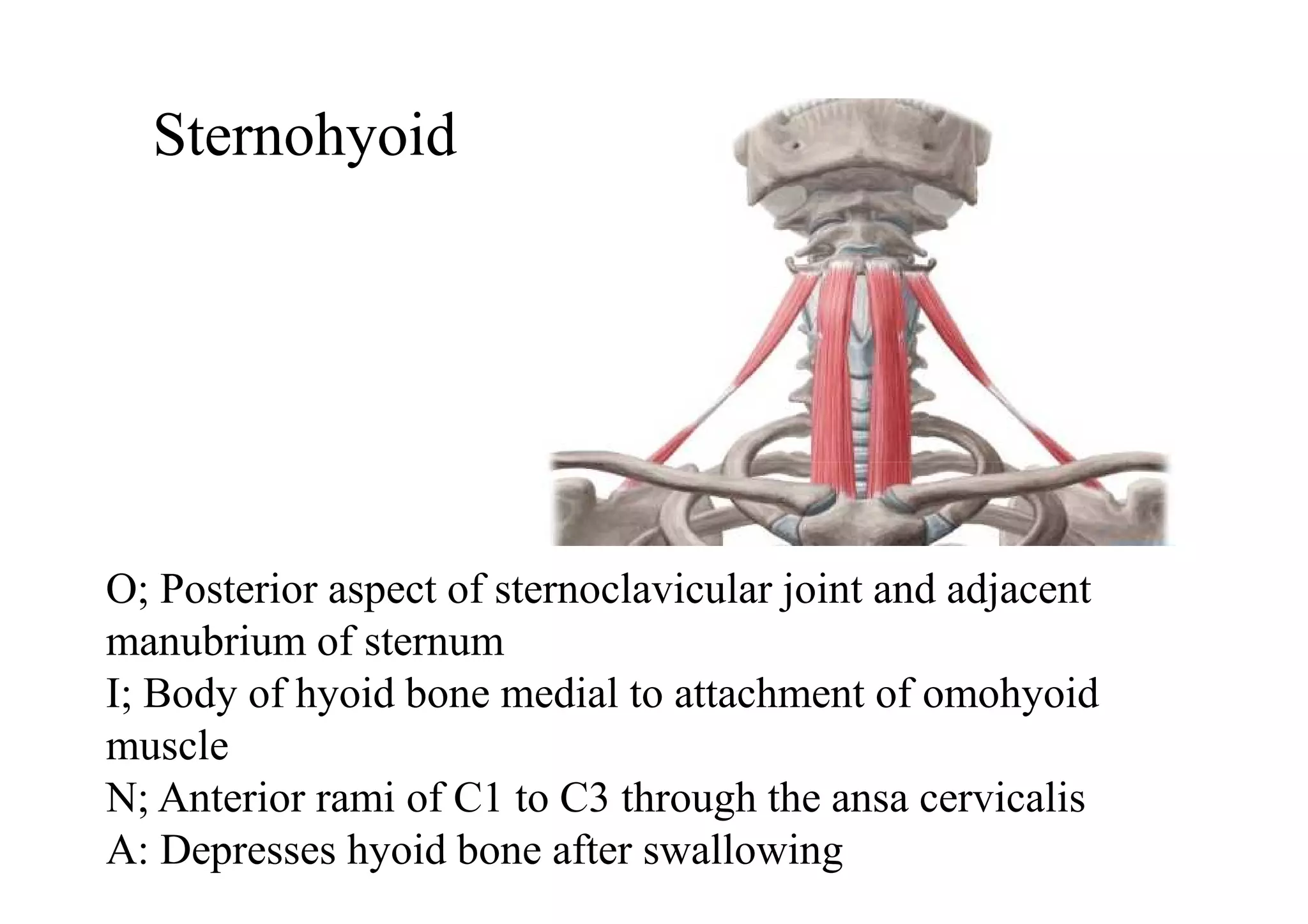
Sternohyoid
O; Posterior aspect of sternoclavicular joint and adjacent
manubrium of sternum
I; Body of hyoid bone medial to attachment of omohyoid
muscle
N; Anterior rami of C1 to C3 through the ansa cervicalis
A: Depresses hyoid bone after swallowing
Omohyoid
O; Superior border of scapula medial to suprascapular notch
I; Lower border of body of hyoid bone just lateral to
attachment of sternohyoid
N; Anterior rami of C1 to C3 through the ansa cervicalis
A; Depresses and fixes hyoid bone
Thyrohyoid
O; Oblique line on lamina of thyroid cartilage
I; Greater horn and adjacent aspect of body of hyoid bone
N; Fibers from anterior ramus of C1 carried along hypoglossal nerve
A; Depresses hyoid bone, but when hyoid bone is fixed raises larynx
Sternothyroid
O; Posterior surface of manubrium of sternum
I; Oblique line on lamina of thyroid cartilage
N: Anterior rami of C1 to C3 through the ansa cervicalis
A; Draws larynx (thyroid cartilage) downward
Trapezius
O ; Superior nuchal line; external occipital protuberance; ligamentum
nuchae; spinous processes of vertebrae CVII to TXII
I: Lateral one-third of clavicle; acromion; spine of scapula
N; Motor-accessory nerve [XI]; proprioception-C3 and C4
A: Assists in rotating the scapula during abduction of humerus above
horizontal; upper fibers-elevate, middle fibers-adduct, lower fibers-
depress scapula
Sternocleidomastoid muscle
O; Upper part of anterior surface of manubrium of sternum
I; Lateral one-half of superior nuchal line
O; Superior surface of medial one-third of clavicle
I : Lateral surface of mastoid process
N : Accessory nerve [XI] and branches from anterior rami of C2 to C3 (C4)
A: Individually-will tilt head to-wards shoulder on same side rotating head to turn face
to opposite side; acting to-gether, draw head forwards
Torticollis or wry neck- deformity in which the head bent to one
side and the chin points to the other side
1. Rheumatic torticollis- due to exposure to cold or draught
2. Reflex torticollis- due to inflamed or suppurating cervical
lymph nodes which irritate the spinal accessory nerve
3. Congenital torticollis- due to birth injury
4. Spasmodic torticollis- due to central irritation on CN-XI.
Thank YouThank You

Muscles of mastication

  • 2.
    Muscles of mastication Temporalis: Origin: Temporal fossa and temporal fascia Insertion: margin and deep surface of Coronoid process. Nerve supply: deep temporal nerve. Action : Elevation & protrusion of mandible and Side to side grinding movement.
  • 3.
    Origin: Masseter: Origin: Superficial layer: anterior2/3rd of lower border zygomatic arch Middle layer: from anterior 2/3rd of deep surface & post. 1/3rd of lower border of Zygomatic arch. Deep layer: deep surface of zygomatic arch Insertion Superficial layer to lower part Middle layer to middle part Deep layer to upper part of lateral surface of mandible. Nerve supply: masseteric nerve, Action: Elevation of mandible during chewing.
  • 4.
    Lateral pterygoid: Origin ofUpper head : Infratemporal surface and crest of greater wing of sphenoid bone. Origin of Lower head: Lateral surface of lateral pterygoid plate. Insertion I. Pterygoid fovea II. Articular disc and capsule of TMJ Nerve supply: Ant. division of mandibular nerve Action: Depress and protrude the mandible, assist in grinding movement
  • 5.
    Medial pterygoid: Origin: Superficial headfrom tuberosity of maxilla & Deep head from medial surface of lateral pterygoid plate. Insertion: medial surface of ramus of mandible. Nerve supply: nerve to medial Pterygoid, br. Of main trunk of mandibular nerve. Action: elevation of mandible, grinding movement.
  • 6.
    MylohyoidMylohyoid O: Mylohyoid lineon mandible I; Body of hyoid bone and fibers from muscle on opposite side N: Mylohyoid nerve from inferior alveolar branch of mandibular nerve A: Support and elevation of floor of mouth; elevation of hyoid Fixed mandible elevates and pulls hyoid bone forward; fixed hyoid bone pulls mandible downward and in-ward
  • 7.
    Geniohyoid O: Inferior mentalspine on inner surface of mandible I; Anterior surface of body of hyoid bone N: Branch from anterior ramus of C1 (carried along the hypoglossal nerve) A; Fixed mandible elevates and pulls hyoid bone forward; fixed hyoid bone pulls mandible downward and in-ward
  • 8.
    Sternohyoid O; Posterior aspectof sternoclavicular joint and adjacent manubrium of sternum I; Body of hyoid bone medial to attachment of omohyoid muscle N; Anterior rami of C1 to C3 through the ansa cervicalis A: Depresses hyoid bone after swallowing
  • 9.
    Omohyoid O; Superior borderof scapula medial to suprascapular notch I; Lower border of body of hyoid bone just lateral to attachment of sternohyoid N; Anterior rami of C1 to C3 through the ansa cervicalis A; Depresses and fixes hyoid bone
  • 11.
    Thyrohyoid O; Oblique lineon lamina of thyroid cartilage I; Greater horn and adjacent aspect of body of hyoid bone N; Fibers from anterior ramus of C1 carried along hypoglossal nerve A; Depresses hyoid bone, but when hyoid bone is fixed raises larynx
  • 12.
    Sternothyroid O; Posterior surfaceof manubrium of sternum I; Oblique line on lamina of thyroid cartilage N: Anterior rami of C1 to C3 through the ansa cervicalis A; Draws larynx (thyroid cartilage) downward
  • 13.
    Trapezius O ; Superiornuchal line; external occipital protuberance; ligamentum nuchae; spinous processes of vertebrae CVII to TXII I: Lateral one-third of clavicle; acromion; spine of scapula N; Motor-accessory nerve [XI]; proprioception-C3 and C4 A: Assists in rotating the scapula during abduction of humerus above horizontal; upper fibers-elevate, middle fibers-adduct, lower fibers- depress scapula
  • 14.
    Sternocleidomastoid muscle O; Upperpart of anterior surface of manubrium of sternum I; Lateral one-half of superior nuchal line O; Superior surface of medial one-third of clavicle I : Lateral surface of mastoid process N : Accessory nerve [XI] and branches from anterior rami of C2 to C3 (C4) A: Individually-will tilt head to-wards shoulder on same side rotating head to turn face to opposite side; acting to-gether, draw head forwards
  • 16.
    Torticollis or wryneck- deformity in which the head bent to one side and the chin points to the other side 1. Rheumatic torticollis- due to exposure to cold or draught 2. Reflex torticollis- due to inflamed or suppurating cervical lymph nodes which irritate the spinal accessory nerve 3. Congenital torticollis- due to birth injury 4. Spasmodic torticollis- due to central irritation on CN-XI.
  • 17.