Case scenario
A 55-year-old male presented with new symptoms of
exertional fatigue. He is otherwise well with no
significant past medical history. His hemoglobin is
found to be low at 10.6g/dl.He has normal serum
ferritin, vitamin B12, and folic acid levels. He has a
creatinine of 0.9 mg/dL, calcium of 9.2 mg/dL, and
albumin of 3.8 g/dL. A serum protein electrophoresis is
performed that demonstrates a monoclonal IgA protein
of 1.5 g/dL. A skeletal survey shows occult lytic lesions
in the skull and bilateral humeri, and a bone marrow
biopsy shows 30 percent involvement by abnormal
appearing plasma cells, confirmed by CD138+
immunohistochemical stain.
Care Of Patient With Multiple Myeloma
Moderator:
Dr.L.Gopichandran
Lecturer,
AIIMSCON
Presenter:
Saumya P.Srivastava
Msc.Nsg 2nd year
AIIMSCON
Objectives: At the end of this session you will be able to:
• Introduce the topic(plasma cell dyscrasia)
• Define Multiple Myeloma
• Explain development and function of B cell
• Describe epidemiology of MM
• Enumerate Etiology and risk factors associated with MM
• Describe disease trajectory
• Explain Durie-salmon staging of MM
• Explain classification of MM
• Describe pathophysiology of MM
• Explain clinical manifestations of MM
• Elaborate on investigations done for MM
• Explain various treatment
modalities(Chemotherapy,ASCT,RT, Supportive care)
• Explain Nursing management of patient with MM
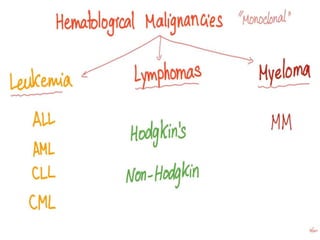
Introduction
• Multiple myeloma represents a malignant
proliferation of plasma cells derived from a single
clone.
• It’s the most important of the class of diseases
included under the plasma cell dyscrasias.
• It is the second most common hematological
malignancy after non hodgkins lymphoma and it
accounts for 15% of all hematological malignancies
Cont..
Multiple myeloma (MM) is characterised by:Its three
hallmarks include
1. The presence of monoclonal immunoglobulin,in a
serum or urine
2. Monoclonal plasmacytosis,
3. Bony lytic lesions
Introduction
• Plasma cells make the antibodies (also called
immunoglobulins) that help the body attack and
kill germs.
• When plasma cells become cancerous and grow
out of control, they can produce a tumor called a
plasmacytoma.
• If someone has more than one plasmacytoma,
they have multiple myeloma.
History
• Descriptions of diseases very similar to multiple myeloma
were obtained in Egyptian mummies.
• 1850:1st Clinical description reported in England by Dr.
William Macintrye a patient named Thomas Alexander
presented to him with fatigue , diffuse bone pain and
increased frequency of urination.
• The term Multiple Myeloma by Rustizky (1873) by
independent observation with similar complaints.
• 1900:Wright described involvement of Plasma cells in MM &
for the 1st time He used Xray to described patient’s C/F.
• 1937:Serum protein electrophoresis
Definition
• Multiple myeloma is a disease characterized by
proliferation of malignant plasma cells and a
subsequent overabundance of monoclonal para
protein.
• It’s difficult to diagnose multiple myeloma early.
Often, multiple myeloma causes no symptoms until
it reaches an advanced stage.
Cont..
• Paraproteins: is an Ig or Ig light-chain that is
produced in excess by the clonal proliferation of
plasma cells.
• Also k/as Bence Jones Proteins ,excess in the
blood is known as paraproteinemia.
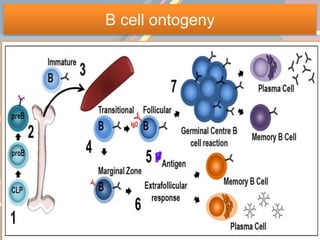
Development of B-Cell
B cell ontogeny
Functions of B cell
• B cells are at the centre of the adaptive humoral
immune system
• Responsible for mediating the production of
antigen-specific immunoglobulin (Ig) directed
against invasive pathogens (typically known as
antibodies).
Epidemiology
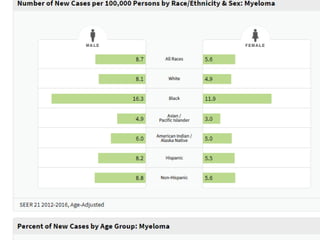
• MM accounts for 10% of all hematologic cancers.
• The American Cancer Society estimates that in the
United States, approximately 32,110 new cases of MM
(18,130 in men and 13,980 in women) will be
diagnosed in 2019.
• The lifetime risk of getting MM is approximately one in
1 in 25 (0.8%).
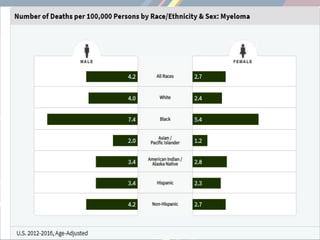
• Approximately 12,960 deaths from MM (6,990 in men
and 5,970 in women) are expected to occur in 2019.
• Death rates fell from 3.49 to 3.24 per 100,000 from
2006 to 2016
Cont..
• The median age of patients with MM is 68 years for
men and 70 years for women.
• Only 18% of patients are younger than 50 years,
• Only 3% of patients are younger than 40 years.
• The male-to-female ratio in MM is approximately 3:2
• The ASR for MM incidence in India is 0.7/1,00,000
population amounting to about 6,800 new cases a year
Etiology And Risk Factors
• The precise etiology of MM has not yet been
established.
• Genetic causes: abnormalities of certain oncogenes,
such as c-myc, N-ras and K-ras. Abnormalities of tumor
suppressor genes, such as TP53.
• MM has been reported in two or more first-degree
relatives and in identical twins
• Although no evidence suggests a hereditary basis for
the disease.
• Environmental or occupational causes: Exposure to
herbicides and insecticides,benzene and organic
solvents.
Cont..
MGUS/Smoldering Multiple Myeloma (SMM): patient
with MGUS have a risk of progression to MM at rate of
1% per year.
Radiation:An increased risk has been reported in atomic-
bomb survivors exposed to more than 50 Gy.
Chronic inflammation: A relationship between MM and
preexisting chronic inflammatory diseases has been
suggested.
Infection:Human herpesvirus 8 (HH8) infection of bone
marrow dendritic cells has been found in patients with
multiple myeloma and in some patients with MGUS
Cont..
Dietary intake is associated with risk of multiple
myeloma and its precursor disease-Marianna
Thordardottir PLoS One. 2018
Aim:We aimed to explore the association between common
foods and MGUS and progression to MM.
Method and results:Food frequency questionnaire was used to
assess dietary intake during adolescence, midlife, and late life. We
found that intake of fruit at least three times per week during
adolescence was associated with lower risk of MGUS when
compared to lower fruit consumption (OR = 0.62, 95% CI 0.41–0.95).
We additionally found that intake of fruit at least three times per
week during the late life period was associated with decreased risk
of progressing from MGUS to MM (HR = 0.34, 95% CI 0.13–0.89)
when compared to lower intake.
Cont..
Dietary intake is associated with risk of multiple
myeloma and its precursor disease-Marianna
Thordardottir PLoS One. 2018
Conclusion:Adolescent intake of fruit may reduce risk of
MGUS, whereas fruit intake after MGUS onset may reduce risk
of progressing to MM. Our findings suggest that diet might alter
the risk of developing MGUS and progression to MM.
Disease Trajectory
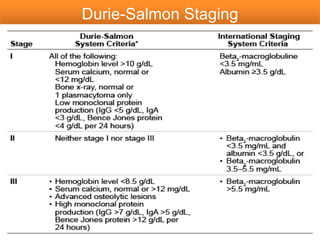
Durie-Salmon Staging
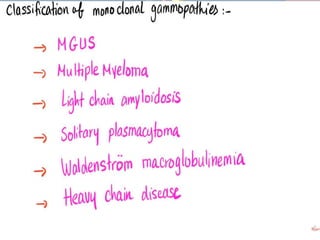
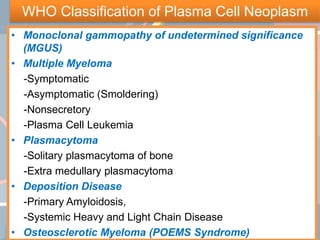
WHO Classification of Plasma Cell Neoplasm
• Monoclonal gammopathy of undetermined significance
(MGUS)
• Multiple Myeloma
-Symptomatic
-Asymptomatic (Smoldering)
-Nonsecretory
-Plasma Cell Leukemia
• Plasmacytoma
-Solitary plasmacytoma of bone
-Extra medullary plasmacytoma
• Deposition Disease
-Primary Amyloidosis,
-Systemic Heavy and Light Chain Disease
• Osteosclerotic Myeloma (POEMS Syndrome)
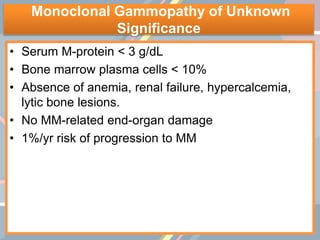
Monoclonal Gammopathy of Unknown
Significance
• Serum M-protein < 3 g/dL
• Bone marrow plasma cells < 10%
• Absence of anemia, renal failure, hypercalcemia,
lytic bone lesions.
• No MM-related end-organ damage
• 1%/yr risk of progression to MM
Multiple Myeloma and its variants
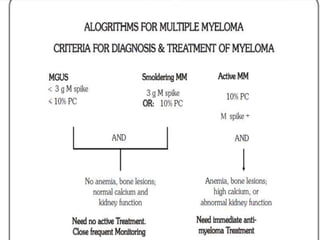
Symptomatic Multiple Myeloma
• Bone marrow plasmacytosis (> 10%)
• CRAB features of disease related to organ
damage
C: Calcium elevation > 11.5 mg/L
R: Renal dysfunction (serum creatinine
> 2 mg/dL)
A: Anemia (Hb < 10 g/dL or 2 g < normal)
B: Bone disease (lytic lesions or osteoporosis)
Multiple Myeloma and its variants
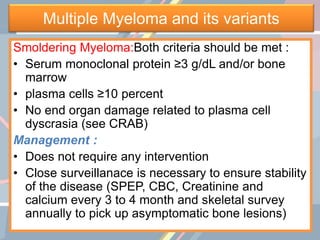
Smoldering Myeloma:Both criteria should be met :
• Serum monoclonal protein ≥3 g/dL and/or bone
marrow
• plasma cells ≥10 percent
• No end organ damage related to plasma cell
dyscrasia (see CRAB)
Management :
• Does not require any intervention
• Close surveillanace is necessary to ensure stability
of the disease (SPEP, CBC, Creatinine and
calcium every 3 to 4 month and skeletal survey
annually to pick up asymptomatic bone lesions)
Multiple Myeloma and its variants
• Rare variant : About 1% of Myelomas
• May present with Bone lesions ( most common
presenting symptom bone pain)
• No serum or urine monoclonal protein ( diagnosis
can be missed if one is not aware of this entity,
NSMM).
• Renal failure and hypercalcemia are generally
lacking anemia may be present
• Bone marrow biopsy must be performed in
suspected cases
Solitary Plasmacytoma
• No M protein in serum / urine
• Single area of bone destruction due to clonal
plasma cell .
• Bone marrow not consistent with M.M.
• Normal skeletal survey.
• No end organ damage(other than solitary bone
lesion)
• Younger median Age at Presentation (55yrs)
• 50-60% will convert to Multiple Myeloma within 10 yrs
• Treatment : Radiation(40-50Gy) to the site of Solitary
Plasmacytoma
Extramedullary Plasmacytoma
• No M protein in serum / urine
• Extramedullary tumor of clonal
plasma cells
• Normal bone marrow
• Normal skeletal survey
• No end organ damage(including
bone lesions)
• Most Common Primary Sites -
Head and Neck region: Upper
air passages and oropharynx
(May involve draining lymph
nodes.
Primary Amyloidosis
• Rare disorder in which
abnormal proteins build
up in tissues and
organs.
• Clumps of the
abnormal proteins are
called amyloid
deposits.
• Primary amyloidosis
can lead to kidney
failure ,nephrotic
syndrome
Osteosclerotic Myeloma (POEMS Syndrome)
• Polyneuropathy, Organomegaly, Endocrinopathy,
Monoclonal gammopathy, Skin changes (POEMS)
syndrome is a rare multisystemic disease that
occurs in the setting of a plasma cell dyscrasia
• Elevations in vascular endothelial growth factor
(VEGF) is noted.
• Elevations of cytokines, such as interleukin (IL)–
1beta, IL-6, and tumor necrosis factor (TNF)–alpha,
have all been noted.
Pathophysiology
The pathological and clinical features of myeloma
are due to:
1. Tissue infiltration
2. Production of large amount of paraprotein
3. Impairment of immunity.
Clinical Manifestations
BONE PAIN (Pain in the lower back, long bones or ribs)
• Generalized malaise,Weight loss,
• Anaemia,Thrombocytopenia (Bleeding)
• Renal failure( Light chains and amyloid depostion)
• Symptoms of hypercalcemia
Nausea
Fatigue
Thirst
• Symptoms of hyperviscosity
Headaches
Bruising
Ischemic neurologic symptoms
Myeloma defining events
Evidence of end organ damage due to underlying
plasma cell proliferative disorder
♦♦ Hypercalcemia: >1 mg/dl higher than upper limit
or >11 mg/dl
♦♦ Renal insufficiency: serum cretinine >2mg/dl or
cretinin clearance <40 ml/min
♦♦ Anemia: Hb<10 gm/dl or >2gm/dl below the lower
limit of normal
♦♦ Bone lesion: one or more osteolytic lesions
skeletal radiography, CT or PET-CT
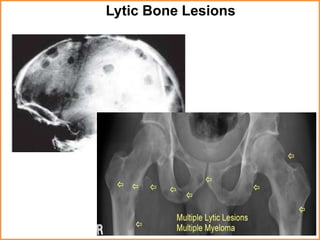
Lytic Bone Lesions
Lytic Bone Lesions
Myeloma defining events
♦♦ Clonal bone marrow plasma cells ≥ 60%
♦♦ Free light chain ratio ≥ 100
♦♦ >1 focal lesions on MRI
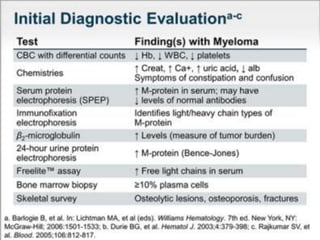
Investigations
The International Myeloma Workshop developed
guidelines for standard investigative workup in patients
suspected to have multiple myeloma:
• Serum and urine assessment for monoclonal protein
• Serum-free light chain assay (in all patients with newly
diagnosed plasma cell dyscrasias)
• Bone marrow aspiration and/or biopsy
• Serum beta-2 microglobulin, albumin, and lactate
dehydrogenase measurement
• Standard metaphase cytogenetics
• Fluorescent in situ hybridization
• Skeletal survey
• Magnetic resonance imaging
Blood Studies
• Complete blood count (CBC): to determine
anemia, thrombocytopenia, or leukopenia.
• Peripheral blood smears :rouleau formation.
• Erythrocyte sedimentation rate (ESR) is typically
increased.
• Comprehensive metabolic panel to assess levels
of the following:
• Total protein, albumin, and globulin
• Blood urea nitrogen (BUN) and creatinine
• Uric acid (will be elevated if the patient has high
cell turnover or is dehydrated
Urine Collection
• 24-hour urine collection :quantification of the
Bence Jones protein (ie, lambda light chains),
protein, and creatinine clearance.
• Quantification of proteinuria is useful for the
diagnosis of MM (>1 g of protein in 24 h is a major
criterion) and for monitoring the response to
therapy.
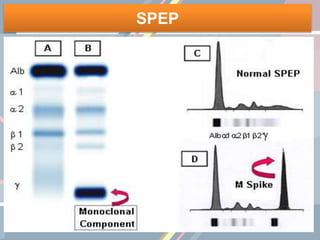
SPEP
• Serum is placed on special paper treated with
agarose gel and exposed to an electric current.
• This separates the serum protein components
into five classifications by size and electrical
charge : serum albumin, alpha-1 globulins, alpha-
2 globulins, beta globulins, and gamma globulins.
• SPEP is a useful screening test for detecting M
proteins
SPEP
Immunofixation
• More sensitive than SPEP
• Immunofixation is performed when SPEP shows a
sharp “peak” or a plasma cell disorder is suspected
despite a normal SPEP
• Immunofixation always done to confirm the
presence of M-Protein and to determine the type
(IgM or IgG etc and the light chain restriction : k
or λ)
• should be done in conjunction with electrophoresis.
Radiography
• Simple radiography is indicated for the evaluation of
skeleton lesions.
• A complete skeletal series at diagnosis of MM,
including the skull, the long bones , and the spine
should be done.
• Conventional plain radiography can usually depict
lytic lesions.
• Such lesions appear as multiple, rounded,punched-
out areas, most often in the skull, vertebral column,
ribs, and/or pelvis
Magnetic Resonance Imaging
• For detecting thoracic and lumbar spine lesions,
paraspinal involvement, and early cord
compression.
• MRI can depict as many as 40% of spinal
abnormalities in patients with asymptomatic
gammopathies in whom radiographic studies are
normal.
PET SCAN
• Detection of extraosseous
soft tissue masses
• Evaluation of ribs and
appendicular bone lesions.
• PET might be helpful in
detecting active lesions
from inactive ones and thus
differentiate to between
MGUS and MM.
Bone scans
• Bone scan is not a preferred modality for
assessing skeletal lesions in MM since it shows
areas of bone formation only.
Bone marrow aspiration and biopsy
• Bone marrow plasmacytosis is to be proven by
BM aspiration and Biopsy from both iliac crests.
• Bilateral BM Biopsy is recommended as it is
proven that MM can have a patchy affection of the
BM.
• BM involvement is found in about 95% patients.
Histologic Findings
• Plasma cells are 2-3 times larger than typical
lymphocytes.
• They have eccentric nuclei that are smooth (round
or oval) in contour with clumped chromatin and
have a perinuclear halo.
• Cytoplasm is basophilic.
• Variants include Mott cells, Russell bodies, grape
cells, and morula cells
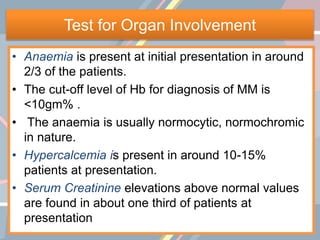
Test for Organ Involvement
• Anaemia is present at initial presentation in around
2/3 of the patients.
• The cut-off level of Hb for diagnosis of MM is
<10gm% .
• The anaemia is usually normocytic, normochromic
in nature.
• Hypercalcemia is present in around 10-15%
patients at presentation.
• Serum Creatinine elevations above normal values
are found in about one third of patients at
presentation
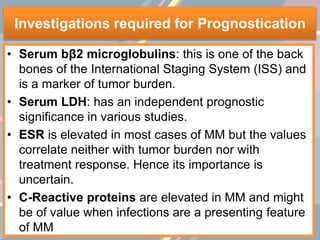
Investigations required for Prognostication
• Serum bβ2 microglobulins: this is one of the back
bones of the International Staging System (ISS) and
is a marker of tumor burden.
• Serum LDH: has an independent prognostic
significance in various studies.
• ESR is elevated in most cases of MM but the values
correlate neither with tumor burden nor with
treatment response. Hence its importance is
uncertain.
• C-Reactive proteins are elevated in MM and might
be of value when infections are a presenting feature
of MM
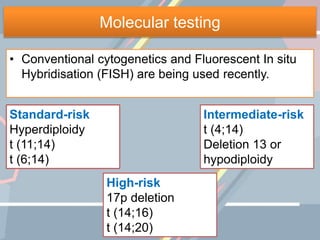
Molecular testing
• Conventional cytogenetics and Fluorescent In situ
Hybridisation (FISH) are being used recently.
Standard-risk
Hyperdiploidy
t (11;14)
t (6;14)
Intermediate-risk
t (4;14)
Deletion 13 or
hypodiploidy
High-risk
17p deletion
t (14;16)
t (14;20)
TREATMENT
• The care of patients with MM is complex and
focuses on treatment of the disease process and
any associated complications.
• Asymptomatic plasma cell disorders like MGUS
and smoldering myeloma do not require treatment.
• They are to be kept under strict and regular follow
up.
• A single autologous stem cell transplant is considered
the preferred approach
• Newer agents (bortezomib, thalidomide, and
lenalidomide) are studied
• Induction chemotherapy followed by autologous stem
cell support is widely used as treatment in patients
with multiple myeloma
• Complete remission is defined as negative serum and
urine immunofixation, disappearance of soft-tissue
plasmacytomas, and < 5% plasma cells in bone
marrow
General treatment recommendations for
multiple myeloma
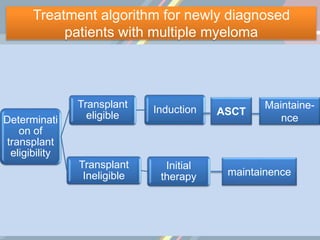
Treatment algorithm for newly diagnosed
patients with multiple myeloma
Determinati
on of
transplant
eligibility
Transplant
eligible
Induction
Transplant
Ineligible
Initial
therapy
ASCT
Maintaine-
nce
maintainence
Chemotherapy and Immunosuppression
• In patients with symptomatic MM, chemotherapy is
required.
• In asymptomatic patients with MM, treatment is
delayed until disease clinically progresses.
• The M-component level in serum and/or urine is an
indicator of the tumor burden; its reduction after
chemotherapy is used as a sign of response.
• The first step before starting therapy in MM is to
determine whether a patient is a candidate for an
autologous stem cell transplant.
• Typically an age of 65 years is used as a cut-off
point for transplant eligibility
TREATMENT PROTOCOLS
Treatment recommendations for the following are
included:
• Primary therapy (induction for stem cell
transplantation)
• Patients with relapse after transplant
• Patients who are not transplant candidates
Primary therapy (transplant candidates)
• Patients who present with active (symptomatic)
multiple myeloma are treated with induction therapy.
• Bortezomib/cyclophosphamide/dexamethasone
Regimen:
Bortezomib 1.3 mg/m2 IVP on days 1, 4, 8, and
11 plus cyclophosphamide 300 mg/m2/day PO on
days 1, 8, 15, and 22 plus dexamethasone 40 mg PO
daily on days 1-4, 9-12, and 17-20; 28-d cycle for three
or four cycles
Cont..
• Bortezomib/lenalidomide/dexamethasone
• Bortezomib 1.3 mg/m2 IVP on days 1, 4, 8, and
11 plus lenalidomide 25 mg PO daily on days 1-
14 plus dexamethasone 20 mg PO daily on days
1, 2, 4, 5, 8, 9, 11, and 12 or 40 mg PO daily on
days 1, 8, and 15; 21d cycle for three or four cycles
• Oncea remissionhasbeenachieved,stemcellsare harvestedvia apheresis.
• Carriedoutwiththeuseofhigh-dosecyclophosphamidewithgrowthfactors.
• ASCT utilizeshigh-dosemelphalan200mg/m2 or 140mg/m2, withtotalbody
irradiationas aconditioningregimen.
• A second (tandem) autologous stem cell transplant
is recommended for patients who relapse more
than 12 months after the first transplant.
• Patients who relapse within 12 month of the initial
transplant are best treated with agents they have not
received before.
• Patients who relapse after the second autologous
transplant may be candidates for allogeneic
transplant or salvage chemotherapy
Relapse after transplant
• Bortezomib 1-1.3 mg/m2 on days 1, 4, 8, 11, 22, 25,
29, and 32, followed by a 10-d rest
period plus melphalan 9mg/m2 PO plus prednisone
60 mg/m2 PO, both on days 1-4; every 6 wk for four
cycles then
• Maintenance phase consisting of bortezomib 1-1.3
mg/m2 on days 1, 8, 22, and 29, followed by a 13-d
rest period plus melphalan 9
mg/m2 PO plus prednisone PO 60 mg/m2; every 5
wk for five cycles
Primary treatment (non-transplant candidates
CONT..
• Daratumumab plus lenalidomide plus
dexamethasone
• Daratumumab plus bortezomib plus melphalan plus
prednisone until disease progression
.
Maintenance therapy
Once the best remission has been achieved, maintenance
therapy can prolong remission
• Lenalidomide 10 mg/day on days 1-21 every 28d or
• Thalidomide 50 mg/day to start, escalated to 200
mg/day, titrated to tolerance
.
Salvage therapy
Salvage therapy is used in the following :
• Patients who have relapse following allogeneic or
autologous stem cell transplant
• Patients with primary progressive disease
• Patients who are ineligible for stem cell transplant
.
Salvage therapy
Salvage therapy regimen used :
• Panobinostat 20 mg PO once every other day for
three doses/week (on days 1, 3, 5, 8, 10, and 12)
of weeks 1 and 2 of each 21-day cycle for eight
cycles plus bortezomib and dexamethasone.
• Carfilzomib (Kyprolis), a proteasome inhibitor,
is indicated as monotherapy, in combination with
dexamethasone
Guidelines for Stem Cell Transplant in Multiple
Myeloma
• These are a group of slowly proliferating
malignancies hence not susceptible to cell cycle
dependent cytotoxic agents.
• Relatively resistant to most conventional
chemotherapy agents and more susceptible to
corticosteroids and alkylating agents such as
cyclophosphamide and melphalan.
• This forms the basis for high dose melphalan
followed by autologous stem cell
Autologous stem cell transplant
• ASCT approach is considered superior over
conventional therapy in terms of response rates
and overall survival.
• Research says,ASCT improves the median
survival from 36 months to 50 months.
• Some of the issues related to autologous SCT in
myeloma are:
It is generally reserved for younger
patients without significant co-morbidities.
There is limited data on benefit for patients
>65 years
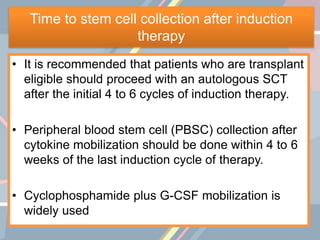
Time to stem cell collection after induction
therapy
• It is recommended that patients who are transplant
eligible should proceed with an autologous SCT
after the initial 4 to 6 cycles of induction therapy.
• Peripheral blood stem cell (PBSC) collection after
cytokine mobilization should be done within 4 to 6
weeks of the last induction cycle of therapy.
• Cyclophosphamide plus G-CSF mobilization is
widely used
Conditioning Regimen
• High dose melphalan (200mg/m2) remains the
standard recommendation.
• Collected stem cells can be infused 12 to 24
hours after the infusion of melphalan dose.
• Assessment of response post transplant:
complete disease response assessment should
be done 3 months following the autologous SCT.
Radiation Therapy
• Considered mainstay of treatment prior to
chemotherapeutic options.
• NOW – VERY LIMITED ROLE in multiple myeloma.
• Definitive role – solitary bone and extramedullary
plasmacytoma.
Radiation Therapy
• TBI + HIGH DOSE CHEMOTHERAPY as conditioning
regimen.
• Toxicity concerns - mucosal and hematological r/t TBI
• Palliation of diffuse bone pain.
• 5-8Gy in single cycle
• UNIRRADIATED MARROW: serves as stem cells
which repopulated the irradiated marrow after
treatment.
• Rarely used now.
• Remain useful for palliation of advanced disease in
chemotherapy refractory patients.
Local EBRT for palliation
• Most common use of radiotherapy.
• Relief of compression of spinal / cranial / peripheral
nerves
• Reduces incidence of impending fractures
• RT preferred for residual disease ,post surgery.
• PAIN- 10-20Gy/5-10# - pain relief is often partial.
• SPINAL CORD COMPRESSION- Motor improvement in
50% of the patients.
(30Gy/10# better neurologic response than 20Gy/5# or
8Gy/1#)
•
BACKGROUND
Promising results have been reported with high-dose therapy supported by
autologous bone marrow transplantation. We conducted a randomized study
comparing conventional chemotherapy and high-dose therapy.
METHODS
Two hundred previously untreated patients under the age of 65 years who had
myeloma were randomly assigned at the time of diagnosis to receive either
conventional chemotherapy or high-dose therapy and autologous bone marrow
transplantation.
RESULTS
The response rate among the patients who received high-dose therapy was 81
percent (including complete responses in 22 percent and very good partial
responses in 16 percent), whereas it was 57 percent (complete responses in 5
percent and very good partial responses in 9 percent) in the group treated with
conventional chemotherapy (P<0.001).
CONCLUSIONS
High-dose therapy combined with transplantation improves the response rate,
event-free survival, and overall survival in patients with myeloma.
Supportive and palliative Care in myeloma
• Supportive care is an important but often
neglected part of myeloma therapy.
• There are various spheres to the supportive care
aspect of myeloma:
 Myeloma Bone disease
 Renal Impairment
 Anemia
 Infections
 Thrombosis
 Pain
 Psychosocial rehabilitation
 Palliative care
Myeloma bone disease
Myeloma Bone disease
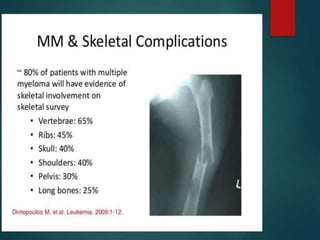
• 80-90% myeloma patient have myeloma bone disease
• Most of patients present at an advanced stage in myeloma
with pathological fractures, vertebral collapse leading to
paraparesis and even symptomatic hypercalcemia.
• These interventions are most effective if performed within
months of occurrence.
 Stabilization of long bone fractures with either internal or
external fixation.
 Vertebral fracture/ collapse stabilization with fixation or
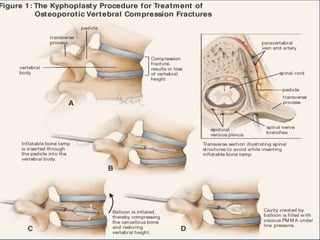
vertebroplasty
 Kyphoplasty for spinal deformities
 Neurosurgery for spinal canal compromise
Cont..
• Bisphosphonates:recommended for all patients
with symptomatic myeloma irrespective of bone
lesions on radiology.
• Zolendronate or Pamidronate are the preferred
drugs. Given every 4 weekly for 2-years.
• Renal function assessment (serum creatinine and
urine albumin) before starting and before every
dose.
• Oral calcium and vitamin D supplementation is
recommended.
Renal Impairment
• It occurs in upto 50% patients during the course of
the disease.
• Only 2-12% of the patients require RRT
Management:
• Renal failure in myeloma should be managed as a
medical emergency.
• Hydration to maintain urine output>3L/day. Fluids
as per CVP if required.
• Treat precipitating causes aggressively
• Manage hypercalcemia with bisphosphonates in
renal modified doses, antibiotics for sepsis,
allopurinol for hyperuricemia. Stop nephrotoxics/
NSAIDS.
Cont..
• hemodialysis or Plasmapheresis is recommended for
patients with light chain myeloma
• Initiate therapy of myeloma with high dose
Dexamethasone 40mg four days on, four days off, for
initial few cycles.
Anemia
• Almost all Indian patients of myeloma have
anemia.
• Anemia is often multifactorial. Anemia can be
attributed to myeloma or renal failure.
• A therapeutic trial of ESA can be considered in
cases where significant anemia (Hb<10g/L) is
attributed to renal disease/ myeloma.
• 150 U/kg three times a week SC. If no response
after 4 weeks can escalate to 300 U/kg three
times a week. Darbepoetin 6.25 mcg/kg three
weekly.
• Target Hb=12g/L. Stop if Hb>12 or no response
within 6-8 weeks of trial.
Infections
• Vaccination against Influenza, Streptococcus
Pneumoniae, Haemophilus Infuenzae is
recommended.
• Prophylactic Immunoglobulins is not routinely
recommended.
• Prophylactic Acyclovir is recommended for pts
receiving Bortezomib, Autologous HSCT, High
dose Dexamethasone or recurrent herpes
infections.
• Co-trimoxozole / Azole prophylaxis can be
considered in patients receiving high dose
Dexamethasone
Thrombosis
• All such patients on thalidomide or Lenalidomide
based chemotherapy need to be started on LMWH
1mg/kg OD or Low dose UFH (5000 U SC BD) or
Warfarin dose adjusted to a target INR of 2-3.
• Duration of anticoagulation is till control of disease
activity or for 4-6 months.
Pain
• Causes of pain in myeloma patients e.g. Bone lesions
including arthritis and osteoporosis,neuropathy (disease
or drug induced) etc.
• The various analgesics out of the WHO ladder that can
be used are:
 Paracetomol (Max 1 gm QID)
 Tramadol (max 50mg QID or BD sustained release
forms)
 Fentanyl patches (25-50 mcg patch/ 48 hrs)
 Morphine can be used for severe pain (patients on
palliative care for advanced myeloma may be given
max morphine upto 120 mg/day)
 Neuropathic pain: Gabapentin/ Pregabalin/
Amitryptyline
 All patients receiving opioid analgesics to be given
laxatives. Avoid using NSAIDS
Psychosocial rehabilitation
• Upto 25-50% patients and partners report anxiety about
uncertainty in the future and depression.
• Nutrition, Fatigue,insomnia and sexual concerns are
some aspects requiring attention.
• Both patients and their care givers may require
psychosocial rehabilitation in consultation with the
psychiatrists
Symptoms and anxiety predict declining health-related
quality of life in multiple myeloma: A prospective, multi-
centre longitudinal study Christina Ramsenthaler journal
of palliative medicine May 7, 2019
Aim:
To identify which patients might benefit from early integration, by identifying
trajectories of health-related quality of life and the determinants for declining
or poor Health related quality of life .
Design:Prospective, longitudinal cohort study.
Participants:
Multiple myeloma patients at all stages (newly diagnosed, first-line or
second-line treatment, early or later treatment-free interval, refractory
disease) from in- and outpatient units at 14 hospitals in England were
recruited. In addition to clinical information and standardised Health related
quality of life and psychological aspects, the Myeloma Patient Outcome
Scale (MyPOS) measured palliative care concerns.
Conclusion:
General symptom level, pain and presence of anxiety predict declining Health
related quality of life in multiple myeloma. Identification of patients with
palliative care needs should focus on assessing patient-reported symptoms
and psychosocial well-being for identifying those at risk of deterioration
Palliative care
• It is best to discuss end of life care with patient’s
attendants.
• It is important that the responsibility during these
stages be shared by the general practitioners/
family physicians, primary health care centers and
nursing homes.
• Pain should be managed adequately and invasive
procedures be kept to a minimum.
• End of life care decisions and withdrawal of
treatment must be in accordance with institutional
guidelines.
Perceived benefits and barriers to exercise for recently
treated patients with multiple myeloma: a qualitative
study Melinda J Craike 2013
Background
The aim of this study was to gain an in-depth understanding of
the physical activity experiences and perceived benefits and
barriers to physical activity for patients with MM.
Methods
This was a qualitative study that used a grounded theory
approach. Semi-structured interviews were conducted in Victoria,
Australia by telephone from December 2011-February 2012 with
patients who had been treated for MM within the preceding 2–
12 months. Interviews were transcribed and analysed using the
constant comparison coding method to reduce the data to
themes. Gender differences and differences between treatment
groups were explored
Results
• Twenty-four interviews were completed. The sample comprised
13 females (54%), with a mean age of 62 years (SD = 8.8).
Sixteen (67%) participants had received an autologous stem
cell transplant (ASCT). All participants currently engaged in a
range of light to moderate intensity physical activity; walking
and gardening were the most common activities. pain, fatigue,
and fear of infection. Low self- motivation was also a barrier.
Women participated in a more diverse range of physical
activities than men and there were gender differences in
preferred type of physical activity. Patients treated with an
ASCT more often reported affective benefits of participation in
physical activity and fatigue as a barrier. Patients treated with
other therapies (e.g., chemotherapy, radiotherapy) were more
likely to report pain as a barrier
Conclusion:
• Patients with MM experience debilitating effects of
their condition and therapy, which influences their
level and intensity of physical activity participation.
Physical activity programs should be individualised;
take into consideration gender differences and the
impact of different types of therapy on physical
activity; and focus on meeting the psychological,
coping and recovery needs of patients.
Prognosis
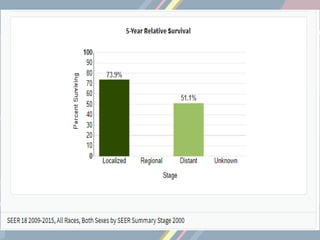
• The 5-year relative survival rate is 46.6%
• Survival is higher in younger people and lower in the
elderly.
• C-reactive protein (CRP) and beta-2 microglobulin is
used to predict survival
• Level of both protein ˂ 6mg/L=median survival 54
month
• Level of both protein > 6mg/L=median survival 6
month
Newer approach:
Multiple myeloma vaccine:
• PVX-410 is a multi-peptide vaccine that helps
promote the immune system to fight myeloma.
• PVX-410 will be administered via a biweekly
subcutaneous injection (a shot in the stomach)
• The FDA (U.S. Food and Drug Administration) has
not yet approved PVX-410 as a treatment for any
disease.
Nursing Management
ROLE OF NURSE
• Nurses should advise patients about fracture risk and
limitations imposed by age, the disease and
medications.
• Educate and support patient and family
• Promote adherence to therapy
• Older individual ≥ 65yrs and patients with myeloma have
risk factors related to falls from,eg, visual problem,
orthostatic hypotension, problem with gait and balance.
Nursing management
• The goals of treatment include symptom relief,
minimising complications and preservation of
patient functioning.
• Educating patients about the disease and
meeting the psychological needs of the patient
and their family is key to supporting patients in
their disease journey.
• There are three main phases to the BMT (Bone
Marrow Transplant) process:
• Pre-BMT phase
• BMT day or “reinfusion” day
• Post-BMT phase
Care in various phases of Autologous
Peripheral Blood Stem Cell Transplant
Pre-Conditioning Chemotherapy:
• One day before BMT, Melphalan is given in high-
dose chemotherapy. which has many potential side
effects.
• Fluids/hydration will be started two hours
beforehand and will continue for 2 hours after the
completion of your melphalan.
Pre Transplant
Managing Side Effects of Melphalan
Nausea and Vomiting:
• Keep your mouth fresh by rinsing before and after
meals/snacks
• Eat small, more frequent meals/snacks throughout
the day.
• Avoid spicy, fried and greasy foods. Starchy, bland
foods are better tolerated.
• Try foods that are cool/ cold.
• Eat whenever your appetite is the best.
• Learn some relaxation and distraction techniques
that work well for you.
• Wear loose, comfortable clothing.
Mouth and Throat Problems
• Discomfort in the mouth, throat, and esophagus include
dryness, redness, sores/ulcers, and taste changes.
Management:
• A regular mouth care routine will help minimize the
discomfort.
• Drink lots of fluids in order to help minimize mouth
dryness.
• Choose foods that are soft, moist and easy to chew and
swallow etc.
• Many people find that hard, sour candies are very
effective for metallic tastes.
Diarrhea
•Side effect that commonly occurs as a result of these
changes is diarrhea, gas and cramping.
•The amount and frequency of diarrhea experienced
varies from person to person.
•Keep the rectal area clean to prevent skin irritation.
•If needed, a sitz bath may be taken after bowel
movements followed by a mild cream to keep the area
protected.
Hair Loss
• Areas affected will likely include the scalp, face, chest,
arms, legs and pelvic area.
• Adjusting to hair loss may be difficult.
• It is a temporary side effect, with some exceptions.
• Hair loss usually begins several days to a few weeks
after the treatment has started.
• Hair should begin to grow back a few months after your
treatment is completed.
• Monitor for side effects associated with DMSO (Dimethyl
Sulfoxide).
• The DMSO most likely will cause a garlic-like taste in the
mouth that will last for a few (generally 1-3) days.
• Some patients have found it beneficial to chew gum or
suck on hard candies to lessen this effect during the
transfusion.
• Urine may become red-coloured for 24 hours.
• Other side effects DMSO can cause are shortness of
breath or chest tightness, wheezing, nausea, stomach
pains, and tingling in your fingers.
BMT or Peripheral Stem Cell Transplant Day
The third phase of BMT begins following the bone
marrow infusion and continues throughout the recovery
period.
• Managing low blood cell counts
• Waiting for engraftment
Post Transplant: The Recovery Stage
Living With Multiple Myeloma
A Focus Group Study of Unmet Needs and Preferences
for Survivorship Care
Leanne Monterosso et al J Patient Exp 2018 Mar
Purpose:
To describe the unmet informational, psychological,
emotional, social, practical, and physical needs and
preferences for posttreatment survivorship care of
individuals living with multiple myeloma to inform the
development of relevant, person-centered, survivorship
services.
Methods:
An exploratory, descriptive study using 2 focus groups
with 14 participants, 6 to 49 months postdiagnosis.
Results:
• Thematic analysis revealed 7 key themes: information
needs, experience with health-care professionals,
coping with side effects, communicating with family
and friends, dealing with emotions, support needs,
and living with the chronicity of myeloma
Conclusion:
• The development of flexible, person-centered
approaches to comprehensive survivorship care is
needed to address the considerable quality-of-life
issues experienced by people living with multiple
myeloma. Nurse-led care may offer viable model to
deliver enhanced patient experience—providing the
vital “link” that people described as missing from their
survivorship care.
Nursing Management related to
Chemotherapy
Risk for infection related to Neutropenia
• Monitor vital signs frequently.
• Strict asepsis, hand-washing techniques.
• Assess ANC count
• Assess for presence of risk factors.
• Assess for s/s of infection.
• Minimize invasive procedures.
• Encourage to maintain proper hygienic measures.
• Mouthwashes
• Mask
• Daily bath
• Wash hands regularly
Preventing infection:
• Administer antibiotics as prescribed.
• Evaluate patient for potential sites of infection(mucosal
ulceration, skin abrasion, needle punctures) and
localized signs of infection.
• Eat well cooked food.
• Avoid eating outside.
• Avoid eating raw fruits and vegetables.
• Avoid crowded places.
• Avoid visitors with upper respiratory infections.
• Do not keep fresh flowers or plants near the patient.
• Keep pet animals away.
Risk for injury related to thrombocytopenia
• Monitor susceptibility to bleeding.
• Assess for signs of bleeding (petechiae, bruising,
occult bleeding, blood in urine)
• Check daily platelet count.
• Take vital signs frequently.
• Monitor for signs of hemorrhage ( BP, tachycardia,
pallor, diaphoresis, restlessness)
Potential for complications r/t chemotherapy
• Nausea and vomiting
• Observation of vital signs.
• Observation for signs of dehydration.
• Measure input and output of fluid (fluid balance).
• Encourage fluid intake 2000 - 2500 cc per day
orally if tolerating or iv if severe vomiting
• Administer antiemetics (dexamethasone, emset )
prrior to chemotherapy
• Use non-pharmacological methods
• Avoid spicy foods
Diarrhoea
• Antidiarrhoeals- [loperamide(Imodium),
diphenoxylate (Lomotil)]
• Antisecretory drugs - Inj.Octreotide
• Probiotics and yoghurt to maintain the natural gut
flora
• Increase fluid intake
• Low-residue, low-fat diet
• Assess daily weight
• Multiple myeloma patients often appear lethargic
and fatigued.
• Assess vitals signs every 2 hrly. Myeloma patients
usually have low grade fever.
• Assess for pallor,ecchymoses and purpura.
• Assess for hepatomegaly,splenomegaly,abdominal
tenderness (if hypercalcemia is present).
• Assess for bony tenderness in long bones
• Assess for Mood alterations (if hypercalcemia is
present)
Assessment
Nursing Process
• Pain management
• Mobility problems
• Potential for injury
• Potential for fluid electrolyte imbalance
• Alteration in elimination pattern
• Pain is the most frequent presenting symptom in multiple
myeloma patients.
• Thorough ongoing assessment and communication is
necessary in providing adequate pain management.
• Back pain is the most common sign of impending spinal cord
compression
• Interventions for managing pain include pharmacologic
management with narcotics and non-narcotic analgesics, and
no pharmacologic interventions such as distraction,
visualisation, relaxation techniques and cutaneous stimulation.
Pain Management
• Spinal cord compression and pathologic fractures which
arise from osteolytic lesions are primary causes of
immobility.
• Pain is a major contributor to immobility as well.
• It is important that bed rest is to be avoided because it
leads to increased mobilisation of calcium and
predisposes to the development of pneumonia and UTI.
• A progressive exercise programme should be instituted to
increase muscle tone and reduce bone resorption.
Management of Mobility problems
• Neutropenia, bleeding,weakness and activity intolerance
increases risk for injury.
• Patients with hyperviscocity syndrome or hypercalcaemia
are risk for injury secondary to confusional states .
• The signs and symptoms of hypercalcaemia should be
routinely included in the patient and family teaching
• Providing information on maintaining a safe environment,
dealing with patient in reassuring manner, and explaining
the etiology of symptoms to family members may alleviate
some of the anxiety that accompanies confusional states.
Minimizing Potential for injury
• Fluid and electrolyte disturbance can arise from renal
insufficiency or failure.
• Adequate fluid intake consisting of 2 to 3 L per day can
potentially prevent kidney damage from Bence- Jones
proteins and elevated levels of calcium and uric acid.
• Patients and families must be instructed on importance of
taking allopurinol as part of chemotherapy regimen to
prevent kidney damage from hyperuricaemia
Managing Fluid electrolyte disturbance
• Pain, anaemia weakness and depression all contribute to
activity intolerance in the person with myeloma
• Maintaining as close to normal activities as possible is
important in maintaining self-esteem, independence and a
sense of control.
• Teaching the patient and family about managing activity
intolerance should include planning for frequent rest periods,
grouping activities using assistive devices as necessary and
progressively increasing activity as tolerated.
• Transfusions may be necessary to treat the anaemia
Minimizing Activity intolerance
• Constipation may develop in myeloma patients due to
use of narcotics, decreased physical activity and
dehydration.
• Patient taking vincristine should make note of their
normal bowel routine so that they can recognise
deviations.
• Increasing fluid intake and taking laxative as
necessary should be included in the teaching plan.
Constipation
Complications
• Skeletal complications
• Infection
• Anemia
• Renal failure
• Amyloidosis
• Spinal cord compression
• Hyper viscosity syndrome
Bone Health, Pain, and Mobility: Evidence-Based
Recommendations for Patients With Multiple Myeloma Rome S
et al Clin J Oncol Nurs. 2017
BACKGROUND:
About 85% of patients with multiple myeloma develop bone disease. In these
patients, lytic bone lesions can cause fractures, poor circulation, blood clots,
pain, poor mobility, and decreased quality of life..
OBJECTIVES:
This article presents consensus statements to guide nurses in the
assessment and management of bone disease, pain, and mobility in patients
with multiple myeloma at varying points in their disease trajectory..
METHODS:
Members of the International Myeloma Foundation Nurse Leadership Board
reviewed previously provided recommendations, current recommendations
based on literature review, and evidence-based grading..
FINDINGS:
Oncology nurses play a key role in maximizing bone health, minimizing
skeletal injury, maximizing pain control, and improving quality of life in
patients by enhancing patient mobility and safety. Clinician assessment
accompanied by effective interventions reduces patient injury and optimizes
functioning in patients with multiple myeloma
Conclusion
• Myeloma remains an incurable cancer. Treatment aims to
extend patient survival and minimise the effects of the
disease, avoiding complications and premature mortality.
The haematology nurse has a pivotal role in educating
patients and providing supportive care to patients and their
families throughout the disease trajectory, thereby
promoting patient quality of life and assisting patients to
live with myeloma.
References
• DeVita VT, Lawrence TS, Rosenberg SA. DeVita,
Hellman, and Rosenberg’s cancer: principles &
practice of oncology. 2019.
• http://books.google.com/books?id=20DyLuGabJcC
&pg=PA1980&lpg=PA1980&dq=renal+multiple+mye
loma
• http://en.medscape/Multiple_myeloma
• Brenner’s and Rector’s, The Kidney, ed.8th, vol. 2,
2008.
• J.feehally,Richard, J.Johnson,Comprehensive
clinical oncology,3rd ed.2009.
• Brunner & Suddarth’s, Textbook of Medical Surgical
Nursing.10th ed. Lippincott.
Thankyou

Multiple myeloma

  • 1.
    Case scenario A 55-year-oldmale presented with new symptoms of exertional fatigue. He is otherwise well with no significant past medical history. His hemoglobin is found to be low at 10.6g/dl.He has normal serum ferritin, vitamin B12, and folic acid levels. He has a creatinine of 0.9 mg/dL, calcium of 9.2 mg/dL, and albumin of 3.8 g/dL. A serum protein electrophoresis is performed that demonstrates a monoclonal IgA protein of 1.5 g/dL. A skeletal survey shows occult lytic lesions in the skull and bilateral humeri, and a bone marrow biopsy shows 30 percent involvement by abnormal appearing plasma cells, confirmed by CD138+ immunohistochemical stain.
  • 2.
    Care Of PatientWith Multiple Myeloma Moderator: Dr.L.Gopichandran Lecturer, AIIMSCON Presenter: Saumya P.Srivastava Msc.Nsg 2nd year AIIMSCON
  • 3.
    Objectives: At theend of this session you will be able to: • Introduce the topic(plasma cell dyscrasia) • Define Multiple Myeloma • Explain development and function of B cell • Describe epidemiology of MM • Enumerate Etiology and risk factors associated with MM • Describe disease trajectory • Explain Durie-salmon staging of MM • Explain classification of MM • Describe pathophysiology of MM • Explain clinical manifestations of MM • Elaborate on investigations done for MM • Explain various treatment modalities(Chemotherapy,ASCT,RT, Supportive care) • Explain Nursing management of patient with MM
  • 8.
    Introduction • Multiple myelomarepresents a malignant proliferation of plasma cells derived from a single clone. • It’s the most important of the class of diseases included under the plasma cell dyscrasias. • It is the second most common hematological malignancy after non hodgkins lymphoma and it accounts for 15% of all hematological malignancies
  • 9.
    Cont.. Multiple myeloma (MM)is characterised by:Its three hallmarks include 1. The presence of monoclonal immunoglobulin,in a serum or urine 2. Monoclonal plasmacytosis, 3. Bony lytic lesions
  • 10.
    Introduction • Plasma cellsmake the antibodies (also called immunoglobulins) that help the body attack and kill germs. • When plasma cells become cancerous and grow out of control, they can produce a tumor called a plasmacytoma. • If someone has more than one plasmacytoma, they have multiple myeloma.
  • 11.
    History • Descriptions ofdiseases very similar to multiple myeloma were obtained in Egyptian mummies. • 1850:1st Clinical description reported in England by Dr. William Macintrye a patient named Thomas Alexander presented to him with fatigue , diffuse bone pain and increased frequency of urination. • The term Multiple Myeloma by Rustizky (1873) by independent observation with similar complaints. • 1900:Wright described involvement of Plasma cells in MM & for the 1st time He used Xray to described patient’s C/F. • 1937:Serum protein electrophoresis
  • 12.
    Definition • Multiple myelomais a disease characterized by proliferation of malignant plasma cells and a subsequent overabundance of monoclonal para protein. • It’s difficult to diagnose multiple myeloma early. Often, multiple myeloma causes no symptoms until it reaches an advanced stage.
  • 13.
    Cont.. • Paraproteins: isan Ig or Ig light-chain that is produced in excess by the clonal proliferation of plasma cells. • Also k/as Bence Jones Proteins ,excess in the blood is known as paraproteinemia.
  • 14.
  • 15.
  • 16.
    Functions of Bcell • B cells are at the centre of the adaptive humoral immune system • Responsible for mediating the production of antigen-specific immunoglobulin (Ig) directed against invasive pathogens (typically known as antibodies).
  • 17.
    Epidemiology • MM accountsfor 10% of all hematologic cancers. • The American Cancer Society estimates that in the United States, approximately 32,110 new cases of MM (18,130 in men and 13,980 in women) will be diagnosed in 2019. • The lifetime risk of getting MM is approximately one in 1 in 25 (0.8%). • Approximately 12,960 deaths from MM (6,990 in men and 5,970 in women) are expected to occur in 2019. • Death rates fell from 3.49 to 3.24 per 100,000 from 2006 to 2016
  • 18.
    Cont.. • The medianage of patients with MM is 68 years for men and 70 years for women. • Only 18% of patients are younger than 50 years, • Only 3% of patients are younger than 40 years. • The male-to-female ratio in MM is approximately 3:2 • The ASR for MM incidence in India is 0.7/1,00,000 population amounting to about 6,800 new cases a year
  • 26.
    Etiology And RiskFactors • The precise etiology of MM has not yet been established. • Genetic causes: abnormalities of certain oncogenes, such as c-myc, N-ras and K-ras. Abnormalities of tumor suppressor genes, such as TP53. • MM has been reported in two or more first-degree relatives and in identical twins • Although no evidence suggests a hereditary basis for the disease. • Environmental or occupational causes: Exposure to herbicides and insecticides,benzene and organic solvents.
  • 27.
    Cont.. MGUS/Smoldering Multiple Myeloma(SMM): patient with MGUS have a risk of progression to MM at rate of 1% per year. Radiation:An increased risk has been reported in atomic- bomb survivors exposed to more than 50 Gy. Chronic inflammation: A relationship between MM and preexisting chronic inflammatory diseases has been suggested. Infection:Human herpesvirus 8 (HH8) infection of bone marrow dendritic cells has been found in patients with multiple myeloma and in some patients with MGUS
  • 28.
    Cont.. Dietary intake isassociated with risk of multiple myeloma and its precursor disease-Marianna Thordardottir PLoS One. 2018 Aim:We aimed to explore the association between common foods and MGUS and progression to MM. Method and results:Food frequency questionnaire was used to assess dietary intake during adolescence, midlife, and late life. We found that intake of fruit at least three times per week during adolescence was associated with lower risk of MGUS when compared to lower fruit consumption (OR = 0.62, 95% CI 0.41–0.95). We additionally found that intake of fruit at least three times per week during the late life period was associated with decreased risk of progressing from MGUS to MM (HR = 0.34, 95% CI 0.13–0.89) when compared to lower intake.
  • 29.
    Cont.. Dietary intake isassociated with risk of multiple myeloma and its precursor disease-Marianna Thordardottir PLoS One. 2018 Conclusion:Adolescent intake of fruit may reduce risk of MGUS, whereas fruit intake after MGUS onset may reduce risk of progressing to MM. Our findings suggest that diet might alter the risk of developing MGUS and progression to MM.
  • 30.
  • 32.
  • 33.
    WHO Classification ofPlasma Cell Neoplasm • Monoclonal gammopathy of undetermined significance (MGUS) • Multiple Myeloma -Symptomatic -Asymptomatic (Smoldering) -Nonsecretory -Plasma Cell Leukemia • Plasmacytoma -Solitary plasmacytoma of bone -Extra medullary plasmacytoma • Deposition Disease -Primary Amyloidosis, -Systemic Heavy and Light Chain Disease • Osteosclerotic Myeloma (POEMS Syndrome)
  • 34.
    Monoclonal Gammopathy ofUnknown Significance • Serum M-protein < 3 g/dL • Bone marrow plasma cells < 10% • Absence of anemia, renal failure, hypercalcemia, lytic bone lesions. • No MM-related end-organ damage • 1%/yr risk of progression to MM
  • 35.
    Multiple Myeloma andits variants Symptomatic Multiple Myeloma • Bone marrow plasmacytosis (> 10%) • CRAB features of disease related to organ damage C: Calcium elevation > 11.5 mg/L R: Renal dysfunction (serum creatinine > 2 mg/dL) A: Anemia (Hb < 10 g/dL or 2 g < normal) B: Bone disease (lytic lesions or osteoporosis)
  • 36.
    Multiple Myeloma andits variants Smoldering Myeloma:Both criteria should be met : • Serum monoclonal protein ≥3 g/dL and/or bone marrow • plasma cells ≥10 percent • No end organ damage related to plasma cell dyscrasia (see CRAB) Management : • Does not require any intervention • Close surveillanace is necessary to ensure stability of the disease (SPEP, CBC, Creatinine and calcium every 3 to 4 month and skeletal survey annually to pick up asymptomatic bone lesions)
  • 37.
    Multiple Myeloma andits variants • Rare variant : About 1% of Myelomas • May present with Bone lesions ( most common presenting symptom bone pain) • No serum or urine monoclonal protein ( diagnosis can be missed if one is not aware of this entity, NSMM). • Renal failure and hypercalcemia are generally lacking anemia may be present • Bone marrow biopsy must be performed in suspected cases
  • 38.
    Solitary Plasmacytoma • NoM protein in serum / urine • Single area of bone destruction due to clonal plasma cell . • Bone marrow not consistent with M.M. • Normal skeletal survey. • No end organ damage(other than solitary bone lesion) • Younger median Age at Presentation (55yrs) • 50-60% will convert to Multiple Myeloma within 10 yrs • Treatment : Radiation(40-50Gy) to the site of Solitary Plasmacytoma
  • 39.
    Extramedullary Plasmacytoma • NoM protein in serum / urine • Extramedullary tumor of clonal plasma cells • Normal bone marrow • Normal skeletal survey • No end organ damage(including bone lesions) • Most Common Primary Sites - Head and Neck region: Upper air passages and oropharynx (May involve draining lymph nodes.
  • 40.
    Primary Amyloidosis • Raredisorder in which abnormal proteins build up in tissues and organs. • Clumps of the abnormal proteins are called amyloid deposits. • Primary amyloidosis can lead to kidney failure ,nephrotic syndrome
  • 41.
    Osteosclerotic Myeloma (POEMSSyndrome) • Polyneuropathy, Organomegaly, Endocrinopathy, Monoclonal gammopathy, Skin changes (POEMS) syndrome is a rare multisystemic disease that occurs in the setting of a plasma cell dyscrasia • Elevations in vascular endothelial growth factor (VEGF) is noted. • Elevations of cytokines, such as interleukin (IL)– 1beta, IL-6, and tumor necrosis factor (TNF)–alpha, have all been noted.
  • 43.
    Pathophysiology The pathological andclinical features of myeloma are due to: 1. Tissue infiltration 2. Production of large amount of paraprotein 3. Impairment of immunity.
  • 44.
    Clinical Manifestations BONE PAIN(Pain in the lower back, long bones or ribs) • Generalized malaise,Weight loss, • Anaemia,Thrombocytopenia (Bleeding) • Renal failure( Light chains and amyloid depostion) • Symptoms of hypercalcemia Nausea Fatigue Thirst • Symptoms of hyperviscosity Headaches Bruising Ischemic neurologic symptoms
  • 45.
    Myeloma defining events Evidenceof end organ damage due to underlying plasma cell proliferative disorder ♦♦ Hypercalcemia: >1 mg/dl higher than upper limit or >11 mg/dl ♦♦ Renal insufficiency: serum cretinine >2mg/dl or cretinin clearance <40 ml/min ♦♦ Anemia: Hb<10 gm/dl or >2gm/dl below the lower limit of normal ♦♦ Bone lesion: one or more osteolytic lesions skeletal radiography, CT or PET-CT
  • 46.
  • 47.
  • 48.
    Myeloma defining events ♦♦Clonal bone marrow plasma cells ≥ 60% ♦♦ Free light chain ratio ≥ 100 ♦♦ >1 focal lesions on MRI
  • 49.
    Investigations The International MyelomaWorkshop developed guidelines for standard investigative workup in patients suspected to have multiple myeloma: • Serum and urine assessment for monoclonal protein • Serum-free light chain assay (in all patients with newly diagnosed plasma cell dyscrasias) • Bone marrow aspiration and/or biopsy • Serum beta-2 microglobulin, albumin, and lactate dehydrogenase measurement • Standard metaphase cytogenetics • Fluorescent in situ hybridization • Skeletal survey • Magnetic resonance imaging
  • 50.
    Blood Studies • Completeblood count (CBC): to determine anemia, thrombocytopenia, or leukopenia. • Peripheral blood smears :rouleau formation. • Erythrocyte sedimentation rate (ESR) is typically increased. • Comprehensive metabolic panel to assess levels of the following: • Total protein, albumin, and globulin • Blood urea nitrogen (BUN) and creatinine • Uric acid (will be elevated if the patient has high cell turnover or is dehydrated
  • 51.
    Urine Collection • 24-hoururine collection :quantification of the Bence Jones protein (ie, lambda light chains), protein, and creatinine clearance. • Quantification of proteinuria is useful for the diagnosis of MM (>1 g of protein in 24 h is a major criterion) and for monitoring the response to therapy.
  • 52.
    SPEP • Serum isplaced on special paper treated with agarose gel and exposed to an electric current. • This separates the serum protein components into five classifications by size and electrical charge : serum albumin, alpha-1 globulins, alpha- 2 globulins, beta globulins, and gamma globulins. • SPEP is a useful screening test for detecting M proteins
  • 53.
  • 54.
    Immunofixation • More sensitivethan SPEP • Immunofixation is performed when SPEP shows a sharp “peak” or a plasma cell disorder is suspected despite a normal SPEP • Immunofixation always done to confirm the presence of M-Protein and to determine the type (IgM or IgG etc and the light chain restriction : k or λ) • should be done in conjunction with electrophoresis.
  • 55.
    Radiography • Simple radiographyis indicated for the evaluation of skeleton lesions. • A complete skeletal series at diagnosis of MM, including the skull, the long bones , and the spine should be done. • Conventional plain radiography can usually depict lytic lesions. • Such lesions appear as multiple, rounded,punched- out areas, most often in the skull, vertebral column, ribs, and/or pelvis
  • 56.
    Magnetic Resonance Imaging •For detecting thoracic and lumbar spine lesions, paraspinal involvement, and early cord compression. • MRI can depict as many as 40% of spinal abnormalities in patients with asymptomatic gammopathies in whom radiographic studies are normal.
  • 57.
    PET SCAN • Detectionof extraosseous soft tissue masses • Evaluation of ribs and appendicular bone lesions. • PET might be helpful in detecting active lesions from inactive ones and thus differentiate to between MGUS and MM.
  • 58.
    Bone scans • Bonescan is not a preferred modality for assessing skeletal lesions in MM since it shows areas of bone formation only.
  • 59.
    Bone marrow aspirationand biopsy • Bone marrow plasmacytosis is to be proven by BM aspiration and Biopsy from both iliac crests. • Bilateral BM Biopsy is recommended as it is proven that MM can have a patchy affection of the BM. • BM involvement is found in about 95% patients.
  • 60.
    Histologic Findings • Plasmacells are 2-3 times larger than typical lymphocytes. • They have eccentric nuclei that are smooth (round or oval) in contour with clumped chromatin and have a perinuclear halo. • Cytoplasm is basophilic. • Variants include Mott cells, Russell bodies, grape cells, and morula cells
  • 62.
    Test for OrganInvolvement • Anaemia is present at initial presentation in around 2/3 of the patients. • The cut-off level of Hb for diagnosis of MM is <10gm% . • The anaemia is usually normocytic, normochromic in nature. • Hypercalcemia is present in around 10-15% patients at presentation. • Serum Creatinine elevations above normal values are found in about one third of patients at presentation
  • 63.
    Investigations required forPrognostication • Serum bβ2 microglobulins: this is one of the back bones of the International Staging System (ISS) and is a marker of tumor burden. • Serum LDH: has an independent prognostic significance in various studies. • ESR is elevated in most cases of MM but the values correlate neither with tumor burden nor with treatment response. Hence its importance is uncertain. • C-Reactive proteins are elevated in MM and might be of value when infections are a presenting feature of MM
  • 64.
    Molecular testing • Conventionalcytogenetics and Fluorescent In situ Hybridisation (FISH) are being used recently. Standard-risk Hyperdiploidy t (11;14) t (6;14) Intermediate-risk t (4;14) Deletion 13 or hypodiploidy High-risk 17p deletion t (14;16) t (14;20)
  • 65.
    TREATMENT • The careof patients with MM is complex and focuses on treatment of the disease process and any associated complications. • Asymptomatic plasma cell disorders like MGUS and smoldering myeloma do not require treatment. • They are to be kept under strict and regular follow up.
  • 66.
    • A singleautologous stem cell transplant is considered the preferred approach • Newer agents (bortezomib, thalidomide, and lenalidomide) are studied • Induction chemotherapy followed by autologous stem cell support is widely used as treatment in patients with multiple myeloma • Complete remission is defined as negative serum and urine immunofixation, disappearance of soft-tissue plasmacytomas, and < 5% plasma cells in bone marrow General treatment recommendations for multiple myeloma
  • 67.
    Treatment algorithm fornewly diagnosed patients with multiple myeloma Determinati on of transplant eligibility Transplant eligible Induction Transplant Ineligible Initial therapy ASCT Maintaine- nce maintainence
  • 70.
    Chemotherapy and Immunosuppression •In patients with symptomatic MM, chemotherapy is required. • In asymptomatic patients with MM, treatment is delayed until disease clinically progresses. • The M-component level in serum and/or urine is an indicator of the tumor burden; its reduction after chemotherapy is used as a sign of response. • The first step before starting therapy in MM is to determine whether a patient is a candidate for an autologous stem cell transplant. • Typically an age of 65 years is used as a cut-off point for transplant eligibility
  • 71.
    TREATMENT PROTOCOLS Treatment recommendationsfor the following are included: • Primary therapy (induction for stem cell transplantation) • Patients with relapse after transplant • Patients who are not transplant candidates
  • 72.
    Primary therapy (transplantcandidates) • Patients who present with active (symptomatic) multiple myeloma are treated with induction therapy. • Bortezomib/cyclophosphamide/dexamethasone Regimen: Bortezomib 1.3 mg/m2 IVP on days 1, 4, 8, and 11 plus cyclophosphamide 300 mg/m2/day PO on days 1, 8, 15, and 22 plus dexamethasone 40 mg PO daily on days 1-4, 9-12, and 17-20; 28-d cycle for three or four cycles
  • 73.
    Cont.. • Bortezomib/lenalidomide/dexamethasone • Bortezomib1.3 mg/m2 IVP on days 1, 4, 8, and 11 plus lenalidomide 25 mg PO daily on days 1- 14 plus dexamethasone 20 mg PO daily on days 1, 2, 4, 5, 8, 9, 11, and 12 or 40 mg PO daily on days 1, 8, and 15; 21d cycle for three or four cycles • Oncea remissionhasbeenachieved,stemcellsare harvestedvia apheresis. • Carriedoutwiththeuseofhigh-dosecyclophosphamidewithgrowthfactors. • ASCT utilizeshigh-dosemelphalan200mg/m2 or 140mg/m2, withtotalbody irradiationas aconditioningregimen.
  • 74.
    • A second(tandem) autologous stem cell transplant is recommended for patients who relapse more than 12 months after the first transplant. • Patients who relapse within 12 month of the initial transplant are best treated with agents they have not received before. • Patients who relapse after the second autologous transplant may be candidates for allogeneic transplant or salvage chemotherapy Relapse after transplant
  • 75.
    • Bortezomib 1-1.3mg/m2 on days 1, 4, 8, 11, 22, 25, 29, and 32, followed by a 10-d rest period plus melphalan 9mg/m2 PO plus prednisone 60 mg/m2 PO, both on days 1-4; every 6 wk for four cycles then • Maintenance phase consisting of bortezomib 1-1.3 mg/m2 on days 1, 8, 22, and 29, followed by a 13-d rest period plus melphalan 9 mg/m2 PO plus prednisone PO 60 mg/m2; every 5 wk for five cycles Primary treatment (non-transplant candidates
  • 76.
    CONT.. • Daratumumab pluslenalidomide plus dexamethasone • Daratumumab plus bortezomib plus melphalan plus prednisone until disease progression
  • 77.
    . Maintenance therapy Once thebest remission has been achieved, maintenance therapy can prolong remission • Lenalidomide 10 mg/day on days 1-21 every 28d or • Thalidomide 50 mg/day to start, escalated to 200 mg/day, titrated to tolerance
  • 78.
    . Salvage therapy Salvage therapyis used in the following : • Patients who have relapse following allogeneic or autologous stem cell transplant • Patients with primary progressive disease • Patients who are ineligible for stem cell transplant
  • 79.
    . Salvage therapy Salvage therapyregimen used : • Panobinostat 20 mg PO once every other day for three doses/week (on days 1, 3, 5, 8, 10, and 12) of weeks 1 and 2 of each 21-day cycle for eight cycles plus bortezomib and dexamethasone. • Carfilzomib (Kyprolis), a proteasome inhibitor, is indicated as monotherapy, in combination with dexamethasone
  • 80.
    Guidelines for StemCell Transplant in Multiple Myeloma • These are a group of slowly proliferating malignancies hence not susceptible to cell cycle dependent cytotoxic agents. • Relatively resistant to most conventional chemotherapy agents and more susceptible to corticosteroids and alkylating agents such as cyclophosphamide and melphalan. • This forms the basis for high dose melphalan followed by autologous stem cell
  • 82.
    Autologous stem celltransplant • ASCT approach is considered superior over conventional therapy in terms of response rates and overall survival. • Research says,ASCT improves the median survival from 36 months to 50 months. • Some of the issues related to autologous SCT in myeloma are: It is generally reserved for younger patients without significant co-morbidities. There is limited data on benefit for patients >65 years
  • 83.
    Time to stemcell collection after induction therapy • It is recommended that patients who are transplant eligible should proceed with an autologous SCT after the initial 4 to 6 cycles of induction therapy. • Peripheral blood stem cell (PBSC) collection after cytokine mobilization should be done within 4 to 6 weeks of the last induction cycle of therapy. • Cyclophosphamide plus G-CSF mobilization is widely used
  • 84.
    Conditioning Regimen • Highdose melphalan (200mg/m2) remains the standard recommendation. • Collected stem cells can be infused 12 to 24 hours after the infusion of melphalan dose. • Assessment of response post transplant: complete disease response assessment should be done 3 months following the autologous SCT.
  • 85.
    Radiation Therapy • Consideredmainstay of treatment prior to chemotherapeutic options. • NOW – VERY LIMITED ROLE in multiple myeloma. • Definitive role – solitary bone and extramedullary plasmacytoma.
  • 86.
    Radiation Therapy • TBI+ HIGH DOSE CHEMOTHERAPY as conditioning regimen. • Toxicity concerns - mucosal and hematological r/t TBI • Palliation of diffuse bone pain. • 5-8Gy in single cycle • UNIRRADIATED MARROW: serves as stem cells which repopulated the irradiated marrow after treatment. • Rarely used now. • Remain useful for palliation of advanced disease in chemotherapy refractory patients.
  • 87.
    Local EBRT forpalliation • Most common use of radiotherapy. • Relief of compression of spinal / cranial / peripheral nerves • Reduces incidence of impending fractures • RT preferred for residual disease ,post surgery. • PAIN- 10-20Gy/5-10# - pain relief is often partial. • SPINAL CORD COMPRESSION- Motor improvement in 50% of the patients. (30Gy/10# better neurologic response than 20Gy/5# or 8Gy/1#)
  • 88.
    • BACKGROUND Promising results havebeen reported with high-dose therapy supported by autologous bone marrow transplantation. We conducted a randomized study comparing conventional chemotherapy and high-dose therapy. METHODS Two hundred previously untreated patients under the age of 65 years who had myeloma were randomly assigned at the time of diagnosis to receive either conventional chemotherapy or high-dose therapy and autologous bone marrow transplantation. RESULTS The response rate among the patients who received high-dose therapy was 81 percent (including complete responses in 22 percent and very good partial responses in 16 percent), whereas it was 57 percent (complete responses in 5 percent and very good partial responses in 9 percent) in the group treated with conventional chemotherapy (P<0.001). CONCLUSIONS High-dose therapy combined with transplantation improves the response rate, event-free survival, and overall survival in patients with myeloma.
  • 89.
    Supportive and palliativeCare in myeloma • Supportive care is an important but often neglected part of myeloma therapy. • There are various spheres to the supportive care aspect of myeloma:  Myeloma Bone disease  Renal Impairment  Anemia  Infections  Thrombosis  Pain  Psychosocial rehabilitation  Palliative care
  • 90.
  • 91.
    Myeloma Bone disease •80-90% myeloma patient have myeloma bone disease • Most of patients present at an advanced stage in myeloma with pathological fractures, vertebral collapse leading to paraparesis and even symptomatic hypercalcemia. • These interventions are most effective if performed within months of occurrence.  Stabilization of long bone fractures with either internal or external fixation.  Vertebral fracture/ collapse stabilization with fixation or vertebroplasty  Kyphoplasty for spinal deformities  Neurosurgery for spinal canal compromise
  • 93.
    Cont.. • Bisphosphonates:recommended forall patients with symptomatic myeloma irrespective of bone lesions on radiology. • Zolendronate or Pamidronate are the preferred drugs. Given every 4 weekly for 2-years. • Renal function assessment (serum creatinine and urine albumin) before starting and before every dose. • Oral calcium and vitamin D supplementation is recommended.
  • 94.
    Renal Impairment • Itoccurs in upto 50% patients during the course of the disease. • Only 2-12% of the patients require RRT Management: • Renal failure in myeloma should be managed as a medical emergency. • Hydration to maintain urine output>3L/day. Fluids as per CVP if required. • Treat precipitating causes aggressively • Manage hypercalcemia with bisphosphonates in renal modified doses, antibiotics for sepsis, allopurinol for hyperuricemia. Stop nephrotoxics/ NSAIDS.
  • 95.
    Cont.. • hemodialysis orPlasmapheresis is recommended for patients with light chain myeloma • Initiate therapy of myeloma with high dose Dexamethasone 40mg four days on, four days off, for initial few cycles.
  • 96.
    Anemia • Almost allIndian patients of myeloma have anemia. • Anemia is often multifactorial. Anemia can be attributed to myeloma or renal failure. • A therapeutic trial of ESA can be considered in cases where significant anemia (Hb<10g/L) is attributed to renal disease/ myeloma. • 150 U/kg three times a week SC. If no response after 4 weeks can escalate to 300 U/kg three times a week. Darbepoetin 6.25 mcg/kg three weekly. • Target Hb=12g/L. Stop if Hb>12 or no response within 6-8 weeks of trial.
  • 97.
    Infections • Vaccination againstInfluenza, Streptococcus Pneumoniae, Haemophilus Infuenzae is recommended. • Prophylactic Immunoglobulins is not routinely recommended. • Prophylactic Acyclovir is recommended for pts receiving Bortezomib, Autologous HSCT, High dose Dexamethasone or recurrent herpes infections. • Co-trimoxozole / Azole prophylaxis can be considered in patients receiving high dose Dexamethasone
  • 98.
    Thrombosis • All suchpatients on thalidomide or Lenalidomide based chemotherapy need to be started on LMWH 1mg/kg OD or Low dose UFH (5000 U SC BD) or Warfarin dose adjusted to a target INR of 2-3. • Duration of anticoagulation is till control of disease activity or for 4-6 months.
  • 99.
    Pain • Causes ofpain in myeloma patients e.g. Bone lesions including arthritis and osteoporosis,neuropathy (disease or drug induced) etc. • The various analgesics out of the WHO ladder that can be used are:  Paracetomol (Max 1 gm QID)  Tramadol (max 50mg QID or BD sustained release forms)  Fentanyl patches (25-50 mcg patch/ 48 hrs)  Morphine can be used for severe pain (patients on palliative care for advanced myeloma may be given max morphine upto 120 mg/day)  Neuropathic pain: Gabapentin/ Pregabalin/ Amitryptyline  All patients receiving opioid analgesics to be given laxatives. Avoid using NSAIDS
  • 100.
    Psychosocial rehabilitation • Upto25-50% patients and partners report anxiety about uncertainty in the future and depression. • Nutrition, Fatigue,insomnia and sexual concerns are some aspects requiring attention. • Both patients and their care givers may require psychosocial rehabilitation in consultation with the psychiatrists
  • 101.
    Symptoms and anxietypredict declining health-related quality of life in multiple myeloma: A prospective, multi- centre longitudinal study Christina Ramsenthaler journal of palliative medicine May 7, 2019 Aim: To identify which patients might benefit from early integration, by identifying trajectories of health-related quality of life and the determinants for declining or poor Health related quality of life . Design:Prospective, longitudinal cohort study. Participants: Multiple myeloma patients at all stages (newly diagnosed, first-line or second-line treatment, early or later treatment-free interval, refractory disease) from in- and outpatient units at 14 hospitals in England were recruited. In addition to clinical information and standardised Health related quality of life and psychological aspects, the Myeloma Patient Outcome Scale (MyPOS) measured palliative care concerns. Conclusion: General symptom level, pain and presence of anxiety predict declining Health related quality of life in multiple myeloma. Identification of patients with palliative care needs should focus on assessing patient-reported symptoms and psychosocial well-being for identifying those at risk of deterioration
  • 102.
    Palliative care • Itis best to discuss end of life care with patient’s attendants. • It is important that the responsibility during these stages be shared by the general practitioners/ family physicians, primary health care centers and nursing homes. • Pain should be managed adequately and invasive procedures be kept to a minimum. • End of life care decisions and withdrawal of treatment must be in accordance with institutional guidelines.
  • 103.
    Perceived benefits andbarriers to exercise for recently treated patients with multiple myeloma: a qualitative study Melinda J Craike 2013 Background The aim of this study was to gain an in-depth understanding of the physical activity experiences and perceived benefits and barriers to physical activity for patients with MM. Methods This was a qualitative study that used a grounded theory approach. Semi-structured interviews were conducted in Victoria, Australia by telephone from December 2011-February 2012 with patients who had been treated for MM within the preceding 2– 12 months. Interviews were transcribed and analysed using the constant comparison coding method to reduce the data to themes. Gender differences and differences between treatment groups were explored
  • 104.
    Results • Twenty-four interviewswere completed. The sample comprised 13 females (54%), with a mean age of 62 years (SD = 8.8). Sixteen (67%) participants had received an autologous stem cell transplant (ASCT). All participants currently engaged in a range of light to moderate intensity physical activity; walking and gardening were the most common activities. pain, fatigue, and fear of infection. Low self- motivation was also a barrier. Women participated in a more diverse range of physical activities than men and there were gender differences in preferred type of physical activity. Patients treated with an ASCT more often reported affective benefits of participation in physical activity and fatigue as a barrier. Patients treated with other therapies (e.g., chemotherapy, radiotherapy) were more likely to report pain as a barrier
  • 105.
    Conclusion: • Patients withMM experience debilitating effects of their condition and therapy, which influences their level and intensity of physical activity participation. Physical activity programs should be individualised; take into consideration gender differences and the impact of different types of therapy on physical activity; and focus on meeting the psychological, coping and recovery needs of patients.
  • 106.
    Prognosis • The 5-yearrelative survival rate is 46.6% • Survival is higher in younger people and lower in the elderly. • C-reactive protein (CRP) and beta-2 microglobulin is used to predict survival • Level of both protein ˂ 6mg/L=median survival 54 month • Level of both protein > 6mg/L=median survival 6 month
  • 107.
    Newer approach: Multiple myelomavaccine: • PVX-410 is a multi-peptide vaccine that helps promote the immune system to fight myeloma. • PVX-410 will be administered via a biweekly subcutaneous injection (a shot in the stomach) • The FDA (U.S. Food and Drug Administration) has not yet approved PVX-410 as a treatment for any disease.
  • 108.
  • 109.
    ROLE OF NURSE •Nurses should advise patients about fracture risk and limitations imposed by age, the disease and medications. • Educate and support patient and family • Promote adherence to therapy • Older individual ≥ 65yrs and patients with myeloma have risk factors related to falls from,eg, visual problem, orthostatic hypotension, problem with gait and balance.
  • 110.
    Nursing management • Thegoals of treatment include symptom relief, minimising complications and preservation of patient functioning. • Educating patients about the disease and meeting the psychological needs of the patient and their family is key to supporting patients in their disease journey.
  • 111.
    • There arethree main phases to the BMT (Bone Marrow Transplant) process: • Pre-BMT phase • BMT day or “reinfusion” day • Post-BMT phase Care in various phases of Autologous Peripheral Blood Stem Cell Transplant
  • 112.
    Pre-Conditioning Chemotherapy: • Oneday before BMT, Melphalan is given in high- dose chemotherapy. which has many potential side effects. • Fluids/hydration will be started two hours beforehand and will continue for 2 hours after the completion of your melphalan. Pre Transplant
  • 113.
    Managing Side Effectsof Melphalan Nausea and Vomiting: • Keep your mouth fresh by rinsing before and after meals/snacks • Eat small, more frequent meals/snacks throughout the day. • Avoid spicy, fried and greasy foods. Starchy, bland foods are better tolerated. • Try foods that are cool/ cold. • Eat whenever your appetite is the best. • Learn some relaxation and distraction techniques that work well for you. • Wear loose, comfortable clothing.
  • 114.
    Mouth and ThroatProblems • Discomfort in the mouth, throat, and esophagus include dryness, redness, sores/ulcers, and taste changes. Management: • A regular mouth care routine will help minimize the discomfort. • Drink lots of fluids in order to help minimize mouth dryness. • Choose foods that are soft, moist and easy to chew and swallow etc. • Many people find that hard, sour candies are very effective for metallic tastes.
  • 115.
    Diarrhea •Side effect thatcommonly occurs as a result of these changes is diarrhea, gas and cramping. •The amount and frequency of diarrhea experienced varies from person to person. •Keep the rectal area clean to prevent skin irritation. •If needed, a sitz bath may be taken after bowel movements followed by a mild cream to keep the area protected.
  • 116.
    Hair Loss • Areasaffected will likely include the scalp, face, chest, arms, legs and pelvic area. • Adjusting to hair loss may be difficult. • It is a temporary side effect, with some exceptions. • Hair loss usually begins several days to a few weeks after the treatment has started. • Hair should begin to grow back a few months after your treatment is completed.
  • 117.
    • Monitor forside effects associated with DMSO (Dimethyl Sulfoxide). • The DMSO most likely will cause a garlic-like taste in the mouth that will last for a few (generally 1-3) days. • Some patients have found it beneficial to chew gum or suck on hard candies to lessen this effect during the transfusion. • Urine may become red-coloured for 24 hours. • Other side effects DMSO can cause are shortness of breath or chest tightness, wheezing, nausea, stomach pains, and tingling in your fingers. BMT or Peripheral Stem Cell Transplant Day
  • 118.
    The third phaseof BMT begins following the bone marrow infusion and continues throughout the recovery period. • Managing low blood cell counts • Waiting for engraftment Post Transplant: The Recovery Stage
  • 119.
    Living With MultipleMyeloma A Focus Group Study of Unmet Needs and Preferences for Survivorship Care Leanne Monterosso et al J Patient Exp 2018 Mar Purpose: To describe the unmet informational, psychological, emotional, social, practical, and physical needs and preferences for posttreatment survivorship care of individuals living with multiple myeloma to inform the development of relevant, person-centered, survivorship services. Methods: An exploratory, descriptive study using 2 focus groups with 14 participants, 6 to 49 months postdiagnosis.
  • 120.
    Results: • Thematic analysisrevealed 7 key themes: information needs, experience with health-care professionals, coping with side effects, communicating with family and friends, dealing with emotions, support needs, and living with the chronicity of myeloma Conclusion: • The development of flexible, person-centered approaches to comprehensive survivorship care is needed to address the considerable quality-of-life issues experienced by people living with multiple myeloma. Nurse-led care may offer viable model to deliver enhanced patient experience—providing the vital “link” that people described as missing from their survivorship care.
  • 121.
  • 122.
    Risk for infectionrelated to Neutropenia • Monitor vital signs frequently. • Strict asepsis, hand-washing techniques. • Assess ANC count • Assess for presence of risk factors. • Assess for s/s of infection. • Minimize invasive procedures. • Encourage to maintain proper hygienic measures. • Mouthwashes • Mask • Daily bath • Wash hands regularly
  • 123.
    Preventing infection: • Administerantibiotics as prescribed. • Evaluate patient for potential sites of infection(mucosal ulceration, skin abrasion, needle punctures) and localized signs of infection. • Eat well cooked food. • Avoid eating outside. • Avoid eating raw fruits and vegetables. • Avoid crowded places. • Avoid visitors with upper respiratory infections. • Do not keep fresh flowers or plants near the patient. • Keep pet animals away.
  • 124.
    Risk for injuryrelated to thrombocytopenia • Monitor susceptibility to bleeding. • Assess for signs of bleeding (petechiae, bruising, occult bleeding, blood in urine) • Check daily platelet count. • Take vital signs frequently. • Monitor for signs of hemorrhage ( BP, tachycardia, pallor, diaphoresis, restlessness)
  • 125.
    Potential for complicationsr/t chemotherapy • Nausea and vomiting • Observation of vital signs. • Observation for signs of dehydration. • Measure input and output of fluid (fluid balance). • Encourage fluid intake 2000 - 2500 cc per day orally if tolerating or iv if severe vomiting • Administer antiemetics (dexamethasone, emset ) prrior to chemotherapy • Use non-pharmacological methods • Avoid spicy foods
  • 126.
    Diarrhoea • Antidiarrhoeals- [loperamide(Imodium), diphenoxylate(Lomotil)] • Antisecretory drugs - Inj.Octreotide • Probiotics and yoghurt to maintain the natural gut flora • Increase fluid intake • Low-residue, low-fat diet • Assess daily weight
  • 127.
    • Multiple myelomapatients often appear lethargic and fatigued. • Assess vitals signs every 2 hrly. Myeloma patients usually have low grade fever. • Assess for pallor,ecchymoses and purpura. • Assess for hepatomegaly,splenomegaly,abdominal tenderness (if hypercalcemia is present). • Assess for bony tenderness in long bones • Assess for Mood alterations (if hypercalcemia is present) Assessment
  • 128.
    Nursing Process • Painmanagement • Mobility problems • Potential for injury • Potential for fluid electrolyte imbalance • Alteration in elimination pattern
  • 129.
    • Pain isthe most frequent presenting symptom in multiple myeloma patients. • Thorough ongoing assessment and communication is necessary in providing adequate pain management. • Back pain is the most common sign of impending spinal cord compression • Interventions for managing pain include pharmacologic management with narcotics and non-narcotic analgesics, and no pharmacologic interventions such as distraction, visualisation, relaxation techniques and cutaneous stimulation. Pain Management
  • 130.
    • Spinal cordcompression and pathologic fractures which arise from osteolytic lesions are primary causes of immobility. • Pain is a major contributor to immobility as well. • It is important that bed rest is to be avoided because it leads to increased mobilisation of calcium and predisposes to the development of pneumonia and UTI. • A progressive exercise programme should be instituted to increase muscle tone and reduce bone resorption. Management of Mobility problems
  • 131.
    • Neutropenia, bleeding,weaknessand activity intolerance increases risk for injury. • Patients with hyperviscocity syndrome or hypercalcaemia are risk for injury secondary to confusional states . • The signs and symptoms of hypercalcaemia should be routinely included in the patient and family teaching • Providing information on maintaining a safe environment, dealing with patient in reassuring manner, and explaining the etiology of symptoms to family members may alleviate some of the anxiety that accompanies confusional states. Minimizing Potential for injury
  • 132.
    • Fluid andelectrolyte disturbance can arise from renal insufficiency or failure. • Adequate fluid intake consisting of 2 to 3 L per day can potentially prevent kidney damage from Bence- Jones proteins and elevated levels of calcium and uric acid. • Patients and families must be instructed on importance of taking allopurinol as part of chemotherapy regimen to prevent kidney damage from hyperuricaemia Managing Fluid electrolyte disturbance
  • 133.
    • Pain, anaemiaweakness and depression all contribute to activity intolerance in the person with myeloma • Maintaining as close to normal activities as possible is important in maintaining self-esteem, independence and a sense of control. • Teaching the patient and family about managing activity intolerance should include planning for frequent rest periods, grouping activities using assistive devices as necessary and progressively increasing activity as tolerated. • Transfusions may be necessary to treat the anaemia Minimizing Activity intolerance
  • 134.
    • Constipation maydevelop in myeloma patients due to use of narcotics, decreased physical activity and dehydration. • Patient taking vincristine should make note of their normal bowel routine so that they can recognise deviations. • Increasing fluid intake and taking laxative as necessary should be included in the teaching plan. Constipation
  • 135.
    Complications • Skeletal complications •Infection • Anemia • Renal failure • Amyloidosis • Spinal cord compression • Hyper viscosity syndrome
  • 136.
    Bone Health, Pain,and Mobility: Evidence-Based Recommendations for Patients With Multiple Myeloma Rome S et al Clin J Oncol Nurs. 2017 BACKGROUND: About 85% of patients with multiple myeloma develop bone disease. In these patients, lytic bone lesions can cause fractures, poor circulation, blood clots, pain, poor mobility, and decreased quality of life.. OBJECTIVES: This article presents consensus statements to guide nurses in the assessment and management of bone disease, pain, and mobility in patients with multiple myeloma at varying points in their disease trajectory.. METHODS: Members of the International Myeloma Foundation Nurse Leadership Board reviewed previously provided recommendations, current recommendations based on literature review, and evidence-based grading.. FINDINGS: Oncology nurses play a key role in maximizing bone health, minimizing skeletal injury, maximizing pain control, and improving quality of life in patients by enhancing patient mobility and safety. Clinician assessment accompanied by effective interventions reduces patient injury and optimizes functioning in patients with multiple myeloma
  • 137.
    Conclusion • Myeloma remainsan incurable cancer. Treatment aims to extend patient survival and minimise the effects of the disease, avoiding complications and premature mortality. The haematology nurse has a pivotal role in educating patients and providing supportive care to patients and their families throughout the disease trajectory, thereby promoting patient quality of life and assisting patients to live with myeloma.
  • 138.
    References • DeVita VT,Lawrence TS, Rosenberg SA. DeVita, Hellman, and Rosenberg’s cancer: principles & practice of oncology. 2019. • http://books.google.com/books?id=20DyLuGabJcC &pg=PA1980&lpg=PA1980&dq=renal+multiple+mye loma • http://en.medscape/Multiple_myeloma • Brenner’s and Rector’s, The Kidney, ed.8th, vol. 2, 2008. • J.feehally,Richard, J.Johnson,Comprehensive clinical oncology,3rd ed.2009. • Brunner & Suddarth’s, Textbook of Medical Surgical Nursing.10th ed. Lippincott.
  • 139.