Presented By
CONTENTS
CHARACTERISTICS OF MULTIMEDIA
HYPERMEDIA AND INTERACTIVE
MULTIMEDIA
ELEMENTS OF MULTIMEDIA
APPLICATION OF MULTIMEDIA
CONCLUSION
HISTORY
INTRODUCTION OF MULTIMEDIA
MULTI
MEDIA
• Many or more
than one
• Medium of
communicatio
n
HISTORY
• The term multimedia was coined by singer and artist Bob Goldstein
to promote the July 1966 opening of his "Light Works at L‘ Oursin"
show at Southampton, Long Island.
• In the late 1970s, the term referred to presentations consisting of
multi-projector slide shows timed to an audio track.
• In 1990s 'multimedia' took on its current meaning.
• Tay Vaughan declared “Multimedia is any combination of text,
graphic art, sound, animation, and video that is delivered by
computer.
• Some computers which were marketed in the 1990s were called
"multimedia" computers because they incorporated a CD-ROM
drive
HYPERMEDIA
• A combination of hypertext, graphics, audio,
video and interactivity culminating in a
complete, non liner computer – based
experience.
INTERACTIVE MULTIMEDIA
• Interactive media normally refers to products
and services on digital computer-based systems
which respond to the user’s actions by
presenting content such as text, graphics,
animation, video, audio, games, etc.
CHARACTERISTICS OF MULTIMEDIA
• Multimedia presentation may be viewed by person on stage,
projected, transmitted or played locally on media player
• Broadcasts and recordings can be either analog or digital
electronic media technology.
• Enhanced levels of interactivity are made possible by
combining multiple forms of media content.
ELEMENTS OF MULTIMEDIA
Text
Audio
Image/graphic
Video
Animation
Hypermedia
TEXT
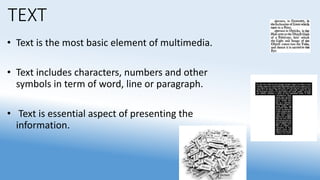
• Text is the most basic element of multimedia.
• Text includes characters, numbers and other
symbols in term of word, line or paragraph.
• Text is essential aspect of presenting the
information.
AUDIO
• Multimedia phones have music player to run
audio music.
• Audio songs comes under the heading of
multimedia.
• Audio formats may be in the form of MP3,
WMA, WAVE, MIDI and realaudio etc.
IMAGE/GRAPHIC
• Images are very useful feature of multimedia.
Multimedia presentation uses pictures or clip art to
make people understand.
• Picture is a two dimensional screen display, and as
well as a three- dimensional, such as a status or
hologram.
• Various file formats of images are .jpg, .png, .gif, etc
VIDEO
• Video is more towards photo realistic image sequence/
live recording as in comparison to animation.
• Videos makes multimedia presentation more
entraining as well as makes viewers clear to
understand.
• Common digital formats include Flash, MPEG, MP4,
AVI, FLV, WMA etc.
ANIMATION
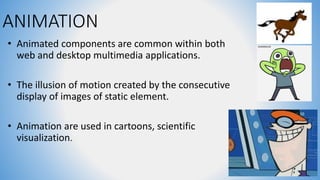
• Animated components are common within both
web and desktop multimedia applications.
• The illusion of motion created by the consecutive
display of images of static element.
• Animation are used in cartoons, scientific
visualization.
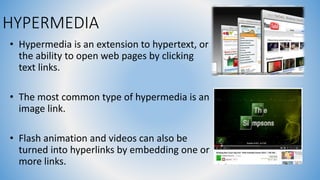
HYPERMEDIA
• Hypermedia is an extension to hypertext, or
the ability to open web pages by clicking
text links.
• The most common type of hypermedia is an
image link.
• Flash animation and videos can also be
turned into hyperlinks by embedding one or
more links.
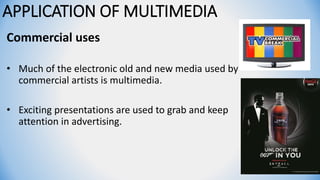
APPLICATION OF MULTIMEDIA
Commercial uses
• Much of the electronic old and new media used by
commercial artists is multimedia.
• Exciting presentations are used to grab and keep
attention in advertising.
APPLICATION OF MULTIMEDIA
Entertainment
• Multimedia is heavily used in the entertainment
industry, especially to develop special effects in
movies and animations
• Multimedia applications that allow users to
actively participate instead of just sitting by as
passive recipients of information are
called Interactive Multimedia.
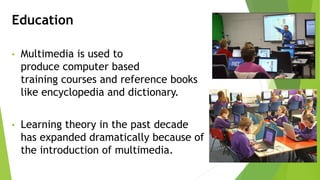
Education
• Multimedia is used to
produce computer based
training courses and reference books
like encyclopedia and dictionary.
• Learning theory in the past decade
has expanded dramatically because of
the introduction of multimedia.
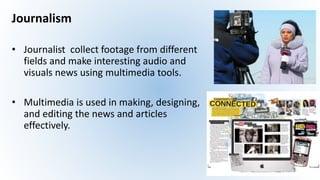
Journalism
• Journalist collect footage from different
fields and make interesting audio and
visuals news using multimedia tools.
• Multimedia is used in making, designing,
and editing the news and articles
effectively.
Engineering
• Software engineers frequently use
multimedia tools and simulations in new
inventions projects.
• Multimedia tools are used for creativity in
designing and developing in entertainment
business of scientific research.
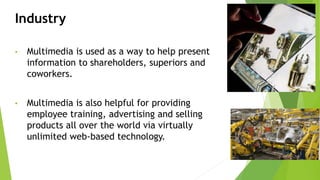
Industry
• Multimedia is used as a way to help present
information to shareholders, superiors and
coworkers.
• Multimedia is also helpful for providing
employee training, advertising and selling
products all over the world via virtually
unlimited web-based technology.
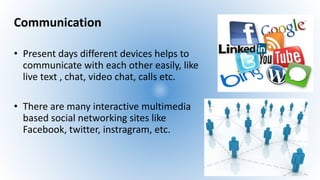
Communication
• Present days different devices helps to
communicate with each other easily, like
live text , chat, video chat, calls etc.
• There are many interactive multimedia
based social networking sites like
Facebook, twitter, instragram, etc.
Medicine
• Doctor can get trained by looking at a
virtual surgery.
• They can simulate how the human
body is affected by disease spread
by viruses and bacteria and then develop
techniques to prevent it.
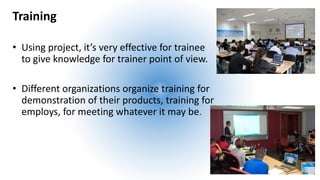
Training
• Using project, it’s very effective for trainee
to give knowledge for trainer point of view.
• Different organizations organize training for
demonstration of their products, training for
employs, for meeting whatever it may be.
Web Page
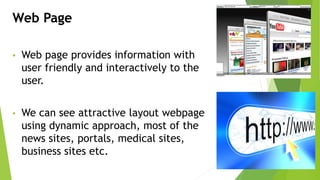
• Web page provides information with
user friendly and interactively to the
user.
• We can see attractive layout webpage
using dynamic approach, most of the
news sites, portals, medical sites,
business sites etc.
REFERENCE
Wikipedia
REFERENCE
Multimedia and all about it.

Multimedia and all about it.

  • 3.
  • 4.
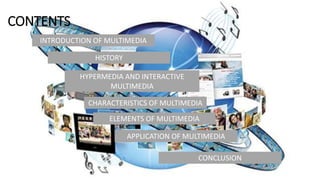
    CONTENTS CHARACTERISTICS OF MULTIMEDIA HYPERMEDIAAND INTERACTIVE MULTIMEDIA ELEMENTS OF MULTIMEDIA APPLICATION OF MULTIMEDIA CONCLUSION HISTORY INTRODUCTION OF MULTIMEDIA
  • 5.
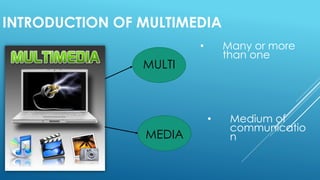
    INTRODUCTION OF MULTIMEDIA MULTI MEDIA •Many or more than one • Medium of communicatio n
  • 6.
    HISTORY • The termmultimedia was coined by singer and artist Bob Goldstein to promote the July 1966 opening of his "Light Works at L‘ Oursin" show at Southampton, Long Island. • In the late 1970s, the term referred to presentations consisting of multi-projector slide shows timed to an audio track. • In 1990s 'multimedia' took on its current meaning. • Tay Vaughan declared “Multimedia is any combination of text, graphic art, sound, animation, and video that is delivered by computer. • Some computers which were marketed in the 1990s were called "multimedia" computers because they incorporated a CD-ROM drive
  • 7.
    HYPERMEDIA • A combinationof hypertext, graphics, audio, video and interactivity culminating in a complete, non liner computer – based experience. INTERACTIVE MULTIMEDIA • Interactive media normally refers to products and services on digital computer-based systems which respond to the user’s actions by presenting content such as text, graphics, animation, video, audio, games, etc.
  • 8.
    CHARACTERISTICS OF MULTIMEDIA •Multimedia presentation may be viewed by person on stage, projected, transmitted or played locally on media player • Broadcasts and recordings can be either analog or digital electronic media technology. • Enhanced levels of interactivity are made possible by combining multiple forms of media content.
  • 9.
  • 10.
    TEXT • Text isthe most basic element of multimedia. • Text includes characters, numbers and other symbols in term of word, line or paragraph. • Text is essential aspect of presenting the information.
  • 11.
    AUDIO • Multimedia phoneshave music player to run audio music. • Audio songs comes under the heading of multimedia. • Audio formats may be in the form of MP3, WMA, WAVE, MIDI and realaudio etc.
  • 12.
    IMAGE/GRAPHIC • Images arevery useful feature of multimedia. Multimedia presentation uses pictures or clip art to make people understand. • Picture is a two dimensional screen display, and as well as a three- dimensional, such as a status or hologram. • Various file formats of images are .jpg, .png, .gif, etc
  • 13.
    VIDEO • Video ismore towards photo realistic image sequence/ live recording as in comparison to animation. • Videos makes multimedia presentation more entraining as well as makes viewers clear to understand. • Common digital formats include Flash, MPEG, MP4, AVI, FLV, WMA etc.
  • 14.
    ANIMATION • Animated componentsare common within both web and desktop multimedia applications. • The illusion of motion created by the consecutive display of images of static element. • Animation are used in cartoons, scientific visualization.
  • 15.
    HYPERMEDIA • Hypermedia isan extension to hypertext, or the ability to open web pages by clicking text links. • The most common type of hypermedia is an image link. • Flash animation and videos can also be turned into hyperlinks by embedding one or more links.
  • 16.
    APPLICATION OF MULTIMEDIA Commercialuses • Much of the electronic old and new media used by commercial artists is multimedia. • Exciting presentations are used to grab and keep attention in advertising.
  • 17.
    APPLICATION OF MULTIMEDIA Entertainment •Multimedia is heavily used in the entertainment industry, especially to develop special effects in movies and animations • Multimedia applications that allow users to actively participate instead of just sitting by as passive recipients of information are called Interactive Multimedia.
  • 18.
    Education • Multimedia isused to produce computer based training courses and reference books like encyclopedia and dictionary. • Learning theory in the past decade has expanded dramatically because of the introduction of multimedia.
  • 19.
    Journalism • Journalist collectfootage from different fields and make interesting audio and visuals news using multimedia tools. • Multimedia is used in making, designing, and editing the news and articles effectively.
  • 20.
    Engineering • Software engineersfrequently use multimedia tools and simulations in new inventions projects. • Multimedia tools are used for creativity in designing and developing in entertainment business of scientific research.
  • 21.
    Industry • Multimedia isused as a way to help present information to shareholders, superiors and coworkers. • Multimedia is also helpful for providing employee training, advertising and selling products all over the world via virtually unlimited web-based technology.
  • 22.
    Communication • Present daysdifferent devices helps to communicate with each other easily, like live text , chat, video chat, calls etc. • There are many interactive multimedia based social networking sites like Facebook, twitter, instragram, etc.
  • 23.
    Medicine • Doctor canget trained by looking at a virtual surgery. • They can simulate how the human body is affected by disease spread by viruses and bacteria and then develop techniques to prevent it.
  • 24.
    Training • Using project,it’s very effective for trainee to give knowledge for trainer point of view. • Different organizations organize training for demonstration of their products, training for employs, for meeting whatever it may be.
  • 25.
    Web Page • Webpage provides information with user friendly and interactively to the user. • We can see attractive layout webpage using dynamic approach, most of the news sites, portals, medical sites, business sites etc.
  • 27.