

Mule: What’s New and
Coming
Adoption Velocity
Operational Excellence
Intelligence
Design Manage
Engage
Mule runtime engine
Connectivity
Runtime services
Hybrid cloud
Mule is the heart of the application network
Mule 3.8
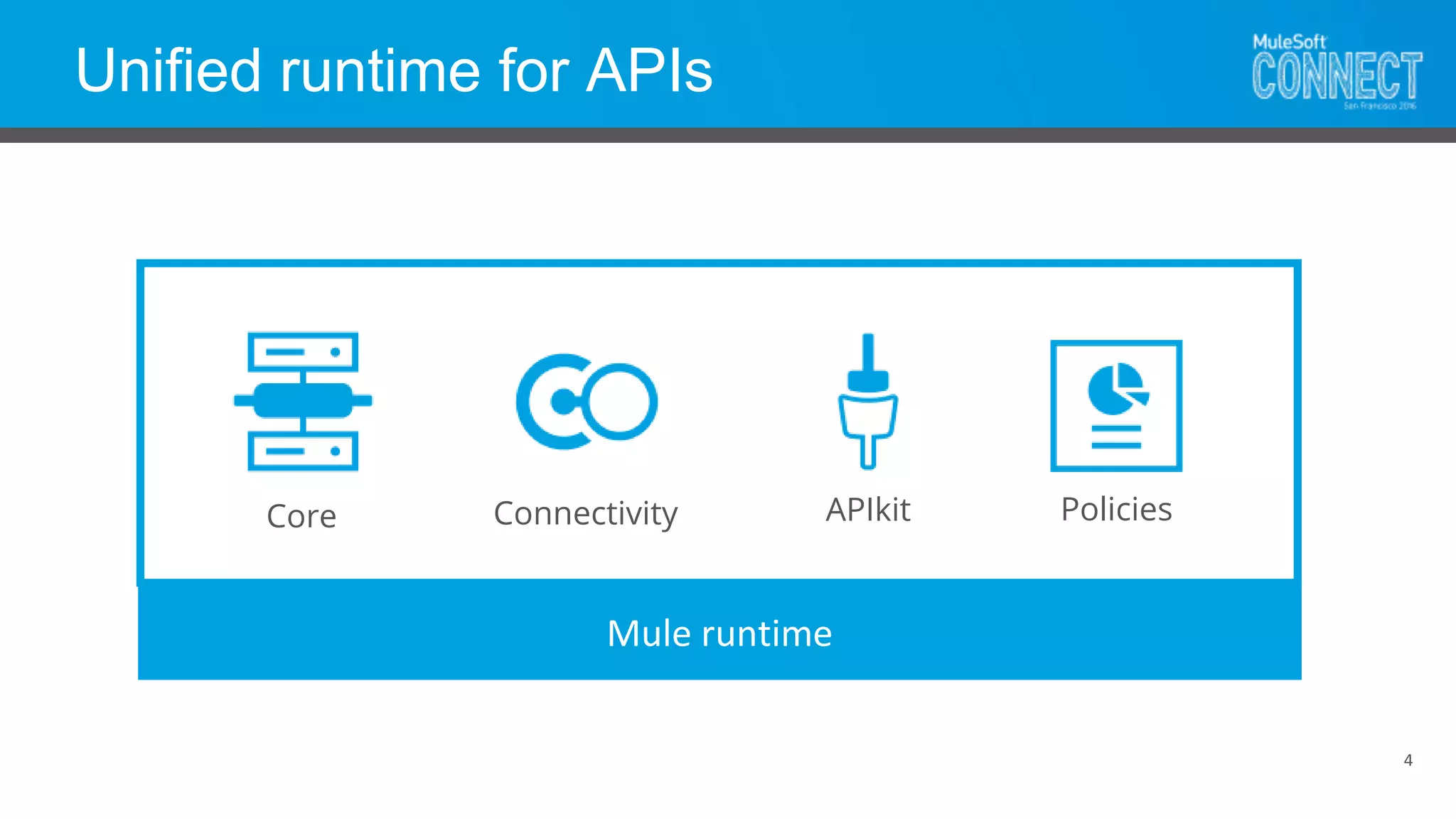
Unified runtime for APIs
4
APIkitCore Policies
Mule runtime
Connectivity
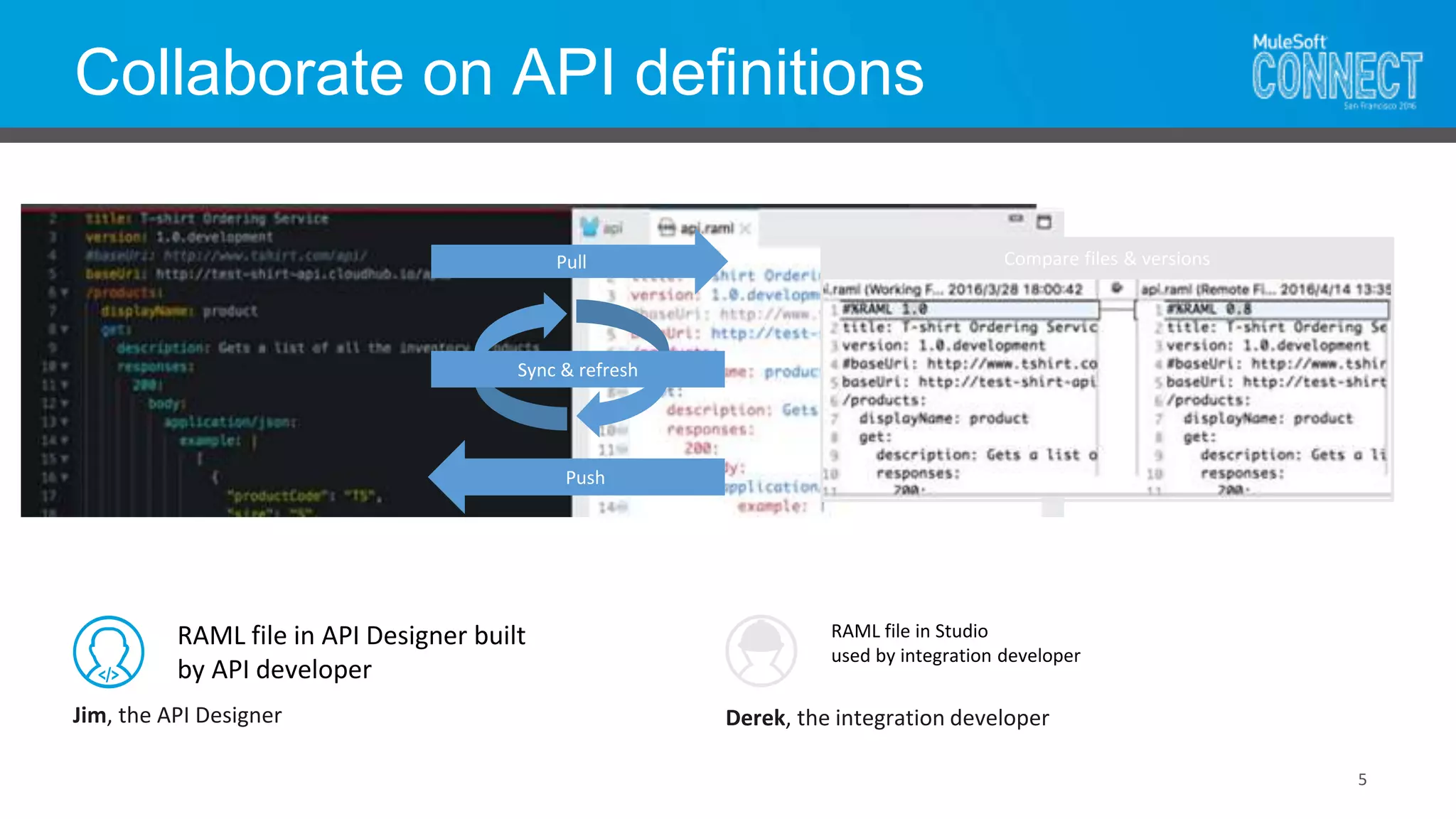
Collaborate on API definitions
5
RAML file in API Designer built
by API developer
RAML file in Studio
used by integration developer
Pull
Push
Compare files & versions
Sync & refresh
Jim, the API Designer Derek, the integration developer
DataWeave: Flat File, Fixed Width, COBOL
6
• Fixed Width
• Flat File
- Define schemas with YAML
based syntax
- Support for fixed width
• COBOL Copybook (Early Access)
foo.com
DNS round robin load balancing
7
• Mule resolves all IP addresses
• Connections are distributed
across all IPs
• If a connection error occurs
for one IP, the next one will
be tried transparently
• This allows for load balancing
across the addresses
returned for the host
address.
Mule
IP 1 IP 2 IP 3
Demo
8
Mule 4
Enabling the application network
10
Adoption at scale APIs & experiences Platform agility
Enabling Mule adoption at scale
30% fewer components, easier to
learn & maintain apps
Manage configurations at runtime,
not design time
Adopt new platform capabilities
faster without changing applications
Easier to use
Manage at scale
Smooth upgrades
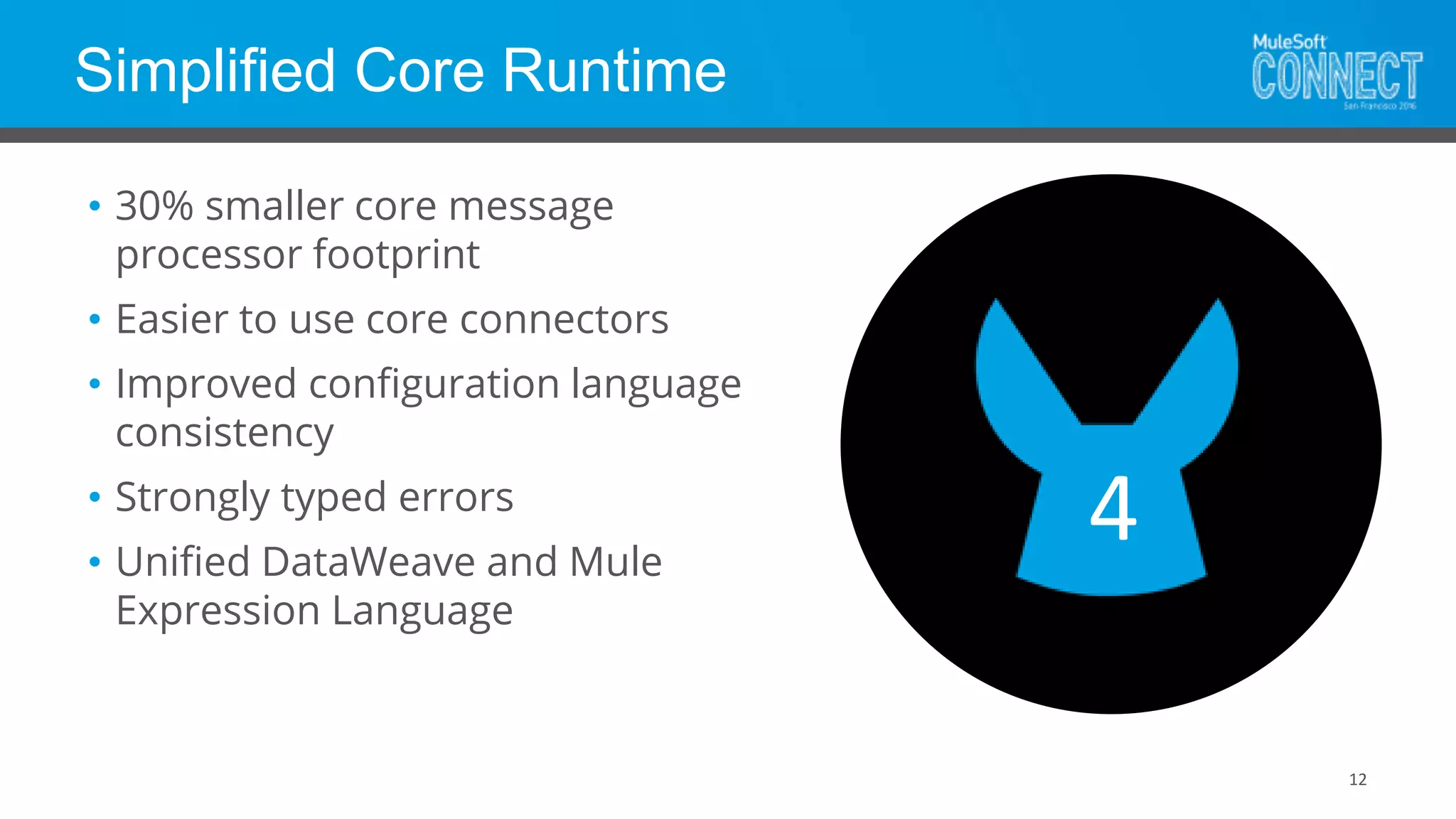
Simplified Core Runtime
12
• 30% smaller core message
processor footprint
• Easier to use core connectors
• Improved configuration language
consistency
• Strongly typed errors
• Unified DataWeave and Mule
Expression Language
4
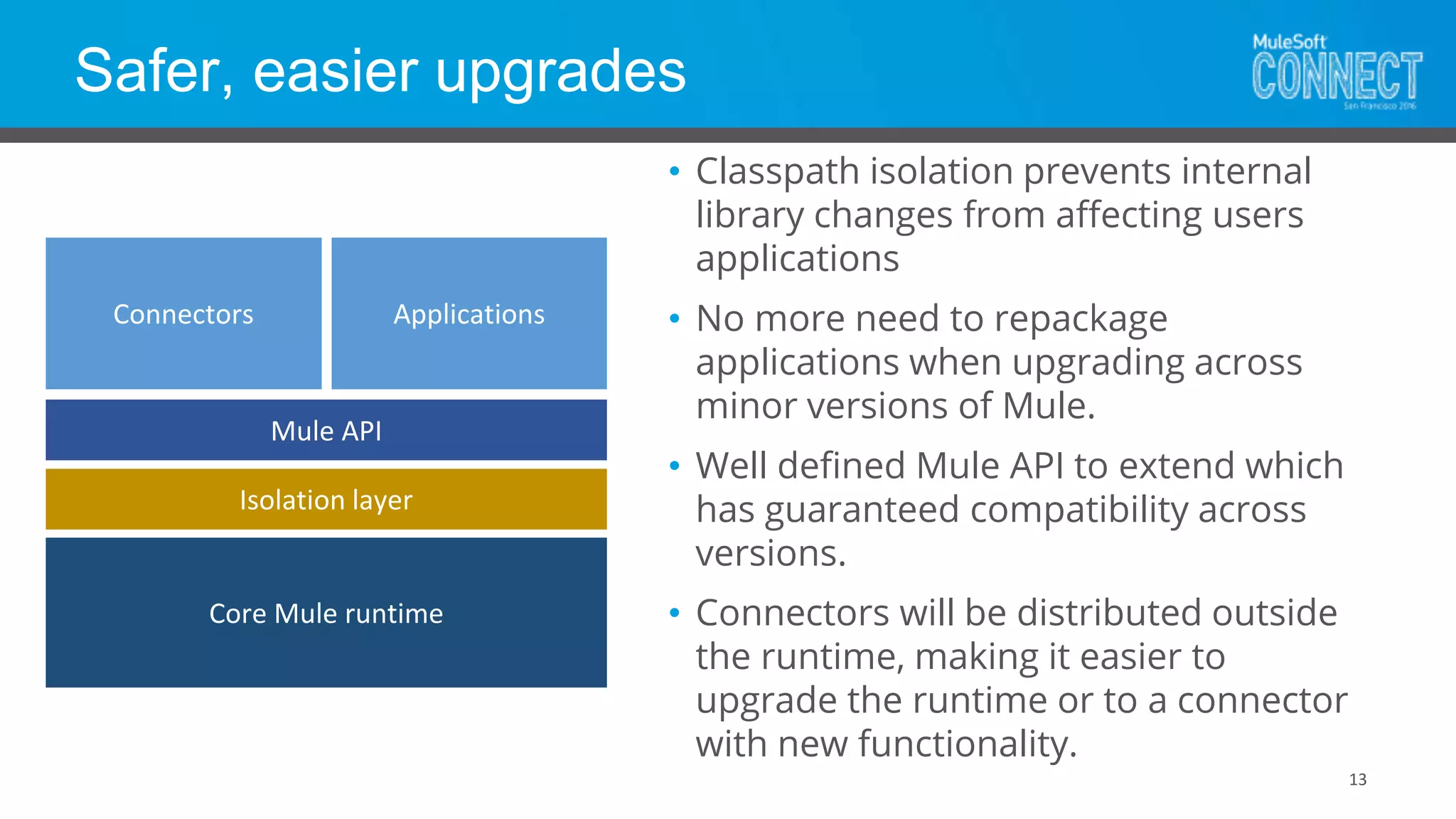
Safer, easier upgrades
13
• Classpath isolation prevents internal
library changes from affecting users
applications
• No more need to repackage
applications when upgrading across
minor versions of Mule.
• Well defined Mule API to extend which
has guaranteed compatibility across
versions.
• Connectors will be distributed outside
the runtime, making it easier to
upgrade the runtime or to a connector
with new functionality.
Core Mule runtime
ApplicationsConnectors
Mule API
Isolation layer
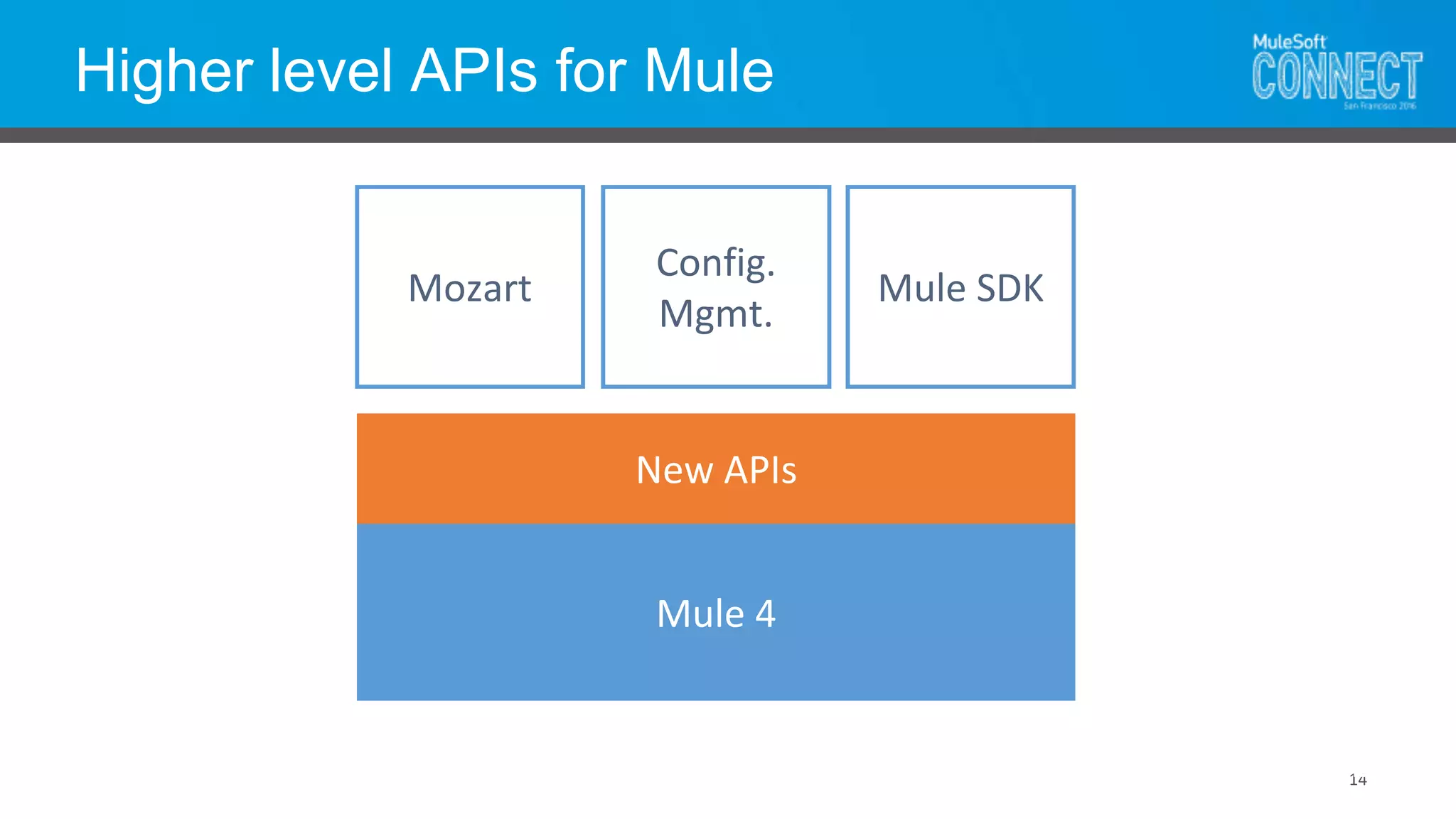
Higher level APIs for Mule
14
Mule 4
Mozart
Config.
Mgmt.
Mule SDK
New APIs
4
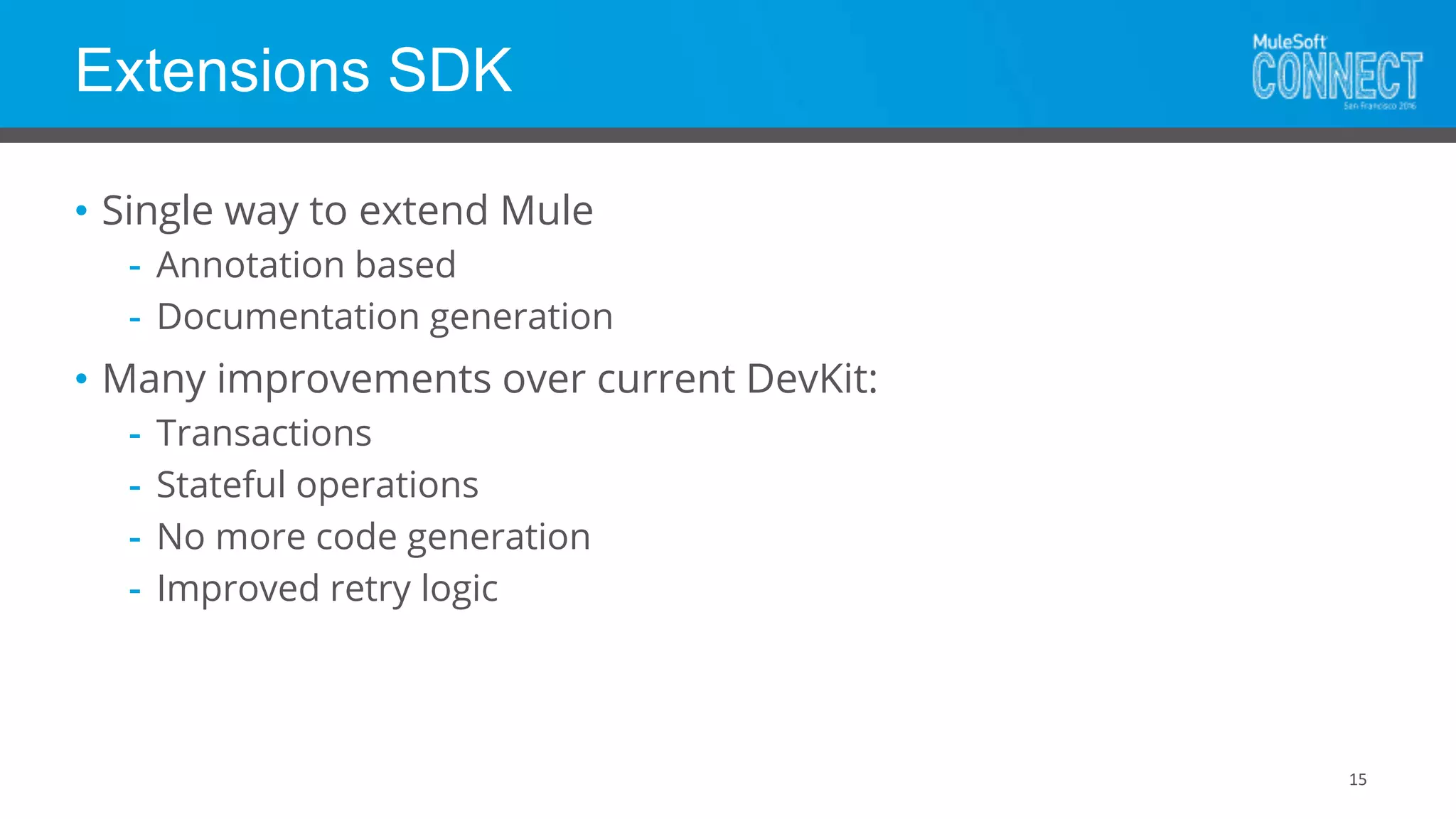
Extensions SDK
15
• Single way to extend Mule
- Annotation based
- Documentation generation
• Many improvements over current DevKit:
- Transactions
- Stateful operations
- No more code generation
- Improved retry logic
Configuration Management
16
• Configure connectors at
runtime
• Share configs across apps
• Rotate passwords in one
place
• Securely store credentials
in central location
• No need to build best
practices into dev lifecycle
Q&A
17

Mule: What's New and Coming?

  • 1.
  • 2.
    Adoption Velocity Operational Excellence Intelligence DesignManage Engage Mule runtime engine Connectivity Runtime services Hybrid cloud Mule is the heart of the application network
  • 3.
  • 4.
    Unified runtime forAPIs 4 APIkitCore Policies Mule runtime Connectivity
  • 5.
    Collaborate on APIdefinitions 5 RAML file in API Designer built by API developer RAML file in Studio used by integration developer Pull Push Compare files & versions Sync & refresh Jim, the API Designer Derek, the integration developer
  • 6.
    DataWeave: Flat File,Fixed Width, COBOL 6 • Fixed Width • Flat File - Define schemas with YAML based syntax - Support for fixed width • COBOL Copybook (Early Access)
  • 7.
    foo.com DNS round robinload balancing 7 • Mule resolves all IP addresses • Connections are distributed across all IPs • If a connection error occurs for one IP, the next one will be tried transparently • This allows for load balancing across the addresses returned for the host address. Mule IP 1 IP 2 IP 3
  • 8.
  • 9.
  • 10.
    Enabling the applicationnetwork 10 Adoption at scale APIs & experiences Platform agility
  • 11.
    Enabling Mule adoptionat scale 30% fewer components, easier to learn & maintain apps Manage configurations at runtime, not design time Adopt new platform capabilities faster without changing applications Easier to use Manage at scale Smooth upgrades
  • 12.
    Simplified Core Runtime 12 •30% smaller core message processor footprint • Easier to use core connectors • Improved configuration language consistency • Strongly typed errors • Unified DataWeave and Mule Expression Language 4
  • 13.
    Safer, easier upgrades 13 •Classpath isolation prevents internal library changes from affecting users applications • No more need to repackage applications when upgrading across minor versions of Mule. • Well defined Mule API to extend which has guaranteed compatibility across versions. • Connectors will be distributed outside the runtime, making it easier to upgrade the runtime or to a connector with new functionality. Core Mule runtime ApplicationsConnectors Mule API Isolation layer
  • 14.
    Higher level APIsfor Mule 14 Mule 4 Mozart Config. Mgmt. Mule SDK New APIs 4
  • 15.
    Extensions SDK 15 • Singleway to extend Mule - Annotation based - Documentation generation • Many improvements over current DevKit: - Transactions - Stateful operations - No more code generation - Improved retry logic
  • 16.
    Configuration Management 16 • Configureconnectors at runtime • Share configs across apps • Rotate passwords in one place • Securely store credentials in central location • No need to build best practices into dev lifecycle
  • 17.