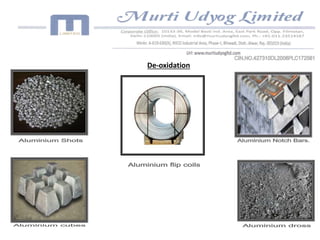
De-oxidation
Desulphurization And Dephosphoriser 
What do we need for good desulphurisation? 
Basic slag, reducing conditions 
Ladle desulphurisation uses CaO-rich slag, 
with Al deoxidation (low hO) 
Reaction: [S]steel + (O2-) slag = (S2-) slag + [O]steel 
How can [Si] affect desulphurisation? 
[Si] can control the oxygen potential in Al-killed steel 
if 
- Steel equilibrates with the slag 
- Low SiO2 activity in slag (relative to Al2O3 activity) 
Dephosphorisation requires: 
oxidising conditions (higher [O] or higher po2) 
high slag basicity 
Relatively low temperature 
pO2 (O2-) T 
Blast furnace hearth (10-16 atm) 
Lower 
Oxygen steelmaking / EAF (10-9 atm) higher 
Ladle (deoxidised steel) (10-14 atm) higher 
Dephosphorisation options 
Oxygen steelmaking: 
- Limit tapping temperature 
- control slag volume 
- maximize basicity (ensure CaO dissolves) 
- enhance kinetics (e.g. bottom stirring) 
Note: steelmaking involves oxidising 
C (~4%), Si (~0.5-1%) and P (~0.1%) 
Out of hot metal
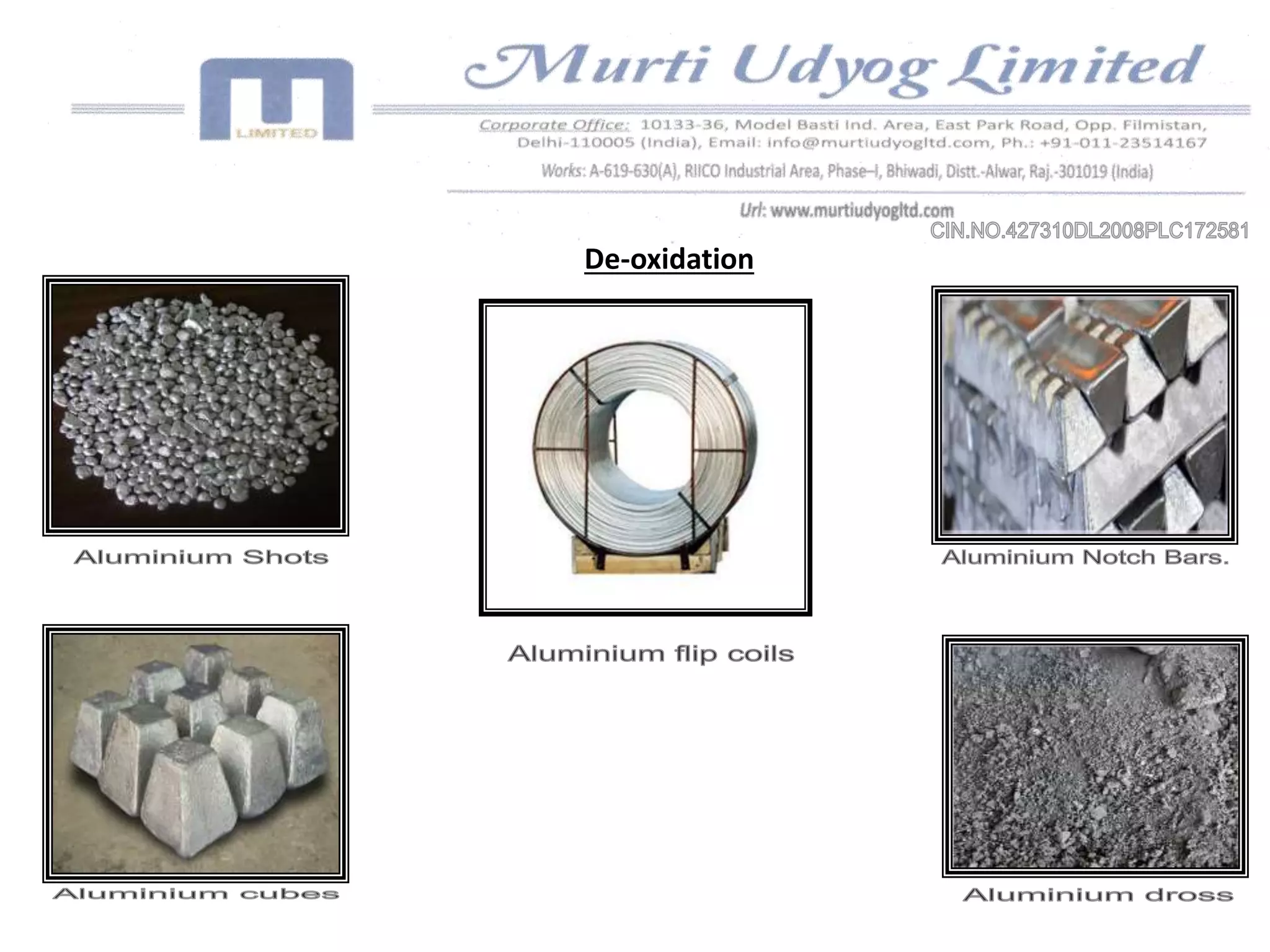
Aluminium based Master Alloys 
A master alloy is a base metal such as aluminium, copper or nickel combined with a relatively high percentage of 
one or two other elements. An example is AlTi10 - a binary alloy consisting of 10% titanium in aluminium. A 
master alloy is a semi-finished product. It is manufactured for use as a raw material by the metals industry. 
Master alloys are produced in various shapes. Examples are: ingot, waffle plate, rod in coils, etc. 
Master alloys are used worldwide. Invariably they are found in plants where metal is melted, alloyed with various 
elements and then cast into shapes. This can be aluminium, iron, steel or even a precious metal such as gold. 
There are various reasons for adding master alloys to a melt. One of the main applications is composition 
Adjustment, 
i.e. changing the composition of the liquid metal to achieve the desired chemical specification. Another important 
Application is structure control - influencing the microstructure of a metal during casting and solidification in order 
to change its properties. Such properties include mechanical strength, ductility, electrical conductivity, castability or surface 
appearance. A master alloy is sometimes also referred to as "hardener", "grain refiner" or "modifier" 
Depending on its application. 
Reasons for using a master alloy instead of a pure metal can be economical, technical or both. Some elements 
Show high losses - or poor yield - when added in pure form. Others will not dissolve at all at the furnace 
Temperature prevailing in a cast house. A master alloy often provides the solution, as it dissolves much quicker at 
Lower temperatures, saving valuable energy and production time. 
The master alloy industry uses specialized equipment such as high temperature induction furnaces to produce the 
alloy composition suitable for use by the regular metals industry. 
Master alloy fabrication is a truly specialized field.
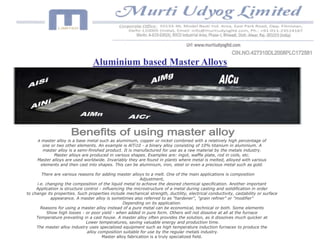
Aluminium based Grain Refiners : 
Grain Refinement is a process used for grain boundary strengthening of casting material. 
Aluminum alloys with ultra fine grain structure has received Objectives 
Aluminum alloys with ultra fine grain structure has received tremendous increase in research interest in 
various disciplines specially in automotive and aerospace industries for properties like low density and good 
castability. 
Grain refinement of Al and its alloys improve the mechanical properties of casting along with surface 
finish, soundness etc. 
Methods of Grain Refinement 
Methods of grain refinements used in casting process are mainly classified into following three 
groups 
Thermal method i.e. cooling rate control Methods of Grain Refinement 
Chemical method i.e. Grain size refiners addition 
Mechanical method i.e. agitation of melt during solidification
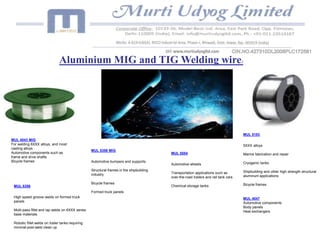
Aluminium MIG and TIG Welding wire: 
MUL 4047 
Automotive components 
Body panels 
Heat exchangers 
MUL 4043 MIG 
For welding 6XXX alloys, and most 
casting alloys 
Automotive components such as 
frame and drive shafts 
Bicycle frames 
MUL 5554 
Automotive wheels 
Transportation applications such as 
over-the-road trailers and rail tank cars 
Chemical storage tanks 
MUL 5183 
5XXX alloys 
Marine fabrication and repair 
Cryogenic tanks 
Shipbuilding and other high strength structural 
aluminum applications 
MUL 5356 Bicycle frames 
High speed groove welds on formed truck 
panels 
Multi-pass fillet and lap welds on 6XXX series 
base materials 
Robotic fillet welds on trailer tanks requiring 
minimal post-weld clean up 
MUL 5356 MIG 
Automotive bumpers and supports 
Structural frames in the shipbuilding 
industry 
Bicycle frames 
Formed truck panels

Mul web

  • 1.
  • 2.
    Desulphurization And Dephosphoriser What do we need for good desulphurisation? Basic slag, reducing conditions Ladle desulphurisation uses CaO-rich slag, with Al deoxidation (low hO) Reaction: [S]steel + (O2-) slag = (S2-) slag + [O]steel How can [Si] affect desulphurisation? [Si] can control the oxygen potential in Al-killed steel if - Steel equilibrates with the slag - Low SiO2 activity in slag (relative to Al2O3 activity) Dephosphorisation requires: oxidising conditions (higher [O] or higher po2) high slag basicity Relatively low temperature pO2 (O2-) T Blast furnace hearth (10-16 atm) Lower Oxygen steelmaking / EAF (10-9 atm) higher Ladle (deoxidised steel) (10-14 atm) higher Dephosphorisation options Oxygen steelmaking: - Limit tapping temperature - control slag volume - maximize basicity (ensure CaO dissolves) - enhance kinetics (e.g. bottom stirring) Note: steelmaking involves oxidising C (~4%), Si (~0.5-1%) and P (~0.1%) Out of hot metal
  • 3.
    Aluminium based MasterAlloys A master alloy is a base metal such as aluminium, copper or nickel combined with a relatively high percentage of one or two other elements. An example is AlTi10 - a binary alloy consisting of 10% titanium in aluminium. A master alloy is a semi-finished product. It is manufactured for use as a raw material by the metals industry. Master alloys are produced in various shapes. Examples are: ingot, waffle plate, rod in coils, etc. Master alloys are used worldwide. Invariably they are found in plants where metal is melted, alloyed with various elements and then cast into shapes. This can be aluminium, iron, steel or even a precious metal such as gold. There are various reasons for adding master alloys to a melt. One of the main applications is composition Adjustment, i.e. changing the composition of the liquid metal to achieve the desired chemical specification. Another important Application is structure control - influencing the microstructure of a metal during casting and solidification in order to change its properties. Such properties include mechanical strength, ductility, electrical conductivity, castability or surface appearance. A master alloy is sometimes also referred to as "hardener", "grain refiner" or "modifier" Depending on its application. Reasons for using a master alloy instead of a pure metal can be economical, technical or both. Some elements Show high losses - or poor yield - when added in pure form. Others will not dissolve at all at the furnace Temperature prevailing in a cast house. A master alloy often provides the solution, as it dissolves much quicker at Lower temperatures, saving valuable energy and production time. The master alloy industry uses specialized equipment such as high temperature induction furnaces to produce the alloy composition suitable for use by the regular metals industry. Master alloy fabrication is a truly specialized field.
  • 4.
    Aluminium based GrainRefiners : Grain Refinement is a process used for grain boundary strengthening of casting material. Aluminum alloys with ultra fine grain structure has received Objectives Aluminum alloys with ultra fine grain structure has received tremendous increase in research interest in various disciplines specially in automotive and aerospace industries for properties like low density and good castability. Grain refinement of Al and its alloys improve the mechanical properties of casting along with surface finish, soundness etc. Methods of Grain Refinement Methods of grain refinements used in casting process are mainly classified into following three groups Thermal method i.e. cooling rate control Methods of Grain Refinement Chemical method i.e. Grain size refiners addition Mechanical method i.e. agitation of melt during solidification
  • 5.
    Aluminium MIG andTIG Welding wire: MUL 4047 Automotive components Body panels Heat exchangers MUL 4043 MIG For welding 6XXX alloys, and most casting alloys Automotive components such as frame and drive shafts Bicycle frames MUL 5554 Automotive wheels Transportation applications such as over-the-road trailers and rail tank cars Chemical storage tanks MUL 5183 5XXX alloys Marine fabrication and repair Cryogenic tanks Shipbuilding and other high strength structural aluminum applications MUL 5356 Bicycle frames High speed groove welds on formed truck panels Multi-pass fillet and lap welds on 6XXX series base materials Robotic fillet welds on trailer tanks requiring minimal post-weld clean up MUL 5356 MIG Automotive bumpers and supports Structural frames in the shipbuilding industry Bicycle frames Formed truck panels