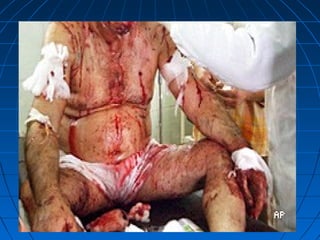
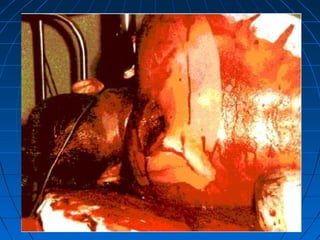
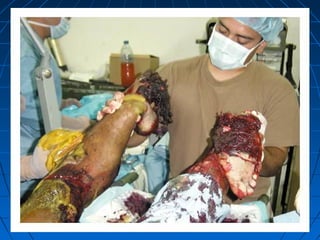
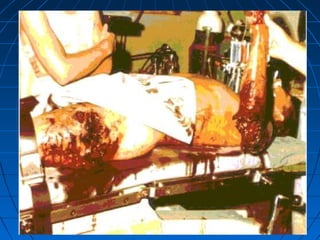
Blast injury
Presented ByPresented By
MUHAMMAD ABDULLAHMUHAMMAD ABDULLAH
Blast injury
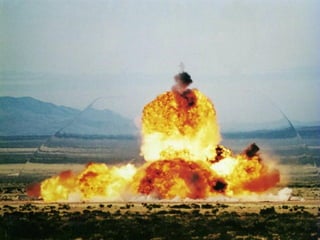
 Rapid chemical conversion of a solid or
liquid into a gas with resultant energy
release.
 All nuclear explosion provide thisAll nuclear explosion provide this
change in potential energy to kineticchange in potential energy to kinetic
injury in a very short period of time.injury in a very short period of time.
Once notified of a possibleOnce notified of a possible
bombing or explosion, hospital-bombing or explosion, hospital-
based physicians should considerbased physicians should consider
immediately activating hospitalimmediately activating hospital
disaster plans, includingdisaster plans, including
preparations to care for anywherepreparations to care for anywhere
from a handful to hundreds offrom a handful to hundreds of
victims.victims.
Blast injury
 Blast injuries in civilian populations occur as aBlast injuries in civilian populations occur as a
result ofresult of
fireworks,fireworks,
household explosions, orhousehold explosions, or
industrial accidents.industrial accidents.
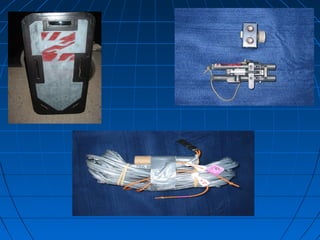
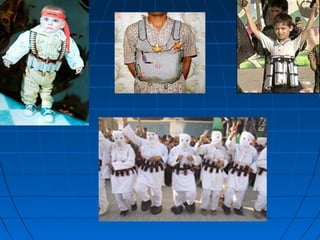
 Terrorist tactics may take the form ofTerrorist tactics may take the form of
letter bombs,letter bombs,
suitcase bombs,suitcase bombs,
vehicle bombs, andvehicle bombs, and
suicide bombers.suicide bombers.
BackgroundBackground
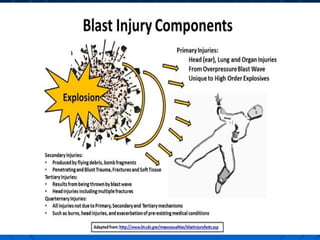
 Explosions have the capability to causeExplosions have the capability to cause
multisystem, life-threatening injuries inmultisystem, life-threatening injuries in
single or multiple victims simultaneously.single or multiple victims simultaneously.
 Explosions can produce classic injuryExplosions can produce classic injury
patterns from blunt and penetratingpatterns from blunt and penetrating
mechanisms to several organ systems, butmechanisms to several organ systems, but
they can also result in unique injurythey can also result in unique injury
patterns to specific organs including thepatterns to specific organs including the
lungs and the central nervous systemlungs and the central nervous system
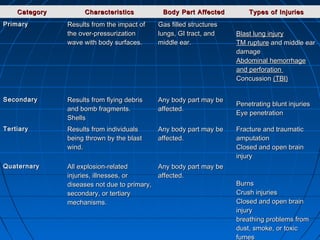
CategoryCategory CharacteristicsCharacteristics Body Part AffectedBody Part Affected Types of InjuriesTypes of Injuries
PrimaryPrimary Results from the impact ofResults from the impact of
the over-pressurizationthe over-pressurization
wave with body surfaces. wave with body surfaces. 
Gas filled structuresGas filled structures
lungs, GI tract, andlungs, GI tract, and
middle ear.middle ear.
Blast lung injuryBlast lung injury
TM ruptureTM rupture and middle earand middle ear
damage damage 
Abdominal hemorrhageAbdominal hemorrhage
and perforationand perforation
ConcussionConcussion (TBI)(TBI)
SecondarySecondary Results from flying debrisResults from flying debris
and bomb fragments.and bomb fragments.
Shells Shells 
Any body part may beAny body part may be
affected.affected.
Penetrating blunt injuriesPenetrating blunt injuries
Eye penetrationEye penetration
TertiaryTertiary Results from individualsResults from individuals
being thrown by the blastbeing thrown by the blast
wind.wind.
Any body part may beAny body part may be
affected.affected.
Fracture and traumaticFracture and traumatic
amputation amputation 
Closed and open brainClosed and open brain
injuryinjury
Quaternary Quaternary  All explosion-relatedAll explosion-related
injuries, illnesses, orinjuries, illnesses, or
diseases not due to primary,diseases not due to primary,
secondary, or tertiarysecondary, or tertiary
mechanisms. mechanisms. 
Any body part may beAny body part may be
affected.affected.
BurnsBurns
Crush injuriesCrush injuries
Closed and open brainClosed and open brain
injuryinjury
breathing problems frombreathing problems from
dust, smoke, or toxicdust, smoke, or toxic
fumesfumes
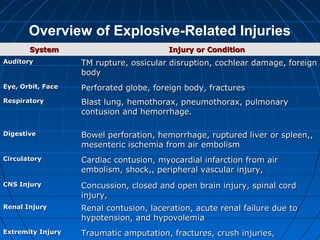
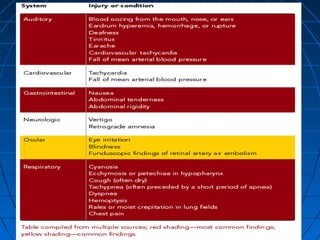
Overview of Explosive-Related Injuries
SystemSystem Injury or ConditionInjury or Condition
AuditoryAuditory TM rupture, ossicular disruption, cochlear damage, foreignTM rupture, ossicular disruption, cochlear damage, foreign
bodybody  
Eye, Orbit, FaceEye, Orbit, Face Perforated globe, foreign body, fracturesPerforated globe, foreign body, fractures
RespiratoryRespiratory Blast lung, hemothorax, pneumothorax, pulmonaryBlast lung, hemothorax, pneumothorax, pulmonary
contusion and hemorrhage.contusion and hemorrhage.
DigestiveDigestive Bowel perforation, hemorrhage, ruptured liver or spleen,,Bowel perforation, hemorrhage, ruptured liver or spleen,,
mesenteric ischemia from air embolismmesenteric ischemia from air embolism
CirculatoryCirculatory Cardiac contusion, myocardial infarction from airCardiac contusion, myocardial infarction from air
embolism, shock,, peripheral vascular injury,embolism, shock,, peripheral vascular injury,
CNS InjuryCNS Injury Concussion, closed and open brain injury, spinal cordConcussion, closed and open brain injury, spinal cord
injury,injury,
Renal InjuryRenal Injury Renal contusion, laceration, acute renal failure due toRenal contusion, laceration, acute renal failure due to
hypotension, and hypovolemiahypotension, and hypovolemia
Extremity InjuryExtremity Injury Traumatic amputation, fractures, crush injuries,Traumatic amputation, fractures, crush injuries,
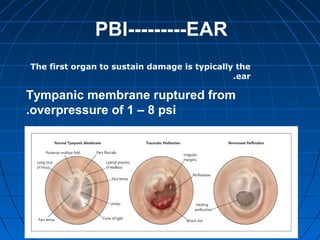
PBI---------EAR
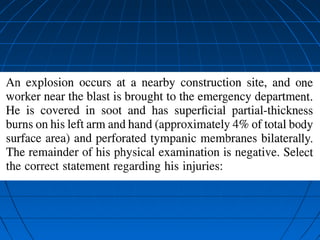
Tympanic membrane ruptured from
overpressure of 1 – 8 psi.
The first organ to sustain damage is typically the
ear.
INITIAL MANAGEMENTINITIAL MANAGEMENT
Manage as other soft tissue injuriesManage as other soft tissue injuries
Attention to foreign body removal,Attention to foreign body removal,
cleaning of wounds, and closurecleaning of wounds, and closure..
Cartilage must not be left exposed andCartilage must not be left exposed and
wounds should be closed primarilywounds should be closed primarily;;
The patient should be referred toThe patient should be referred to
SpecialistSpecialist..
Blast Lung InjuryBlast Lung Injury
Major cause of death in PBI’s
Clinical PresentationClinical Presentation
••Symptoms may include dyspnea,Symptoms may include dyspnea,
hemoptysis, cough, and chest painhemoptysis, cough, and chest pain..
••Signs may include tachypnea, hypoxiaSigns may include tachypnea, hypoxia
cyanosis, apnea, wheezing, decreasedcyanosis, apnea, wheezing, decreased
breath sounds, and hemodynamicbreath sounds, and hemodynamic
instabilityinstability..
••Other injuries may be presentOther injuries may be present..
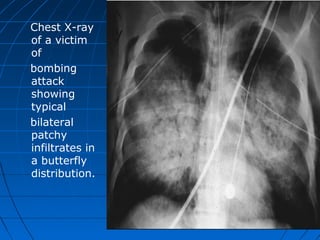
Chest X-ray
of a victim
of
bombing
attack
showing
typical
bilateral
patchy
infiltrates in
a butterfly
distribution.
BLI’s ManagementBLI’s Management
 Diagnostic Evaluation
 • Chest radiography is necessary for
anyone who is exposed to a blast.
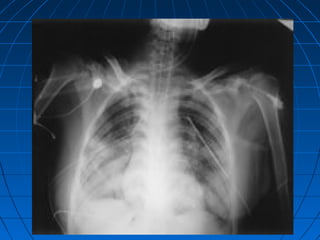
 A characteristic “butterfly” pattern may be
revealed upon x-ray.
 • Arterial blood gases, computerized
tomography, and doppler
 technology may be used.
 • Most laboratory and diagnostic testing
can be conducted
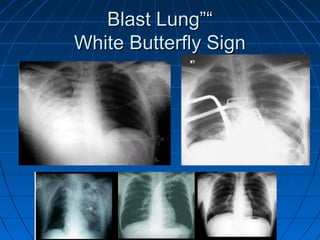
““Blast Lung”Blast Lung”
White Butterfly SignWhite Butterfly Sign
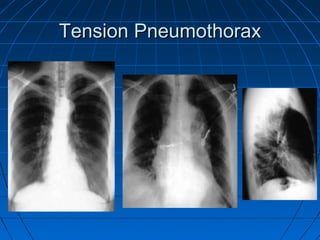
Tension PneumothoraxTension Pneumothorax
Treatment of BLI
Patients with suspected or confirmed BLI should receivePatients with suspected or confirmed BLI should receive
supplemental high-flow oxygen to prevent hypoxemiasupplemental high-flow oxygen to prevent hypoxemia
If ventilatory failure occurs, patients should be intubatedIf ventilatory failure occurs, patients should be intubated..
High-flow oxygen should be administered if air embolism isHigh-flow oxygen should be administered if air embolism is
suspected, and the patient should be placed in a prone,suspected, and the patient should be placed in a prone,
semi-left lateral, or left lateral positionsemi-left lateral, or left lateral position
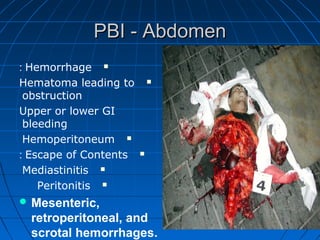
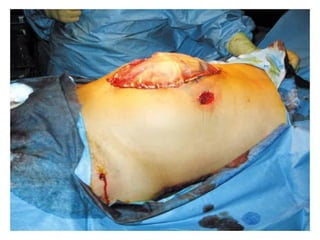
PBI - AbdomenPBI - Abdomen
Hemorrhage:
Hematoma leading to
obstruction
Upper or lower GI
bleeding
Hemoperitoneum
Escape of Contents:
Mediastinitis
Peritonitis
 Mesenteric,
retroperitoneal, and
scrotal hemorrhages.
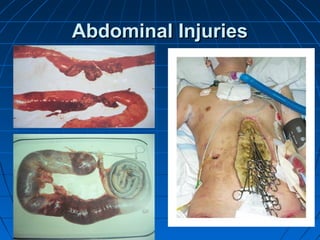
Abdominal InjuriesAbdominal Injuries
Management of Abd.InjManagement of Abd.Inj
Initial ManagementInitial Management
••ABCs (airway, breathing, circulation) as for allABCs (airway, breathing, circulation) as for all
trauma patientstrauma patients
••Nothing by mouthNothing by mouth
••Avoid removal of penetrating objects in emergencyAvoid removal of penetrating objects in emergency
room (operative intervention due to risk ofroom (operative intervention due to risk of
hemorrhagehemorrhage((
••Antibiotics and tetanus immunizationAntibiotics and tetanus immunization
••Serial exams and laboratory monitoringSerial exams and laboratory monitoring
••Radiological studies: plain abdominal films,Radiological studies: plain abdominal films,
computed tomography [CT] scan, Focusedcomputed tomography [CT] scan, Focused
AbdominalAbdominal
Sonography for Trauma (FASTSonography for Trauma (FAST
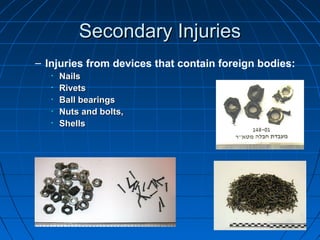
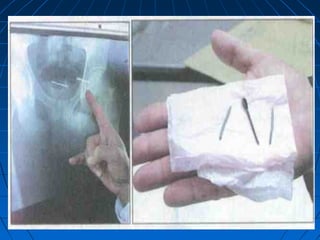
– Injuries from devices that contain foreign bodies:
• NailsNails
• RivetsRivets
• Ball bearingsBall bearings
• Nuts and bolts,Nuts and bolts,
• ShellsShells
Secondary InjuriesSecondary Injuries
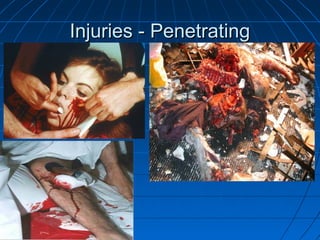
Injuries - PenetratingInjuries - Penetrating
Tertiary injuriesTertiary injuries
– Physically thrown through the air and
strike or impale themselves on objects.
– Collapsing structures.
– Other objects propelled through the air
striking the victim.
Severe head injury is a leading cause
of death in victims of blasts.
Subdural and subarachnoid
hemorrhages are the most common
findings
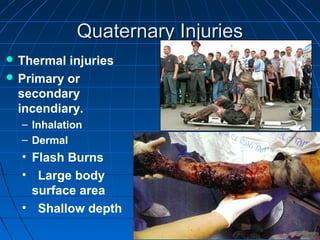
Quaternary InjuriesQuaternary Injuries
 Thermal injuries
 Primary or
secondary
incendiary.
– Inhalation
– Dermal
• Flash Burns
• Large body
surface area
• Shallow depth
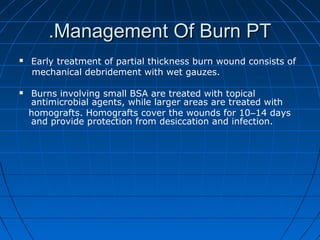
Management Of Burn PTManagement Of Burn PT..
 Early treatment of partial thickness burn wound consists of
mechanical debridement with wet gauzes.
 Burns involving small BSA are treated with topical
antimicrobial agents, while larger areas are treated with
homografts. Homografts cover the wounds for 10–14 days
and provide protection from desiccation and infection.
PhysicalPhysical
 HeadachesHeadaches
 DizzinessDizziness
 InsomniaInsomnia
 FatigueFatigue
 Uneven gaitUneven gait
 NauseaNausea
 Blurred VisionBlurred Vision
CognitiveCognitive
 Attention difficultiesAttention difficulties
 Concentration problemsConcentration problems
 Memory problemsMemory problems
 Orientation problemsOrientation problems
Signs and Symptoms of a Traumatic Brain Injury (TBISigns and Symptoms of a Traumatic Brain Injury (TBI((
Behavioral
Irritability
Depression
Anxiety
Sleep disturbances
Problems with emotional
control
Loss of initiative
Problems related to
employment, marriage,
relationships, and home
or school management
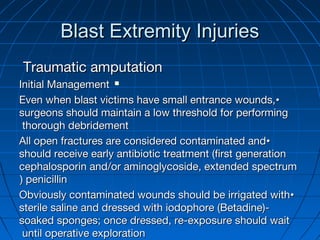
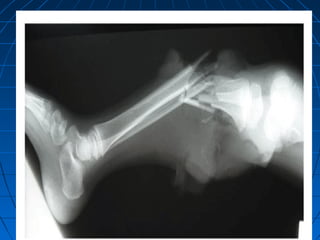
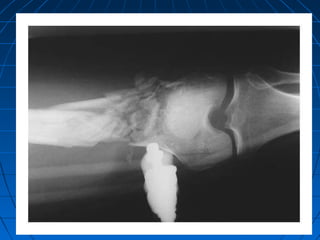
Blast Extremity InjuriesBlast Extremity Injuries
Traumatic amputationTraumatic amputation
Initial ManagementInitial Management
••Even when blast victims have small entrance wounds,Even when blast victims have small entrance wounds,
surgeons should maintain a low threshold for performingsurgeons should maintain a low threshold for performing
thorough debridementthorough debridement
••All open fractures are considered contaminated andAll open fractures are considered contaminated and
should receive early antibiotic treatment (first generationshould receive early antibiotic treatment (first generation
cephalosporin and/or aminoglycoside, extended spectrumcephalosporin and/or aminoglycoside, extended spectrum
penicillinpenicillin((
••Obviously contaminated wounds should be irrigated withObviously contaminated wounds should be irrigated with
sterile saline and dressed with iodophore (Betadine)-sterile saline and dressed with iodophore (Betadine)-
soaked sponges; once dressed, re-exposure should waitsoaked sponges; once dressed, re-exposure should wait
until operative explorationuntil operative exploration
••Tetanus prophylaxis should be administered unlessTetanus prophylaxis should be administered unless
immunization within five years can be documentedimmunization within five years can be documented
••Extremity fractures should be splinted toExtremity fractures should be splinted to
provide mechanical stability and relieve painprovide mechanical stability and relieve pain..
Eye Injuries……
Blast eye injuries may present with a wide range of symptoms,
from minimal discomfort to severe pain or loss of vision.
Minor blast-related eye injuries include corneal abrasions,
conjunctivitis.
Eyelid lacerations, penetrating and perforating injuries to the
cornea or sclera
 .
THANK
YOU

Muhammad abdullah blast inj.

  • 1.
    Blast injury Presented ByPresentedBy MUHAMMAD ABDULLAHMUHAMMAD ABDULLAH
  • 2.
    Blast injury  Rapidchemical conversion of a solid or liquid into a gas with resultant energy release.  All nuclear explosion provide thisAll nuclear explosion provide this change in potential energy to kineticchange in potential energy to kinetic injury in a very short period of time.injury in a very short period of time.
  • 4.
    Once notified ofa possibleOnce notified of a possible bombing or explosion, hospital-bombing or explosion, hospital- based physicians should considerbased physicians should consider immediately activating hospitalimmediately activating hospital disaster plans, includingdisaster plans, including preparations to care for anywherepreparations to care for anywhere from a handful to hundreds offrom a handful to hundreds of victims.victims.
  • 5.
    Blast injury  Blastinjuries in civilian populations occur as aBlast injuries in civilian populations occur as a result ofresult of fireworks,fireworks, household explosions, orhousehold explosions, or industrial accidents.industrial accidents.  Terrorist tactics may take the form ofTerrorist tactics may take the form of letter bombs,letter bombs, suitcase bombs,suitcase bombs, vehicle bombs, andvehicle bombs, and suicide bombers.suicide bombers.
  • 8.
    BackgroundBackground  Explosions havethe capability to causeExplosions have the capability to cause multisystem, life-threatening injuries inmultisystem, life-threatening injuries in single or multiple victims simultaneously.single or multiple victims simultaneously.  Explosions can produce classic injuryExplosions can produce classic injury patterns from blunt and penetratingpatterns from blunt and penetrating mechanisms to several organ systems, butmechanisms to several organ systems, but they can also result in unique injurythey can also result in unique injury patterns to specific organs including thepatterns to specific organs including the lungs and the central nervous systemlungs and the central nervous system
  • 11.
    CategoryCategory CharacteristicsCharacteristics BodyPart AffectedBody Part Affected Types of InjuriesTypes of Injuries PrimaryPrimary Results from the impact ofResults from the impact of the over-pressurizationthe over-pressurization wave with body surfaces. wave with body surfaces.  Gas filled structuresGas filled structures lungs, GI tract, andlungs, GI tract, and middle ear.middle ear. Blast lung injuryBlast lung injury TM ruptureTM rupture and middle earand middle ear damage damage  Abdominal hemorrhageAbdominal hemorrhage and perforationand perforation ConcussionConcussion (TBI)(TBI) SecondarySecondary Results from flying debrisResults from flying debris and bomb fragments.and bomb fragments. Shells Shells  Any body part may beAny body part may be affected.affected. Penetrating blunt injuriesPenetrating blunt injuries Eye penetrationEye penetration TertiaryTertiary Results from individualsResults from individuals being thrown by the blastbeing thrown by the blast wind.wind. Any body part may beAny body part may be affected.affected. Fracture and traumaticFracture and traumatic amputation amputation  Closed and open brainClosed and open brain injuryinjury Quaternary Quaternary  All explosion-relatedAll explosion-related injuries, illnesses, orinjuries, illnesses, or diseases not due to primary,diseases not due to primary, secondary, or tertiarysecondary, or tertiary mechanisms. mechanisms.  Any body part may beAny body part may be affected.affected. BurnsBurns Crush injuriesCrush injuries Closed and open brainClosed and open brain injuryinjury breathing problems frombreathing problems from dust, smoke, or toxicdust, smoke, or toxic fumesfumes
  • 12.
    Overview of Explosive-RelatedInjuries SystemSystem Injury or ConditionInjury or Condition AuditoryAuditory TM rupture, ossicular disruption, cochlear damage, foreignTM rupture, ossicular disruption, cochlear damage, foreign bodybody   Eye, Orbit, FaceEye, Orbit, Face Perforated globe, foreign body, fracturesPerforated globe, foreign body, fractures RespiratoryRespiratory Blast lung, hemothorax, pneumothorax, pulmonaryBlast lung, hemothorax, pneumothorax, pulmonary contusion and hemorrhage.contusion and hemorrhage. DigestiveDigestive Bowel perforation, hemorrhage, ruptured liver or spleen,,Bowel perforation, hemorrhage, ruptured liver or spleen,, mesenteric ischemia from air embolismmesenteric ischemia from air embolism CirculatoryCirculatory Cardiac contusion, myocardial infarction from airCardiac contusion, myocardial infarction from air embolism, shock,, peripheral vascular injury,embolism, shock,, peripheral vascular injury, CNS InjuryCNS Injury Concussion, closed and open brain injury, spinal cordConcussion, closed and open brain injury, spinal cord injury,injury, Renal InjuryRenal Injury Renal contusion, laceration, acute renal failure due toRenal contusion, laceration, acute renal failure due to hypotension, and hypovolemiahypotension, and hypovolemia Extremity InjuryExtremity Injury Traumatic amputation, fractures, crush injuries,Traumatic amputation, fractures, crush injuries,
  • 14.
    PBI---------EAR Tympanic membrane rupturedfrom overpressure of 1 – 8 psi. The first organ to sustain damage is typically the ear.
  • 15.
    INITIAL MANAGEMENTINITIAL MANAGEMENT Manageas other soft tissue injuriesManage as other soft tissue injuries Attention to foreign body removal,Attention to foreign body removal, cleaning of wounds, and closurecleaning of wounds, and closure.. Cartilage must not be left exposed andCartilage must not be left exposed and wounds should be closed primarilywounds should be closed primarily;; The patient should be referred toThe patient should be referred to SpecialistSpecialist..
  • 16.
    Blast Lung InjuryBlastLung Injury Major cause of death in PBI’s Clinical PresentationClinical Presentation ••Symptoms may include dyspnea,Symptoms may include dyspnea, hemoptysis, cough, and chest painhemoptysis, cough, and chest pain.. ••Signs may include tachypnea, hypoxiaSigns may include tachypnea, hypoxia cyanosis, apnea, wheezing, decreasedcyanosis, apnea, wheezing, decreased breath sounds, and hemodynamicbreath sounds, and hemodynamic instabilityinstability.. ••Other injuries may be presentOther injuries may be present..
  • 17.
    Chest X-ray of avictim of bombing attack showing typical bilateral patchy infiltrates in a butterfly distribution.
  • 19.
    BLI’s ManagementBLI’s Management Diagnostic Evaluation  • Chest radiography is necessary for anyone who is exposed to a blast.  A characteristic “butterfly” pattern may be revealed upon x-ray.  • Arterial blood gases, computerized tomography, and doppler  technology may be used.  • Most laboratory and diagnostic testing can be conducted
  • 20.
    ““Blast Lung”Blast Lung” WhiteButterfly SignWhite Butterfly Sign
  • 21.
  • 22.
    Treatment of BLI Patientswith suspected or confirmed BLI should receivePatients with suspected or confirmed BLI should receive supplemental high-flow oxygen to prevent hypoxemiasupplemental high-flow oxygen to prevent hypoxemia If ventilatory failure occurs, patients should be intubatedIf ventilatory failure occurs, patients should be intubated.. High-flow oxygen should be administered if air embolism isHigh-flow oxygen should be administered if air embolism is suspected, and the patient should be placed in a prone,suspected, and the patient should be placed in a prone, semi-left lateral, or left lateral positionsemi-left lateral, or left lateral position
  • 23.
    PBI - AbdomenPBI- Abdomen Hemorrhage: Hematoma leading to obstruction Upper or lower GI bleeding Hemoperitoneum Escape of Contents: Mediastinitis Peritonitis  Mesenteric, retroperitoneal, and scrotal hemorrhages.
  • 24.
  • 26.
    Management of Abd.InjManagementof Abd.Inj Initial ManagementInitial Management ••ABCs (airway, breathing, circulation) as for allABCs (airway, breathing, circulation) as for all trauma patientstrauma patients ••Nothing by mouthNothing by mouth ••Avoid removal of penetrating objects in emergencyAvoid removal of penetrating objects in emergency room (operative intervention due to risk ofroom (operative intervention due to risk of hemorrhagehemorrhage(( ••Antibiotics and tetanus immunizationAntibiotics and tetanus immunization ••Serial exams and laboratory monitoringSerial exams and laboratory monitoring ••Radiological studies: plain abdominal films,Radiological studies: plain abdominal films, computed tomography [CT] scan, Focusedcomputed tomography [CT] scan, Focused AbdominalAbdominal Sonography for Trauma (FASTSonography for Trauma (FAST
  • 27.
    – Injuries fromdevices that contain foreign bodies: • NailsNails • RivetsRivets • Ball bearingsBall bearings • Nuts and bolts,Nuts and bolts, • ShellsShells Secondary InjuriesSecondary Injuries
  • 28.
  • 29.
    Tertiary injuriesTertiary injuries –Physically thrown through the air and strike or impale themselves on objects. – Collapsing structures. – Other objects propelled through the air striking the victim. Severe head injury is a leading cause of death in victims of blasts. Subdural and subarachnoid hemorrhages are the most common findings
  • 30.
    Quaternary InjuriesQuaternary Injuries Thermal injuries  Primary or secondary incendiary. – Inhalation – Dermal • Flash Burns • Large body surface area • Shallow depth
  • 31.
    Management Of BurnPTManagement Of Burn PT..  Early treatment of partial thickness burn wound consists of mechanical debridement with wet gauzes.  Burns involving small BSA are treated with topical antimicrobial agents, while larger areas are treated with homografts. Homografts cover the wounds for 10–14 days and provide protection from desiccation and infection.
  • 32.
    PhysicalPhysical  HeadachesHeadaches  DizzinessDizziness InsomniaInsomnia  FatigueFatigue  Uneven gaitUneven gait  NauseaNausea  Blurred VisionBlurred Vision CognitiveCognitive  Attention difficultiesAttention difficulties  Concentration problemsConcentration problems  Memory problemsMemory problems  Orientation problemsOrientation problems Signs and Symptoms of a Traumatic Brain Injury (TBISigns and Symptoms of a Traumatic Brain Injury (TBI(( Behavioral Irritability Depression Anxiety Sleep disturbances Problems with emotional control Loss of initiative Problems related to employment, marriage, relationships, and home or school management
  • 33.
    Blast Extremity InjuriesBlastExtremity Injuries Traumatic amputationTraumatic amputation Initial ManagementInitial Management ••Even when blast victims have small entrance wounds,Even when blast victims have small entrance wounds, surgeons should maintain a low threshold for performingsurgeons should maintain a low threshold for performing thorough debridementthorough debridement ••All open fractures are considered contaminated andAll open fractures are considered contaminated and should receive early antibiotic treatment (first generationshould receive early antibiotic treatment (first generation cephalosporin and/or aminoglycoside, extended spectrumcephalosporin and/or aminoglycoside, extended spectrum penicillinpenicillin(( ••Obviously contaminated wounds should be irrigated withObviously contaminated wounds should be irrigated with sterile saline and dressed with iodophore (Betadine)-sterile saline and dressed with iodophore (Betadine)- soaked sponges; once dressed, re-exposure should waitsoaked sponges; once dressed, re-exposure should wait until operative explorationuntil operative exploration
  • 34.
    ••Tetanus prophylaxis shouldbe administered unlessTetanus prophylaxis should be administered unless immunization within five years can be documentedimmunization within five years can be documented ••Extremity fractures should be splinted toExtremity fractures should be splinted to provide mechanical stability and relieve painprovide mechanical stability and relieve pain.. Eye Injuries…… Blast eye injuries may present with a wide range of symptoms, from minimal discomfort to severe pain or loss of vision. Minor blast-related eye injuries include corneal abrasions, conjunctivitis. Eyelid lacerations, penetrating and perforating injuries to the cornea or sclera
  • 35.
  • 54.