BLAST & MISSILE INJURIES
Prepared by: Supervisor:
Dareevan Mahdi Dr. Qaidar hassawi
Hindreen Omar
Yaseer Saad
OBJECTIVES:
 Definition of blast injury
 Classification
 Mechanism of injury
 Effect on the body
 Management
WHAT IS BLAST INJURY?
 A blast injury is a complex type of physical trauma
resulting from direct or indirect exposure to an
explosion.
 Blast injuries range from internal organ injuries,
including lung and traumatic brain injury, to extremity
injuries, burns, hearing and vision injury.
 Usually occur as an act of terrorism, firework,
household explosion, industrial accidents, motor
vehicular accidents.
 Types of the Blasts:
1-High order explosive.
2-Low order explosive.
 High-order Explosives produce a defining supersonic over-
pressurization shock wave. (Detonation)
 Examples of HE include TNT, C-4, Semtex, nitroglycerin,
dynamite, and ammonium nitrate fuel oil (ANFO).
 Low-order Explosives create a subsonic explosion and lack
HE’s over-pressurization wave. (Deflagration)
 Examples of LE include pipe bombs, gunpowder, and most
pure petroleum-based bombs such as Molotov cocktails or
aircraft improvised as guided missiles.
 HE and LE cause different injury patterns.
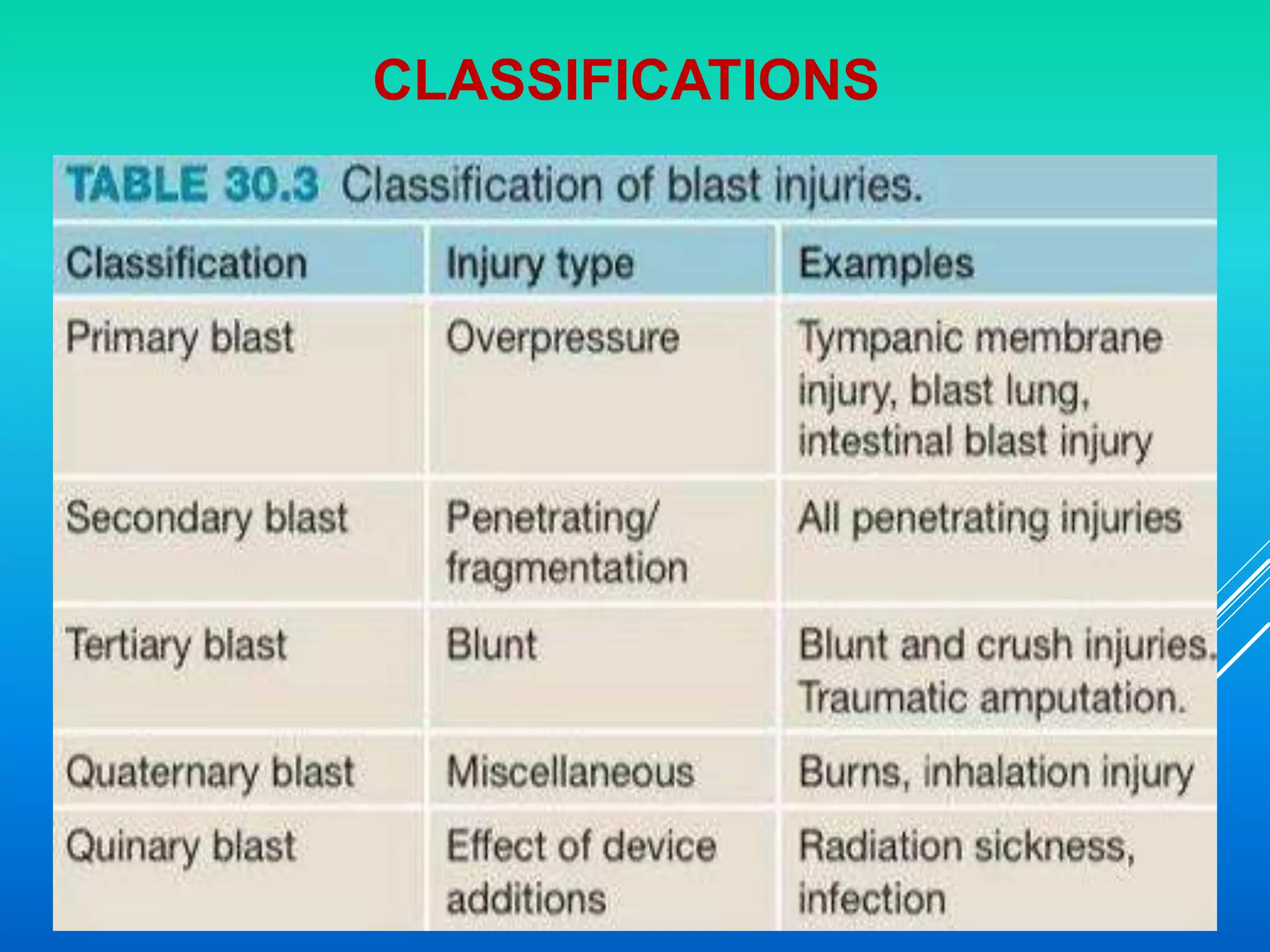
CLASSIFICATIONS
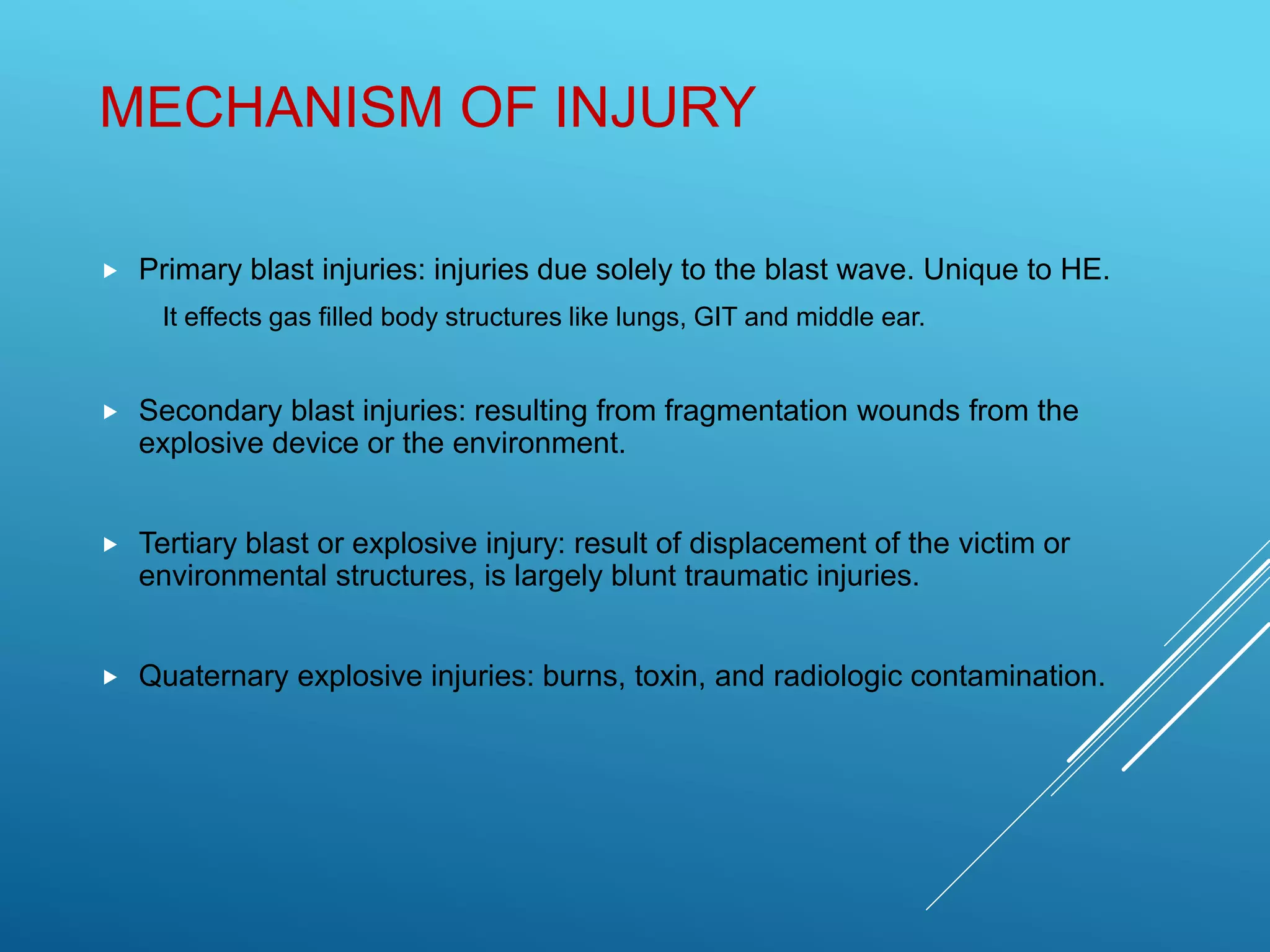
MECHANISM OF INJURY
 Primary blast injuries: injuries due solely to the blast wave. Unique to HE.
It effects gas filled body structures like lungs, GIT and middle ear.
 Secondary blast injuries: resulting from fragmentation wounds from the
explosive device or the environment.
 Tertiary blast or explosive injury: result of displacement of the victim or
environmental structures, is largely blunt traumatic injuries.
 Quaternary explosive injuries: burns, toxin, and radiologic contamination.
Hiroshima nuclear bomb radiation effect
FACTORS AFFECTING
MORBIDITY AND MORTALITY
 Agent: missile size and weight and types.
 Host :gender, age, weight, and fitness.
 Environment: closed or open space structural
collapse reflecting or shielding surfaces building and
non structural debris air and liquid hazards.
EXPECTED INJURIES
FOLLOWING MISSILE ATTACKS
 Victims of terrorist explosions are more severely
injured than victims of other types of trauma.
 The need for abdominal, vascular, and neurosurgical
procedure is higher, the extend of injuries is also more
severe and more complex compared with the victims
of other forms of trauma.
 Effect of the blast and heat waves, and multiple
penetrating injuries are common among victims and
are hallmark of such attacks.
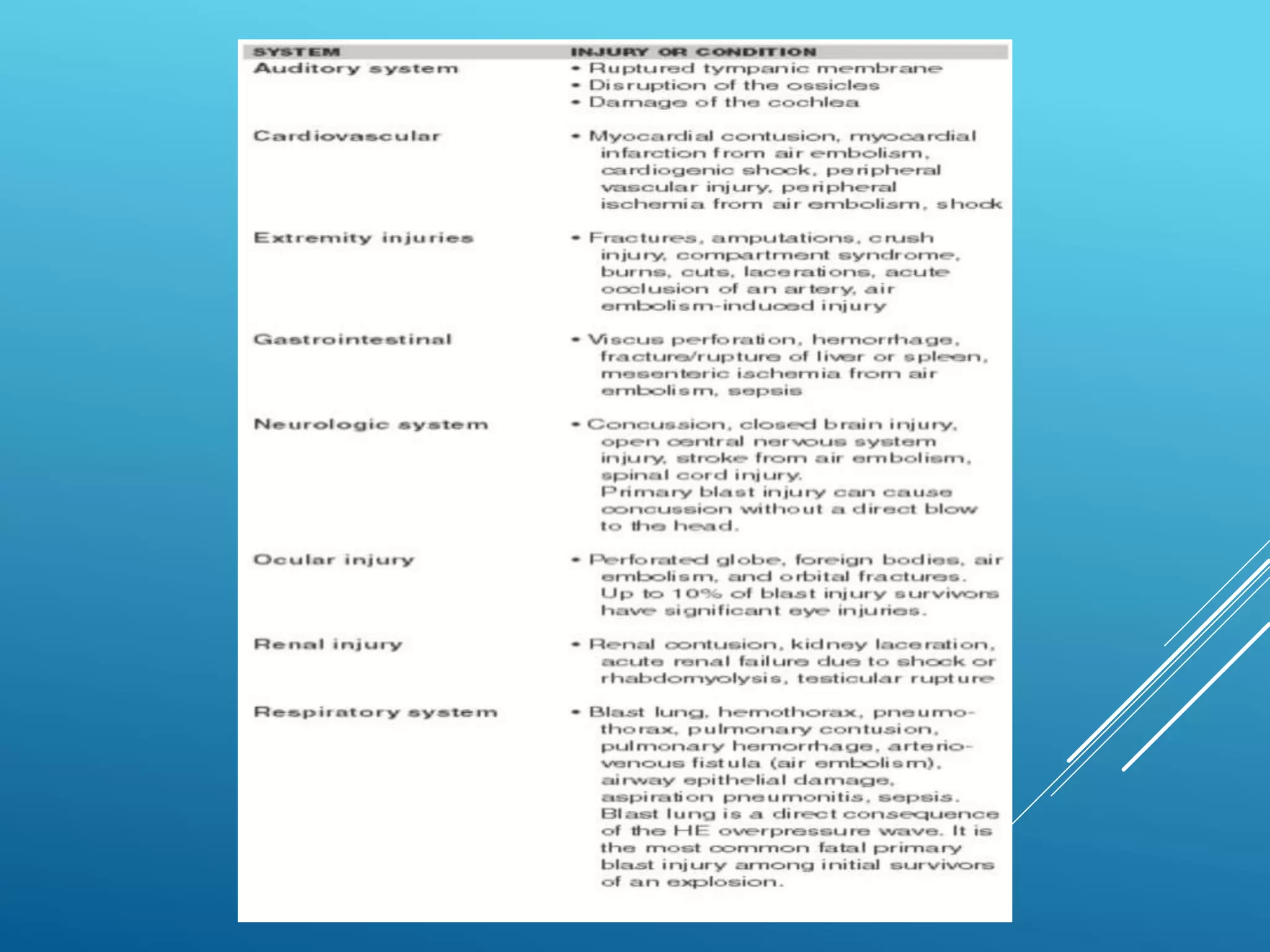
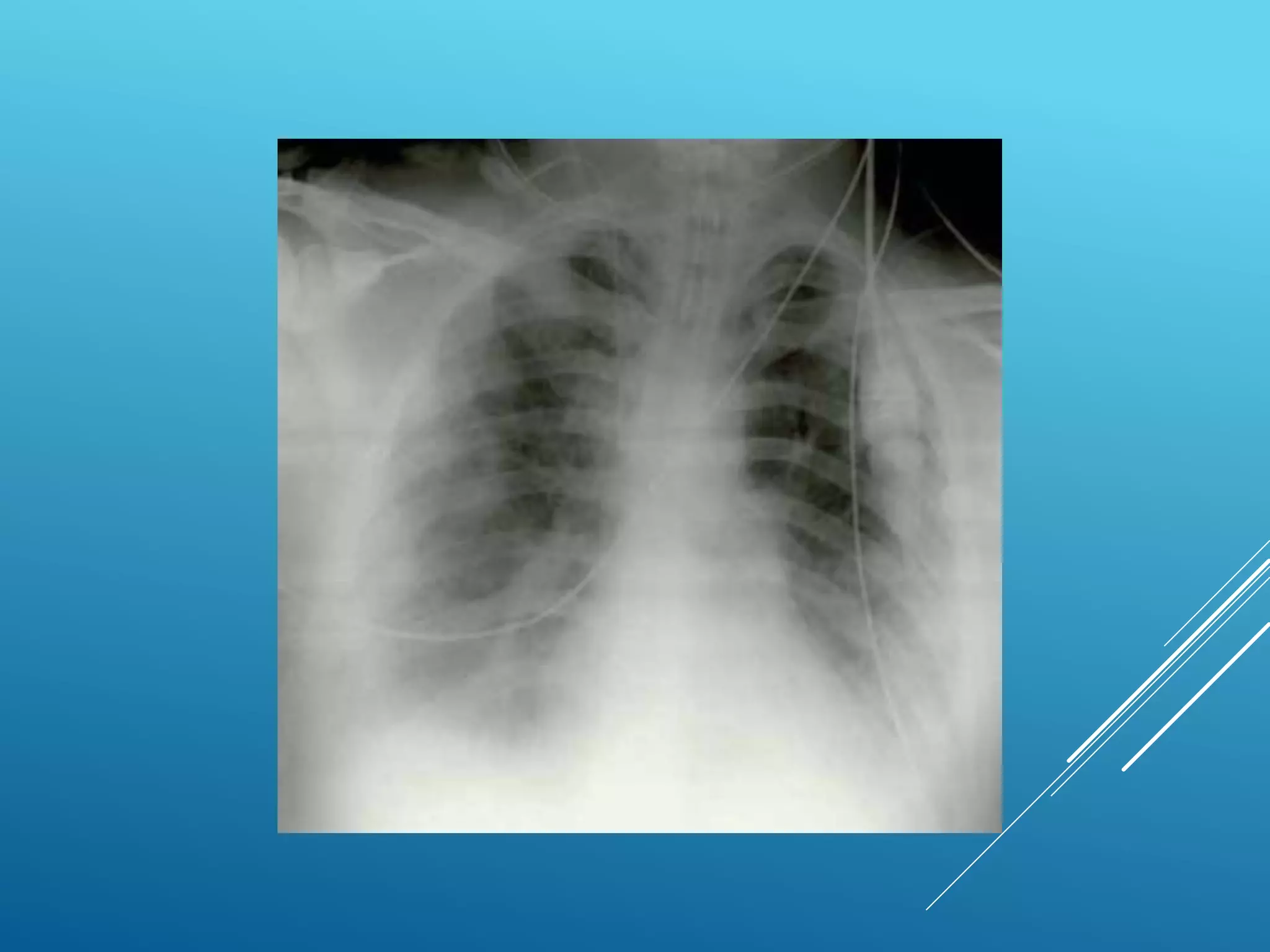
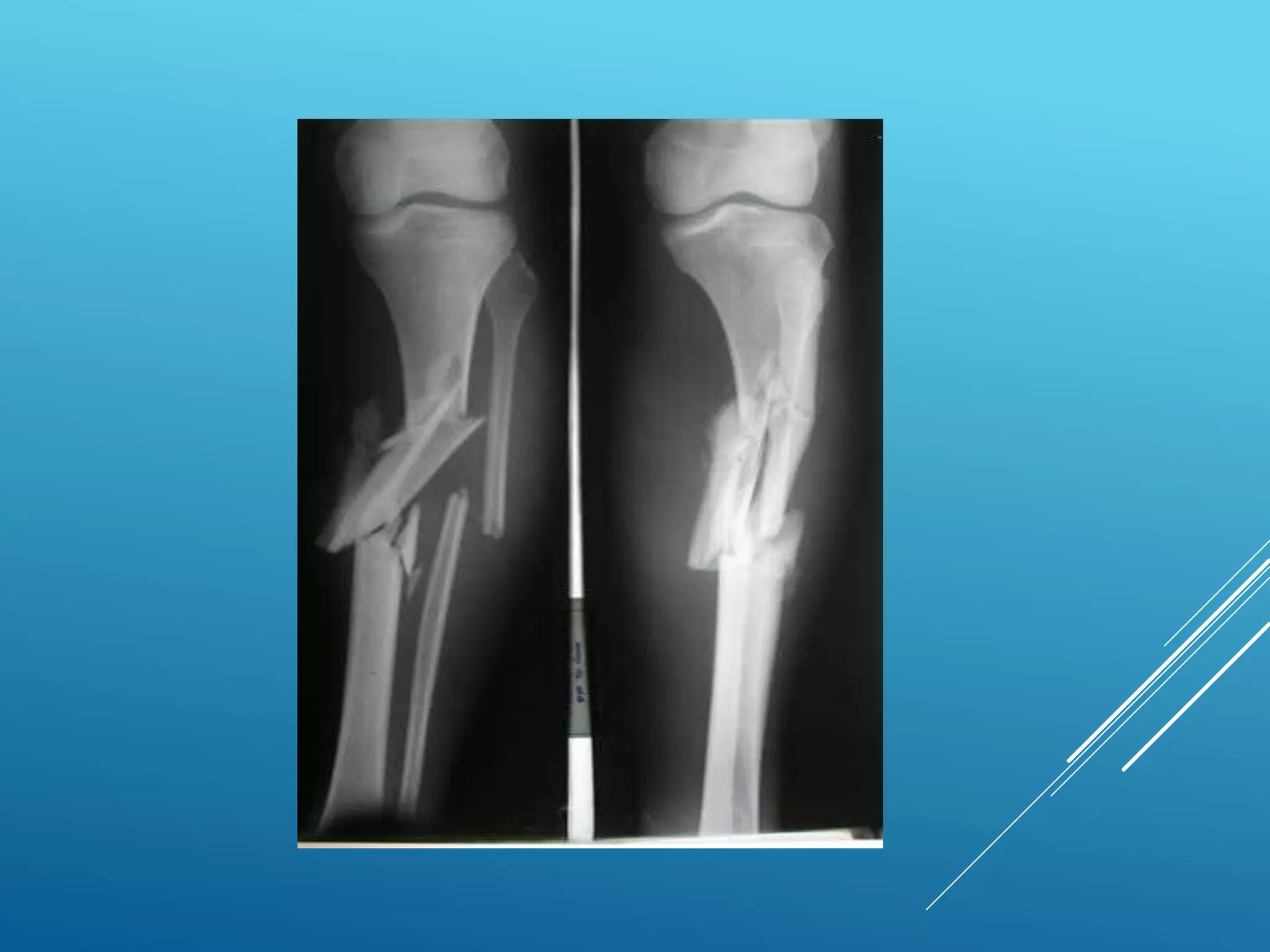
EFFECT ON THE BODY SYSTEMS
TRAUMATIC AMPUTATION
 Traumatic amputation is loss of a body part usually a
finger, toe, arm or leg.
 Are common injuries, particularly following explosions,
and, in addition, many survivors require primary
amputation for unsalvageable injuries or to save their
life.
COMPARTMENT SYNDROME
 Compartment syndrome is most often seen in lower
leg, but can also affect other closed anatomic space
or body cavity.
 Clinical picture:
 Excessive pain out of proportion
 The muscles become tense, solid and hard
 Other signs of ischemia appear including pallor and
paraesthesia.
MANAGEMENT
 History
 Physical Examination
 Investigations
 Treatment
HISTORY
 Focused history about :
 1- explosive device details.
 2-Device location, open or closed space, surrounding
structure( urban or rural setting ).
 3-Victim: distance of the victim from the detonation
center.
 4- Personal protective equipment(PPE).
 5-Status of other casualties.
 6- Flash burns.
Treatment
Initial treatment:
Priority goes to life threatening conditions of
ABCDEs paradigm the only pertinent parameter
in the limbs is peripheral hemorrhage due to a
lesion in major blood vessels.
 control of peripheral hemorrhage is an
emergency and requires immediate
intervention.
 Control the airway and breathing
 Take care for patient with shock
 Immobilization
 Care for amputated part
EXTERNAL BLEEDING
CONTROL
 Place sterile dressing on wound.
 Apply direct pressure with gloved hand
 If needed put another dressing on the top of
first and keep applying pressure
 If needed apply pressure bandage
 Keep the pressure until bleeding stops
 In case of severe bleeding use tourniquet
BLEEDING CONTROL:
IF PATIENT IS IN SHOCK:
 Position the patient on back and raise feet and turn head to one
side if there is no spinal or pelvic injuries
 Maintain normal body temperature
Immobilization
If there is spinal o limbs injuries we should immobilize until
definitive treatment.
CARE OF THE AMPUTATED
BODY PART
 The amputated part does not need to be cleaned.
 Wrap the amputated part with a dry sterile gauze or clean clothes.
 Put the wrapped amputated part in the plastic bag or other
waterproof container.
 Keep the amputated part cool but do not freeze (place the bag or the
container with the wrapped part on a bed of ice)
 Seek medical attention immediately.
TREATMENT PRINCIPLES
 1- Resuscitation ( ABCDE).
 2-Penicillin.
 3-Anti tetanus.
 4-Debridement.
 5-Wash.
 6-Fasciotomize.
 7-Pack.
 8-Stablize.
 9-Follow up.
 10-Definitive treatment according to the injury.
REFRENCES:
 WAR SURGERY, VOLUME 2
 Department of health and human services-USA
 Parker PG(ii) initial medical and surgical
management.carr orthopedics2006
 Baily and loves short practic of surgery 26th edition.
 Medscape
THANK YOU

blast injury

  • 1.
    BLAST & MISSILEINJURIES Prepared by: Supervisor: Dareevan Mahdi Dr. Qaidar hassawi Hindreen Omar Yaseer Saad
  • 2.
    OBJECTIVES:  Definition ofblast injury  Classification  Mechanism of injury  Effect on the body  Management
  • 3.
    WHAT IS BLASTINJURY?  A blast injury is a complex type of physical trauma resulting from direct or indirect exposure to an explosion.  Blast injuries range from internal organ injuries, including lung and traumatic brain injury, to extremity injuries, burns, hearing and vision injury.  Usually occur as an act of terrorism, firework, household explosion, industrial accidents, motor vehicular accidents.  Types of the Blasts: 1-High order explosive. 2-Low order explosive.
  • 4.
     High-order Explosivesproduce a defining supersonic over- pressurization shock wave. (Detonation)  Examples of HE include TNT, C-4, Semtex, nitroglycerin, dynamite, and ammonium nitrate fuel oil (ANFO).  Low-order Explosives create a subsonic explosion and lack HE’s over-pressurization wave. (Deflagration)  Examples of LE include pipe bombs, gunpowder, and most pure petroleum-based bombs such as Molotov cocktails or aircraft improvised as guided missiles.  HE and LE cause different injury patterns.
  • 5.
  • 6.
    MECHANISM OF INJURY Primary blast injuries: injuries due solely to the blast wave. Unique to HE. It effects gas filled body structures like lungs, GIT and middle ear.  Secondary blast injuries: resulting from fragmentation wounds from the explosive device or the environment.  Tertiary blast or explosive injury: result of displacement of the victim or environmental structures, is largely blunt traumatic injuries.  Quaternary explosive injuries: burns, toxin, and radiologic contamination.
  • 8.
    Hiroshima nuclear bombradiation effect
  • 9.
    FACTORS AFFECTING MORBIDITY ANDMORTALITY  Agent: missile size and weight and types.  Host :gender, age, weight, and fitness.  Environment: closed or open space structural collapse reflecting or shielding surfaces building and non structural debris air and liquid hazards.
  • 10.
    EXPECTED INJURIES FOLLOWING MISSILEATTACKS  Victims of terrorist explosions are more severely injured than victims of other types of trauma.  The need for abdominal, vascular, and neurosurgical procedure is higher, the extend of injuries is also more severe and more complex compared with the victims of other forms of trauma.  Effect of the blast and heat waves, and multiple penetrating injuries are common among victims and are hallmark of such attacks.
  • 11.
    EFFECT ON THEBODY SYSTEMS
  • 12.
    TRAUMATIC AMPUTATION  Traumaticamputation is loss of a body part usually a finger, toe, arm or leg.  Are common injuries, particularly following explosions, and, in addition, many survivors require primary amputation for unsalvageable injuries or to save their life.
  • 14.
    COMPARTMENT SYNDROME  Compartmentsyndrome is most often seen in lower leg, but can also affect other closed anatomic space or body cavity.  Clinical picture:  Excessive pain out of proportion  The muscles become tense, solid and hard  Other signs of ischemia appear including pallor and paraesthesia.
  • 15.
    MANAGEMENT  History  PhysicalExamination  Investigations  Treatment
  • 16.
    HISTORY  Focused historyabout :  1- explosive device details.  2-Device location, open or closed space, surrounding structure( urban or rural setting ).  3-Victim: distance of the victim from the detonation center.  4- Personal protective equipment(PPE).  5-Status of other casualties.  6- Flash burns.
  • 21.
  • 22.
    Initial treatment: Priority goesto life threatening conditions of ABCDEs paradigm the only pertinent parameter in the limbs is peripheral hemorrhage due to a lesion in major blood vessels.  control of peripheral hemorrhage is an emergency and requires immediate intervention.  Control the airway and breathing  Take care for patient with shock  Immobilization  Care for amputated part
  • 23.
    EXTERNAL BLEEDING CONTROL  Placesterile dressing on wound.  Apply direct pressure with gloved hand  If needed put another dressing on the top of first and keep applying pressure  If needed apply pressure bandage  Keep the pressure until bleeding stops  In case of severe bleeding use tourniquet
  • 24.
  • 26.
    IF PATIENT ISIN SHOCK:  Position the patient on back and raise feet and turn head to one side if there is no spinal or pelvic injuries  Maintain normal body temperature Immobilization If there is spinal o limbs injuries we should immobilize until definitive treatment.
  • 27.
    CARE OF THEAMPUTATED BODY PART  The amputated part does not need to be cleaned.  Wrap the amputated part with a dry sterile gauze or clean clothes.  Put the wrapped amputated part in the plastic bag or other waterproof container.  Keep the amputated part cool but do not freeze (place the bag or the container with the wrapped part on a bed of ice)  Seek medical attention immediately.
  • 28.
    TREATMENT PRINCIPLES  1-Resuscitation ( ABCDE).  2-Penicillin.  3-Anti tetanus.  4-Debridement.  5-Wash.  6-Fasciotomize.  7-Pack.  8-Stablize.  9-Follow up.  10-Definitive treatment according to the injury.
  • 30.
    REFRENCES:  WAR SURGERY,VOLUME 2  Department of health and human services-USA  Parker PG(ii) initial medical and surgical management.carr orthopedics2006  Baily and loves short practic of surgery 26th edition.  Medscape
  • 31.