MUGHAL
  ART
Introduction
Major Mughal contribution to the Indian
subcontinent was their unique architecture.
Many monuments were built by the Muslim
emperors, especially Shah jahan, during the
Mughal era. One of them is the world famous Taj
Mahal. Others are Fatehpur sikri, Red fort,
Qutb Minar and Agra fort and many more.
Babur

               Humayun

                 Akbar

               Jahangir

              Shah jahan

             Aurangzeb
                   .
                   .
                   .
Bahadur Shah Jafar II (the last emperor)
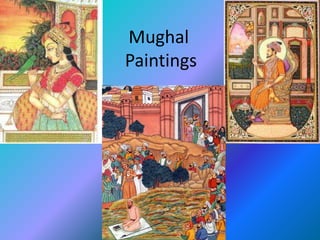
Mughal
Paintings
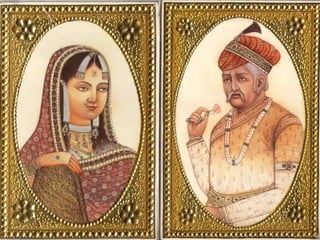
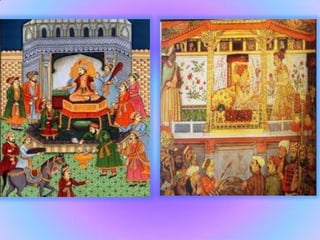
•Under the rule of King Akbar, there was a large scale growth of
Painting experience.

•He encouraged paintings based on Ramayana, Mahabharata and
Persian epics. It also used to depict nature, animal tales and
portraits of Kings and Queens.

•The king who showed the maximum interest in painting was
Emperor Jahangir.

•This period saw more and more refinement in brushwork, along
with the use of much lighter colours.

•During the rule of Aurangzeb, Painting was not allowed and thus
Mughal style of painting started to decline.
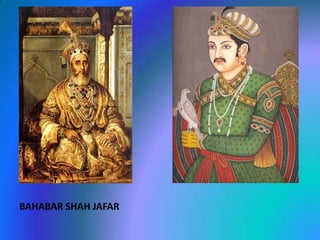
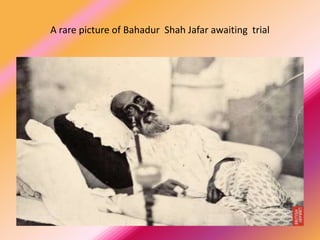
BAHABAR SHAH JAFAR
A rare picture of Bahadur Shah Jafar awaiting trial
Mughal Literature
• Islamic schools were attached to mosques, Khanqah of the
  Sufis and tombs.
• Students received education free of cost. Famous scholars
  received fixed stipends from the royal treasury.
• Nizamiyyah ( model of madrasa) system of education was
  introduced.
• Nizamiyyah institutes were the first well organized higher
  institutes of learning in the Muslim world. The quality of
  education was the highest in the Islamic world.
• Girls from rich families were given private tuitions at home
  and girls from middle class were usually able to attend classes
  in the same schools as the boys.
• The Mughal period saw great developments in
  the field of literature.
• Many Mughal emperors and members of the
  royal family were great men of letters.
• Babar the first Mughal emperor was one of the
  pioneers of Turkish poetry and also the author of
  a very valuable autobiography in Turkish
  BabarNama which was later translated into
  Persian
• Jahangir the great connoisseur of painting wrote
  his autobiography the Tuzuk-i- Jahangiri.
• The last Mughal emperor Bahadur Shah Zafar
  was a notable Urdu poet.
• Hindi literature made significant progress during
  Akbar’s reign.
• Tulsidas and the Surdas wrote in this
  period.Keshavdas a great poet wrote on themes
  of love
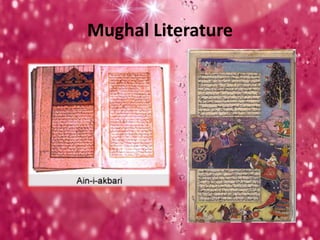
• Abul Fazl wrote the Ain-i-Akbari and Akbar
  Nama during Akbar’s reign.
• Akbar also encouraged the translation of
  Mahabharat, Bhagvad Gita, Panchatantra, etc.
• One of the most significant developments during
  the medieval period was the birth of the Urdu
  language.
• It produced great poets like Wali, Mir Dard, Mir
Mughal Architecture
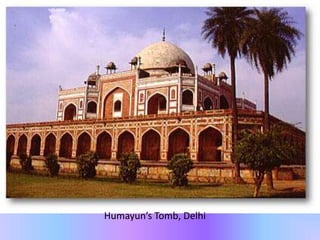
• A style that combines elements from Persian, Indian,
  and Islamic architectural styles is the finest example of Mughal
  architecture in India.
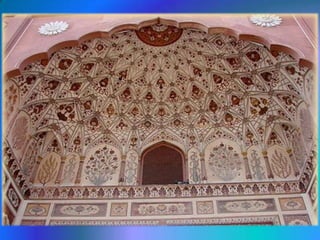
• It is symmetrical and decorative in style.
• The buildings wore a look of grace, beauty, grandeur and
  richness.
• Red stone was substituted by White Mrbles and Precious
  Stones.
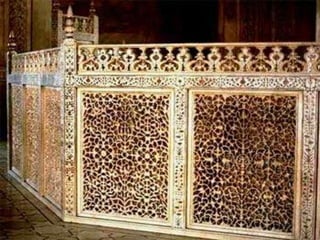
• The Pietra Dura style became a became a popular feature of this
  period.
   It was a technique of sculpturing marble and highlighting them
  with precious stones.
Babur – Most of the monuments he constructed
  collapsed just 3 mosques are remaining in North
  India( Panipat, Sambhal in Rajhasthan and Ayodhya)

Humayun – Didn't have much time to build due to
  problems at home though he build one Palace called
  Dinpanah.

Akbar- He built many buildings such as forts, gardens,
  mosques, etc. He even established the city of
  Fatehpur sikri .Some buildings from there are Birbal
  Mahal, Panch Mahal, Jami Masjid, Jodha bai Mahal,
  etc.
Shah Jahan – Mughal architecture reached its height during the
 reign of Shahjahan. He demolished most of the buildings built
 by Akbar and built them back again using marble.
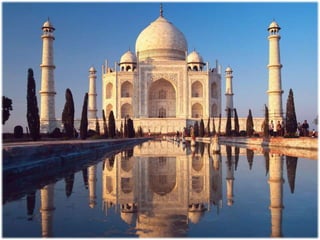
The most popular builiding by him- Taj mahal was built in
 memory of his beloved wife, Mumtaz Mahal who died during a
 child birth. It took 20 years to complete the construction. Other
 famous buildings are Red Fort, Moti masjid, Diwan-i-Khas, etc.

Aurangzeb - Did not show much interest in art or architecture
but he built few mosquesand also tried to replicate Taj mahal
but it could no way match the real one.
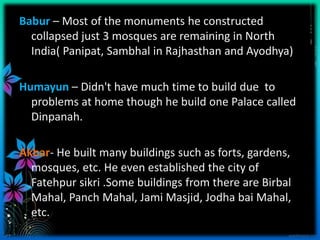
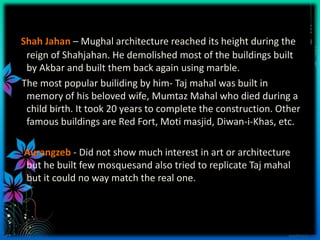
Jodhabai Palace   Birbal Palace


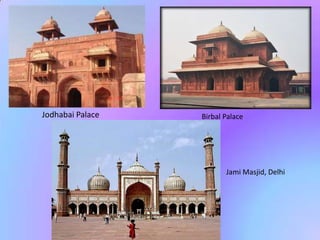
                         Jami Masjid, Delhi
Humayun’s Tomb, Delhi
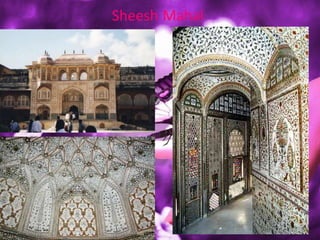
Sheesh Mahal
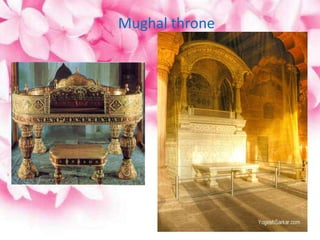
Mughal throne
MUGHAL MUSIC
During the Mughal period, especially under Akbar's reign, temple music
  took a backseat and durbar sangeet came into being.

Music was composed mainly to sing praises of the masters. There were
  numerous musician irrespective of gender or religion.

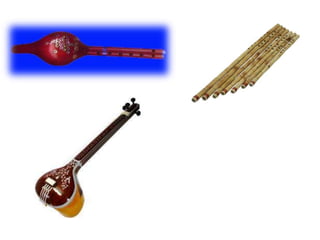
The main instruments were Sarmandal, bin, nay, karna and tanpura.

The musicians came from far and wide and the music was rich and
  varied.

Akbar’s court was witness to a complete fusion of the Persian and Indian
  music systems. But Aurangzeb was a puritan thus did not support any
  type of art or architecture
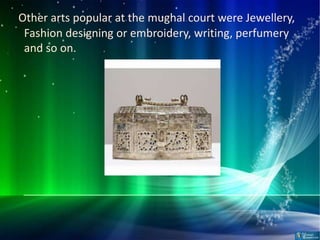
Other arts popular at the mughal court were Jewellery,
 Fashion designing or embroidery, writing, perfumery
 and so on.
THANK YOU

Mughal art and architecture - Thesmi Thomas

  • 1.
  • 2.
    Introduction Major Mughal contributionto the Indian subcontinent was their unique architecture. Many monuments were built by the Muslim emperors, especially Shah jahan, during the Mughal era. One of them is the world famous Taj Mahal. Others are Fatehpur sikri, Red fort, Qutb Minar and Agra fort and many more.
  • 3.
    Babur Humayun Akbar Jahangir Shah jahan Aurangzeb . . . Bahadur Shah Jafar II (the last emperor)
  • 4.
  • 6.
    •Under the ruleof King Akbar, there was a large scale growth of Painting experience. •He encouraged paintings based on Ramayana, Mahabharata and Persian epics. It also used to depict nature, animal tales and portraits of Kings and Queens. •The king who showed the maximum interest in painting was Emperor Jahangir. •This period saw more and more refinement in brushwork, along with the use of much lighter colours. •During the rule of Aurangzeb, Painting was not allowed and thus Mughal style of painting started to decline.
  • 8.
  • 10.
    A rare pictureof Bahadur Shah Jafar awaiting trial
  • 11.
  • 12.
    • Islamic schoolswere attached to mosques, Khanqah of the Sufis and tombs. • Students received education free of cost. Famous scholars received fixed stipends from the royal treasury. • Nizamiyyah ( model of madrasa) system of education was introduced. • Nizamiyyah institutes were the first well organized higher institutes of learning in the Muslim world. The quality of education was the highest in the Islamic world. • Girls from rich families were given private tuitions at home and girls from middle class were usually able to attend classes in the same schools as the boys.
  • 13.
    • The Mughalperiod saw great developments in the field of literature. • Many Mughal emperors and members of the royal family were great men of letters. • Babar the first Mughal emperor was one of the pioneers of Turkish poetry and also the author of a very valuable autobiography in Turkish BabarNama which was later translated into Persian • Jahangir the great connoisseur of painting wrote his autobiography the Tuzuk-i- Jahangiri. • The last Mughal emperor Bahadur Shah Zafar was a notable Urdu poet.
  • 14.
    • Hindi literaturemade significant progress during Akbar’s reign. • Tulsidas and the Surdas wrote in this period.Keshavdas a great poet wrote on themes of love • Abul Fazl wrote the Ain-i-Akbari and Akbar Nama during Akbar’s reign. • Akbar also encouraged the translation of Mahabharat, Bhagvad Gita, Panchatantra, etc. • One of the most significant developments during the medieval period was the birth of the Urdu language. • It produced great poets like Wali, Mir Dard, Mir
  • 16.
    Mughal Architecture • Astyle that combines elements from Persian, Indian, and Islamic architectural styles is the finest example of Mughal architecture in India. • It is symmetrical and decorative in style. • The buildings wore a look of grace, beauty, grandeur and richness. • Red stone was substituted by White Mrbles and Precious Stones. • The Pietra Dura style became a became a popular feature of this period. It was a technique of sculpturing marble and highlighting them with precious stones.
  • 17.
    Babur – Mostof the monuments he constructed collapsed just 3 mosques are remaining in North India( Panipat, Sambhal in Rajhasthan and Ayodhya) Humayun – Didn't have much time to build due to problems at home though he build one Palace called Dinpanah. Akbar- He built many buildings such as forts, gardens, mosques, etc. He even established the city of Fatehpur sikri .Some buildings from there are Birbal Mahal, Panch Mahal, Jami Masjid, Jodha bai Mahal, etc.
  • 18.
    Shah Jahan –Mughal architecture reached its height during the reign of Shahjahan. He demolished most of the buildings built by Akbar and built them back again using marble. The most popular builiding by him- Taj mahal was built in memory of his beloved wife, Mumtaz Mahal who died during a child birth. It took 20 years to complete the construction. Other famous buildings are Red Fort, Moti masjid, Diwan-i-Khas, etc. Aurangzeb - Did not show much interest in art or architecture but he built few mosquesand also tried to replicate Taj mahal but it could no way match the real one.
  • 19.
    Jodhabai Palace Birbal Palace Jami Masjid, Delhi
  • 21.
  • 24.
  • 25.
  • 26.
    MUGHAL MUSIC During theMughal period, especially under Akbar's reign, temple music took a backseat and durbar sangeet came into being. Music was composed mainly to sing praises of the masters. There were numerous musician irrespective of gender or religion. The main instruments were Sarmandal, bin, nay, karna and tanpura. The musicians came from far and wide and the music was rich and varied. Akbar’s court was witness to a complete fusion of the Persian and Indian music systems. But Aurangzeb was a puritan thus did not support any type of art or architecture
  • 28.
    Other arts popularat the mughal court were Jewellery, Fashion designing or embroidery, writing, perfumery and so on.
  • 29.