MSA
1
• AEW
2
• MEASUREMENTSYSTEMANALYSIS
3
• PROJECT GUIDEs
• Mr. ALOK SHARMA
• 1. Determine which measurement system
will be studied ACCORDING TO MSA PLAN AND THE STUDY OF GAGE R &
r.
• 2. Establish test procedure IN DIFFERENT DEPARTMENTS FOR GAGE R
& r.
• 3. Establish the number of sample parts, the number of repeated readings,
and the number of operators that will be used.
• 4. Choose operators and sample parts.
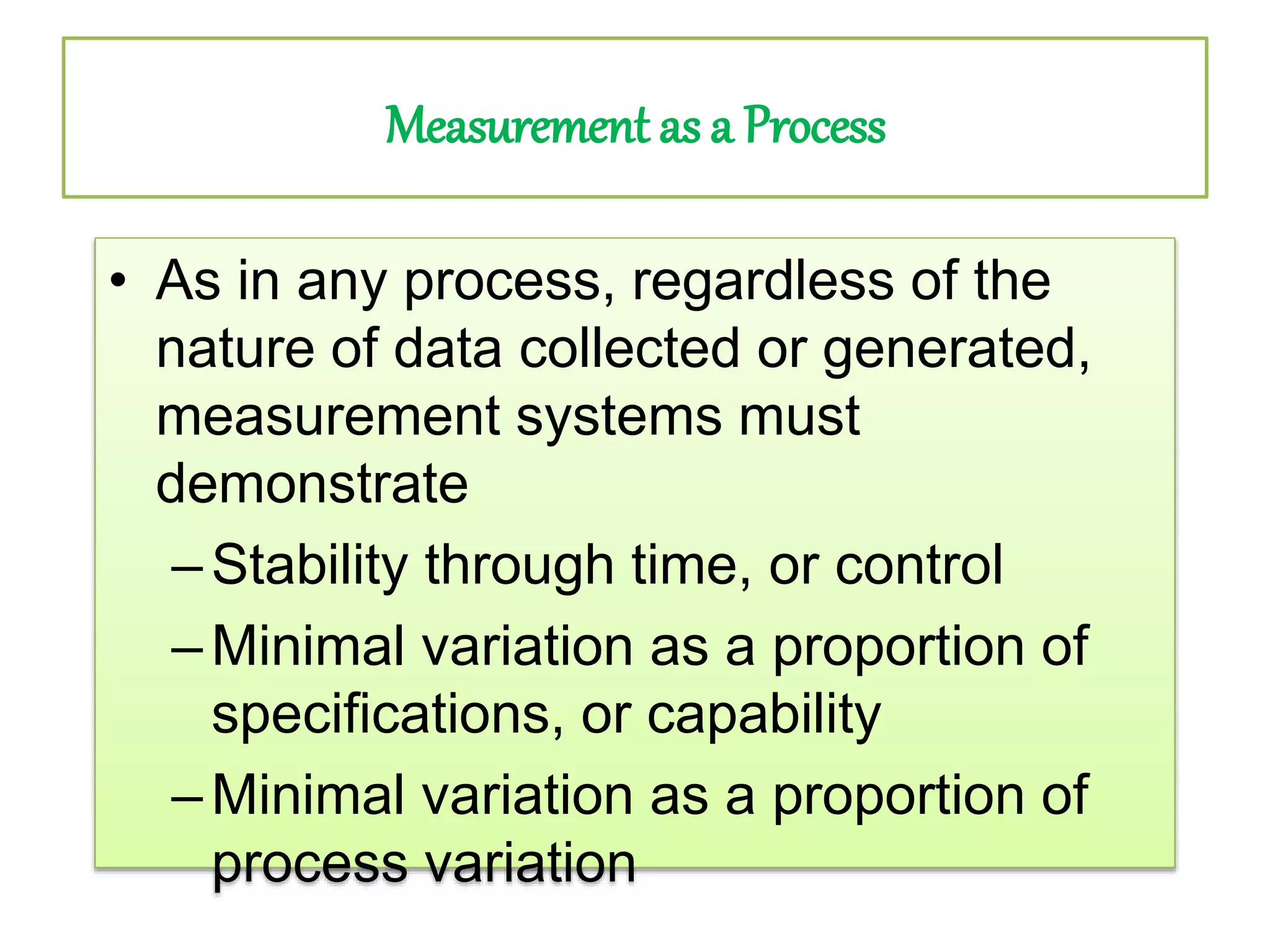
Measurement as a Process
• As in any process, regardless of the
nature of data collected or generated,
measurement systems must
demonstrate
–Stability through time, or control
–Minimal variation as a proportion of
specifications, or capability
–Minimal variation as a proportion of
process variation
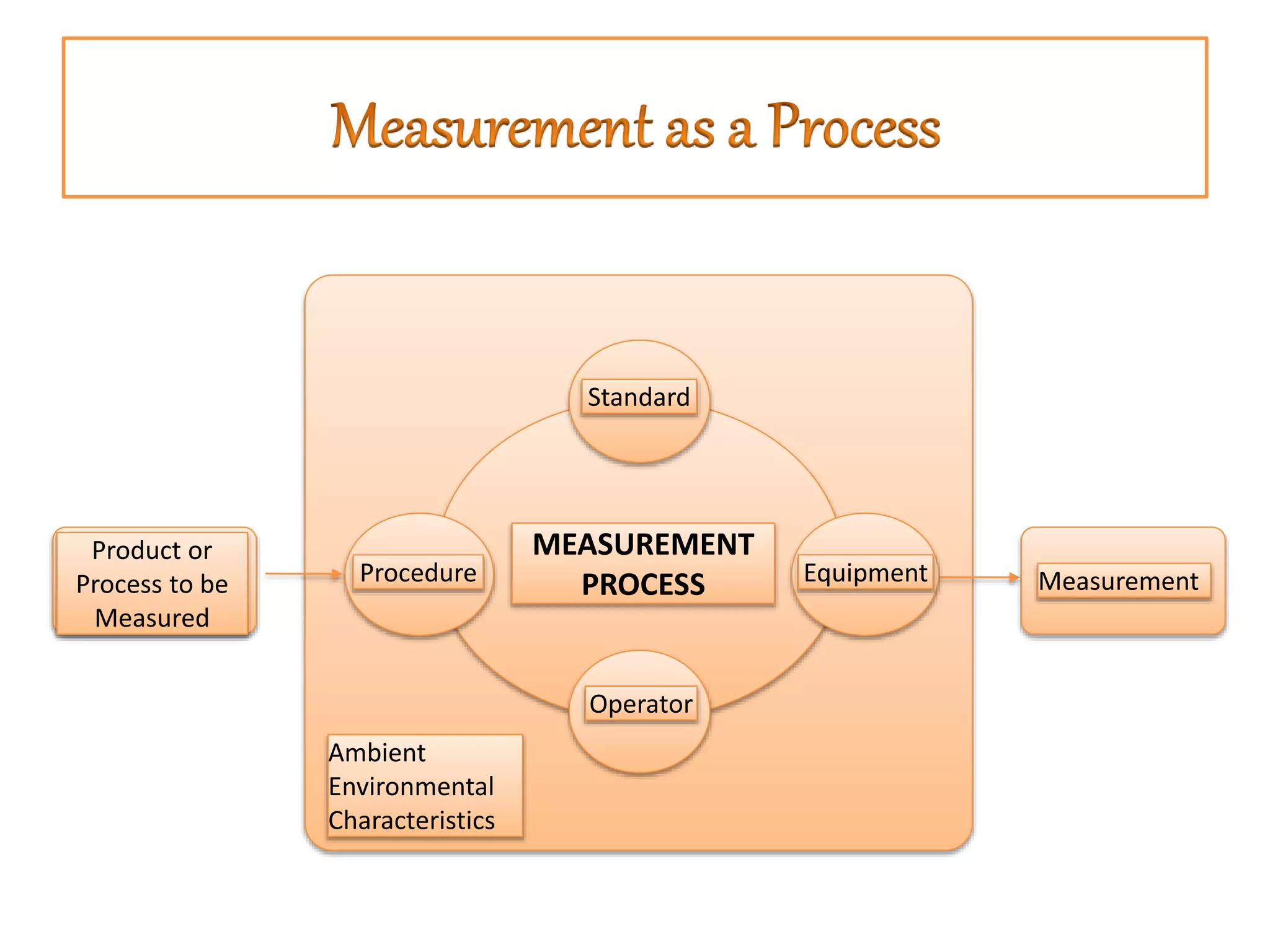
MEASUREMENT
PROCESS Equipment
Standard
Procedure
Operator
Measurement
Ambient
Environmental
Characteristics
Product or
Process to be
Measured
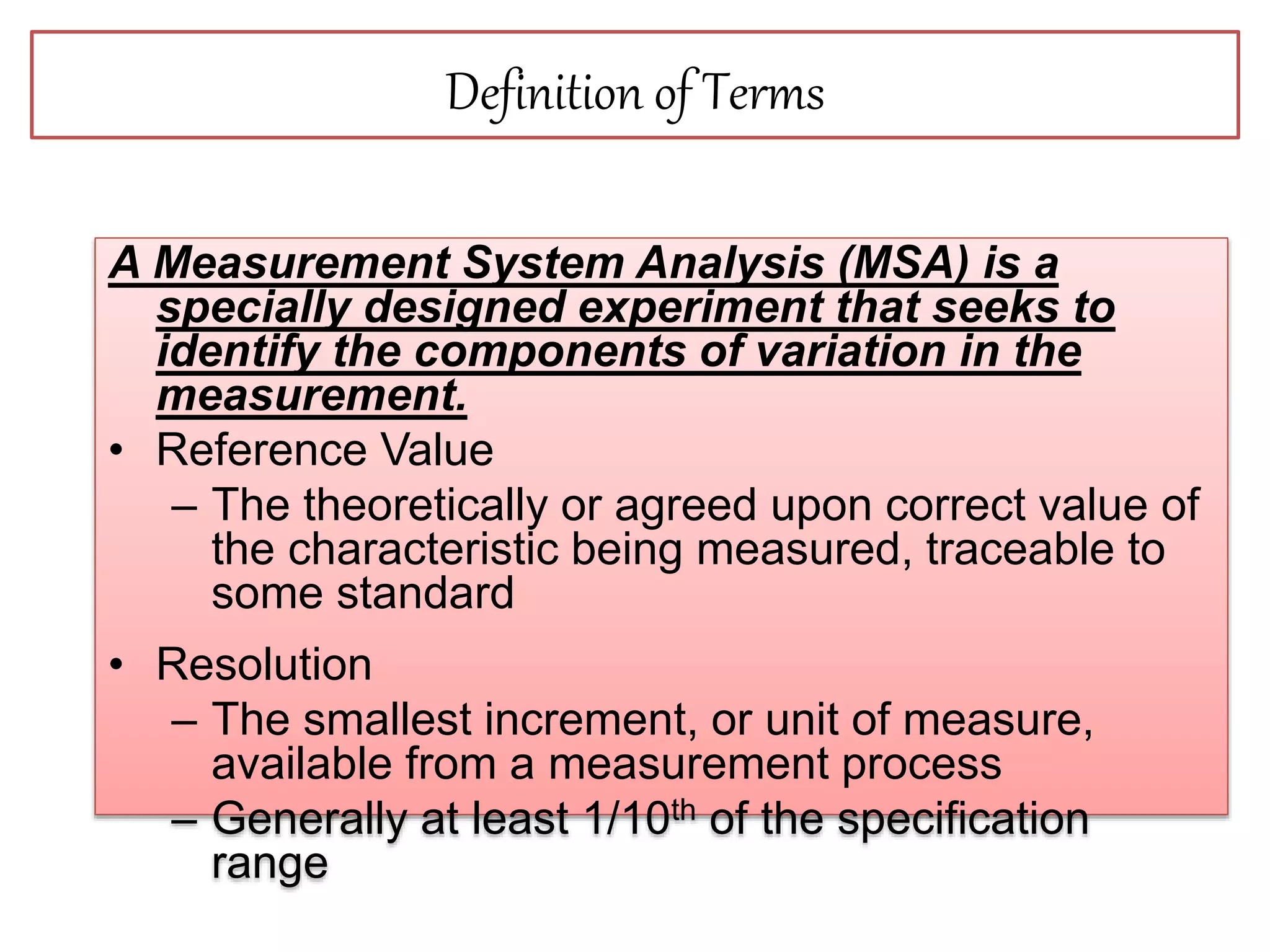
Definition of Terms
A Measurement System Analysis (MSA) is a
specially designed experiment that seeks to
identify the components of variation in the
measurement.
• Reference Value
– The theoretically or agreed upon correct value of
the characteristic being measured, traceable to
some standard
• Resolution
– The smallest increment, or unit of measure,
available from a measurement process
– Generally at least 1/10th of the specification
range
• Precision
– The degree of agreement (or variability)
between individual measurements or test
results from measuring the same
specimen(s)
• Accuracy (Bias)
– The difference between the average of the
measurement error distribution and the
reference value of the specimen measured
Accuracy
Precision
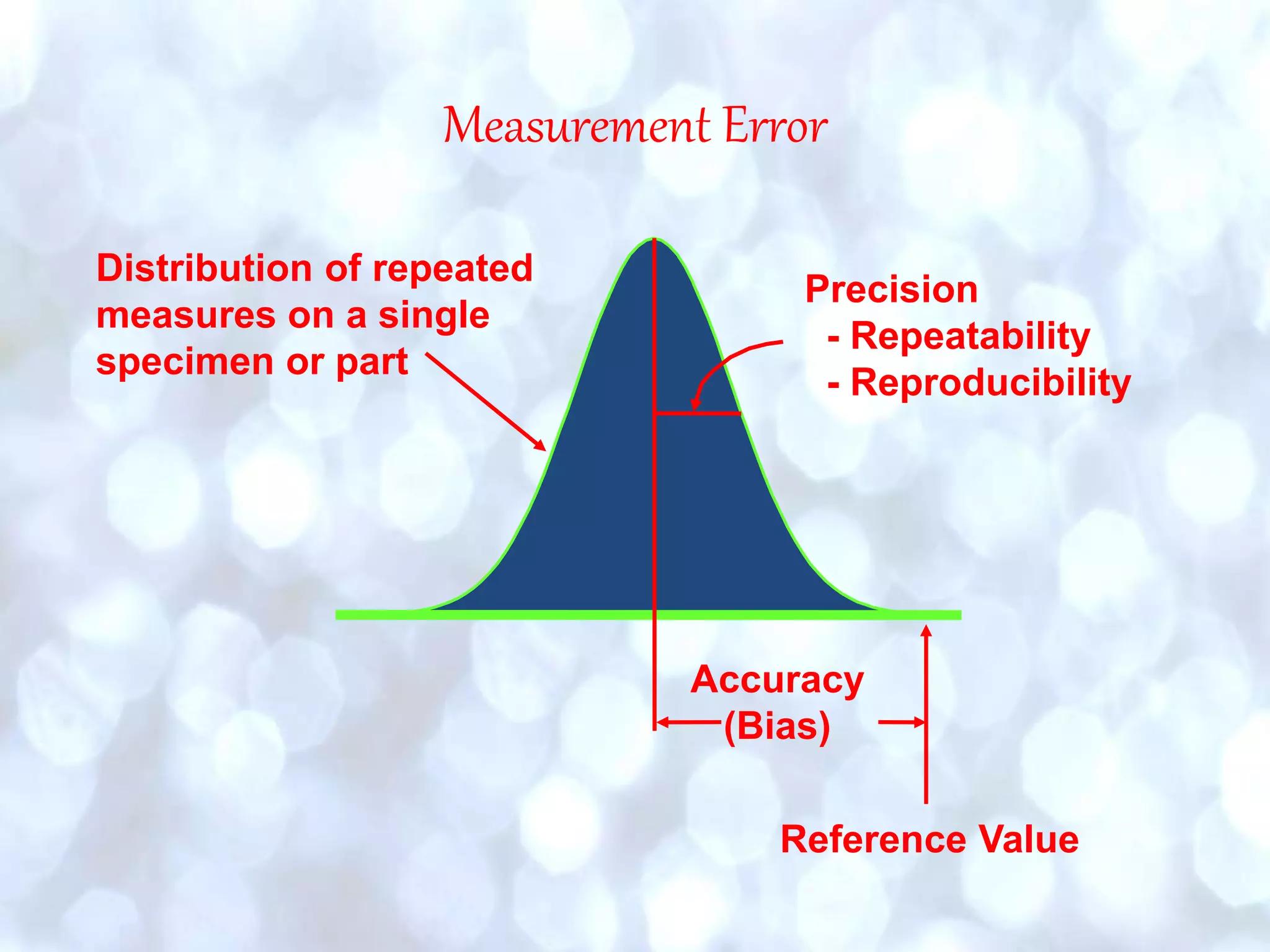
Measurement Error
Reference Value
Accuracy
(Bias)
Distribution of repeated
measures on a single
specimen or part
Precision
- Repeatability
- Reproducibility
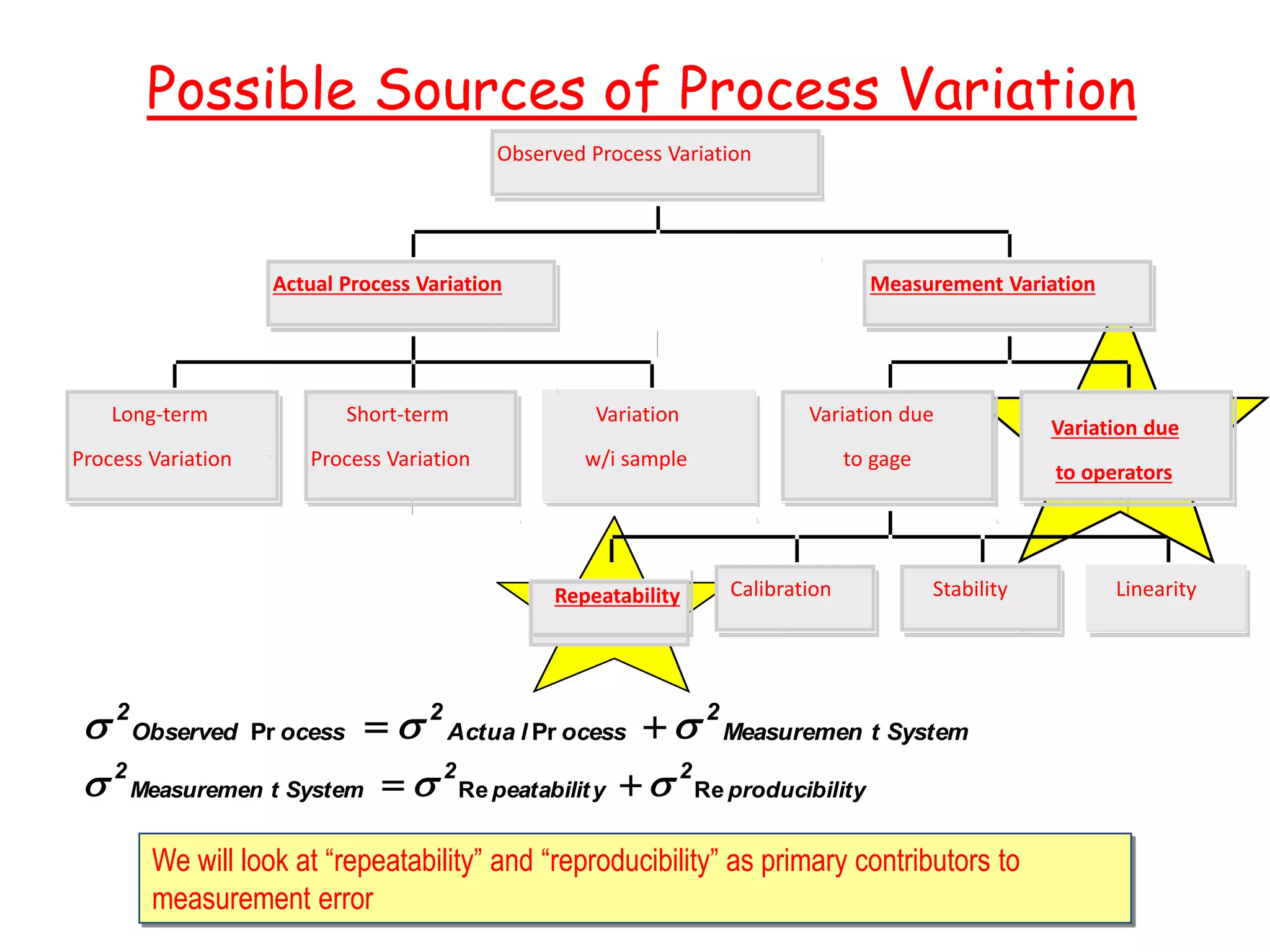
Possible Sources of Process Variation
Stability Linearity
Long-term
Process Variation
Short-term
Process Variation
Variation
w/i sample
Actual Process Variation
Repeatability Calibration
Variation due
to gage
Variation due
to operators
Measurement Variation
Observed Process Variation
SystemtMeasuremen
2
ocesslActua
2
ocessObserved
2
  PrPr
ityproducibil
2
ypeatabilit
2
SystemtMeasuremen
2
ReRe  
We will look at “repeatability” and “reproducibility” as primary contributors to
measurement error
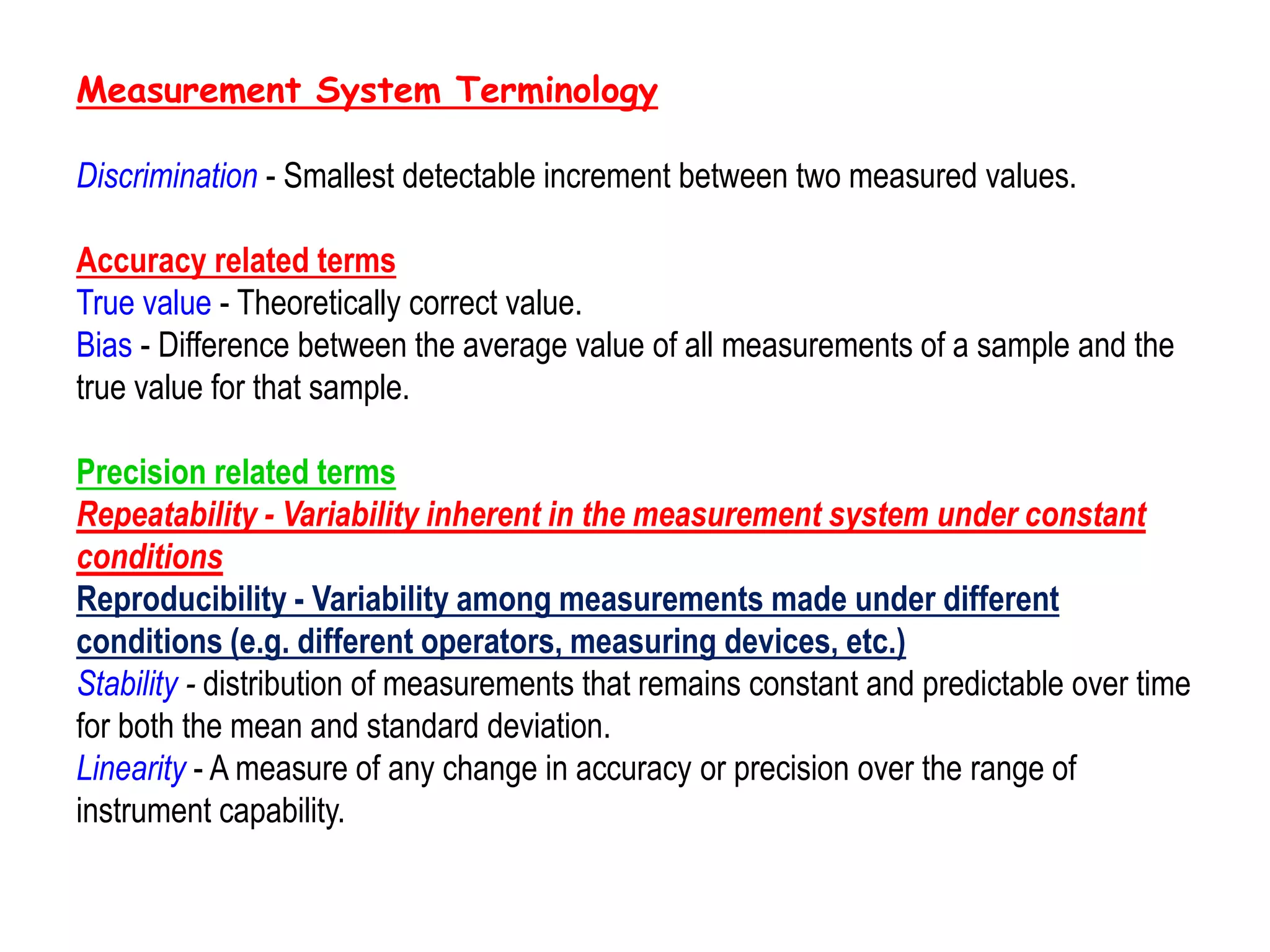
Measurement System Terminology
Discrimination - Smallest detectable increment between two measured values.
Accuracy related terms
True value - Theoretically correct value.
Bias - Difference between the average value of all measurements of a sample and the
true value for that sample.
Precision related terms
Repeatability - Variability inherent in the measurement system under constant
conditions
Reproducibility - Variability among measurements made under different
conditions (e.g. different operators, measuring devices, etc.)
Stability - distribution of measurements that remains constant and predictable over time
for both the mean and standard deviation.
Linearity - A measure of any change in accuracy or precision over the range of
instrument capability.
MSA for Continuous Processes
11 .PPT
True
Value or
Standard
Bias
Observed
Average
Possible Causes of Bias
 Sensor not properly calibrated
 Improper use of sensor
 Unclear procedures
 Human limitations
Bias
MSA for Continuous Processes
12 .PPT
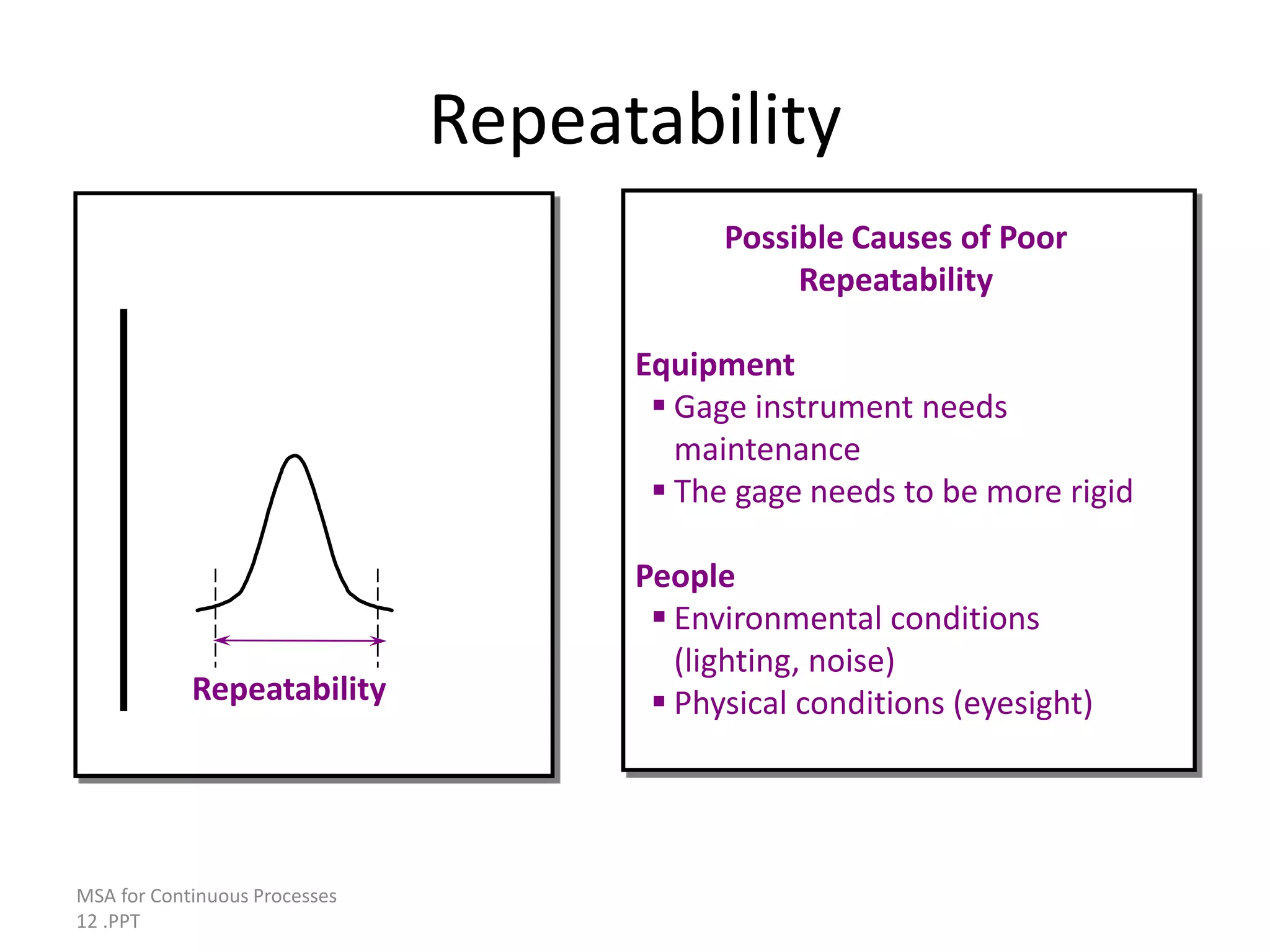
Repeatability
Possible Causes of Poor
Repeatability
Equipment
 Gage instrument needs
maintenance
 The gage needs to be more rigid
People
 Environmental conditions
(lighting, noise)
 Physical conditions (eyesight)
Repeatability
MSA for Continuous Processes
13 .PPT
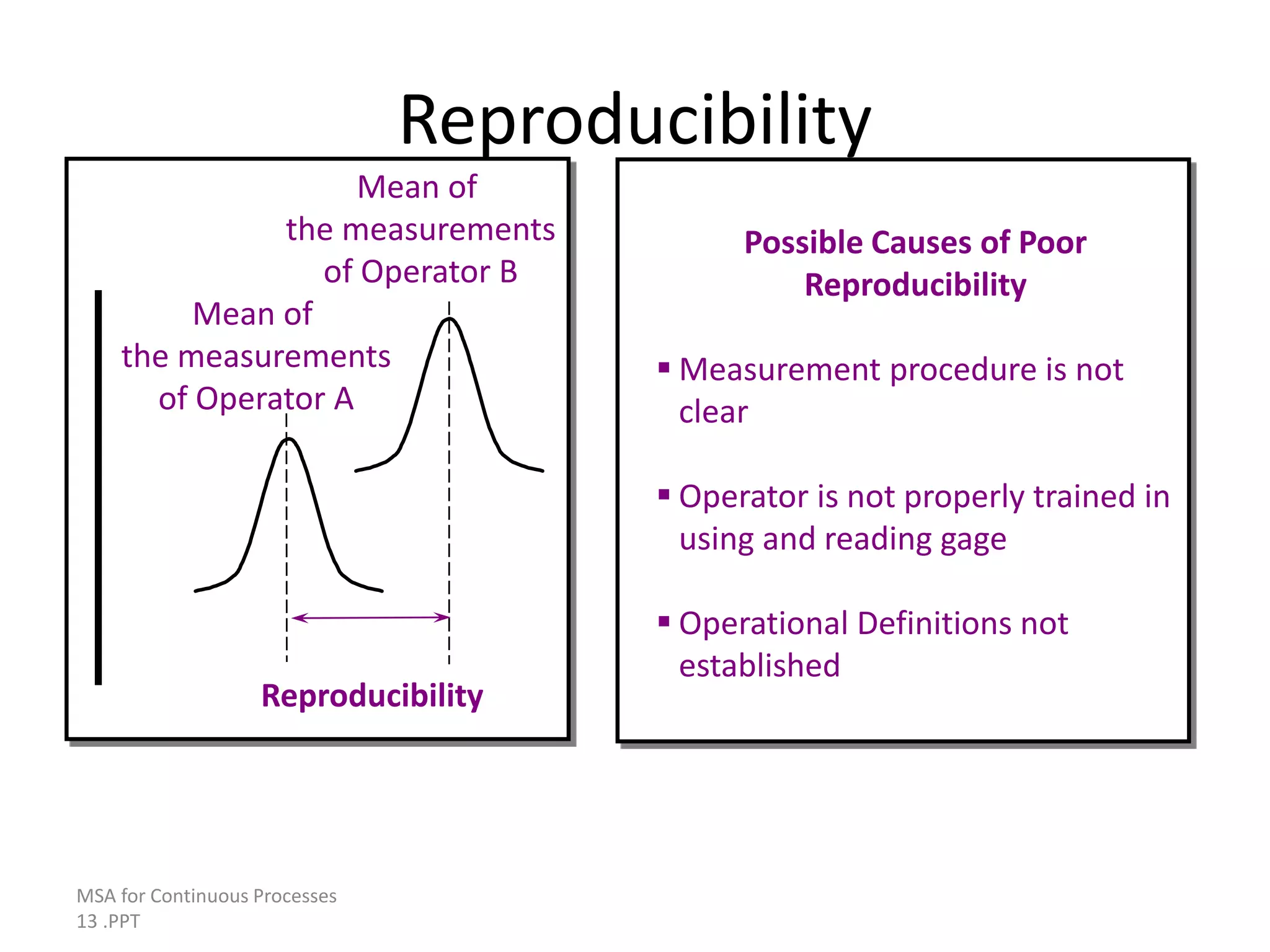
Reproducibility
Mean of
the measurements
of Operator B
Mean of
the measurements
of Operator A
Possible Causes of Poor
Reproducibility
 Measurement procedure is not
clear
 Operator is not properly trained in
using and reading gage
 Operational Definitions not
established
Reproducibility
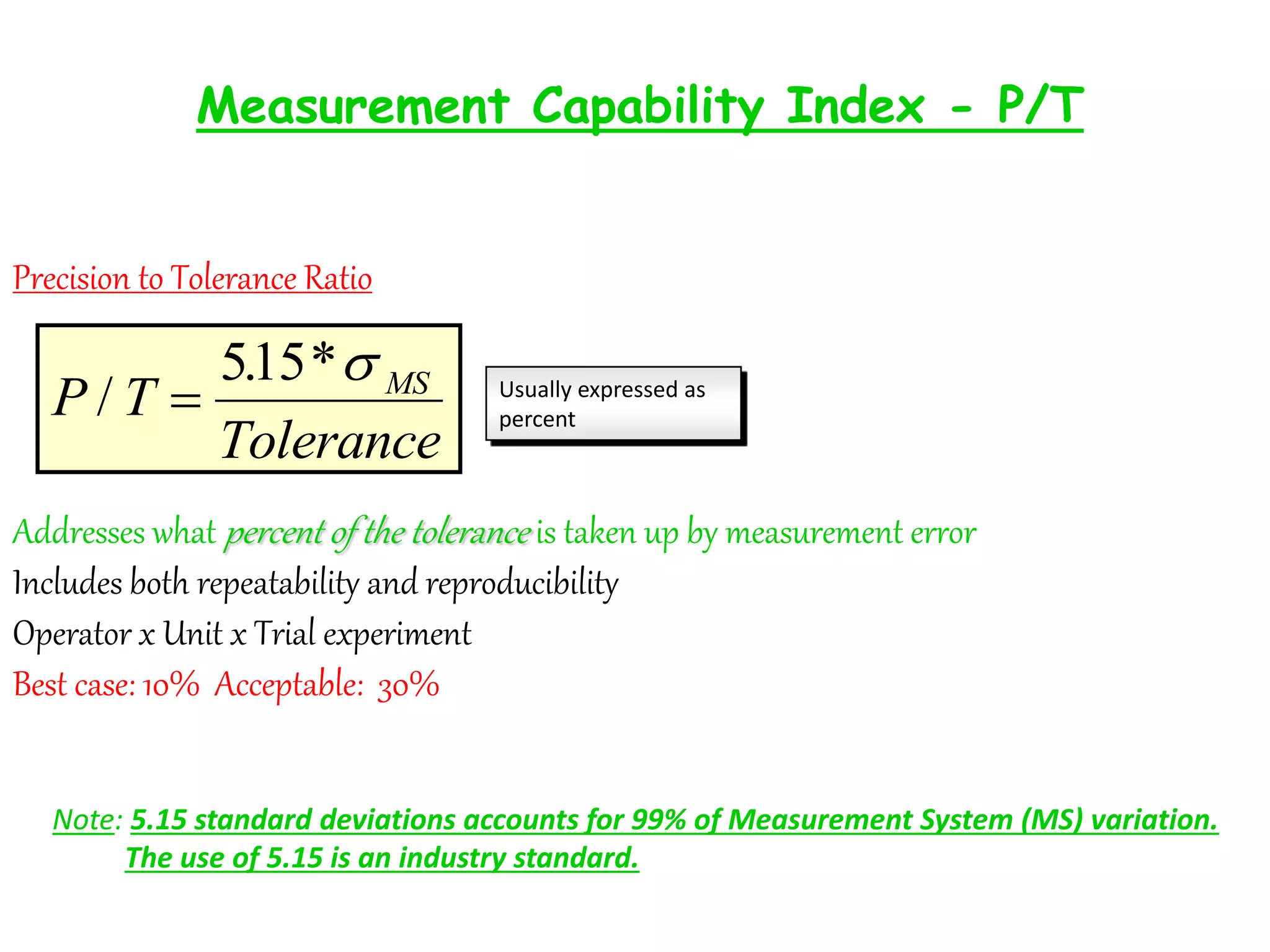
Precision to Tolerance Ratio
Addresses what percent of the tolerance is taken up by measurement error
Includes both repeatability and reproducibility
Operator x Unit x Trial experiment
Best case: 10% Acceptable: 30%
P T
Tolerance
MS
/
. *

515 
Measurement Capability Index - P/T
Usually expressed as
percent
Note: 5.15 standard deviations accounts for 99% of Measurement System (MS) variation.
The use of 5.15 is an industry standard.
AddresseswhatpercentoftheObservedProcessVariationistakenupby
measurementerror
%R&Risthebestestimateoftheeffectofmeasurementsystemsonthevalidityof
processimprovementstudies(DOE)
Includesbothrepeatabilityandreproducibility
Asatarget,lookfor%R&R<30%
100&%
Pr
xRR
VariationocessObserved
MS


 Usually expressed as
percent
Measurement Capability Index - % GR&R
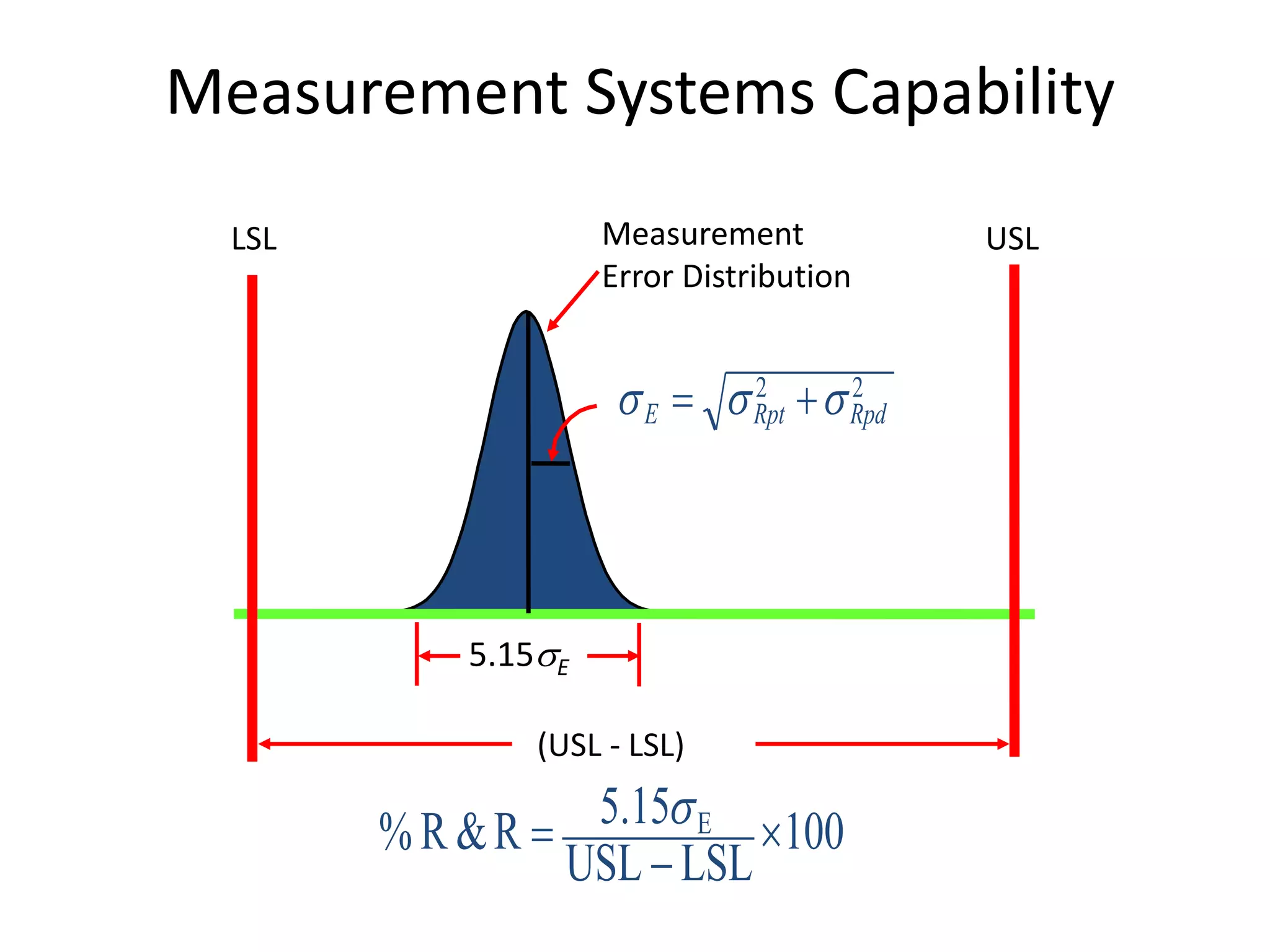
Measurement Systems Capability
22
RpdRptE  
LSL USL
5.15E
(USL - LSL)
Measurement
Error Distribution
100
LSLUSL
5.15R&R% E 

 
THANK YOU

Msa training

  • 1.
    MSA 1 • AEW 2 • MEASUREMENTSYSTEMANALYSIS 3 •PROJECT GUIDEs • Mr. ALOK SHARMA
  • 2.
    • 1. Determinewhich measurement system will be studied ACCORDING TO MSA PLAN AND THE STUDY OF GAGE R & r. • 2. Establish test procedure IN DIFFERENT DEPARTMENTS FOR GAGE R & r. • 3. Establish the number of sample parts, the number of repeated readings, and the number of operators that will be used. • 4. Choose operators and sample parts.
  • 3.
    Measurement as aProcess • As in any process, regardless of the nature of data collected or generated, measurement systems must demonstrate –Stability through time, or control –Minimal variation as a proportion of specifications, or capability –Minimal variation as a proportion of process variation
  • 4.
  • 5.
    Definition of Terms AMeasurement System Analysis (MSA) is a specially designed experiment that seeks to identify the components of variation in the measurement. • Reference Value – The theoretically or agreed upon correct value of the characteristic being measured, traceable to some standard • Resolution – The smallest increment, or unit of measure, available from a measurement process – Generally at least 1/10th of the specification range
  • 6.
    • Precision – Thedegree of agreement (or variability) between individual measurements or test results from measuring the same specimen(s) • Accuracy (Bias) – The difference between the average of the measurement error distribution and the reference value of the specimen measured
  • 7.
  • 8.
    Measurement Error Reference Value Accuracy (Bias) Distributionof repeated measures on a single specimen or part Precision - Repeatability - Reproducibility
  • 9.
    Possible Sources ofProcess Variation Stability Linearity Long-term Process Variation Short-term Process Variation Variation w/i sample Actual Process Variation Repeatability Calibration Variation due to gage Variation due to operators Measurement Variation Observed Process Variation SystemtMeasuremen 2 ocesslActua 2 ocessObserved 2   PrPr ityproducibil 2 ypeatabilit 2 SystemtMeasuremen 2 ReRe   We will look at “repeatability” and “reproducibility” as primary contributors to measurement error
  • 10.
    Measurement System Terminology Discrimination- Smallest detectable increment between two measured values. Accuracy related terms True value - Theoretically correct value. Bias - Difference between the average value of all measurements of a sample and the true value for that sample. Precision related terms Repeatability - Variability inherent in the measurement system under constant conditions Reproducibility - Variability among measurements made under different conditions (e.g. different operators, measuring devices, etc.) Stability - distribution of measurements that remains constant and predictable over time for both the mean and standard deviation. Linearity - A measure of any change in accuracy or precision over the range of instrument capability.
  • 11.
    MSA for ContinuousProcesses 11 .PPT True Value or Standard Bias Observed Average Possible Causes of Bias  Sensor not properly calibrated  Improper use of sensor  Unclear procedures  Human limitations Bias
  • 12.
    MSA for ContinuousProcesses 12 .PPT Repeatability Possible Causes of Poor Repeatability Equipment  Gage instrument needs maintenance  The gage needs to be more rigid People  Environmental conditions (lighting, noise)  Physical conditions (eyesight) Repeatability
  • 13.
    MSA for ContinuousProcesses 13 .PPT Reproducibility Mean of the measurements of Operator B Mean of the measurements of Operator A Possible Causes of Poor Reproducibility  Measurement procedure is not clear  Operator is not properly trained in using and reading gage  Operational Definitions not established Reproducibility
  • 14.
    Precision to ToleranceRatio Addresses what percent of the tolerance is taken up by measurement error Includes both repeatability and reproducibility Operator x Unit x Trial experiment Best case: 10% Acceptable: 30% P T Tolerance MS / . *  515  Measurement Capability Index - P/T Usually expressed as percent Note: 5.15 standard deviations accounts for 99% of Measurement System (MS) variation. The use of 5.15 is an industry standard.
  • 15.
  • 17.
    Measurement Systems Capability 22 RpdRptE  LSL USL 5.15E (USL - LSL) Measurement Error Distribution 100 LSLUSL 5.15R&R% E    
  • 18.

Editor's Notes

  • #4 3
  • #5 4
  • #6 5
  • #7 6
  • #8 7
  • #9 8
  • #12 Bias is the difference between the observed average of measurements and the true average. Validating accuracy is the process of quantifying the amount of bias in the measurement process. Experience has shown that bias and linearity are typically not major sources of measurement error for continuous data, but they can be. In service and transaction applications, evaluating bias most often involves testing the judgment of people carrying out the measurements. Example A team wants to establish the accuracy of its process to measure defects in invoices. First, they gather a “standard” group of invoices and have an “expert” panel establish the type and number of defects in the group. Next, they have the standard group of invoices measured by the “normal” measurement process. Differences between averages the measurement process came up with, and what the known defect level was from the expert panel represented the bias of the measurement process.
  • #13 Repeatability is the variation in measurements obtained when one operator uses the same measurement process for measuring the identical characteristics of the same parts or items. Repeatability is determined by taking one person, or one measurement device, and measuring the same units or items repeatedly. Differences between the repeated measurements represent the ability of the person or measurement device to be consistent. Possible causes of the lack of repeatability are listed on the slide.
  • #14 Reproducibility is very similar to repeatability. The only difference is that instead of looking at the consistency of one person, you are looking at the consistency between people. Reproducibility is the variation in the average of measurements made by different operators using the same measurement process when measuring identical characteristics of the same parts or items. Possible causes of poor reproducibility include: measurement process is not clear, operator not properly trained in using the measurement system, and operational definitions are not clear nor well established.
  • #18 17