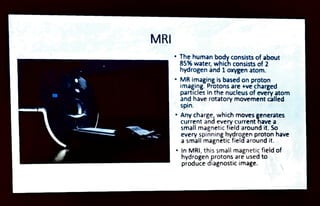
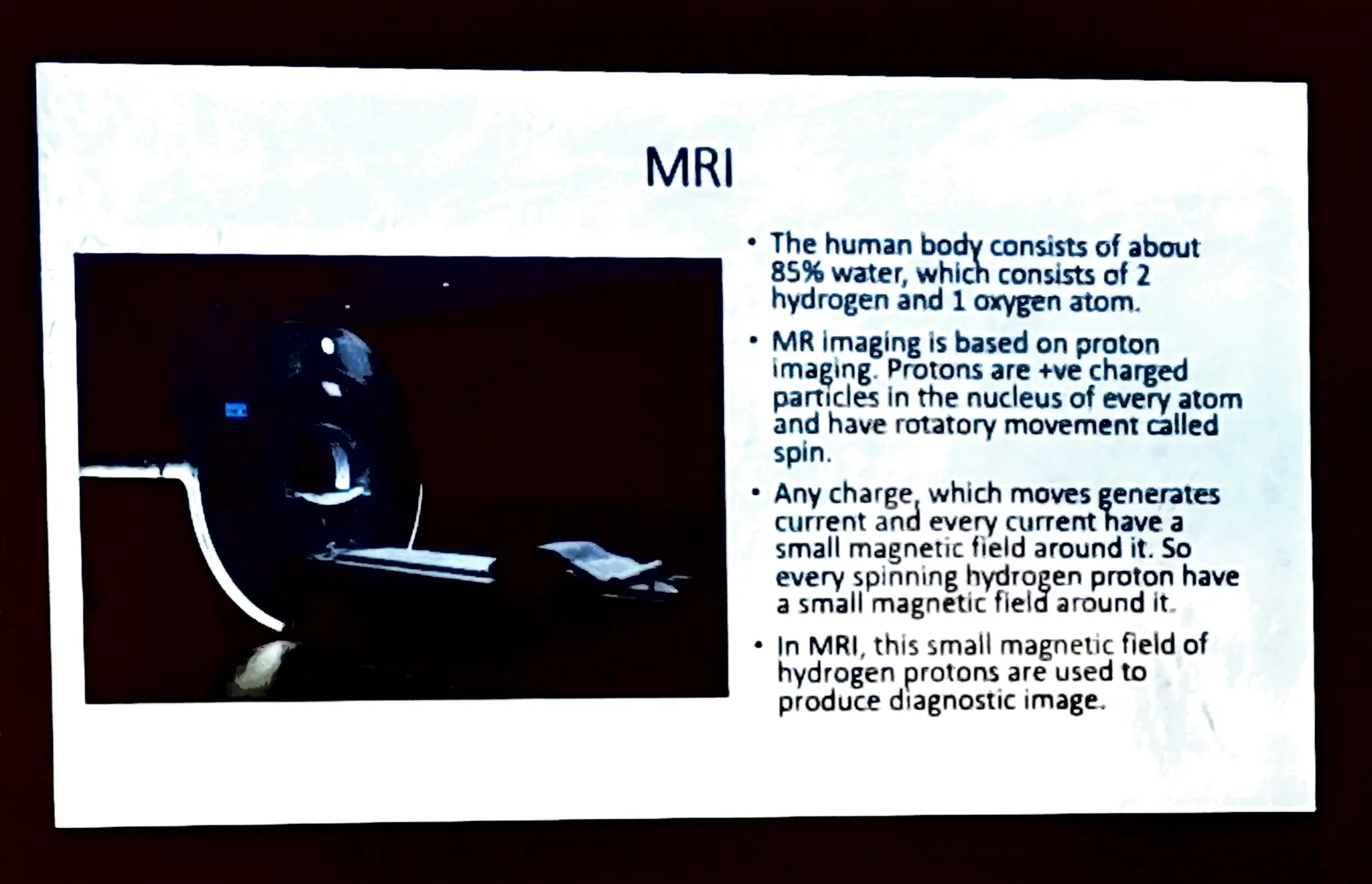
MRI
The human body consists of about
85% water, which consists of 2
hydrogen and 1oxygen atom.
" MR imaging is based on proton
imaging. Protons are +ve charged
particles in the nucleus of every atom
and have rotatory movement called
spin.
Any charge, which moves generates
current and every currenthave a
small magnetic field around it. So
every spinninghydrogen proton have
asmallmagntic field around it.
InMRI, this smallmagnetic field of
hydrogen protons areused to
produce diagnostic image.
Ro
Midsagittal
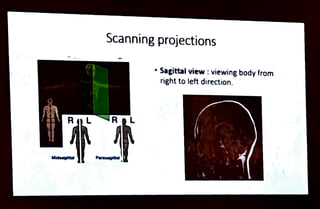
Scanning projections
R.L
Parasagita
"Sagittal view : viewing body from
right toleft direction.
T
Top
Bottom
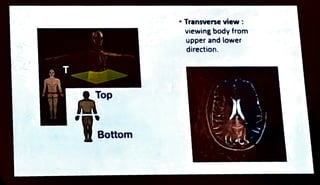
"Transverse view :
viewing body from
upper and lower
direction.
C
Back Front
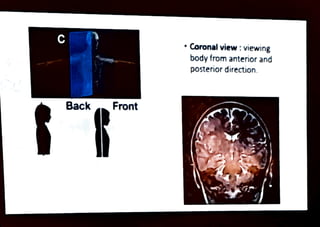
"Coronal view :viewing
body from anterior and
posterior direction.
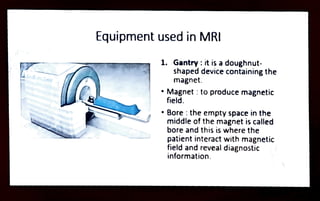
Equipment used in MRI
1. Gantry:it is adoughnut
shaped device containing the
magnet.
"Magnet :toproduce magnetic
field.
"Bore :the empty space inthe
middle ofthe magnet is called
bore and this is where the
patient interact with magnetic
field and reveal diagnostic
information.
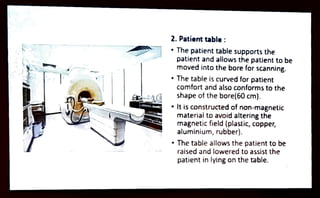
2. Patient table:
"The patient table supports the
patient and allows the patient to be
moved into the bore for scanning.
" The table is curved for patient
comfort and also conforms to the
shape of the bore(60 cm).
" It is constructed of non-magnetic
material toavoid altering the
magnetic field (plastic, copper,
aluminium, rubber).
"The table allows the patient to be
raisedand lowered to assist the
patient in lying on the table.
3.Computer
" The computer is a major
component in the
formation of MR image.
" It process different signals
from the patient body to
create MRimage.
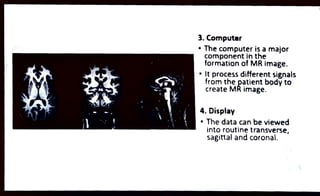
4. Display
"The datacan be viewed
into routine transverse,
sagittal and coronal.
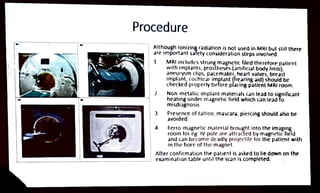
Procedure
Although ionizing radiation is not used in MRI but stillthere
are important salety consideration sleps ivolved.
1
2.
3.
4.
MRIincludes strong rmagnetic filed theretore paticnt
with implants,prostheses (artificial body limb).
aneurysm clips, pacemakei, heart valves, breast
implant,cochlear implant (hearingaid)should be
checked properly betore placing palient MRIroom.
Non-metallicimplant materials an leadtosignificant
heatingunder magneticfield which can leado
misdiagnosis
Presence of tattoo, mascara,piering should alsobe
avoided.
Ferro magnelic material broughtintothe imaging
room 1or eg. IV pole are attraded by magnetic field
and can bEComedeadly projectile for thepaticnt with
in the boreof the magnet.
After confirmation the patient is asked to lie down on the
examinatian table until the scan is completed.
Indication andcontraindications
Indications
Torn ligament
"Soft tissue problems
"Spinal problems
" Nerve issues
" Inflammation
Contraindications
"Any non-removable metallic
device.
" Claustrophobia
"Pregnancy (if not emergency
case)
"Themost common bio-effect of MRsystem is tissue heating caused by
magnetic field energy deposition.
Metallic taste
" Flushing of face
"Blur vision
MRI Biological Effects
"ECG :change in naturalwave form for ashort duration.
Disadvantage
"MRIScans produce loud noises which saome people mayfindstressful.
"Longer scan time.

MRI.pdf

  • 1.
    MRI The human bodyconsists of about 85% water, which consists of 2 hydrogen and 1oxygen atom. " MR imaging is based on proton imaging. Protons are +ve charged particles in the nucleus of every atom and have rotatory movement called spin. Any charge, which moves generates current and every currenthave a small magnetic field around it. So every spinninghydrogen proton have asmallmagntic field around it. InMRI, this smallmagnetic field of hydrogen protons areused to produce diagnostic image.
  • 2.
    Ro Midsagittal Scanning projections R.L Parasagita "Sagittal view: viewing body from right toleft direction.
  • 3.
    T Top Bottom "Transverse view : viewingbody from upper and lower direction.
  • 4.
    C Back Front "Coronal view:viewing body from anterior and posterior direction.
  • 5.
    Equipment used inMRI 1. Gantry:it is adoughnut shaped device containing the magnet. "Magnet :toproduce magnetic field. "Bore :the empty space inthe middle ofthe magnet is called bore and this is where the patient interact with magnetic field and reveal diagnostic information.
  • 6.
    2. Patient table: "Thepatient table supports the patient and allows the patient to be moved into the bore for scanning. " The table is curved for patient comfort and also conforms to the shape of the bore(60 cm). " It is constructed of non-magnetic material toavoid altering the magnetic field (plastic, copper, aluminium, rubber). "The table allows the patient to be raisedand lowered to assist the patient in lying on the table.
  • 7.
    3.Computer " The computeris a major component in the formation of MR image. " It process different signals from the patient body to create MRimage. 4. Display "The datacan be viewed into routine transverse, sagittal and coronal.
  • 8.
    Procedure Although ionizing radiationis not used in MRI but stillthere are important salety consideration sleps ivolved. 1 2. 3. 4. MRIincludes strong rmagnetic filed theretore paticnt with implants,prostheses (artificial body limb). aneurysm clips, pacemakei, heart valves, breast implant,cochlear implant (hearingaid)should be checked properly betore placing palient MRIroom. Non-metallicimplant materials an leadtosignificant heatingunder magneticfield which can leado misdiagnosis Presence of tattoo, mascara,piering should alsobe avoided. Ferro magnelic material broughtintothe imaging room 1or eg. IV pole are attraded by magnetic field and can bEComedeadly projectile for thepaticnt with in the boreof the magnet. After confirmation the patient is asked to lie down on the examinatian table until the scan is completed.
  • 9.
    Indication andcontraindications Indications Torn ligament "Softtissue problems "Spinal problems " Nerve issues " Inflammation Contraindications "Any non-removable metallic device. " Claustrophobia "Pregnancy (if not emergency case)
  • 10.
    "Themost common bio-effectof MRsystem is tissue heating caused by magnetic field energy deposition. Metallic taste " Flushing of face "Blur vision MRI Biological Effects "ECG :change in naturalwave form for ashort duration. Disadvantage "MRIScans produce loud noises which saome people mayfindstressful. "Longer scan time.