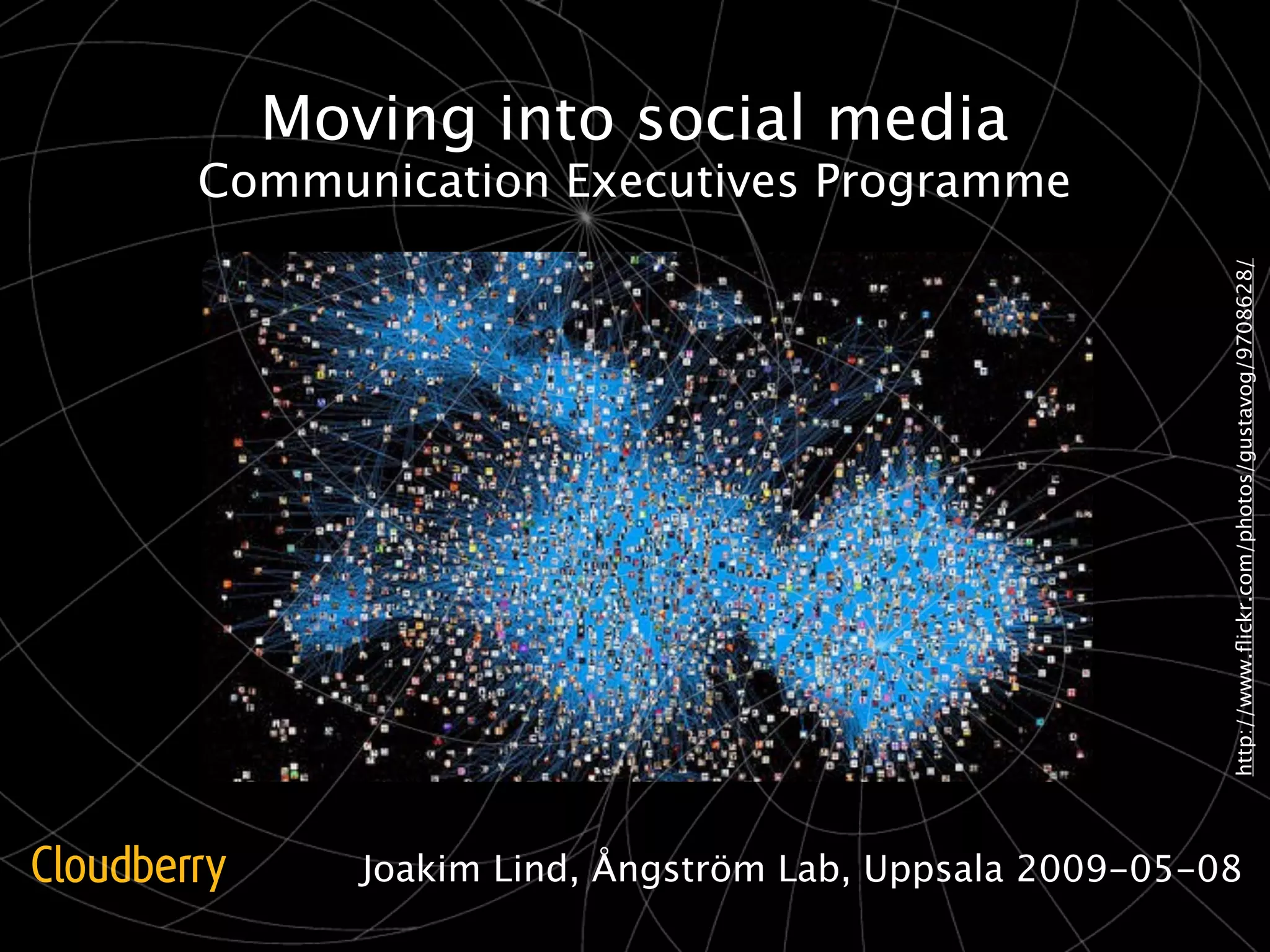










Moving into social media
Communication Executives Programme


                                                  http://www.๏ฌ‚ickr.com/photos/gustavog/9708628/
      Joakim Lind, ร…ngstrรถm Lab, Uppsala 2009-05-08
A Sweden-based strategic PR and
                                           communications agency that helps
                                           companies and organisations reach
Background                                 out with their messages.

ยป   Established in 2000
ยป   International pro๏ฌle
ยป   International network of partners       Services

ยป   Offices in Stockholm and Malmรถ          ยป   Analysis and strategy
                                            ยป   Traditional and social media
Focus                                       ยป   Workshops and seminars

ยป Corporate and consumer PR                 ยป   Media training and coaching

ยป Main focus:                               ยป   Copy (blogs, cases, opinion, press)

  ยป ICT/Tech                                ยป   Press material and media rooms

  ยป Clean tech                              ยป   Crisis management

  ยป Environment
  ยป Place branding
  ยป Analysis


                                  www.cloudberry.se
http://www.๏ฌ‚ickr.com/photos/lukevargas/2174568925/
Social media is information content created by
people using highly accessible and scalable
publishing technologies. At its most basic sense,
social media is a shift in how people discover, read
and share news, information and content.


               http://en.wikipedia.org/wiki/Social_media
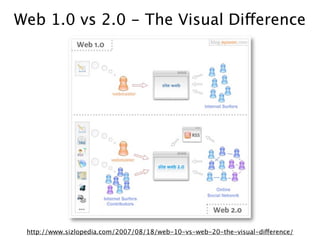
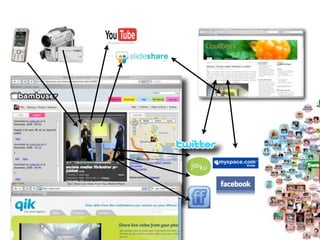
Web 1.0 vs 2.0 - The Visual Difference


 http://www.sizlopedia.com/2007/08/18/web-10-vs-web-20-the-visual-difference/
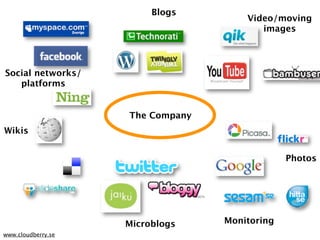
Blogs
                                      Video/moving
                                         images


Social networks/
   platforms


                    The Company
Wikis


                                               Photos


                    Microblogs    Monitoring
www.cloudberry.se
Is your website needed?


http://www.modernista.com/7/index.php
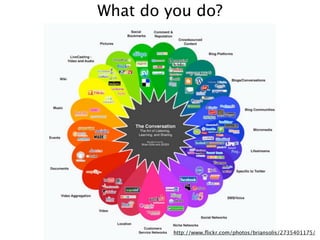
What do you do?


         http://www.๏ฌ‚ickr.com/photos/briansolis/2735401175/
Background
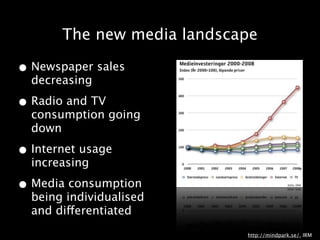
The new media landscape

โ€ข Newspaper sales
  decreasing

โ€ข Radio and TV
  consumption going
  down

โ€ข Internet usage
  increasing

โ€ข Media consumption
  being individualised
  and differentiated
                            http://mindpark.se/, IRM
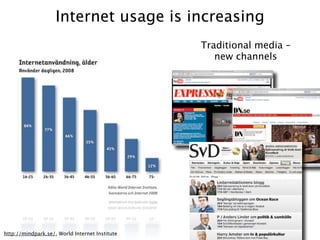
Internet usage is increasing
                                                Traditional media โ€“
                                                   new channels


http://mindpark.se/, World Internet Institute
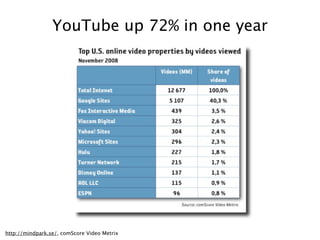
YouTube up 72% in one year


http://mindpark.se/, comScore Video Metrix
Open Source


โ€ข Apache
โ€ข Linux
โ€ข MySQL
โ€ข Firefox
โ€ข World wide web
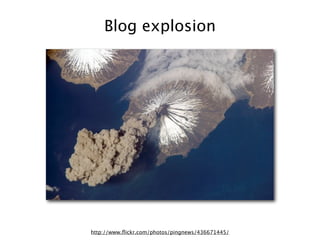
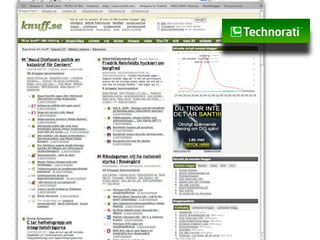
Blog explosion


http://www.๏ฌ‚ickr.com/photos/pingnews/436671445/
Death of the blog
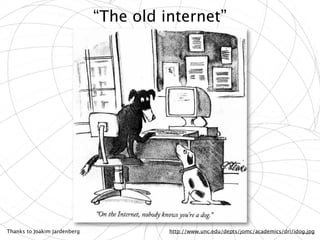
โ€œThe old internetโ€


Thanks to Joakim Jardenberg             http://www.unc.edu/depts/jomc/academics/dri/idog.jpg
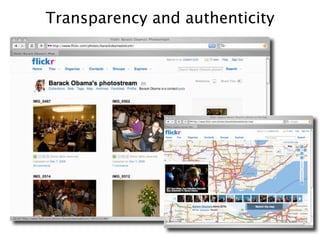
Transparency and authenticity
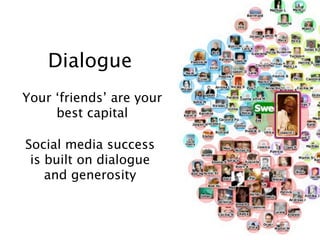
Dialogue
Your โ€˜friendsโ€™ are your
     best capital

Social media success
 is built on dialogue
    and generosity
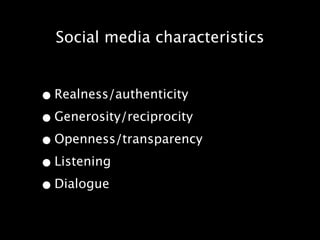
Social media characteristics


โ€ข Realness/authenticity
โ€ข Generosity/reciprocity
โ€ข Openness/transparency
โ€ข Listening
โ€ข Dialogue
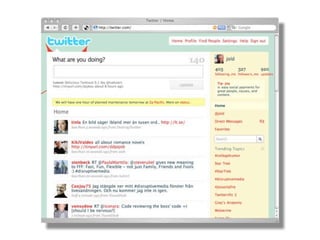
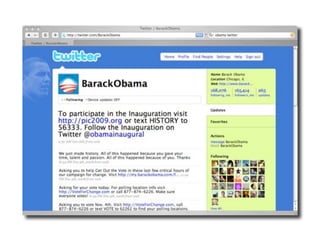
Micro blogs
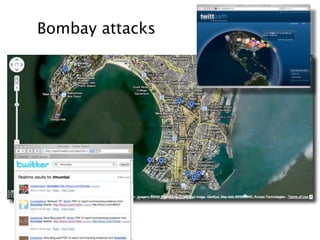
Bombay attacks
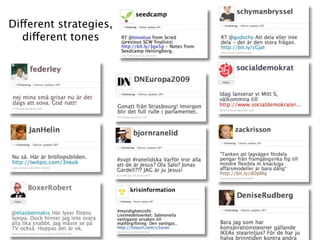
Different strategies,
   different tones
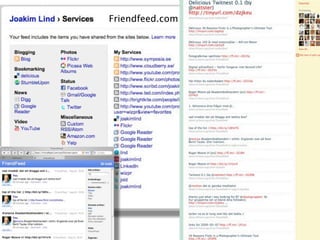
Friendfeed.com
www.cloudberry.se
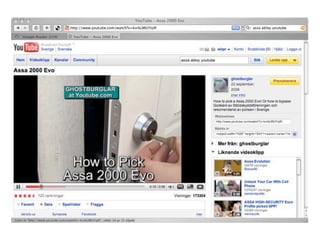
Video
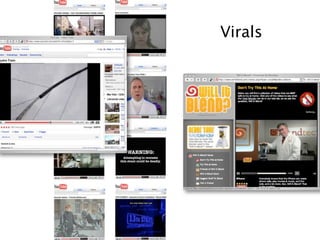
Virals
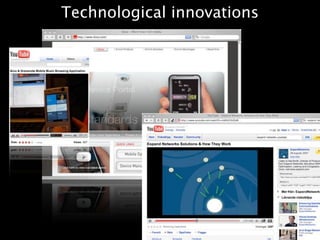
Technological innovations


              36
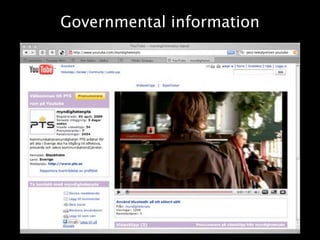
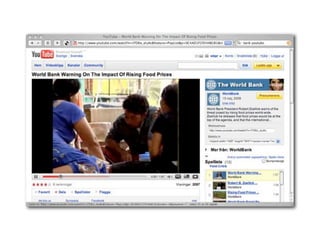
Governmental information
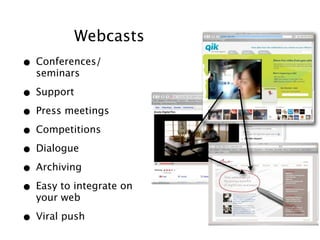
Webcasts
โ€ข Conferences/
  seminars

โ€ข Support
โ€ข Press meetings
โ€ข Competitions
โ€ข Dialogue
โ€ข Archiving
โ€ข Easy to integrate on
  your web

โ€ข Viral push
Listen
Micro blog search
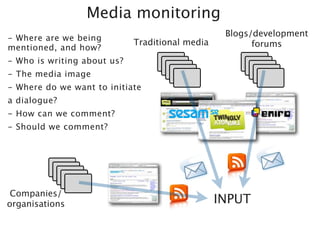
Media monitoring
                                                  Blogs/development
- Where are we being
                             Traditional media          forums
mentioned, and how?
- Who is writing about us?
- The media image
- Where do we want to initiate
a dialogue?
- How can we comment?
- Should we comment?


 Companies/
organisations                                    INPUT
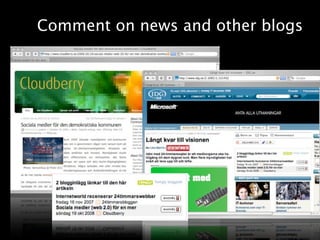
Comment on news and other blogs
Social media in
press activities
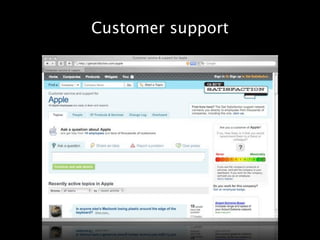
Customer support
Wikipedia

How are you and your
company described on
     Wikipedia?
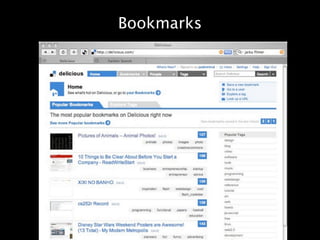
Bookmarks
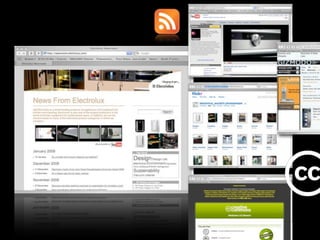
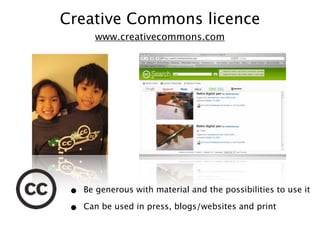
Creative Commons licence
       www.creativecommons.com


 โ€ข   Be generous with material and the possibilities to use it

 โ€ข   Can be used in press, blogs/websites and print
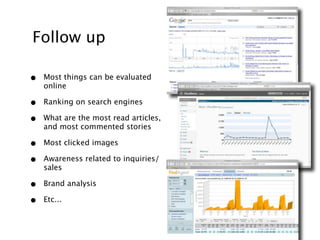
Follow up

โ€ข   Most things can be evaluated
    online

โ€ข   Ranking on search engines

โ€ข   What are the most read articles,
    and most commented stories

โ€ข   Most clicked images

โ€ข   Awareness related to inquiries/
    sales

โ€ข   Brand analysis

โ€ข   Etc...
Strategy for social media
1. Monitor and listen to blogs, microblogs and other social
   media platforms (make sure that the reporting is quick by
   limiting search terms and sending the results to the
   relevant contacts)
Strategy for social media
1. Monitor and listen to blogs, microblogs and other social
   media platforms (make sure that the reporting is quick by
   limiting search terms and sending the results to the
   relevant contacts)

2. Conduct an analysis (What is written about us, and where?
   By whom?)
Strategy for social media
1. Monitor and listen to blogs, microblogs and other social
   media platforms (make sure that the reporting is quick by
   limiting search terms and sending the results to the
   relevant contacts)

2. Conduct an analysis (What is written about us, and where?
   By whom?)

3. Strategy on how you are to work with social media (to be
   included in your communication plan)
Strategy for social media
1. Monitor and listen to blogs, microblogs and other social
   media platforms (make sure that the reporting is quick by
   limiting search terms and sending the results to the
   relevant contacts)

2. Conduct an analysis (What is written about us, and where?
   By whom?)

3. Strategy on how you are to work with social media (to be
   included in your communication plan)

4. Design and introduce a policy for social media (and press)
Strategy for social media
1. Monitor and listen to blogs, microblogs and other social
   media platforms (make sure that the reporting is quick by
   limiting search terms and sending the results to the
   relevant contacts)

2. Conduct an analysis (What is written about us, and where?
   By whom?)

3. Strategy on how you are to work with social media (to be
   included in your communication plan)

4. Design and introduce a policy for social media (and press)

5. Division of responsibilities
Strategy for social media
1. Monitor and listen to blogs, microblogs and other social
   media platforms (make sure that the reporting is quick by
   limiting search terms and sending the results to the
   relevant contacts)

2. Conduct an analysis (What is written about us, and where?
   By whom?)

3. Strategy on how you are to work with social media (to be
   included in your communication plan)

4. Design and introduce a policy for social media (and press)

5. Division of responsibilities

6. Make sure that web pages can be indexed by search
   engines and web spiders
Strategy for social media
1. Monitor and listen to blogs, microblogs and other social
   media platforms (make sure that the reporting is quick by
   limiting search terms and sending the results to the
   relevant contacts)

2. Conduct an analysis (What is written about us, and where?
   By whom?)

3. Strategy on how you are to work with social media (to be
   included in your communication plan)

4. Design and introduce a policy for social media (and press)

5. Division of responsibilities

6. Make sure that web pages can be indexed by search
   engines and web spiders

7. Introduce a function to distribute material on your website
   (share/RSS)
Strategy for social media

8. Educate your organisation (social media success is to a
   large part built on individualsโ€™ engagement and interest)
Strategy for social media

8. Educate your organisation (social media success is to a
   large part built on individualsโ€™ engagement and interest)

9. Not everyone has to take part! (the need for engagement
   and authenticity)
Strategy for social media

8. Educate your organisation (social media success is to a
   large part built on individualsโ€™ engagement and interest)

9. Not everyone has to take part! (the need for engagement
   and authenticity)

10. Be active in your dialogue. Reply to other peopleโ€™s
    questions. Head, heart, gut.
Strategy for social media

8. Educate your organisation (social media success is to a
   large part built on individualsโ€™ engagement and interest)

9. Not everyone has to take part! (the need for engagement
   and authenticity)

10. Be active in your dialogue. Reply to other peopleโ€™s
    questions. Head, heart, gut.

11. Build personal networks on social web platforms
Strategy for social media

8. Educate your organisation (social media success is to a
   large part built on individualsโ€™ engagement and interest)

9. Not everyone has to take part! (the need for engagement
   and authenticity)

10. Be active in your dialogue. Reply to other peopleโ€™s
    questions. Head, heart, gut.

11. Build personal networks on social web platforms

12. Reciprocity
Strategy for social media

8. Educate your organisation (social media success is to a
   large part built on individualsโ€™ engagement and interest)

9. Not everyone has to take part! (the need for engagement
   and authenticity)

10. Be active in your dialogue. Reply to other peopleโ€™s
    questions. Head, heart, gut.

11. Build personal networks on social web platforms

12. Reciprocity

13. Start on a scale that you are able to handle and can manage
Strategy for social media

8. Educate your organisation (social media success is to a
   large part built on individualsโ€™ engagement and interest)

9. Not everyone has to take part! (the need for engagement
   and authenticity)

10. Be active in your dialogue. Reply to other peopleโ€™s
    questions. Head, heart, gut.

11. Build personal networks on social web platforms

12. Reciprocity

13. Start on a scale that you are able to handle and can manage

14. Integrate social media in everyday work routines
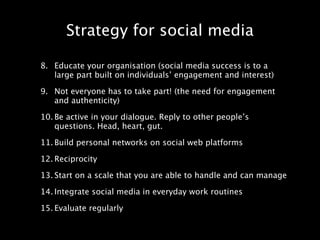
Strategy for social media

8. Educate your organisation (social media success is to a
   large part built on individualsโ€™ engagement and interest)

9. Not everyone has to take part! (the need for engagement
   and authenticity)

10. Be active in your dialogue. Reply to other peopleโ€™s
    questions. Head, heart, gut.

11. Build personal networks on social web platforms

12. Reciprocity

13. Start on a scale that you are able to handle and can manage

14. Integrate social media in everyday work routines

15. Evaluate regularly
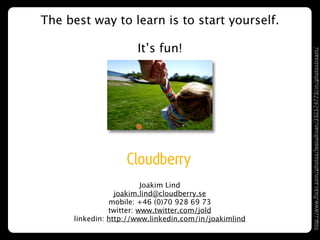
The best way to learn is to start yourself.

                       Itโ€™s fun!


                                                        http://www.๏ฌ‚ickr.com/photos/leecullivan/392574779/in/photostream/
                          Joakim Lind
                  joakim.lind@cloudberry.se
                mobile: +46 (0)70 928 69 73
                twitter: www.twitter.com/jold
      linkedin: http://www.linkedin.com/in/joakimlind
                                 57

Moving into Social Media

  • 1.
    Moving into socialmedia Communication Executives Programme http://www.๏ฌ‚ickr.com/photos/gustavog/9708628/ Joakim Lind, ร…ngstrรถm Lab, Uppsala 2009-05-08
  • 2.
    A Sweden-based strategicPR and communications agency that helps companies and organisations reach Background out with their messages. ยป Established in 2000 ยป International pro๏ฌle ยป International network of partners Services ยป Offices in Stockholm and Malmรถ ยป Analysis and strategy ยป Traditional and social media Focus ยป Workshops and seminars ยป Corporate and consumer PR ยป Media training and coaching ยป Main focus: ยป Copy (blogs, cases, opinion, press) ยป ICT/Tech ยป Press material and media rooms ยป Clean tech ยป Crisis management ยป Environment ยป Place branding ยป Analysis www.cloudberry.se
  • 3.
  • 4.
    Social media isinformation content created by people using highly accessible and scalable publishing technologies. At its most basic sense, social media is a shift in how people discover, read and share news, information and content. http://en.wikipedia.org/wiki/Social_media
  • 6.
    Web 1.0 vs2.0 - The Visual Difference http://www.sizlopedia.com/2007/08/18/web-10-vs-web-20-the-visual-difference/
  • 7.
    Blogs Video/moving images Social networks/ platforms The Company Wikis Photos Microblogs Monitoring www.cloudberry.se
  • 8.
    Is your websiteneeded? http://www.modernista.com/7/index.php
  • 9.
    What do youdo? http://www.๏ฌ‚ickr.com/photos/briansolis/2735401175/
  • 10.
  • 11.
    The new medialandscape โ€ข Newspaper sales decreasing โ€ข Radio and TV consumption going down โ€ข Internet usage increasing โ€ข Media consumption being individualised and differentiated http://mindpark.se/, IRM
  • 12.
    Internet usage isincreasing Traditional media โ€“ new channels http://mindpark.se/, World Internet Institute
  • 13.
    YouTube up 72%in one year http://mindpark.se/, comScore Video Metrix
  • 14.
    Open Source โ€ข Apache โ€ขLinux โ€ข MySQL โ€ข Firefox โ€ข World wide web
  • 15.
  • 18.
  • 19.
    โ€œThe old internetโ€ Thanksto Joakim Jardenberg http://www.unc.edu/depts/jomc/academics/dri/idog.jpg
  • 20.
  • 21.
    Dialogue Your โ€˜friendsโ€™ areyour best capital Social media success is built on dialogue and generosity
  • 22.
    Social media characteristics โ€ขRealness/authenticity โ€ข Generosity/reciprocity โ€ข Openness/transparency โ€ข Listening โ€ข Dialogue
  • 23.
  • 24.
  • 27.
    Different strategies, different tones
  • 29.
  • 32.
  • 33.
  • 34.
  • 36.
  • 37.
  • 39.
    Webcasts โ€ข Conferences/ seminars โ€ข Support โ€ข Press meetings โ€ข Competitions โ€ข Dialogue โ€ข Archiving โ€ข Easy to integrate on your web โ€ข Viral push
  • 41.
  • 43.
  • 44.
    Media monitoring Blogs/development - Where are we being Traditional media forums mentioned, and how? - Who is writing about us? - The media image - Where do we want to initiate a dialogue? - How can we comment? - Should we comment? Companies/ organisations INPUT
  • 45.
    Comment on newsand other blogs
  • 46.
  • 48.
  • 49.
    Wikipedia How are youand your company described on Wikipedia?
  • 50.
  • 53.
    Creative Commons licence www.creativecommons.com โ€ข Be generous with material and the possibilities to use it โ€ข Can be used in press, blogs/websites and print
  • 54.
    Follow up โ€ข Most things can be evaluated online โ€ข Ranking on search engines โ€ข What are the most read articles, and most commented stories โ€ข Most clicked images โ€ข Awareness related to inquiries/ sales โ€ข Brand analysis โ€ข Etc...
  • 55.
  • 56.
    Strategy for socialmedia 1. Monitor and listen to blogs, microblogs and other social media platforms (make sure that the reporting is quick by limiting search terms and sending the results to the relevant contacts)
  • 57.
    Strategy for socialmedia 1. Monitor and listen to blogs, microblogs and other social media platforms (make sure that the reporting is quick by limiting search terms and sending the results to the relevant contacts) 2. Conduct an analysis (What is written about us, and where? By whom?)
  • 58.
    Strategy for socialmedia 1. Monitor and listen to blogs, microblogs and other social media platforms (make sure that the reporting is quick by limiting search terms and sending the results to the relevant contacts) 2. Conduct an analysis (What is written about us, and where? By whom?) 3. Strategy on how you are to work with social media (to be included in your communication plan)
  • 59.
    Strategy for socialmedia 1. Monitor and listen to blogs, microblogs and other social media platforms (make sure that the reporting is quick by limiting search terms and sending the results to the relevant contacts) 2. Conduct an analysis (What is written about us, and where? By whom?) 3. Strategy on how you are to work with social media (to be included in your communication plan) 4. Design and introduce a policy for social media (and press)
  • 60.
    Strategy for socialmedia 1. Monitor and listen to blogs, microblogs and other social media platforms (make sure that the reporting is quick by limiting search terms and sending the results to the relevant contacts) 2. Conduct an analysis (What is written about us, and where? By whom?) 3. Strategy on how you are to work with social media (to be included in your communication plan) 4. Design and introduce a policy for social media (and press) 5. Division of responsibilities
  • 61.
    Strategy for socialmedia 1. Monitor and listen to blogs, microblogs and other social media platforms (make sure that the reporting is quick by limiting search terms and sending the results to the relevant contacts) 2. Conduct an analysis (What is written about us, and where? By whom?) 3. Strategy on how you are to work with social media (to be included in your communication plan) 4. Design and introduce a policy for social media (and press) 5. Division of responsibilities 6. Make sure that web pages can be indexed by search engines and web spiders
  • 62.
    Strategy for socialmedia 1. Monitor and listen to blogs, microblogs and other social media platforms (make sure that the reporting is quick by limiting search terms and sending the results to the relevant contacts) 2. Conduct an analysis (What is written about us, and where? By whom?) 3. Strategy on how you are to work with social media (to be included in your communication plan) 4. Design and introduce a policy for social media (and press) 5. Division of responsibilities 6. Make sure that web pages can be indexed by search engines and web spiders 7. Introduce a function to distribute material on your website (share/RSS)
  • 63.
  • 64.
    Strategy for socialmedia 8. Educate your organisation (social media success is to a large part built on individualsโ€™ engagement and interest)
  • 65.
    Strategy for socialmedia 8. Educate your organisation (social media success is to a large part built on individualsโ€™ engagement and interest) 9. Not everyone has to take part! (the need for engagement and authenticity)
  • 66.
    Strategy for socialmedia 8. Educate your organisation (social media success is to a large part built on individualsโ€™ engagement and interest) 9. Not everyone has to take part! (the need for engagement and authenticity) 10. Be active in your dialogue. Reply to other peopleโ€™s questions. Head, heart, gut.
  • 67.
    Strategy for socialmedia 8. Educate your organisation (social media success is to a large part built on individualsโ€™ engagement and interest) 9. Not everyone has to take part! (the need for engagement and authenticity) 10. Be active in your dialogue. Reply to other peopleโ€™s questions. Head, heart, gut. 11. Build personal networks on social web platforms
  • 68.
    Strategy for socialmedia 8. Educate your organisation (social media success is to a large part built on individualsโ€™ engagement and interest) 9. Not everyone has to take part! (the need for engagement and authenticity) 10. Be active in your dialogue. Reply to other peopleโ€™s questions. Head, heart, gut. 11. Build personal networks on social web platforms 12. Reciprocity
  • 69.
    Strategy for socialmedia 8. Educate your organisation (social media success is to a large part built on individualsโ€™ engagement and interest) 9. Not everyone has to take part! (the need for engagement and authenticity) 10. Be active in your dialogue. Reply to other peopleโ€™s questions. Head, heart, gut. 11. Build personal networks on social web platforms 12. Reciprocity 13. Start on a scale that you are able to handle and can manage
  • 70.
    Strategy for socialmedia 8. Educate your organisation (social media success is to a large part built on individualsโ€™ engagement and interest) 9. Not everyone has to take part! (the need for engagement and authenticity) 10. Be active in your dialogue. Reply to other peopleโ€™s questions. Head, heart, gut. 11. Build personal networks on social web platforms 12. Reciprocity 13. Start on a scale that you are able to handle and can manage 14. Integrate social media in everyday work routines
  • 71.
    Strategy for socialmedia 8. Educate your organisation (social media success is to a large part built on individualsโ€™ engagement and interest) 9. Not everyone has to take part! (the need for engagement and authenticity) 10. Be active in your dialogue. Reply to other peopleโ€™s questions. Head, heart, gut. 11. Build personal networks on social web platforms 12. Reciprocity 13. Start on a scale that you are able to handle and can manage 14. Integrate social media in everyday work routines 15. Evaluate regularly
  • 72.
    The best wayto learn is to start yourself. Itโ€™s fun! http://www.๏ฌ‚ickr.com/photos/leecullivan/392574779/in/photostream/ Joakim Lind joakim.lind@cloudberry.se mobile: +46 (0)70 928 69 73 twitter: www.twitter.com/jold linkedin: http://www.linkedin.com/in/joakimlind 57