Moving Beyond Teaching
Excellence - Collaboration Through
Dialogue
(in roughly 9 diagrams)
Dr Phil Wood
Bishop Grosseteste University
A Need for Dialogue (and diagrams)
At present, a truly creative
dialogue, in the sense that has
been indicated here, is not at all
common, even in science. Rather the
struggle of each idea to dominate is
commonly emphasized in most
activities in society.’
Bohm and Peat (1987: 243)
‘A key difference between a
dialogue and a discussion is that,
within the latter, people usually
hold relatively fixed positions and
argue in favour of their views as
they try to convince others to
change.’ Bohm and Peat (1987: 241)
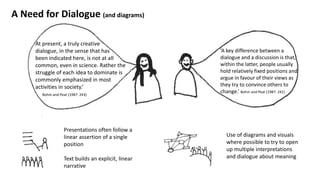
Presentations often follow a
linear assertion of a single
position
Text builds an explicit, linear
narrative
Use of diagrams and visuals
where possible to try to open
up multiple interpretations
and dialogue about meaning
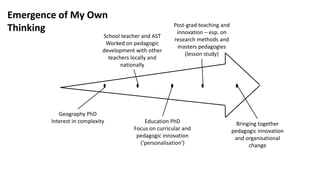
Geography PhD
Interest in complexity
School teacher and AST
Worked on pedagogic
development with other
teachers locally and
nationally
Education PhD
Focus on curricular and
pedagogic innovation
(‘personalisation’)
Post-grad teaching and
innovation – esp. on
research methods and
masters pedagogies
(lesson study)
Bringing together
pedagogic innovation
and organisational
change
Emergence of My Own
Thinking
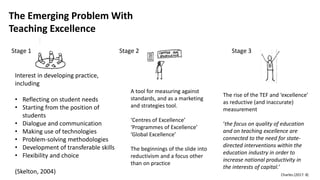
The Emerging Problem With
Teaching Excellence
Stage 1
Interest in developing practice,
including
• Reflecting on student needs
• Starting from the position of
students
• Dialogue and communication
• Making use of technologies
• Problem-solving methodologies
• Development of transferable skills
• Flexibility and choice
(Skelton, 2004)
Stage 2
A tool for measuring against
standards, and as a marketing
and strategies tool.
‘Centres of Excellence’
‘Programmes of Excellence’
‘Global Excellence’
The beginnings of the slide into
reductivism and a focus other
than on practice
Stage 3
The rise of the TEF and ‘excellence’
as reductive (and inaccurate)
measurement
‘the focus on quality of education
and on teaching excellence are
connected to the need for state-
directed interventions within the
education industry in order to
increase national productivity in
the interests of capital.’
Charles (2017: 8)
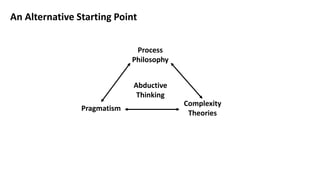
An Alternative Starting Point
Process
Philosophy
Complexity
Theories
Pragmatism
Abductive
Thinking
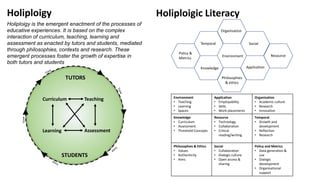
Holiploigy is the emergent enactment of the processes of
educative experiences. It is based on the complex
interaction of curriculum, teaching, learning and
assessment as enacted by tutors and students, mediated
through philosophies, contexts and research. These
emergent processes foster the growth of expertise in
both tutors and students
Holiploigy Holiploigic Literacy
Philosophies
& ethics
Organisation
Social
Application
Policy &
Metrics
Temporal
Environment
Knowledge
Resource
Environment
• Teaching
• Learning
• Spaces
Application
• Employability
• Skills
• Work placements
Organisation
• Academic culture
• Research
• Innovation
Knowledge
• Curriculum
• Assessment
• Threshold Concepts
Resource
• Technology
• Collaboration
• Critical
reading/writing
Temporal
• Growth and
development
• Reflection
• Research
Philosophies & Ethics
• Values
• Authenticity
• Aims
Social
• Collaboration
• Dialogic culture
• Open access &
sharing
Policy and Metrics
• Data generation &
use
• Dialogic
development
• Organisational
support
Curriculum Teaching
AssessmentLearning
TUTORS
STUDENTS
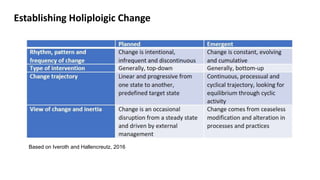
Based on Iveroth and Hallencreutz, 2016
Establishing Holiploigic Change
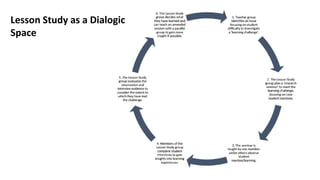
Lesson Study as a Dialogic
Space
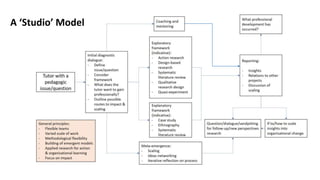
A ‘Studio’ Model

Moving beyond teaching excellence - developing dialogic collaboration

  • 1.
    Moving Beyond Teaching Excellence- Collaboration Through Dialogue (in roughly 9 diagrams) Dr Phil Wood Bishop Grosseteste University
  • 2.
    A Need forDialogue (and diagrams) At present, a truly creative dialogue, in the sense that has been indicated here, is not at all common, even in science. Rather the struggle of each idea to dominate is commonly emphasized in most activities in society.’ Bohm and Peat (1987: 243) ‘A key difference between a dialogue and a discussion is that, within the latter, people usually hold relatively fixed positions and argue in favour of their views as they try to convince others to change.’ Bohm and Peat (1987: 241) Presentations often follow a linear assertion of a single position Text builds an explicit, linear narrative Use of diagrams and visuals where possible to try to open up multiple interpretations and dialogue about meaning
  • 3.
    Geography PhD Interest incomplexity School teacher and AST Worked on pedagogic development with other teachers locally and nationally Education PhD Focus on curricular and pedagogic innovation (‘personalisation’) Post-grad teaching and innovation – esp. on research methods and masters pedagogies (lesson study) Bringing together pedagogic innovation and organisational change Emergence of My Own Thinking
  • 4.
    The Emerging ProblemWith Teaching Excellence Stage 1 Interest in developing practice, including • Reflecting on student needs • Starting from the position of students • Dialogue and communication • Making use of technologies • Problem-solving methodologies • Development of transferable skills • Flexibility and choice (Skelton, 2004) Stage 2 A tool for measuring against standards, and as a marketing and strategies tool. ‘Centres of Excellence’ ‘Programmes of Excellence’ ‘Global Excellence’ The beginnings of the slide into reductivism and a focus other than on practice Stage 3 The rise of the TEF and ‘excellence’ as reductive (and inaccurate) measurement ‘the focus on quality of education and on teaching excellence are connected to the need for state- directed interventions within the education industry in order to increase national productivity in the interests of capital.’ Charles (2017: 8)
  • 6.
    An Alternative StartingPoint Process Philosophy Complexity Theories Pragmatism Abductive Thinking
  • 7.
    Holiploigy is theemergent enactment of the processes of educative experiences. It is based on the complex interaction of curriculum, teaching, learning and assessment as enacted by tutors and students, mediated through philosophies, contexts and research. These emergent processes foster the growth of expertise in both tutors and students Holiploigy Holiploigic Literacy Philosophies & ethics Organisation Social Application Policy & Metrics Temporal Environment Knowledge Resource Environment • Teaching • Learning • Spaces Application • Employability • Skills • Work placements Organisation • Academic culture • Research • Innovation Knowledge • Curriculum • Assessment • Threshold Concepts Resource • Technology • Collaboration • Critical reading/writing Temporal • Growth and development • Reflection • Research Philosophies & Ethics • Values • Authenticity • Aims Social • Collaboration • Dialogic culture • Open access & sharing Policy and Metrics • Data generation & use • Dialogic development • Organisational support Curriculum Teaching AssessmentLearning TUTORS STUDENTS
  • 8.
    Based on Iverothand Hallencreutz, 2016 Establishing Holiploigic Change
  • 9.
    Lesson Study asa Dialogic Space
  • 10.