21 Century
  st

Leadership

                     Chris Lindholm
       clindhol@shakopee.k12.mn.us
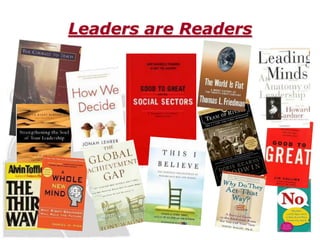
Leaders are Readers
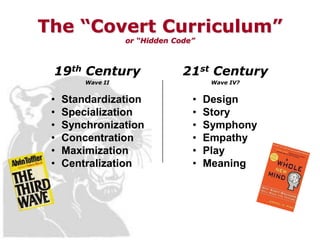
The “Covert Curriculum”
                   or “Hidden Code”


 19th Century                   21st Century
         Wave II                       Wave IV?


 •   Standardization              •   Design
 •   Specialization               •   Story
 •   Synchronization              •   Symphony
 •   Concentration                •   Empathy
 •   Maximization                 •   Play
 •   Centralization               •   Meaning
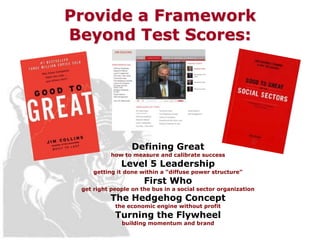
Provide a Framework
Beyond Test Scores:


                  Defining Great
           how to measure and calibrate success
              Level 5 Leadership
     getting it done within a “diffuse power structure”
                      First Who
 get right people on the bus in a social sector organization
          The Hedgehog Concept
            the economic engine without profit
            Turning the Flywheel
              building momentum and brand
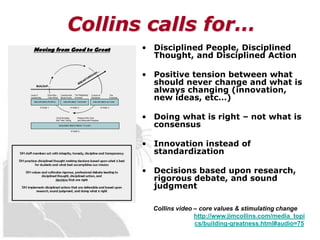
Collins calls for…
       • Disciplined People, Disciplined
         Thought, and Disciplined Action

       • Positive tension between what
         should never change and what is
         always changing (innovation,
         new ideas, etc…)

       • Doing what is right – not what is
         consensus

       • Innovation instead of
         standardization

       • Decisions based upon research,
         rigorous debate, and sound
         judgment

         Collins video – core values & stimulating change
                       http://www.jimcollins.com/media_topi
                       cs/building-greatness.html#audio=75
Constant Attention to the

            Culture
    of the Organization

• How do you measure this?
• How do you empower others to own this?
• How do you create common language for this?
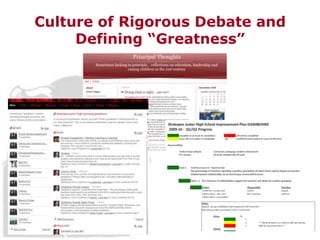
Culture of Rigorous Debate and
     Defining “Greatness”
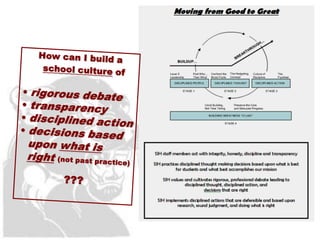
How do we create rigorous debate
 and a culture of innovation???
• Create the framework – including
  leadership training
   • PLCs, Departments, Teams, VTs, etc…
   • Myers-Briggs, Collins, PLC facilitators, Lit circle
     protocols!
• Create Opportunities/Vehicles
   • Regular Group meetings, faculty meetings, hallway
     conversations, lunch prompts, classroom walk
     throughs, etc…
   • Blog, Twitter, Google Reader, Ning, podcasting lessons
     or interviews, and other web 2.0 tools!!!
   • Don’t forget coffee chats and Friday “curriculum
     writing”
• Make it safe to take risks and encourage,
  encourage, encourage!!!
Real, Authentic, Scary
               Questions
•   What is SpEd?
•   How can a teacher write one modified test that meets the
    individual needs of 7 students on IEPs?
•   Why does it seem that the students with disabilities that
    make school more difficult have less homework and work
    less than those without a disability?
•   How can more than 50% of our students receive academic
    performance awards each year yet our average test scores
    be below the state average?
•   What is a grade?
•   If student doesn’t turn in homework but passes
    assessments, how can s/he be failing?
•   Are are we systematically creating a positive relationship
    with every student?
•   If PE is all about participation, why do we call them
    “teachers?”
And some more…
•   Shouldn’t Honors English class be very difficult for a
    student who reads at the 40th percentile?
•   If a teacher gives different assignments to students in the
    same class to differentiate, what do they put in the little
    box in the grade book?
•   Why do we give “extra credit?” Isn’t that more about
    currency for work than a communication of mastery?
•   If we modify the rigor of a course to meet the needs of a
    student, how can we put the same grade on the transcript
    as we would for everyone else using different criteria?
•   Where did the notion that grades are based upon points
    for doing stuff come from?
•   Is having grades online so we can argue about points
    instead of learning really better?
•   Why is SpEd services so focused on helping kids do their
    homework? Shouldn’t they be addressing the real issue?
•   What does research and expert opinion say about grading,
    rigor, standards, and SpEd?
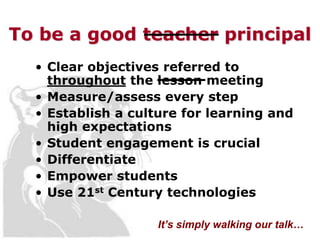
To be a good teacher principal
  • Clear objectives referred to
    throughout the lesson meeting
  • Measure/assess every step
  • Establish a culture for learning and
    high expectations
  • Student engagement is crucial
  • Differentiate
  • Empower students
  • Use 21st Century technologies

                    It’s simply walking our talk…
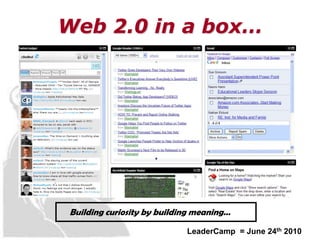
Web 2.0 in a box…


Building curiosity by building meaning…

                            LeaderCamp = June 24th 2010
Real Debates on Tech…
       Standardization       vs.    Innovation
           19th century…             21st century…

•   Training leadership, support staff, teachers, etc…

•   Exposure to liability vs. addressing individuals

•   Supporting multiple platforms and the constant
    change of Web 2.0 (vendors and products are out
    by the time we get them up and running!!)

•   Cost, cost, cost

•   False assumption that we need to give every child
    the same education

•   Does it really help us teach better and improve
    student performance?
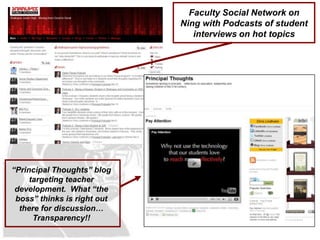
Faculty Social Network on
                             Ning with Podcasts of student
                                interviews on hot topics


“Principal Thoughts” blog
     targeting teacher
 development. What “the
 boss” thinks is right out
  there for discussion…
      Transparency!!
Playing the game…
• Email article links to the old timers
• Web 2.0 on a box
• Share success stories
• Ask for forgiveness instead of permission
• Make sure the Tech Director understands
  Web 2.0 world and is on your side!!!
• Find grant $$
• Plant seeds and more seeds and more seeds
• Support teachers who want to take risks
http://chrislindholm.typepad.com/principal-thoughts/

April 2010 WI administrators

  • 1.
    21 Century st Leadership Chris Lindholm clindhol@shakopee.k12.mn.us
  • 2.
  • 3.
    The “Covert Curriculum” or “Hidden Code” 19th Century 21st Century Wave II Wave IV? • Standardization • Design • Specialization • Story • Synchronization • Symphony • Concentration • Empathy • Maximization • Play • Centralization • Meaning
  • 4.
    Provide a Framework BeyondTest Scores: Defining Great how to measure and calibrate success Level 5 Leadership getting it done within a “diffuse power structure” First Who get right people on the bus in a social sector organization The Hedgehog Concept the economic engine without profit Turning the Flywheel building momentum and brand
  • 5.
    Collins calls for… • Disciplined People, Disciplined Thought, and Disciplined Action • Positive tension between what should never change and what is always changing (innovation, new ideas, etc…) • Doing what is right – not what is consensus • Innovation instead of standardization • Decisions based upon research, rigorous debate, and sound judgment Collins video – core values & stimulating change http://www.jimcollins.com/media_topi cs/building-greatness.html#audio=75
  • 6.
    Constant Attention tothe Culture of the Organization • How do you measure this? • How do you empower others to own this? • How do you create common language for this?
  • 7.
    Culture of RigorousDebate and Defining “Greatness”
  • 9.
    How do wecreate rigorous debate and a culture of innovation??? • Create the framework – including leadership training • PLCs, Departments, Teams, VTs, etc… • Myers-Briggs, Collins, PLC facilitators, Lit circle protocols! • Create Opportunities/Vehicles • Regular Group meetings, faculty meetings, hallway conversations, lunch prompts, classroom walk throughs, etc… • Blog, Twitter, Google Reader, Ning, podcasting lessons or interviews, and other web 2.0 tools!!! • Don’t forget coffee chats and Friday “curriculum writing” • Make it safe to take risks and encourage, encourage, encourage!!!
  • 10.
    Real, Authentic, Scary Questions • What is SpEd? • How can a teacher write one modified test that meets the individual needs of 7 students on IEPs? • Why does it seem that the students with disabilities that make school more difficult have less homework and work less than those without a disability? • How can more than 50% of our students receive academic performance awards each year yet our average test scores be below the state average? • What is a grade? • If student doesn’t turn in homework but passes assessments, how can s/he be failing? • Are are we systematically creating a positive relationship with every student? • If PE is all about participation, why do we call them “teachers?”
  • 11.
    And some more… • Shouldn’t Honors English class be very difficult for a student who reads at the 40th percentile? • If a teacher gives different assignments to students in the same class to differentiate, what do they put in the little box in the grade book? • Why do we give “extra credit?” Isn’t that more about currency for work than a communication of mastery? • If we modify the rigor of a course to meet the needs of a student, how can we put the same grade on the transcript as we would for everyone else using different criteria? • Where did the notion that grades are based upon points for doing stuff come from? • Is having grades online so we can argue about points instead of learning really better? • Why is SpEd services so focused on helping kids do their homework? Shouldn’t they be addressing the real issue? • What does research and expert opinion say about grading, rigor, standards, and SpEd?
  • 13.
    To be agood teacher principal • Clear objectives referred to throughout the lesson meeting • Measure/assess every step • Establish a culture for learning and high expectations • Student engagement is crucial • Differentiate • Empower students • Use 21st Century technologies It’s simply walking our talk…
  • 14.
    Web 2.0 ina box… Building curiosity by building meaning… LeaderCamp = June 24th 2010
  • 15.
    Real Debates onTech… Standardization vs. Innovation 19th century… 21st century… • Training leadership, support staff, teachers, etc… • Exposure to liability vs. addressing individuals • Supporting multiple platforms and the constant change of Web 2.0 (vendors and products are out by the time we get them up and running!!) • Cost, cost, cost • False assumption that we need to give every child the same education • Does it really help us teach better and improve student performance?
  • 16.
    Faculty Social Networkon Ning with Podcasts of student interviews on hot topics “Principal Thoughts” blog targeting teacher development. What “the boss” thinks is right out there for discussion… Transparency!!
  • 17.
    Playing the game… •Email article links to the old timers • Web 2.0 on a box • Share success stories • Ask for forgiveness instead of permission • Make sure the Tech Director understands Web 2.0 world and is on your side!!! • Find grant $$ • Plant seeds and more seeds and more seeds • Support teachers who want to take risks
  • 18.