Motor Learning and 
Perception 
The acquiring of skills 
involving muscular 
movement. 
Karen Grace M. Alvaro
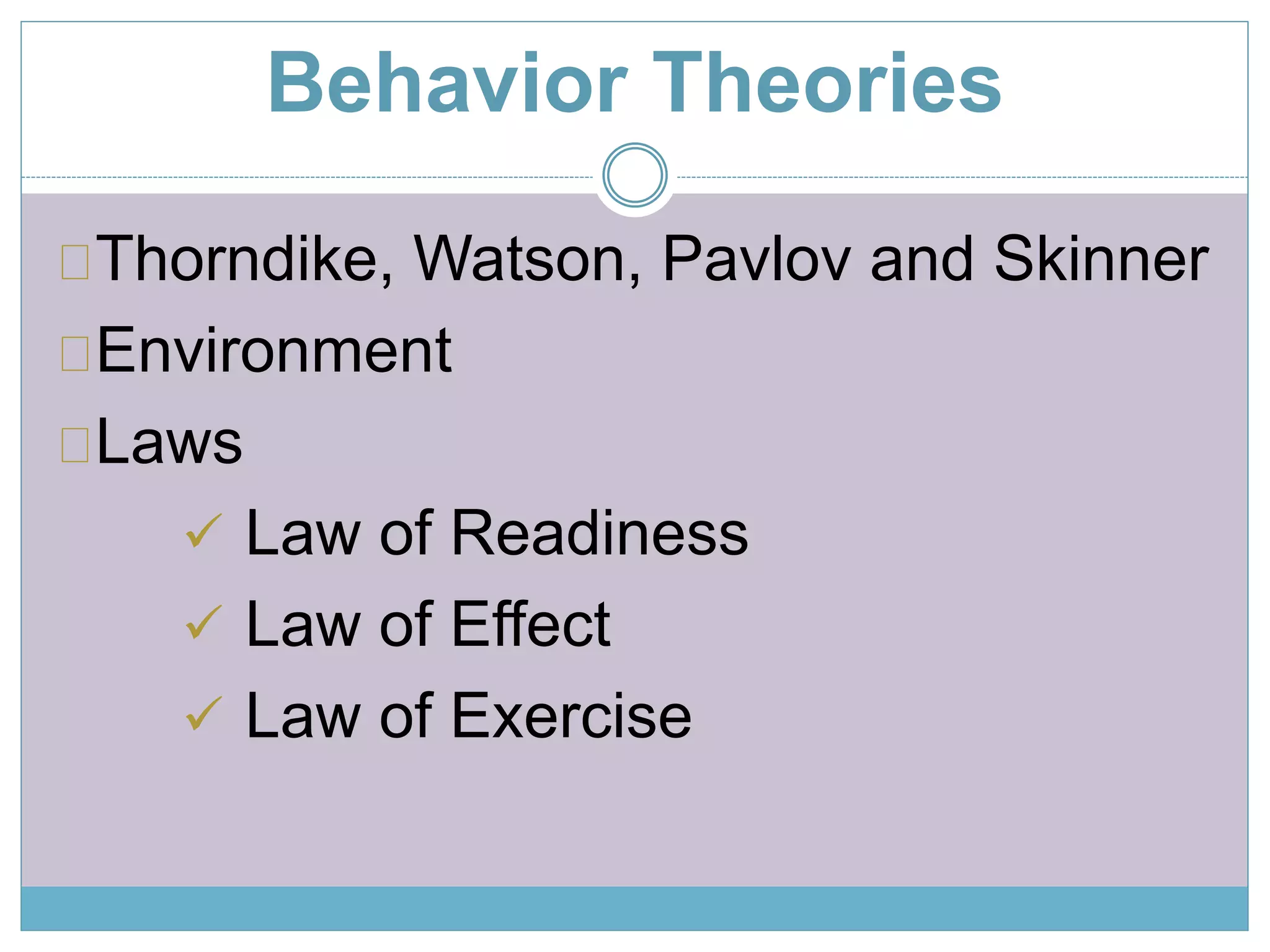
Behavior Theories 
Thorndike, Watson, Pavlov and Skinner 
Environment 
Laws 
 Law of Readiness 
 Law of Effect 
 Law of Exercise
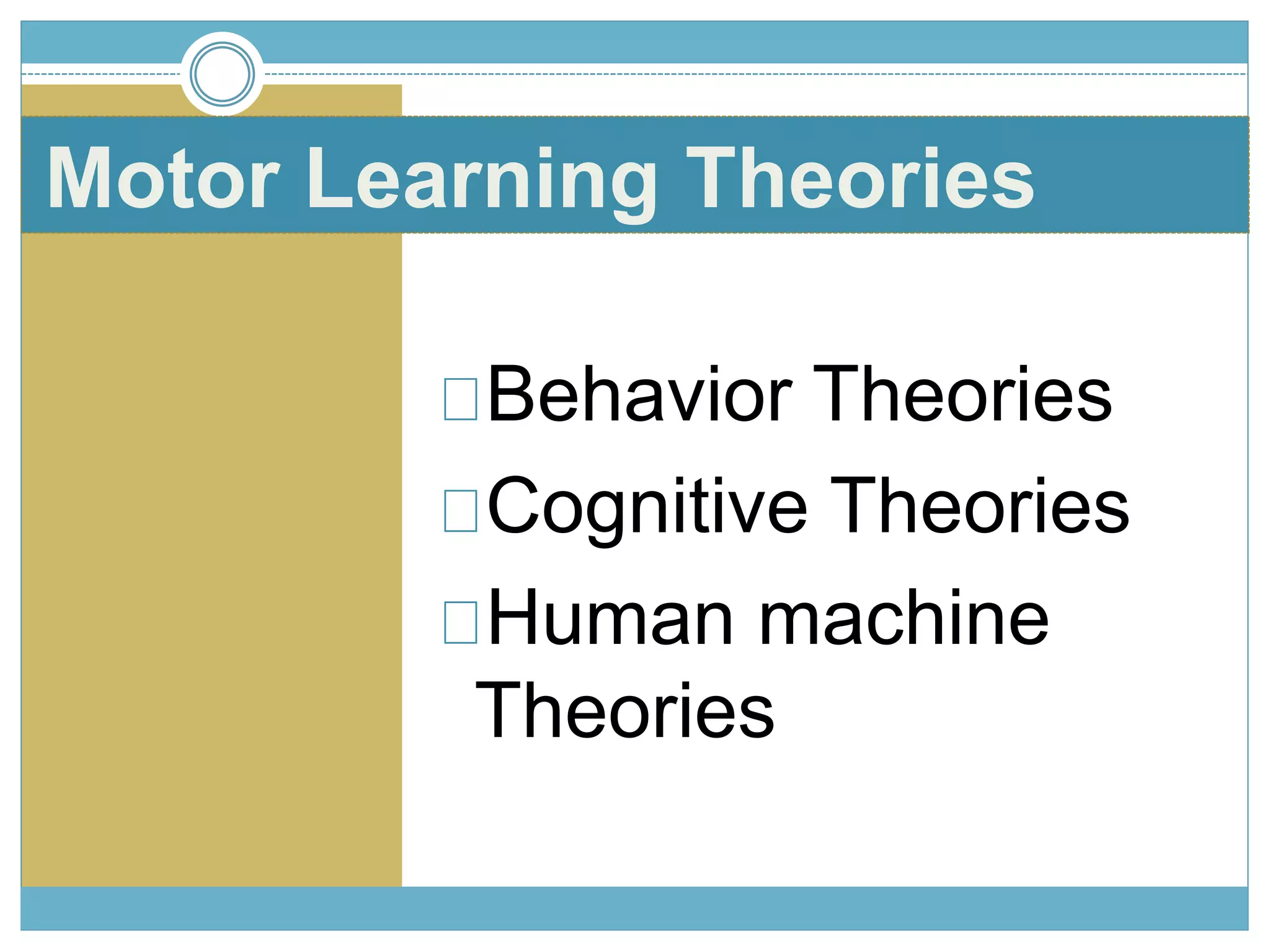
Motor Learning Theories 
Behavior Theories 
Cognitive Theories 
Human machine 
Theories
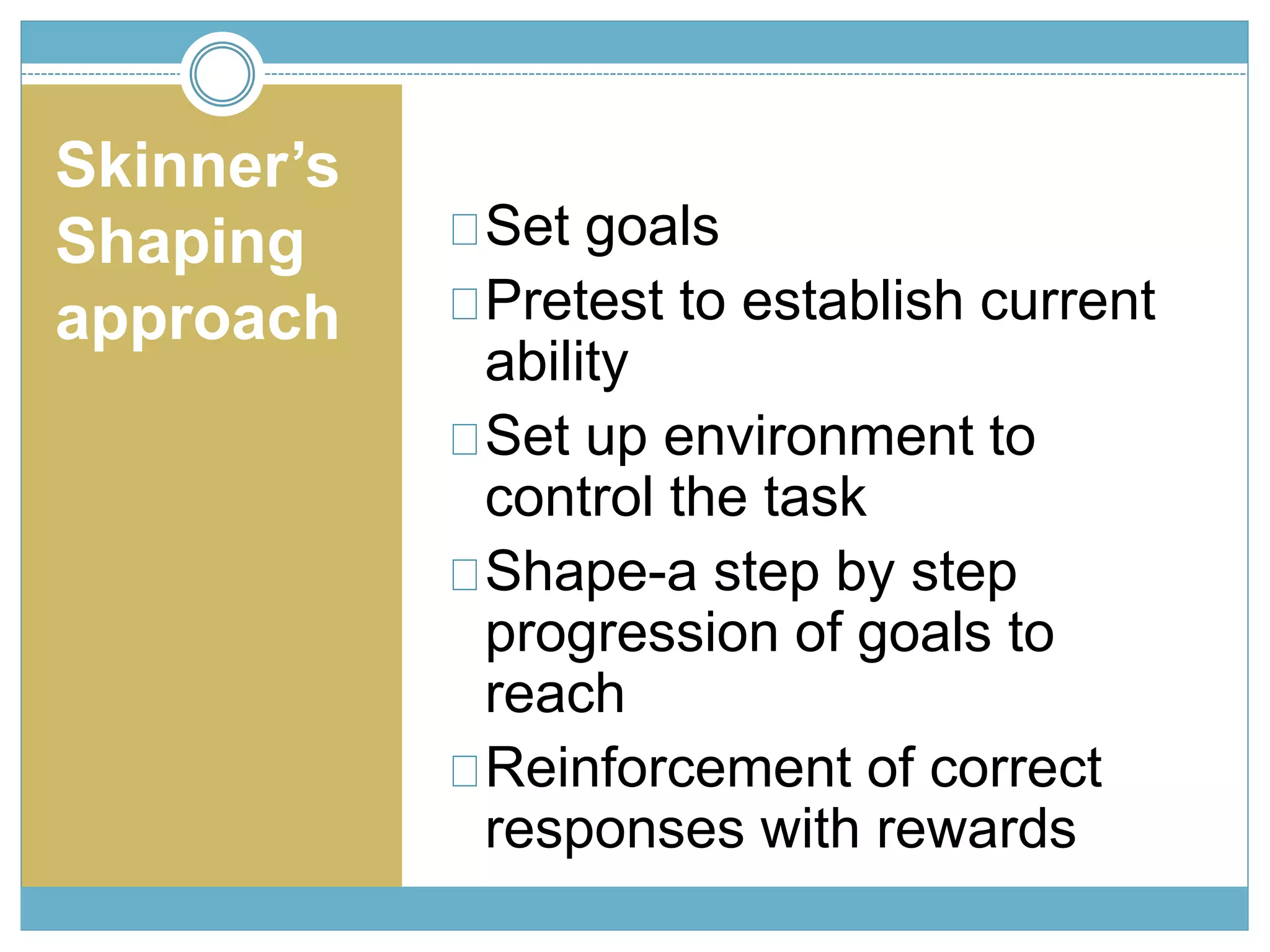
Skinner’s 
Shaping 
approach 
Set goals 
Pretest to establish current 
ability 
Set up environment to 
control the task 
Shape-a step by step 
progression of goals to 
reach 
Reinforcement of correct 
responses with rewards
Gestalt’s Theory 
Developed several laws of their own: 
Proximity 
Similarity 
Closure
Cognitive Theories 
An alternative approach to the 
Behaviorist 
individual’s interpretation of the 
environment 
how people abstract meaning from the 
environment and use this info to solve 
problems
Linking them together 
use of the behavioral approach may be 
appropriate 
students should be challenged to 
recognize and understand the 
principles involved
Human /Machine Theories 
Relatively new 
Cybernetics 
Feedback is critical in this approach 
Amount of info needed to develop a 
plan of action
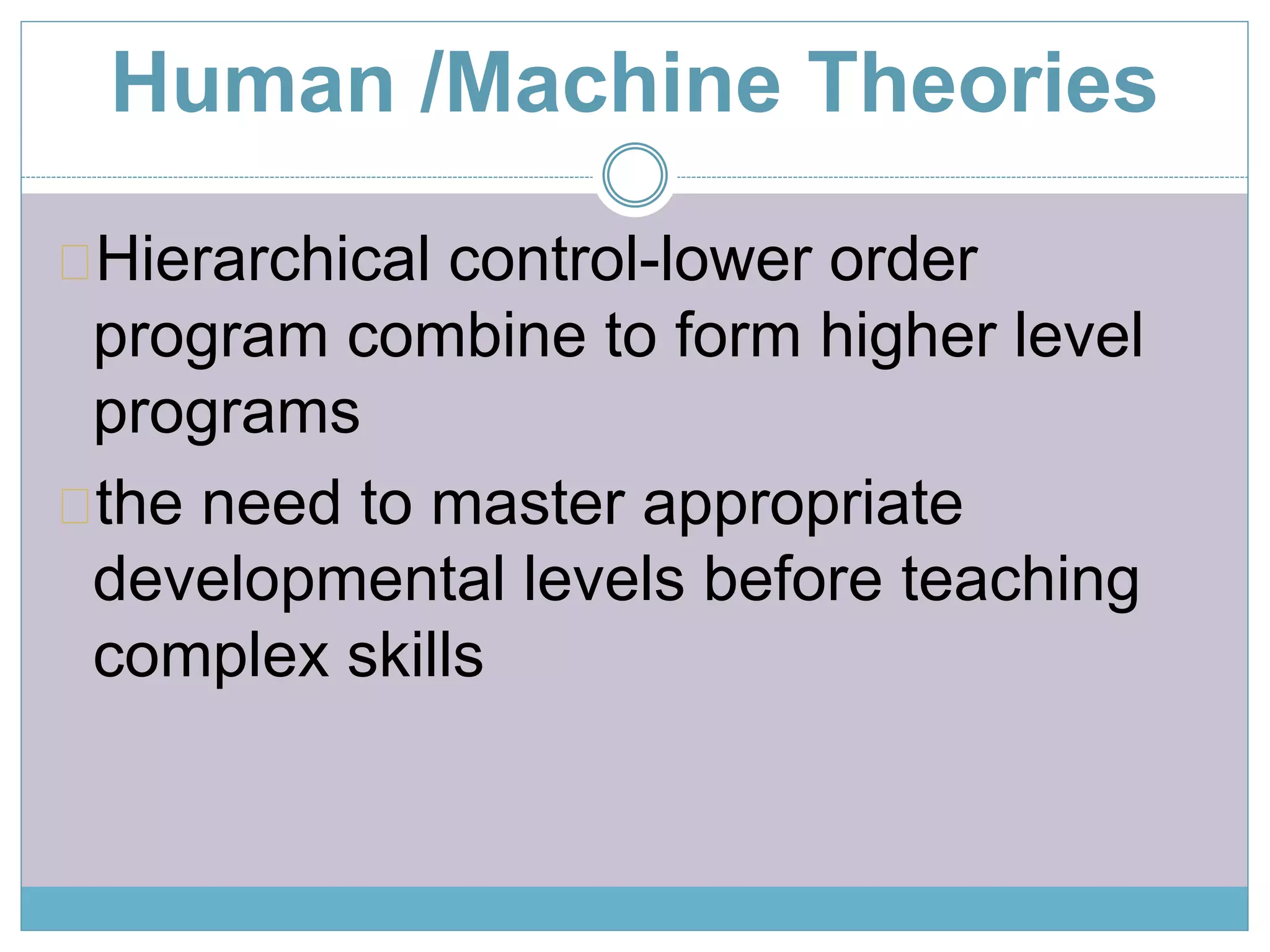
Human /Machine Theories 
Hierarchical control-lower order 
program combine to form higher level 
programs 
the need to master appropriate 
developmental levels before teaching 
complex skills
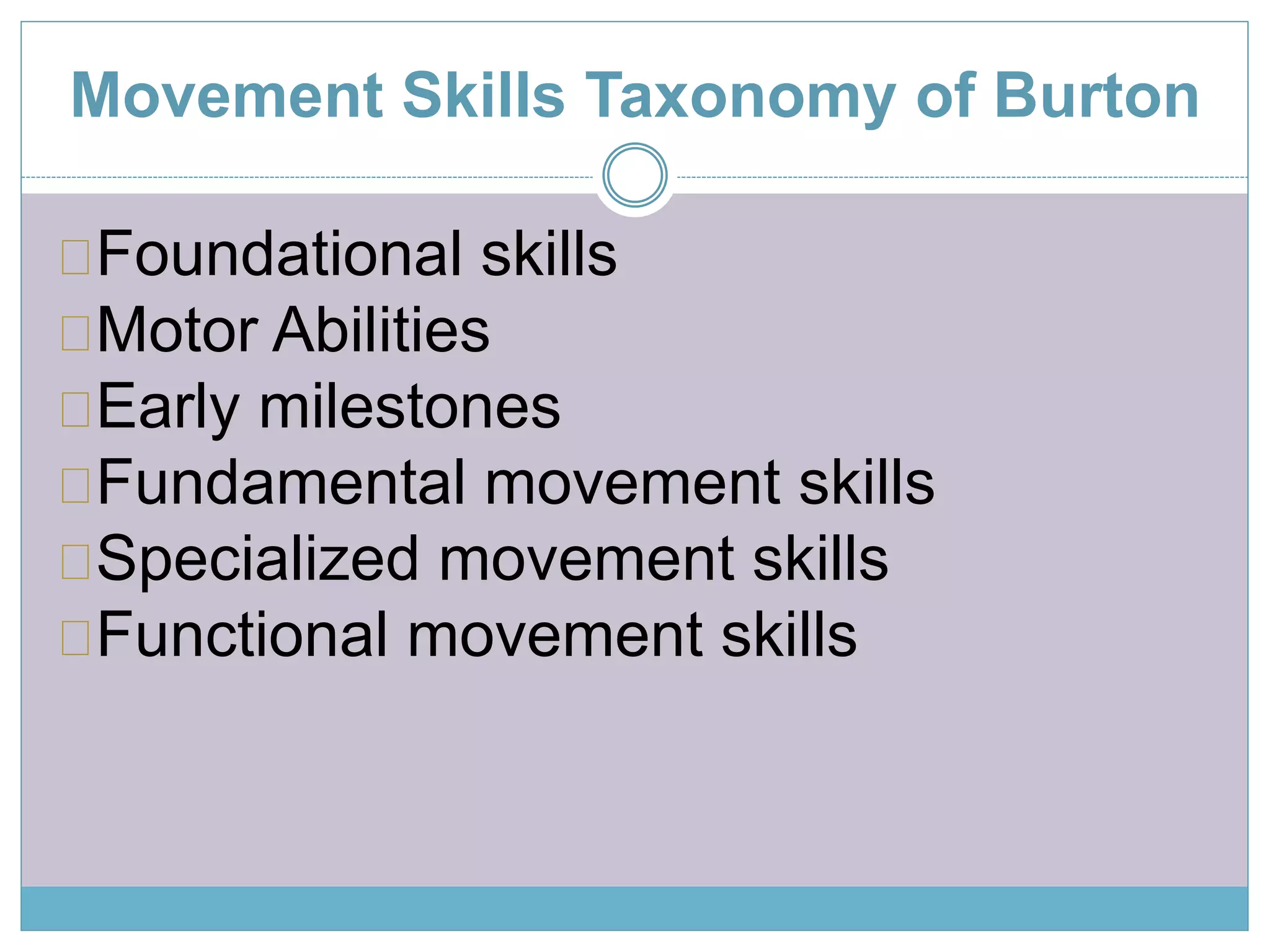
Movement Skills Taxonomy of Burton 
Foundational skills 
Motor Abilities 
Early milestones 
Fundamental movement skills 
Specialized movement skills 
Functional movement skills
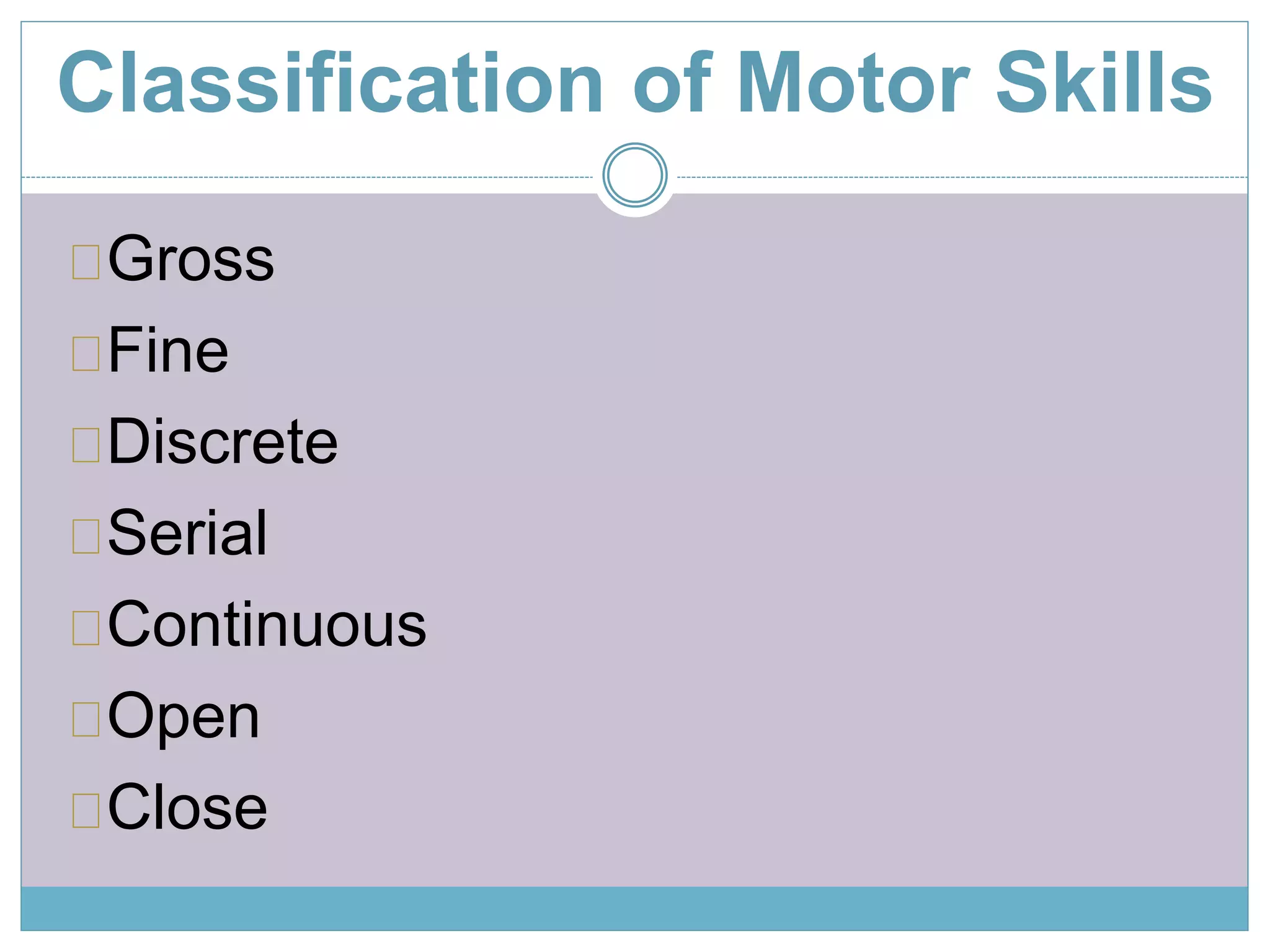
Classification of Motor Skills 
Gross 
Fine 
Discrete 
Serial 
Continuous 
Open 
Close
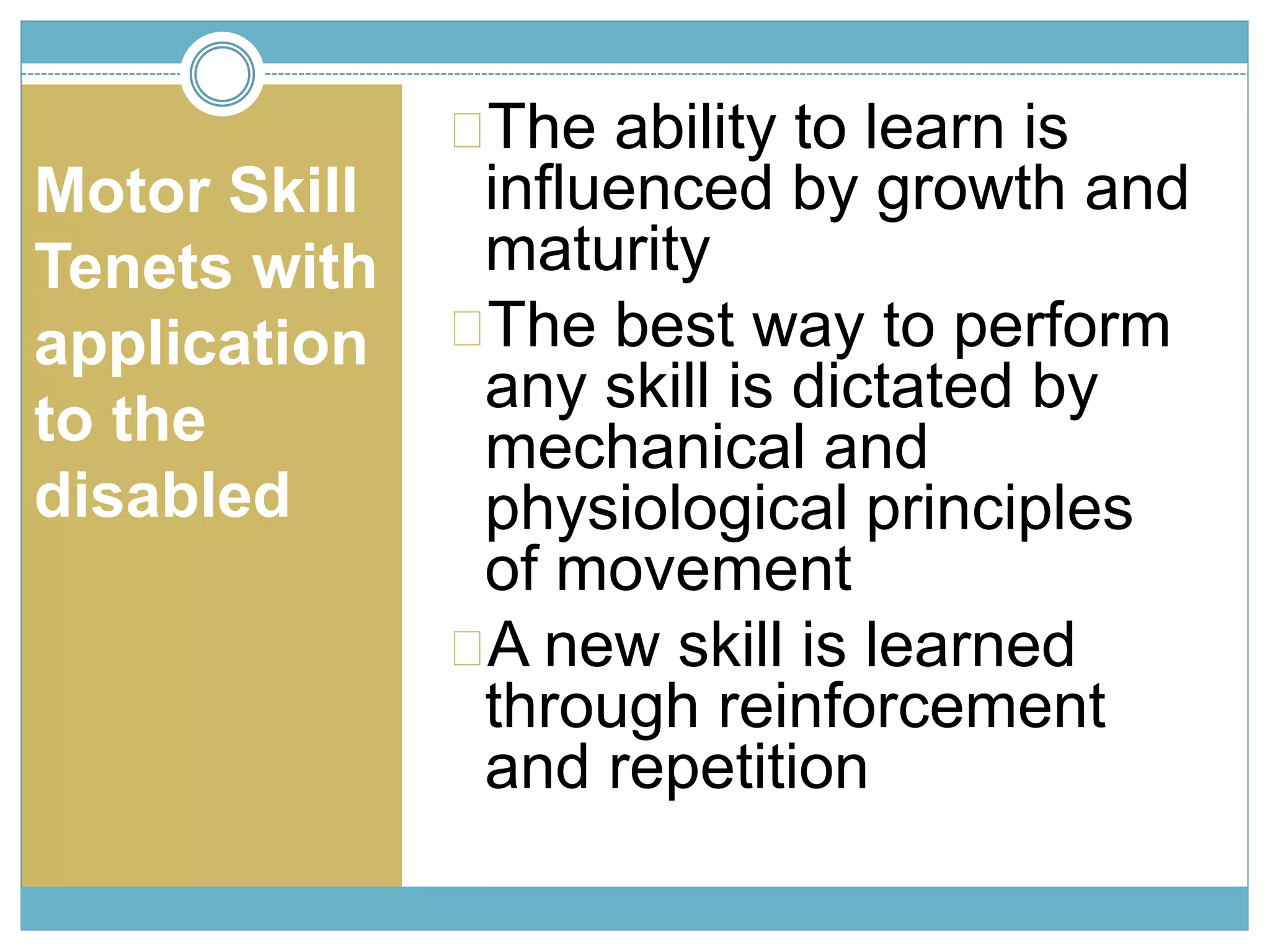
Motor Skill 
Tenets with 
application 
to the 
disabled 
The ability to learn is 
influenced by growth and 
maturity 
The best way to perform 
any skill is dictated by 
mechanical and 
physiological principles 
of movement 
A new skill is learned 
through reinforcement 
and repetition
Motor Skill 
Tenets with 
application 
to the 
disabled 
Practice alone does not 
improve performance. 
Learning rate varies 
greatly 
Emotion affects the 
process 
Learning is very specific 
Learning ability increases 
when success is present
Motor Skill 
Tenets with 
application 
to the 
disabled 
Faster learning occurs 
when practice is followed 
by adequate rest 
Over learning is required 
Gross motor skills and 
continuous tasks are 
retained longer-like 
skipping and hoping
Motor Skill 
Tenets with 
application 
to the 
disabled 
The students with 
disabilities learn motor skills 
the same way as others-sometimes 
it just takes 
longer 
While a continuous process, 
stages exist 
Stage 1-Cognitive phase 
Stage 2-Associative phase 
Stage 3-Autonomous phase
Perceptual Motor Learning 
recognition and interpretation of stimuli 
by the brain 
movement is a important key in the 
development of perception 
viewed as a cure for problems of 
learning academics-today it is seen 
more as a vital part of improving 
movement
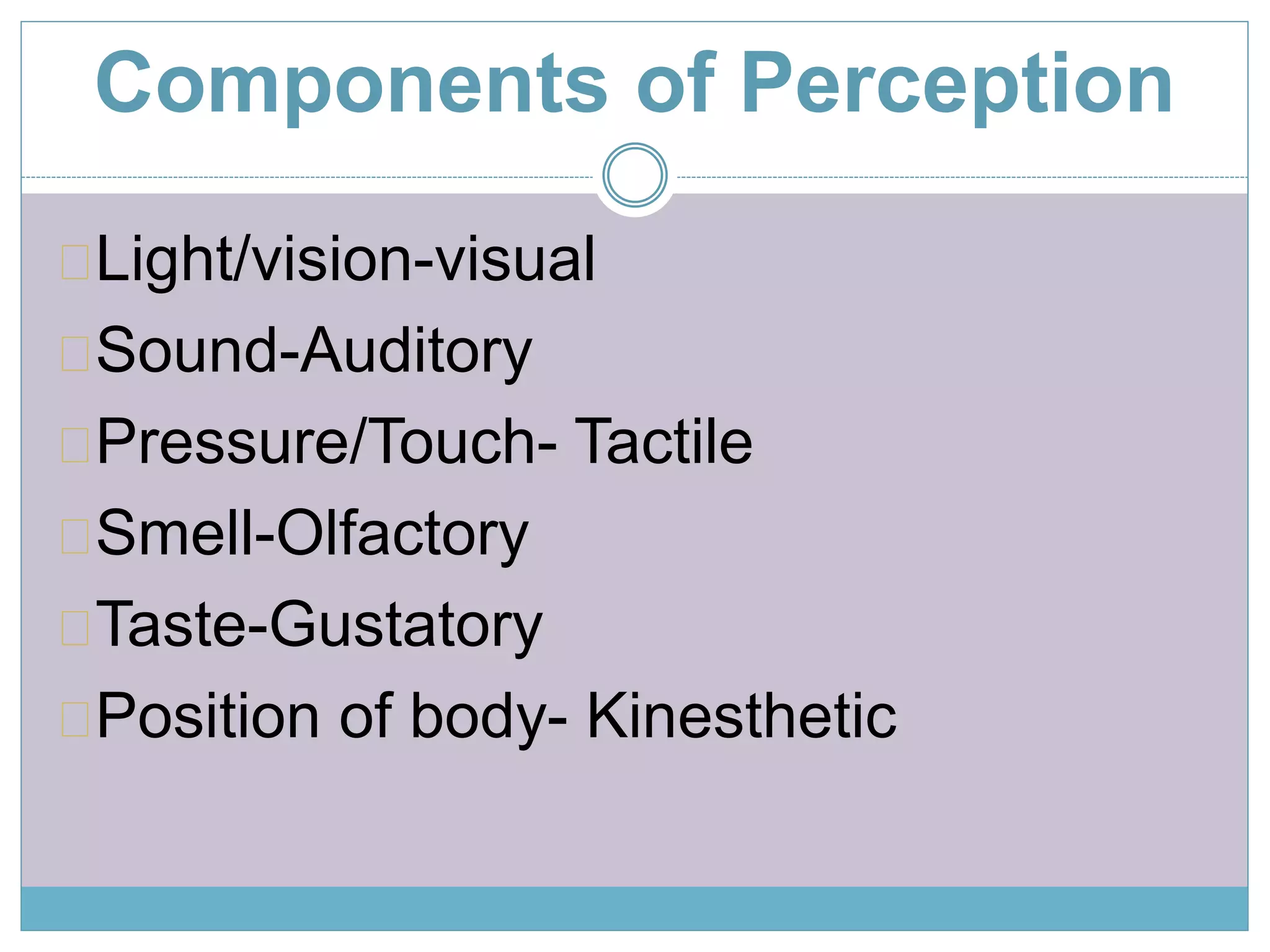
Components of Perception 
Light/vision-visual 
Sound-Auditory 
Pressure/Touch- Tactile 
Smell-Olfactory 
Taste-Gustatory 
Position of body- Kinesthetic
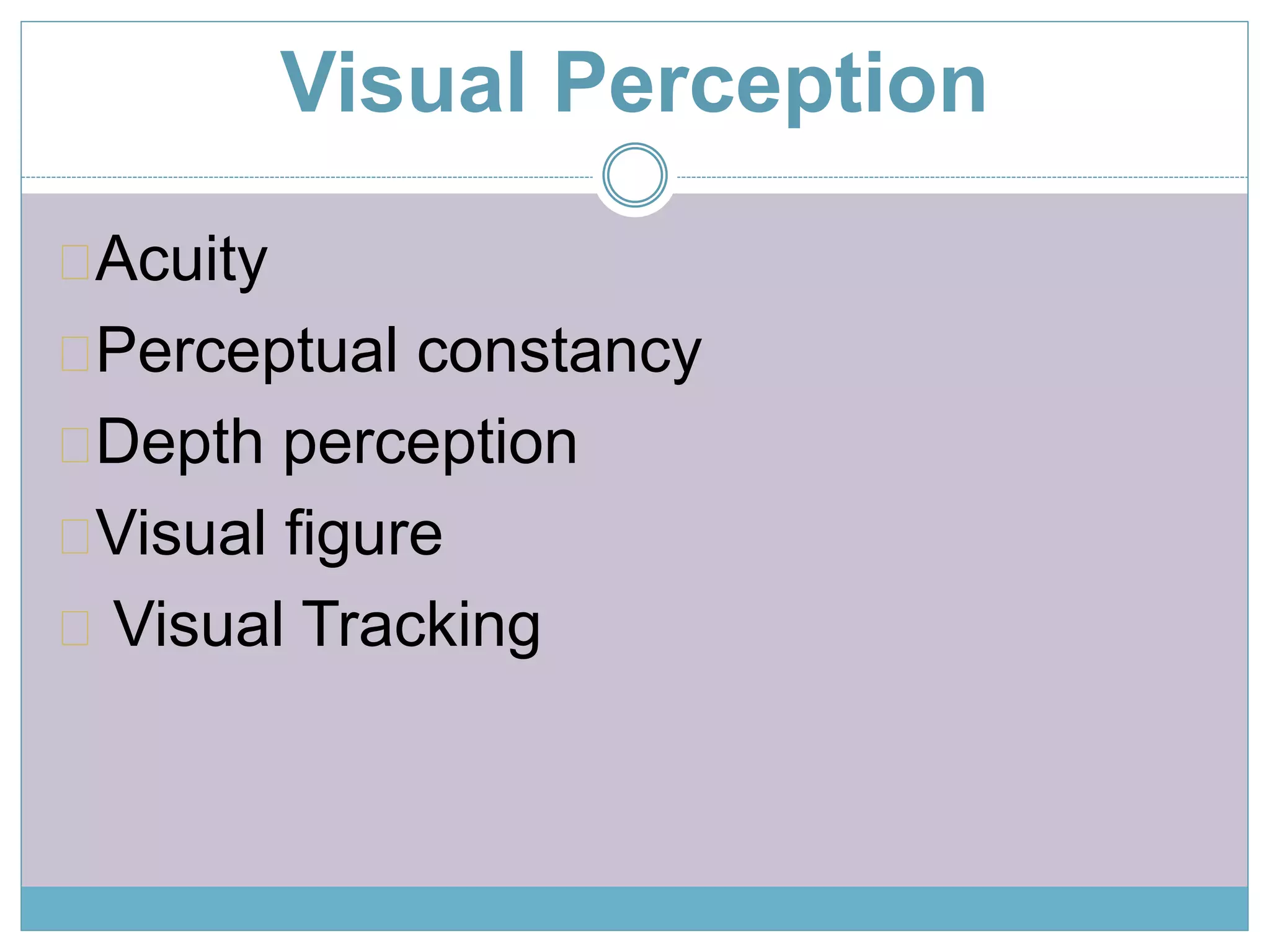
Visual Perception 
Acuity 
Perceptual constancy 
Depth perception 
Visual figure 
Visual Tracking
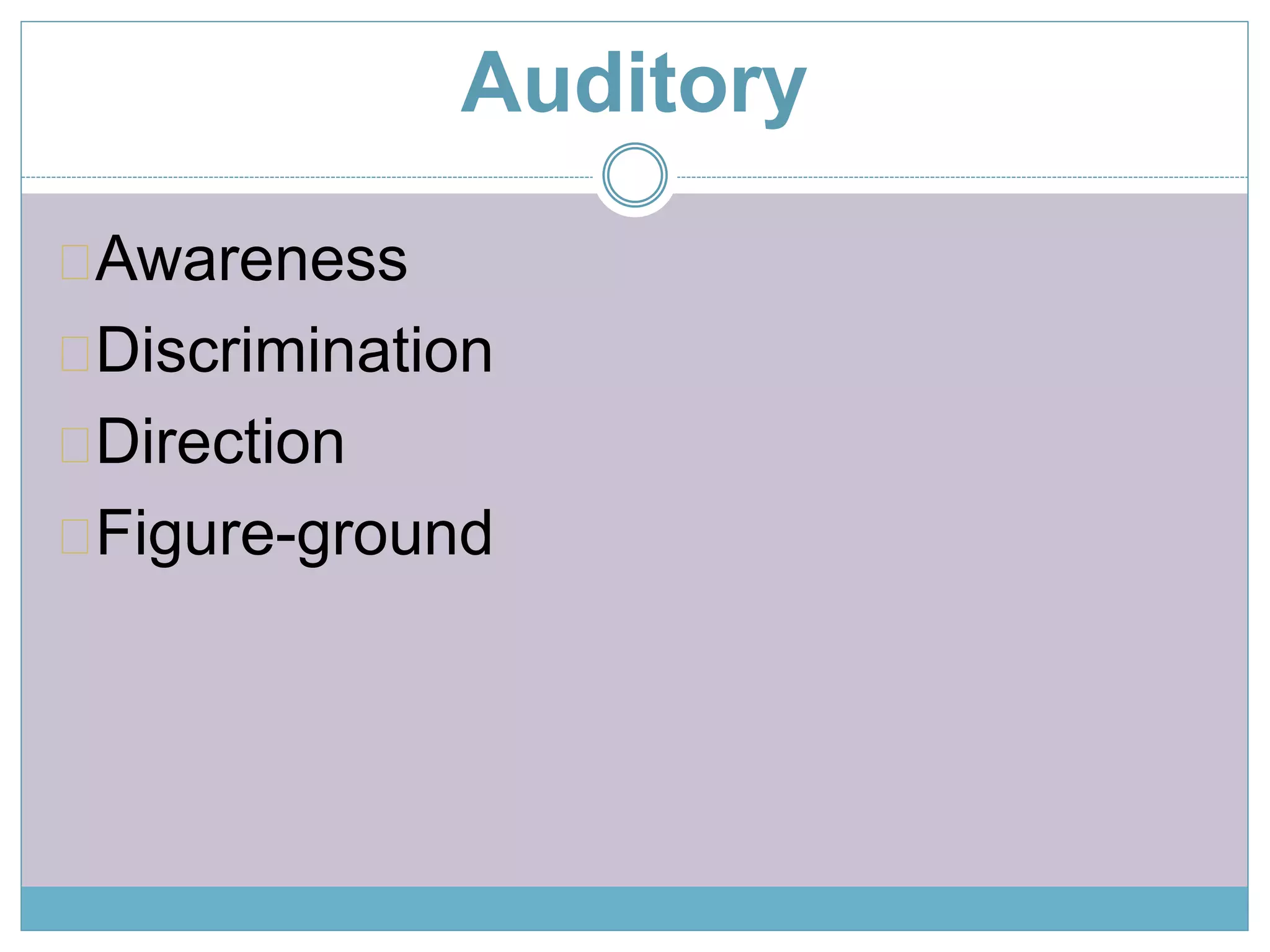
Auditory 
Awareness 
Discrimination 
Direction 
Figure-ground
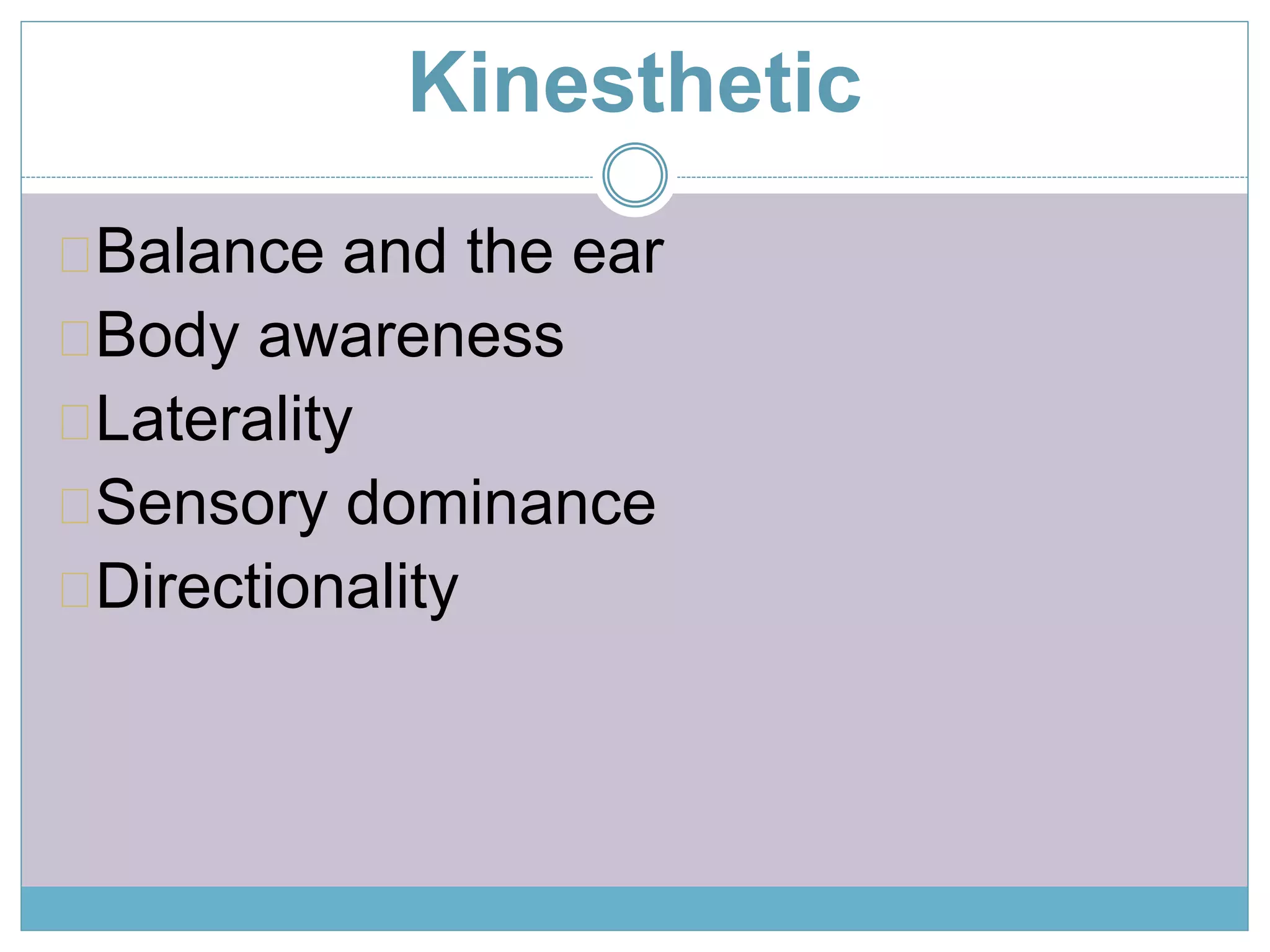
Kinesthetic 
Balance and the ear 
Body awareness 
Laterality 
Sensory dominance 
Directionality
Tactile/ gustatory/olfactory 
Tactile Especially important for the 
visual sight problems 
Although not normal considered a 
factor in motor learning or perceptual 
development, gustatory and olfactory— 
Few like to learn or perform things in an 
environment that STINKS!!!
How to enhance the perceptual process? 
Consider the perception in every 
activity! 
Develop games that are fun and work 
toward the perception 
Realize that little things do make a 
difference!
Developmental Coordination Disorder 
A new classification by the American 
Psychiatric Association 
Performance in daily motor activities 
that is substantially below normal and 
Interferes with academic achievement 
Cannot be attributed to other 
disabilities

Motor learning and perception

  • 1.
    Motor Learning and Perception The acquiring of skills involving muscular movement. Karen Grace M. Alvaro
  • 2.
    Behavior Theories Thorndike,Watson, Pavlov and Skinner Environment Laws  Law of Readiness  Law of Effect  Law of Exercise
  • 3.
    Motor Learning Theories Behavior Theories Cognitive Theories Human machine Theories
  • 4.
    Skinner’s Shaping approach Set goals Pretest to establish current ability Set up environment to control the task Shape-a step by step progression of goals to reach Reinforcement of correct responses with rewards
  • 5.
    Gestalt’s Theory Developedseveral laws of their own: Proximity Similarity Closure
  • 6.
    Cognitive Theories Analternative approach to the Behaviorist individual’s interpretation of the environment how people abstract meaning from the environment and use this info to solve problems
  • 7.
    Linking them together use of the behavioral approach may be appropriate students should be challenged to recognize and understand the principles involved
  • 8.
    Human /Machine Theories Relatively new Cybernetics Feedback is critical in this approach Amount of info needed to develop a plan of action
  • 9.
    Human /Machine Theories Hierarchical control-lower order program combine to form higher level programs the need to master appropriate developmental levels before teaching complex skills
  • 10.
    Movement Skills Taxonomyof Burton Foundational skills Motor Abilities Early milestones Fundamental movement skills Specialized movement skills Functional movement skills
  • 11.
    Classification of MotorSkills Gross Fine Discrete Serial Continuous Open Close
  • 12.
    Motor Skill Tenetswith application to the disabled The ability to learn is influenced by growth and maturity The best way to perform any skill is dictated by mechanical and physiological principles of movement A new skill is learned through reinforcement and repetition
  • 13.
    Motor Skill Tenetswith application to the disabled Practice alone does not improve performance. Learning rate varies greatly Emotion affects the process Learning is very specific Learning ability increases when success is present
  • 14.
    Motor Skill Tenetswith application to the disabled Faster learning occurs when practice is followed by adequate rest Over learning is required Gross motor skills and continuous tasks are retained longer-like skipping and hoping
  • 15.
    Motor Skill Tenetswith application to the disabled The students with disabilities learn motor skills the same way as others-sometimes it just takes longer While a continuous process, stages exist Stage 1-Cognitive phase Stage 2-Associative phase Stage 3-Autonomous phase
  • 16.
    Perceptual Motor Learning recognition and interpretation of stimuli by the brain movement is a important key in the development of perception viewed as a cure for problems of learning academics-today it is seen more as a vital part of improving movement
  • 17.
    Components of Perception Light/vision-visual Sound-Auditory Pressure/Touch- Tactile Smell-Olfactory Taste-Gustatory Position of body- Kinesthetic
  • 18.
    Visual Perception Acuity Perceptual constancy Depth perception Visual figure Visual Tracking
  • 19.
    Auditory Awareness Discrimination Direction Figure-ground
  • 20.
    Kinesthetic Balance andthe ear Body awareness Laterality Sensory dominance Directionality
  • 21.
    Tactile/ gustatory/olfactory TactileEspecially important for the visual sight problems Although not normal considered a factor in motor learning or perceptual development, gustatory and olfactory— Few like to learn or perform things in an environment that STINKS!!!
  • 22.
    How to enhancethe perceptual process? Consider the perception in every activity! Develop games that are fun and work toward the perception Realize that little things do make a difference!
  • 23.
    Developmental Coordination Disorder A new classification by the American Psychiatric Association Performance in daily motor activities that is substantially below normal and Interferes with academic achievement Cannot be attributed to other disabilities