Motivating students: Stimulating and sustaining student interest with the incorporation of humor within the classroom Research Applications: AEE 5104
Problem.. Schools have narrow focus on discipline Heavy emphasis solely on standardized testing, objectives, and competencies in today’s classroom Teachers have lost sight of making the learning environment fun for students
Problem.. Reviewing the literature the following voids were found: Lack of research pertaining to humor within education  Lack of research with definitive results Challenging to measure the true affect of humor on students within the classroom
Humor has shown to facilitate attention and motivation, improve teacher-student rapport, and make curriculum more enjoyable Humor allows students to feel more at ease, and decreases stress, and increases students retention of material Humor increases retention, creativity, and critical thinking Literature Findings
Facilitating Planned Humor Teachers can develop their skills to incorporate humor within their instructional strategy Use cartoons, ask questions with humorous answers, rewrite bits of text humorously, incorporate humor within direct lecture All subjects have the potential for humor
Humor should be based in a positive light Steer clear of sarcasm Humor is a skill that can be practiced and perfected Teachers don’t need to be a comedian to effectively incorporate Incorporating Humor
Loudoun County Public Schools Dominion High School Stone Bridge High School Marketing Education Courses Purpose was to determine the impact of humor on students The Context
Data Collection Method One Incorporate humor into direct lecture Use jokes, stories, and quips throughout lesson Measure affect humor on retention through short assessments  Method Two Incorporate humor directly into assessments Place humor into directions to facilitate motivation Measure effectiveness of humor by students reading directions in entirety
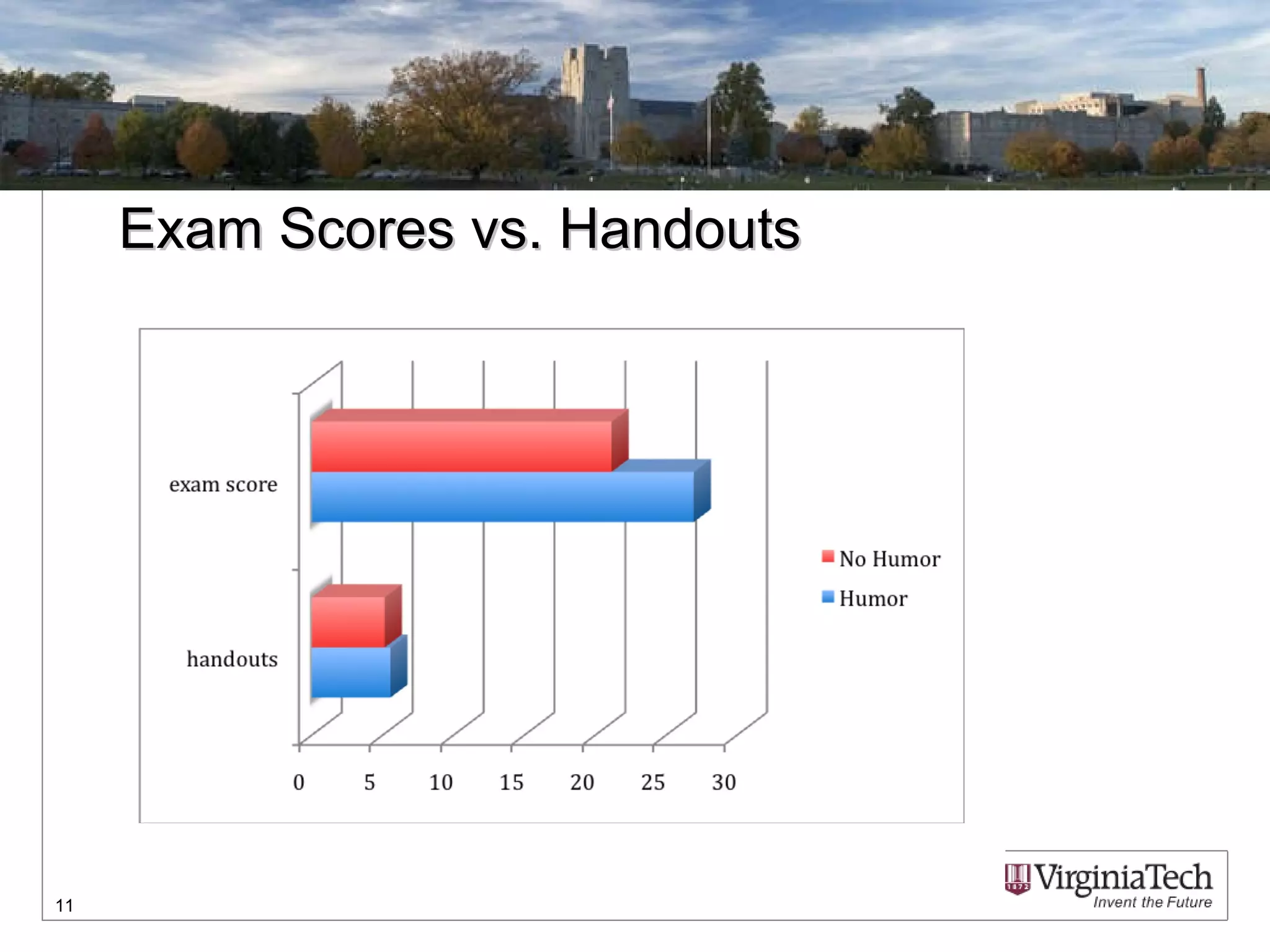
Findings Using Exam Scores Exam scores used to gauge student retention Using t-test and p-score was proven to be statistically insignificant  A lower p-score was needed to determine if humor within the classroom is effective
Findings Using Informal Assessments Informal assessment scores determine amount of knowledge that was retained after a lecture Assessment consisted of questions pertaining to direct lecture Based on t-test and p-score was not statistically significant enough to draw a definitive conclusion
Exam Scores vs. Handouts
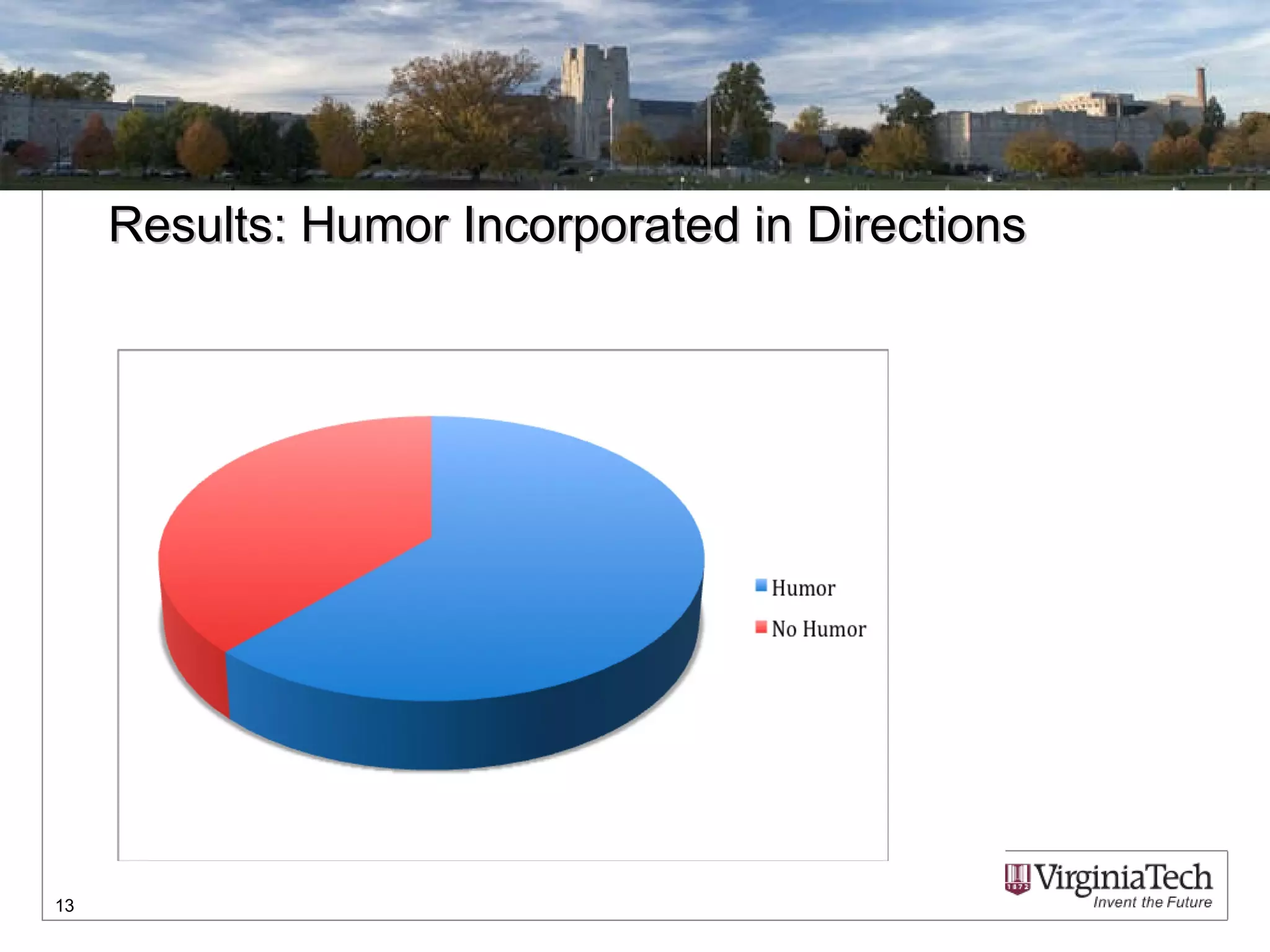
Findings Based on Humor Incorporated in Directions Humor placed within directions One class received humor-filled directions and the control group did not receive any humor Based on a one-tailed individual t-test and p-score the data was not statistically significant
Results: Humor Incorporated in Directions
Conclusions Research evidence was not statistically significant enough to draw definite conclusions Researchers observed positive change when humor was incorporated in the curriculum Humor directly affects students attention, retention, and excitement for curriculum
Conclusions Team believes there is value in incorporating humor into the curriculum The team will continue research into next academic year Students showed less fatigue, anxiety, and tension during the humorous lessons
Recommendations Research team will add more assessments to gauge impact of humor on other factors Educational approach rather than assessment based Further investigation in order to draw more conclusive evidence Refine humor and implementation Team will be more experienced and more capable of implementing humor within their own classrooms Increased collaboration  Obtain more data to draw conclusions

Motivation Is No Laughing Matter

  • 1.
    Motivating students: Stimulatingand sustaining student interest with the incorporation of humor within the classroom Research Applications: AEE 5104
  • 2.
    Problem.. Schools havenarrow focus on discipline Heavy emphasis solely on standardized testing, objectives, and competencies in today’s classroom Teachers have lost sight of making the learning environment fun for students
  • 3.
    Problem.. Reviewing theliterature the following voids were found: Lack of research pertaining to humor within education Lack of research with definitive results Challenging to measure the true affect of humor on students within the classroom
  • 4.
    Humor has shownto facilitate attention and motivation, improve teacher-student rapport, and make curriculum more enjoyable Humor allows students to feel more at ease, and decreases stress, and increases students retention of material Humor increases retention, creativity, and critical thinking Literature Findings
  • 5.
    Facilitating Planned HumorTeachers can develop their skills to incorporate humor within their instructional strategy Use cartoons, ask questions with humorous answers, rewrite bits of text humorously, incorporate humor within direct lecture All subjects have the potential for humor
  • 6.
    Humor should bebased in a positive light Steer clear of sarcasm Humor is a skill that can be practiced and perfected Teachers don’t need to be a comedian to effectively incorporate Incorporating Humor
  • 7.
    Loudoun County PublicSchools Dominion High School Stone Bridge High School Marketing Education Courses Purpose was to determine the impact of humor on students The Context
  • 8.
    Data Collection MethodOne Incorporate humor into direct lecture Use jokes, stories, and quips throughout lesson Measure affect humor on retention through short assessments Method Two Incorporate humor directly into assessments Place humor into directions to facilitate motivation Measure effectiveness of humor by students reading directions in entirety
  • 9.
    Findings Using ExamScores Exam scores used to gauge student retention Using t-test and p-score was proven to be statistically insignificant A lower p-score was needed to determine if humor within the classroom is effective
  • 10.
    Findings Using InformalAssessments Informal assessment scores determine amount of knowledge that was retained after a lecture Assessment consisted of questions pertaining to direct lecture Based on t-test and p-score was not statistically significant enough to draw a definitive conclusion
  • 11.
  • 12.
    Findings Based onHumor Incorporated in Directions Humor placed within directions One class received humor-filled directions and the control group did not receive any humor Based on a one-tailed individual t-test and p-score the data was not statistically significant
  • 13.
  • 14.
    Conclusions Research evidencewas not statistically significant enough to draw definite conclusions Researchers observed positive change when humor was incorporated in the curriculum Humor directly affects students attention, retention, and excitement for curriculum
  • 15.
    Conclusions Team believesthere is value in incorporating humor into the curriculum The team will continue research into next academic year Students showed less fatigue, anxiety, and tension during the humorous lessons
  • 16.
    Recommendations Research teamwill add more assessments to gauge impact of humor on other factors Educational approach rather than assessment based Further investigation in order to draw more conclusive evidence Refine humor and implementation Team will be more experienced and more capable of implementing humor within their own classrooms Increased collaboration Obtain more data to draw conclusions

Editor's Notes