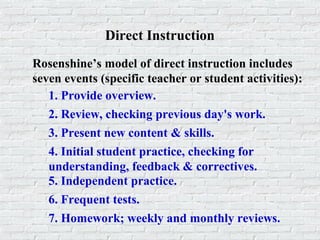
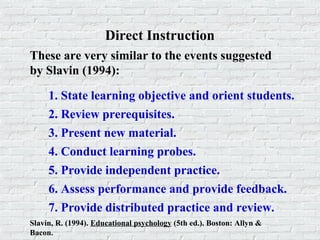
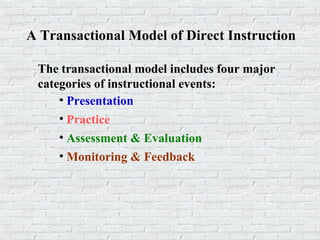
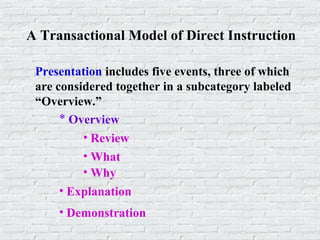
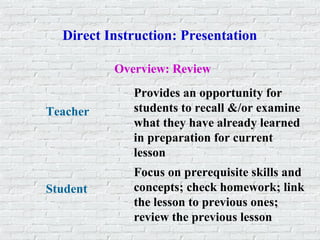
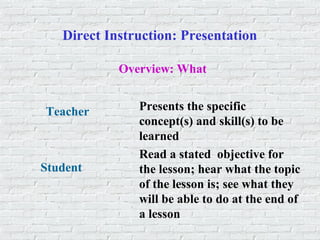
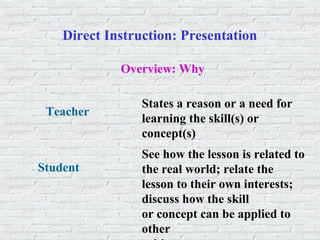
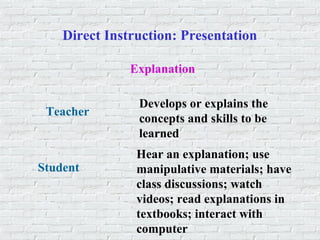
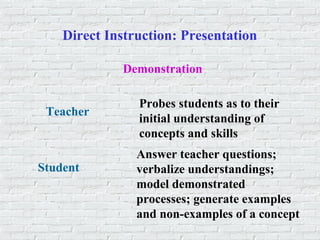
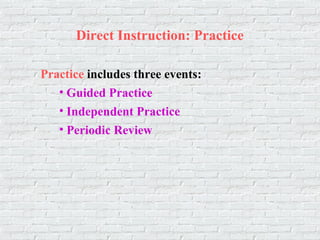
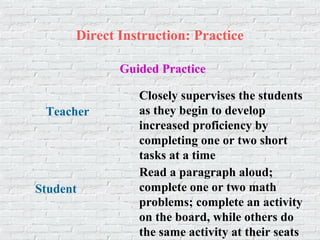
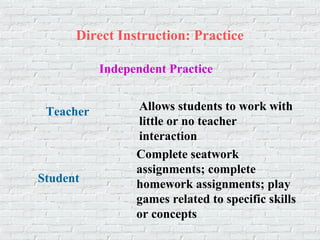
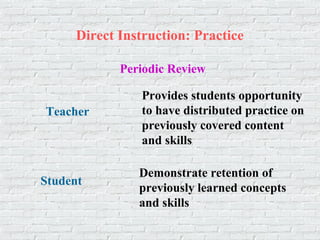
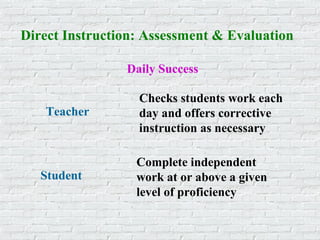
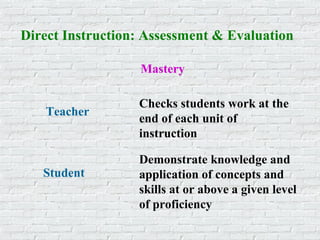
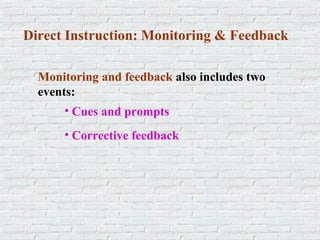
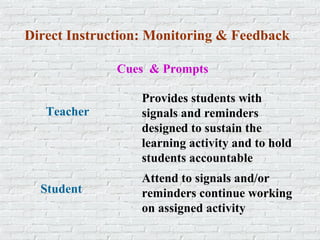
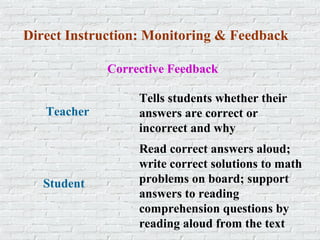
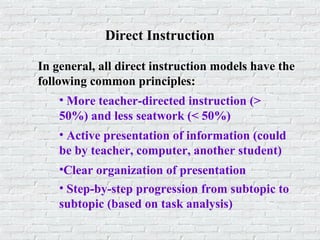
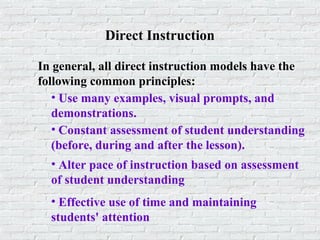
The document describes a transactional model of direct instruction that includes four categories of instructional events: presentation, practice, assessment & evaluation, and monitoring & feedback. Each category includes specific teacher and student behaviors. For example, in the presentation category, the teacher would provide an overview by reviewing prerequisite skills while the student recalls what they have learned. The model aims to actively engage both teachers and students at each instructional event. In general, direct instruction models emphasize teacher-directed instruction, active presentation of information, clear organization, and constant assessment of student understanding.