Using Humor
to Maximize Learning
Group Members
  Mohammed
    Roqya
     Badr
   Nariman
    Shady
    Asmaa
Purpose of Today’s presentation
• Identify the concept of humor
• Identify the benefits of using humor
• Identify humor implications in language
  learning/teaching and how to motivate
  learners through using humor.
• Developing ideas concerning the
  application of humor and its various
  techniques.
• Identify guidelines for using humor .
What is humor ?
Humor has been defined as “the mental faculty
  of discovering, expressing or appreciating
something that is comical, amusing, or absurdly
                  out of place”.
 Humor has also been described as a “sense,” as
        in the term, “sense of humor.”
Why should we use humor ?
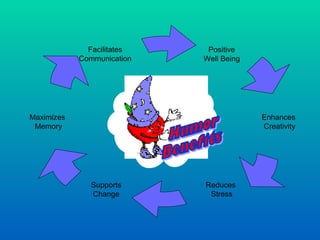
Facilitates    Positive
            Communication   Well Being


Maximizes                                Enhances
 Memory                                  Creativity


               Supports     Reduces
               Change        Stress
we can wrap up and say that :

 * Humor can relieve stress and promote
healing.
* Humor counteracts depression.
* Humor raises self-esteem.
* Humor elevates mood.
* Humor improves relationships.
* Humor Increase retention of the
materials .
* Humor Enhances memory
* Humor Increases motivation and self
confidence .
* Humor Creates a positive classroom
environment .
* Humor Builds group identity, solidarity and
cohesiveness.
* humour Increases learners’ attendance levels.
*Humour enhances creative thinking .
We have seen the benefits of
humor in teaching , but how do
  we go about using it in our
           lessons .
Humor in the language classroom can be classified
               into major categories:
Textual examples :
Stories , jokes , riddles .
Pictorial examples
Cartoons and comics
Action examples
Videos
Verbal examples
Similes and word games
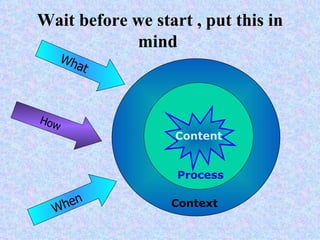
Wait before we start , put this in
            mind
      Wh
         at


How
                   Content


                   Process


  When            Context
NOW
Let’s do it
Back again , to the last part of
   today’s presentation.
Myths about Humor

There is no doubt that we have been asked to
accomplish more and more in our jobs. the stress
that this creates has led to several belief systems
that permeate our culture.
 “If we have fun, work will not get done!”
“If I am silly , I will not be seen as a
professional.”
“If we are laughing, they will not be learning.”
“I don’t have time for humor.”
Humor phobia
* Fear of not having time for
humor
* Fear of being perceived as silly
and not as a professional
* Fear of losing “control”
Did you made your own decision?
would you like to use humor ?
      Yes or No
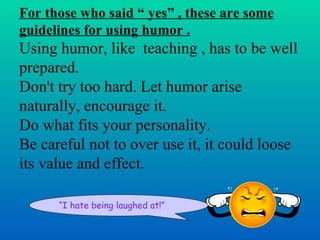
For those who said “ yes” , these are some
guidelines for using humor .
Using humor, like teaching , has to be well
prepared.
Don't try too hard. Let humor arise
naturally, encourage it.
Do what fits your personality.
Be careful not to over use it, it could loose
its value and effect.

      “I hate being laughed at!”
Thank you so much for listening
                   prepared by
             Asmaa Shehata Hassan
                      Email
           golden.fish23@yahoo.com
presented in a lecture in the Faculty of Education
              Ain Shams University
               Dated : 10 /3/ 2012
            under the supervision of
     Prof . Zeinab El _Naggar
                presented by
              Asmaa and Roqya

Using humor to maximize learning

  • 1.
  • 2.
    Group Members Mohammed Roqya Badr Nariman Shady Asmaa
  • 3.
    Purpose of Today’spresentation • Identify the concept of humor • Identify the benefits of using humor • Identify humor implications in language learning/teaching and how to motivate learners through using humor. • Developing ideas concerning the application of humor and its various techniques. • Identify guidelines for using humor .
  • 4.
  • 5.
    Humor has beendefined as “the mental faculty of discovering, expressing or appreciating something that is comical, amusing, or absurdly out of place”. Humor has also been described as a “sense,” as in the term, “sense of humor.”
  • 6.
    Why should weuse humor ?
  • 7.
    Facilitates Positive Communication Well Being Maximizes Enhances Memory Creativity Supports Reduces Change Stress
  • 8.
    we can wrapup and say that : * Humor can relieve stress and promote healing. * Humor counteracts depression. * Humor raises self-esteem. * Humor elevates mood. * Humor improves relationships. * Humor Increase retention of the materials .
  • 9.
    * Humor Enhancesmemory * Humor Increases motivation and self confidence . * Humor Creates a positive classroom environment . * Humor Builds group identity, solidarity and cohesiveness. * humour Increases learners’ attendance levels. *Humour enhances creative thinking .
  • 10.
    We have seenthe benefits of humor in teaching , but how do we go about using it in our lessons .
  • 11.
    Humor in thelanguage classroom can be classified into major categories: Textual examples : Stories , jokes , riddles . Pictorial examples Cartoons and comics Action examples Videos Verbal examples Similes and word games
  • 12.
    Wait before westart , put this in mind Wh at How Content Process When Context
  • 13.
  • 14.
    Back again ,to the last part of today’s presentation.
  • 15.
    Myths about Humor Thereis no doubt that we have been asked to accomplish more and more in our jobs. the stress that this creates has led to several belief systems that permeate our culture. “If we have fun, work will not get done!” “If I am silly , I will not be seen as a professional.” “If we are laughing, they will not be learning.” “I don’t have time for humor.”
  • 16.
    Humor phobia * Fearof not having time for humor * Fear of being perceived as silly and not as a professional * Fear of losing “control”
  • 17.
    Did you madeyour own decision? would you like to use humor ? Yes or No
  • 18.
    For those whosaid “ yes” , these are some guidelines for using humor . Using humor, like teaching , has to be well prepared. Don't try too hard. Let humor arise naturally, encourage it. Do what fits your personality. Be careful not to over use it, it could loose its value and effect. “I hate being laughed at!”
  • 19.
    Thank you somuch for listening prepared by Asmaa Shehata Hassan Email golden.fish23@yahoo.com presented in a lecture in the Faculty of Education Ain Shams University Dated : 10 /3/ 2012 under the supervision of Prof . Zeinab El _Naggar presented by Asmaa and Roqya