MOTIVATION
S U B M I T T E D T O : P R O F E S S O R S A T Y E N D R A C
P A N D E Y
Presented by Macline Seles Xalxo
Roll no 07
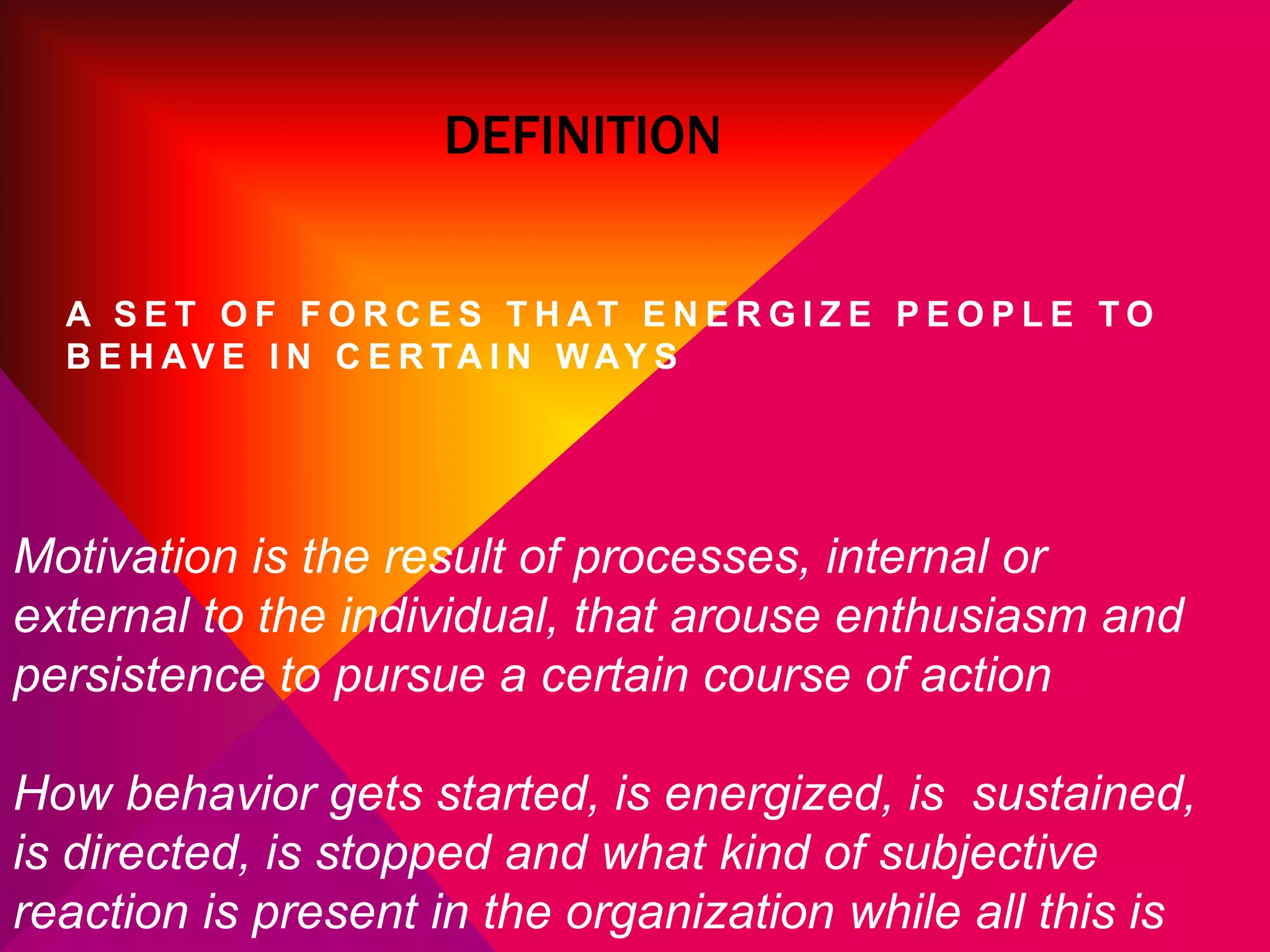
DEFINITION
A S E T O F F O R C E S T H AT E N E R G I Z E P E O P L E T O
B E H AV E I N C E R TA I N WAY S
Motivation is the result of processes, internal or
external to the individual, that arouse enthusiasm and
persistence to pursue a certain course of action
How behavior gets started, is energized, is sustained,
is directed, is stopped and what kind of subjective
reaction is present in the organization while all this is
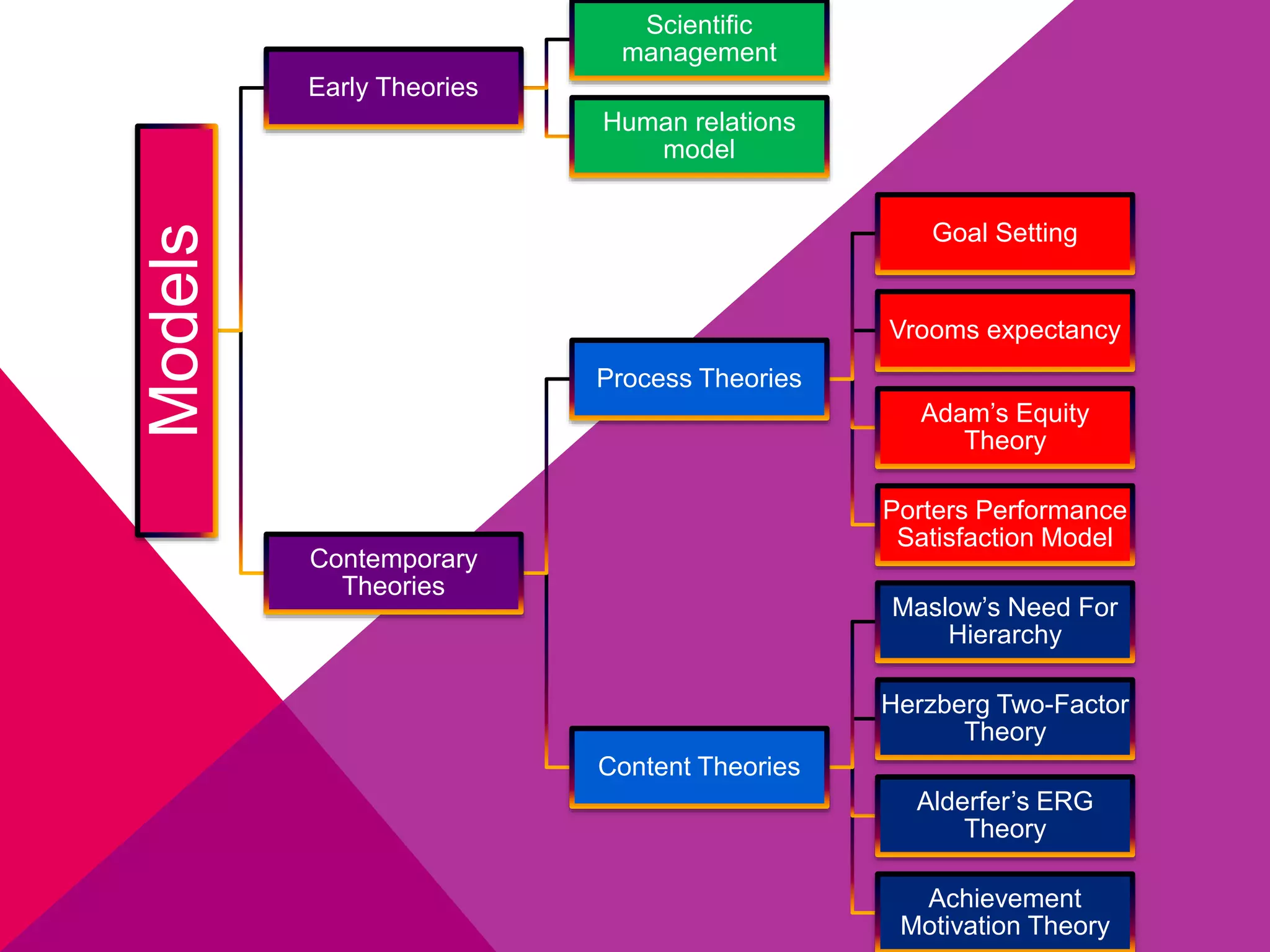
Models
Early Theories
Scientific
management
Human relations
model
Contemporary
Theories
Process Theories
Goal Setting
Vrooms expectancy
Adam’s Equity
Theory
Porters Performance
Satisfaction Model
Content Theories
Maslow’s Need For
Hierarchy
Herzberg Two-Factor
Theory
Alderfer’s ERG
Theory
Achievement
Motivation Theory
Physiological
Safety(securit
y)
Social(affiliatio
n)
Esteem(recog
nition)
Self
actualization
Motivators: Job Satisfaction
Achievement
Recognition Of
Achievement
Work Itself Responsibility Advancement Growth
Hygiene Job dissatisfaction
Company
policy
Supervision
Interpersonal
Relations
Working
Conditions
Salary Status Security
Herzberg’s Hygiene's & motivator
Issue
Type of
Theory
The
Satisfaction
performance
relationship
Effect of need
satisfaction
Need Order
Effect of pay
Effect of
needs
View of
Motivation
Worker Level
Mashlow
Descriptive
Unsatisfied needs
energize Behavor,this
behavior causes
performanceA Satisfied Need Is Not
A Motivator(except
Self-Actualization)
Hierarchy of Needs
Pay is a motivator if it
satisfies needs
All needs are
motivators at various
times
Macro view- Deals with
all aspects of existence
Relevant to all workers
Herzberg
Prescriptive
Needs cause
performance
A satisfied need is not a
motivator, other
satisfied needs are
motivators.
No hierarchy
Pay is not a motivator
Only needs are a
motivator
Micro view-Deals
primarily with work
related motivation
Probably more relevant
to white collar and
professional workers

Motivation

  • 1.
    MOTIVATION S U BM I T T E D T O : P R O F E S S O R S A T Y E N D R A C P A N D E Y Presented by Macline Seles Xalxo Roll no 07
  • 2.
    DEFINITION A S ET O F F O R C E S T H AT E N E R G I Z E P E O P L E T O B E H AV E I N C E R TA I N WAY S Motivation is the result of processes, internal or external to the individual, that arouse enthusiasm and persistence to pursue a certain course of action How behavior gets started, is energized, is sustained, is directed, is stopped and what kind of subjective reaction is present in the organization while all this is
  • 3.
    Models Early Theories Scientific management Human relations model Contemporary Theories ProcessTheories Goal Setting Vrooms expectancy Adam’s Equity Theory Porters Performance Satisfaction Model Content Theories Maslow’s Need For Hierarchy Herzberg Two-Factor Theory Alderfer’s ERG Theory Achievement Motivation Theory
  • 4.
  • 5.
    Motivators: Job Satisfaction Achievement RecognitionOf Achievement Work Itself Responsibility Advancement Growth Hygiene Job dissatisfaction Company policy Supervision Interpersonal Relations Working Conditions Salary Status Security Herzberg’s Hygiene's & motivator
  • 6.
    Issue Type of Theory The Satisfaction performance relationship Effect ofneed satisfaction Need Order Effect of pay Effect of needs View of Motivation Worker Level Mashlow Descriptive Unsatisfied needs energize Behavor,this behavior causes performanceA Satisfied Need Is Not A Motivator(except Self-Actualization) Hierarchy of Needs Pay is a motivator if it satisfies needs All needs are motivators at various times Macro view- Deals with all aspects of existence Relevant to all workers Herzberg Prescriptive Needs cause performance A satisfied need is not a motivator, other satisfied needs are motivators. No hierarchy Pay is not a motivator Only needs are a motivator Micro view-Deals primarily with work related motivation Probably more relevant to white collar and professional workers