PRACTICAL
APPLICATION
OF GOAL
SETTING

Research on
Expectancy
Theory

EXPANDING
THE CONCEPT
OF EQUITY
THEORY
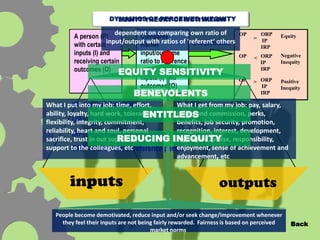
DYNAMICS OF PERCEIVED INEQUITY
EQUITY THEORY OF MOTIVATION

dependent on comparing own ratio of
A person (P)
Compares
input/output with ratios of 'referent‘ others
and perceives
with certain
his/her
inputs (I) and
input/outcome
receiving certain
ratio to reference
outcomes (O) EQUITY SENSITIVITY
person’s (RP)
inputs (I) and
outcomes (O)

BENEVOLENTS

OP

ORP
= IP
IRP

Equity

OP

< ORP
IP
IRP

Negative
Inequity

OP

> ORP
IP
IRP

Positive
Inequity

What I put into my job:the person
What I get from my job: pay, salary,
IP: Inputs of time, effort,
ability, loyalty, hard work, tolerance,
bonus and
ENTITLEDS commission, perks,
OP: Outcomes of the person
flexibility, integrity, commitment,
benefits, job security, promotion,
reliability, heart and soul, personal
IRP: Inputs of reference person recognition, interest, development,
sacrifice, trust in our superiors,
reputation, praise,
REDUCING INEQUITY responsibility,
enjoyment, sense of achievement and
support to the colleagues, etcreference person
ORP: Outcomes of
advancement, etc

inputs

outputs

People become demotivated, reduce input and/or seek change/improvement whenever
they feel their inputs are not being fairly rewarded. Fairness is based on perceived
market norms.

Back
PRACTICAL LESSONSCONCEPT OFTHEORY
EXPANDING THE FROM EQUITY EQUITY

Give employees the opportunity to
Provides explanation of how
appeal decisions that affects
beliefs & attitude affect their
DISTRIBUTIVE
Treating performance
employees inequitably can
welfare
JUSTICE
lead to litigation & costly rework
Employees are more likely to
Paying attention toorganizational
accept and support employee’s
PROCEDURAL JUSTICE
perceptions of what is fair &
change if it is fairly implemented
equitable
and produces equitable outcomes
Managers need to pay attention to the

organization’s climate per justice
INTERACTIONAL
Allowing employees to participate
Managers can promote cooperation
JUSTICE
in making decisions about
&teamwork among group members by
important work equitably
treating them outcomes

Back
INSTRUMENTALITY

The strength of a tendency
to act in a certain way
VALENCE
depends on the strength
of Theexpectancyreward
an value of a that the
act will be followed by a
given consequence & on
the value or attractiveness
of that consequence

EFFORT =
PERFORMANCE
EXPECTATION

Represents a
person’s belief that a
particular outcome
is contingent on a
specific level of
performance

Back
Some workers value interesting work and
recognition more than money
Extrinsic rewards can lose their
motivating properties overtime and
many undermine intrinsic motivation

Research On
Expectancy
Theory

Monetary rewards must be large enough
to generate motivation

Four Prerequisites to Linking Performance &
Rewards

Managers need to determine the relative
Managers should use develop and
Managers need to the performance
valid and accurate
mix of individual versus team contribution
performance ratings with which to compare
communicate performance standards to
ratings to differentially allocate rewards
to performance and then reward accordingly
among employees
employees
employees
Back
Four
Management
Insights From
Motivational
Goal Setting
by Objectives
Research
Mechanisms

Goals Direct Attention
Goal Difficulty
Goals Regulate Effort
Goal Specificity
Feedback Enhances the Effect of
Goals Increase Persistence
Specific Goals
Goals Foster the Development &
Participative goals, assigned
Application of Task Strategies & Action
goals& self set goals

Goal Commitment

Back
What
individual is
trying to
accomplish
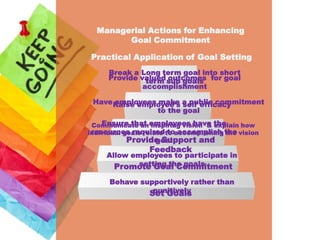
Managerial Actions for Enhancing
Goal Commitment
Practical Application of Goal Setting
Break a Long term goal into short
Provide valued sub goals for goal
term outcomes
accomplishment
Have Raise employee’s a public commitment
employees make self efficacy
to the goal
Ensure that inspiring vision & explain how
Communicate anemployees have the
resources required to accomplish the
individual goals relate to accomplishing the vision

Provide Support and
goal
Feedback

Allow employees to participate in
setting the goals
Promote Goal Commitment
Behave supportively rather than
punitively
Set Goals
Motivation

Motivation

  • 2.
  • 3.
    DYNAMICS OF PERCEIVEDINEQUITY EQUITY THEORY OF MOTIVATION dependent on comparing own ratio of A person (P) Compares input/output with ratios of 'referent‘ others and perceives with certain his/her inputs (I) and input/outcome receiving certain ratio to reference outcomes (O) EQUITY SENSITIVITY person’s (RP) inputs (I) and outcomes (O) BENEVOLENTS OP ORP = IP IRP Equity OP < ORP IP IRP Negative Inequity OP > ORP IP IRP Positive Inequity What I put into my job:the person What I get from my job: pay, salary, IP: Inputs of time, effort, ability, loyalty, hard work, tolerance, bonus and ENTITLEDS commission, perks, OP: Outcomes of the person flexibility, integrity, commitment, benefits, job security, promotion, reliability, heart and soul, personal IRP: Inputs of reference person recognition, interest, development, sacrifice, trust in our superiors, reputation, praise, REDUCING INEQUITY responsibility, enjoyment, sense of achievement and support to the colleagues, etcreference person ORP: Outcomes of advancement, etc inputs outputs People become demotivated, reduce input and/or seek change/improvement whenever they feel their inputs are not being fairly rewarded. Fairness is based on perceived market norms. Back
  • 4.
    PRACTICAL LESSONSCONCEPT OFTHEORY EXPANDINGTHE FROM EQUITY EQUITY Give employees the opportunity to Provides explanation of how appeal decisions that affects beliefs & attitude affect their DISTRIBUTIVE Treating performance employees inequitably can welfare JUSTICE lead to litigation & costly rework Employees are more likely to Paying attention toorganizational accept and support employee’s PROCEDURAL JUSTICE perceptions of what is fair & change if it is fairly implemented equitable and produces equitable outcomes Managers need to pay attention to the organization’s climate per justice INTERACTIONAL Allowing employees to participate Managers can promote cooperation JUSTICE in making decisions about &teamwork among group members by important work equitably treating them outcomes Back
  • 5.
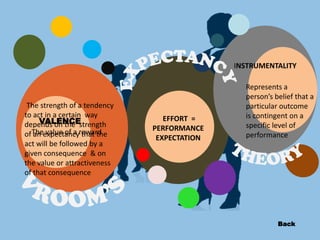
    INSTRUMENTALITY The strength ofa tendency to act in a certain way VALENCE depends on the strength of Theexpectancyreward an value of a that the act will be followed by a given consequence & on the value or attractiveness of that consequence EFFORT = PERFORMANCE EXPECTATION Represents a person’s belief that a particular outcome is contingent on a specific level of performance Back
  • 6.
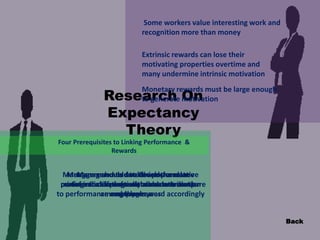
    Some workers valueinteresting work and recognition more than money Extrinsic rewards can lose their motivating properties overtime and many undermine intrinsic motivation Research On Expectancy Theory Monetary rewards must be large enough to generate motivation Four Prerequisites to Linking Performance & Rewards Managers need to determine the relative Managers should use develop and Managers need to the performance valid and accurate mix of individual versus team contribution performance ratings with which to compare communicate performance standards to ratings to differentially allocate rewards to performance and then reward accordingly among employees employees employees Back
  • 7.
    Four Management Insights From Motivational Goal Setting byObjectives Research Mechanisms Goals Direct Attention Goal Difficulty Goals Regulate Effort Goal Specificity Feedback Enhances the Effect of Goals Increase Persistence Specific Goals Goals Foster the Development & Participative goals, assigned Application of Task Strategies & Action goals& self set goals Goal Commitment Back
  • 8.
  • 9.
    Managerial Actions forEnhancing Goal Commitment Practical Application of Goal Setting Break a Long term goal into short Provide valued sub goals for goal term outcomes accomplishment Have Raise employee’s a public commitment employees make self efficacy to the goal Ensure that inspiring vision & explain how Communicate anemployees have the resources required to accomplish the individual goals relate to accomplishing the vision Provide Support and goal Feedback Allow employees to participate in setting the goals Promote Goal Commitment Behave supportively rather than punitively Set Goals