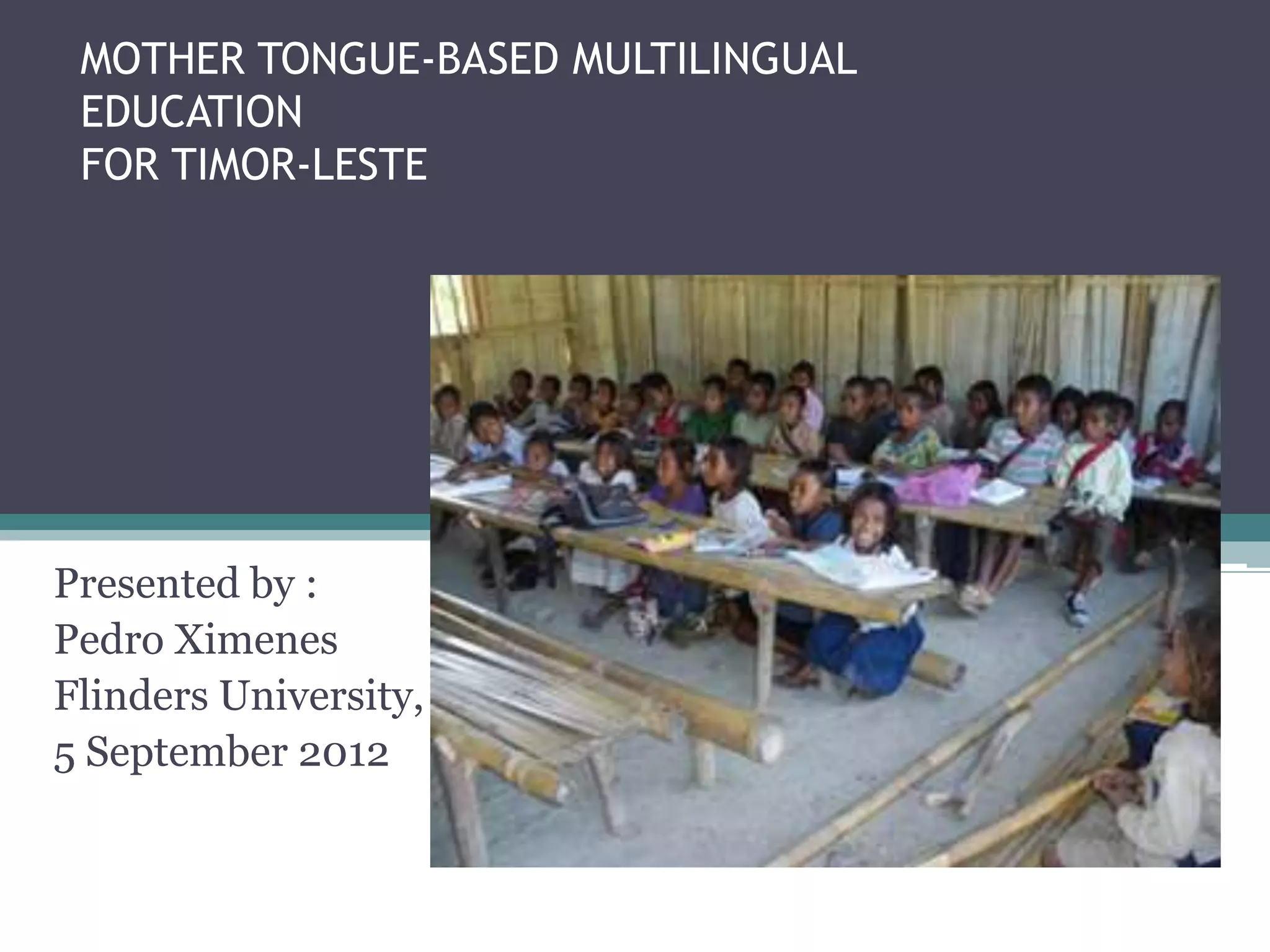
MOTHER TONGUE-BASED MULTILINGUAL
EDUCATION
FOR TIMOR-LESTE
Presented by :
Pedro Ximenes
Flinders University,
5 September 2012
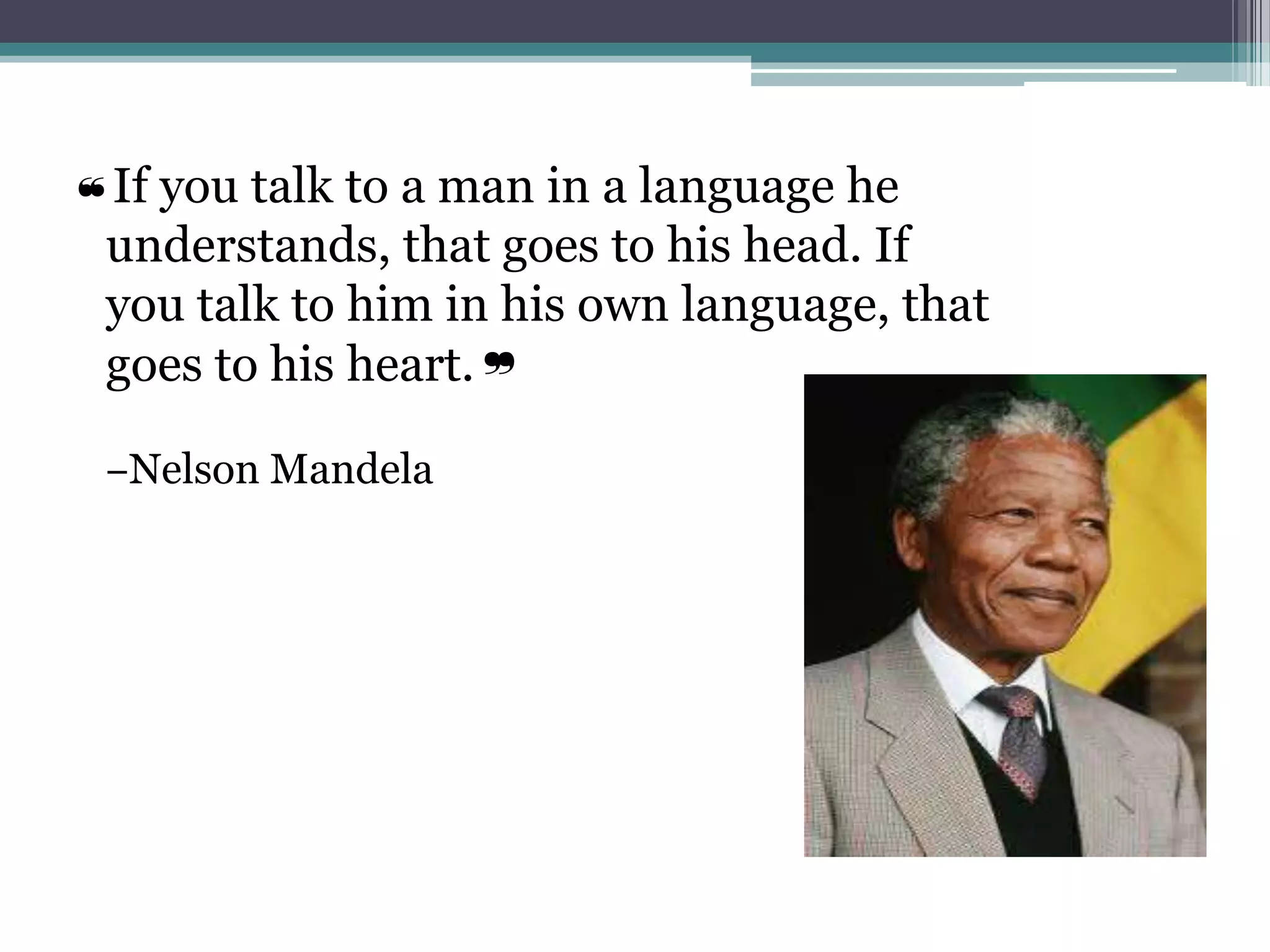
❝If you talk to a man in a language he
understands, that goes to his head. If
you talk to him in his own language, that
goes to his heart.❞
‒Nelson Mandela
Presentation Outline :
• Definition
• Objective and Purpose
• Why mother tongue ?
• Theoretical framework
• Challenges
• Questions and important issues.
Definition
• Mother Tongue :
▫ The home language of learners (L1)
▫ That one has learnt first
▫ One identifies with or is identified as a native
speaker of by others
▫ One knows best
▫ One uses most
• In the case of TL 32 local languages.
Definition (Mother tongue-based multi
language)
• An approach that uses a language in which the
learner is proficient (L1) to teach beginning
literacy (reading and writing) and curricular
content (maths, physics etc).
• One or more new languages (L2, L3) are taught
systematically, beginning with oral
communication, so that learners can transfer
literacy and knowledge.
Objective and Purpose
Objective :
1. Cultural Identity
2. Enhanced and Transferable Literacy
3. Educations access, attainment and success
4. Preparation for later learning in official and
international languages
Why Mother tongue?
“Humans tend to think and dream in
their mother tongue”
-- Unknown
Why Mother tongue? (History)
• Colonization history
▫ 450 years under Portuguese (Portuguese and
European culture)
▫ 23 years under Indonesian (Bahasa Indonesia
and melayu culture)
• 1,1 million of population with 32 local languages
• State constitution :
▫ Tetum (lingua Franca) as National Language.
▫ Tetum and Portuguese as Official languages
▫ English and Bahasa Indonesia as “ working
languages”
▫ Portuguese as “Education Language” … ?????
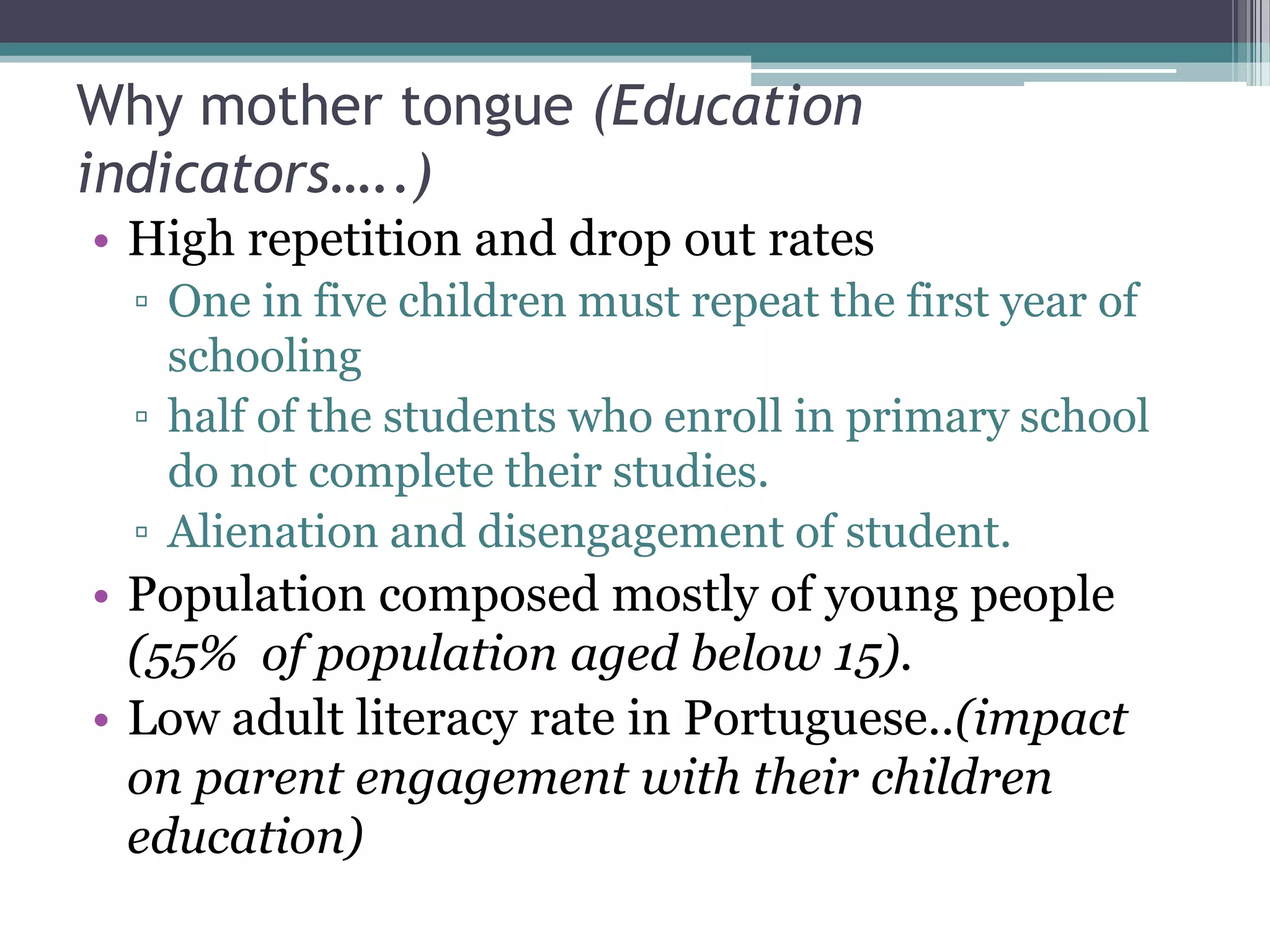
Why mother tongue (Education
indicators…..)
• High repetition and drop out rates
▫ One in five children must repeat the first year of
schooling
▫ half of the students who enroll in primary school
do not complete their studies.
▫ Alienation and disengagement of student.
• Population composed mostly of young people
(55% of population aged below 15).
• Low adult literacy rate in Portuguese..(impact
on parent engagement with their children
education)
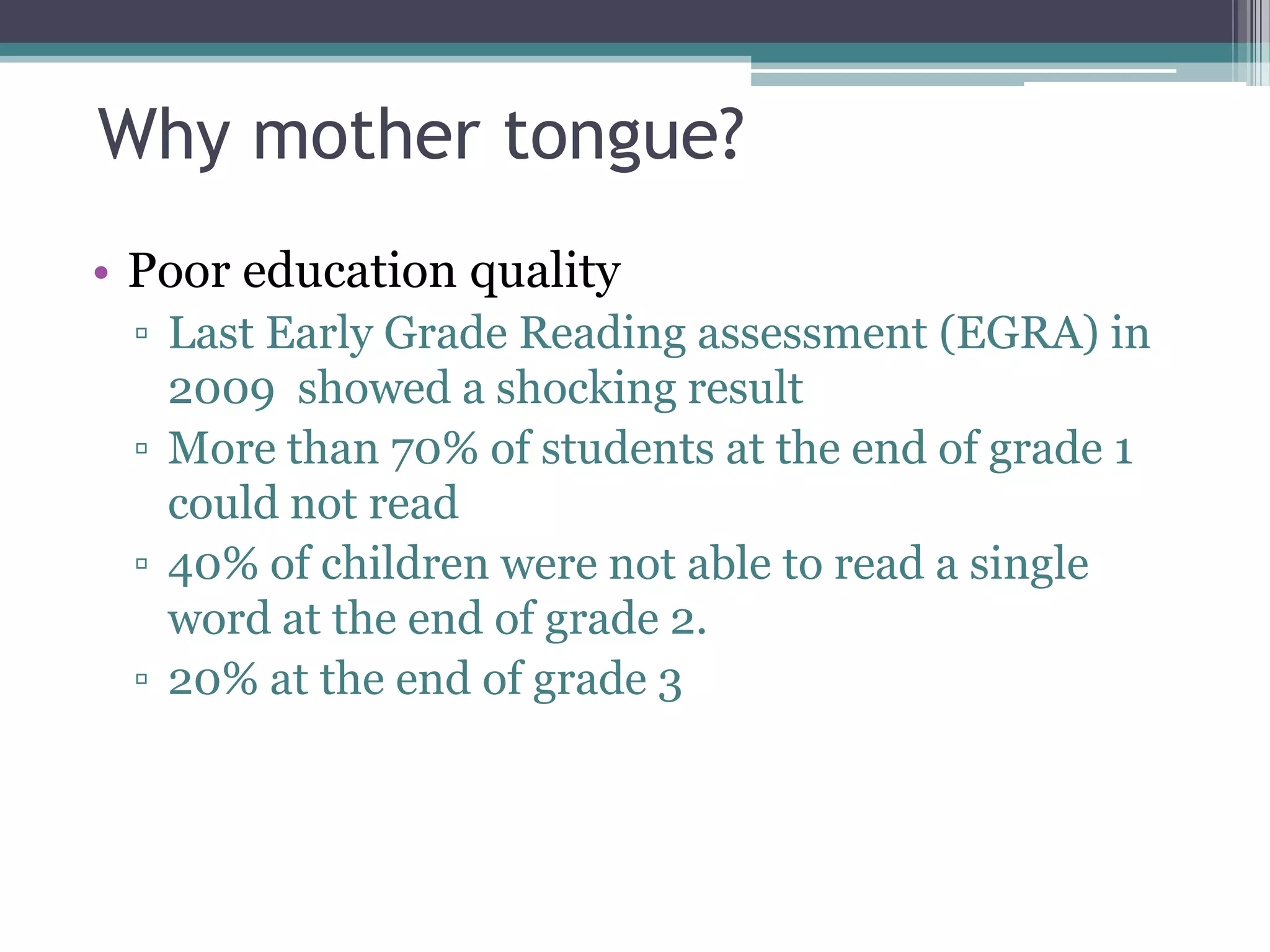
Why mother tongue?
• Poor education quality
▫ Last Early Grade Reading assessment (EGRA) in
2009 showed a shocking result
▫ More than 70% of students at the end of grade 1
could not read
▫ 40% of children were not able to read a single
word at the end of grade 2.
▫ 20% at the end of grade 3
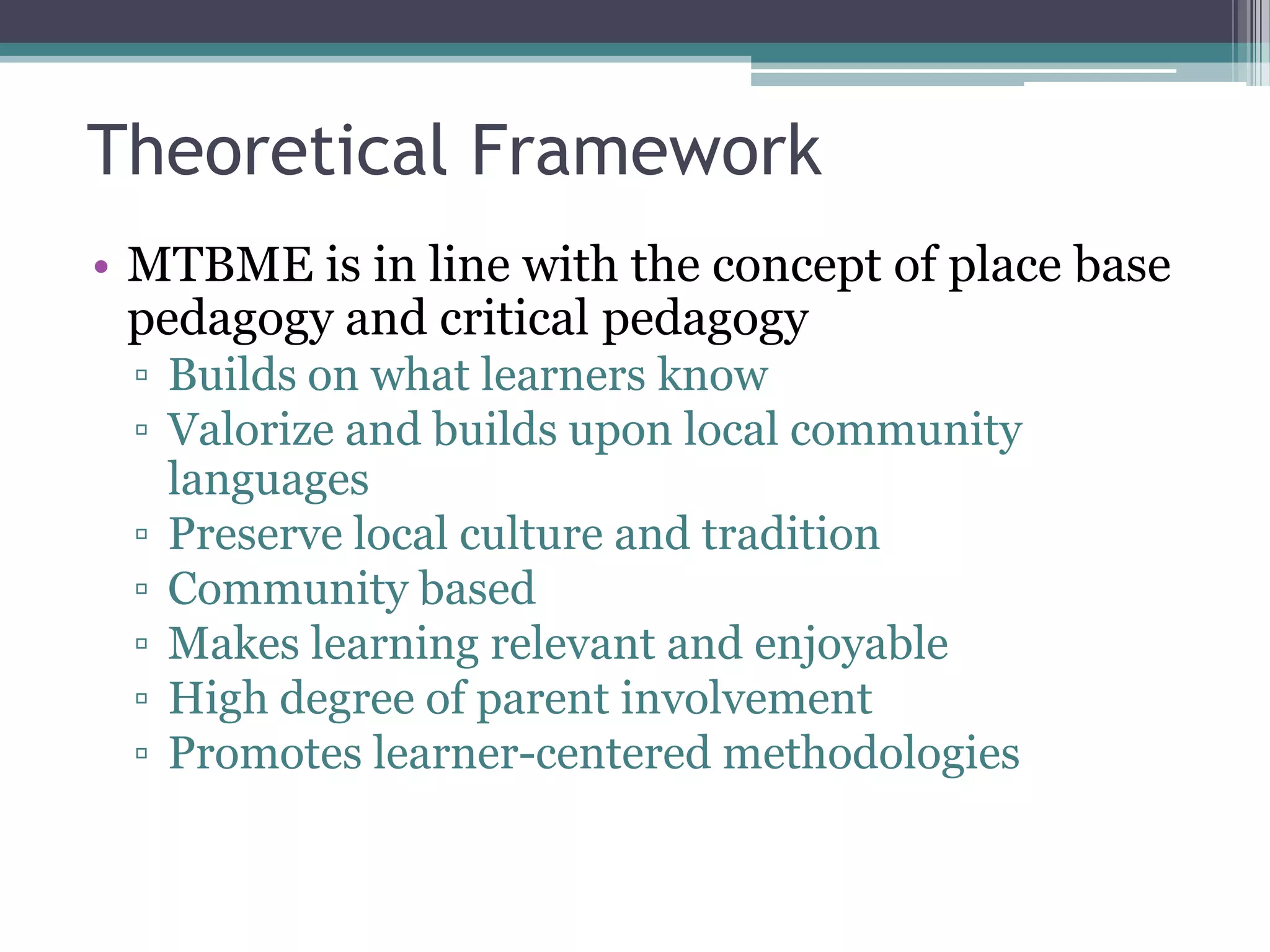
Theoretical Framework
• MTBME is in line with the concept of place base
pedagogy and critical pedagogy
▫ Builds on what learners know
▫ Valorize and builds upon local community
languages
▫ Preserve local culture and tradition
▫ Community based
▫ Makes learning relevant and enjoyable
▫ High degree of parent involvement
▫ Promotes learner-centered methodologies
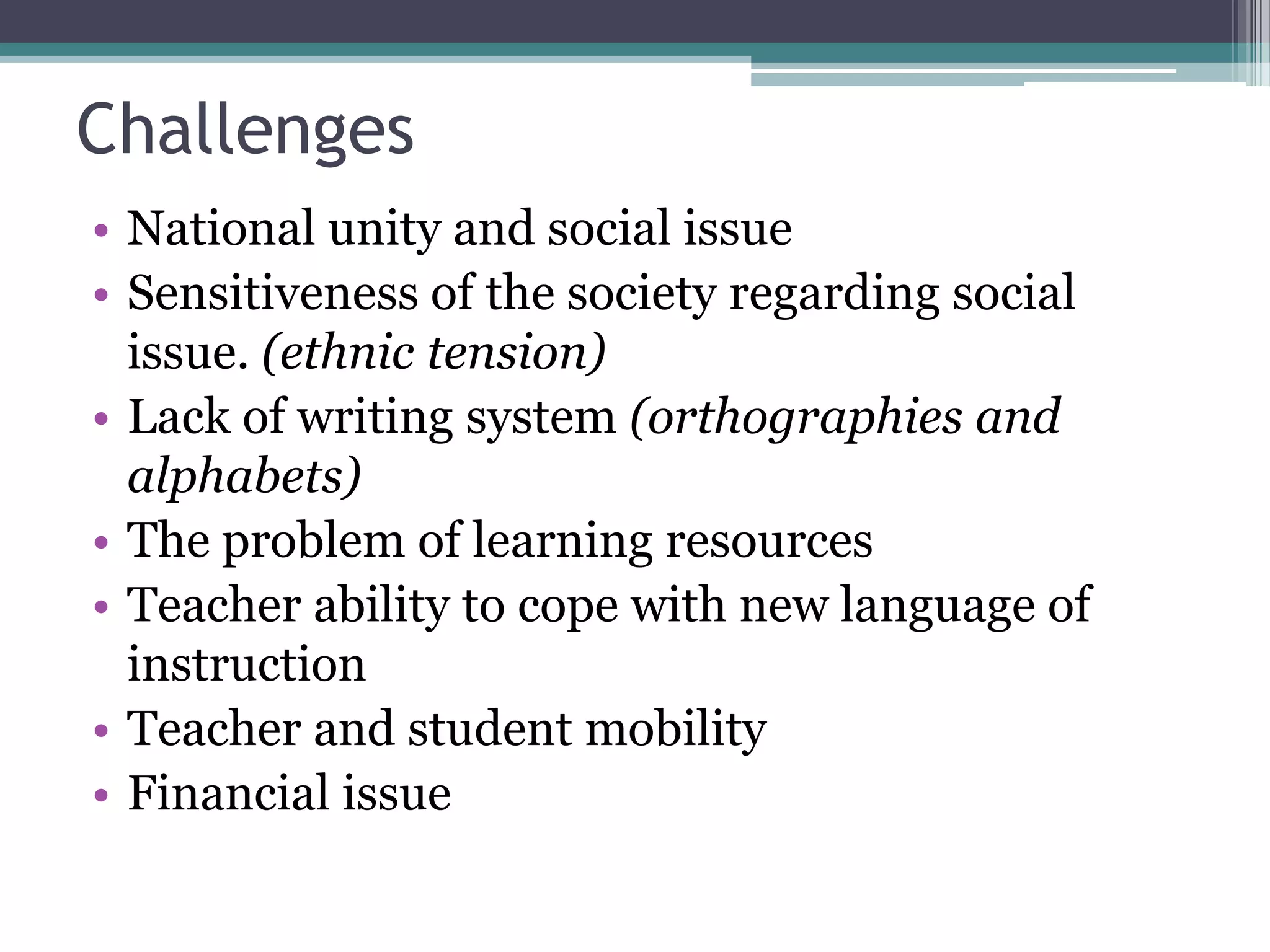
Challenges
• National unity and social issue
• Sensitiveness of the society regarding social
issue. (ethnic tension)
• Lack of writing system (orthographies and
alphabets)
• The problem of learning resources
• Teacher ability to cope with new language of
instruction
• Teacher and student mobility
• Financial issue
Issues and Questions ….
• Why it is called mother tongue and not “father
tongue” ?
• whether to use a „mother tongue‟ or home
language for the first years of education or
whether to focus on building Tetum as a national
language .
• National Disunity issue
“Those who know many languages live as many
lives as the languages they know.”
Thank you

Mother tongue based multilingual education-2

  • 1.
    MOTHER TONGUE-BASED MULTILINGUAL EDUCATION FORTIMOR-LESTE Presented by : Pedro Ximenes Flinders University, 5 September 2012
  • 2.
    ❝If you talkto a man in a language he understands, that goes to his head. If you talk to him in his own language, that goes to his heart.❞ ‒Nelson Mandela
  • 3.
    Presentation Outline : •Definition • Objective and Purpose • Why mother tongue ? • Theoretical framework • Challenges • Questions and important issues.
  • 4.
    Definition • Mother Tongue: ▫ The home language of learners (L1) ▫ That one has learnt first ▫ One identifies with or is identified as a native speaker of by others ▫ One knows best ▫ One uses most • In the case of TL 32 local languages.
  • 5.
    Definition (Mother tongue-basedmulti language) • An approach that uses a language in which the learner is proficient (L1) to teach beginning literacy (reading and writing) and curricular content (maths, physics etc). • One or more new languages (L2, L3) are taught systematically, beginning with oral communication, so that learners can transfer literacy and knowledge.
  • 6.
    Objective and Purpose Objective: 1. Cultural Identity 2. Enhanced and Transferable Literacy 3. Educations access, attainment and success 4. Preparation for later learning in official and international languages
  • 7.
    Why Mother tongue? “Humanstend to think and dream in their mother tongue” -- Unknown
  • 8.
    Why Mother tongue?(History) • Colonization history ▫ 450 years under Portuguese (Portuguese and European culture) ▫ 23 years under Indonesian (Bahasa Indonesia and melayu culture) • 1,1 million of population with 32 local languages • State constitution : ▫ Tetum (lingua Franca) as National Language. ▫ Tetum and Portuguese as Official languages ▫ English and Bahasa Indonesia as “ working languages” ▫ Portuguese as “Education Language” … ?????
  • 9.
    Why mother tongue(Education indicators…..) • High repetition and drop out rates ▫ One in five children must repeat the first year of schooling ▫ half of the students who enroll in primary school do not complete their studies. ▫ Alienation and disengagement of student. • Population composed mostly of young people (55% of population aged below 15). • Low adult literacy rate in Portuguese..(impact on parent engagement with their children education)
  • 10.
    Why mother tongue? •Poor education quality ▫ Last Early Grade Reading assessment (EGRA) in 2009 showed a shocking result ▫ More than 70% of students at the end of grade 1 could not read ▫ 40% of children were not able to read a single word at the end of grade 2. ▫ 20% at the end of grade 3
  • 11.
    Theoretical Framework • MTBMEis in line with the concept of place base pedagogy and critical pedagogy ▫ Builds on what learners know ▫ Valorize and builds upon local community languages ▫ Preserve local culture and tradition ▫ Community based ▫ Makes learning relevant and enjoyable ▫ High degree of parent involvement ▫ Promotes learner-centered methodologies
  • 12.
    Challenges • National unityand social issue • Sensitiveness of the society regarding social issue. (ethnic tension) • Lack of writing system (orthographies and alphabets) • The problem of learning resources • Teacher ability to cope with new language of instruction • Teacher and student mobility • Financial issue
  • 13.
    Issues and Questions…. • Why it is called mother tongue and not “father tongue” ? • whether to use a „mother tongue‟ or home language for the first years of education or whether to focus on building Tetum as a national language . • National Disunity issue
  • 14.
    “Those who knowmany languages live as many lives as the languages they know.” Thank you