HAFIZ M WASEEM UNIVERSITY OF
EDUCATION LAHORE
TOPIC
MONOCYTOSIS
CONTENTS
 Monocytosis
 Differences b/w monoblast and promonocytes
 Development
 Function of monocytosis
 Causes of monocytosis
 Symptoms
 Diagnosis
 Treatment
 References
MONOCYTOSIS
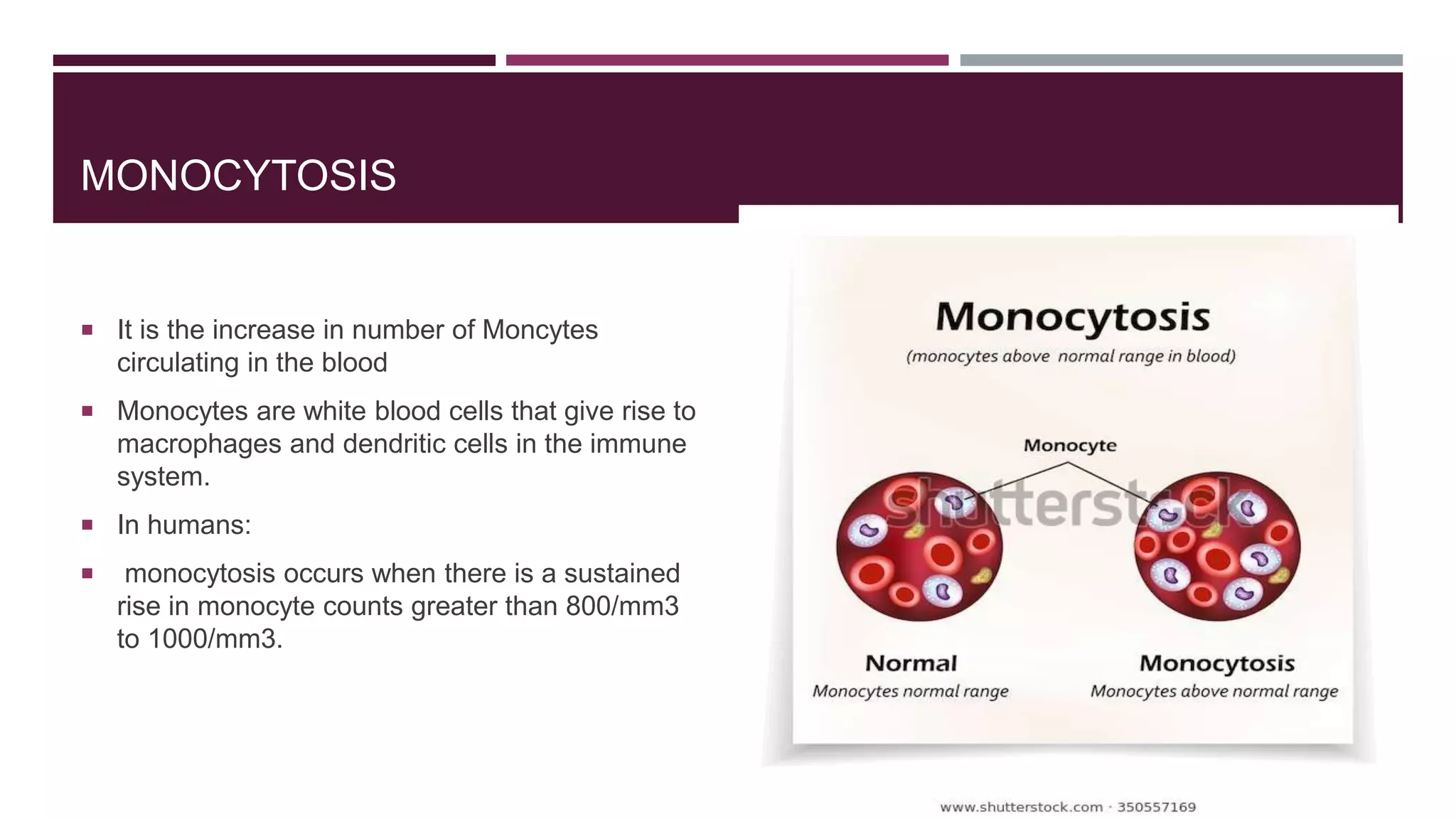
 It is the increase in number of Moncytes
circulating in the blood
 Monocytes are white blood cells that give rise to
macrophages and dendritic cells in the immune
system.
 In humans:
 monocytosis occurs when there is a sustained
rise in monocyte counts greater than 800/mm3
to 1000/mm3.
CONTENTS
MONOBLAST
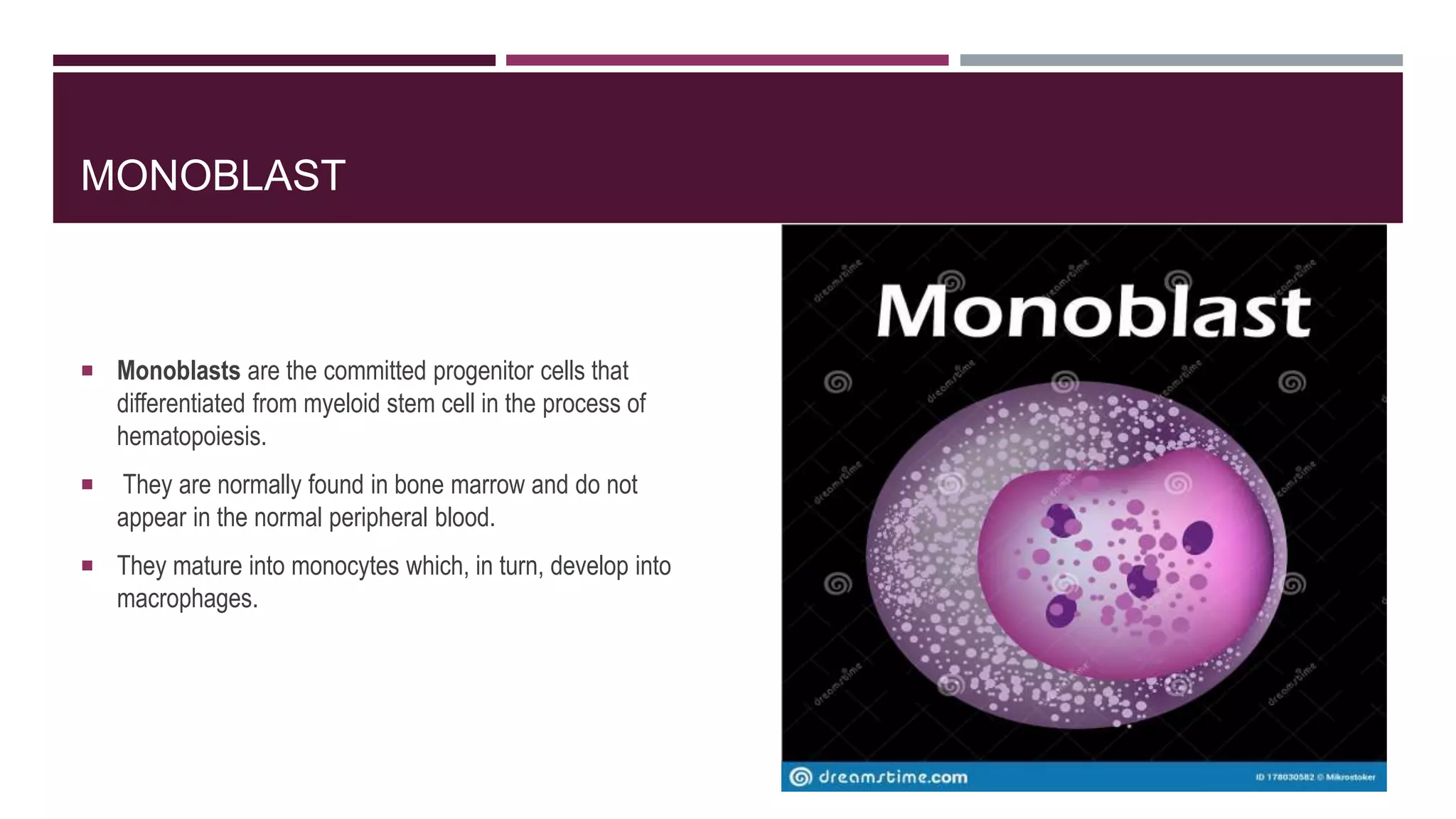
 Monoblasts are the committed progenitor cells that
differentiated from myeloid stem cell in the process of
hematopoiesis.
 They are normally found in bone marrow and do not
appear in the normal peripheral blood.
 They mature into monocytes which, in turn, develop into
macrophages.
MONOBLAST AND PROMONOCYTES
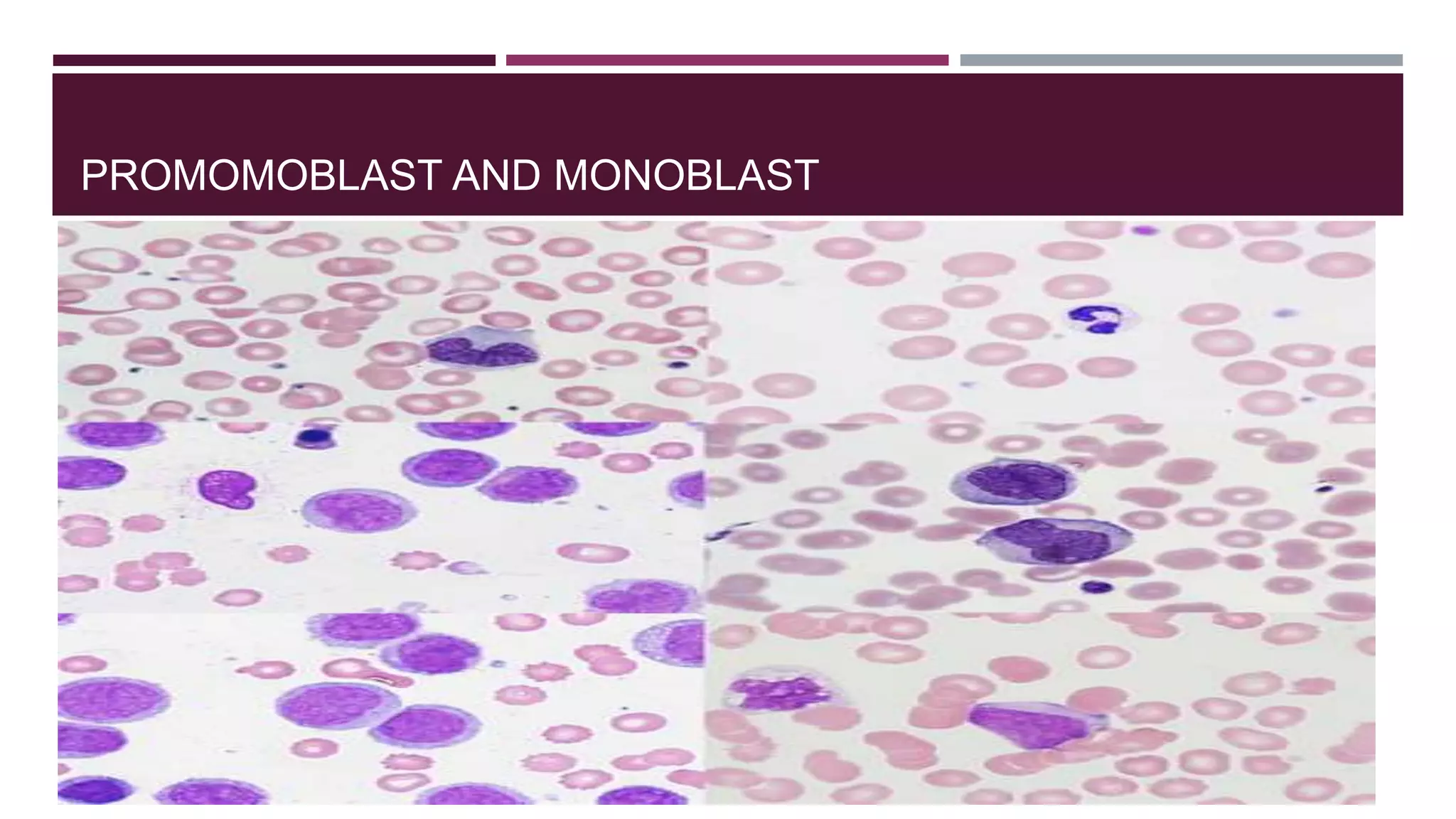
 Monoblasts and promonocytes are the monocyte precursors that are considered blasts/blast
equivalents. Monoblasts typically have round or oval nuclei with finely dispersed
 Immature chromatin, prominent nucleoli, and moderate amounts of basophilic cytoplasm, with absent to
rare azurophilic granules.
 Promonocytes:
 Although similarly having immature chromatin and visible nucleoli, are differentiated from monoblasts by
having a slightly convoluted or gently folded nucleus.
 monocytes with immature‐appearing chromatin but with prominent nuclear folds or convolutions.

PROMOMOBLAST AND MONOBLAST
DEVELOPMENT
 Monocytes are produced by the bone marrow from precursors called
monoblasts, bipotent cells that differentiated from hematopoietic stem cells.
FUNCTIONS OF MONOCYTOSIS
 Monocytes are a critical component of the innate immune system.
They are the source of many other vital elements of the immune
system, such as macrophages and dendritic cells.
 Monocytes play a role in both the inflammatory and anti-
inflammatory processes that take place during an immune
response.
HOW DOES MONOCYTOSIS PROTECT THE BODY?
 Monocytes are a type of white blood cell. Like other white blood cells,
monocytes are important in the immune system's ability to destroy invaders
 It also in facilitating healing and repair.
 Monocytes are formed in the bone marrow and are released into peripheral
blood, where they circulate for several days.
WHAT IS THE EFFECT OF HIGH MONOCYTOSIS?
 Monocytes and other kinds of white blood cells are necessary to help the body fight disease and infection.
 Low levels:
 can result from certain medical treatments or bone marrow problems.
 high levels can indicate the presence of chronic infections or an autoimmune disease
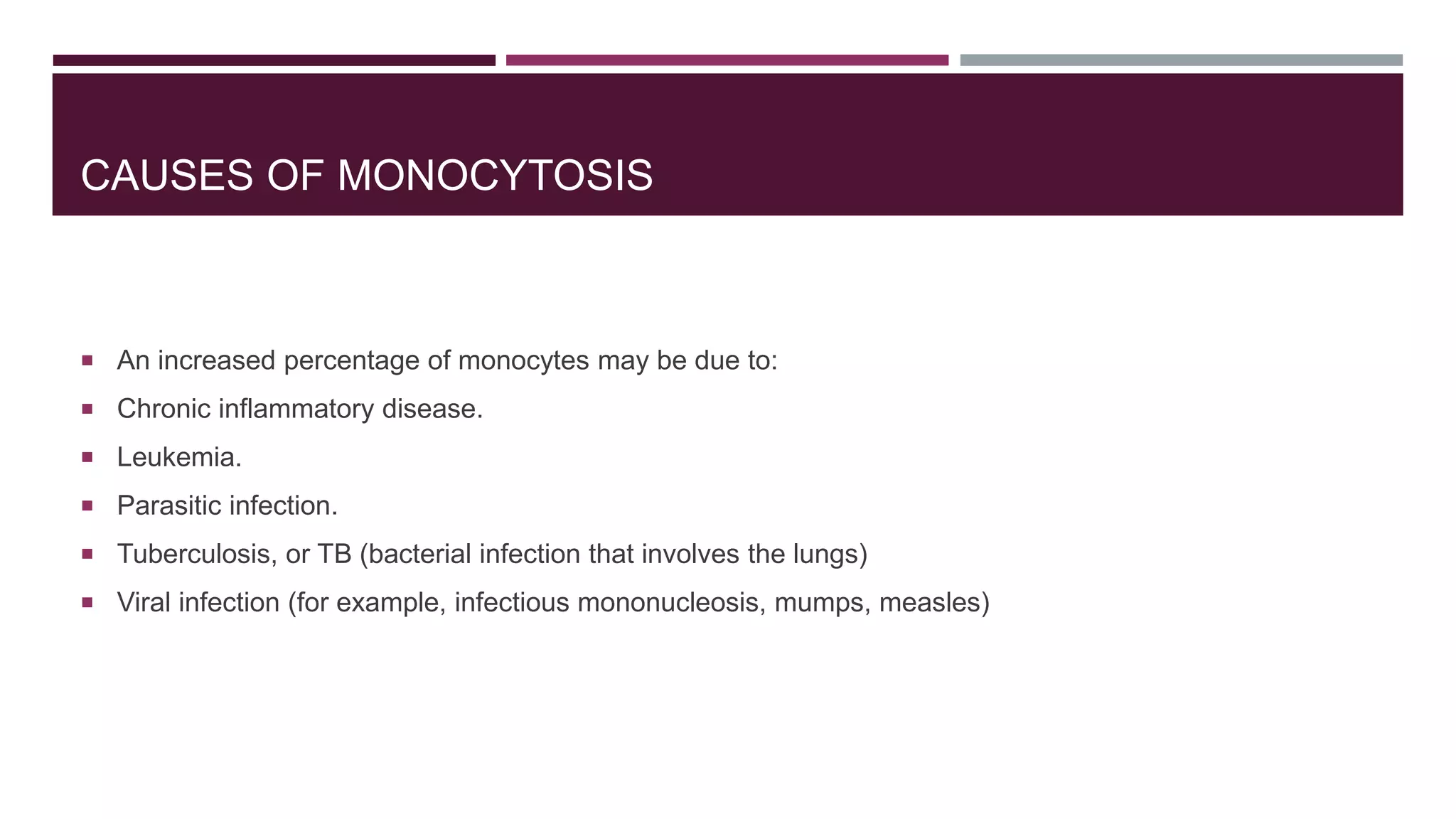
CAUSES OF MONOCYTOSIS
 An increased percentage of monocytes may be due to:
 Chronic inflammatory disease.
 Leukemia.
 Parasitic infection.
 Tuberculosis, or TB (bacterial infection that involves the lungs)
 Viral infection (for example, infectious mononucleosis, mumps, measles)
CAUSES OF MONOCYTOSIS
 Neutropenia and bone marrow recovery
 Chronic infections (eg, viral, tuberculosis, malaria, subacute bacterial
endocarditis, and congenital syphilis)
 Immune/inflammatory disorders (eg, collagen vascular diseases, inflammatory
bowel disease, sarcoidosis, and immune thrombocytopenia)
 Myocardial infarction
WHAT ARE THE SYMPTOMS OF HIGH MONOCYTES?
 These monocytes can settle in the spleen or liver, enlarging these
organs.
 An enlarged spleen (called splenomegaly) can cause pain in the
upper left part of the belly (abdomen)
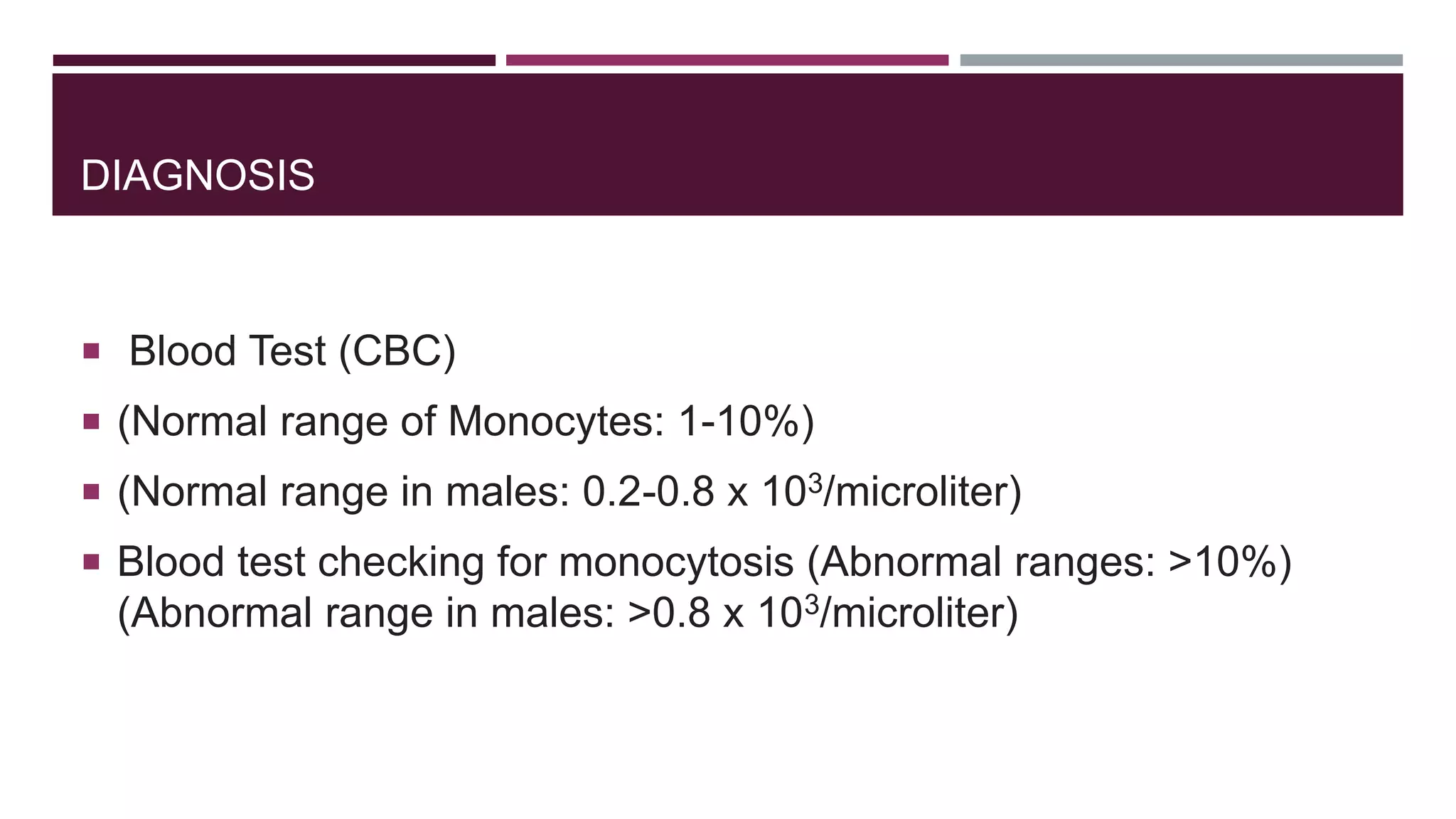
DIAGNOSIS
 Blood Test (CBC)
 (Normal range of Monocytes: 1-10%)
 (Normal range in males: 0.2-0.8 x 10³/microliter)
 Blood test checking for monocytosis (Abnormal ranges: >10%)
(Abnormal range in males: >0.8 x 10³/microliter)
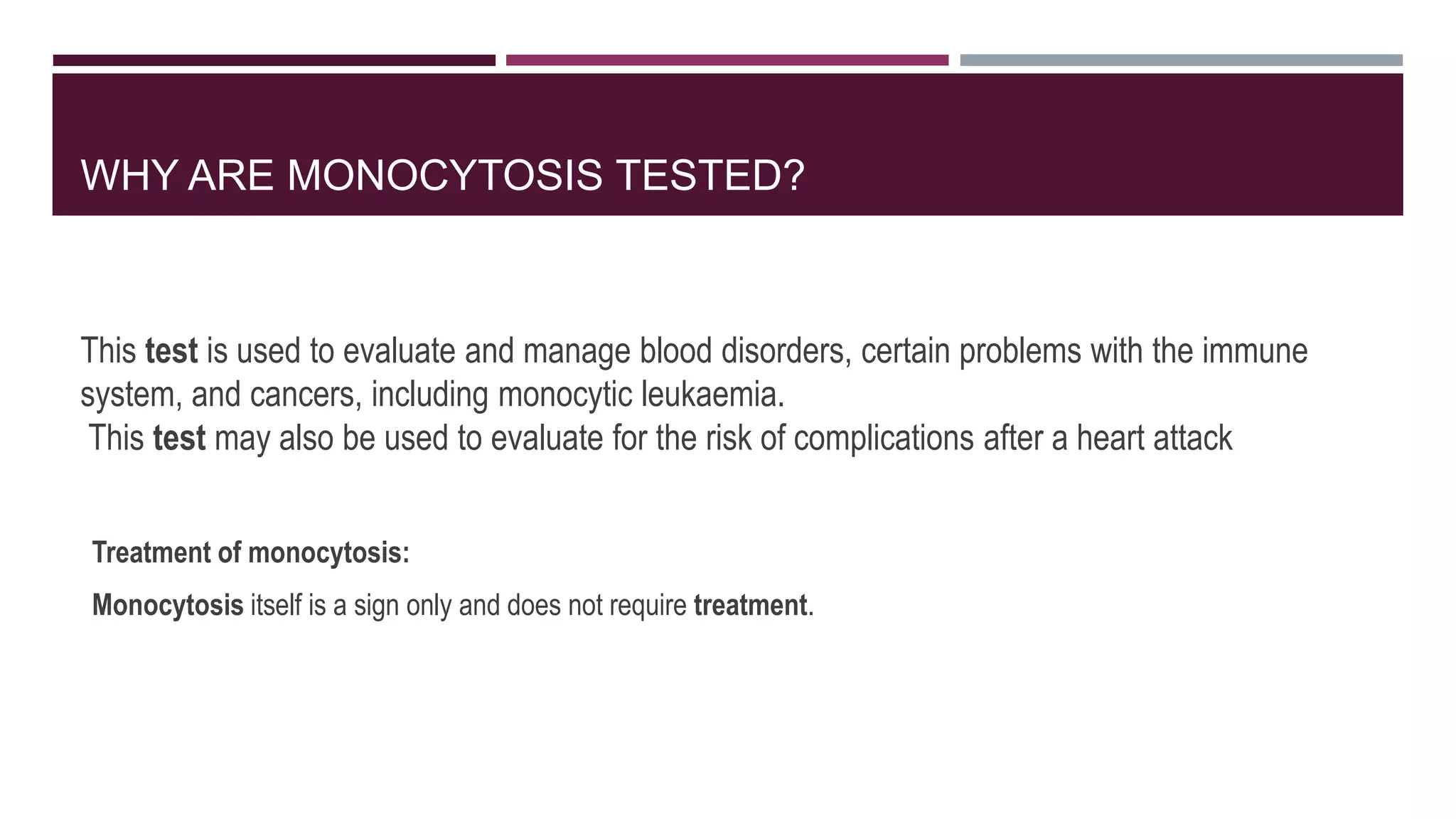
WHY ARE MONOCYTOSIS TESTED?
Treatment of monocytosis:
Monocytosis itself is a sign only and does not require treatment.
This test is used to evaluate and manage blood disorders, certain problems with the immune
system, and cancers, including monocytic leukaemia.
This test may also be used to evaluate for the risk of complications after a heart attack
REFERENCES
 ^ "monocytosis" at Dorland's Medical Dictionary
 ^ Rice, Lawrence; Jung, Moonjung (2018). "Neutrophilic Leukocytosis, Neutropenia, Monocytosis, and
Monocytopenia". In Hoffman, Ronald; Benz, Edward J.; Heslop, Helen; Silberstein, Leslie E.; Weitz,
Jeffrey; Anastasi, John (eds.). Hematology. pp. 675–681. doi:10.1016/B978-0-323-35762-3.00048-
2. ISBN 978-0-323-35762-3.
Monocytosis

Monocytosis

  • 2.
    HAFIZ M WASEEMUNIVERSITY OF EDUCATION LAHORE
  • 3.
  • 4.
    CONTENTS  Monocytosis  Differencesb/w monoblast and promonocytes  Development  Function of monocytosis  Causes of monocytosis  Symptoms  Diagnosis  Treatment  References
  • 5.
    MONOCYTOSIS  It isthe increase in number of Moncytes circulating in the blood  Monocytes are white blood cells that give rise to macrophages and dendritic cells in the immune system.  In humans:  monocytosis occurs when there is a sustained rise in monocyte counts greater than 800/mm3 to 1000/mm3.
  • 6.
  • 7.
    MONOBLAST  Monoblasts arethe committed progenitor cells that differentiated from myeloid stem cell in the process of hematopoiesis.  They are normally found in bone marrow and do not appear in the normal peripheral blood.  They mature into monocytes which, in turn, develop into macrophages.
  • 8.
    MONOBLAST AND PROMONOCYTES Monoblasts and promonocytes are the monocyte precursors that are considered blasts/blast equivalents. Monoblasts typically have round or oval nuclei with finely dispersed  Immature chromatin, prominent nucleoli, and moderate amounts of basophilic cytoplasm, with absent to rare azurophilic granules.  Promonocytes:  Although similarly having immature chromatin and visible nucleoli, are differentiated from monoblasts by having a slightly convoluted or gently folded nucleus.  monocytes with immature‐appearing chromatin but with prominent nuclear folds or convolutions. 
  • 9.
  • 10.
    DEVELOPMENT  Monocytes areproduced by the bone marrow from precursors called monoblasts, bipotent cells that differentiated from hematopoietic stem cells.
  • 11.
    FUNCTIONS OF MONOCYTOSIS Monocytes are a critical component of the innate immune system. They are the source of many other vital elements of the immune system, such as macrophages and dendritic cells.  Monocytes play a role in both the inflammatory and anti- inflammatory processes that take place during an immune response.
  • 12.
    HOW DOES MONOCYTOSISPROTECT THE BODY?  Monocytes are a type of white blood cell. Like other white blood cells, monocytes are important in the immune system's ability to destroy invaders  It also in facilitating healing and repair.  Monocytes are formed in the bone marrow and are released into peripheral blood, where they circulate for several days.
  • 13.
    WHAT IS THEEFFECT OF HIGH MONOCYTOSIS?  Monocytes and other kinds of white blood cells are necessary to help the body fight disease and infection.  Low levels:  can result from certain medical treatments or bone marrow problems.  high levels can indicate the presence of chronic infections or an autoimmune disease
  • 14.
    CAUSES OF MONOCYTOSIS An increased percentage of monocytes may be due to:  Chronic inflammatory disease.  Leukemia.  Parasitic infection.  Tuberculosis, or TB (bacterial infection that involves the lungs)  Viral infection (for example, infectious mononucleosis, mumps, measles)
  • 15.
    CAUSES OF MONOCYTOSIS Neutropenia and bone marrow recovery  Chronic infections (eg, viral, tuberculosis, malaria, subacute bacterial endocarditis, and congenital syphilis)  Immune/inflammatory disorders (eg, collagen vascular diseases, inflammatory bowel disease, sarcoidosis, and immune thrombocytopenia)  Myocardial infarction
  • 16.
    WHAT ARE THESYMPTOMS OF HIGH MONOCYTES?  These monocytes can settle in the spleen or liver, enlarging these organs.  An enlarged spleen (called splenomegaly) can cause pain in the upper left part of the belly (abdomen)
  • 17.
    DIAGNOSIS  Blood Test(CBC)  (Normal range of Monocytes: 1-10%)  (Normal range in males: 0.2-0.8 x 10³/microliter)  Blood test checking for monocytosis (Abnormal ranges: >10%) (Abnormal range in males: >0.8 x 10³/microliter)
  • 18.
    WHY ARE MONOCYTOSISTESTED? Treatment of monocytosis: Monocytosis itself is a sign only and does not require treatment. This test is used to evaluate and manage blood disorders, certain problems with the immune system, and cancers, including monocytic leukaemia. This test may also be used to evaluate for the risk of complications after a heart attack
  • 19.
    REFERENCES  ^ "monocytosis"at Dorland's Medical Dictionary  ^ Rice, Lawrence; Jung, Moonjung (2018). "Neutrophilic Leukocytosis, Neutropenia, Monocytosis, and Monocytopenia". In Hoffman, Ronald; Benz, Edward J.; Heslop, Helen; Silberstein, Leslie E.; Weitz, Jeffrey; Anastasi, John (eds.). Hematology. pp. 675–681. doi:10.1016/B978-0-323-35762-3.00048- 2. ISBN 978-0-323-35762-3.