Ms. VARALAKSHMI
MSc, DCR
MONITORING CLINICAL TRIALS
 Act of overseeing the progress of a clinical trial
 Ensures that the study is conducted, recorder and
reported in accordance with:
 Protocol
 GCP
 Applicable regulatory requirements
 SOP
Purpose
 To verify that:
 The rights of subjects are being protected
 Conduct of trial is in compliance with GCP, currently
approved protocol/amendments
 The data is complete, verifiable
FREQUENCY OF MONITORING
VISITS
 The sponsor should ensure that the trials are adequately
monitored
 Number of factors determine the frequency of monitoring
visits:
 Complexity of the protocol
 Experience of the investigator/staff
 Number of study subjects enrolled at the site
 Rate of enrolment
 Site performance
 All sites should be visited soon after the first subjects are
enrolled to be sure the site is following protocol procedures
 Catching and solving problems early will save a lot of
extra work as the study progresses.
 The more subjects a site has, the more frequently the
CRA will have to visit
 The faster a site enrols and the more data generated, the
more frequently the site will need monitoring
 The CRA should visit a site regularly even though
enrollment may be slow
 The frequency and duration of monitoring visits will vary
from site to site depending on the experience of the
investigator and staff
 In some instances, sponsor SOPs dictate the frequency
of monitoring visits
 The frequency of monitoring visits may change as the
study progresses
 Subject visits may spread out over the course of long-
term studies and require less review
 Another factor that has an impact on CRA visits
frequency is the number and location of sites for
which they have monitoring responsibility
 With the complexity of protocols, regulatory
requirements, they will need to spend a day or more
at the sites
 A good CRA should be able to monitor 5-10 sites
 Number will change depending on complexity of
study, site, CRA experience
Selection, qualification of monitors
 Monitors are appointed by the sponsor
 Should be appropriately trained
 Have scientific/ clinical knowledge
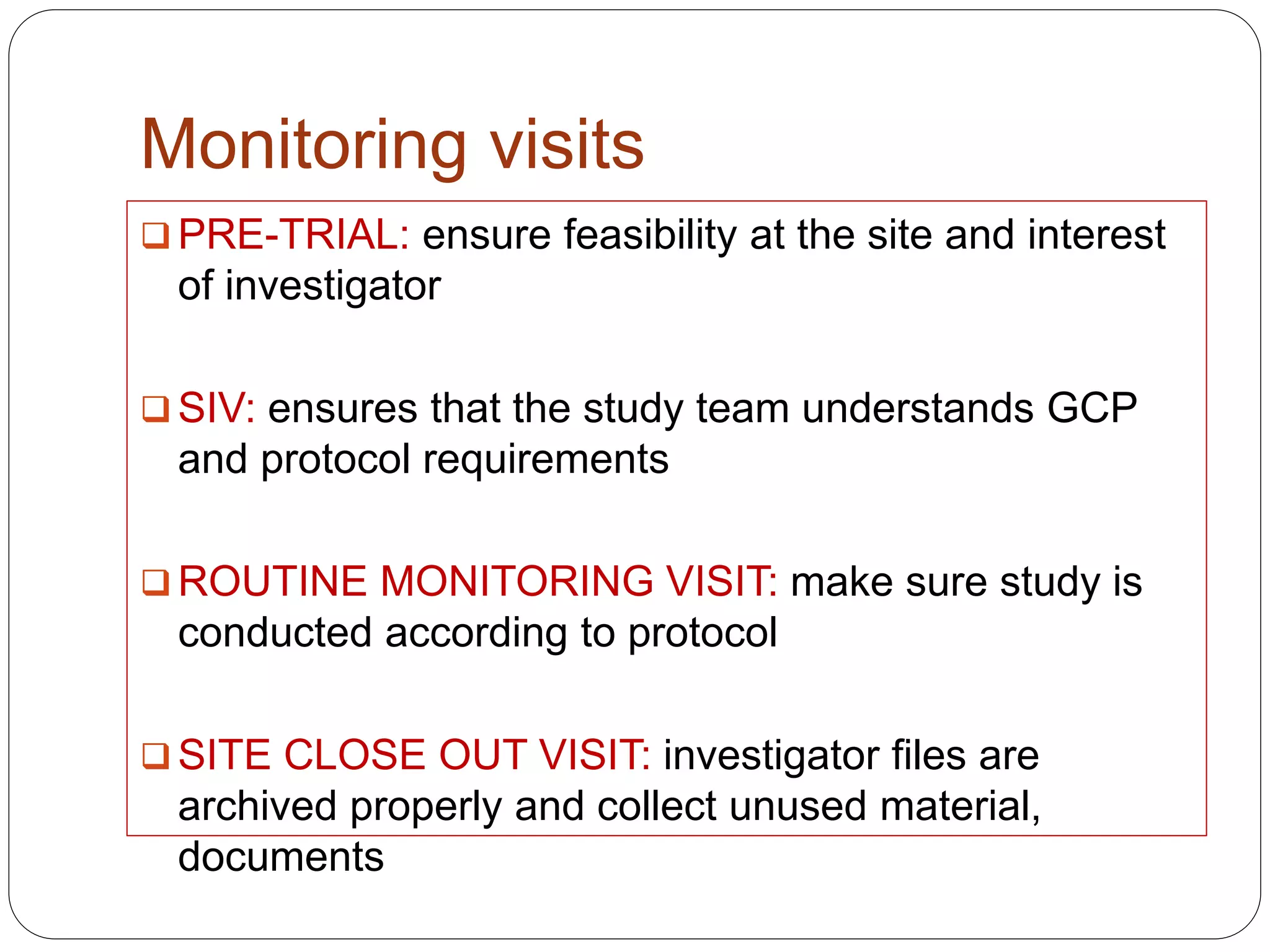
Monitoring visits
 PRE-TRIAL: ensure feasibility at the site and interest
of investigator
 SIV: ensures that the study team understands GCP
and protocol requirements
 ROUTINE MONITORING VISIT: make sure study is
conducted according to protocol
 SITE CLOSE OUT VISIT: investigator files are
archived properly and collect unused material,
documents
Tasks
 Verify resources remain adequate throughout trial
period
 investigator receives the current Investigator's
Brochure, documents, and all trial supplies needed for
proper conduct of study
 the receipt, use, and return of the investigational
product(s) are controlled and documented adequately.
 …
the disposition of unused investigational
product(s)complies with applicable regulatory
requirement(s)
 That the investigator is enrolling only eligible subjects
 that written informed consent was obtained before each
subject's participation in the trial
 Verify that source documents and other trial records are
accurate, complete
 Verify CRFs match with the corresponding source
documents
 Verify CRFs are completed only by authorised persons
 Corrections made to CRFs are signed, dated and backed
by source documents
 Report the subject recruitment rate
 …
Trial progress
 Problems/ needs at site
Monitoring activity
 CRA should have a plan for what will be monitored at
each site visit
 CRA should send the monitoring visit confirmation
report and a follow up report
 This report is a standard document that CRA will use
for all monitoring visits
 Serves as a checklist for the CRA and as a
documentation of the visit
 Important to know what you need to monitor at each
site
 How much time and attention to be given to each
activity
 Helps the CRA to pinpoint areas where problems are
most likely to arise
Aspects of monitoring
 According to the U.S. Food and Drug Administration's
Center of Drug Evaluation and Research, the top five
deficiency categories for site inspections caught by clinical
monitors as reported in the 2001 Report to the Nation[4] are:
 Failure to follow investigation protocol (the procedures and
treatment subjects must undergo, as well as the schedule of
assessments)
 Failure to keep adequate and accurate records
 Problems with the informed consent form
 Failure to report adverse events
 Failure to account for the disposition of study drugs
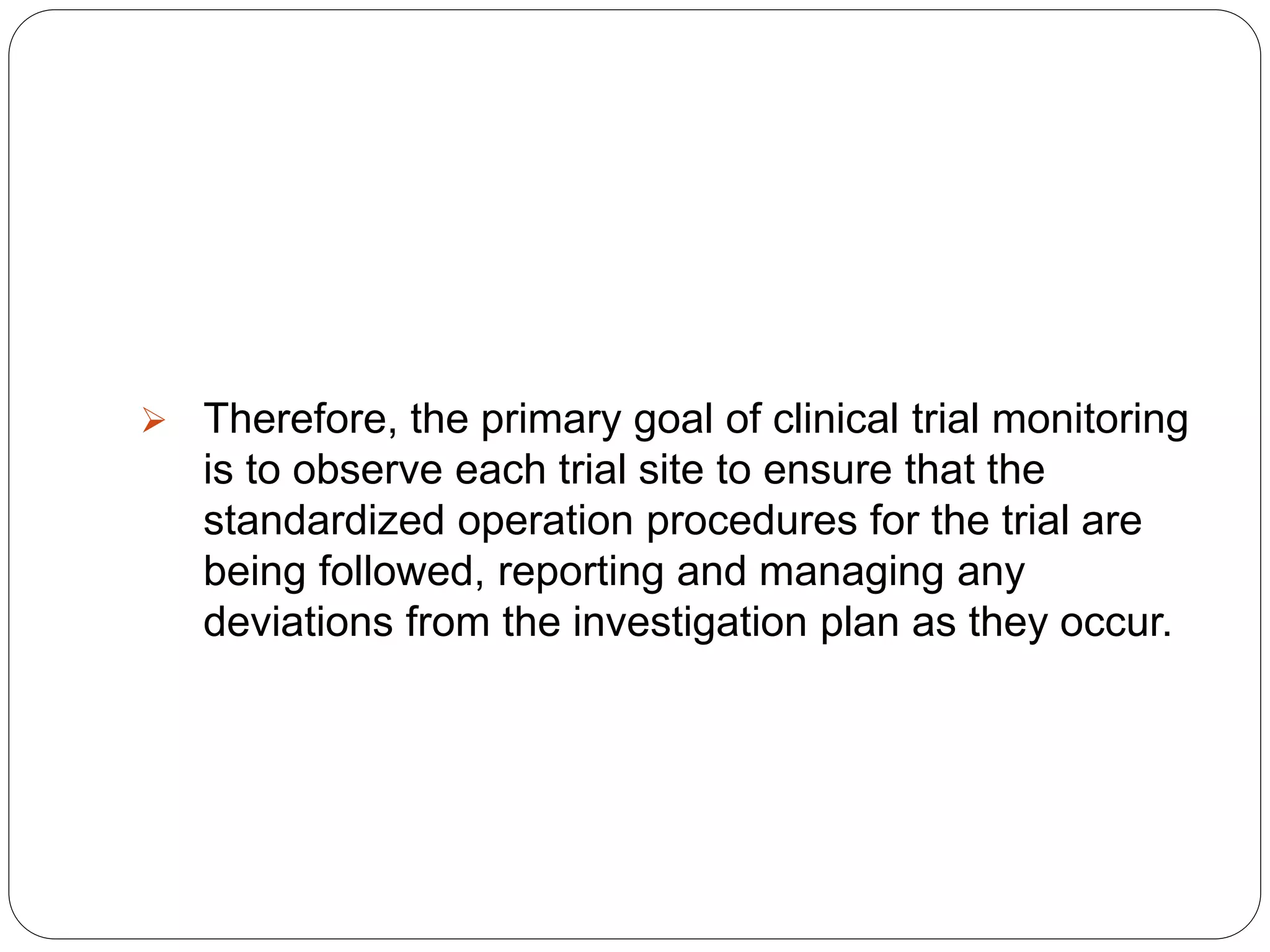
 Therefore, the primary goal of clinical trial monitoring
is to observe each trial site to ensure that the
standardized operation procedures for the trial are
being followed, reporting and managing any
deviations from the investigation plan as they occur.
The overall monitoring plan should remain fairly
consistent, but the strategy for individual sites may
change considerably during the course of the study
depending on study conditions and site performance.
Monitoring of clinical trials

Monitoring of clinical trials

  • 1.
  • 2.
     Act ofoverseeing the progress of a clinical trial  Ensures that the study is conducted, recorder and reported in accordance with:  Protocol  GCP  Applicable regulatory requirements  SOP
  • 4.
    Purpose  To verifythat:  The rights of subjects are being protected  Conduct of trial is in compliance with GCP, currently approved protocol/amendments  The data is complete, verifiable
  • 5.
    FREQUENCY OF MONITORING VISITS The sponsor should ensure that the trials are adequately monitored  Number of factors determine the frequency of monitoring visits:  Complexity of the protocol  Experience of the investigator/staff  Number of study subjects enrolled at the site  Rate of enrolment  Site performance  All sites should be visited soon after the first subjects are enrolled to be sure the site is following protocol procedures
  • 6.
     Catching andsolving problems early will save a lot of extra work as the study progresses.  The more subjects a site has, the more frequently the CRA will have to visit  The faster a site enrols and the more data generated, the more frequently the site will need monitoring  The CRA should visit a site regularly even though enrollment may be slow  The frequency and duration of monitoring visits will vary from site to site depending on the experience of the investigator and staff
  • 7.
     In someinstances, sponsor SOPs dictate the frequency of monitoring visits  The frequency of monitoring visits may change as the study progresses  Subject visits may spread out over the course of long- term studies and require less review
  • 8.
     Another factorthat has an impact on CRA visits frequency is the number and location of sites for which they have monitoring responsibility  With the complexity of protocols, regulatory requirements, they will need to spend a day or more at the sites  A good CRA should be able to monitor 5-10 sites  Number will change depending on complexity of study, site, CRA experience
  • 9.
    Selection, qualification ofmonitors  Monitors are appointed by the sponsor  Should be appropriately trained  Have scientific/ clinical knowledge
  • 10.
    Monitoring visits  PRE-TRIAL:ensure feasibility at the site and interest of investigator  SIV: ensures that the study team understands GCP and protocol requirements  ROUTINE MONITORING VISIT: make sure study is conducted according to protocol  SITE CLOSE OUT VISIT: investigator files are archived properly and collect unused material, documents
  • 11.
    Tasks  Verify resourcesremain adequate throughout trial period  investigator receives the current Investigator's Brochure, documents, and all trial supplies needed for proper conduct of study  the receipt, use, and return of the investigational product(s) are controlled and documented adequately.  … the disposition of unused investigational product(s)complies with applicable regulatory requirement(s)
  • 12.
     That theinvestigator is enrolling only eligible subjects  that written informed consent was obtained before each subject's participation in the trial  Verify that source documents and other trial records are accurate, complete  Verify CRFs match with the corresponding source documents
  • 13.
     Verify CRFsare completed only by authorised persons  Corrections made to CRFs are signed, dated and backed by source documents  Report the subject recruitment rate  … Trial progress  Problems/ needs at site
  • 14.
    Monitoring activity  CRAshould have a plan for what will be monitored at each site visit  CRA should send the monitoring visit confirmation report and a follow up report  This report is a standard document that CRA will use for all monitoring visits  Serves as a checklist for the CRA and as a documentation of the visit
  • 15.
     Important toknow what you need to monitor at each site  How much time and attention to be given to each activity  Helps the CRA to pinpoint areas where problems are most likely to arise
  • 16.
    Aspects of monitoring According to the U.S. Food and Drug Administration's Center of Drug Evaluation and Research, the top five deficiency categories for site inspections caught by clinical monitors as reported in the 2001 Report to the Nation[4] are:  Failure to follow investigation protocol (the procedures and treatment subjects must undergo, as well as the schedule of assessments)  Failure to keep adequate and accurate records  Problems with the informed consent form  Failure to report adverse events  Failure to account for the disposition of study drugs
  • 17.
     Therefore, theprimary goal of clinical trial monitoring is to observe each trial site to ensure that the standardized operation procedures for the trial are being followed, reporting and managing any deviations from the investigation plan as they occur.
  • 18.
    The overall monitoringplan should remain fairly consistent, but the strategy for individual sites may change considerably during the course of the study depending on study conditions and site performance.