MONITORING OF
CLINICAL TRIALS
INTRODUCTION
Monitoring:
 The act of overseeing the progress of a clinical trial, and of
ensuring that it is conducted, recorded, and reported in
accordance with the protocol, SOPs, GCPs, and the
applicable regulatory requirement(s)
 The determination of the extent and nature of monitoring
should be based on considerations such as the objective,
purpose, design, complexity, blinding, size and endpoints
of the trial
 In general there is a need for on-site monitoring, before,
during and after the trial
INTRODUCTION...
 However, central monitoring in conjunction with procedures
such as investigators’ training and meetings and extensive
written guidance can assure appropriate conduct of the trial
in accordance with GCP
 Statistically controlled sampling may be an acceptable
method for selecting the data to be verified
Monitors
 Appointed by sponsor
 No requirement for independence from study team
PURPOSE OF MONITORING
To verify that …
 The rights and well-being of human subjects are protected
 The reported trial data are accurate, complete and verifiable
from source documents
 The conduct of trial is in compliance with protocol, GCPs,
and applicable regulatory requirements
 Sponsor shall monitor progress of its studies
WHAT AND HOW TO MONITOR?
 ICH GCP – very detailed guidance
 When ICH GCP not necessary:
 No simple checklists
 Need to understand principles and purpose
 Need to think differently
 Don’t try to be a company CRA!
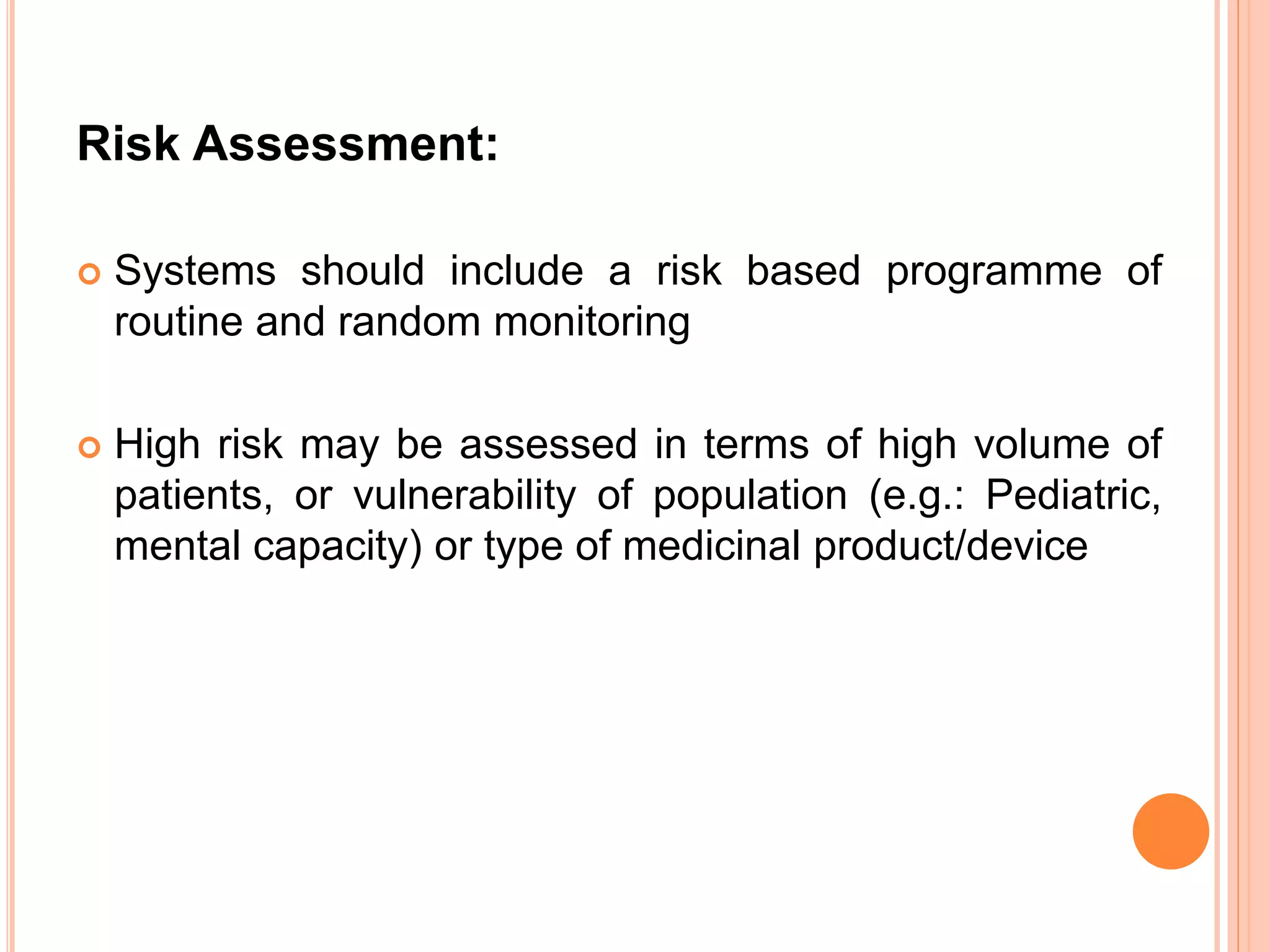
Risk Assessment:
 Systems should include a risk based programme of
routine and random monitoring
 High risk may be assessed in terms of high volume of
patients, or vulnerability of population (e.g.: Pediatric,
mental capacity) or type of medicinal product/device
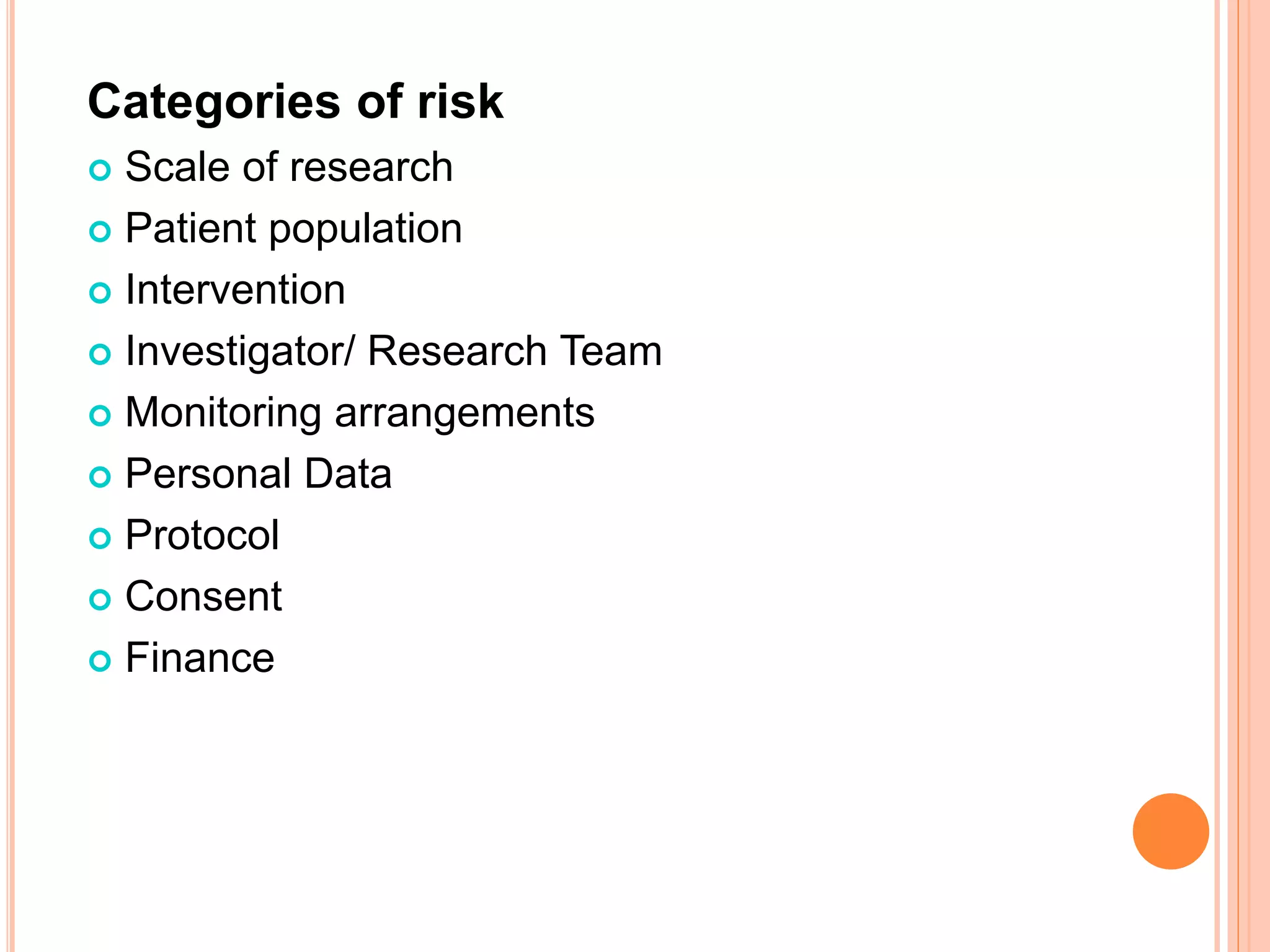
Categories of risk
 Scale of research
 Patient population
 Intervention
 Investigator/ Research Team
 Monitoring arrangements
 Personal Data
 Protocol
 Consent
 Finance
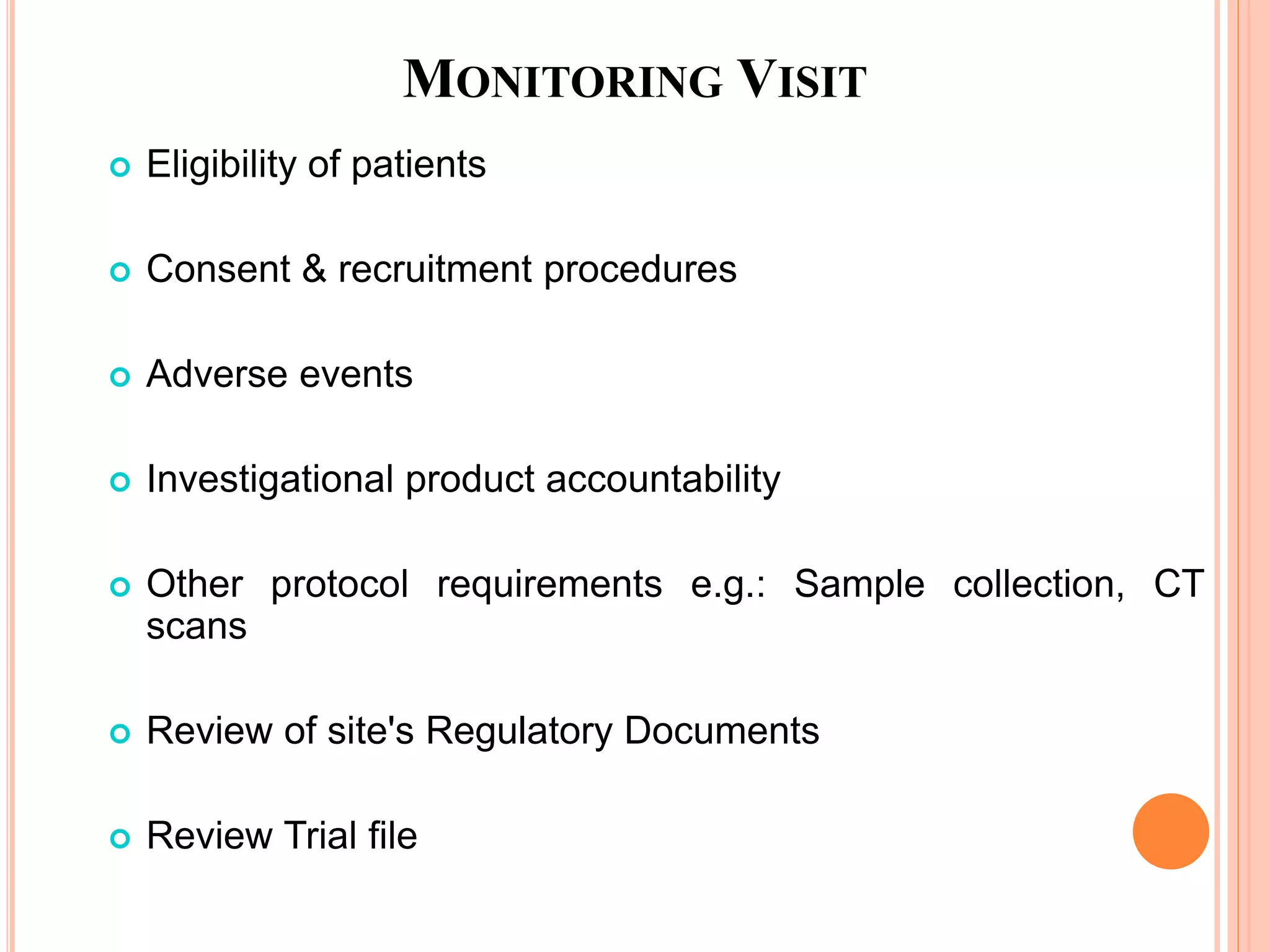
MONITORING VISIT
 Eligibility of patients
 Consent & recruitment procedures
 Adverse events
 Investigational product accountability
 Other protocol requirements e.g.: Sample collection, CT
scans
 Review of site's Regulatory Documents
 Review Trial file
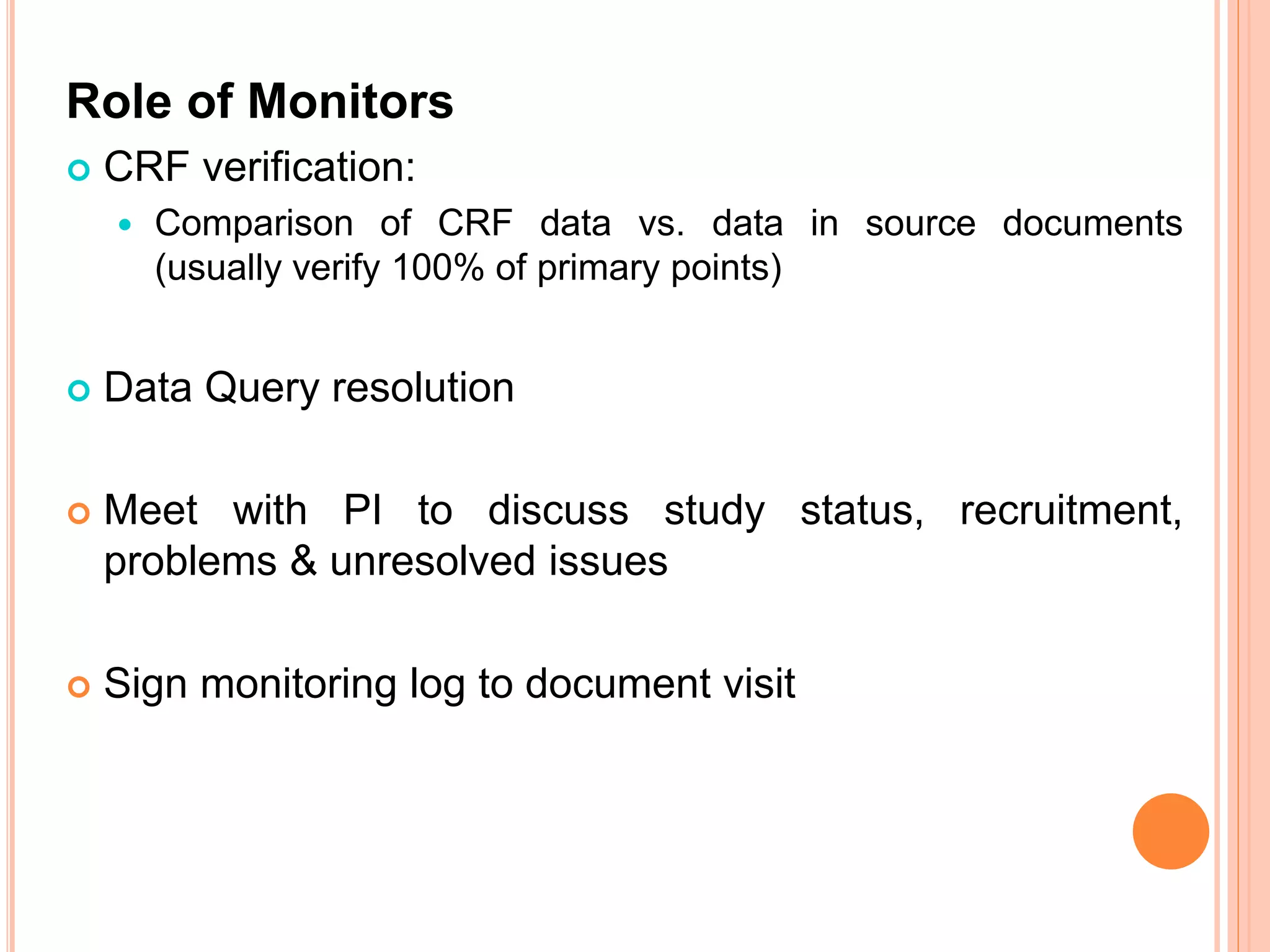
Role of Monitors
 CRF verification:
 Comparison of CRF data vs. data in source documents
(usually verify 100% of primary points)
 Data Query resolution
 Meet with PI to discuss study status, recruitment,
problems & unresolved issues
 Sign monitoring log to document visit
Summary
 To improve quality & promote high standards
 To identify non-compliance
 To identify research misconduct/ fraud
 Ensures safety of trial participants
 To adhere to the regulations (Research Governance
Framework, Regulatory Directives)
TRIAL MONITORING.ppt

TRIAL MONITORING.ppt

  • 1.
  • 2.
    INTRODUCTION Monitoring:  The actof overseeing the progress of a clinical trial, and of ensuring that it is conducted, recorded, and reported in accordance with the protocol, SOPs, GCPs, and the applicable regulatory requirement(s)  The determination of the extent and nature of monitoring should be based on considerations such as the objective, purpose, design, complexity, blinding, size and endpoints of the trial  In general there is a need for on-site monitoring, before, during and after the trial
  • 3.
    INTRODUCTION...  However, centralmonitoring in conjunction with procedures such as investigators’ training and meetings and extensive written guidance can assure appropriate conduct of the trial in accordance with GCP  Statistically controlled sampling may be an acceptable method for selecting the data to be verified Monitors  Appointed by sponsor  No requirement for independence from study team
  • 4.
    PURPOSE OF MONITORING Toverify that …  The rights and well-being of human subjects are protected  The reported trial data are accurate, complete and verifiable from source documents  The conduct of trial is in compliance with protocol, GCPs, and applicable regulatory requirements  Sponsor shall monitor progress of its studies
  • 5.
    WHAT AND HOWTO MONITOR?  ICH GCP – very detailed guidance  When ICH GCP not necessary:  No simple checklists  Need to understand principles and purpose  Need to think differently  Don’t try to be a company CRA!
  • 6.
    Risk Assessment:  Systemsshould include a risk based programme of routine and random monitoring  High risk may be assessed in terms of high volume of patients, or vulnerability of population (e.g.: Pediatric, mental capacity) or type of medicinal product/device
  • 7.
    Categories of risk Scale of research  Patient population  Intervention  Investigator/ Research Team  Monitoring arrangements  Personal Data  Protocol  Consent  Finance
  • 8.
    MONITORING VISIT  Eligibilityof patients  Consent & recruitment procedures  Adverse events  Investigational product accountability  Other protocol requirements e.g.: Sample collection, CT scans  Review of site's Regulatory Documents  Review Trial file
  • 9.
    Role of Monitors CRF verification:  Comparison of CRF data vs. data in source documents (usually verify 100% of primary points)  Data Query resolution  Meet with PI to discuss study status, recruitment, problems & unresolved issues  Sign monitoring log to document visit
  • 10.
    Summary  To improvequality & promote high standards  To identify non-compliance  To identify research misconduct/ fraud  Ensures safety of trial participants  To adhere to the regulations (Research Governance Framework, Regulatory Directives)