Dr. Sonia Ben Jaafar
EduEval
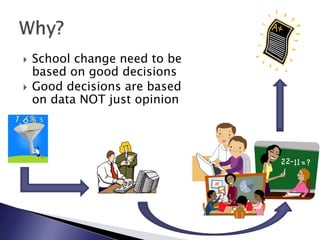
 School change need to be
based on good decisions
 Good decisions are based
on data NOT just opinion
i. Understanding the terms
a) School improvement
b) School effectiveness
c) Monitoring & evaluation (M&E)
ii. Role of M&E in schools
iii. Logic models
iv. School culture for good decisions
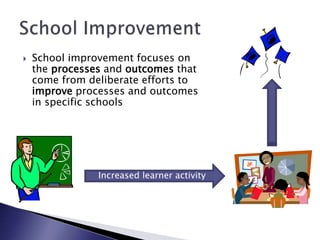
 School improvement focuses on
the processes and outcomes that
come from deliberate efforts to
improve processes and outcomes
in specific schools
Increased learner activity
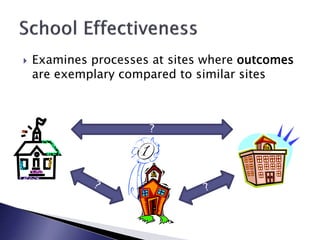
 Examines processes at sites where outcomes
are exemplary compared to similar sites
?
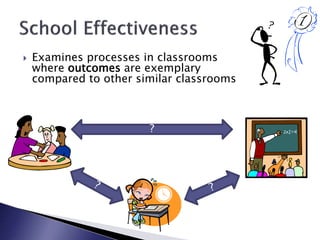
 Examines processes in classrooms
where outcomes are exemplary
compared to other similar classrooms
?
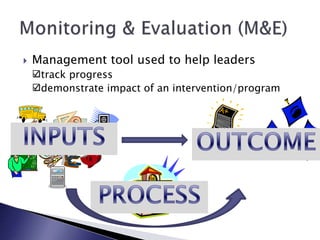
 Management tool used to help leaders
track progress
demonstrate impact of an intervention/program
 Continuous
 Systematic collection of data on specified
indicators
 Provides management & stakeholders up to
date information on
◦ Progress
◦ Use of allocated funds
 Report should be credible & useful
 Inform stakeholders to make good decisions
OECD
 Systematic and objective
 Assessment of an ongoing or completed
program
◦ Design
◦ Implementation
◦ Results
 Report should be credible & useful
 To determine if objectives met
 Inform stakeholders on lessons learned
OECD
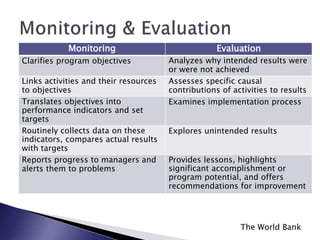
Monitoring Evaluation
Clarifies program objectives Analyzes why intended results were
or were not achieved
Links activities and their resources
to objectives
Assesses specific causal
contributions of activities to results
Translates objectives into
performance indicators and set
targets
Examines implementation process
Routinely collects data on these
indicators, compares actual results
with targets
Explores unintended results
Reports progress to managers and
alerts them to problems
Provides lessons, highlights
significant accomplishment or
program potential, and offers
recommendations for improvement
The World Bank
Monitoring and evaluation provide essential
information for setting priorities and planning
further improvement.
KHDA
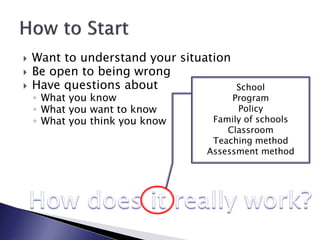
 Want to understand your situation
 Be open to being wrong
 Have questions about
◦ What you know
◦ What you want to know
◦ What you think you know
School
Program
Policy
Family of schools
Classroom
Teaching method
Assessment method
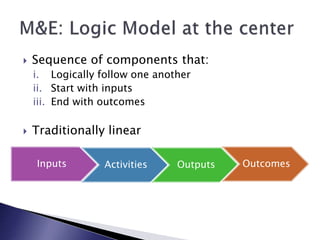
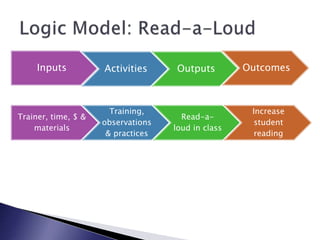
 Sequence of components that:
i. Logically follow one another
ii. Start with inputs
iii. End with outcomes
 Traditionally linear
Inputs Activities Outputs Outcomes
Trainer, time, $ &
materials
Training,
observations
& practices
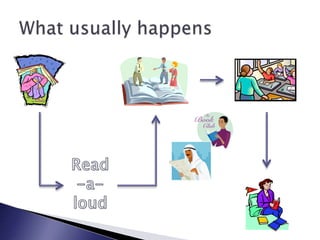
Read-a-
loud in class
Increase
student
reading
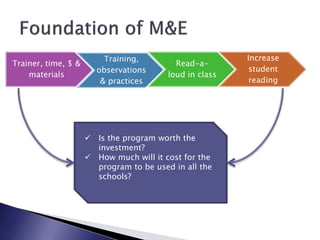
Trainer, time, $ &
materials
Training,
observations
& practices
Read-a-
loud in class
Increase
student
reading
 Is the program worth the
investment?
 How much will it cost for the
program to be used in all the
schools?
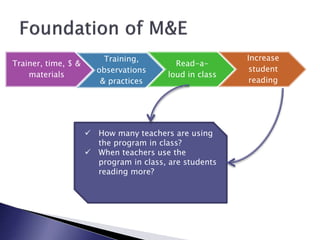
Trainer, time, $ &
materials
Training,
observations
& practices
Read-a-
loud in class
Increase
student
reading
 How many teachers are using
the program in class?
 When teachers use the
program in class, are students
reading more?
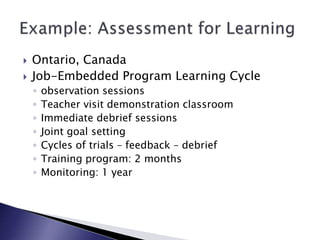
 Ontario, Canada
 Job-Embedded Program Learning Cycle
◦ observation sessions
◦ Teacher visit demonstration classroom
◦ Immediate debrief sessions
◦ Joint goal setting
◦ Cycles of trials – feedback – debrief
◦ Training program: 2 months
◦ Monitoring: 1 year
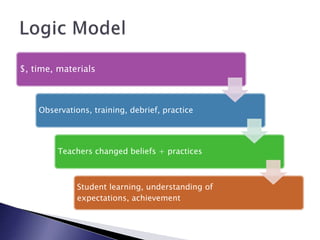
$, time, materials
Observations, training, debrief, practice
Teachers changed beliefs + practices
Student learning, understanding of
expectations, achievement
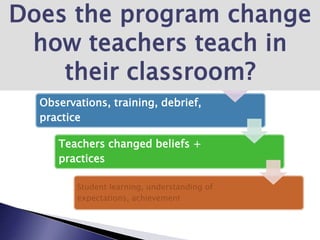
$, time, materials
Observations, training, debrief,
practice
Teachers changed beliefs +
practices
Student learning, understanding of
expectations, achievement
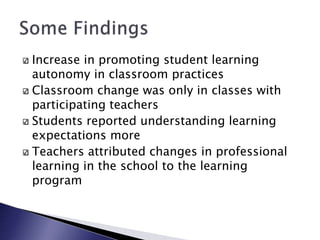
Increase in promoting student learning
autonomy in classroom practices
Classroom change was only in classes with
participating teachers
Students reported understanding learning
expectations more
Teachers attributed changes in professional
learning in the school to the learning
program
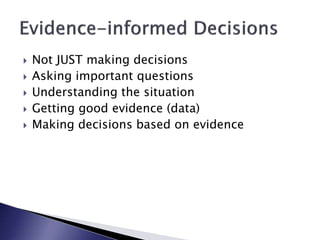
 Not JUST making decisions
 Asking important questions
 Understanding the situation
 Getting good evidence (data)
 Making decisions based on evidence
 School culture
◦ How a school thinks and acts together
◦ Collective thinking
 Inclusive process
◦ Teachers
◦ Students
◦ Parents
1. Designing a Logic Model for Program
Evaluations
2. Conducting a Program Evaluation: Checking
for School Improvement and Effectiveness

Monitoring and Evaluation Supporting School Improvement and Effectiveness

  • 1.
    Dr. Sonia BenJaafar EduEval
  • 2.
     School changeneed to be based on good decisions  Good decisions are based on data NOT just opinion
  • 3.
    i. Understanding theterms a) School improvement b) School effectiveness c) Monitoring & evaluation (M&E) ii. Role of M&E in schools iii. Logic models iv. School culture for good decisions
  • 4.
     School improvementfocuses on the processes and outcomes that come from deliberate efforts to improve processes and outcomes in specific schools Increased learner activity
  • 5.
     Examines processesat sites where outcomes are exemplary compared to similar sites ?
  • 6.
     Examines processesin classrooms where outcomes are exemplary compared to other similar classrooms ?
  • 7.
     Management toolused to help leaders track progress demonstrate impact of an intervention/program
  • 8.
     Continuous  Systematiccollection of data on specified indicators  Provides management & stakeholders up to date information on ◦ Progress ◦ Use of allocated funds  Report should be credible & useful  Inform stakeholders to make good decisions OECD
  • 9.
     Systematic andobjective  Assessment of an ongoing or completed program ◦ Design ◦ Implementation ◦ Results  Report should be credible & useful  To determine if objectives met  Inform stakeholders on lessons learned OECD
  • 10.
    Monitoring Evaluation Clarifies programobjectives Analyzes why intended results were or were not achieved Links activities and their resources to objectives Assesses specific causal contributions of activities to results Translates objectives into performance indicators and set targets Examines implementation process Routinely collects data on these indicators, compares actual results with targets Explores unintended results Reports progress to managers and alerts them to problems Provides lessons, highlights significant accomplishment or program potential, and offers recommendations for improvement The World Bank
  • 11.
    Monitoring and evaluationprovide essential information for setting priorities and planning further improvement. KHDA
  • 12.
     Want tounderstand your situation  Be open to being wrong  Have questions about ◦ What you know ◦ What you want to know ◦ What you think you know School Program Policy Family of schools Classroom Teaching method Assessment method
  • 15.
     Sequence ofcomponents that: i. Logically follow one another ii. Start with inputs iii. End with outcomes  Traditionally linear Inputs Activities Outputs Outcomes
  • 16.
    Inputs Activities OutputsOutcomes Trainer, time, $ & materials Training, observations & practices Read-a- loud in class Increase student reading
  • 17.
    Trainer, time, $& materials Training, observations & practices Read-a- loud in class Increase student reading  Is the program worth the investment?  How much will it cost for the program to be used in all the schools?
  • 18.
    Trainer, time, $& materials Training, observations & practices Read-a- loud in class Increase student reading  How many teachers are using the program in class?  When teachers use the program in class, are students reading more?
  • 19.
     Ontario, Canada Job-Embedded Program Learning Cycle ◦ observation sessions ◦ Teacher visit demonstration classroom ◦ Immediate debrief sessions ◦ Joint goal setting ◦ Cycles of trials – feedback – debrief ◦ Training program: 2 months ◦ Monitoring: 1 year
  • 20.
    $, time, materials Observations,training, debrief, practice Teachers changed beliefs + practices Student learning, understanding of expectations, achievement
  • 21.
    $, time, materials Observations,training, debrief, practice Teachers changed beliefs + practices Student learning, understanding of expectations, achievement
  • 22.
    Increase in promotingstudent learning autonomy in classroom practices Classroom change was only in classes with participating teachers Students reported understanding learning expectations more Teachers attributed changes in professional learning in the school to the learning program
  • 23.
     Not JUSTmaking decisions  Asking important questions  Understanding the situation  Getting good evidence (data)  Making decisions based on evidence
  • 24.
     School culture ◦How a school thinks and acts together ◦ Collective thinking  Inclusive process ◦ Teachers ◦ Students ◦ Parents
  • 25.
    1. Designing aLogic Model for Program Evaluations 2. Conducting a Program Evaluation: Checking for School Improvement and Effectiveness