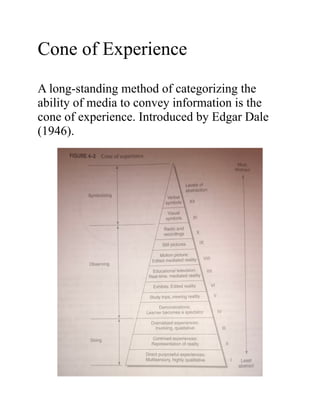
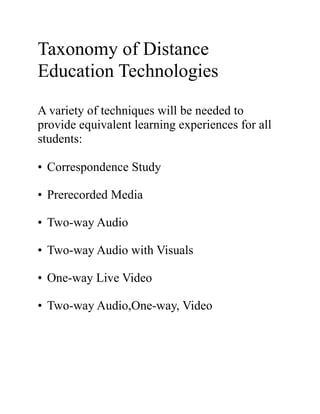
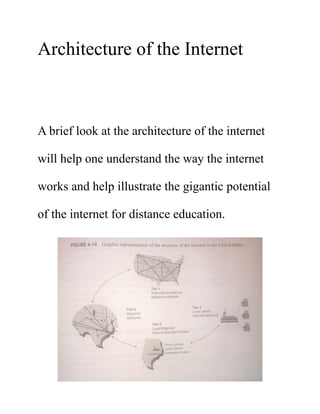
This document discusses technologies used for distance education. It begins by introducing the cone of experience taxonomy for classifying how well different media can convey information. It then outlines various distance education technologies including correspondence study, prerecorded media, audio, and video technologies. It also discusses selecting technologies based on learning outcomes and experiences. The document also briefly discusses the internet architecture and how it enables distance education. It notes that while MOOCs and some online courses still use a teacher-centered model, distributed learning implements a more learner-centered approach. In the end, it discusses advantages like flexibility and accessibility of online learning but also limitations like lack of access to technology.