




MODERN IMAGING MODALITIES
WITH RECENT INNOVATION
GRINTY BABU
Modality, a method of
diagnosis. Modality (medical
imaging), a type of equipment
used to acquire structural or
functional images of the body.
What is Modality in medical terms?
A variety of imaging
techniques such as X-ray
radiography, ultrasound, CT, nuclear
medicine including positron
emission tomography (PET),
Magnetic resonance imaging (MRI)
are used to diagnose or treat
diseases.
What are the modalities of radiology?
These emerging
technologies could enhance
medical imaging by
providing better resolution,
enabling new modalities, or
facilitating portability.
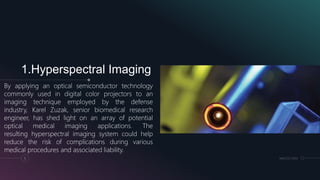
1.Hyperspectral Imaging
By applying an optical semiconductor technology
commonly used in digital color projectors to an
imaging technique employed by the defense
industry, Karel Zuzak, senior biomedical research
engineer, has shed light on an array of potential
optical medical imaging applications. The
resulting hyperspectral imaging system could help
reduce the risk of complications during various
medical procedures and associated liability.
5 MM.DD.20XX
MM.DD.20XX6
Hyperspectral imaging, like other
spectral imaging, collects and processes
information from across the
electromagnetic spectrum. The goal
of hyperspectral imaging is to obtain the
spectrum for each pixel in the image of a
scene, with the purpose of finding objects,
identifying materials, or detecting
processes.
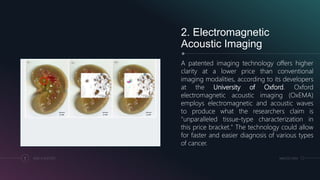
2. Electromagnetic
Acoustic Imaging
A patented imaging technology offers higher
clarity at a lower price than conventional
imaging modalities, according to its developers
at the University of Oxford. Oxford
electromagnetic acoustic imaging (OxEMA)
employs electromagnetic and acoustic waves
to produce what the researchers claim is
"unparalleled tissue-type characterization in
this price bracket." The technology could allow
for faster and easier diagnosis of various types
of cancer.
7 ADD A FOOTER MM.DD.20XX
MM.DD.20XX8
Electromagnetic acoustic imaging (EMAI) is
a new imaging technique that uses long-
wavelength RF electromagnetic (EM) waves
to induce ultrasound emission. Signal
intensity and image contrast have been
found to depend on spatially varying
electrical conductivity of the medium in
addition to conventional acoustic
properties.
3. Superconducting Magnet
System
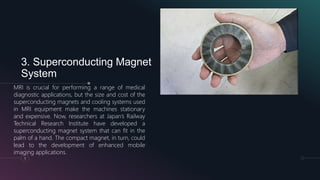
MRI is crucial for performing a range of medical
diagnostic applications, but the size and cost of the
superconducting magnets and cooling systems used
in MRI equipment make the machines stationary
and expensive. Now, researchers at Japan’s Railway
Technical Research Institute have developed a
superconducting magnet system that can fit in the
palm of a hand. The compact magnet, in turn, could
lead to the development of enhanced mobile
imaging applications.
9
10
Type II superconductors such as niobium-
tin and niobium-titanium are used to make
the coil windings for superconducting
magnets. These two materials can be
fabricated into wires and can withstand
high magnetic fields.
4. Wafer-Scale Mega
Microchip
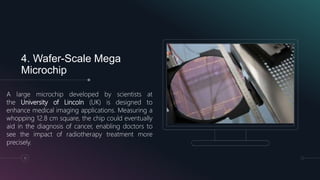
A large microchip developed by scientists at
the University of Lincoln (UK) is designed to
enhance medical imaging applications. Measuring a
whopping 12.8 cm square, the chip could eventually
aid in the diagnosis of cancer, enabling doctors to
see the impact of radiotherapy treatment more
precisely.
11
12
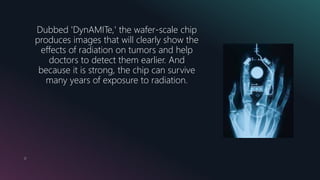
Dubbed 'DynAMITe,' the wafer-scale chip
produces images that will clearly show the
effects of radiation on tumors and help
doctors to detect them earlier. And
because it is strong, the chip can survive
many years of exposure to radiation.
REFERENCE
https://www.mddionline.com/six-
advances-medical-imaging-technology
13
https://www.itnonline.com/article/top-
trends-medical-imaging-technology
THANK YOU
MM.DD.20XXADD A FOOTER14

Modern imaging modalities with recent innovation

  • 1.
    MODERN IMAGING MODALITIES WITHRECENT INNOVATION GRINTY BABU
  • 2.
    Modality, a methodof diagnosis. Modality (medical imaging), a type of equipment used to acquire structural or functional images of the body. What is Modality in medical terms?
  • 3.
    A variety ofimaging techniques such as X-ray radiography, ultrasound, CT, nuclear medicine including positron emission tomography (PET), Magnetic resonance imaging (MRI) are used to diagnose or treat diseases. What are the modalities of radiology?
  • 4.
    These emerging technologies couldenhance medical imaging by providing better resolution, enabling new modalities, or facilitating portability.
  • 5.
    1.Hyperspectral Imaging By applyingan optical semiconductor technology commonly used in digital color projectors to an imaging technique employed by the defense industry, Karel Zuzak, senior biomedical research engineer, has shed light on an array of potential optical medical imaging applications. The resulting hyperspectral imaging system could help reduce the risk of complications during various medical procedures and associated liability. 5 MM.DD.20XX
  • 6.
    MM.DD.20XX6 Hyperspectral imaging, likeother spectral imaging, collects and processes information from across the electromagnetic spectrum. The goal of hyperspectral imaging is to obtain the spectrum for each pixel in the image of a scene, with the purpose of finding objects, identifying materials, or detecting processes.
  • 7.
    2. Electromagnetic Acoustic Imaging Apatented imaging technology offers higher clarity at a lower price than conventional imaging modalities, according to its developers at the University of Oxford. Oxford electromagnetic acoustic imaging (OxEMA) employs electromagnetic and acoustic waves to produce what the researchers claim is "unparalleled tissue-type characterization in this price bracket." The technology could allow for faster and easier diagnosis of various types of cancer. 7 ADD A FOOTER MM.DD.20XX
  • 8.
    MM.DD.20XX8 Electromagnetic acoustic imaging(EMAI) is a new imaging technique that uses long- wavelength RF electromagnetic (EM) waves to induce ultrasound emission. Signal intensity and image contrast have been found to depend on spatially varying electrical conductivity of the medium in addition to conventional acoustic properties.
  • 9.
    3. Superconducting Magnet System MRIis crucial for performing a range of medical diagnostic applications, but the size and cost of the superconducting magnets and cooling systems used in MRI equipment make the machines stationary and expensive. Now, researchers at Japan’s Railway Technical Research Institute have developed a superconducting magnet system that can fit in the palm of a hand. The compact magnet, in turn, could lead to the development of enhanced mobile imaging applications. 9
  • 10.
    10 Type II superconductorssuch as niobium- tin and niobium-titanium are used to make the coil windings for superconducting magnets. These two materials can be fabricated into wires and can withstand high magnetic fields.
  • 11.
    4. Wafer-Scale Mega Microchip Alarge microchip developed by scientists at the University of Lincoln (UK) is designed to enhance medical imaging applications. Measuring a whopping 12.8 cm square, the chip could eventually aid in the diagnosis of cancer, enabling doctors to see the impact of radiotherapy treatment more precisely. 11
  • 12.
    12 Dubbed 'DynAMITe,' thewafer-scale chip produces images that will clearly show the effects of radiation on tumors and help doctors to detect them earlier. And because it is strong, the chip can survive many years of exposure to radiation.
  • 13.
  • 14.