Modeled Writing


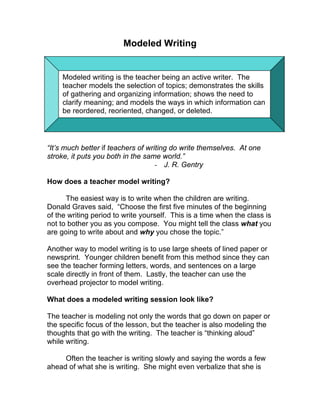
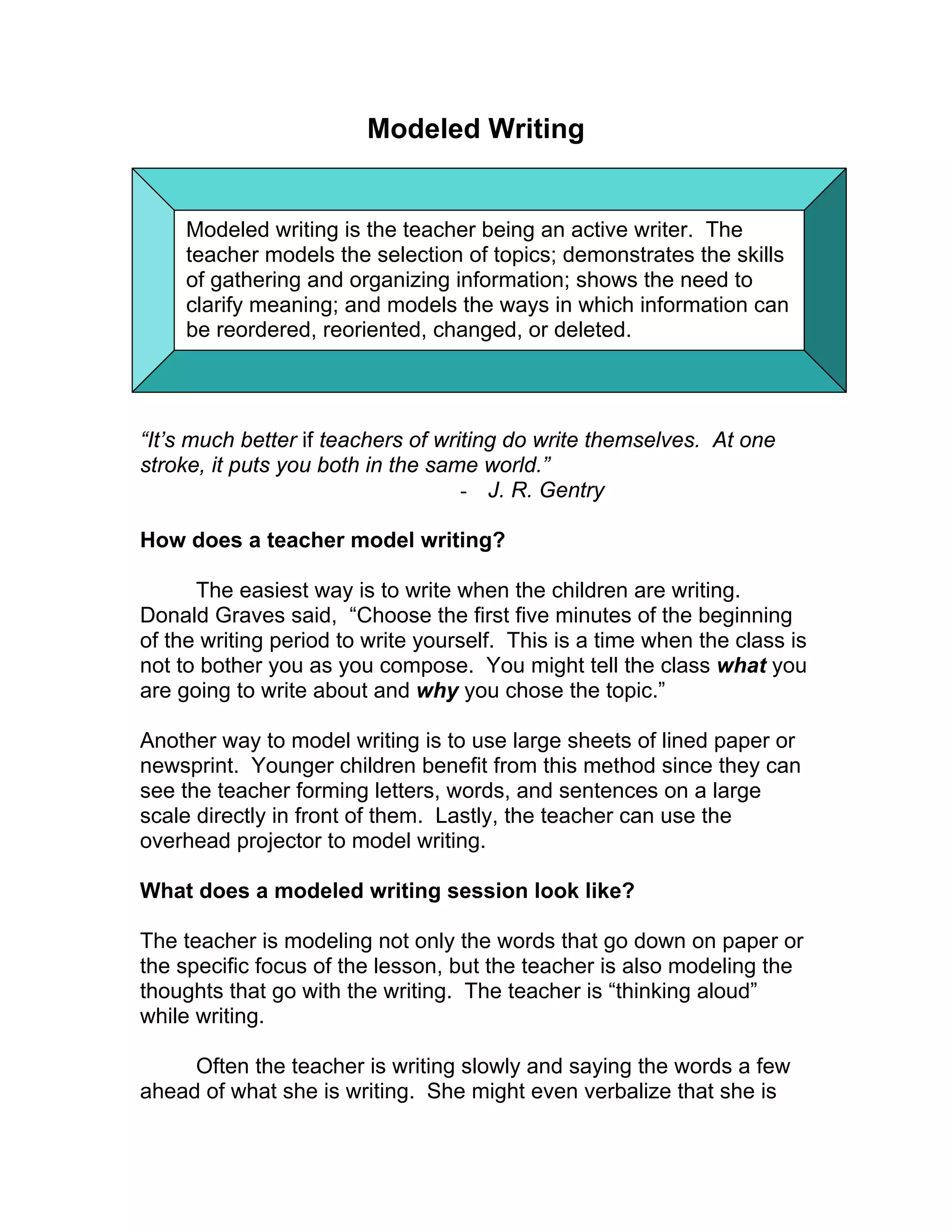
     Modeled writing is the teacher being an active writer. The
     teacher models the selection of topics; demonstrates the skills
     of gathering and organizing information; shows the need to
     clarify meaning; and models the ways in which information can
     be reordered, reoriented, changed, or deleted.


“It’s much better if teachers of writing do write themselves. At one
stroke, it puts you both in the same world.”
                                    - J. R. Gentry

How does a teacher model writing?

      The easiest way is to write when the children are writing.
Donald Graves said, “Choose the first five minutes of the beginning
of the writing period to write yourself. This is a time when the class is
not to bother you as you compose. You might tell the class what you
are going to write about and why you chose the topic.”

Another way to model writing is to use large sheets of lined paper or
newsprint. Younger children benefit from this method since they can
see the teacher forming letters, words, and sentences on a large
scale directly in front of them. Lastly, the teacher can use the
overhead projector to model writing.

What does a modeled writing session look like?

The teacher is modeling not only the words that go down on paper or
the specific focus of the lesson, but the teacher is also modeling the
thoughts that go with the writing. The teacher is “thinking aloud”
while writing.

     Often the teacher is writing slowly and saying the words a few
ahead of what she is writing. She might even verbalize that she is
stuck and is going to reread what she has written. She could ask the
class what they want to know. When she does that, she is modeling
how the children can ask each other questions when they are stuck in
their writing.

What should the teacher model?

  Topic Selection
  Teachers need to model how to select a topic, how to give
  reasons for topic selection, and how to write on a variety of topics.
  It is also beneficial for students to see their teacher keeping a topic
  list.

  Gathering and Selecting Information
  Teachers need to model the usefulness of drawing pictures or
  diagrams, making graphic organizers, jotting in margins, and
  notetaking.

  Writing in a Variety of Forms
  In order for children to write in a variety of forms, they need to hear
  and see the variations. The teacher can model variety by reading
  aloud to children different genres and styles of writing. Then
  discuss with the class the various genres and literacy styles to
  discover the defining characteristics of each form.

  Voice
  What is “voice”?
  Voice is the personal quality of the writing, a sense of the writer
  behind the words – their individual fingerprints on the page. It is
  the “flavor” or tone appropriate to the purpose for the writing and
  audience, a sense of commitment to the topic, involvement in the
  writing, enthusiasm, and integrity.

  The teacher can model voice by interjecting her thoughts and
  feelings into her writing and choosing vivid, specific verbs. Then
  discuss the tone of the piece with the students while stressing the
  importance of knowing the audience and the purpose for the
  writing.
Ways in which Writing can be Rearranged
Teachers need to model ways that writing can be changed,
rearranged, or deleted. At this point, teacher “think aloud” is
imperative.


Where can a teacher find additional information about
modeled writing?

   Fletcher, Ralph. 1992. Dancing with the Pen. Richard C.
Owen Publishers.

   Graves, Donald. 1983. Writing: Teachers and Children at
Work. Portsmouth, N.H.:Heinemann.

Modeled writing

  • 1.
    Modeled Writing Modeled writing is the teacher being an active writer. The teacher models the selection of topics; demonstrates the skills of gathering and organizing information; shows the need to clarify meaning; and models the ways in which information can be reordered, reoriented, changed, or deleted. “It’s much better if teachers of writing do write themselves. At one stroke, it puts you both in the same world.” - J. R. Gentry How does a teacher model writing? The easiest way is to write when the children are writing. Donald Graves said, “Choose the first five minutes of the beginning of the writing period to write yourself. This is a time when the class is not to bother you as you compose. You might tell the class what you are going to write about and why you chose the topic.” Another way to model writing is to use large sheets of lined paper or newsprint. Younger children benefit from this method since they can see the teacher forming letters, words, and sentences on a large scale directly in front of them. Lastly, the teacher can use the overhead projector to model writing. What does a modeled writing session look like? The teacher is modeling not only the words that go down on paper or the specific focus of the lesson, but the teacher is also modeling the thoughts that go with the writing. The teacher is “thinking aloud” while writing. Often the teacher is writing slowly and saying the words a few ahead of what she is writing. She might even verbalize that she is
  • 2.
    stuck and isgoing to reread what she has written. She could ask the class what they want to know. When she does that, she is modeling how the children can ask each other questions when they are stuck in their writing. What should the teacher model? Topic Selection Teachers need to model how to select a topic, how to give reasons for topic selection, and how to write on a variety of topics. It is also beneficial for students to see their teacher keeping a topic list. Gathering and Selecting Information Teachers need to model the usefulness of drawing pictures or diagrams, making graphic organizers, jotting in margins, and notetaking. Writing in a Variety of Forms In order for children to write in a variety of forms, they need to hear and see the variations. The teacher can model variety by reading aloud to children different genres and styles of writing. Then discuss with the class the various genres and literacy styles to discover the defining characteristics of each form. Voice What is “voice”? Voice is the personal quality of the writing, a sense of the writer behind the words – their individual fingerprints on the page. It is the “flavor” or tone appropriate to the purpose for the writing and audience, a sense of commitment to the topic, involvement in the writing, enthusiasm, and integrity. The teacher can model voice by interjecting her thoughts and feelings into her writing and choosing vivid, specific verbs. Then discuss the tone of the piece with the students while stressing the importance of knowing the audience and the purpose for the writing.
  • 3.
    Ways in whichWriting can be Rearranged Teachers need to model ways that writing can be changed, rearranged, or deleted. At this point, teacher “think aloud” is imperative. Where can a teacher find additional information about modeled writing? Fletcher, Ralph. 1992. Dancing with the Pen. Richard C. Owen Publishers. Graves, Donald. 1983. Writing: Teachers and Children at Work. Portsmouth, N.H.:Heinemann.