ENGLISH 9
WEEK 1
LEARNING OBJECTIVES
1.Name modals according to purpose
2. Identify the appropriate modal to be
used
3. Use the appropriate modal in a given
situation
Recall and recite one or
two school rules and
policies.
3
MODAL VERBS
WHAT IS A MODAL?
A modal verb is a type of verb that joins up with
another verb to create a mood or situation. It is
also known as a “modal auxiliary (helping)
verb. It expresses something that can probably,
certainly or possibly happen. This word helps
when speaking about ability, obligation,
prohibition or asking permission. Examples of
these are: may, must, should, can, have to etc.
ARE MODALS LIKE NORMAL VERBS?
Modals are different from normal verbs:
a. They don't use an 's' for the third person singular.
Example: The victim of the crime may ask for a good
lawyer.
(The verb ask in the sentence has no -s.)
Unlike in this sentence where the modal is not used:
The victim of the crime asks for a good lawyer.
b. They make questions by
inversion.
Example: She can go. = Can
she go?
c. They are followed directly by the
infinitive of another verb (without
'to').
Example: The victim of the crime
may ask for a good lawyer. (infinitive
form without ‘to’)
SEVERAL TYPES OF MODALS ACCORDING TO
THEIR FUNCTION/PURPOSE.
A. Modal Verb Expressing Permission-
It is used to indicate whether someone
asks permission, gives permission or says
someone has the permission to do
something.
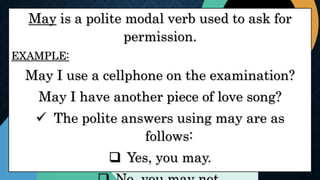
May is a polite modal verb used to ask for
permission.
EXAMPLE:
May I use a cellphone on the examination?
May I have another piece of love song?
 The polite answers using may are as
follows:
 Yes, you may.
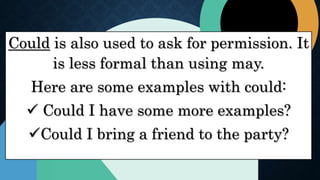
Could is also used to ask for permission. It
is less formal than using may.
Here are some examples with could:
 Could I have some more examples?
Could I bring a friend to the party?
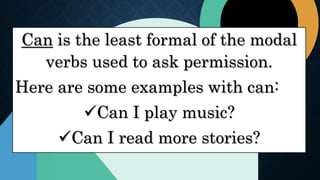
Can is the least formal of the modal
verbs used to ask permission.
Here are some examples with can:
Can I play music?
Can I read more stories?
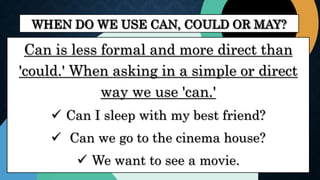
WHEN DO WE USE CAN, COULD OR MAY?
Can is less formal and more direct than
'could.' When asking in a simple or direct
way we use 'can.'
 Can I sleep with my best friend?
 Can we go to the cinema house?
 We want to see a movie.
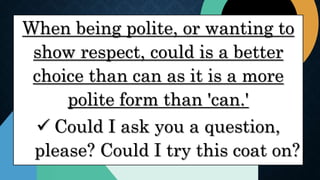
When being polite, or wanting to
show respect, could is a better
choice than can as it is a more
polite form than 'can.'
 Could I ask you a question,
please? Could I try this coat on?
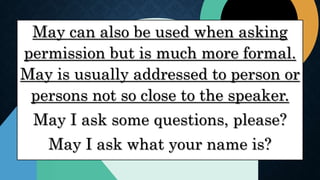
May can also be used when asking
permission but is much more formal.
May is usually addressed to person or
persons not so close to the speaker.
May I ask some questions, please?
May I ask what your name is?
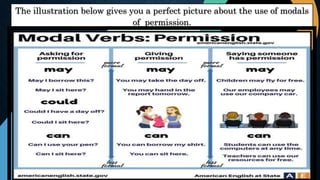
The illustration below gives you a perfect picture about the use of modals
of permission.
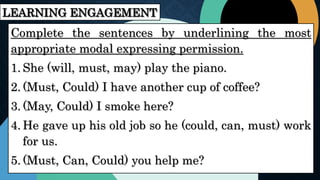
LEARNING ENGAGEMENT
Complete the sentences by underlining the most
appropriate modal expressing permission.
1. She (will, must, may) play the piano.
2. (Must, Could) I have another cup of coffee?
3. (May, Could) I smoke here?
4. He gave up his old job so he (could, can, must) work
for us.
5. (Must, Can, Could) you help me?
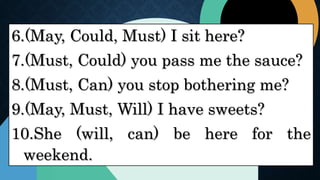
6.(May, Could, Must) I sit here?
7.(Must, Could) you pass me the sauce?
8.(Must, Can) you stop bothering me?
9.(May, Must, Will) I have sweets?
10.She (will, can) be here for the
weekend.
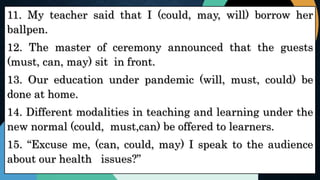
11. My teacher said that I (could, may, will) borrow her
ballpen.
12. The master of ceremony announced that the guests
(must, can, may) sit in front.
13. Our education under pandemic (will, must, could) be
done at home.
14. Different modalities in teaching and learning under the
new normal (could, must,can) be offered to learners.
15. “Excuse me, (can, could, may) I speak to the audience
about our health issues?”
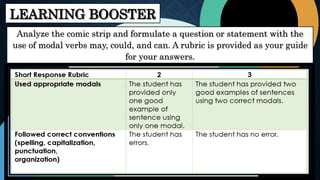
LEARNING BOOSTER
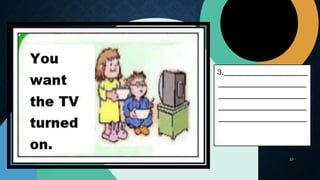
Analyze the comic strip and formulate a question or statement with the
use of modal verbs may, could, and can. A rubric is provided as your guide
for your answers.
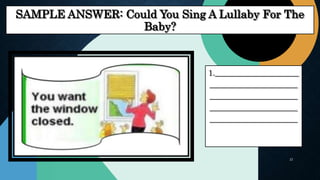
SAMPLE ANSWER: Could You Sing A Lullaby For The
Baby?
1._____________________
______________________
______________________
______________________
______________________
21
22
2._____________________
______________________
______________________
______________________
______________________
23
3._____________________
______________________
______________________
______________________
______________________
24
4._____________________
______________________
______________________
______________________
______________________
25
5._____________________
______________________
______________________
______________________
______________________

ENGLISH 9 WEEK 1.pptx

  • 1.
  • 2.
    LEARNING OBJECTIVES 1.Name modalsaccording to purpose 2. Identify the appropriate modal to be used 3. Use the appropriate modal in a given situation
  • 3.
    Recall and reciteone or two school rules and policies. 3
  • 4.
  • 5.
    WHAT IS AMODAL? A modal verb is a type of verb that joins up with another verb to create a mood or situation. It is also known as a “modal auxiliary (helping) verb. It expresses something that can probably, certainly or possibly happen. This word helps when speaking about ability, obligation, prohibition or asking permission. Examples of these are: may, must, should, can, have to etc.
  • 6.
    ARE MODALS LIKENORMAL VERBS? Modals are different from normal verbs: a. They don't use an 's' for the third person singular. Example: The victim of the crime may ask for a good lawyer. (The verb ask in the sentence has no -s.) Unlike in this sentence where the modal is not used: The victim of the crime asks for a good lawyer.
  • 7.
    b. They makequestions by inversion. Example: She can go. = Can she go?
  • 8.
    c. They arefollowed directly by the infinitive of another verb (without 'to'). Example: The victim of the crime may ask for a good lawyer. (infinitive form without ‘to’)
  • 9.
    SEVERAL TYPES OFMODALS ACCORDING TO THEIR FUNCTION/PURPOSE. A. Modal Verb Expressing Permission- It is used to indicate whether someone asks permission, gives permission or says someone has the permission to do something.
  • 10.
    May is apolite modal verb used to ask for permission. EXAMPLE: May I use a cellphone on the examination? May I have another piece of love song?  The polite answers using may are as follows:  Yes, you may.
  • 11.
    Could is alsoused to ask for permission. It is less formal than using may. Here are some examples with could:  Could I have some more examples? Could I bring a friend to the party?
  • 12.
    Can is theleast formal of the modal verbs used to ask permission. Here are some examples with can: Can I play music? Can I read more stories?
  • 13.
    WHEN DO WEUSE CAN, COULD OR MAY? Can is less formal and more direct than 'could.' When asking in a simple or direct way we use 'can.'  Can I sleep with my best friend?  Can we go to the cinema house?  We want to see a movie.
  • 14.
    When being polite,or wanting to show respect, could is a better choice than can as it is a more polite form than 'can.'  Could I ask you a question, please? Could I try this coat on?
  • 15.
    May can alsobe used when asking permission but is much more formal. May is usually addressed to person or persons not so close to the speaker. May I ask some questions, please? May I ask what your name is?
  • 16.
    The illustration belowgives you a perfect picture about the use of modals of permission.
  • 17.
    LEARNING ENGAGEMENT Complete thesentences by underlining the most appropriate modal expressing permission. 1. She (will, must, may) play the piano. 2. (Must, Could) I have another cup of coffee? 3. (May, Could) I smoke here? 4. He gave up his old job so he (could, can, must) work for us. 5. (Must, Can, Could) you help me?
  • 18.
    6.(May, Could, Must)I sit here? 7.(Must, Could) you pass me the sauce? 8.(Must, Can) you stop bothering me? 9.(May, Must, Will) I have sweets? 10.She (will, can) be here for the weekend.
  • 19.
    11. My teachersaid that I (could, may, will) borrow her ballpen. 12. The master of ceremony announced that the guests (must, can, may) sit in front. 13. Our education under pandemic (will, must, could) be done at home. 14. Different modalities in teaching and learning under the new normal (could, must,can) be offered to learners. 15. “Excuse me, (can, could, may) I speak to the audience about our health issues?”
  • 20.
    LEARNING BOOSTER Analyze thecomic strip and formulate a question or statement with the use of modal verbs may, could, and can. A rubric is provided as your guide for your answers.
  • 21.
    SAMPLE ANSWER: CouldYou Sing A Lullaby For The Baby? 1._____________________ ______________________ ______________________ ______________________ ______________________ 21
  • 22.
  • 23.
  • 24.
  • 25.

Editor's Notes

  • #5 A modal verb is a type of verb that joins up with another verb to create a mood or situation. They are also known as a “modal auxiliary (helping) verb,” to express ability or possibility, permission, obligation.
  • #9 Infinitive is obtained by adding the suffix “to” in front of the verb or using the verb in plainform Ex. To write ; to prevent; to give