MODAL VERBS ©  Anna   Morales i Puigcerver
The verbs  can, could, may, might, will ,  would, shall  (mainly British English),  should, must and ought   are called ‘modal auxiliary verbs’. Modal verbs have  no  –s  in the 3rd singular person. Questions, negatives, tags and short answers are made  without   do. After modal auxiliary verbs, we use the infinitive without  to  of other verbs.  Ought  is an exception. Modal verbs do not have infinitives or participles (* to must,musting, musted). Introduction
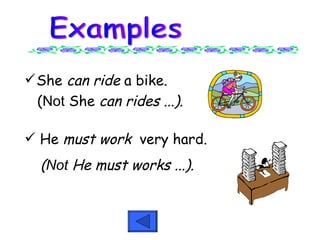
She  can ride  a bike. ( Not  She  can rides ...). Examples He  must work  very hard. ( Not  He must works ...).
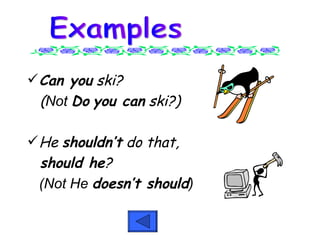
Can you  ski?  ( Not  Do   you can  ski?) He  shouldn’t  do that, should he ? (Not He  doesn’t should ) Examples
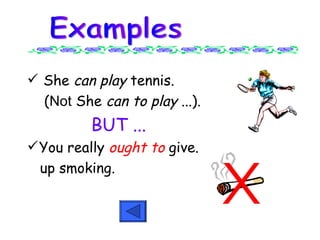
She  can play  tennis. ( Not  She  can to play  ...). BUT ... You really  ought to   give. up smoking. Examples

Modal Verbs I

  • 1.
    MODAL VERBS © Anna Morales i Puigcerver
  • 2.
    The verbs can, could, may, might, will , would, shall (mainly British English), should, must and ought are called ‘modal auxiliary verbs’. Modal verbs have no –s in the 3rd singular person. Questions, negatives, tags and short answers are made without do. After modal auxiliary verbs, we use the infinitive without to of other verbs. Ought is an exception. Modal verbs do not have infinitives or participles (* to must,musting, musted). Introduction
  • 3.
    She canride a bike. ( Not She can rides ...). Examples He must work very hard. ( Not He must works ...).
  • 4.
    Can you ski? ( Not Do you can ski?) He shouldn’t do that, should he ? (Not He doesn’t should ) Examples
  • 5.
    She canplay tennis. ( Not She can to play ...). BUT ... You really ought to give. up smoking. Examples