Marketing Management	2.2
Peppers and Rogers on “creating customer loyalty”5-2The only value your company will ever create is the value that comes from customers—the ones you have now and the ones you will have in the future.Businesses succeed by getting, keeping, and growing customers. Customers are the only reason you build factories, hire employees, schedule meetings, lay fiber-optic lines, or engage in any business activity. Without customers, you don’t have a business5-2
Building Customer Value, Satisfaction & LoyaltyCustomers are value-maximizersForm value expectation & act on it Buy from firm perceived to offer highest customer delivered value, defined astotal customer value - total customer cost5-3
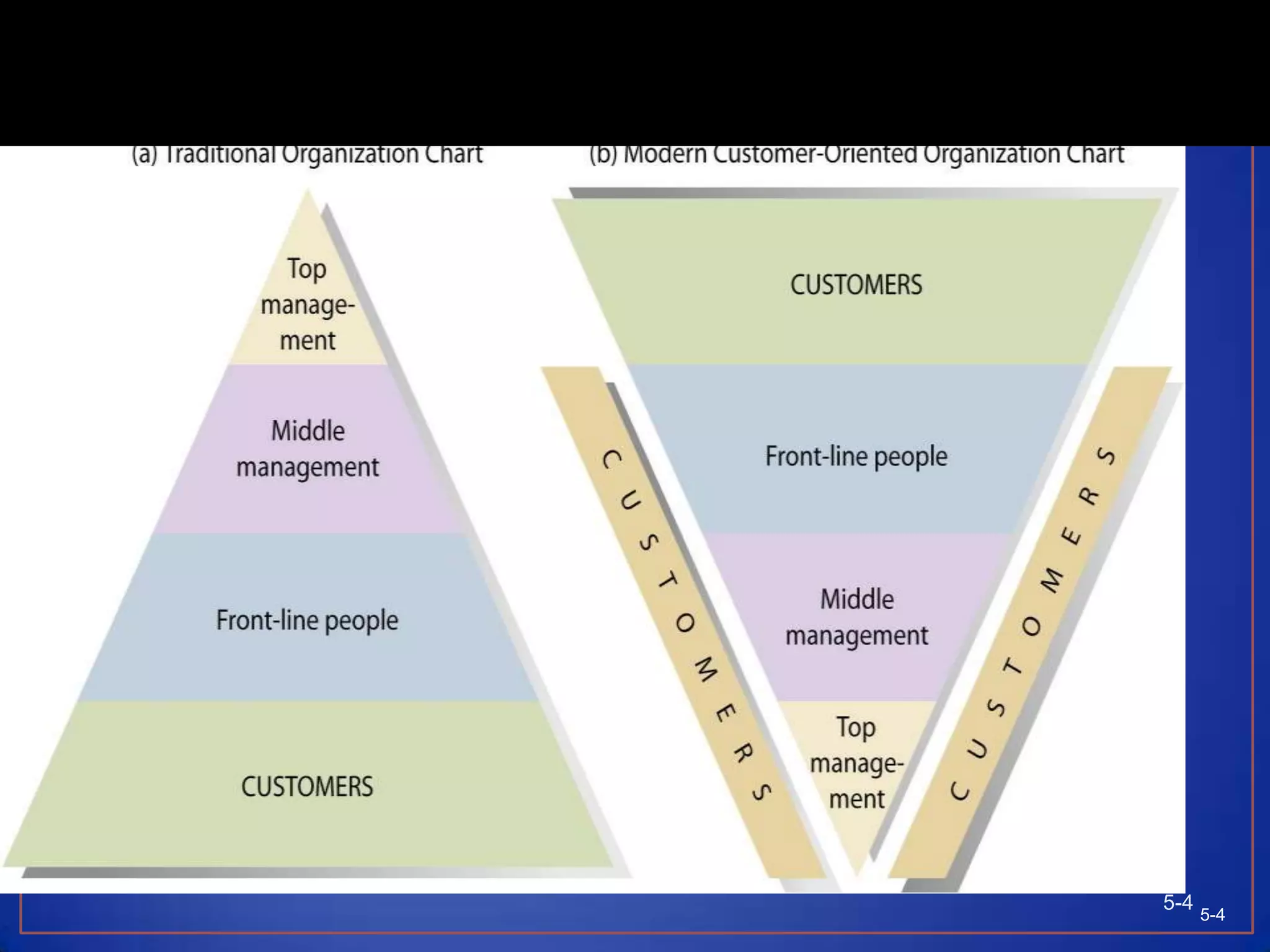
5-4Traditional Organization versusModern Customer-Oriented Company Organization5-4
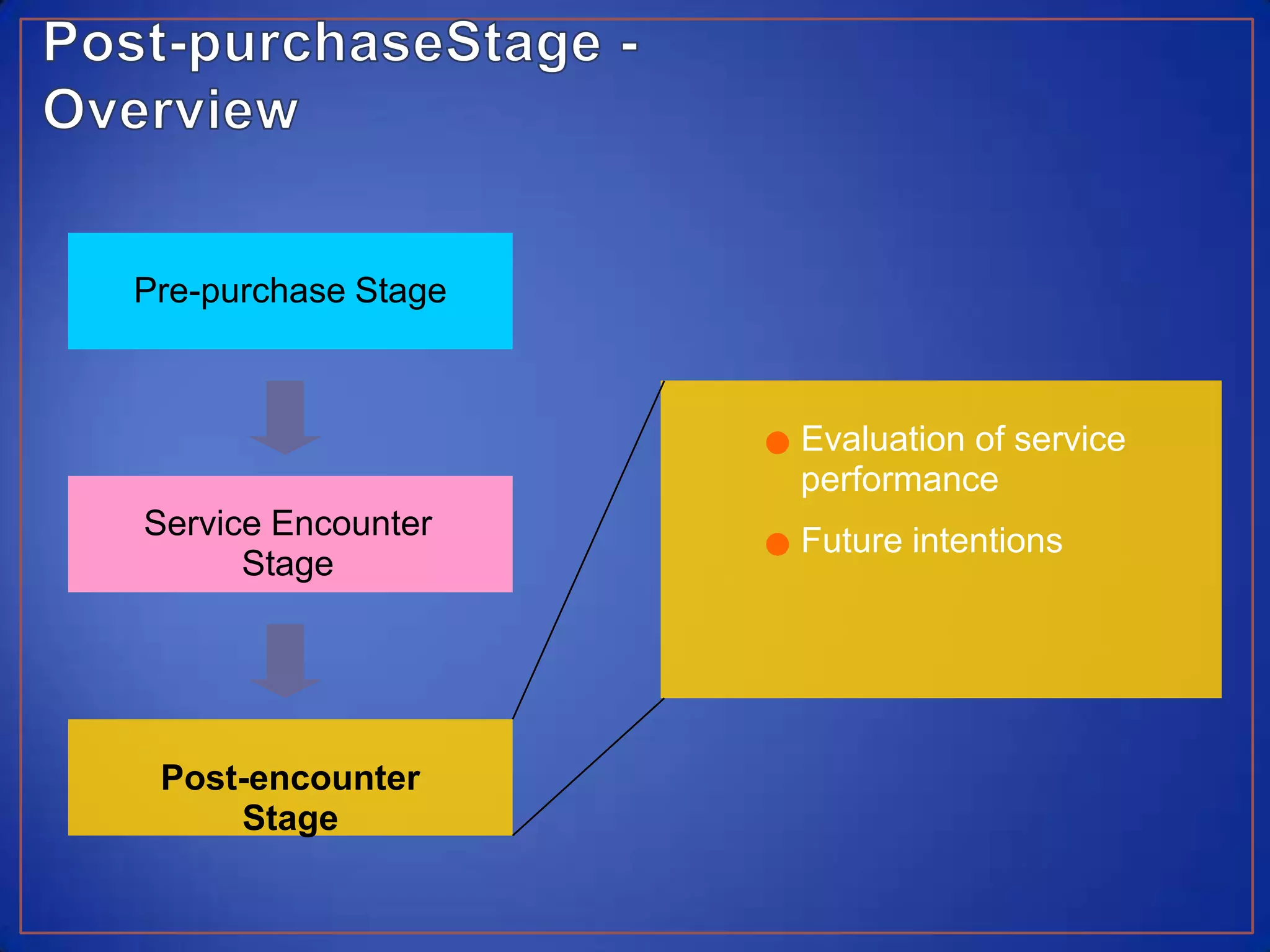
Pre-purchase Stage
Need ArousalDecision to buy or use a service is triggered by need arousalTriggers of need:Unconscious minds (e.g., personal identity and aspirations)Physical conditions (e.g., hunger )External sources (e.g., a service firm’s marketing activities)Courtesy of Masterfile Corporation
Information SearchEvoked set a set of products and brands that a consumer considers during the decision-making process – that is derived from past experiences or external sourcesEvaluationAlternatives then need to be evaluated before a final decision is made
Evaluating Alternatives – Service AttributesSearch attributes help customers evaluate a product before purchaseExperience attributes cannot be evaluated before purchaseCredence attributes are those that customers find impossible to evaluate confidently even after purchase and consumption
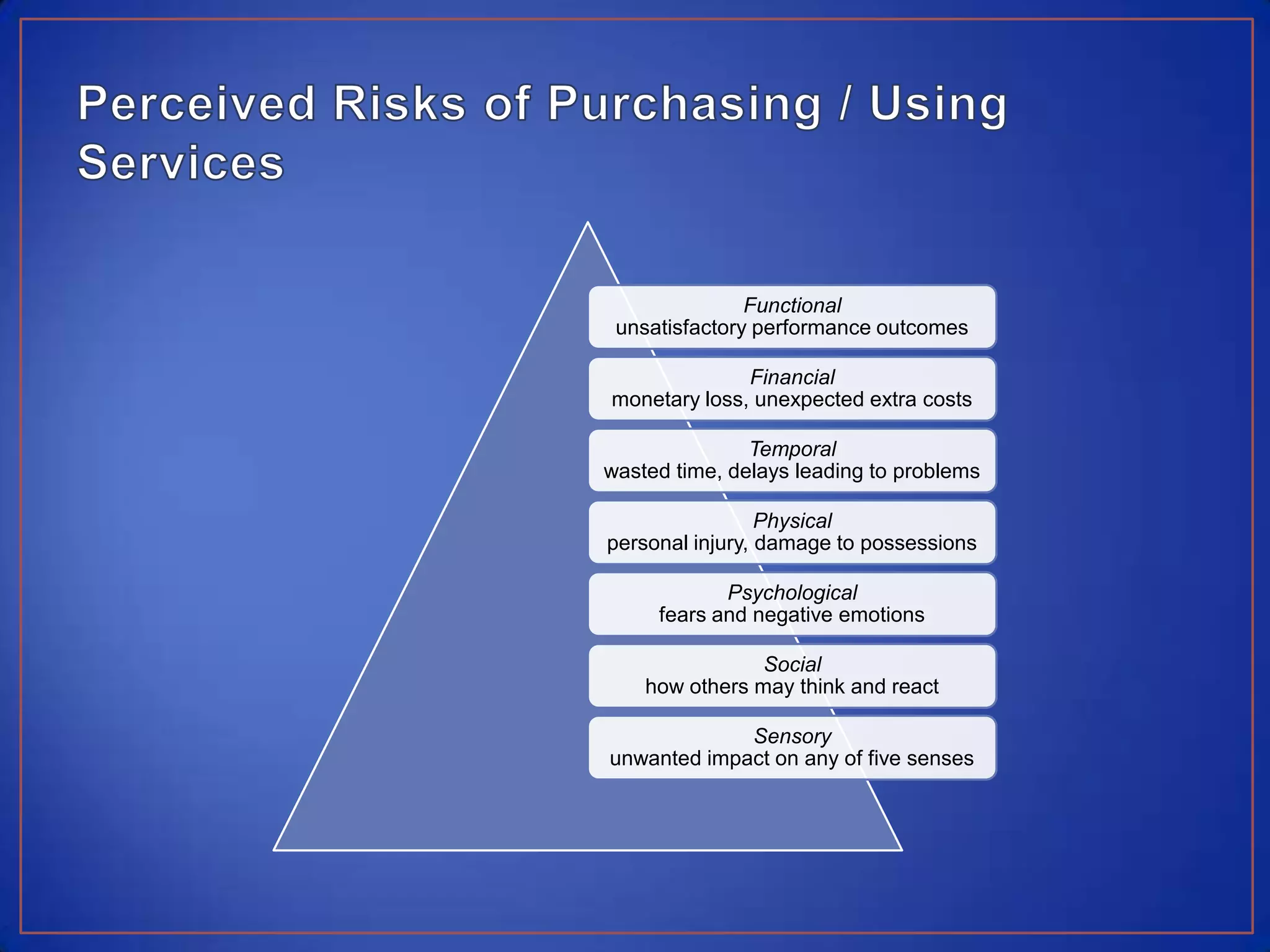
Perceived Risks of Purchasing / Using Services
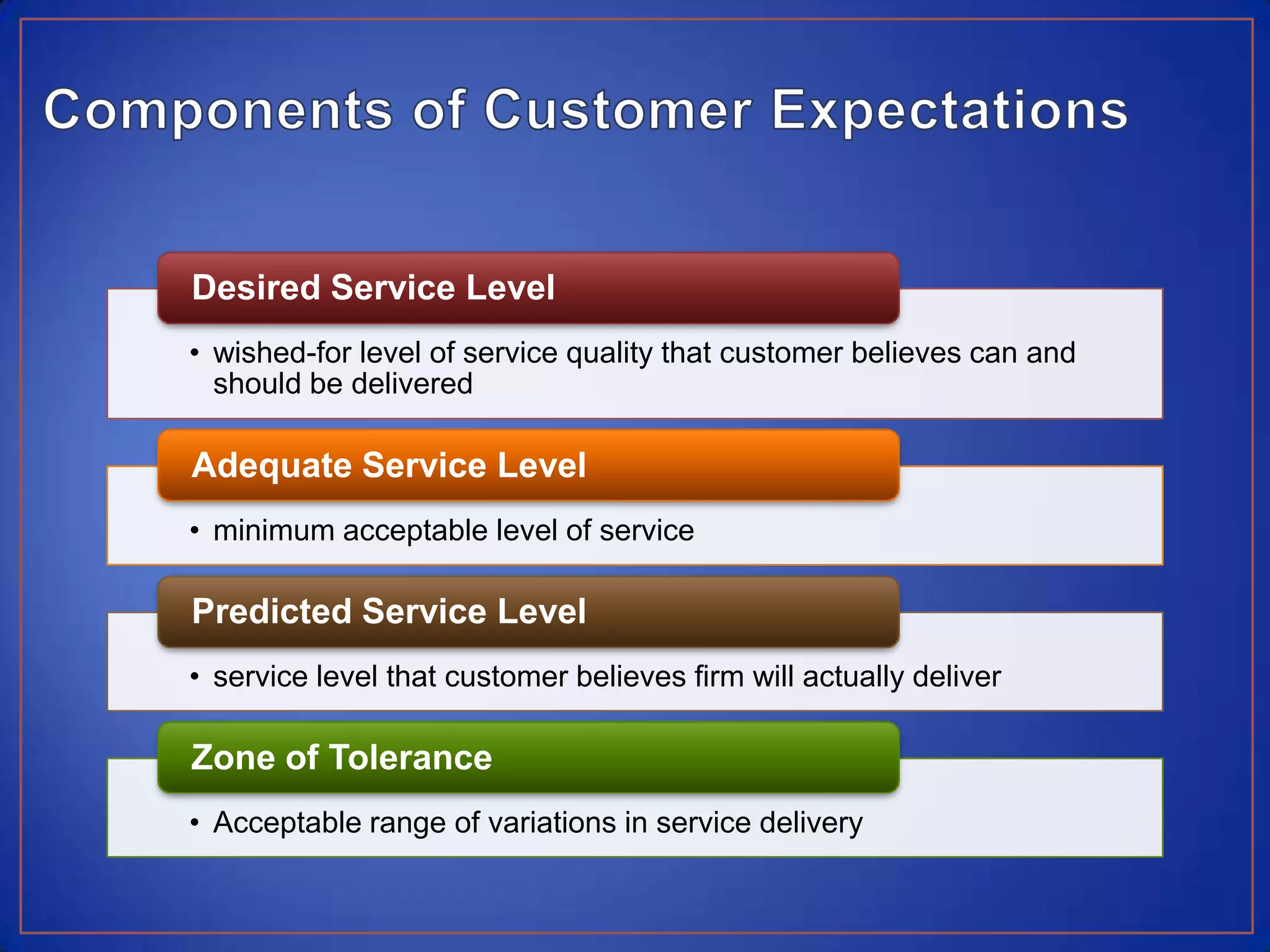
Components of Customer Expectations
Service Encounter Stage
Service Encounter StageService encounter – a period of time during which a customer interacts directly with the service providerMight be brief or extend over a period of time (e.g., a phone call or visit to the hospital)
Service Encounter StageModels and frameworks:“Moments of Truth” – importance of managing touchpointsHigh/low contact model – extent and nature of contact pointsServuction model – variations of interactionsTheater metaphor – “staging” service performances
Moments of Truth“[W]e could say that the perceived quality is realized at the moment of truth, when the service provider and the service customer confront one another in the arena. At that moment they are very much on their own… It is the skill, the motivation, and the tools employed by the firm’s representative and the expectations and behavior of the client which together will create the service delivery process.”Richard Normann
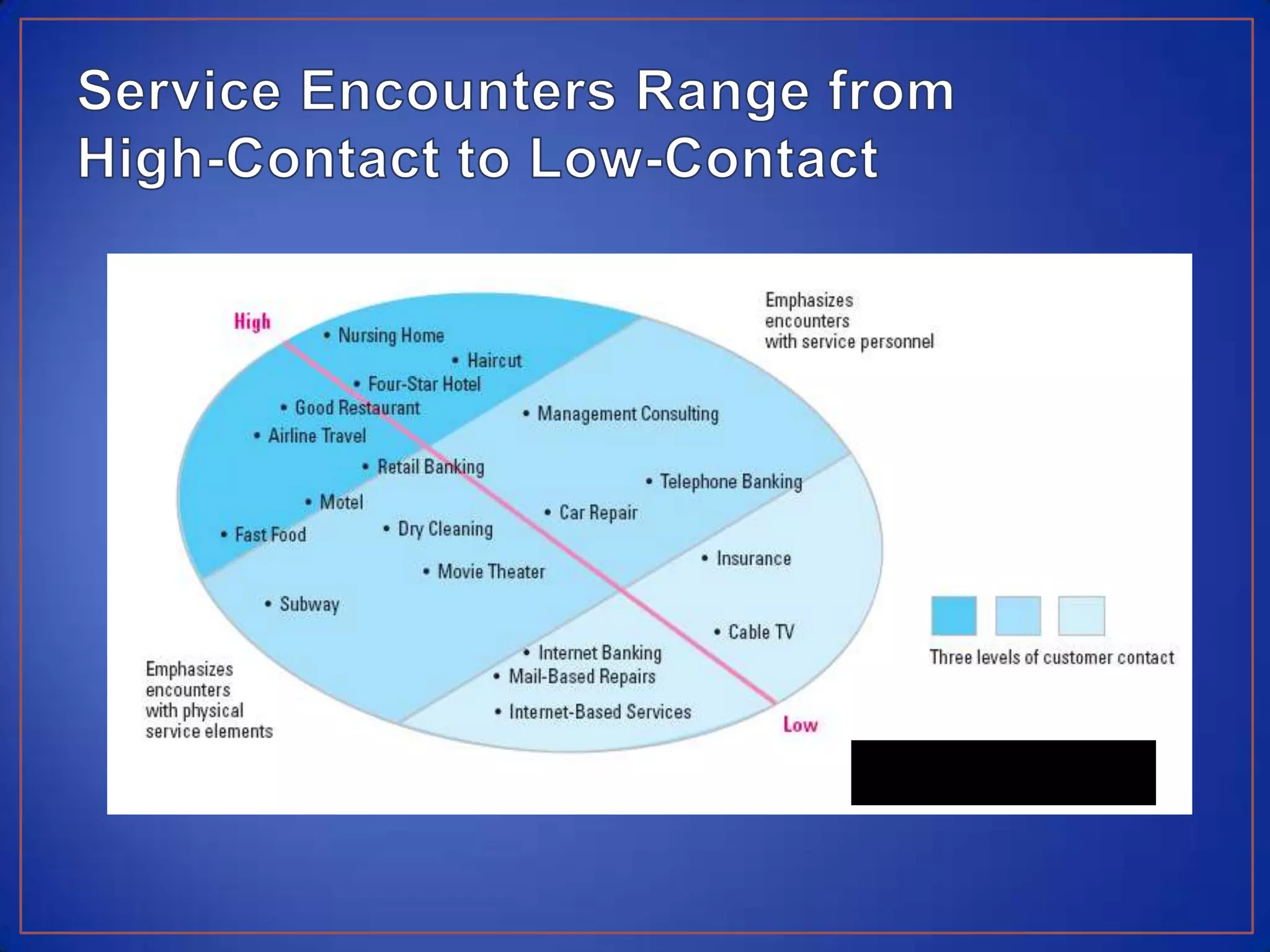
Service Encounters Range from High-Contact to Low-Contact
Distinctions between High-Contact and Low-Contact ServicesHigh-Contact ServicesCustomers visit service facility and remain throughout service deliveryActive contactIncludes most people-processing servicesLow-Contact ServicesLittle or no physical contactContact usually at arm’s length through electronic or physical distribution channelsFacilitated by new technologies
Post-Encounter Stage
Pre-purchase StageEvaluation of service performance
Future intentionsService Encounter StagePost-encounter StagePost-purchaseStage - Overview
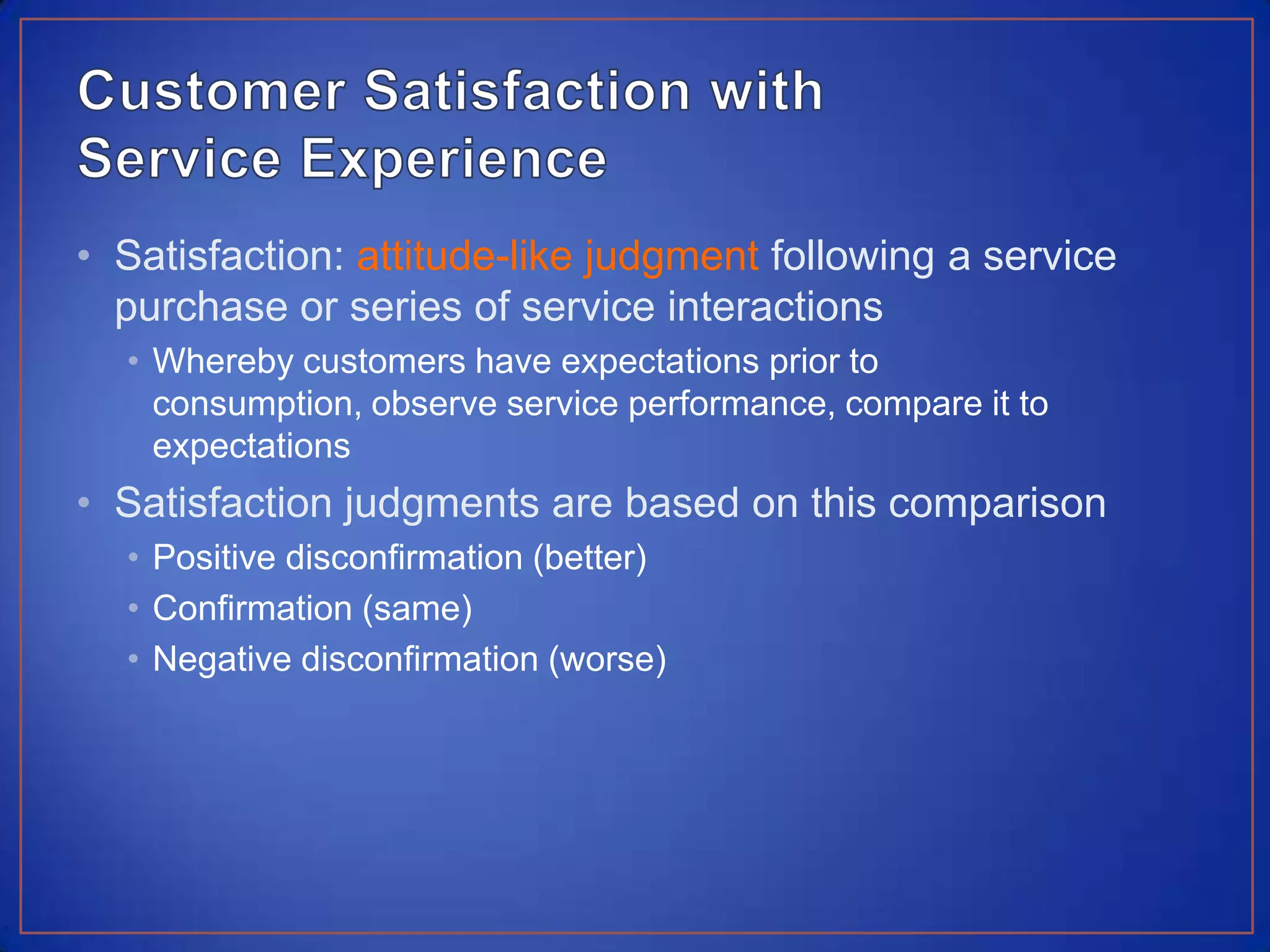
Customer Satisfaction with Service ExperienceSatisfaction: attitude-like judgment following a service purchase or series of service interactionsWhereby customers have expectations prior to consumption, observe service performance, compare it to expectationsSatisfaction judgments are based on this comparisonPositive disconfirmation (better) Confirmation (same) Negative disconfirmation (worse)
Conducting Value AnalysisManagers conduct a customer value analysis to reveal the company’s strengths and weaknesses relative to those of competitors. These steps are to help: 5-205-20Copyright © 2009 Pearson Education South Asia Pte Ltd
Conducting Value AnalysisIdentify the major attributes and benefits that customers value.Assess the quantitative importance of the different attributes and benefits. Asses the company’s and competitor’s performances on the different customer values against their rated importance.Examine how customers rate the company against major competitors on individual attributes or benefits.Monitor customer values over time5-215-21Copyright © 2009 Pearson Education South Asia Pte Ltd
Customer SatisfactionSatisfaction is a person’s feeling of pleasure or disappointment A customer’s decision to be loyal or to defect is the sum or many small encounters with the company. 5-225-22
Tracking Customer SatisfactionCompanies can monitor the customer loss rate and contact customers who have stopped buying and learn why this happened.Companies can hire mystery shoppers to pose a potential buyers and report on strong and weak points experienced in buying the company’s and competitor’s products. In addition to tracking customer value expectations and satisfaction, companies need to monitor their competitor’s performance in these areas as well.5-23Copyright © 2009 Pearson Education South Asia Pte Ltd5-23
Recovering Customer Goodwill5-24Set up a 7-day, 24-hour toll-free “hotline” (by phone, fax, or email) to receive and act on customer complaints.2. 	Contact the complaining customer as quickly as possible. The slower the company is to respond, the more dissatisfaction may grow and lead to negative word of mouth.3. 	Accept responsibility for the customer’s disappointment. Never ever blame the customer.4. 	Use customer-service people who are empathetic.5. 	Resolve the complaint swiftly and to the customer’s satisfaction. Some complaining customers are not looking for compensation so much as a sign that the company cares.5-24
Maximizing Customer Life Time ValueCopyright © 2009 Pearson Education South Asia Pte Ltd5-25       Marketing is the art of attracting and keeping               profitable customers. The 80/20 rule states that the top 20 percent of the customers may generate as much as 80 percent of the company’s profits.Customer Profitability          A profitable customer is a person, household, or company that over time yields a revenue stream that exceeds by an acceptable amount the company’s cost stream of attracting, selling, and servicing that customer.5-25
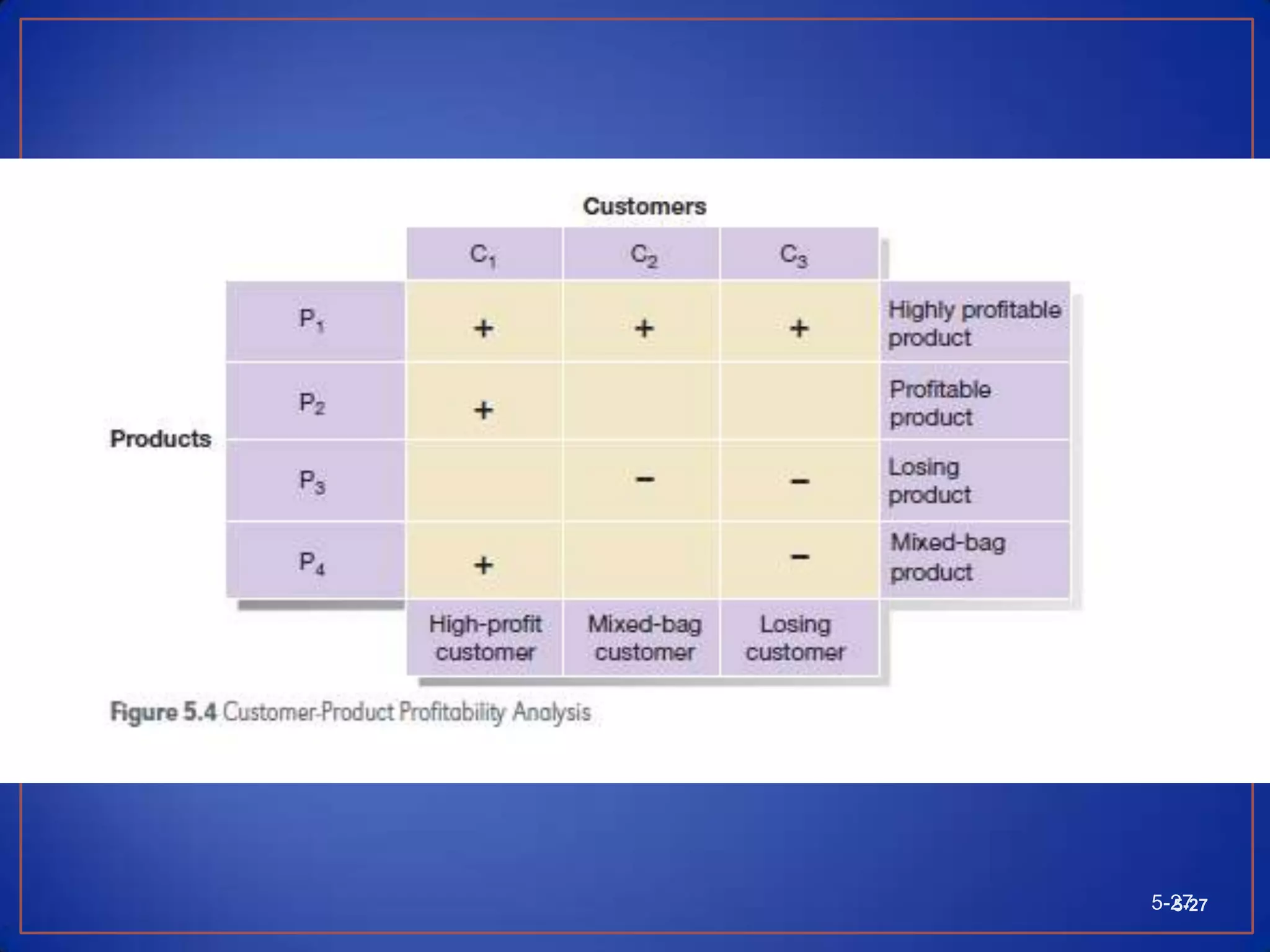
Customer PortfoliosMarketers are recognizing the need to manage customer portfolios, made up of different groups of customers. These customers are defined in terms of loyalty, profitability, and other factors.  5-265-26
5-275-27
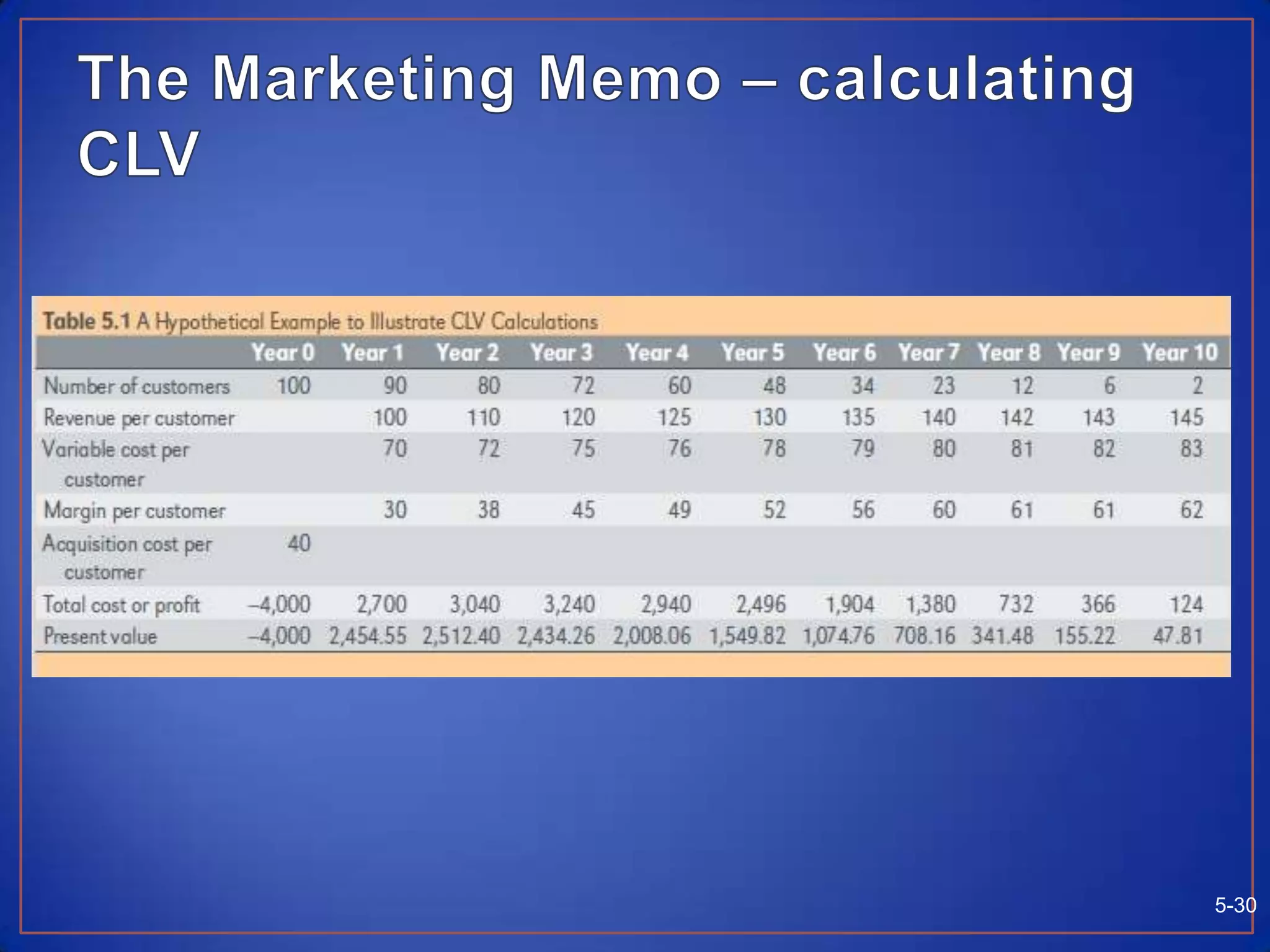
Measuring Customer Lifetime ValuesCustomer Lifetime Value (CLV) describes the net present value of the stream of future profits expected over the customer’s lifetime purchases. CLV calculations provide a formal quantitative framework for planning customer investment and helps marketers to adopt a long-term perspective.5-285-28
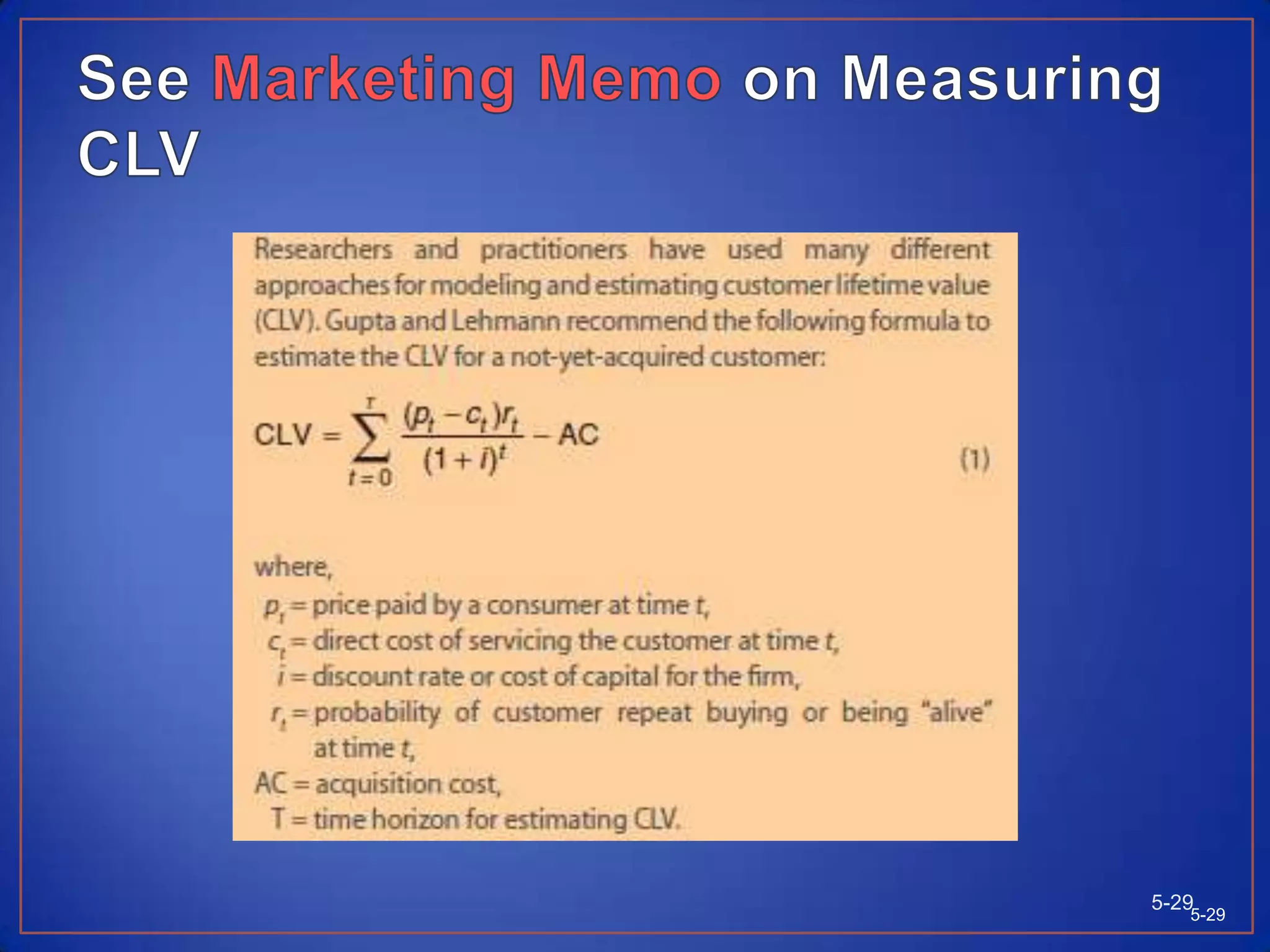
See Marketing Memo on Measuring CLV5-295-29
The Marketing Memo – calculating CLV5-30
Cultivating Customer RelationshipsMaximizing customer value means cultivating long-term customer relationships. Companies are moving to more precision marketing designed to build strong customer relationships.Mass customization is the ability of a company to meet each customer’s requirements—to prepare on a mass basis individually designed products, services, programs, and communications.5-315-31
Customer Relationship ManagementCustomer relationship management (CRM) is the process of managing detailed information about individual customers and carefully managing all customer “touch points” to maximize customer loyalty. 5-325-32
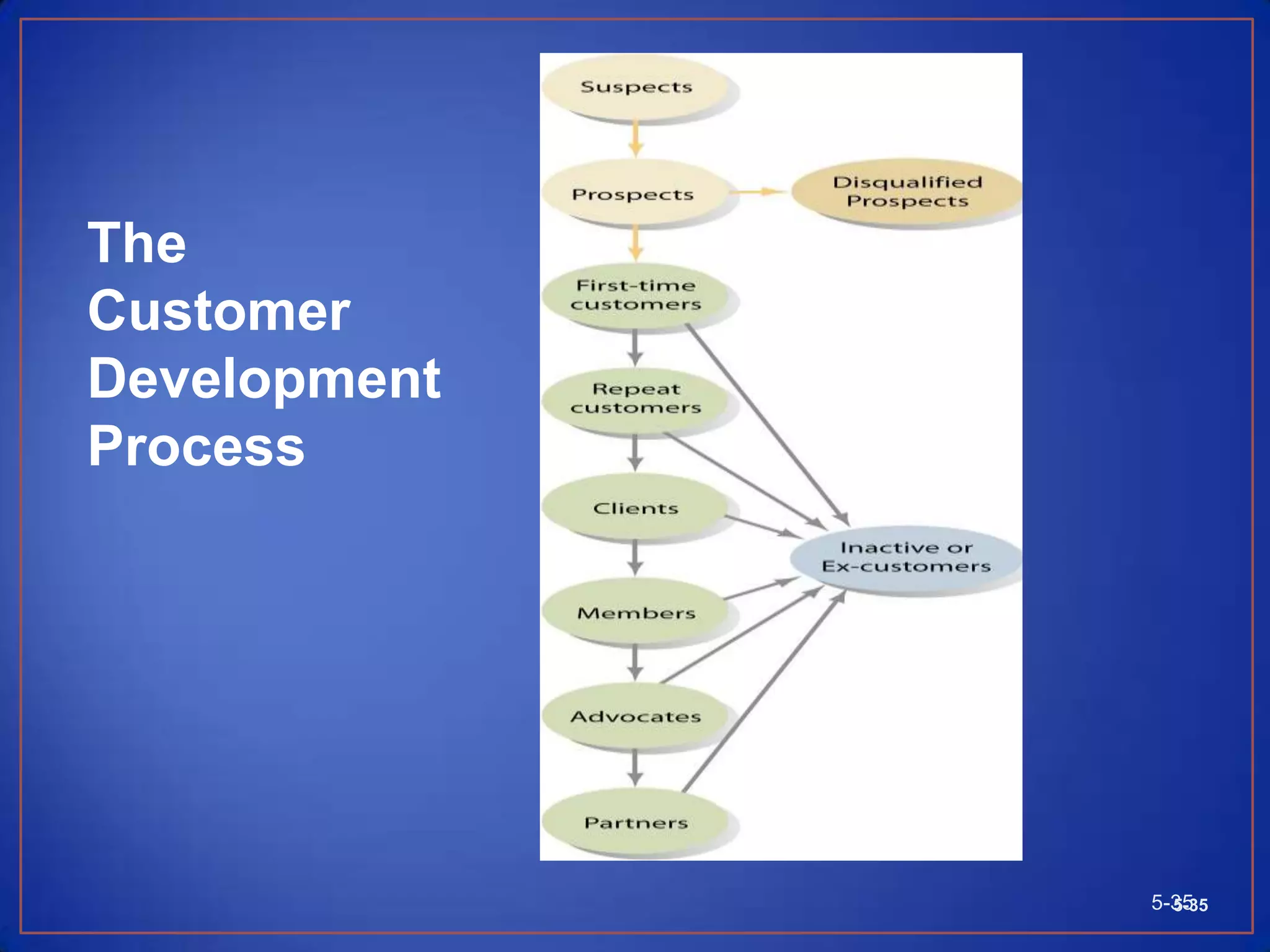
Attracting and Retaining CustomersCompanies seeking to expand profits and sales have to spend considerable time and resources searching for new customers.Suspects are people or organizations that might conceivably have an interest in buying but many not have the means or real intention to buy.Prospects—customers with the motivation, ability, and opportunity to make a purchase.Customer churn—high customer defection.5-335-33
Reducing DefectionThe company must define and measure its retention rate.The company must distinguish the cause of customer attrition and identify those that can be managed better.The company needs to estimate how much profit it loses when it loses customers.5-345-34
5-35The Customer Development Process5-35
Building LoyaltyFour important types of marketing activities that build customer loyalty and retention:Interacting with customersDeveloping loyalty programsPersonalizing marketingCreating institutional ties5-365-36
Developing loyalty benefitsTwo customer loyalty programs that companies can offer are frequency programs and club marketing programs. Frequency programs (FPs)FPs– reward for frequent & substantial buysClub membership programsClub membership - open to everyone, group or those who pay a fee5-375-37
Creating Institutional TiesProviding software, special computer links or hardware to customers to help them manage key functions adds to retaining customers. Example Nestlé in AsiaSupport retailersHelp in inventory management5-385-38
Creating structural tiesCreate long-term contractsCharge lower price to consumers who buy larger suppliesTurn product into long-term service5-395-39

MM.2011.2.2

  • 1.
  • 2.
    Peppers and Rogerson “creating customer loyalty”5-2The only value your company will ever create is the value that comes from customers—the ones you have now and the ones you will have in the future.Businesses succeed by getting, keeping, and growing customers. Customers are the only reason you build factories, hire employees, schedule meetings, lay fiber-optic lines, or engage in any business activity. Without customers, you don’t have a business5-2
  • 3.
    Building Customer Value,Satisfaction & LoyaltyCustomers are value-maximizersForm value expectation & act on it Buy from firm perceived to offer highest customer delivered value, defined astotal customer value - total customer cost5-3
  • 4.
    5-4Traditional Organization versusModernCustomer-Oriented Company Organization5-4
  • 5.
  • 6.
    Need ArousalDecision tobuy or use a service is triggered by need arousalTriggers of need:Unconscious minds (e.g., personal identity and aspirations)Physical conditions (e.g., hunger )External sources (e.g., a service firm’s marketing activities)Courtesy of Masterfile Corporation
  • 7.
    Information SearchEvoked seta set of products and brands that a consumer considers during the decision-making process – that is derived from past experiences or external sourcesEvaluationAlternatives then need to be evaluated before a final decision is made
  • 8.
    Evaluating Alternatives –Service AttributesSearch attributes help customers evaluate a product before purchaseExperience attributes cannot be evaluated before purchaseCredence attributes are those that customers find impossible to evaluate confidently even after purchase and consumption
  • 9.
    Perceived Risks ofPurchasing / Using Services
  • 10.
  • 11.
  • 12.
    Service Encounter StageServiceencounter – a period of time during which a customer interacts directly with the service providerMight be brief or extend over a period of time (e.g., a phone call or visit to the hospital)
  • 13.
    Service Encounter StageModelsand frameworks:“Moments of Truth” – importance of managing touchpointsHigh/low contact model – extent and nature of contact pointsServuction model – variations of interactionsTheater metaphor – “staging” service performances
  • 14.
    Moments of Truth“[W]ecould say that the perceived quality is realized at the moment of truth, when the service provider and the service customer confront one another in the arena. At that moment they are very much on their own… It is the skill, the motivation, and the tools employed by the firm’s representative and the expectations and behavior of the client which together will create the service delivery process.”Richard Normann
  • 15.
    Service Encounters Rangefrom High-Contact to Low-Contact
  • 16.
    Distinctions between High-Contactand Low-Contact ServicesHigh-Contact ServicesCustomers visit service facility and remain throughout service deliveryActive contactIncludes most people-processing servicesLow-Contact ServicesLittle or no physical contactContact usually at arm’s length through electronic or physical distribution channelsFacilitated by new technologies
  • 17.
  • 18.
  • 19.
    Future intentionsService EncounterStagePost-encounter StagePost-purchaseStage - Overview
  • 20.
    Customer Satisfaction withService ExperienceSatisfaction: attitude-like judgment following a service purchase or series of service interactionsWhereby customers have expectations prior to consumption, observe service performance, compare it to expectationsSatisfaction judgments are based on this comparisonPositive disconfirmation (better) Confirmation (same) Negative disconfirmation (worse)
  • 21.
    Conducting Value AnalysisManagersconduct a customer value analysis to reveal the company’s strengths and weaknesses relative to those of competitors. These steps are to help: 5-205-20Copyright © 2009 Pearson Education South Asia Pte Ltd
  • 22.
    Conducting Value AnalysisIdentifythe major attributes and benefits that customers value.Assess the quantitative importance of the different attributes and benefits. Asses the company’s and competitor’s performances on the different customer values against their rated importance.Examine how customers rate the company against major competitors on individual attributes or benefits.Monitor customer values over time5-215-21Copyright © 2009 Pearson Education South Asia Pte Ltd
  • 23.
    Customer SatisfactionSatisfaction isa person’s feeling of pleasure or disappointment A customer’s decision to be loyal or to defect is the sum or many small encounters with the company. 5-225-22
  • 24.
    Tracking Customer SatisfactionCompaniescan monitor the customer loss rate and contact customers who have stopped buying and learn why this happened.Companies can hire mystery shoppers to pose a potential buyers and report on strong and weak points experienced in buying the company’s and competitor’s products. In addition to tracking customer value expectations and satisfaction, companies need to monitor their competitor’s performance in these areas as well.5-23Copyright © 2009 Pearson Education South Asia Pte Ltd5-23
  • 25.
    Recovering Customer Goodwill5-24Setup a 7-day, 24-hour toll-free “hotline” (by phone, fax, or email) to receive and act on customer complaints.2. Contact the complaining customer as quickly as possible. The slower the company is to respond, the more dissatisfaction may grow and lead to negative word of mouth.3. Accept responsibility for the customer’s disappointment. Never ever blame the customer.4. Use customer-service people who are empathetic.5. Resolve the complaint swiftly and to the customer’s satisfaction. Some complaining customers are not looking for compensation so much as a sign that the company cares.5-24
  • 26.
    Maximizing Customer LifeTime ValueCopyright © 2009 Pearson Education South Asia Pte Ltd5-25 Marketing is the art of attracting and keeping profitable customers. The 80/20 rule states that the top 20 percent of the customers may generate as much as 80 percent of the company’s profits.Customer Profitability A profitable customer is a person, household, or company that over time yields a revenue stream that exceeds by an acceptable amount the company’s cost stream of attracting, selling, and servicing that customer.5-25
  • 27.
    Customer PortfoliosMarketers arerecognizing the need to manage customer portfolios, made up of different groups of customers. These customers are defined in terms of loyalty, profitability, and other factors.  5-265-26
  • 28.
  • 29.
    Measuring Customer LifetimeValuesCustomer Lifetime Value (CLV) describes the net present value of the stream of future profits expected over the customer’s lifetime purchases. CLV calculations provide a formal quantitative framework for planning customer investment and helps marketers to adopt a long-term perspective.5-285-28
  • 30.
    See Marketing Memoon Measuring CLV5-295-29
  • 31.
    The Marketing Memo– calculating CLV5-30
  • 32.
    Cultivating Customer RelationshipsMaximizingcustomer value means cultivating long-term customer relationships. Companies are moving to more precision marketing designed to build strong customer relationships.Mass customization is the ability of a company to meet each customer’s requirements—to prepare on a mass basis individually designed products, services, programs, and communications.5-315-31
  • 33.
    Customer Relationship ManagementCustomerrelationship management (CRM) is the process of managing detailed information about individual customers and carefully managing all customer “touch points” to maximize customer loyalty. 5-325-32
  • 34.
    Attracting and RetainingCustomersCompanies seeking to expand profits and sales have to spend considerable time and resources searching for new customers.Suspects are people or organizations that might conceivably have an interest in buying but many not have the means or real intention to buy.Prospects—customers with the motivation, ability, and opportunity to make a purchase.Customer churn—high customer defection.5-335-33
  • 35.
    Reducing DefectionThe companymust define and measure its retention rate.The company must distinguish the cause of customer attrition and identify those that can be managed better.The company needs to estimate how much profit it loses when it loses customers.5-345-34
  • 36.
  • 37.
    Building LoyaltyFour importanttypes of marketing activities that build customer loyalty and retention:Interacting with customersDeveloping loyalty programsPersonalizing marketingCreating institutional ties5-365-36
  • 38.
    Developing loyalty benefitsTwocustomer loyalty programs that companies can offer are frequency programs and club marketing programs. Frequency programs (FPs)FPs– reward for frequent & substantial buysClub membership programsClub membership - open to everyone, group or those who pay a fee5-375-37
  • 39.
    Creating Institutional TiesProvidingsoftware, special computer links or hardware to customers to help them manage key functions adds to retaining customers. Example Nestlé in AsiaSupport retailersHelp in inventory management5-385-38
  • 40.
    Creating structural tiesCreatelong-term contractsCharge lower price to consumers who buy larger suppliesTurn product into long-term service5-395-39
  • 41.
    Customer DatabaseA customerdatabase is an organized collection of comprehensive information about individual customers or prospects that is current, accessible, and actionable, for such marketing purposes as lead generation, lead qualification, sale of a product or service, or maintenance of customer relationships. 5-405-40