Presented By:
Dinesh Gosavi 20165010
Mayank Mishra 20165020
Nipun Jalan 20165025
Shrey Hadvani 20165037
WHY NIKE?
 Nike brand is the most valuable among sports businesses so basically to know the marketing
strategies of a leading sportswear brand.
 Technology in Products– Historically had some of the most cutting-edge products on the
market. E.g. Nike + iPod
 It provides the services of customized shoes under the brand name of NIKE ID so studying this
can help us to know about the customer driven product.
INTRODUCTION TO SPORTS
APPAREL & FOOTWEAR
INDUSTRY
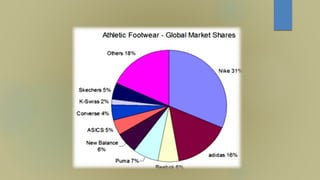
 Sports apparel and footwear sales have jumped 42% to $270 billion over
the past seven years.
 Since several years Asia has been dominating the apparel and footwear
industry and has been a leading exporter to USA and other developed
nations. This is basically because of low priced products.
 Local players in this industry are also emerging,
 Lifestyle along with sports inspired apparel and footwear has led to growth
as consumers demand functionality and comfort in their everyday shoes.
Opportunity and Threats of
Industry
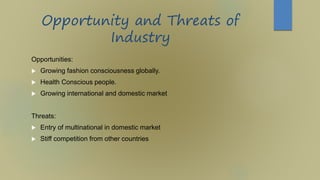
Opportunities:
 Growing fashion consciousness globally.
 Health Conscious people.
 Growing international and domestic market
Threats:
 Entry of multinational in domestic market
 Stiff competition from other countries
COMPANY PROFILE
 Originally known as Blue Ribbon Sports (BRS).
 Founded by University of Oregon track athlete Philip Knight and his coach Bill
Bowerman in January 1964.
 The iconic SWOOSH symbol of Nike represents The wings of the Greek
Goddess of Victory.
 Launched its own line of shoes branded as Nike in 1971
 Headquartered near Beaverton, Oregon, in the Portland metropolitan area
Core Business Unit
1. Athletic Footwear
 54 % of total revenue
 Casual Footwear Line
2. Apparel
 27 % of total revenue
3. Rest
 Equipment
 Sports related business
BUISNESS STRATERGY
 “To distribute High-cost, high-quality Japanese athletic shoes to American
consumers in an attempt to break Germany’s domination of the domestic
industry”
 Quality Products
 Constant Innovation
 Aggressive Marketing
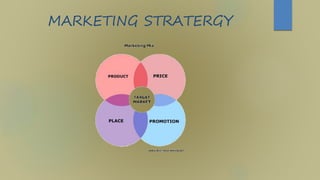
MARKETING STRATERGY
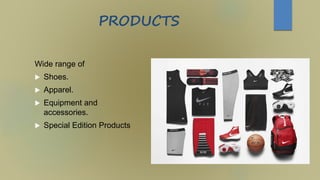
PRODUCTS
Wide range of
 Shoes.
 Apparel.
 Equipment and
accessories.
 Special Edition Products
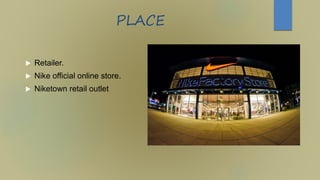
PLACE
 Retailer.
 Nike official online store.
 Niketown retail outlet
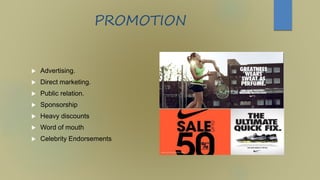
PROMOTION
 Advertising.
 Direct marketing.
 Public relation.
 Sponsorship
 Heavy discounts
 Word of mouth
 Celebrity Endorsements
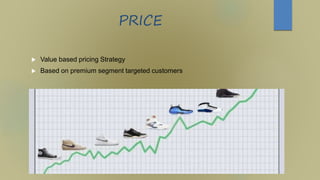
PRICE
 Value based pricing Strategy
 Based on premium segment targeted customers
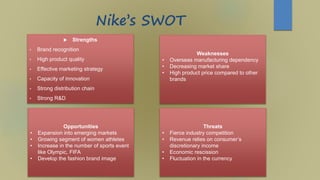
Nike’s SWOT
 Strengths
• Brand recognition
• High product quality
• Effective marketing strategy
• Capacity of innovation
• Strong distribution chain
• Strong R&D
Weaknesses
• Overseas manufacturing dependency
• Decreasing market share
• High product price compared to other
brands
Opportunities
• Expansion into emerging markets
• Growing segment of women athletes
• Increase in the number of sports event
like Olympic, FIFA
• Develop the fashion brand image
Threats
• Fierce industry competition
• Revenue relies on consumer’s
discretionary income
• Economic rescission
• Fluctuation in the currency
Nike Against Controversy
 The key to Nike's turnaround was being honest and transparent about the
labor issues it faced.
 "The Nike product has become synonymous with slave wages, forced
overtime, and arbitrary abuse," Knight said in a public address at the time.
"I truly believe the American consumer doesn't want to buy products made
under abusive conditions.“
 Nike also raised the minimum wage it paid workers, improved oversight of
labor practices, and made sure factories had clean air.
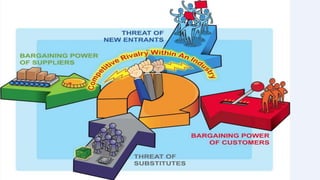
Nike’s Five Forces Analysis
Bargaining Power of Nike’s Customers
 Low switching costs
 Moderate substitute availability
 Small size of individual buyers
Bargaining Power of Nike’s Suppliers
 High overall supply
 Large population of suppliers
 Moderate size of individual suppliers
Threat of Substitutes or Substitution
 Moderate availability of substitutes
 Moderate performance per price of substitutes
 Low switching costs
Competitive Rivalry or Competition with Nike
 Intense global players
 Competition from local players
 Emerging players in niche market
 Continuous changes in consumer preference and technology
Threat of New Entrants or New Entry
 High cost of brand development
 High economies of scale
 Moderate cost of doing business
WAY FORWARD
The main challenges what Nike was facing was of Stiff competition from local
as well as multinationals and the other was of overpricing. So tackle this what
it can do is-
 Continuity in innovation in fields other than sports. Opportunities in Health
sector.
 Price reduction by backward integration.
KEY LEARNINGS
 Customer Satisfaction is the most important part to be taken care of
especially for customer driven products.
 Never compromise on values
 Effective Marketing Strategies can drive the entire business.
 Ethics is important in every business
Mm nike1

Mm nike1

  • 1.
    Presented By: Dinesh Gosavi20165010 Mayank Mishra 20165020 Nipun Jalan 20165025 Shrey Hadvani 20165037
  • 2.
    WHY NIKE?  Nikebrand is the most valuable among sports businesses so basically to know the marketing strategies of a leading sportswear brand.  Technology in Products– Historically had some of the most cutting-edge products on the market. E.g. Nike + iPod  It provides the services of customized shoes under the brand name of NIKE ID so studying this can help us to know about the customer driven product.
  • 3.
    INTRODUCTION TO SPORTS APPAREL& FOOTWEAR INDUSTRY  Sports apparel and footwear sales have jumped 42% to $270 billion over the past seven years.  Since several years Asia has been dominating the apparel and footwear industry and has been a leading exporter to USA and other developed nations. This is basically because of low priced products.  Local players in this industry are also emerging,  Lifestyle along with sports inspired apparel and footwear has led to growth as consumers demand functionality and comfort in their everyday shoes.
  • 6.
    Opportunity and Threatsof Industry Opportunities:  Growing fashion consciousness globally.  Health Conscious people.  Growing international and domestic market Threats:  Entry of multinational in domestic market  Stiff competition from other countries
  • 7.
    COMPANY PROFILE  Originallyknown as Blue Ribbon Sports (BRS).  Founded by University of Oregon track athlete Philip Knight and his coach Bill Bowerman in January 1964.  The iconic SWOOSH symbol of Nike represents The wings of the Greek Goddess of Victory.  Launched its own line of shoes branded as Nike in 1971  Headquartered near Beaverton, Oregon, in the Portland metropolitan area
  • 9.
    Core Business Unit 1.Athletic Footwear  54 % of total revenue  Casual Footwear Line 2. Apparel  27 % of total revenue 3. Rest  Equipment  Sports related business
  • 10.
    BUISNESS STRATERGY  “Todistribute High-cost, high-quality Japanese athletic shoes to American consumers in an attempt to break Germany’s domination of the domestic industry”  Quality Products  Constant Innovation  Aggressive Marketing
  • 11.
  • 12.
    PRODUCTS Wide range of Shoes.  Apparel.  Equipment and accessories.  Special Edition Products
  • 13.
    PLACE  Retailer.  Nikeofficial online store.  Niketown retail outlet
  • 14.
    PROMOTION  Advertising.  Directmarketing.  Public relation.  Sponsorship  Heavy discounts  Word of mouth  Celebrity Endorsements
  • 15.
    PRICE  Value basedpricing Strategy  Based on premium segment targeted customers
  • 16.
    Nike’s SWOT  Strengths •Brand recognition • High product quality • Effective marketing strategy • Capacity of innovation • Strong distribution chain • Strong R&D Weaknesses • Overseas manufacturing dependency • Decreasing market share • High product price compared to other brands Opportunities • Expansion into emerging markets • Growing segment of women athletes • Increase in the number of sports event like Olympic, FIFA • Develop the fashion brand image Threats • Fierce industry competition • Revenue relies on consumer’s discretionary income • Economic rescission • Fluctuation in the currency
  • 17.
    Nike Against Controversy The key to Nike's turnaround was being honest and transparent about the labor issues it faced.  "The Nike product has become synonymous with slave wages, forced overtime, and arbitrary abuse," Knight said in a public address at the time. "I truly believe the American consumer doesn't want to buy products made under abusive conditions.“  Nike also raised the minimum wage it paid workers, improved oversight of labor practices, and made sure factories had clean air.
  • 18.
  • 19.
    Nike’s Five ForcesAnalysis Bargaining Power of Nike’s Customers  Low switching costs  Moderate substitute availability  Small size of individual buyers Bargaining Power of Nike’s Suppliers  High overall supply  Large population of suppliers  Moderate size of individual suppliers
  • 20.
    Threat of Substitutesor Substitution  Moderate availability of substitutes  Moderate performance per price of substitutes  Low switching costs Competitive Rivalry or Competition with Nike  Intense global players  Competition from local players  Emerging players in niche market  Continuous changes in consumer preference and technology
  • 21.
    Threat of NewEntrants or New Entry  High cost of brand development  High economies of scale  Moderate cost of doing business
  • 22.
    WAY FORWARD The mainchallenges what Nike was facing was of Stiff competition from local as well as multinationals and the other was of overpricing. So tackle this what it can do is-  Continuity in innovation in fields other than sports. Opportunities in Health sector.  Price reduction by backward integration.
  • 23.
    KEY LEARNINGS  CustomerSatisfaction is the most important part to be taken care of especially for customer driven products.  Never compromise on values  Effective Marketing Strategies can drive the entire business.  Ethics is important in every business

Editor's Notes

  • #4 America imports 98% of shoes sold there from asia Low priced products because of cheap labour