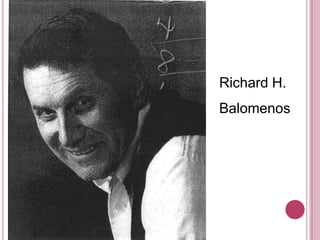
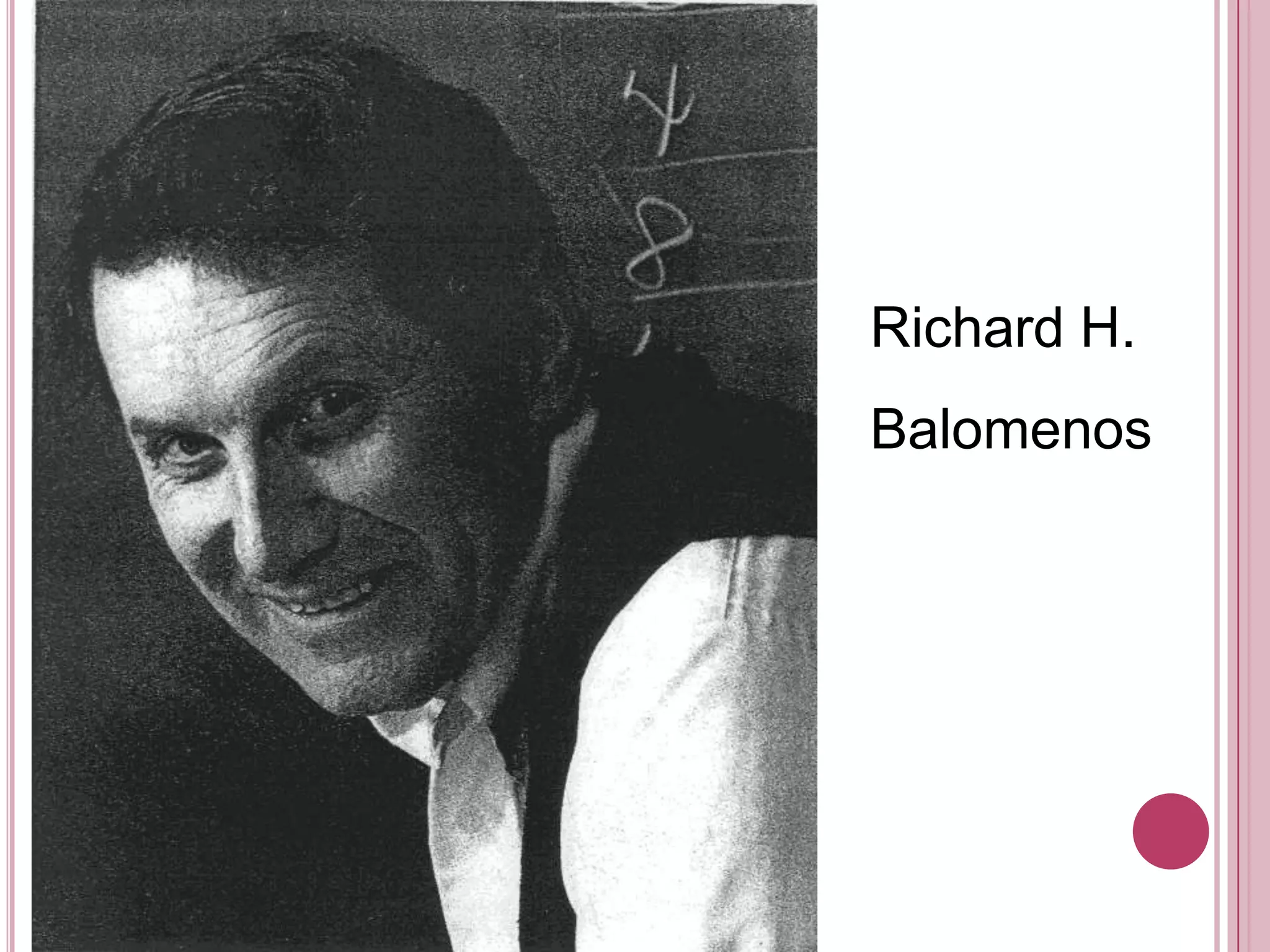
Richard H.Balomenos
Richard H. Balomenos LectureDr. Anne M. CollinsLesley UniversityCambridge, MAOctober 22, 2009
Richard H. BalomenosDedicated to the belief that 	mathematics teachers can	accomplish great things.Promoted solid mathematics background for teachers and students.Offered strong opinions and justified them.
mathematics teachers can accomplish great things if they:Change the focus of math instruction from skill and practice to problem solvingOffer all students interesting problem situations that will:  excite them about math  embed skills and computationprovide meaning and build understanding
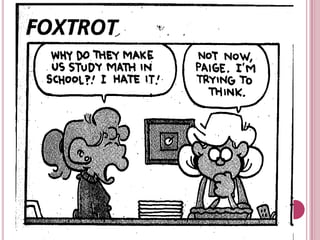
mathematics teachers can accomplish great things if they acknowledge that:Most of the math students experience is passive and irrelevantMost secondary mathematics involves symbolic manipulation for the sake of symbolic manipulation
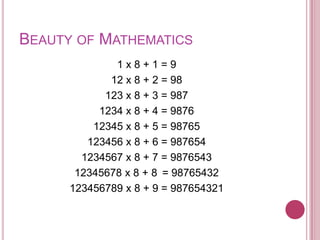
Beauty of Mathematics1 x 8 + 1 = 912 x 8 + 2 = 98123 x 8 + 3 = 9871234 x 8 + 4 = 987612345 x 8 + 5 = 98765123456 x 8 + 6 = 9876541234567 x 8 + 7 = 987654312345678 x 8 + 8 = 98765432123456789 x 8 + 9 = 987654321
What Does It Mean to Teach for Understanding?There are three stages of learning:Acquisition of knowledge and skillsMake Meaning and interpret  contexts or conditionsTransfer learning to new or novel situations
Acquisition –Meaning-TransferenceAcquire Skills ( in context when it is clear they are needed)Make Meaning (sense making why? How do you know? Can you explain your thinking?)Transfer knowledge to realistic situations, real world
Teachers Teaching for UnderstandingConfront students with problem solving and ask themselves if:Their students  can make meaning Their students can transfer skills to problem solving?
Currently the Impact Mathematics Instruction Has on high school students results in:Nearly 40% of high school graduates feel ill-prepared for college or the workplaceMost secondary students describe mathematics as  boring	(Grant Wiggins, 2009)
Post SecondaryUp to  55% of college freshman take remedial coursesStudent complaint…	“I wasn’t taught to think.”
Reform began in earnest in 1989 with the NCTM Standards yet: Many teachers teach as they were taughtIf we continue to teach as we always have, we will continue to get the results we have always gotten
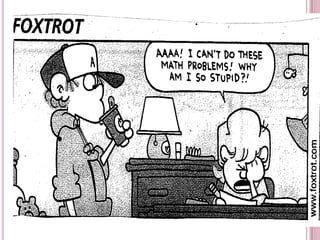
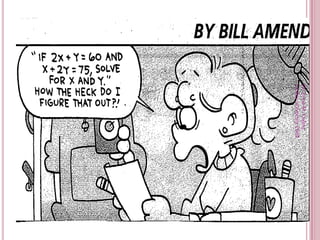
And what is Worse   If we do not make a concerted effort to change the way we engage with and in the mathematics we teach  we will have yet another generation of students who are math phobic, avoid math at all costs, and believe they are stupid…
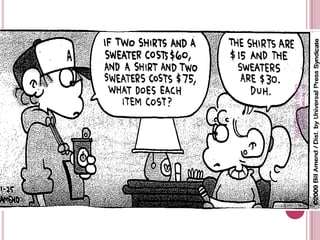
Dr. Anne M. Collins                                   Lesley University 2009
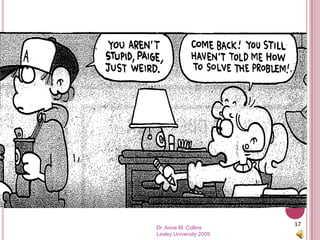
17Dr. Anne M. Collins                                   Lesley University 2009
solid mathematics background for teachersThe most qualified math teachers teach high school math.The most qualified usually teach advanced placement or honor courses.Many high school teachers and university faculty still emphasize symbolic manipulation without conceptual understanding.
YetStudents who struggle are the ones that need the best teachers.Students who struggle are the ones who benefit most from multiple representations.Students who struggle are often supported by special educators who have little or no math background.
Common core Standards consist of Standard for Mathematical PracticeTen standards for Mathematical ContentA set of Example Tasks
Mathematical PracticeAll students can and do:Attend to precision.Construct viable arguments.Make sense of complex problems and persevere in solving them.Look for and make use of structure.Look for and express regularity in repeated reasoning.Make strategic decisions about the use of technological tools.
solid mathematics background for teachers Elementary teachers must have a deep understanding of number and operations, and how arithmetic relates to algebra.Special educators who co-teach or support students in mathematics must also have a deep understanding of math appropriate for the level of students with whom they work.
solid mathematics background for teachersCoursework must provide opportunity to develop mastery of the math they are going to teach.Most K-6 teachers need intensive study of number & operation, number theory, algebra and functions, informal geometry, measurement, probability, and elementary statistics.
solid mathematics background for teachersMost secondary teachers and university faculty need to consider modes of instruction that actively engage students.What is the mathematics that is taught in the preceding grades?What is the mathematics that is taught in the subsequent grades?
solid mathematics background for teachersWhy does it matter?What you learn reflects how you learned it!Students who have one year of poor mathematics instruction may recover but students who have two years in a row of poor instruction rarely catch up.
Dr. Anne M. Collins                                   Lesley University 2009
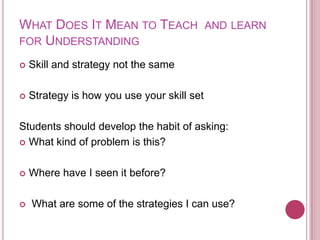
What Does It Mean to Teach  and learn for UnderstandingSkill and strategy not the sameStrategy is how you use your skill setStudents should develop the habit of asking:What kind of problem is this?Where have I seen it before? What are some of the strategies I can use?
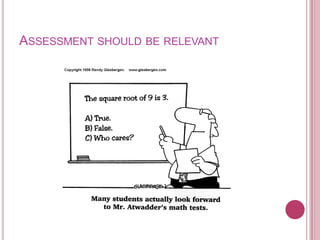
Assessment should be relevant
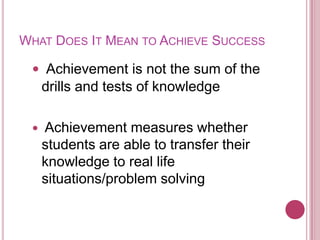
What Does It Mean to Achieve SuccessAchievement is not the sum of the drills and tests of knowledge Achievement measures whether  students are able to transfer their knowledge to real life situations/problem solving
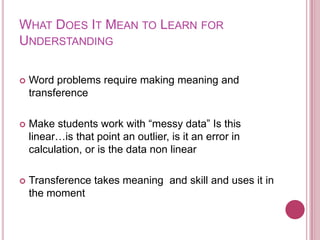
What Does It Mean to Learn for UnderstandingWord problems require making meaning and transferenceMake students work with “messy data” Is this linear…is that point an outlier, is it an error in calculation, or is the data non linearTransference takes meaning  and skill and uses it in the moment
Subtle  and not so subtle Messages Relayed to Many Students Move beyond the familiar comments:“ I know this math is going to be hard but I will work with you to get you through it!”  “ I was never good at math and    look how successful I am.”  “ You have a disability so how do you expect to do honors math.”
EQUITY All Can Do Mathematics and Mathematics Is For All We all need to work together  to provide mathematics that will enable all students to be successful.
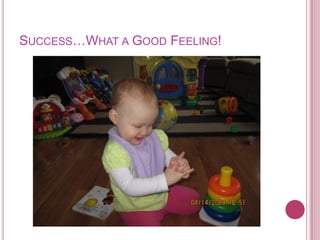
Success…What a Good Feeling!

Balomenos Lecture

  • 1.
  • 2.
    Richard H. BalomenosLectureDr. Anne M. CollinsLesley UniversityCambridge, MAOctober 22, 2009
  • 3.
    Richard H. BalomenosDedicatedto the belief that mathematics teachers can accomplish great things.Promoted solid mathematics background for teachers and students.Offered strong opinions and justified them.
  • 4.
    mathematics teachers canaccomplish great things if they:Change the focus of math instruction from skill and practice to problem solvingOffer all students interesting problem situations that will: excite them about math embed skills and computationprovide meaning and build understanding
  • 5.
    mathematics teachers canaccomplish great things if they acknowledge that:Most of the math students experience is passive and irrelevantMost secondary mathematics involves symbolic manipulation for the sake of symbolic manipulation
  • 6.
    Beauty of Mathematics1x 8 + 1 = 912 x 8 + 2 = 98123 x 8 + 3 = 9871234 x 8 + 4 = 987612345 x 8 + 5 = 98765123456 x 8 + 6 = 9876541234567 x 8 + 7 = 987654312345678 x 8 + 8 = 98765432123456789 x 8 + 9 = 987654321
  • 7.
    What Does ItMean to Teach for Understanding?There are three stages of learning:Acquisition of knowledge and skillsMake Meaning and interpret contexts or conditionsTransfer learning to new or novel situations
  • 8.
    Acquisition –Meaning-TransferenceAcquire Skills( in context when it is clear they are needed)Make Meaning (sense making why? How do you know? Can you explain your thinking?)Transfer knowledge to realistic situations, real world
  • 9.
    Teachers Teaching forUnderstandingConfront students with problem solving and ask themselves if:Their students can make meaning Their students can transfer skills to problem solving?
  • 10.
    Currently the ImpactMathematics Instruction Has on high school students results in:Nearly 40% of high school graduates feel ill-prepared for college or the workplaceMost secondary students describe mathematics as boring (Grant Wiggins, 2009)
  • 11.
    Post SecondaryUp to 55% of college freshman take remedial coursesStudent complaint… “I wasn’t taught to think.”
  • 12.
    Reform began inearnest in 1989 with the NCTM Standards yet: Many teachers teach as they were taughtIf we continue to teach as we always have, we will continue to get the results we have always gotten
  • 13.
    And what isWorse If we do not make a concerted effort to change the way we engage with and in the mathematics we teach we will have yet another generation of students who are math phobic, avoid math at all costs, and believe they are stupid…
  • 15.
    Dr. Anne M.Collins Lesley University 2009
  • 16.
    Dr. Anne M.Collins Lesley University 2009
  • 17.
    17Dr. Anne M.Collins Lesley University 2009
  • 18.
    solid mathematics backgroundfor teachersThe most qualified math teachers teach high school math.The most qualified usually teach advanced placement or honor courses.Many high school teachers and university faculty still emphasize symbolic manipulation without conceptual understanding.
  • 19.
    YetStudents who struggleare the ones that need the best teachers.Students who struggle are the ones who benefit most from multiple representations.Students who struggle are often supported by special educators who have little or no math background.
  • 20.
    Common core Standardsconsist of Standard for Mathematical PracticeTen standards for Mathematical ContentA set of Example Tasks
  • 21.
    Mathematical PracticeAll studentscan and do:Attend to precision.Construct viable arguments.Make sense of complex problems and persevere in solving them.Look for and make use of structure.Look for and express regularity in repeated reasoning.Make strategic decisions about the use of technological tools.
  • 22.
    solid mathematics backgroundfor teachers Elementary teachers must have a deep understanding of number and operations, and how arithmetic relates to algebra.Special educators who co-teach or support students in mathematics must also have a deep understanding of math appropriate for the level of students with whom they work.
  • 23.
    solid mathematics backgroundfor teachersCoursework must provide opportunity to develop mastery of the math they are going to teach.Most K-6 teachers need intensive study of number & operation, number theory, algebra and functions, informal geometry, measurement, probability, and elementary statistics.
  • 24.
    solid mathematics backgroundfor teachersMost secondary teachers and university faculty need to consider modes of instruction that actively engage students.What is the mathematics that is taught in the preceding grades?What is the mathematics that is taught in the subsequent grades?
  • 25.
    solid mathematics backgroundfor teachersWhy does it matter?What you learn reflects how you learned it!Students who have one year of poor mathematics instruction may recover but students who have two years in a row of poor instruction rarely catch up.
  • 27.
    Dr. Anne M.Collins Lesley University 2009
  • 28.
    Dr. Anne M.Collins Lesley University 2009
  • 29.
    Dr. Anne M.Collins Lesley University 2009
  • 30.
    Dr. Anne M.Collins Lesley University 2009
  • 31.
    What Does ItMean to Teach and learn for UnderstandingSkill and strategy not the sameStrategy is how you use your skill setStudents should develop the habit of asking:What kind of problem is this?Where have I seen it before? What are some of the strategies I can use?
  • 32.
  • 33.
    What Does ItMean to Achieve SuccessAchievement is not the sum of the drills and tests of knowledge Achievement measures whether students are able to transfer their knowledge to real life situations/problem solving
  • 34.
    What Does ItMean to Learn for UnderstandingWord problems require making meaning and transferenceMake students work with “messy data” Is this linear…is that point an outlier, is it an error in calculation, or is the data non linearTransference takes meaning and skill and uses it in the moment
  • 35.
    Subtle andnot so subtle Messages Relayed to Many Students Move beyond the familiar comments:“ I know this math is going to be hard but I will work with you to get you through it!” “ I was never good at math and look how successful I am.” “ You have a disability so how do you expect to do honors math.”
  • 36.
    EQUITY All CanDo Mathematics and Mathematics Is For All We all need to work together to provide mathematics that will enable all students to be successful.
  • 37.

Editor's Notes

  • #4 We will remember Richard for his dedication to his profession, and his belief that mathematics teachers could accomplish great things, given appropriate resources and support. He humbly went about the business of improving mathematics education by promoting solid mathematics background for teachers and students, and he did so with infectious enthusiasm and humor. Richard offered strong opinions, and by so doing, encouraged the rest of us to defend and justify our own positions on educational issue. He initiated and influenced countless curriculum development and teacher education program in New England that have touched us all in various ways. His students and colleagues now share the responsibility for carrying forward his ideals.
  • #8 Acquisition goals: learn with accurate and timely recall important facts and discrete skillsMeaning: make connections & generalizations using the facts and skills ( interpret and extrapolate from data, recognize patterns in the data etcTransfer adapt knowledge, skill and understanding to specific and realistic situations and contexts…Aim: efficient, effective solutions for real world or realistic challenges, audiences, purposes, settingsAt the transitional grades a formative assessment of the students should be completed and an intervention (not remediation) should be designed and carried out by the math teacher not the Special Educators who lack the content knowledge and understanding of multiple representations. We need to consider the fact that this is a social justice issue since math is considered a gate keeper discipline….includes college and university professors
  • #9 This means that focus should not be on the symbolic manipulation as much as the problem situations that need the level of mathematics students are learning so they can internalize
  • #10 Long past time to state that I taught it, they just didn’t get it.Start with the when and where do normal people encounter the material
  • #11 Need to find ways for students to “do math” not just drills and practice. Emphasis has been on acquiring a discrete set of skills out of context and without meaning. They have not had the opportunity to transfer their knowledge to problem situations they encounter.Students do not identify mathematics as a “thinking” discipline but rather one that requires memorization and procedural knowledgeNeed to find ways to reduce the boredomWhat does it mean to teach for understanding
  • #12 AP course 5 on AP exam struggle to do problem solvingStudents are entering college unable to solve non routine problems
  • #13 Despite the research being done, samples of math classrooms from other countries our high school and college/university math classes still, for the most part, resemble the classes of the past. Students sitting, taking notes, listening and/or watching demonstrations of procedures and memorizing formulas.
  • #14 Hairdresser didn’t pass MCAS in grade 8 so spent the rest of her schooling in MCAS math classes. She resented the fact that all her friends were taking algebra and geometry yet she was consigned to take MCAS math…and she is still angry about it.
  • #19 A teacher was working with students about Mean. He put the formula on the board. Student pointed to different values and asked is this the mean? Pointed to another value and asked is this the mean. Student said, “ How do you know that’s the mean? Why does it make sense?”The teacher replied, “mathematical formulas are not about the philosophical why, but rather about the HOW.” so the student said, oh, so you just plug in the numbers and don’t need to know why it works.Or…when completing the square…most students are clueless about the fact that you are actually making a square.
  • #20 Pygmalian EffectYet, how often do you hear teachers say…Do It The Way I showed you because that is the right way? Often the students who struggle are placed in remedial classes but most need to develop and understand multiple representations and choose a representation that works best for them.
  • #21 The ten standards for math content identify core concepts students should understand and core skills students should know and be able to do: the influence of MA standards is evident in the skill labeled “know when and how to use standard algorithms, and perform them flexibly, accurately and efficiently” which is a narrow interpretation of the concept of procedural fluency reported in Adding It Up which states “ Procedural fluency referes to knowledge of procedures, knowledge of when and how to use them appropriately, and skill in performing them flexibly, accurately, and efficiently.
  • #22 Student assigned the use of the distance formula. Student complained that he just doesn’t get it, questions why he should use it and what it really means. He plotted two points, drew the line segment then asked, “why can’t I use Pythagorean Theorem.” Student had no idea that there was a connection between the distance formula and the Pythagorean Theorem…because the text books artificially separate the two and the teacher neglected to make the connections between them.
  • #23 Special educators must have the same level of mathematical understanding as the regular math teacher so they can present multiple representations appropriate for enhancing understanding.
  • #25 Common Core standards identify Modeling as a mathematical practice.Cannot afford to reteach the previous years contentNeed to ensure all students are prepared for the next grade
  • #26 And we are here for the students!!!
  • #32 Many teachers and students cannot make a comprehensive list of strategies appropriate to solve problems…and this is not just an occurrence at the elementary level but it permeates all levels
  • #37 It may take some students longer than others. It may take multiple representations for some students. It may mean that some students need to spend more time practicing skills before they feel competent to seek more challenging problems…but they need the opportunity to work through the struggle and access to the support that will enable them to be successful