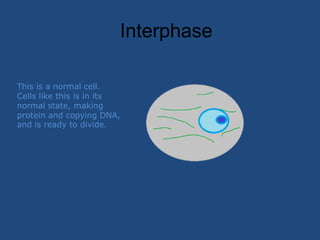
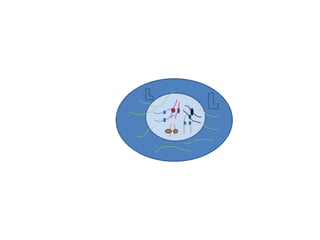
InterphaseThis is a normal cell. Cells like this is in its normal state, making protein and copying DNA, and is ready to divide.
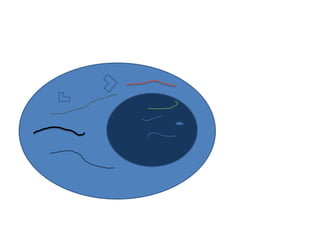
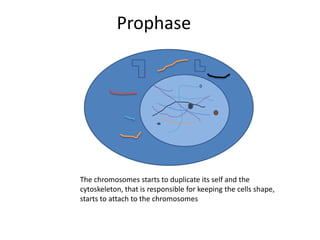
ProphaseThe chromosomes starts to duplicate its self and the cytoskeleton, that is responsible for keeping the cells shape, starts to attach to the chromosomes
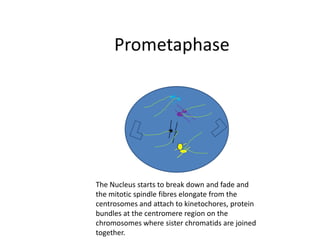
PrometaphaseThe Nucleus starts to break down and fade and the mitotic spindle fibres elongate from the centrosomes and attach to kinetochores, protein bundles at the centromere region on the chromosomes where sister chromatids are joined together.
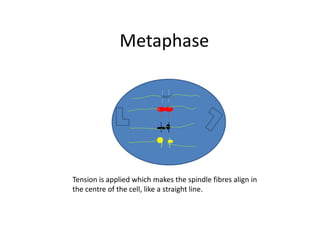
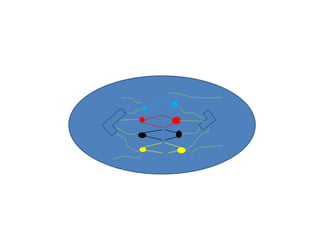
MetaphaseTension is applied which makes the spindle fibres align in the centre of the cell, like a straight line.
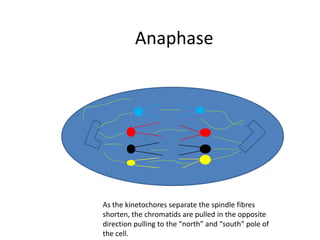
AnaphaseAs the kinetochores separate the spindle fibres shorten, the chromatids are pulled in the opposite direction pulling to the “north” and “south” pole of the cell.
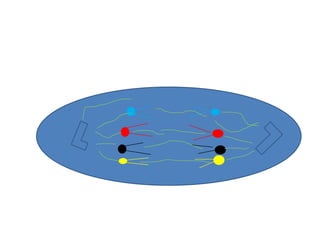
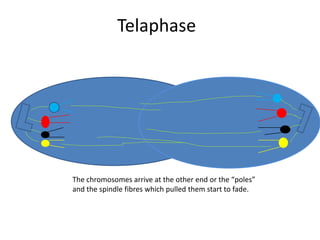
TelaphaseThe chromosomes arrive at the other end or the “poles” and the spindle fibres which pulled them start to fade.
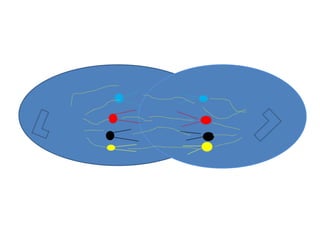
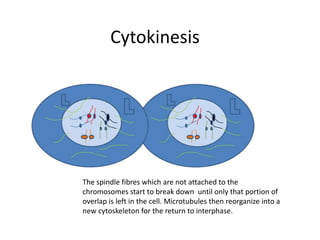
CytokinesisThe spindle fibres which are not attached to the chromosomes start to break down  until only that portion of overlap is left in the cell. Microtubules then reorganize into a new cytoskeleton for the return to interphase.
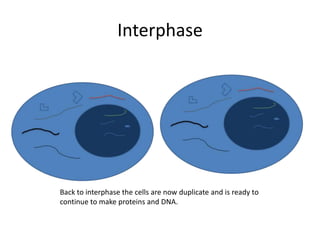
InterphaseBack to interphase the cells are now duplicate and is ready to continue to make proteins and DNA.

Mitoses

  • 1.
    InterphaseThis is anormal cell. Cells like this is in its normal state, making protein and copying DNA, and is ready to divide.
  • 4.
    ProphaseThe chromosomes startsto duplicate its self and the cytoskeleton, that is responsible for keeping the cells shape, starts to attach to the chromosomes
  • 6.
    PrometaphaseThe Nucleus startsto break down and fade and the mitotic spindle fibres elongate from the centrosomes and attach to kinetochores, protein bundles at the centromere region on the chromosomes where sister chromatids are joined together.
  • 7.
    MetaphaseTension is appliedwhich makes the spindle fibres align in the centre of the cell, like a straight line.
  • 9.
    AnaphaseAs the kinetochoresseparate the spindle fibres shorten, the chromatids are pulled in the opposite direction pulling to the “north” and “south” pole of the cell.
  • 12.
    TelaphaseThe chromosomes arriveat the other end or the “poles” and the spindle fibres which pulled them start to fade.
  • 13.
    CytokinesisThe spindle fibreswhich are not attached to the chromosomes start to break down until only that portion of overlap is left in the cell. Microtubules then reorganize into a new cytoskeleton for the return to interphase.
  • 14.
    InterphaseBack to interphasethe cells are now duplicate and is ready to continue to make proteins and DNA.