Exploring Microsoft Office
Excel 2010
by Robert Grauer, Keith Mulbery,
and Mary Anne Poatsy

Chapter 4
Excel Datasets and Tables
1
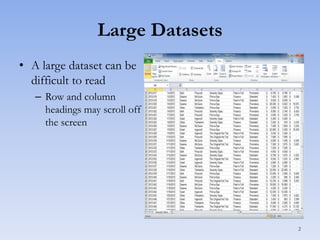
Large Datasets
• A large dataset can be
difficult to read
– Row and column
headings may scroll off
the screen

2
Freezing Rows and Columns
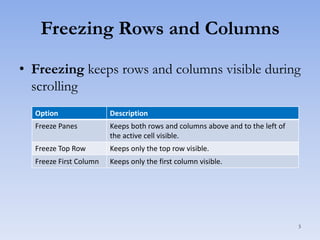
• Freezing keeps rows and columns visible during
scrolling
Option

Description

Freeze Panes

Keeps both rows and columns above and to the left of
the active cell visible.

Freeze Top Row

Keeps only the top row visible.

Freeze First Column

Keeps only the first column visible.

3
Freezing Rows and Columns
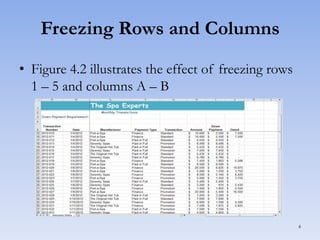
• Figure 4.2 illustrates the effect of freezing rows
1 – 5 and columns A – B

4
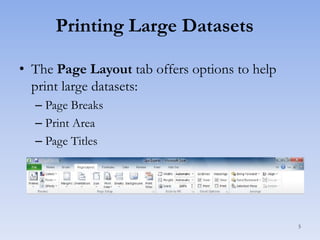
Printing Large Datasets
• The Page Layout tab offers options to help
print large datasets:
– Page Breaks
– Print Area
– Page Titles

5
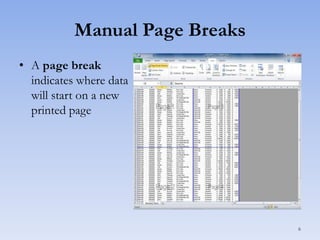
Manual Page Breaks
• A page break
indicates where data
will start on a new
printed page

6
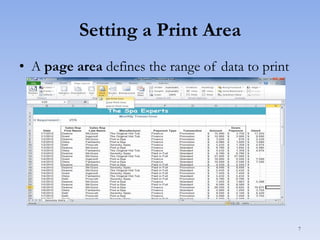
Setting a Print Area
• A page area defines the range of data to print

7
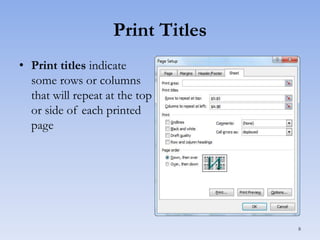
Print Titles
• Print titles indicate
some rows or columns
that will repeat at the top
or side of each printed
page

8
Excel Tables
• A table is a structured range of related data
formatted to enable data management and
analysis
• Excel tables offer many features not available to
regular ranges

9
Table Design
• A field is an individual piece of data
– Field names appear in the top row as column
headings
– Field names should be short, but descriptive

• A record is a complete set of data for an entity
– Each record is listed in a row of the table
– Do not insert blank rows in the table

10
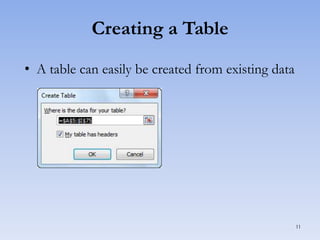
Creating a Table
• A table can easily be created from existing data

11
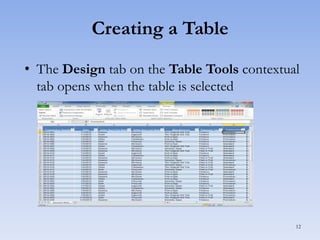
Creating a Table
• The Design tab on the Table Tools contextual
tab opens when the table is selected

12
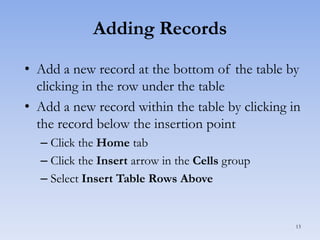
Adding Records
• Add a new record at the bottom of the table by
clicking in the row under the table
• Add a new record within the table by clicking in
the record below the insertion point
– Click the Home tab
– Click the Insert arrow in the Cells group
– Select Insert Table Rows Above

13
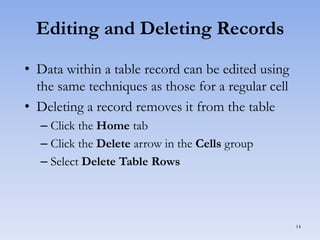
Editing and Deleting Records
• Data within a table record can be edited using
the same techniques as those for a regular cell
• Deleting a record removes it from the table
– Click the Home tab
– Click the Delete arrow in the Cells group
– Select Delete Table Rows

14
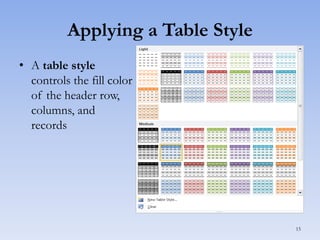
Applying a Table Style
• A table style
controls the fill color
of the header row,
columns, and
records

15
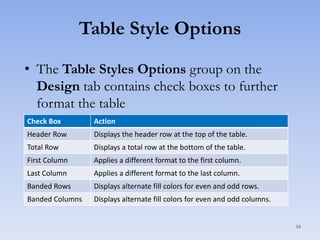
Table Style Options
• The Table Styles Options group on the
Design tab contains check boxes to further
format the table
Check Box

Action

Header Row

Displays the header row at the top of the table.

Total Row

Displays a total row at the bottom of the table.

First Column

Applies a different format to the first column.

Last Column

Applies a different format to the last column.

Banded Rows

Displays alternate fill colors for even and odd rows.

Banded Columns

Displays alternate fill colors for even and odd columns.

16
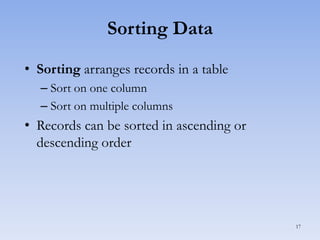
Sorting Data
• Sorting arranges records in a table
– Sort on one column
– Sort on multiple columns

• Records can be sorted in ascending or
descending order

17
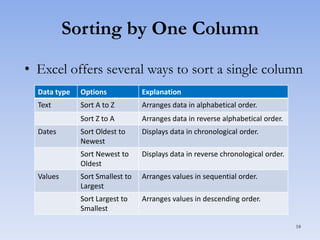
Sorting by One Column
• Excel offers several ways to sort a single column
Data type

Options

Explanation

Text

Sort A to Z

Arranges data in alphabetical order.

Sort Z to A

Arranges data in reverse alphabetical order.

Sort Oldest to
Newest

Displays data in chronological order.

Sort Newest to
Oldest

Displays data in reverse chronological order.

Sort Smallest to
Largest

Arranges values in sequential order.

Sort Largest to
Smallest

Arranges values in descending order.

Dates

Values

18
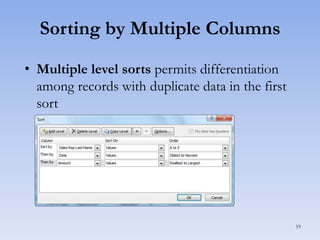
Sorting by Multiple Columns
• Multiple level sorts permits differentiation
among records with duplicate data in the first
sort

19
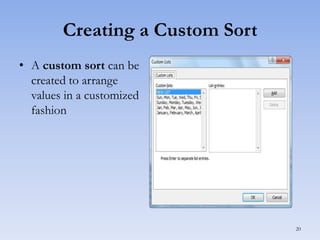
Creating a Custom Sort
• A custom sort can be
created to arrange
values in a customized
fashion

20
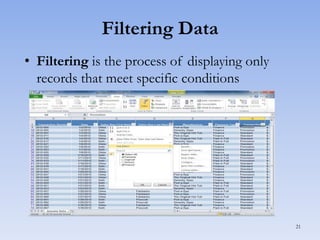
Filtering Data
• Filtering is the process of displaying only
records that meet specific conditions

21
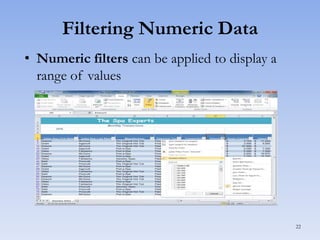
Filtering Numeric Data
• Numeric filters can be applied to display a
range of values

22
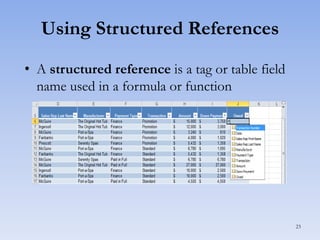
Using Structured References
• A structured reference is a tag or table field
name used in a formula or function

23
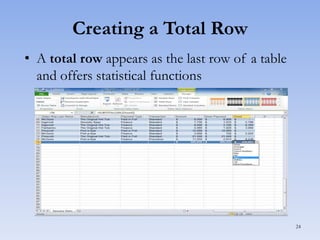
Creating a Total Row
• A total row appears as the last row of a table
and offers statistical functions

24
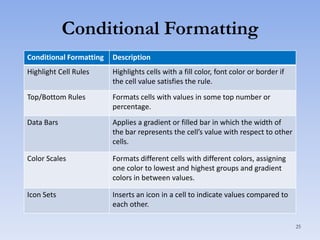
Conditional Formatting

Description

Highlight Cell Rules

Highlights cells with a fill color, font color or border if
the cell value satisfies the rule.

Top/Bottom Rules

Formats cells with values in some top number or
percentage.

Data Bars

Applies a gradient or filled bar in which the width of
the bar represents the cell’s value with respect to other
cells.

Color Scales

Formats different cells with different colors, assigning
one color to lowest and highest groups and gradient
colors in between values.

Icon Sets

Inserts an icon in a cell to indicate values compared to
each other.
25
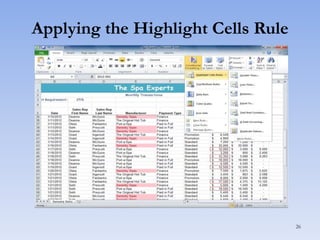
Applying the Highlight Cells Rule

26
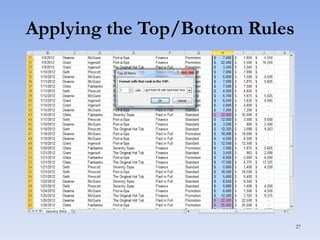
Applying the Top/Bottom Rules

27
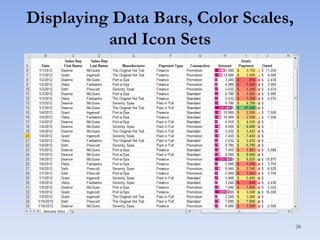
Displaying Data Bars, Color Scales,
and Icon Sets

28
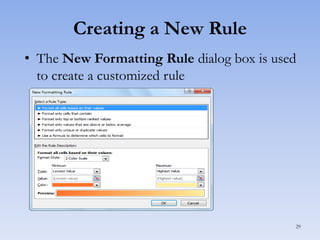
Creating a New Rule
• The New Formatting Rule dialog box is used
to create a customized rule

29
Sorting and Filtering Using
Conditional Formatting
• It is possible to apply sorting and filtering
commands to data using a conditional filter
– Use the Sort by Color option to group highlighted
records
– Sort the field in ascending order to arrange data bars
– Use the Filter by Color option to display only
highlighted records

30
Questions

31

MIS 226: Chapter 4

  • 1.
    Exploring Microsoft Office Excel2010 by Robert Grauer, Keith Mulbery, and Mary Anne Poatsy Chapter 4 Excel Datasets and Tables 1
  • 2.
    Large Datasets • Alarge dataset can be difficult to read – Row and column headings may scroll off the screen 2
  • 3.
    Freezing Rows andColumns • Freezing keeps rows and columns visible during scrolling Option Description Freeze Panes Keeps both rows and columns above and to the left of the active cell visible. Freeze Top Row Keeps only the top row visible. Freeze First Column Keeps only the first column visible. 3
  • 4.
    Freezing Rows andColumns • Figure 4.2 illustrates the effect of freezing rows 1 – 5 and columns A – B 4
  • 5.
    Printing Large Datasets •The Page Layout tab offers options to help print large datasets: – Page Breaks – Print Area – Page Titles 5
  • 6.
    Manual Page Breaks •A page break indicates where data will start on a new printed page 6
  • 7.
    Setting a PrintArea • A page area defines the range of data to print 7
  • 8.
    Print Titles • Printtitles indicate some rows or columns that will repeat at the top or side of each printed page 8
  • 9.
    Excel Tables • Atable is a structured range of related data formatted to enable data management and analysis • Excel tables offer many features not available to regular ranges 9
  • 10.
    Table Design • Afield is an individual piece of data – Field names appear in the top row as column headings – Field names should be short, but descriptive • A record is a complete set of data for an entity – Each record is listed in a row of the table – Do not insert blank rows in the table 10
  • 11.
    Creating a Table •A table can easily be created from existing data 11
  • 12.
    Creating a Table •The Design tab on the Table Tools contextual tab opens when the table is selected 12
  • 13.
    Adding Records • Adda new record at the bottom of the table by clicking in the row under the table • Add a new record within the table by clicking in the record below the insertion point – Click the Home tab – Click the Insert arrow in the Cells group – Select Insert Table Rows Above 13
  • 14.
    Editing and DeletingRecords • Data within a table record can be edited using the same techniques as those for a regular cell • Deleting a record removes it from the table – Click the Home tab – Click the Delete arrow in the Cells group – Select Delete Table Rows 14
  • 15.
    Applying a TableStyle • A table style controls the fill color of the header row, columns, and records 15
  • 16.
    Table Style Options •The Table Styles Options group on the Design tab contains check boxes to further format the table Check Box Action Header Row Displays the header row at the top of the table. Total Row Displays a total row at the bottom of the table. First Column Applies a different format to the first column. Last Column Applies a different format to the last column. Banded Rows Displays alternate fill colors for even and odd rows. Banded Columns Displays alternate fill colors for even and odd columns. 16
  • 17.
    Sorting Data • Sortingarranges records in a table – Sort on one column – Sort on multiple columns • Records can be sorted in ascending or descending order 17
  • 18.
    Sorting by OneColumn • Excel offers several ways to sort a single column Data type Options Explanation Text Sort A to Z Arranges data in alphabetical order. Sort Z to A Arranges data in reverse alphabetical order. Sort Oldest to Newest Displays data in chronological order. Sort Newest to Oldest Displays data in reverse chronological order. Sort Smallest to Largest Arranges values in sequential order. Sort Largest to Smallest Arranges values in descending order. Dates Values 18
  • 19.
    Sorting by MultipleColumns • Multiple level sorts permits differentiation among records with duplicate data in the first sort 19
  • 20.
    Creating a CustomSort • A custom sort can be created to arrange values in a customized fashion 20
  • 21.
    Filtering Data • Filteringis the process of displaying only records that meet specific conditions 21
  • 22.
    Filtering Numeric Data •Numeric filters can be applied to display a range of values 22
  • 23.
    Using Structured References •A structured reference is a tag or table field name used in a formula or function 23
  • 24.
    Creating a TotalRow • A total row appears as the last row of a table and offers statistical functions 24
  • 25.
    Conditional Formatting Conditional Formatting Description HighlightCell Rules Highlights cells with a fill color, font color or border if the cell value satisfies the rule. Top/Bottom Rules Formats cells with values in some top number or percentage. Data Bars Applies a gradient or filled bar in which the width of the bar represents the cell’s value with respect to other cells. Color Scales Formats different cells with different colors, assigning one color to lowest and highest groups and gradient colors in between values. Icon Sets Inserts an icon in a cell to indicate values compared to each other. 25
  • 26.
  • 27.
  • 28.
    Displaying Data Bars,Color Scales, and Icon Sets 28
  • 29.
    Creating a NewRule • The New Formatting Rule dialog box is used to create a customized rule 29
  • 30.
    Sorting and FilteringUsing Conditional Formatting • It is possible to apply sorting and filtering commands to data using a conditional filter – Use the Sort by Color option to group highlighted records – Sort the field in ascending order to arrange data bars – Use the Filter by Color option to display only highlighted records 30
  • 31.

Editor's Notes

  • #2 This chapter reviews using Excel datasets and tables to manage large volumes of data.
  • #32 Are there any questions?