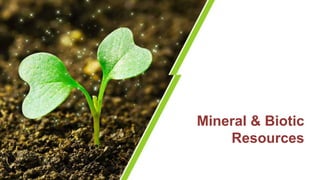
Mineral & Biotic
Resources
Mineral & Biotic resources
Contents
• Minerals
• Mineral classification
• Biotic resources
• Plant resources
• Animal resources
• Micro-organisms
• Conservation
Minerals
Minerals are non-renewable natural
resources. Minerals occur in living organisms
as components of organic and inorganic
molecules and ions.
Classification:
In plants, minerals are divided into:
1. Macronutrients.
2. Micronutrients.
Macronutrients
These include phosphorus, potassium, calcium,
magnesium, sulphur, and iron.
Micronutrients
These include manganese, cobalt, zinc, boron,
copper, molybdenum and chlorine.
Biotic (Living) Resources
They include plants, animals, and microorganisms. The living resources
are renewable.
Plant Resources
Role of plants:
Food, fiber & fuel:
Many plants are cultivated for;
• Food: grains, pulses, vegetables, fruits etc.
• Sugar
• Oil
• Fibers: cotton, jute
Plant resources
• Drinks: coffee, tea.
• Medicines
• Bio-fuels
Timber:
Timber is obtained from the trees which is used for construction work
, furniture, rail sleepers and compartments, ships, boats, decks, poles,
radio and television cabinets.
Animal food & shelter:
Trees provide shelter and food to many animals and birds.
Wood pulp:
Different kind of paper are produced from the wood pulp.
Plant resources
Dry fruits and other products:
Trees provide gums, drugs, resins, tannins, wood alcohol, acetic acid,
oxalic acid, charcoal and dry fruits.
Oxygen production:
Plants provide the oxygen for man and other animals for breathing.
Rainfall:
Vegetation effects the rainfall by retaining the moisture.
Prevent erosion:
The vegetation benefits the soil. It prevents soil erosion. Dead fallen
leaves decay and form humus that enriches the soil. Plants also check
the spread of deserts.
Dry mass production
The dry mass produced annually is 380 thousands million
tons, in which about 325 million tons are produced by
marine plants. However man mostly depends on the land
vegetation.
Over 4,00,000 species of plants are found on earth. Only a
few thousand species are used for food and other needs.
Conservation
Various human activities such as environmental pollution, conversion
of climax community to cropland, deforestation and overgrazing by
cattle are causing damage vegetation and depletion of plant life.
Several species of plants are endangered.
It is therefore necessary to check these human activities to prevent
the damage to plant life. In addition more marine plants should be
used for food and other materials. Man must explore more plant
species that can be utilized for food and other human needs.
Animal Resources
Role of Animals:
Food:
Animals provide food for man. Prawn, fish, fowls, goat, sheep, cows
etc. are reared for meat, fowls and ducks for eggs, cows, buffalos,
goats, reindeer for milk and honey bees for honey.
Transport:
Horses, mules, asses, cattle, elephant and reindeer are used for
transport.
Wax and lac:
Honey bees give wax. Lac is secreted by lac insect.
Animal resources
Laboratory animals:
Guinea pig, rats, rabbits, dogs and monkeys are used as laboratory
animals in research.
Pollination:
Many animals specially insects help in pollination and dispersal of
fruits and seeds.
Musk and ivory:
Musk is obtained from deer and ivory is obtained from the elephant.
Medicine:
Some of hormones secreted by adrenal, thyroid, pituitary of some
Animal resources
Plant growth:
Faecal matter of birds and mammals is good manure for plant
growth.
Pearls:
Pearls are produced by pearl oyster, molluscs.
Ecosystem maintenance:
Animals help in maintaining the ecosystem.
Conservation
Destruction of habitat by deforestation, indiscriminate killing of
animals for sports and poaching of animals for their products are
depleting animals life. These factors have caused a great damage to
several species which are threatened with extinction.
About 25% of all species are likely to disappeared in the next 25
years if immediate measures are not taken to protect their habitat
and stop their indiscriminate killing. People must be educated
regarding the conservation of animal life.
Micro-organisms
They are small organisms that cannot be seen without the aid of a
microscope. The major group of micro-organisms include;
• Bacteria
• Protozoa
• Fungi (yeast and molds)
• Viruses
They are abundant in air, in liquids such as milk and on the bodies
of animals and plants. Bacteria are the most active microorganisms
in breaking of complex molecules that can be used by the other
organisms.
Role of Micro-organisms
Penicillin:
The medicine used to cure bacterial infections, is the product of a fu
ngus.
Recycling materials:
Together with bacteria, fungi break down the biological molecules of
dead organisms and therefore play a major role in recycling of mate
rials.
Food for aquatic animals:
Beneficial protozoa act as food for aquatic animals.
Role of Micro-organisms
Location of oil deposits:
The skeletal deposits of foraminifera and Radiolaria are often found
in association with oil deposits. Thus, they help in the location of
Important fuels.
Note:
All the viruses are harmful and cause different types of diseases.
Conservation:
Following steps can conserve the mineral resources:
1. The minerals should be recycled as far as possible.
2. Use of raw minerals should be restricted to the industries
producing essential materials only.
3. New technologies should be adapted in the industries using
minerals so that, the wastage can be checked.
4. The untapped mineral deposits of the minerals in the sea beds
should be exploited.
5. Proper substitute should be found for minerals e.g., plastic wares
in place of metallic containers, copper zinc nickel alloy in place
of silver coins etc

Mineral and Biotic resources

  • 1.
  • 2.
    Mineral & Bioticresources Contents • Minerals • Mineral classification • Biotic resources • Plant resources • Animal resources • Micro-organisms • Conservation
  • 3.
    Minerals Minerals are non-renewablenatural resources. Minerals occur in living organisms as components of organic and inorganic molecules and ions. Classification: In plants, minerals are divided into: 1. Macronutrients. 2. Micronutrients.
  • 4.
    Macronutrients These include phosphorus,potassium, calcium, magnesium, sulphur, and iron. Micronutrients These include manganese, cobalt, zinc, boron, copper, molybdenum and chlorine.
  • 5.
    Biotic (Living) Resources Theyinclude plants, animals, and microorganisms. The living resources are renewable. Plant Resources Role of plants: Food, fiber & fuel: Many plants are cultivated for; • Food: grains, pulses, vegetables, fruits etc. • Sugar • Oil • Fibers: cotton, jute
  • 6.
    Plant resources • Drinks:coffee, tea. • Medicines • Bio-fuels Timber: Timber is obtained from the trees which is used for construction work , furniture, rail sleepers and compartments, ships, boats, decks, poles, radio and television cabinets. Animal food & shelter: Trees provide shelter and food to many animals and birds. Wood pulp: Different kind of paper are produced from the wood pulp.
  • 7.
    Plant resources Dry fruitsand other products: Trees provide gums, drugs, resins, tannins, wood alcohol, acetic acid, oxalic acid, charcoal and dry fruits. Oxygen production: Plants provide the oxygen for man and other animals for breathing. Rainfall: Vegetation effects the rainfall by retaining the moisture. Prevent erosion: The vegetation benefits the soil. It prevents soil erosion. Dead fallen leaves decay and form humus that enriches the soil. Plants also check the spread of deserts.
  • 8.
    Dry mass production Thedry mass produced annually is 380 thousands million tons, in which about 325 million tons are produced by marine plants. However man mostly depends on the land vegetation. Over 4,00,000 species of plants are found on earth. Only a few thousand species are used for food and other needs.
  • 9.
    Conservation Various human activitiessuch as environmental pollution, conversion of climax community to cropland, deforestation and overgrazing by cattle are causing damage vegetation and depletion of plant life. Several species of plants are endangered. It is therefore necessary to check these human activities to prevent the damage to plant life. In addition more marine plants should be used for food and other materials. Man must explore more plant species that can be utilized for food and other human needs.
  • 10.
    Animal Resources Role ofAnimals: Food: Animals provide food for man. Prawn, fish, fowls, goat, sheep, cows etc. are reared for meat, fowls and ducks for eggs, cows, buffalos, goats, reindeer for milk and honey bees for honey. Transport: Horses, mules, asses, cattle, elephant and reindeer are used for transport. Wax and lac: Honey bees give wax. Lac is secreted by lac insect.
  • 11.
    Animal resources Laboratory animals: Guineapig, rats, rabbits, dogs and monkeys are used as laboratory animals in research. Pollination: Many animals specially insects help in pollination and dispersal of fruits and seeds. Musk and ivory: Musk is obtained from deer and ivory is obtained from the elephant. Medicine: Some of hormones secreted by adrenal, thyroid, pituitary of some
  • 12.
    Animal resources Plant growth: Faecalmatter of birds and mammals is good manure for plant growth. Pearls: Pearls are produced by pearl oyster, molluscs. Ecosystem maintenance: Animals help in maintaining the ecosystem.
  • 13.
    Conservation Destruction of habitatby deforestation, indiscriminate killing of animals for sports and poaching of animals for their products are depleting animals life. These factors have caused a great damage to several species which are threatened with extinction. About 25% of all species are likely to disappeared in the next 25 years if immediate measures are not taken to protect their habitat and stop their indiscriminate killing. People must be educated regarding the conservation of animal life.
  • 14.
    Micro-organisms They are smallorganisms that cannot be seen without the aid of a microscope. The major group of micro-organisms include; • Bacteria • Protozoa • Fungi (yeast and molds) • Viruses They are abundant in air, in liquids such as milk and on the bodies of animals and plants. Bacteria are the most active microorganisms in breaking of complex molecules that can be used by the other organisms.
  • 15.
    Role of Micro-organisms Penicillin: Themedicine used to cure bacterial infections, is the product of a fu ngus. Recycling materials: Together with bacteria, fungi break down the biological molecules of dead organisms and therefore play a major role in recycling of mate rials. Food for aquatic animals: Beneficial protozoa act as food for aquatic animals.
  • 16.
    Role of Micro-organisms Locationof oil deposits: The skeletal deposits of foraminifera and Radiolaria are often found in association with oil deposits. Thus, they help in the location of Important fuels. Note: All the viruses are harmful and cause different types of diseases.
  • 17.
    Conservation: Following steps canconserve the mineral resources: 1. The minerals should be recycled as far as possible. 2. Use of raw minerals should be restricted to the industries producing essential materials only. 3. New technologies should be adapted in the industries using minerals so that, the wastage can be checked. 4. The untapped mineral deposits of the minerals in the sea beds should be exploited. 5. Proper substitute should be found for minerals e.g., plastic wares in place of metallic containers, copper zinc nickel alloy in place of silver coins etc