Metronet Information Literacy InitiativeAn Introduction to a Year Devoted to Research, Reliable Resources, & Responsible Use
MetronetMulticounty multitype library system
One of 7 in Minnesota
Serve libraries of all types with continuing                       education, networking, and special projects
Metronet Board is committed to the cause of Information Literacy & teaching the skills needed for lifelong learningwww.flickr.com/photos/39735679@N00/420390416
Metronet ActivitiesHistory Day @ your library
Web 2.0, Classroom 2.0, & Library 2.0Part 1.
In the beginning of the WebStatic Web sitesSource of information/simple answers Limited media--photos & illustrationsOne-way communication Needed design & coding skillsNeeded proprietary softwareAccess to a serverwww.flickr.com/photos/51512551@N00/3359491617
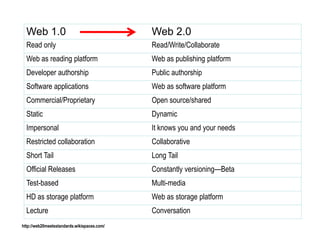
http://web20meetsstandards.wikispaces.com/
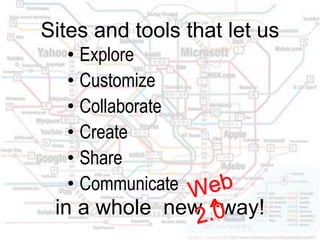
Sites and tools that let us Explore
 Customize
 Collaborate
 Create
 Share
 CommunicateWeb 2.0in a whole  new ^way!
Characteristics of Web 2.0 ToolsNot tied to a device--Internet access neededPortability--available from any deviceNo software--but Web plug-ins No programmingOS not an issue usually (although browser may matter)User-generated contentSharing--content, expertise Global connectionsPerpetual Betawww.flickr.com/photos/11979533@N00/441921094
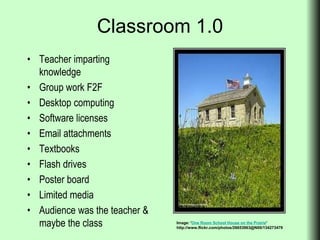
Classroom 1.0Teacher imparting knowledgeGroup work F2FDesktop computingSoftware licensesEmail attachmentsTextbooksFlash drivesPoster boardLimited mediaAudience was the teacher & maybe the classImage: 'One Room School House on the Prairie' http://www.flickr.com/photos/26653963@N00/134273479
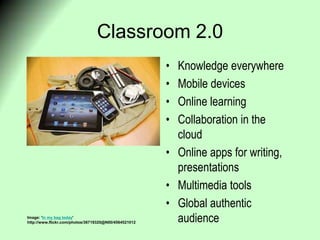
Classroom 2.0Knowledge everywhereMobile devicesOnline learningCollaboration in the cloudOnline apps for writing, presentationsMultimedia toolsGlobal authentic audienceImage: 'In my bag today' http://www.flickr.com/photos/36719320@N00/4564521012
Why Classroom 2.0?Encourage collaboration and engagement to involve every student in something that is personally engaging More opportunities for content creation on a broader stageInvolves the students in a very proactive learning environmentIt’s the future of education
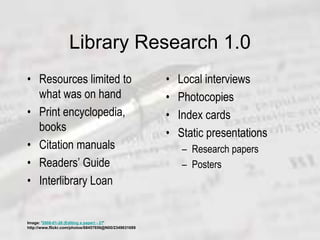
Library Research 1.0Resources limited to what was on handPrint encyclopedia, booksCitation manualsReaders’ GuideInterlibrary LoanLocal interviewsPhotocopiesIndex cardsStatic presentationsResearch papersPostersImage: '2008-01-26 (Editing a paper) - 27' http://www.flickr.com/photos/68457656@N00/2349631689
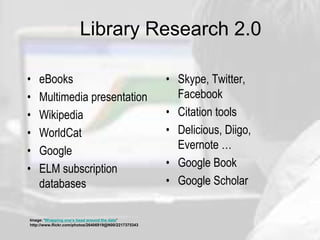
Library Research 2.0eBooksMultimedia presentationWikipediaWorldCatGoogleELM subscription databasesSkype, Twitter, FacebookCitation toolsDelicious, Diigo, Evernote …Google BookGoogle ScholarImage: 'Wrapping one's head around the data' http://www.flickr.com/photos/26406919@N00/2217375343
Improve productivityManage informationCollaborateExpand our reachClassroom/Library/Web 2.0 tools help uswww.flickr.com/photos/17258892@N05/2588347668
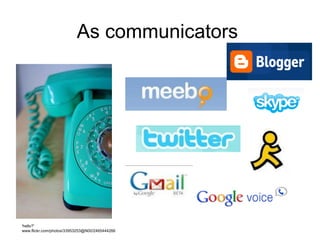
As communicators'hello?'www.flickr.com/photos/33953253@N00/2465444266
As  CollaboratorsImage: 'what are word for' www.flickr.com/photos/53611153@N00/395970515
As Creators
As commentators
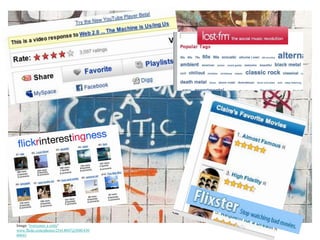
Image: 'everyones a critic' www.flickr.com/photos/25414047@N00/43060641
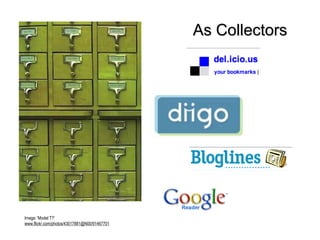
As CollectorsImage: 'Model T?'www.flickr.com/photos/43017881@N00/91467701
As Contributors
As Community Memberswww.flickr.com/photos/98624608@N00/75699268
wHAT is MILI?Part 2.
MILI Professional development for teachers & LMS
 How to integrate the MNInfo & Technology Literacy Standardsinto classroom teachingwww.flickr.com/photos/50502690@N00/112295678
MILI’s PurposeInfluence the teaching of the research processIncrease teacher/LMS awareness and use of Web 2.0 tools useful in the classroomEncourage teachers/LMS to incorporate the 3 Rs into teachingEncourage more collaboration between LMS & teachers around the research processwww.flickr.com/photos/34017702@N00/74907741
Information LiteracyKey to SuccessAcademic  Work life Daily lifeLifelong learning
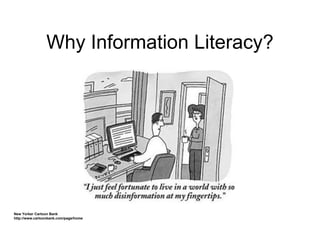
Why Information Literacy?New Yorker Cartoon Bankhttp://www.cartoonbank.com/page/home
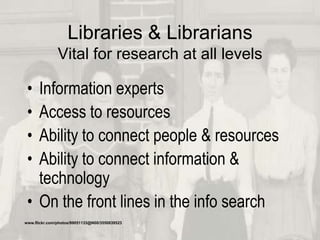
Libraries & LibrariansVital for research at all levelsInformation expertsAccess to resourcesAbility to connect people & resourcesAbility to connect information & technologyOn the front lines in the info searchwww.flickr.com/photos/99051133@N00/3550839523
Why?www.flickr.com/photos/49462908@N00/143623934
Information literacy is a key skill in every discipline and profession. No exceptions.
Students are content creatorswww.flickr.com/photos/81571077@N00/488412425
They need traditional & new skills
Using new & traditional media
To understand their need for informationImage: 'Q & A 2.0: Nothing Is Off Limits!' http://www.flickr.com/photos/8727793@N05/2887622999
To find & evaluate reliable information
To draw conclusions & present informationImage: 'Spectrum and reflection'http://www.flickr.com/photos/80238169@N00/2376481110
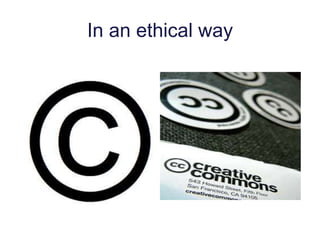
In an ethical way
To prepare for post-secondary educationandwww.flickr.com/photos/27304596@N00/583749159
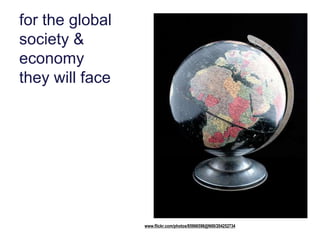
for the global society & economy they will face www.flickr.com/photos/85966598@N00/204252734
And, because . . .We limit students if we do not help them develop and use information literacy skills across the curriculum
Trends
TechnologyProfoundly affects the way we work, collaborate, communicate, and succeed Changes how people work, play, learn, socialize, and collaborate Explosive growth of mobile devices and applications will drive more changemage: 'Thinning Down' http://www.flickr.com/photos/44124348109@N01/227904949
Business & Societyand maybe schoolUser-created contentSocial networkingCollaborative work Collective intelligence to solve problemsParticipatory LeadershipOnline civic engagementGlobal reach and influencehttp://www.flickr.com/photos/21936447@N04/2744217176
Moving (fast) Towards . . .Mobile computingCloud apps, storage, collaborationGeo-coded everythingPersonalized, customizable WebInteractive computingCollaborative environmentsThe Horizon Report K-12 http://wp.nmc.org/horizon-k12-2009/chapters/executive-summary/The Horizon Report 2009 http://wp.nmc.org/horizon2009/http://www.flickr.com/photos/38305415@N00/2968794599
Students are changingTechnology is how they communicate & socializeUbiquitous, transparent part of their livesEmpowered by being  connected to information & each other 24/7Globally connectedExpect guides not expertsmage: 'The Students Who Listen Together Learn Together' http://www.flickr.com/photos/8166472@N03/3866208804
Learning Environments are changingNo longer tied to a physical space  “Spaces” are becoming more community-driven, interdisciplinarySpaces & technologies that allow virtual communication and collaboration Image: 'Never Be..' http://www.flickr.com/photos/84142366@N00/4390842406
 Access beyond the wallsOnline learning ELM and other database accessPublic/academic libraries online resourcesVirtual collaborationImage: 'Chairs' http://www.flickr.com/photos/89898604@N00/6550520
Will they be ready for this future—which really is now?www.flickr.com/photos/45877650@N00/2581604391
If. . .Image: 'Yes!' http://www.flickr.com/photos/40646519@N00/3584172834
Students have teachers/LMS who can guide them…www.flickr.com/photos/60648084@N00/2462966749
Through the research processwww.flickr.com/photos/91409160@N00/3139332908
To reliable resourceswww.flickr.com/photos/88935916@N00/32415987
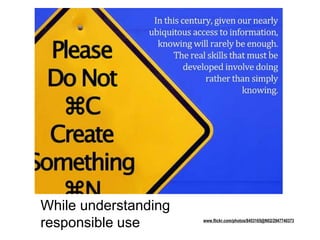
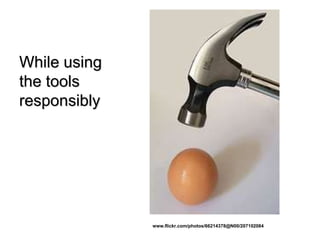
While understandingresponsible usewww.flickr.com/photos/8453165@N02/2947740373
How?
MILI will be your guideTo the research processFinding reliable resourcesIdentifying new toolsInformation literacy21st century skills
MILI FocusOn the processOn the resourcesOn the tools that make it happenwww.flickr.com/photos/26887305@N00/79952661
The MILI 3 RsResearch ProcessReliable ResourcesResponsible Usewww.flickr.com/photos/49968232@N00/101563312
ResearchImprove the ability of students & teachers to conduct effective research by using a process that includes 5 stepsQuestionGather & Evaluate informationConcludeCommunicate information & conclusionEvaluate process & productwww.flickr.com/photos/47643206@N00/185651630
Reliable Resources Identify & use available, reliable resources“Format agnostic”--the format of the information is not the point Evaluate all print, electronic, online, & human resources for authenticity & accuracyResource is appropriate in the context of this researchwww.flickr.com/photos/96586445@N00/816524
Responsible UsePromote the understanding & practice of the responsible use of information & technologyAdvise & assist teachers in the creation of plagiarism-proof assignmentsProvide resources for teaching responsible use including copyright, Creative Commons, technology use www.flickr.com/photos/34427470616@N01/1141305603
By developing research projects that encourage 21st Century Learning skills & promote Information LiteracyCreating assignments that encourage building knowledge, not just repeating informationwww.flickr.com/photos/85966598@N00/98179665
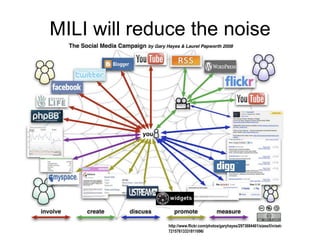
MILI will reduce the noisehttp://www.flickr.com/photos/garyhayes/2973684461/sizes/l/in/set-72157613331811096/
Together, we canImprove your research project to incorporate the 5 stepsLearn Web 2.0 tools that work in classrooms and school buildings for collaboration, communication, & creationShare what we know & what we learn
Thoughts on MILI by Past Participantswww.flickr.com/photos/78147607@N00/1506680304
Information Literacy &21st Century SkillsPart 3.
What is Information Literacy?"To be information literate, a person must be able to recognize when information is needed and have the ability to locate, evaluate, and use effectively the needed information." The American Library Association’s (ALA) Presidential Committee on Information Literacy, Final Report, 1989www.flickr.com/photos/66606673@N00/2297933452
In the real world…The ability to solve problems & answer questions using information & technologyAn understanding of the ethical/legal issues surrounding the access and use of informationwww.flickr.com/photos/65768710@N00/2200198472
Partnership for 21st Century Skills21st Century SkillsInformation and communication skills  Thinking and problem-solvingInterpersonal and self-direction skillsGlobal awareness Financial, economic and business literacy, and developing entrepreneurial skills to enhance workplace productivity and career optionsCivic literacyhttp://www.21stcenturyskills.org/index.php
Information & Communication SkillsInterpret text, data, media, & more for context & meaning  Communication of concepts, ideas, conclusions…www.flickr.com/photos/66208256@N00/2697847277
Thinking & problem-solvingCritical thinking and systems thinkingProblem identification, formulation and solutionCreativity and intellectual curiosity http://www.flickr.com/photos/84959877@N00/144868194
Interpersonal & self-direction skillsInterpersonal and collaborative skillsSelf-directionAccountability and adaptabilitySocial responsibility www.flickr.com/photos/elsie/8229790/
Standards & Classroom 2.0AASL-Standards for 21st Century LearnersISTE-National Educational Technology StandardsMEMO-Information & Technology Literacy Standards
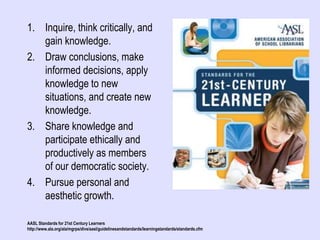
Inquire, think critically, and gain knowledge.Draw conclusions, make informed decisions, apply knowledge to new situations, and create new knowledge.Share knowledge and participate ethically and productively as members of our democratic society.Pursue personal and aesthetic growth.AASL Standards for 21st Century Learnershttp://www.ala.org/ala/mgrps/divs/aasl/guidelinesandstandards/learningstandards/standards.cfm
ISTENational Educational Technology Standards (NETS)Creativity and InnovationCommunication and CollaborationResearch and Information FluencyCritical Thinking, Problem Solving, and Decision MakingDigital CitizenshipTechnology Operations and Conceptshttp://www.iste.org/AM/Template.cfm?Section=NETSwww.flickr.com/photos/77265262@N00/2938074434
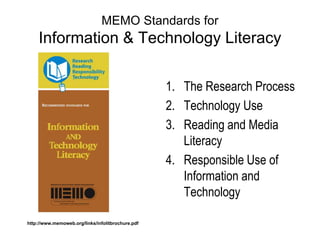
MEMO Standards for Information & Technology LiteracyThe Research ProcessTechnology UseReading and Media LiteracyResponsible Use of Information and Technologyhttp://www.memoweb.org/links/infolitbrochure.pdf
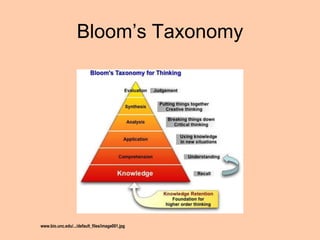
Bloom’s Taxonomywww.bio.unc.edu/.../default_files/image001.jpg
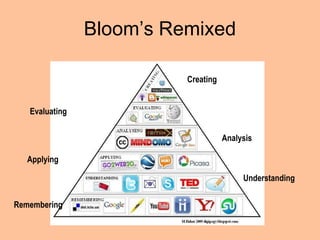
Bloom’s RemixedCreatingEvaluatingAnalysisApplyingUnderstandingRemembering
Which brings us back to      Information Literacy  www.flickr.com/photos/13597901@N00/254102459
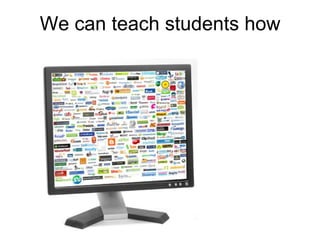
We can teach students how
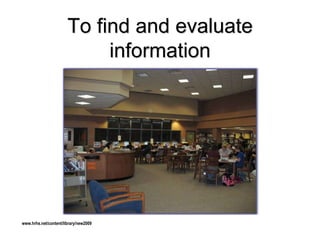
To find and evaluate informationwww.hrhs.net/content/library/new2009
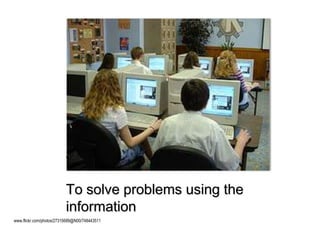
To solve problems using the informationTo solve problems using the informationwww.flickr.com/photos/27315689@N00/748443511
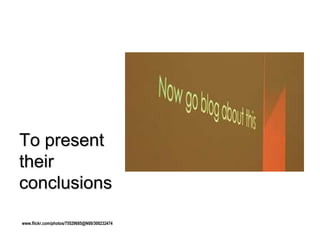
To present their conclusionswww.flickr.com/photos/75529685@N00/300232474

Mili Intro 2010 Minneapolis

  • 1.
    Metronet Information LiteracyInitiativeAn Introduction to a Year Devoted to Research, Reliable Resources, & Responsible Use
  • 2.
  • 3.
    One of 7in Minnesota
  • 4.
    Serve libraries ofall types with continuing education, networking, and special projects
  • 5.
    Metronet Board iscommitted to the cause of Information Literacy & teaching the skills needed for lifelong learningwww.flickr.com/photos/39735679@N00/420390416
  • 6.
  • 7.
    Web 2.0, Classroom2.0, & Library 2.0Part 1.
  • 8.
    In the beginningof the WebStatic Web sitesSource of information/simple answers Limited media--photos & illustrationsOne-way communication Needed design & coding skillsNeeded proprietary softwareAccess to a serverwww.flickr.com/photos/51512551@N00/3359491617
  • 9.
  • 10.
    Sites and toolsthat let us Explore
  • 11.
  • 12.
  • 13.
  • 14.
  • 15.
    CommunicateWeb 2.0ina whole new ^way!
  • 16.
    Characteristics of Web2.0 ToolsNot tied to a device--Internet access neededPortability--available from any deviceNo software--but Web plug-ins No programmingOS not an issue usually (although browser may matter)User-generated contentSharing--content, expertise Global connectionsPerpetual Betawww.flickr.com/photos/11979533@N00/441921094
  • 17.
    Classroom 1.0Teacher impartingknowledgeGroup work F2FDesktop computingSoftware licensesEmail attachmentsTextbooksFlash drivesPoster boardLimited mediaAudience was the teacher & maybe the classImage: 'One Room School House on the Prairie' http://www.flickr.com/photos/26653963@N00/134273479
  • 18.
    Classroom 2.0Knowledge everywhereMobiledevicesOnline learningCollaboration in the cloudOnline apps for writing, presentationsMultimedia toolsGlobal authentic audienceImage: 'In my bag today' http://www.flickr.com/photos/36719320@N00/4564521012
  • 19.
    Why Classroom 2.0?Encouragecollaboration and engagement to involve every student in something that is personally engaging More opportunities for content creation on a broader stageInvolves the students in a very proactive learning environmentIt’s the future of education
  • 20.
    Library Research 1.0Resourceslimited to what was on handPrint encyclopedia, booksCitation manualsReaders’ GuideInterlibrary LoanLocal interviewsPhotocopiesIndex cardsStatic presentationsResearch papersPostersImage: '2008-01-26 (Editing a paper) - 27' http://www.flickr.com/photos/68457656@N00/2349631689
  • 21.
    Library Research 2.0eBooksMultimediapresentationWikipediaWorldCatGoogleELM subscription databasesSkype, Twitter, FacebookCitation toolsDelicious, Diigo, Evernote …Google BookGoogle ScholarImage: 'Wrapping one's head around the data' http://www.flickr.com/photos/26406919@N00/2217375343
  • 22.
    Improve productivityManage informationCollaborateExpandour reachClassroom/Library/Web 2.0 tools help uswww.flickr.com/photos/17258892@N05/2588347668
  • 23.
  • 24.
    As CollaboratorsImage:'what are word for' www.flickr.com/photos/53611153@N00/395970515
  • 25.
  • 26.
  • 27.
    Image: 'everyones acritic' www.flickr.com/photos/25414047@N00/43060641
  • 28.
    As CollectorsImage: 'ModelT?'www.flickr.com/photos/43017881@N00/91467701
  • 29.
  • 30.
  • 31.
  • 32.
  • 33.
    How tointegrate the MNInfo & Technology Literacy Standardsinto classroom teachingwww.flickr.com/photos/50502690@N00/112295678
  • 34.
    MILI’s PurposeInfluence theteaching of the research processIncrease teacher/LMS awareness and use of Web 2.0 tools useful in the classroomEncourage teachers/LMS to incorporate the 3 Rs into teachingEncourage more collaboration between LMS & teachers around the research processwww.flickr.com/photos/34017702@N00/74907741
  • 36.
    Information LiteracyKey toSuccessAcademic Work life Daily lifeLifelong learning
  • 37.
    Why Information Literacy?NewYorker Cartoon Bankhttp://www.cartoonbank.com/page/home
  • 38.
    Libraries & LibrariansVitalfor research at all levelsInformation expertsAccess to resourcesAbility to connect people & resourcesAbility to connect information & technologyOn the front lines in the info searchwww.flickr.com/photos/99051133@N00/3550839523
  • 39.
  • 40.
    Information literacy isa key skill in every discipline and profession. No exceptions.
  • 41.
    Students are contentcreatorswww.flickr.com/photos/81571077@N00/488412425
  • 42.
  • 43.
    Using new &traditional media
  • 44.
    To understand theirneed for informationImage: 'Q & A 2.0: Nothing Is Off Limits!' http://www.flickr.com/photos/8727793@N05/2887622999
  • 45.
    To find &evaluate reliable information
  • 46.
    To draw conclusions& present informationImage: 'Spectrum and reflection'http://www.flickr.com/photos/80238169@N00/2376481110
  • 47.
  • 48.
    To prepare forpost-secondary educationandwww.flickr.com/photos/27304596@N00/583749159
  • 49.
    for the globalsociety & economy they will face www.flickr.com/photos/85966598@N00/204252734
  • 50.
    And, because .. .We limit students if we do not help them develop and use information literacy skills across the curriculum
  • 51.
  • 52.
    TechnologyProfoundly affects theway we work, collaborate, communicate, and succeed Changes how people work, play, learn, socialize, and collaborate Explosive growth of mobile devices and applications will drive more changemage: 'Thinning Down' http://www.flickr.com/photos/44124348109@N01/227904949
  • 53.
    Business & Societyandmaybe schoolUser-created contentSocial networkingCollaborative work Collective intelligence to solve problemsParticipatory LeadershipOnline civic engagementGlobal reach and influencehttp://www.flickr.com/photos/21936447@N04/2744217176
  • 54.
    Moving (fast) Towards. . .Mobile computingCloud apps, storage, collaborationGeo-coded everythingPersonalized, customizable WebInteractive computingCollaborative environmentsThe Horizon Report K-12 http://wp.nmc.org/horizon-k12-2009/chapters/executive-summary/The Horizon Report 2009 http://wp.nmc.org/horizon2009/http://www.flickr.com/photos/38305415@N00/2968794599
  • 55.
    Students are changingTechnologyis how they communicate & socializeUbiquitous, transparent part of their livesEmpowered by being connected to information & each other 24/7Globally connectedExpect guides not expertsmage: 'The Students Who Listen Together Learn Together' http://www.flickr.com/photos/8166472@N03/3866208804
  • 56.
    Learning Environments arechangingNo longer tied to a physical space “Spaces” are becoming more community-driven, interdisciplinarySpaces & technologies that allow virtual communication and collaboration Image: 'Never Be..' http://www.flickr.com/photos/84142366@N00/4390842406
  • 57.
    Access beyondthe wallsOnline learning ELM and other database accessPublic/academic libraries online resourcesVirtual collaborationImage: 'Chairs' http://www.flickr.com/photos/89898604@N00/6550520
  • 58.
    Will they beready for this future—which really is now?www.flickr.com/photos/45877650@N00/2581604391
  • 59.
    If. . .Image:'Yes!' http://www.flickr.com/photos/40646519@N00/3584172834
  • 60.
    Students have teachers/LMSwho can guide them…www.flickr.com/photos/60648084@N00/2462966749
  • 61.
    Through the researchprocesswww.flickr.com/photos/91409160@N00/3139332908
  • 62.
  • 63.
  • 64.
  • 65.
    MILI will beyour guideTo the research processFinding reliable resourcesIdentifying new toolsInformation literacy21st century skills
  • 66.
    MILI FocusOn theprocessOn the resourcesOn the tools that make it happenwww.flickr.com/photos/26887305@N00/79952661
  • 67.
    The MILI 3RsResearch ProcessReliable ResourcesResponsible Usewww.flickr.com/photos/49968232@N00/101563312
  • 68.
    ResearchImprove the abilityof students & teachers to conduct effective research by using a process that includes 5 stepsQuestionGather & Evaluate informationConcludeCommunicate information & conclusionEvaluate process & productwww.flickr.com/photos/47643206@N00/185651630
  • 69.
    Reliable Resources Identify& use available, reliable resources“Format agnostic”--the format of the information is not the point Evaluate all print, electronic, online, & human resources for authenticity & accuracyResource is appropriate in the context of this researchwww.flickr.com/photos/96586445@N00/816524
  • 70.
    Responsible UsePromote theunderstanding & practice of the responsible use of information & technologyAdvise & assist teachers in the creation of plagiarism-proof assignmentsProvide resources for teaching responsible use including copyright, Creative Commons, technology use www.flickr.com/photos/34427470616@N01/1141305603
  • 71.
    By developing researchprojects that encourage 21st Century Learning skills & promote Information LiteracyCreating assignments that encourage building knowledge, not just repeating informationwww.flickr.com/photos/85966598@N00/98179665
  • 72.
    MILI will reducethe noisehttp://www.flickr.com/photos/garyhayes/2973684461/sizes/l/in/set-72157613331811096/
  • 73.
    Together, we canImproveyour research project to incorporate the 5 stepsLearn Web 2.0 tools that work in classrooms and school buildings for collaboration, communication, & creationShare what we know & what we learn
  • 74.
    Thoughts on MILIby Past Participantswww.flickr.com/photos/78147607@N00/1506680304
  • 75.
    Information Literacy &21stCentury SkillsPart 3.
  • 76.
    What is InformationLiteracy?"To be information literate, a person must be able to recognize when information is needed and have the ability to locate, evaluate, and use effectively the needed information." The American Library Association’s (ALA) Presidential Committee on Information Literacy, Final Report, 1989www.flickr.com/photos/66606673@N00/2297933452
  • 77.
    In the realworld…The ability to solve problems & answer questions using information & technologyAn understanding of the ethical/legal issues surrounding the access and use of informationwww.flickr.com/photos/65768710@N00/2200198472
  • 78.
    Partnership for 21stCentury Skills21st Century SkillsInformation and communication skills Thinking and problem-solvingInterpersonal and self-direction skillsGlobal awareness Financial, economic and business literacy, and developing entrepreneurial skills to enhance workplace productivity and career optionsCivic literacyhttp://www.21stcenturyskills.org/index.php
  • 79.
    Information & CommunicationSkillsInterpret text, data, media, & more for context & meaning Communication of concepts, ideas, conclusions…www.flickr.com/photos/66208256@N00/2697847277
  • 80.
    Thinking & problem-solvingCriticalthinking and systems thinkingProblem identification, formulation and solutionCreativity and intellectual curiosity http://www.flickr.com/photos/84959877@N00/144868194
  • 81.
    Interpersonal & self-directionskillsInterpersonal and collaborative skillsSelf-directionAccountability and adaptabilitySocial responsibility www.flickr.com/photos/elsie/8229790/
  • 82.
    Standards & Classroom2.0AASL-Standards for 21st Century LearnersISTE-National Educational Technology StandardsMEMO-Information & Technology Literacy Standards
  • 83.
    Inquire, think critically,and gain knowledge.Draw conclusions, make informed decisions, apply knowledge to new situations, and create new knowledge.Share knowledge and participate ethically and productively as members of our democratic society.Pursue personal and aesthetic growth.AASL Standards for 21st Century Learnershttp://www.ala.org/ala/mgrps/divs/aasl/guidelinesandstandards/learningstandards/standards.cfm
  • 84.
    ISTENational Educational TechnologyStandards (NETS)Creativity and InnovationCommunication and CollaborationResearch and Information FluencyCritical Thinking, Problem Solving, and Decision MakingDigital CitizenshipTechnology Operations and Conceptshttp://www.iste.org/AM/Template.cfm?Section=NETSwww.flickr.com/photos/77265262@N00/2938074434
  • 85.
    MEMO Standards forInformation & Technology LiteracyThe Research ProcessTechnology UseReading and Media LiteracyResponsible Use of Information and Technologyhttp://www.memoweb.org/links/infolitbrochure.pdf
  • 86.
  • 87.
  • 89.
    Which brings usback to Information Literacy www.flickr.com/photos/13597901@N00/254102459
  • 90.
    We can teachstudents how
  • 91.
    To find andevaluate informationwww.hrhs.net/content/library/new2009
  • 92.
    To solve problemsusing the informationTo solve problems using the informationwww.flickr.com/photos/27315689@N00/748443511
  • 93.
    To present theirconclusionswww.flickr.com/photos/75529685@N00/300232474

Editor's Notes

  • #5 Let’s set the stage
  • #7 Old web to new web---more dynamic, more interactive, very wide and very deep (long tail),
  • #11 Online content online delivery online creation online sharing
  • #12 Authentic audience
  • #13 Resources in school or college or public library
  • #28 There are few situations or jobs that do not require information and the ability to apply it.Translitercy is a term that has come into vogue lately—encompasses all types of
  • #33 Content is very broad—phone videos, blogs, yelp reviews along with the more formal traditional types of content creation
  • #42 And therefore—limit their lifelong ability to question, evaluate, and use information in any form
  • #47 No longer can we be expected to remain unchallenged in what we say—we can be contradicted and corrected easily Gaming culture, parenting styles, level of independence
  • #48 Wi-fi enabled devices—iPads, phones, netbooks—and ubiquitous free wifi at public and academic libraries not to mention at McDonalds, Starbucks, Panera and the various Minneapolis hot spots
  • #49 Some estimates say that by 2014 more than 22 million post-secondary students will take courses online—double the number today. Only about ¼ of total students will take all classes F2F
  • #50 Yes if
  • #64 SO….
  • #70 In MILI we focus on the first three of these
  • #74 Standards that address 21st century skills and information literacy. Summaries of the standards are handouts
  • #80 All the standards, all the skills, all the pieces are focused on the students—defining and teaching the skills they need to succeed now and the future.
  • #88 There is a lot of noise, a lot to learn, A lot of noise and a lot of competition
  • #90 To learn, to share, to try, to play—so you can